24.7 C
London
Friday, May 1, 2026
Home Blog

Another Assassination Attempt, More Fertilizer for Conspiracy Theories

0
another-assassination-attempt,-more-fertilizer-for-conspiracy-theories
Another Assassination Attempt, More Fertilizer for Conspiracy Theories


The White House Correspondents’ Dinner last weekend became the site of the third failed attempt to assassinate President Donald Trump. “I remember the feeling was very similar to when it was clear that the House had been invaded on January 6, 2021,” Rep. Jamie Raskin, D-Md., who was in attendance, tells The Intercept Briefing. “Everybody was afraid that somebody had come in with an AR-15 or something like that.”

This week on the podcast, host Akela Lacy speaks to Raskin about his experience at the dinner and later being asked by CNN’s Dana Bash about whether he’s thinking twice about his “heated rhetoric” toward Trump. “It was curious that, in the wake of this terrible episode, that she would try to equate the way that Democrats talk and the way that President Trump talks,” says Raskin. “He calls people crazy, insane. He calls people evil, wicked. He will buttonhole reporters and tell them that they’re stupid, they’re ugly. … But we try to keep it at the level of policies and their actions.” Some examples, which Raskin discusses, is his forthcoming investigation into Trump’s son-in-law Jared Kushner’s role in the administration and conflicts of interest, and his fight in Congress to stop the reauthorization of warrantless surveillance on Americans.

After this latest assassination attempt on Trump’s life, claims that it was staged flooded the internet, from comments section to social media posts to videos of influencers dissecting alleged evidence.

“We are so conditioned to distrust what we are being told by authorities that people immediately began concocting conspiracy theories about it even before we even knew what had happened. Whether it was a shooting or just dishes breaking,” says journalist Mike Rothschild. He’s the author of “The Storm is Upon Us,” the first complete book on the QAnon conspiracy movement, and more recently, a 200-year history of conspiracy theories called “Jewish Space Lasers.”

Rothschild joins Lacy to unpack the growing world of conspiracy theories that question whether the multiple assassination attempts against Trump were staged. They also dive into other conspiracy theories currently capturing the public imagination, such as the dead and missing scientists and a wildfire in Georgia. “This is one of our more fun and disturbing interviews,” says Lacy.

For more, listen to the full conversation of The Intercept Briefing on Apple Podcasts, Spotify, YouTube, or wherever you listen.

Transcript

Akela Lacy: Welcome to The Intercept Briefing. I’m Akela Lacy, senior politics reporter for The Intercept.

Katherine Krueger: And I’m Katherine Krueger, the Voices editor at The Intercept.

AL: Katherine, do you want to tell our listeners a little bit about what Voices is before we jump into the show today?

KK: Voices is basically The Intercept’s op-ed section we run. Things that are more narrative, things that are a little more first-person-driven, things that advocate for a specific point of view.

AL: An Intercept editorial board, if you will.

KK: Yes, I’m a one-woman editorial board. [Laughs.]

AL: Speaking of opinions on the news of the day, I am going to throw several topics at you. [Laughs.]

KK: OK. Hit me.

AL: On Thursday morning, news broke that Janet Mills is dropping out of the Maine Senate race. Katherine, what was your reaction to seeing that? 

KK: So Janet Mills is the current governor of Maine, former attorney general, running against Graham Platner in the Democratic primary to be the next senator of Maine.

She was neck and neck with the upstart, insurgent, more-left candidate Graham Platner, who has certainly had his share of controversies during this race. But my jaw dropped when I saw the news that she was dropping out. It feels like all polling that I had seen was that her and Platner were pretty close in the polls.

In a statement she put out, she’s blaming a lack of money for not continuing the race, which is also strange to me because she had all of the backing of the Democratic Party. No one at DNC national was pulling for Platner.

AL: Yeah, this was pretty shocking to me. I also got an AP alert on Wednesday evening. The title was “Underdog Governor,” and the dek was “Democratic Maine Governor Janet Mills says she’s used to being underestimated even as she runs for Senate at age 78.”

Literally 12 hours later, Janet Mills is dropping out of the race for U.S. Senate.

I was also pretty shocked at the statement that Chuck Schumer and the Democratic Senatorial Campaign Committee Chair Kirsten Gillibrand put out after she dropped out of the race, which was “[Maine Sen. Susan] Collins has never been more vulnerable” — what? “We will work with the presumptive Democratic nominee, Graham Platner, to defeat her.” [Laughs.]

KK: Yeah, it’s a bit strange. Also, I just love the framing in that headline, which is “underdog governor” — don’t those things pull in opposite directions? Also, Hakeem Jeffries and Chuck Schumer were fully behind Janet Mills. It all strikes me as a bit strange. It also seems Platner had been in general polling ahead of Mills, but it does seem like the race was quite close. My jaw dropped when I saw the news. It seems out of nowhere.

AL: Also in midterms and voting rights news, on Wednesday, the Supreme Court issued a decision that rolled back voting rights. This was focused on a case in Louisiana. After that decision, Louisiana postponed its May 16 primary. Which is kind of insane, considering that that was supposed to happen in two weeks.

KK: It does seem like an existential threat for the Democrats to respond. Gerrymandering has been an issue for a long time. The Republicans are fully aware that without gerrymandering, the force of the electorate is against them. Democrats need to respond as other states, I’m sure, will look to redraw their maps in even more draconian ways.

“The Republicans are fully aware that without gerrymandering, the force of the electorate is against them.”

AL: In that vein, Democrats are also facing intense scrutiny over a series of key votes in the house this week, including on extending the Foreign Intelligence Surveillance Act, which 42 Democrats voted to support and 22 Republicans opposed on Wednesday. This version would authorize warrantless surveillance of Americans.

There’s also been some developments in the fight to end the partial shutdown of the Department of Homeland Security. After a monthslong shutdown, the House passed legislation to reopen DHS on Thursday.

After federal immigration agents killed Renee Good and Alex Pretti in Minnesota earlier this year, Democrats had attempted to block additional funding for DHS until the agency could make some very modest reforms to ICE and Border Patrol. Democrats’ demands have so far gone nowhere. Though some places are framing the vote on Thursday, which did not fund ICE, as a win for Democrats. Katherine, what do you make of all of this?

KK: Well, it does seem that the Republicans are pretty desperate to restore this funding. You know, as an op-ed editor — Democrats need to hold the line on this.

AL: It’s my understanding that this bill will pay for DHS operations except ICE and parts of Border Patrol through September 30. Those agencies are already being generously funded by the Trump so-called Big Beautiful Bill that approved a record $85 billion for immigration crackdowns. 

KK: Right. So for now it appears to be all eyes on the Democrats to see what they can do, if anything, to gum up the works on billions in new funding for ICE and Customs and Border Protection.

AL: And of course, this is all coming on the heels of the third assassination attempt against President Donald Trump over the weekend, which we talk about with Rep. Jamie Raskin of Maryland, who was present at the White House Correspondents’ Dinner during the shooting attempt.

Later in the show, we hear from journalist Mike Rothschild about the world of conspiracy theories swirling around the shooting and other recent events in the U.S.

KK: Akela, you got really great details from Rep. Raskin from inside the Correspondents’ Dinner. So let’s listen to that conversation now.

AL: Welcome to the Intercept Briefing, Rep. Raskin.

Rep. Jamie Raskin: Great to see you, Akela.

AL: So you were at the White House Correspondents’ Dinner on Saturday evening. Tell us what you witnessed.

JR: I entered maybe 10 minutes before the incident happened and the violence and the confusion and the melee and the chaos. All of a sudden, we heard the loud noises, boom boom boom, glasses flying, plates flying — horrific noises taking place. And then people yelling, “Get down, get down.” Somebody, I think it maybe was a Secret Service agent or an officer, somebody threw me to the ground.

Then we stayed on the floor for two or three minutes before people started saying they got the guy, or it’s OK, you can get up. But there was a lot of confusion.

I remember the feeling was very similar to when it was clear that the House had been invaded on January 6, 2021, and everybody was afraid that somebody had come in with an AR-15 or something like that.

It was a scene of crowd chaos and fear in America, which means people are going to be thinking about the possibility of an assault weapon or some kind of deadly gun attack.

AL: The day after the shooting, you spoke to CNN’s Dana Bash about the incident in an interview where she asked you about the responsibility of Democrats whose rhetoric toward Trump she described as “heated.” Let’s hear that clip.

[Clip from CNN]

Dana Bash: And you have, and as many of your fellow Democrats have, used some heated rhetoric against the president. And do you think twice about that when something like this happens?

Rep. Jamie Raskin: What rhetoric do you have in mind?

DB: Just talking about some of the fact that he is terrible for this country and so on and so forth. I understand that’s your democratic right, but overall, do you have no responsibility?

JR: I have no personal problem with Donald Trump at all. I talk about the policies of this administration. The authoritarianism, like we saw on display in Minneapolis where two of our citizens were gunned down in the streets simply for exercising their First Amendment rights; Renee Good, Alex Pretti, and others have died in custody. I’m talking about policies. I don’t personalize it, and I certainly have never called the press the enemy of the people. I think the press are the people’s best friend, and that’s why it’s written right there into the First Amendment.

We need the press to be a vigilant watchdog against every level of government, federal, state, local, all of it.

[Clip ends]

AL: I also want to note that on Tuesday, White House press secretary Karoline Leavitt blamed Democrats who have criticized Trump for the shooting, naming several members of Congress, including House Minority Leader Hakeem Jeffries.

What did you make of Bash’s question to you and the idea behind it, that somehow the real problem here is criticizing the president and his policies, no matter what those policies are?

JR: The freedom of speech has to be wide open, vigorous, and uninhibited in America. But the point I was trying to make was that we should keep to policy matters and political matters, and not personalize it.

So I literally didn’t know what she was talking about. I do not use, or at least I try not to use, the kind of rhetoric that President Trump routinely and habitually uses where he calls people communists, he calls people terrorists. He calls people crazy, insane. He calls people evil, wicked. He will buttonhole reporters and tell them that they’re stupid, they’re ugly, all those kinds of things.

I just thought it was curious that, in the wake of this terrible episode, that [Bash] would try to equate the way that Democrats talk and the way that President Trump talks, because we are indeed very vigorous and aggressive in standing up to violent insurrections and attempts to overthrow elections. And we’re very vigorous and aggressive in opposing illegal wars because Congress has been cut out and so on. But we try to keep it at the level of policies and their actions.

“It was curious that, in the wake of this terrible episode, that she would try to equate the way that Democrats talk and the way that President Trump talks.”

AL: A letter that you sent a few weeks ago to the president’s son-in-law Jared Kushner opened by saying, “You are now reportedly participating as ‘Special Envoy for Peace’ in negotiations on behalf of the United States government to address the roiling conflicts in the Middle East. At the same time, you are soliciting billions of dollars from Gulf monarchies for your private business ventures while already managing billions of dollars of their money in your international investment firm.”

The letter is meant to notify Kushner about a forthcoming investigation into his role in the administration and conflicts of interest. What do you hope to investigate here, and can you talk about what you find most concerning about Kushner’s role in trying to negotiate an end to the war in Iran and being involved in other foreign policy ventures?

JR: Any reasonable person would see this as an absolute conflict of interest — that you can’t serve two masters at the same time.

So on the one hand, he’s got billions of dollars from Saudi Arabia and Qatar and the United Arab Emirates, and they have specific interests of their own. Their leaders do, like Mohammed bin Salman, the homicidal crown prince of Saudi Arabia, who ordered the assassination of Jamal Khashoggi. They’ve got particular interests.

It’s been reported widely that his interest — and therefore Saudi Arabia’s interest — is to keep the war going for as long as possible. There’s money to be made there, and they also want to do everything they can to degrade the power of Iran. That’s one set of interests that Jared Kushner is representing. Those are his business partners, those are his clients.

And at the same time, he’s representing the United States. And I asked him the question straight up: Are you representing, 100%, Saudi Arabia and United Arab Emirates and Qatar and your business with all of those people? Or are you representing, 100%, the people of the United States? Or do you think you’re doing 50/50? Everybody would see that as a dramatic, egregious conflict of interest to do it.

But, of course, in the Trump era, the Trump officials see it not as a conflict of interest but as a convergence of interest. The way they think of it is, “Oh, this is great. We can go over, and we can talk about the war, and we can also talk about our business deals and recruit more clients and get more money from them.”

“Trump officials see it not as a conflict of interest but as a convergence of interest.”

There was reportage about how he’s seeking to get even more billions of dollars from them, which obviously means they have additional leverage beyond the money that they’ve already put in. This has never happened in another presidency, anything remotely like it.

So we want to investigate, to get to the bottom of exactly who he’s representing. How is he representing himself? What is the mixture of private and public business he’s conducting when he goes on these trips?

AL: The BBC also just published a report on insider trading around Trump’s presidency amid questions about how markets have responded to the Iran war. The House Oversight Committee released a report earlier this year on Trump and his family profiteering from his administration.

Do you know if that’s going anywhere, and are you looking into any of those issues in your capacity on the Judiciary Committee?

JR: Yes, because his sons clearly are venturing into defense contracting and are participating in various ventures where they are selling goods to the Department of Defense.

So look, this is a president who started off in his first administration dipping his toes in the water to see what kind of reaction there would be to collecting millions of dollars from China and Saudi Arabia and Indonesia and Egypt and all of these countries at the Trump hotels, at the Trump golf courses, the Trump resorts, some other independent business ventures — but it was basically “ma and pa” brick-and-mortar-type ventures.

Now they’ve gone digital. They’ve gone from millions of dollars to billions of dollars with the crypto schemes and scams that they’ve put together, with the military–industrial complex. All bets are off at this point. They have thrown off any kind of guardrails or inhibitions. 

I fault us for not having impeached him in the first term for violating the foreign emoluments clause and also the domestic emoluments clause, which says that the president is limited to his salary in office and cannot receive any other money from the United States — and yet was regularly billing the Department of Defense, the Secret Service, the Department of Commerce, every other federal department for staying at his hotels, making them stay there, then billing them for it, and the golf courses, and so on and so forth. 

The Constitution tried to create a wall of separation between the president’s private businesses and the public Treasury and the public good. Congress has to act. Obviously, our friends on the MAGA side are not going to act on this. But the Democrats will. We need to reestablish that wall of separation.

AL: While I have you, I know you were on the floor on Wednesday for debate on extending FISA, the Foreign Intelligence Surveillance Act, and whether the government can conduct warrantless surveillance on the public. The House voted to pass the surveillance program extension in the face of fierce opposition from critics and civil liberties advocates. What is the latest here?

JR: It’s an interesting situation because Chairman Jim Jordan, my counterpart on the Judiciary Committee — I’m the ranking member, he’s the chairman for the Republicans — he represented. Nobody else was willing to speak for the FISA bill on the House side. He had no speakers participating in his roster.

I had tons of people who wanted to speak against it and was able to have several of them do it. He was even uncharacteristically subdued in his presentation because he had taken the position historically that there needs to be a warrant requirement and probable cause before you start searching the foreign intelligence database drawn from all the communications companies, emails, texts, phone calls. But he’s changed his position in working with the White House. 

The press at least, is reporting this has to do with his desire to become the next minority leader. So I do not think he advanced the most coherent arguments for this. 

Our position was simple, which is that before you go searching about in querying information that exists in a foreign intelligence database that was gathered without any Fourth Amendment standards — no probable cause, no search warrant, none of it — before you go searching for the information about hundreds of millions of Americans, you’ve got to go and talk to a judge first. The Fourth Amendment says search warrants have to be based on probable cause, and you need to interpose a neutral, independent magistrate between the government and its detective work and its searches.

They say, no, let’s just leave it up to the FBI director to be reasonable. Well, that’s Kash Patel. When there were complaints about that, even on the Republican side, they added something to say, Kash Patel has got to report what he’s doing to Tulsi Gabbard. So if you think having Kash Patel report to Tulsi Gabbard is a great substitute for the Fourth Amendment to the Constitution, go ahead and vote for this.

“If you think having Kash Patel report to Tulsi Gabbard is a great substitute for the Fourth Amendment to the Constitution, go ahead and vote for this.”

But if you want to stand by the Constitution, this is not legislation for you. So the wheel is still in spin as we work our way back and forth between the House and the Senate.

Kash Patel had been spending a lot of taxpayer money by getting FBI agents to shepherd and chauffeur his girlfriend around the country for security and for transportation. When the New York Times somehow got ahold of that, somebody leaked it and wrote a story about it, Kash Patel’s response was not, “Oh my God, I’ve made such a mistake, I’ve gotta apologize and stop using taxpayer money and SWAT teams to chauffeur my girlfriend around America.” No. His response was, let’s investigate her. Let’s search all the databases that we’ve got

So if you think that’s the guy you want to trust to be respecting the privacy rights of the American people and the Fourth Amendment rights — fine, this is for you. But we had more than a dozen Republicans join us after our debate in opposing it, the vast majority of Democrats voted against it, but they were able to win that one on the floor. We’ll see where it goes, and whether our friends on the Senate side can hang tough.

AL: Thank you so much, Congressman Raskin.

JR: Thanks for having me, Akela.

Break

AL: After the latest assassination attempt on President Donald Trump over the weekend, claims that it was a false flag, another orchestrated and staged incident flooded the internet, from the comments section to social media posts to videos of influencers dissecting the alleged evidence. 

Today I speak to journalist Mike Rothschild about the growing world of conspiracy theories that question whether the multiple assassination attempts against Trump were staged. We’ll also dive into other conspiracy theories currently capturing the public imagination, from dead and missing scientists to a wildfire in Georgia. 

Mike writes Rough Edges for TPM, covering fringe groups, conspiracy theories, moral panics, and how the Internet broke our brains. He is the author of the first complete book on the QAnon conspiracy movement called “The Storm is Upon Us” and most recently a 200 year history of conspiracy theories called “Jewish Space Lasers.” 

Mike, welcome to The Intercept Briefing. 

Mike Rothschild: Thank you for having me. 

AL: Last week’s attempt to assassinate Trump already feels far away. But this was the third such attempt after two other failed attacks in recent years. One in Butler, Pennsylvania and another in West Palm Beach, Florida. Mike, one of the reasons that we wanted to bring you on the show is to discuss a growing chorus of online chatter claiming these assassination attempts were staged.

Even before the latest attempt at the White House Correspondents’ Dinner on Saturday, prominent MAGA voices like Marjorie Taylor Green were raising questions. Greene wrote on X, “I’m not calling the Butler assassination a hoax. But there are a lot of questions that deserve public answers. I’m asking why won’t Trump release the information about Matthew Crooks?” Crooks being the 20 year old gunman, killed by secret service while trying to attack Trump at a campaign rally in Pennsylvania two years ago.

To start, can you lay out what we know so far about what happened on Saturday and the suspect, Cole Tomas Allen, the 31 year old from Torrance, California? And then we’ll get into the various conspiracy theories surrounding the shooting.

MR: For an incident that happened fairly recently, we know quite a bit. We know what his motive was because he sent a manifesto to his friends and family. We know what he did because it was caught on camera. He was armed with a shotgun and knives. He ran toward a medal detector on the floor above where the actual White House Correspondents’ Dinner was taking place. He never got in the room. He never actually fired a shot at Trump or was even close. And he was subdued by the Secret Service and security and taken away. This is not the kind of thing where you would think that there would be conspiracy theories about it being fake because we have a timeline of what happened almost immediately.

But we are so conditioned to distrust what we are being told by authorities that people immediately began concocting conspiracy theories about it even before we even knew what had happened. Whether it was a shooting or just dishes breaking. 

AL: Let’s unpack some of the “fake shooting” claims. You wrote on BlueSky “Trump keeps staging assassination attempts’ is the same Infowars brainworm strain as ‘Obama keeps staging mass shootings.’ Different party, same paranoia.” What are the conspiratorial claims surrounding the assassination attempt on Saturday? 

MR: The biggest one is that it was staged, that Trump hired this person and set all of this up and that everyone in the room who needed to know where they were going to go, knew about it, and you could tell from the looks on their faces and the way security acted, and he was staging all of this so that he could bump his approval ratings or that he could create more interest for his super mega ballroom bunker.

All of these are things that have been said about other incidents involving Trump. It’s just that it happened incredibly quickly. I don’t think we even had the name of the suspect before people started saying that it was staged. 

AL: You also had Karoline Leavitt having said there will be shots fired tonight and people taking that and running with it as the verbal version of numerology. I don’t know what the word for that is. 

MR: Right. There is actually a term for it. It’s this term called “predictive programming.” 

AL: Thank you. Thank you. 

MR: Yes, I wish I didn’t know that. In the conspiracy world, it means that the cabal that perpetrates these plots has to tell us what they’re going to do for karmic reasons, but they do it in a way that we won’t understand it. You get this a lot with the Simpsons ironically, or other pieces of entertainment where there’s a clue to some upcoming event that’s hidden in a cutaway on the Simpsons or in the plot of something, and it’s the cabal telling us what they have to do.

I once had somebody say, “Oh, it’s like vampires, they have to be invited into your house.” And I said, “well, vampires aren’t real either.” It’s like come on, what are we doing? 

AL: [Laughs.] What are we doing? That is the question though. What makes these conspiracy theories take hold as opposed to coming out of something like this with more of a collective sense of an effort to address gun violence, or talk about how these incidents are used to police dissent and criticism of the president. 

Last year we had the Minnesota lawmaker and her husband who were killed in their home by a Trump supporter who had radical anti-abortion views. This is in the vein of our longstanding inability to address mass shootings, but what makes it easier to respond to something like that with a conspiracy theory rather than some other kind of response?

MR: Conspiracy theories are easy. They don’t require any evidence. They don’t require any research or self-reflection looking at an incident where the highest ranked people in the United States are all in one room and the security isn’t as tight as it should be, and guns are too easy to get, and there’s too many people who have mental illness because they’ve been radicalized and brain poisoned on the internet.

Those are really difficult issues to solve. They go to the core of American politics and communication right now, but just deciding that it was staged so that the president could get his ballroom bunker or get five points on his approval rating that’s easy. That doesn’t take any effort. 

And then you can do it immediately. If you do it well, you can get viral clout out of it. You get clicks, you make money. It’s a very easy solution to a very, very complicated problem. 

AL: Right now, in the political environment that we’re in there’s always a rush after these shootings to ascribe either far-left or far-right extremism to the suspect or the assailant.

We saw that in this case, where it turns out he seems like a pretty normal centrist, liberal Democrat. After the Minnesota killing of Melissa Hortman and her husband, we spoke to journalist Taylor Lorenz about how quick prominent figures on the right took to social media to blame the left for their deaths.

Utah Senator Mike Lee said it was due to “Marxism.” Elon Musk claimed it was the “far left.” Donald Trump Jr., the president’s son, said it “seems to be a leftist.” Lorenz said, “There’s an entire right-wing media machine aimed at pushing disinformation around breaking news events and specifically attributing violence to the left.”

What’s your assessment of how this dynamic works and how it worked in this last shooting as well? 

MR: There is. We don’t know how organized or coordinated this apparatus is, but it clearly exists. Minutes after this incident broke on social media, you already had people, “Oh, that’s why we need the ballroom. We gotta have more security around the president. He needs to have his bunker where he can never leave.” You had dozens of extremely popular influencers and politicians all saying this at the same time. These people they coordinate their messaging because that’s what you do in politics.

So I think there is a very real apparatus designed to push the blame onto a convenient scapegoat. Usually someone who is not aligned with the president’s values and to turn it into something that the president can use for his own ends. Some of that I think revolves around this particular president having a very vocal cult of personality around him.

But I think it’s also that we are so used to things happening very quickly and immediately being seized upon for political ends. We all do this now. It’s just that the right is a lot better at it. 

AL: The other piece of this is that Donald Trump himself — his political career — has been fueled by conspiracy theories that propelled him to the White House. How has Trump in particular used that race that we’re talking about to ascribe blame and the current media environment that has elevated conspiracy theories to where they’re now shaping national discourse and even policy? We could talk about RFK, Jr. all day. 

MR: Donald Trump was really the first conspiracy theorist presidential candidate. He rose to political power certainly based on his celebrity and his apparent wealth, but also because he was able to say things that had been very popular on the fringes for a long time that the mainstream right really didn’t want anything to do with. 

Things like Barack Obama wasn’t born in the United States. Antonin Scalia was murdered. Obama is secretly a Muslim. Vaccines cause autism. These are things that mainstream Republicans wanted absolutely nothing to do with. But they were incredibly popular on the sort of fringes and sometimes not the fringes of the far-right. 

If you look in the history of these things, you look at some of the more popular conspiracy theory books — and I’ve written about this before — you have the 1970s book, “None Dare Call It Conspiracy,” which was written by two members of the John Birch Society, the far right anti-communist group. It sold 5 million copies in the United States in the early ’70s. Clearly there is a market for this, and clearly there are a lot of people who believe this.

Trump was just the first person to say it in a way that made it mainstream grist for discourse. And of course, everybody’s now catching up to him. So when Trump spouts these insane conspiracy theories or pushes these ridiculous memes, he’s doing something that he’s been doing for the last decade and he’s very good at, and that people expect from him and want from him. He’s filling this niche that I think a lot of people didn’t want to believe was there. 

AL: If you look at the current podcast charts in the news or politics category or the top YouTube shows, you’ll find shows swimming in conspiracy theories topping those charts like Candace Owens’s podcast. We know the media environment is fragmented. We have a problem with media literacy, yada, yada. But is there a way to come back from that level of saturation of conspiracy is now the most popular form of media consumption? What do we do with that? 

MR: Unfortunately I don’t know if there’s a way to do it at scale. I don’t know if there’s a way to glue everyone’s brains back together after 10 years of this insanity, because I think it is extremely lucrative. 

AL: What an image. 

MR: Yeah. It’s extremely lucrative and it really fills a need that a lot of people have. These are very chaotic times. I think people flock to conspiracy theories and conspiracy theory content creators because these are the people who are saying, “Yeah, this is all crazy, but here’s what’s really going on.” 

There is a kind of a smugness to the conspiracy theory world. This idea of I know something you don’t know. I’ve got the secret knowledge. I know what’s really happening and I’m going to share it with you because you think I’m the crazy one, but I think you’re the crazy one. And that’s just a very basic human nature kind of thing. 

AL: When you talk about feeling this need, I think that’s really a key piece of it because it brings to mind what Cole wrote in his manifesto about feeling like he was filling this role that no one else was taking up — this responsibility to fight back against these sort of like raging evils in the administration, some of which is fueled by conspiracy. He writes a lot about the Epstein stuff, which we’ll get into, which is ironically the least conspiratorial part of this. It’s just real and horrible. 

But he talks about feeling like nobody else was going to pick up the torch and do this. That is interesting to me that that sense of finding meaning in something or taking responsibility where no one else will take it, is also caught up in how we come to believe these conspiracy theories in the first place.

MR: There’s a grandiosity to this. There’s a messianic fervor to a lot of these things. You hear it if you listen to Alex Jones. I’m standing in the gap against evil and they’re all coming after me because they know I’m a threat. It’s the same thing, it’s the same delusions of grandeur.

Now with somebody like Alex Jones or Candace Owens or Tucker [Carlson], you wonder how much of that is a character. Not all of it, but some of it is. 

With a guy like Cole, it’s not. He really believes this, and there is of course an inherent irrationality to strapping up a shotgun and going to try to kill the president. It’s not something a rational person does. 

AL: In Trump’s second term, there are also some signs that some of these conspiracy theorists are breaking with him, including prominent figures that we’re talking about, like Candace Owens and Marjorie Taylor Greene. Where and when did you begin to see cracks in that part of Trump’s allies and what is driving those fractures? 

MR: The Trump relationship with the conspiracy community it’s very hot and cold. They will turn on him, but then they’ll always come back. But when they really did start to lose faith, I think for good and much more vocally was Epstein. 

This idea that we’re going to break open the Epstein files, we’re going to put everything out there. They had that infamous meeting at the White House with the Epstein files, phase one binders, and they’re all standing there looking very smug. 

Then Trump goes, oh, there’s nothing there. There’s no Epstein files. It’s a hoax. The Democrats did that. Biden and Obama did the Epstein files. You know anyone who thinks that is an idiot. 

These are influencers who helped get him back into office. Trump is now telling them they’re idiots for believing what he said he was going to do about Epstein. You can only humiliate somebody so many times before they actually start to have feelings.

So I think we started to see it happen with Epstein and then it really happened with Iran. The Iran war really was an abrogation of what Trump said he stood for. He said up and down, I’m the peace president. There’s not going to be any more stupid Middle East forever wars. We’re going to be America first. We’re going to go back to isolationism. We’re not getting involved. Maybe we’ll bomb them if we have to, but we’re not going to war. 

Then we go to war. And we go to war for reasons nobody can articulate. The reason changes constantly. We don’t know what the objective is. We don’t know how we know if we’ve achieved the objective. It just looks like yet another Middle Eastern misadventure. 

A lot of these people realized their audiences are turning on Trump. If you’re somebody like Tucker or Alex or Candace Owens, you know that you can’t trust Trump, but you still feel stupid. You have feelings, you’re still a person. So I think there is a sense of betrayal and of feeling dumb.

But more than that, they know their audiences are feeling betrayed and dumb. They know their audiences thought we were going to get $2 gas prices. That hasn’t happened. Our electric bills are going to get cut in half. That hasn’t happened. We were going to have so much tariff money we wouldn’t need to pay income tax. That hasn’t happened. 

So these people are feeling the effect of Trump’s lying and storytelling in their pocketbooks and in their fuel tanks. And now they’re getting told, yeah, Iran, we gotta go to a war with Iran. You said you weren’t going to go to a war with Iran.

His audiences are feeling betrayed and the influencers are going where their audiences are going because they know they’ve got to start getting ready for a post-Trump world. They just have to do it a little bit faster than they thought they were going to have to. 

AL: You’ve also written extensively about the right-wing conspiracy movement QAnon.

In a story you wrote for TPM recently, you wrote about how the movement differs from the Epstein case. You wrote, “Where QAnon was different, and where it failed spectacularly, was in promising that justice would finally be delivered to these untouchable insiders. It offered believers not nihilistic scapegoating, but a utopia that was just a few executions away. The basis of Q, and why it was so compelling to so many people, was that the monsters were finally going to be brought down by Donald Trump, a figure of outsider wealth beholden to nobody except those who elected him.” 

Can you talk about how these worlds intersect — the Epstein and QAnon conspiracies — and what it says about both our political discourse, but also accountability and lack thereof? 

MR: Lack thereof. Yeah. I don’t want to get too deep into the weeds on the Q drops because no one will survive that. But Epstein is a central figure in this world. This idea that he’s got this satanic temple and these tunnels and he’s trafficking all these girls on the planes with Bill Clinton and all these super elite power brokers and Trump is going to take them down. That was always the biggest part of it. That these people have been an untouchable cabal for thousands of years, and it’s Donald Trump who’s finally going to take them down. 

But of course he’s not. So you need an explanation for why he’s not doing it. So something like QAnon invents an explanation of he’s doing it, it’s just in secret, and it’s happening in all of these ways that the public doesn’t know about, but I’m going to tell you about them so that you don’t lose faith. 

At some point you have to start delivering. I think there was a sense when Trump came back into office of, “OK we’re going to get rid of all this. We’re going to undo the stolen election, we’re going to undo all the COVID stuff. We’re going to finally bring down the elite trafficking rings. Like no one’s standing in Trump’s way.” Then he just says, the whole thing is stupid and nothing’s going to happen, and you’re an idiot if you believed him.

So the idea of Q was right because there’s elite traffickers. Well, there’s always been elites who’ve gotten away with terrible things that the rest of us would all be in prison for. The point of QAnon was that they were going to go down, they were going to be punished, they were going to be executed, they were going to be mass arrests, and Trump was going to get rid of all of these people.

Trump hasn’t gotten rid of them. He’s protected all of them. You’re finally seeing some of the rank and file Trump believers who are still maybe hardcore conspiracy believers going, “Yeah, this guy lied to us. The whole time he’s lied to us.” It is a moment where everything that you have created for yourself over the last decade is starting to fall apart because there was never anything there. 

That’s actually how a lot of deradicalization starts. One thing doesn’t make sense in the world of conspiracies. When you start looking into that one thing, the whole thing falls apart. Now, I don’t know that these people are going to be deradicalized.

I don’t think a lot of these conspiracy influencers are giving up on the precepts of Trumpism, but they’re giving up on Trump. That’s at least something for us to grab onto. Not with Tucker Carlson, but with the people who listen to Tucker Carlson. 

AL: I want to move on to the other conspiracy theories that have been capturing the public’s attention right now.

We’ve been talking a lot about Trump-world conspiracy theories, many of which are now coming back to bite him. But there is a sort of unrelated conspiracy theory that’s been gaining momentum recently that the president is paying attention to and that Republicans are now trying to capitalize on, I would say. This is about the dead and missing scientists. Walk us through that. I know you’ve written about this recently. 

MR: So this conspiracy theory is a very old one. There have been many other conspiracy theories that involve lists of people that are being bumped off by certain powerful figures because they knew too much or it’s part of a plot. 

You had this with the Clinton body count, the Kennedy witnesses. You go all the way back to King Tut’s curse — people who were involved in the opening of King Tut’s tomb were all being killed. So in the case of the missing scientists, it’s this list of around a dozen people who are said to be scientists — not all of them are — who supposedly work in high technology, defense, aerospace, but also UFOs, free energy, anti-gravity, exoplanets. 

It’s been turned into this, all of these scientists involved in alien technology are being kidnapped and what are they really doing? And oh my God, it’s so horrible. I’ve seen these things before and actually one of the clusters of these missing scientists is where I live in Pasadena, California at JPL. 

I know a lot of people who work at JPL. I’ve toured JPL. Thousands of people work there. The idea that three or four of them over the course of a couple of years would have something unfortunate happen to them is not at all a conspiracy, just the same as a few people working at Los Alamos in New Mexico, bad things happening to a few people there. Not a conspiracy, it’s just statistics. 

Linking all of these people together creates a conspiracy theory out of nothing and there’s no indication of what this plot actually is. So one of these people was an expert in plasma physics. One was an expert in exoplanets. One was a pharmaceutical executive. One of them was an administrative assistant who worked at Los Alamos. One was a construction foreman at JPL, I think. None of these people have anything to do with each other, except they all are science adjacent, like millions of other people in the United States.

So you have a conspiracy theory that is working purely on people’s lack of understanding about statistics, lack of understanding about science, and of course, this UAP craze that we’re going through right now. So it’s taking a fragment of pop culture and turning it into a dastardly plot. 

And because of course, the White House is full of conspiracy theorists, they’re able to talk about this, and then they go, oh yeah we’re investigating that. We’re going to get to the bottom of it. There’s nothing to investigate, there’s nothing to get to the bottom of, except they need more content. They know that people are hungry for more conspiracies. Here’s a really juicy one that you can just serve up to people. 

AL: So you mentioned JPL, that’s NASA’s jet Propulsion Laboratory and UAP is what we’re calling UFOs now?

MR: What we’re calling UFOs. 

AL: The new term for UFOs. 

I will mention that the FBI is now saying that it. Looking into connections between these missing and dead scientists. On Monday, the Republican led House Oversight Committee announced that it is also investigating reports of the deaths and disappearances.

They released a statement saying that “reports raise questions about a possible sinister connection between … [these] disappearances.” 

MR: [Laughs.] Oh God.

AL: So, that is how the government is addressing this right now. 

Then actually, I saw this as we were preparing for the show. I had not heard about this, but I don’t know if you’ve seen, there’s another story about conspiracy theories that this wildfire in Georgia was staged to clear the path for a data center.

Have you heard about that? 

MR: I’ve heard a little bit about it. I am not surprised. I can tell you firsthand about wildfire conspiracy theories. We lost our home in the Eaton fire in January of 2025. I’m actually writing a book about it right now. 

AL: Oh gosh. That’s awful. I’m sorry. 

MR: Yeah. Not been my favorite couple of years, but hey, that’s OK. The exact same theories were spread about the fire that I went through that it was set to clear land for a smart city in Malibu that it was set to destroy evidence of trafficking or to build Olympic venues. It is the same strain of paranoia as the missing scientists.

It’s something that wasn’t supposed to happen, and we don’t understand why it’s happening, and therefore there must be a plot behind it. There is something behind it. It’s climate change. 

AL: It’s climate change.

MR: But that’s the thing that people people don’t ever want to talk about. So they make up something so they don’t have to talk about the actual reasons why these things are happening more frequently. Climate change isn’t the only reason, but it’s a big reason. The more you create these fantastical conspiracy theories, the less you have to talk about the actual thing that’s happening.

It’s a psychology that we’re seeing over and over again. 

AL: You wrote a 200 year history about conspiracy theories. They obviously aren’t new, but what does that history tell us about American political culture? Is this unique at all to the United States? How has it evolved over the centuries and how would you characterize the moment that we’re living in now?

MR: It’s a useful question in the context of the speed that everything is happening at. Conspiracy theories are not new to the United States. They’re not inherent to the U.S.. They have been part of human interaction always. If you go back to the great fire of Rome, there were whispers that Nero had set it on purpose for his own political ends.

That’s just how we look at things. We look at things we don’t understand that are dangerous, and we create a plot and we create reasons why these things are happening. 

We live in these extremely chaotic times where a lot of things are happening very quickly. We don’t understand them. We don’t have the trust in the authorities who are supposed to tell us why these things are happening and break them out for us.

So we listen to people who are telling us what we want to hear, who are making us feel better, and making us feel like someone is in control of all of this. It hits on a very particular human need for patterns and for order and for understanding. 

So yes, we are certainly in a time when conspiracy theories are much more mainstream than they’ve ever been, much more lucrative than they’ve ever been. But we’ve always had a strain of distrust and paranoia. 

It’s very American, but it’s not exclusively American. It’s just that right now we are in a time when we can all connect with each other. These people used to be siloed and isolated. No one wanted to talk to them or be around them. Now they find each other and they create communities and they create Facebook groups and message boards.

Sometimes if they’re really good at what they do, they can get elected to office or write bestselling books. This stuff is just everywhere now. Everybody seems to know somebody who’s going through some version of this, and it’s very unfortunate. 

AL: We’re going to leave it there.

Mike Rothschild, thank you so much for joining me on The Intercept Briefing. This is one of our more fun and disturbing interviews. 

MR: Fun for me maybe. Thank you. This was great.

AL: And that does it for this episode. 

This episode was produced by Laura Flynn. Ben Muessig is our editor-in-chief. Maia Hibbett is our Managing Editor. Chelsey B. Coombs is our social and video producer. Fei Liu is our product and design manager. Nara Shin is our copy-editor. Will Stanton mixed our show. Legal review by David Bralow.

Slip Stream provided our theme music.

This show and our reporting at The Intercept do not exist without you. Your donation, no matter the amount, makes a real difference. Keep our investigations free and fearless at theintercept.com/join. 

And if you haven’t already, please subscribe to The Intercept Briefing wherever you listen to podcasts. And leave us a rating or a review, it helps other listeners to find us.

Let us know what you think of this episode, or if you want to send us a general message, email us at podcasts@theintercept.com.

Until next time, I’m Akela Lacy.
Israeli occupiers attack Palestinian man, burn vehicles in West Bank

0
israeli-occupiers-attack-palestinian-man,-burn-vehicles-in-west-bank
Israeli occupiers attack Palestinian man, burn vehicles in West Bank

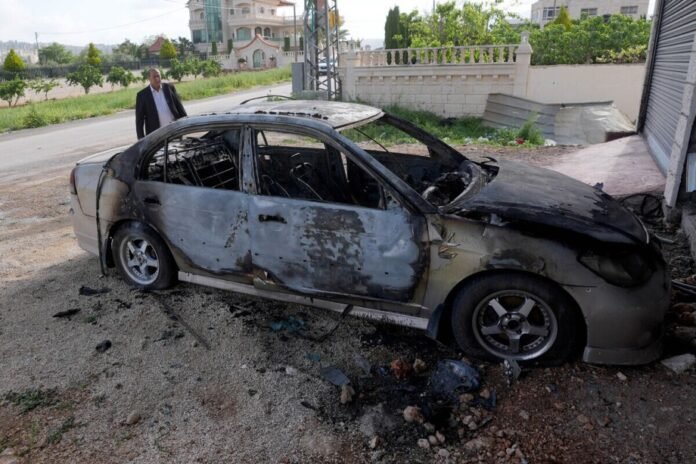
Israeli occupiers attacked a Palestinian man on Friday in the West Bank city of Hebron, local sources said.

Occupiers from the illegal settlement of Susiya assaulted Ahmad Nasser Arabed al-Dajajneh, before burning his vehicle and an excavator, the sources told Anadolu.

The incident occurred in the Wadi al-Rakhim neighborhood.

The attack comes amid a rise in occupier assaults on Palestinian villages and communities in southern Hebron.

The occupied West Bank and East Jerusalem have seen an escalation in Israeli military operations, including raids, arrests, live fire and excessive use of force, alongside increasing occupier attacks on Palestinians and their property.

About 750,000 Israeli occupiers live in 141 illegal settlements and 224 outposts in the West Bank, including around 250,000 in occupied East Jerusalem, which the United Nations considers part of the occupied Palestinian territories.

Since October 2023, Israeli forces and occupiers have killed at least 1,155 Palestinians in the West Bank, injured about 11,750 others and carried out nearly 22,000 arrests, according to Palestinian official data.

READ: Christian nun injured in settler attack in Jerusalem

Women sue the men who used their Instagram feed to create AI porn influencers

0
women-sue-the-men-who-used-their-instagram-feed-to-create-ai-porn-influencers
Women sue the men who used their Instagram feed to create AI porn influencers

A little over a year ago, MG was leading the relatively normal life of a twentysomething in Scottsdale, Arizona. She worked as a personal assistant and supplemented her income by waiting tables on the weekends. Like most women her age, she had an Instagram account, where she’d occasionally post Stories and photos of herself getting matcha and hanging out by the pool with her friends, or going to Pilates.

“I never really cared to pop off and become popular on social media,” says MG (who is cited only as MG in the lawsuit to protect her identity). “I just used it the way most people did when it first came out, to share their lives with the people closest to them.” She has a little more than 9,000 followers—a robust following, but nowhere close to a massive platform.

Last summer, she received a DM from one of her followers. Did she know, the person asked her, that photos and videos of a woman who looked exactly like MG were circulating on Instagram? MG clicked the link and saw multiple Reels of what appeared to be her face superimposed onto a body that looked exactly like her own. The woman in the photo was scantily clad, with tattoos in the same places as MG.

MG was horrified. “If you didn’t know me well, you could very well think they were images of me,” she said. “It was kind of like this reality check that I don’t have any control over my own image.”

She was even more appalled when she discovered that not only were doctored nude or scantily clad photos of her being circulated on the Internet, as she outlined in a recently filed complaint—they were also being used to advertise AI ModelForge, a platform that teaches men how to generate their own AI influencers. In a series of online classes and tutorials, the men allegedly taught subscribers to use a software called CreatorCore to train AI models using photos of unsuspecting young women, posting the resulting content on Instagram and TikTok.

“They provided a whole playbook, including instructions on how to pick the right person so that it’s not someone who can defend themselves, so they all had instructions on what type of women to use and where to get their pictures,” she claims. “It was disgusting on every single level.”

MG is one of three plaintiffs in a lawsuit filed in January in Arizona against three Phoenix men: Jackson Webb, Lucas Webb, and Beau Schultz, as well as 50 other John Does. The lawsuit alleges that the Webbs and Schultz scoured the Internet for photos of unsuspecting young women, then used AI to generate photos and videos of fictional models who look exactly like them, selling such content on the subscription platform Fanvue.

The suit further alleges that for $24.95 a month on the platform Whop, the men sold courses online training other men, including the John Does named in the suit, how to make their own AI-generated influencers based on real women’s photos. The men allegedly created “Blueprints” for how to scrape images from women’s social media accounts and feed them into the generative AI model on CreatorCore, as well as a separate app that would remove the women’s clothes and generate sexually explicit images and videos. Such content, the suit claims, generated millions of views, reportedly generating more than $50,000 in income in one month. (The Webbs and Schultz did not respond to requests for comment.)

This moneymaking scheme, the complaint alleges, preyed on a “harem of indistinguishable AI copies of unsuspecting women and girls,” as well as instructing “predators seeking to prey on” women on social media. According to the suit, in 2025 the CreatorCore platform had more than 8,000 subscribers generating their own AI influencers, resulting in more than 500,000 images and videos.

AI ModelForge is one of many burgeoning companies seemingly looking to capitalize on the widespread use of artificial intelligence by teaching men how to create their own “AI influencers” as a side hustle of sorts. On platforms like X, self-styled entrepreneurs boast about their own patented methods for earning hundreds of thousands of dollars off AI models, luring in young tech-savvy men looking to earn a quick buck.

“The prevalence of this has been shocking to me,” says Nick Brand, who, with attorney Cristina Perez Hasano, is representing MG and the other two plaintiffs. The young men the lawsuit alleges are behind AI ModelForge are “targeting normal, everyday folks that have average social media profiles and social media followings.” One of the more insidious elements of this particular case, he alleges in an interview, is the use of the women’s images to teach other men how to find victims. According to the complaint, the defendants encouraged subscribers to target women with less than 50,000 followers to avoid “legal issues.”

“These boys aren’t just using generative AI to disrobe women—they’re selling the ability to do so to other men and boys, who are then going to use other women’s images to do the same thing,” Brand contends. MG and the other two plaintiffs, he claims, are “the face of a product that is harming other women. It’s like making somebody the face of ICE who has had their parents deported. It’s horrifying.”

Technically, there is a federal law preventing the proliferation of nonconsensual AI-generated porn. The Take It Down Act, which President Trump signed into law in May 2025, makes publishing nonconsensual sexualized AI-generated content illegal, requiring platforms to remove such content within 48 hours when it’s flagged. And most US states, including Arizona, have passed laws banning so-called “deepfake” porn. But the Take It Down Act does not go into effect until May 2026, and state laws tend to be “reactive rather than proactive,” says Arizona state representative Nick Kupper.

Earlier this year, Kupper introduced a bill in the Arizona legislature requiring websites to use automated detection tools, such as age verification or consent forms, to prevent nonconsensual AI content from being uploaded. “Once something’s online, it’s pretty much there forever, even though victims spend millions of dollars trying to take it down. It’s like whack-a-mole—you hit one, another one pops up.”

Currently, if you visit the Linktree page for AI ModelForge, it directs you to what appears to be the same business rebranded as “TaviraLabs,” a Telegram group with more than 18,000 members that advertises itself as “the #1 AI Influencer coaching community.” Additionally, the suit names more than a dozen Instagram accounts used by the defendants to promote AI ModelForge, most of which are still active. The suit details how such accounts continue to post photos of nubile women, fast cars, and expensive watches, writing captions such as, “She’s not my girlfriend, she’s my best paid employee” and “POV: You built her in 20 minutes and she made you $13.2k in the first 45 days.”

Even though MG and the other plaintiffs have continually lobbied Instagram to take their images down, many of them are still up, she claims, because they do not technically violate Instagram’s guidelines surrounding AI-generated content. When reached for comment, a spokesperson for Instagram said it had “extremely strict policies” around both AI- and non-AI-generated nonconsensual intimate imagery, removing accounts that post such content. When provided with a list of a dozen or so accounts thought to be associated with AI ModelForge, the spokesperson said the accounts were under review.

The suit also cites a number of TikTok accounts promoting the men’s business. When reached for comment, a TikTok spokesperson said the accounts were found to violate community guidelines and have been taken down.

MG says the images generated by AI Model Forge are distinct enough from her own photos that she frustratingly has been unable to claim that the accounts are impersonating hers, which is also a violation of Instagram guidelines. “It’s my face, my tattoos, on a different outfit on a slightly different body,” she says. “These are real women being transformed, not just a random AI-generated person.”

Though MG lives in constant fear of people in her lives seeing the pornographic AI-generated images of her, she says filing suit has given her a bit of her agency back. “We were put in this place where our backs were against the wall and I want other women to know you can’t stop living your life,” she says.

Still, what happened to MG, a woman with less than 10,000 followers, has daunting implications for virtually anyone with a remotely public online presence.

“It’s not about being cautious with your image online because everyone posts on social media now,” she says. “Everyone is on LinkedIn. Everyone is on Instagram. And I want people to realize that this could also happen to them.”

This story originally appeared on wired.com.

EU Commission reshuffles top jobs

0
eu-commission-reshuffles-top-jobs
EU Commission reshuffles top jobs


long-stalled reshuffle of senior roles within the European Commission is taking place, thanks to an internal workaround that allows a key official to move from her current post.

As first reported by POLITICO, movement in the upper ranks at the Commission had not proceeded as anticipated because there were not enough roles for all the top officials to move to.

At the center of the reshuffle is Sabine Weyand, head of the Commission’s powerful trade department (DG Trade). According to two Commission officials and a person familiar with the process, the institution solved the problem by creating a new senior adviser position within its Secretariat-General (known as hors-classe) for Weyand, starting a chain reaction of appointments.

According to one of the officials, Weyand will not work at the Secretariat-General but will be sent to the European University Institute in Florence, where she will take up a teaching position while drawing her EU salary.

“It’s a three-way musical chairs game,” one EU official said, describing the cascading nature of the changes.

Weyand’s departure opens the door for Ditte Juul Jørgensen, previously director-general for energy, to take over DG Trade.

Jørgensen’s shift, in turn, creates a vacancy at the energy department, which has been filled by Céline Gauer, the current director-general for reform and investment.

Gauer, considered a close ally of Commission President Ursula von der Leyen, had been viewed as a contender for the Commission’s competition chief role, which ultimately went to Anthony Whelan.

The reshuffle concludes with Gauer’s former post being assigned to Declan Costello, who moves from the Commission’s economic and financial affairs department (DG ECFIN).

This is the first significant reorganization of top posts since von der Leyen took office in 2019.

Via Politico

8 Things You Should Know About Trump’s Effort to “Take Over” the Midterm Elections

0
8-things-you-should-know-about-trump’s-effort-to-“take-over”-the-midterm-elections
8 Things You Should Know About Trump’s Effort to “Take Over” the Midterm Elections

When President Donald Trump attempted to overturn the 2020 election, the institutional guardrails of American democracy held — but just barely.

If faced with the same tests today, those guardrails and the people who held the line would largely be missing, a ProPublica examination found.

At least 75 career officials who once held roles at federal agencies related to election integrity and safety are gone. Two dozen appointees — including many who either actively worked to reverse the 2020 vote or are associates of such people — have been hired to replace them. And once-fringe actors now have access to vast powers.

As the midterms approach, current and former government officials and election security experts expressed concerns that Trump appointees who’ve espoused debunked conspiracy theories about balloting are now in positions to control the narrative around the vote’s soundness.

It’s hard to debunk false claims “coming with the seal of the federal government,” said Derek Tisler, counsel and manager with the Brennan Center for Justice’s elections and government program. “I certainly worry what damage that could do to voters’ confidence.”

Here are some of the key things you should know about the Trump administration’s efforts to, as the president said, “take over” the midterms. Read the full investigation here.

Read More

1. In 2020, institutional guardrails helped to prevent Trump from overturning the election.

Following his defeat in the 2020 election, Trump pushed for federal officials to uncover proof that he had, in fact, beaten Joe Biden at the polls. Election cybersecurity experts with the Department of Homeland Security relayed to Attorney General William Barr that the election fraud claims that they looked into were false. Barr then told the president what he didn’t want to hear: The election had not been hacked.

Barr was one of many federal officials — most of them Trump appointees — who refused to bend to the president’s demands, which only intensified in the weeks leading up to Jan. 6, 2021. Despite the violent uprising at the Capitol on that day, the election results held firm.

2. Less than 18 months into his second term, Trump has dismantled many of those same guardrails.

Since the start of his second term, Trump and his appointees have made significant changes at federal agencies tasked with helping to safeguard elections. In all, at least 75 career officials who’d played important roles in elections work at DHS, the Department of Justice and other agencies have left, been fired or been reassigned, ProPublica found.

In their place are roughly two dozen people Trump has installed in positions that could affect elections. Ten of them actively worked to reverse the 2020 vote, and the rest are associates of those people. In some cases, ProPublica found, officials have been hired from activist groups that are pillars of the election-denial movement.

3. Among the first agencies Trump gutted after returning to office was one that had repeatedly disproved his stolen-election claims.

Officials at DHS’ Cybersecurity and Infrastructure Security Agency had provided research to the first Trump White House that disproved many theories claiming that the 2020 election had been hacked. CISA also played a crucial part in publicly countering these claims by producing a “Rumor Control” website to rebut them.

Then, only weeks into Trump’s second term, DHS leadership put employees focused on countering disinformation and helping safeguard elections on leave. They also froze CISA’s other election security work, which included assessing local election offices for physical and cybersecurity risks. Eventually, all CISA employees specializing in elections were fired or transferred.

A DHS spokesperson told ProPublica that the changes at CISA were in response to “a ballooning budget concealing a dangerous departure from its statutory mission,” which included “electioneering instead of defending America’s critical infrastructure.”

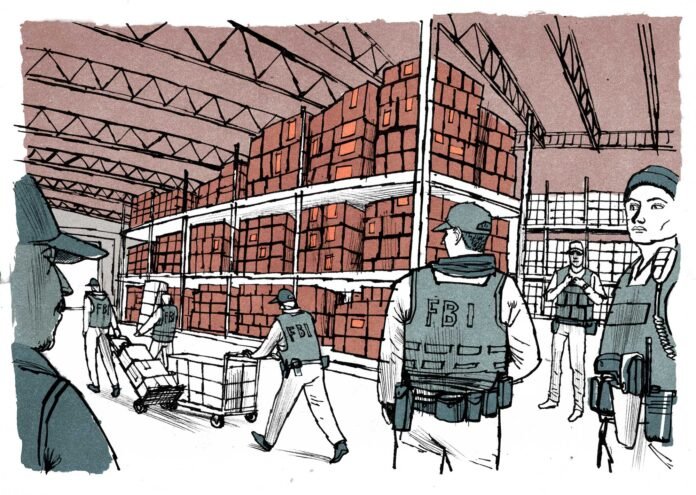
FBI Director Kash Patel dismantled the agency’s public corruption team, which had previously been deployed to help monitor possible criminal activity on Election Day. The Foreign Influence Task Force, which aimed to combat foreign influence in U.S. politics, was also disbanded.

(An FBI spokesperson said the bureau “remains committed to detecting and countering foreign influence efforts by adversarial nations.”)

The voting section of the DOJ’s Civil Rights Division had enforced federal laws that protect voting rights, particularly those that combat racial discrimination. But now, nearly all of the section’s roughly 30 career lawyers have resigned or been moved. Trump then filled the section with conservative lawyers, including at least four who participated in challenging the 2020 vote or have worked with people who helped Trump try to overturn the 2020 election.

5. Trump has replaced ousted career specialists with “Team America.”

In the summer of 2025, after the Trump administration had forced out most of the career specialists, a small group of political appointees — which once called itself “Team America,” according to sources familiar with the matter — began convening at DHS headquarters, looking for federal levers it could pull to realize a March 2025 executive order, in which Trump tried to exert greater federal control over aspects of voting.

Among the core members of the group was David Harvilicz, a DHS assistant secretary tasked with overseeing the security of election infrastructure, including voting machines, and three of his top staffers. As ProPublica has reported, Harvilicz co-founded an AI company with an architect of Trump’s claims about election hacking in Michigan.

Heather Honey, who serves under Harvilicz in a newly created position focused on elections, is a source of the false claim that more ballots were cast in Pennsylvania than there were voters in the 2020 presidential election — a claim Trump cited on the morning of Jan. 6, 2021.

At least 11 administration appointees, including Honey, have ties to the Election Integrity Network, a conservative grassroots organization led by Cleta Mitchell, a lawyer who tried to help Trump overturn the 2020 election. Since moving into government, Honey has maintained close ties to Mitchell’s organization, and she and at least two other federal officials have given its members private briefings.

6. Team America members are using a powerful Homeland Security Investigations tool to try to identify noncitizen voters.

The DOJ has been demanding that states turn over confidential voter roll information, and it has sued around 30 states for this data.

Meanwhile, DHS has urged states to upload their voter rolls to its tool, called the Systematic Alien Verification for Entitlements system.

The goal in both efforts has been to find noncitizens on the voter rolls. But the SAVE tool has come up short, often identifying citizens as noncitizens, as ProPublica has reported, and officials have faced other roadblocks with its use.

More recently, according to two people familiar with the matter, Team America has worked to harness a more powerful tool used by another branch of DHS, Homeland Security Investigations, to increase its ability to search for noncitizen voters and bring criminal charges against them.

In response to questions sent to DHS, Harvilicz and Honey, a DHS spokesperson disputed that they were seeking to use the department’s powers to advantage Trump. In response to questions about their ties to the election denial movement, the spokesperson wrote, “To meet the diverse and evolving challenges the Department faces, we hire experts with diverse backgrounds who go through a rigorous vetting process.”

7. Trump’s head of election security is behind the FBI’s seizure of 2020 election ballots in Georgia.

Attorney Kurt Olsen once worked to try to overturn Trump’s 2020 loss in court and was later sanctioned by judges for making baseless allegations about Arizona elections. He is now Trump’s director of election security and integrity and is the driving force behind the January raid of the election center in Fulton County, Georgia.

Toward the end of 2025, Olsen flew to Georgia to meet with Paul Brown, the head of the FBI’s Atlanta field office, according to people familiar with the matter. Olsen wanted the FBI to seize ballots from the Democratic stronghold, and he gave Brown a report he claimed would justify the extraordinary action. Brown’s team submitted an affidavit to superiors at the DOJ that did not make a strong enough case to move forward with what Olsen wanted. Afterward, Brown was given a choice: retire or be moved to a new office. Brown retired. The raid went forward under his replacement, based on an affidavit that cited information from the report Olsen provided to Brown.

Olsen did not respond to requests for comment.

An FBI spokesperson said that Brown “elected to retire” and that its “work in the election security space is entirely consistent with the law.”

8. The DOJ’s Public Integrity Section could have tried to block the administration’s Georgia voting investigation.

In the months following Trump’s return to office, the DOJ’s Public Integrity Section, which had been responsible for making sure the department’s inquiries weren’t improperly influenced by politics, was eviscerated. Resignations, firings and transfers reduced the 36-person section to two.

Multiple former lawyers for the section said they likely would have tried to block the Fulton County investigation because it lacked strong evidence, had a clear political slant and went against department directives that actions should not be taken “for the purpose of giving an advantage or disadvantage to any candidate or political party.”

John Keller was principal deputy chief of the section from 2020 to 2025 and was acting chief when he resigned in early 2025. He worries that allegations of irregularities in the upcoming election will be handled on a partisan basis.

“Without that review and without apolitical, objective, honest brokers involved in the process, there is a much greater risk for intentional manipulation or inadvertent interference,” Keller said.

Bennett and Eisenkot Lead Netanyahu in Israeli Prime Minister Suitability Poll

0
bennett-and-eisenkot-lead-netanyahu-in-israeli-prime-minister-suitability-poll
Bennett and Eisenkot Lead Netanyahu in Israeli Prime Minister Suitability Poll


Former Prime Minister Naftali Bennett and former Israel Defense Forces Chief of Staff Gadi Eisenkot both ranked ahead of Prime Minister Benjamin Netanyahu in a new suitability-for-prime-minister poll published Friday, as Israel’s opposition parties continue testing new alignments ahead of a future election.

The Lazar Research survey, conducted with Panel4All, found that 46% of respondents viewed Bennett as suitable for the premiership and 44% said the same of Eisenkot, compared with 41% for Netanyahu. In a direct comparison between Bennett and Eisenkot, 33% preferred Eisenkot, 32% chose Bennett, and 35% said they did not know.

The poll also showed mixed results for the new Together electoral list, formed by Bennett and Opposition Leader Yair Lapid. It would still be the largest faction if elections were held now, but its projected strength fell to 28 seats from the 31 seats Bennett and Lapid’s parties had held separately in the previous week’s polling.

The survey found no clear public consensus on whether Eisenkot should join Together. Thirty-four percent said he should accept Lapid’s offer to run as No. 2 on the combined electoral list, 30% said he should continue independently, and 36% were undecided.

The current coalition bloc gained one seat in the poll, reaching 50, while the opposition bloc, excluding Arab parties, fell to 60 seats. Within the coalition, National Security Minister Itamar Ben-Gvir’s Otzma Yehudit rose to nine seats. In the opposition, Yair Golan’s Democrats climbed to 10, while Eisenkot’s Yashar party dropped to 14.

A possible moderate right-wing slate led by former Likud figures, including Yuli Edelstein, Moshe Kahlon, and Gilad Erdan, received 3.5% support, leaving it close to the electoral threshold.

The poll was conducted April 29–30 among 501 Israeli adults and had a 4.4% margin of error.

There’s a lot of hype about Chinese EVs—is any of it true?

0
there’s-a-lot-of-hype-about-chinese-evs—is-any-of-it-true?
There’s a lot of hype about Chinese EVs—is any of it true?

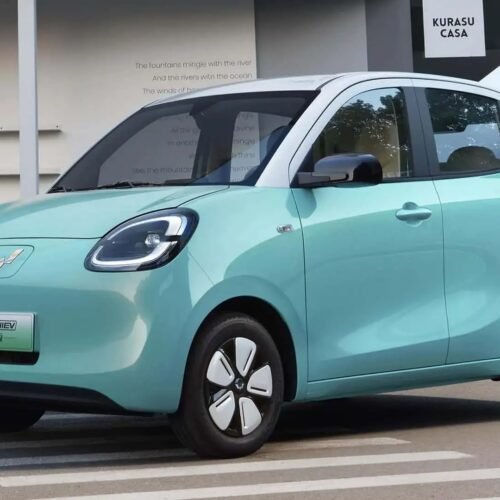
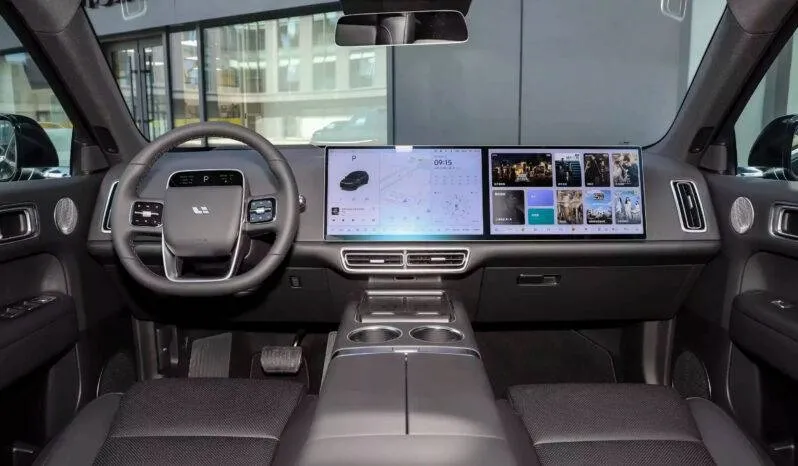
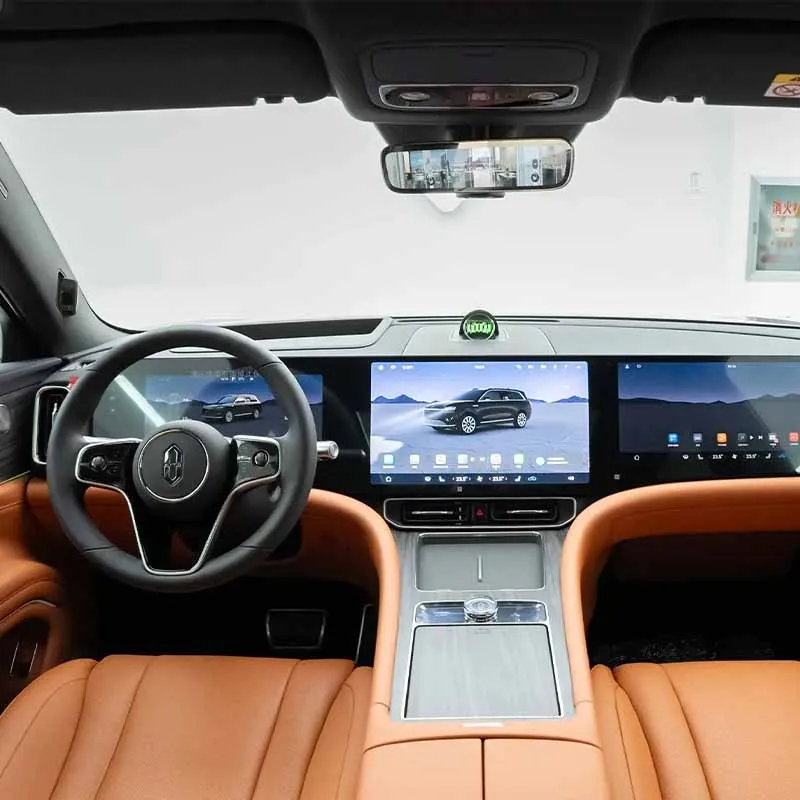
The Beijing Auto Show is currently taking place in China, offering those of us behind the Trump tariff curtain a peek at what’s increasingly being dubbed the world’s most advanced car market. Chinese EVs leave everyone else in the dust, we’re told, with infotainment that makes your smartphone look like a StarTac, range numbers that would make a turbodiesel Audi weep, and charging that might be even faster than filling up with gas, depending on the size of your tank.

As an American, I mostly have to take someone else’s word for that. If there’s one thing Democratic politicians can agree on with Republicans, even now, it’s that they don’t want cars from Chinese automakers on US roads. Toward the end of his administration, President Joe Biden levied a 100 percent tariff on Chinese EVs. Under the Biden and then Trump administrations, Congress passed a law restricting the sale of Chinese-linked connected car software in the US. President Trump has added further tariffs to Chinese imports, making their cars even less competitive here. And just this week, more than 70 Democratic representatives called for maintaining barriers to Chinese cars for both national security and economic reasons.

This puts those elected officials increasingly out of step with popular sentiment on the Internet (I’m using the Ars comments and social media platform Bluesky as my bellwethers). From what I can see, there’s strong appetite for those sweet, cheap Chinese electric vehicles. Headlines like Reuters’ claim that “[f]or the average price of a car in the US, you could buy 5 new Chinese EVs” only reinforce that sentiment.

And why wouldn’t people want them? The average price of a new vehicle in the US in 2025 rose to $50,326 by year’s end. That’s up from ~$40,000 in 2020 and $35,000 in 2015. (Those numbers are for the mean; the medians are slightly less, but the difference is not great.)

Despite the sharp increase in 2020 caused by the pandemic and its associated supply shortages, average sales prices appear to have risen relatively linearly over time, according to Cox Automotive’s data set. And according to Federal Reserve data, wages have also grown steadily (much of it in the lower four quintiles during the Biden administration).

People visit the booths of Mercedes-Benz and Beijing Automotive Group Co., Ltd. during the 2026 Beijing International Automotive Exhibition in Beijing, capital of China, April 26, 2026. The 2026 Beijing International Automotive Exhibition, which kicked off here on Friday, opens for professional visitors from April 26 to 27. The show in China's capital city has set a new global record for scale, spanning 380,000 square meters across two venues, with 1,451 vehicles on display -- 181 of them premieres and 71 concept cars. (Photo by Ju Huanzong/Xinhua via Getty Images)

The auto show might be dead in the US and Europe, but it’s apparently alive and kicking in China.

The auto show might be dead in the US and Europe, but it’s apparently alive and kicking in China. Credit: Ju Huanzong/Xinhua via Getty Images

But for most of the 2010s, interest rates were zero or close to it; today, they very much are not. So financed purchases feel even more expensive than the raw inflation statistics would suggest. And it’s exacerbating as, according to the Fed, American car buyers are borrowing twice as much as they did in 2009, and for longer. Consumer advice orgs like Edmunds might suggest a 60-month loan, but many car buyers are now financing vehicles over 72 or 84 months to keep their monthly payments down.

No wonder buying a car feels increasingly unaffordable.

Some of the concerns are legitimate

Much of the opposition from lawmakers has been framed in terms of protecting domestic jobs. These are not entirely spurious fears: 952,000 people work in motor vehicle and parts manufacturing in the US, according to the Bureau of Labor Statistics. Some work for Ford and General Motors and the cluster of Stellantis brands we still think of as domestic. But European, Japanese, and Korean automakers also employ tens of thousands of workers, not to mention Tesla and the other startups. There’s even more work for suppliers further up the parts chain.

Those jobs are indeed at risk if China were to flood the US with cheap imports. China has been directly subsidizing its green industries to dominate those in Europe and the US (above and beyond the kinds of consumer-facing incentives that the EU and, until recently, the US, also provide). But the advantages of the Chinese car industry go far beyond that. Chinese average wages are a quarter of those in the US, and being able to throw more workers at a factory while still keeping overheads lower than your rivals gives Chinese OEMs a cost advantage. Even more favorable financing terms with suppliers, or not having to pay to license foreign intellectual property, gives them a real boost, according to analysts.

That’s why the European Central Bank blamed Chinese competition for causing 240,000 job losses, many of them in the auto industry. There’s plenty of alarm sounding from industry executives right now, too. Ford CEO Jim Farley, who spent months driving Chinese cars daily, said last week that there’s enough excess capacity in China’s car industry to easily swallow the 12 million or so cars currently bought each year in the US. And Koji Sato, outgoing president and CEO at Toyota, warned last month that Japanese automakers were doomed unless they could learn to match the speed of innovation of their new Chinese competitors.

The other stated reason for blocking Chinese cars is the threat to privacy and national security. Again, there are valid concerns here. Just ask the Chinese government, which stopped allowing Teslas to drive near its military bases and other sensitive locations more than five years ago, although that ban was recently dropped after Tesla began complying with Chinese data-security rules. Among those rules? For almost a decade, Chinese automakers have had to hand over copious amounts of data on their customers’ driving habits to their government.

Are we getting the whole story?

For all the breathless coverage we read (or see on TikTok or Reels, perhaps), it’s very rarely mentioned that those Chinese EVs aren’t nearly as cheap when they’re imported into Europe. Yes, they’re undercutting the competition, but once the cars have been specced to meet European expectations, they might cost more than double their Chinese retail price. So the cars are a few thousand euros or pounds cheaper than established alternatives, but they’re hardly the bargains the Internet has promised you.

Parked BYD Co. Dolphin Surf electric vehicle at the model launch event in Paris, France, on Wednesday, May 21, 2025. The launch of the Dolphin Surf, a fully-electric hatchback, will likely strengthen BYD's foothold in Europe at a time when Chinese EV makers have been losing momentum on the continent. Photographer: Cyril Marcilhacy/Bloomberg via Getty Images

The BYD Dolphin might start at under $14,000 in China, but in the UK, the cheapest one will cost twice that—before you factor in the 20 percent VAT. Just something to consider.

The BYD Dolphin might start at under $14,000 in China, but in the UK, the cheapest one will cost twice that—before you factor in the 20 percent VAT. Just something to consider. Credit: Cyril Marcilhacy/Bloomberg via Getty Images

Did I mention that those Chinese prices have been kept artificially low thanks to a price war among China’s hundreds of car companies, driven by government policies that incentivized overproduction?

That price war is mostly over now at the behest of the Chinese government, but the overproduction problem is quite real: China has the capacity to build about 45 million cars a year; last year, it built about 34 million cars, and fewer than half were sold domestically. The flood of Chinese car exports to the rest of the world does not stem from some kind of altruistic intention from President Xi Jinping to increase global mobility.

Those inexpensive cars are also cheap because they make do with small batteries, and the range numbers are based on China’s CLTC test. That bears little resemblance to the EPA’s testing, which remains the closest approximation of real-world efficiency for EVs.

Let’s be clear: Short-range EVs have been a sales disaster in the US. It’s ludicrous to pretend otherwise. This country’s car buyers’ obsession with being able to drive 300 miles uninterrupted, then stop for five minutes before covering another 300 miles, is undeniable. It’s also why every automaker selling a car here now puts such a large, heavy, and expensive battery pack between the wheels of their respective EVs. There’s a reason the Model S made as much of an impact as it did in 2012—200 miles of range was unheard of. Likewise, when the Chevy Bolt hit the street in early 2017 with a legit 238 miles for a fraction of the price, it was a significant achievement.

The small, short-range EVs that predate or co-existed alongside those—let’s call them second-gen lithium-ion EVs that began with the Model S—were compliance cars, offering maybe 150 miles of range on a good day. Unsurprisingly, America turned its nose up at them. The gas-powered Smart Car didn’t even suffer from an EV’s long recharging times or higher purchase price, and no one can credibly pretend those were a sales success here, either.

The marketeers might have pushed people from sedans to SUVs, but they’re not responsible for an environment in which every street has to be wide enough for two fire engines—that’s on your local fire department and the American Association of State Highway and Transportation Officials.

Policies can push things the other way. Kei cars are popular in Japan not because of an inherent preference for tiny cars but because you can’t buy a car in Japan without having a parking space for it, and a tiny Kei-sized space is much cheaper than one large enough for a compact car by European, American, or Chinese standards. I recently contacted the National Highway Traffic Safety Administration to see if there’s been any movement on the Trump edict to bring them to US roads but have not heard back for a couple of weeks now.

This is what you want?

Li Auto interior.

Li Auto L6 interior.

Nio interior.

NIO ET9 interior.

Zeekr interior

The Zeekr 9X interior.

An Aito M9 inteiror

The interior of the Seres AITO M9.

Then there are the cars themselves. Again, I’m mostly judging customer sentiment by 12+ years of reader comments and from what people post on social media, but I had thought we agreed that car interfaces that rely almost entirely on touchscreens are not a positive industry trend. They save OEMs time and money, but a touch interface is unequivocally less safe than buttons, which have to be individually homologated and individually assembled, and in this smartphone age, I certainly don’t think the front seat passenger needs a whole extra screen just for them.

But that’s what Chinese OEMs are offering, and that’s what we’re told rivals the invention of the presliced breadloaf in the grand discussion of “best things.” Think of every trend in the automotive industry of the last decade that you hate, and you’ll probably find plenty of it baked into new Chinese EVs. (On the other hand, LED headlights that also work as movie projectors are kinda cool—not gonna lie.)

Are we truly crying out for even more of a smartphone experience in our cars? I don’t know about you, but when I’m behind the wheel, it’s a guaranteed time of day when I can’t and won’t be doomscrolling. If the point is to give me something to do while I’m charging, why won’t the phone I already have work?

And that’s before the vehicles are crammed full of AI. Chinese automakers have become a new vanguard in the nation’s latest five-year plan, with a “revolution” spanning design and production, as well as in-car features like letting you give vague, natural-language directions instead of specifying a specific destination.

One might think that last bit of news would land like a lead balloon among communities with a high degree of disgust for AI. Then again, perhaps not. Principles like solidarity with workers or a commitment to road safety or being distrustful of AI are easy to maintain in the abstract if all they require is the occasional post on the Internet or social media.

Shocking Brady Bunch Secret Finally Spills After Decades

0
shocking-brady-bunch-secret-finally-spills-after-decades
Shocking Brady Bunch Secret Finally Spills After Decades


More than 50 years after The Brady Bunch made them household names, two of its biggest stars are finally admitting what fans always suspected — things nearly turned romantic behind the scenes.

Christopher Knight is breaking his silence about his longtime connection with former TV sister Eve Plumb, revealing there was a real spark… but the timing just never worked.

And yes — they even went on a date.

Plumb, now 68, recently dropped the bombshell that shortly after the show wrapped in the 1970s, the pair tested the waters. But instead of fireworks, it ended with laughs.

“It was sweet… but we were already too good of friends,” she admitted.

Now Knight is opening up — and his version only adds more intrigue.

“She always had her claim on me,” Knight confessed in a new interview. “But I wasn’t there.”

That’s right — while Plumb may have been ready for something more, Knight says he simply didn’t see it at the time. Growing up on set from ages 10 to 16, he says his entire world revolved around the Brady cast, making emotions complicated.

By the time he finally caught on? It was too late.

“Right as I might have been ready… we were off the air,” he revealed.

Talk about missed timing.

Knight now believes their almost-romance may have been doomed from the start — and says it might be for the best.

“It wasn’t destined,” he admitted. “And I’m glad.”

Why? Because turning that bond into a real relationship could have cost them something even more valuable — their decades-long friendship.

“Exes don’t usually stay close,” he pointed out.

Instead, the two have remained tight for decades, still keeping in touch regularly — even hopping on monthly Zoom calls with their spouses.

Plumb has been married to Ken Pace since 1995, while Knight tied the knot with Cara Kokenes a year later.

Looking back, Knight summed up their almost-love story with a striking image:

“It’s like getting a kiss on two different trains right as they separate.”

A near-romance frozen in time — and one that fans of America’s most famous TV family are only just fully discovering.

War in the Gulf and on US free speech

0
war-in-the-gulf-and-on-us-free-speech
War in the Gulf and on US free speech

Brent crude oil surged to US$126 (£94) a barrel after US president Donald Trump announced that he was willing to prolong the blockade of Iranian ports for “months if needed”. This conflict has been billed as a matter of who can absorb the most pain. And Trump is betting on it being the US.

Trump has been rather bullish in his public pronouncements of late, declaring that Iran is in a “state of collapse”. Reports that the country’s inflation rate has risen to 50% from 40% since the war began at the end of February would seem to back this assessment.

The damage done to Iran’s economy will be made worse if the country is forced to shut down oil production due to a lack of storage capacity, something Trump is also confident about. He told Axios: “The blockade is somewhat more effective than the bombing. They are choking like a stuffed pig.”

Now in its eighth week, the conflict is having knock-on effects throughout the region and beyond. Perhaps the most telling sign this week was the announcement by the United Arab Emirates (UAE) that it was quitting Opec, the oil producers’ cartel.

Adi Imsirovic, an energy expert at the University of Oxford, believes that while this decision has been brewing for some time – UAE and Opec’s de facto leader, Saudi Arabia, are at loggerheads over the civil war in Yemen and conflicts in Sudan and across the Horn of Africa. But the war has sharpened political sensibilities across the Gulf. Abu Dhabi has been unhappy about the lack of support from the Gulf Cooperation Council (GCC) after being on the receiving end of intense bombardment from Iran.

Meanwhile, it has chafed under production quotas imposed by the cartel, which it sees as being well short – unfairly so – of its production capacity. When the Strait of Hormuz opens and countries begin to restock their reserves, UAE believes it can cash in on increased demand.

For Imsirovic, the episode reveals something deeper: as the transition by much of the world to retool their economies away from dependence on fossil fuels, big producers like the UAE worry about being left with oil in the ground that nobody wants. Hence the desire to pump out more oil without being constrained by Opec quotas.


Read more: UAE’s departure from Opec tells a story about the limited future of oil production


Another question inevitably raised by the Middle East conflict and the chokehold that the Strait of Hormuz has over energy markets is why nobody has figured out an alternative route. After all, Iran has been threatening to close the strait whenever threatened since the early 1980s.

The fact is, various countries have figured out an alternative route, writes David B. Roberts of King’s College London; it’s just not big enough to cope. The East-West Pipeline (or Petroline) can pipe oil across the Saudi peninsula at a rate of 5-7 million barrels a day. This compares with an estimated 20 million barrels that transit the Strait of Hormuz in normal times.

A map showing the East-West Pipeline in Saudi Arabia and the Abu Dhabi Crude Oil Pipeline in the United Arab Emirates.

The East-West Pipeline in Saudi Arabia and the Abu Dhabi Crude Oil Pipeline in the United Arab Emirates are two crucial Hormuz workarounds. Peter Hermes Furian / Shutterstock

The Abu Dhabi crude oil pipeline, which takes oil from the Habshan onshore field in Abu Dhabi and runs to Fujairah on the Gulf of Oman handles less than 2 million barrels per day. Both pipelines have been damaged by Iran during the war. And both were operating before the Strait of Hormuz was closed, so the idea that these pipelines can replace the strait is not feasible.


Read more: What alternatives do Gulf states have to the Strait of Hormuz?


Trump assassination attempt

It was shocking and depressing to read of another apparent attempt on the US president’s life – the third in two years – at the White House Correspondents’ Dinner on Saturday. It was the first of these dinners that Trump had attended since 2011 when he was famously the butt of Barack Obama’s jokes in the by-now familiar comedy “roast” that is traditionally a highlight of the evening.

A man armed with two guns and a knife attempted to enter the ballroom where the dinner was being held, so the principals were evacuated and the dinner broke up in disarray. It later emerged that the would-be assassin had written a “manifesto” in which he revealed his hatred for the US president.

White House press secretary Karoline Leavitt blamed what she called “hateful and constant and violent rhetoric directed at President Trump”, which she said had “helped to legitimise this violence and bring us to this dark moment”. She pointed the finger at the US Democrats and “some in the media”.

White House press secretary addresses the press in the Press Briefing Room.

‘You’re part of the problem’: White House press secretary berated the media for creating a politically polarising climate. EPA/Jim Lo Scalzo

Seeking to link the assassination attempt to political rhetoric is a pretty direct attack on the first amendment to the US constitution, which protects free speech, writes Eliza Bechtold, a US constitutional law expert at the University of Oxford. The Trump administration has a track record of lionising the first amendment when it suits them (the January 6 US Capitol rioters were characterised by some as peaceful protesters exercising first amendment rights). But attacking the media or the Democrats for their criticisms of Trump’s administration is, writes Bechtold, a denial of everything the first amendment was designed to do.


Read more: Trump uses assassination attempt to justify his assault on first amendment rights to free speech


But not everyone in Trump’s Maga movement is now singing from the authorised songbook, writes Clodagh Harrington of the University of Cork. First it was Marjorie Taylor Greene, once a fervent Trump fan in the House of Representatives, now a bitter critic – who jumped ship in 2025, largely due to what she sees as his mishandling of the Epstein files.

More recently, it has been former Fox host Tucker Carlson, who has gone from introducing Trump at election rallies in 2024, to apologising to the US public for “misleading” them into voting for Trump. For Carlson, it’s the Iran war that flies in the face of one of Trump’s core election promises: no new wars.

Mind you, Harrington notes, Carlson’s move may also be dictated by a dream to launch his own presidential run in 2028. A TV personality running for president? Well, it has been known.


Read more: Is Trump losing the support of his Maga base?


Asian currencies wilting in the Iran war’s heat

0
asian-currencies-wilting-in-the-iran-war’s-heat
Asian currencies wilting in the Iran war’s heat

TOKYO – India and Indonesia aren’t often at the center of the global financial zeitgeist. But as the rupee and rupiah lead Asian currencies down and down, events in Mumbai and Jakarta speak to the ways the Iran war is imperiling economies everywhere – and at an accelerating rate. 

In the two months since bombs first fell on Tehran, Asian governments have been racing to sandbag financial systems from energy supply shocks. They’ve restricted fuel use, amped up subsidies, made the biggest work-from-home pivot since the Covid-19 crisis and dispatched diplomats to secure other oil sources.

Yet as the conflict stretches into a third month and oil trades above $120 per barrel, the rupee, rupiah and currencies of nations with chronic fiscal and current-account deficits are already short of options. And a sense of panic is setting in as the giant game of chicken between the US and Iran plays out.

At the Reserve Bank of India headquarters in Mumbai, officials are trying to put a floor under the exchange rate. This week, the rupee fell to another record low — this time hitting 95.34 to the US dollar. The drop could accelerate if the RBI can’t stop foreign funds from fleeing.

Topping the RBI to-do list is curbing excessive volatility and taming speculative bets. The RBI, for example, has told banks to limit their foreign currency exposure to a maximum of US$100 million at the end of each trading day. It means Indian banks will have to cut dollar holdings.

Governor Sanjay Malhotra’s team is tapping the RBI’s massive foreign exchange reserves — which topped $700 billion in late April — to support the rupee in the spot and forward markets.

The RBI is tightening regulations on so-called non-deliverable forwards (NDFs). Effectively, it stops banks from offering related derivative contracts to clients, limiting investors’ latitude to bet against the rupee in overseas markets.

The RBI is getting granular as well. It slapped curbs on rebooking previous foreign exchange contracts. This alone could force the unwinding of as much as $50 billion in arbitrage trades.

In Jakarta, Bank Indonesia is stepping up efforts to defend the rupiah. BI Governor Perry Warjiyo’s team is scrambling to tighten monetary policy, engage in aggressive market intervention and restrict foreign exchange management.

Clearly, the rupiah being back at the 17,000 level versus the US dollar for the first time since the 1997-98 Asian financial crisis is its own warning sign.

The downward pressure is coming from US dollar strength, capital outflows, rising energy costs and renewed worries about fiscal sustainability. The latest risk is that foreign investors are selling Indonesian government bonds.

As Warjiyo said on April 22: “Bank Indonesia is prepared to implement a further strengthening of monetary policy as needed to maintain the stability of the rupiah exchange rate and keep inflation in 2026 and 2027 within the target range.”

Much depends on how long the Middle East war drags on. “If the Iran war ends soon,” says Jason Tuvey at Capital Economics, “we think there’s a good chance that BI will lean towards cutting rates towards the end of the year.”

Yet that “if” is getting bigger by the day. In the interim, currency traders are pricing in around a 33% chance that the rupiah weakens to 18,000 over the next three months. Bets on a weaker Philippine peso are also taking on a life of their own.

Clearly, “more credible signs of de-escalation are needed to ease depreciation pressures,” says Lloyd Chan, a strategist at MUFG Bank.

Risks from the stalled ceasefire, a dual blockade on the Strait of Hormuz and surging inflation mean “Asian currencies are far from out of danger — and a ceasefire collapse could trigger a recessionary spiral,” Ashwin Binwani, founder of Alpha Binwani Capital, tells Bloomberg. “The structural reality is brutal for most Asian currencies.”

Binwani thinks the rupiah and peso are the “most vulnerable” as the war continues to drive commodity prices higher.

Not that the weak yen isn’t grabbing headlines. The yen surged by as much as 3% on Thursday, the most in a day in over three years, amid reports Tokyo intervened for the first time since 2024 to stabilize the falling currency.

Japanese Finance Minister Satsuki Katayama said the time to take “decisive action” had arrived, her strongest signal yet of potential intervention to prop up the sagging yen. With the yen flirting with the psychologically important 160 level, it’s not clear if it’ll work.

“Past intervention has had only a temporary effect on the yen if the underlying fundamentals haven’t ​shifted,” says Kristina Clifton, senior currency strategist at Commonwealth Bank of Australia. “Continued yen depreciation may prompt several rounds of intervention, which in turn would cause larger two-way ‌swings” in the dollar-yen rate.

All this means “the key region to watch is Asia, where dependence on physical energy deliveries from the Middle East is highest,” notes Elliot Hentov, a strategist at State Street Investment Management.

Hentov explains that early signs of inflation pass-through are now emerging, with the Philippines the first emerging-market central bank to tighten policy.

Further rate hikes across the emerging markets appear likely, though there remains a case for central banks to look through near-term inflation toward the eventual growth slowdown—and accompanying disinflationary forces — and stay on hold. “It is at this juncture that scenario outcomes and policy responses diverge most materially,” he says.

The bottom line, Hentov notes, “re-escalation of war is still possible, but the core risk is an elongated diplomatic process where energy flows remain blocked. Risk assets globally do not seem priced according to the probabilities of sustained disruption and mounting economic costs in energy-sensitive regions and sectors.”

A big question is what happens with the dollar. In 1997, a multi-year dollar rally made Asia’s currency pegs impossible to maintain.

First, Thailand devalued the then-pegged baht. Next Indonesia. Then South Korea. All three went hat in hand to the International Monetary Fund and other agencies for giant bailouts totaling $118 billion. The turmoil also pushed Malaysia and the Philippines to the brink.

Since then, emerging markets have been very sensitive to the specter of the Fed hiking rates. Case in point: the 2013 Fed “taper tantrum.”

Market jitters over mere hints that the Fed might be hitting the brakes prompted Morgan Stanley to publish a “fragile five” list that no emerging economy wanted to be on. The original group: Brazil, India, Indonesia, South Africa and Turkey. 

Now, a surging dollar is complicating Asia’s development plans anew. History’s greatest magnet is luring capital from every corner of the globe, hogging liquidity needed to finance budget deficits, keep bond yields stable and support equity markets.

The Iran war has the dollar’s wrecking-ball tendencies bursting back onto the scene. Despite the US national debt nearing $40 trillion, high inflation and US President Donald Trump’s tariffs, tax cuts and profligate spending, the dollar is rising — against all odds and economic fundamentals.

Despite Trump’s policy chaos, the US bond market is still acting as a safe haven, says David Lubin, an economist at Chatham House.

“As anxiety levels rise during a crisis, institutional investors and governments flock to dollar-denominated assets because US capital markets are easier to trade in and out of than any others; and because the ability of the Federal Reserve to act as lender and liquidity-provider of last resort is second to none.”

But, Lubin adds, “global trust in the US seems to be eroding, both before and during this year’s war on Iran.”

So, he notes, “it’s worth asking whether the dollar’s safe-haven status is showing any signs of ill-health. The performance of US asset prices may say less about the dollar’s status than it does about the relative insulation of the US economy from the crisis.”

The quick answer is no, “but it would be wrong to conclude that all is well, for two reasons,” Lubin says. “In the first place, the performance of US asset prices may say less about the dollar’s status than it does about the relative insulation of the US economy from the crisis. And second, China’s capital markets are emerging really very well from the current crisis, which might give Washington some pause for thought.”

The same goes for the intensifying drama at the Fed. In mid-May, Trump will get his long-stated wish to replace Jerome Powell as Fed chair.

Though Trump 1.0 named Powell to the job in 2018, the two men have been at loggerheads during the Trump 2.0 era. Yet as Trump’s pick to replace Powell takes the helm, Kevin Warsh will be under extreme pressure to cut rates – and fast.

Warsh, though, is sure to encounter strong pushback from Fed board members – including Powell, who’s staying on as a governor – with inflation heating up. In March, the personal consumption expenditures price index, the Fed’s preferred inflation barometer, increased at a 3.5% rate year-on-year.

“Warsh would be a more dovish voice” who “would lobby for an aggressive reduction in the size of the Fed’s balance sheet, and would attempt to make significant changes to the Fed’s communication strategy, says economist Nancy Vanden Houten at Oxford Economics.

“TheFed chair can’t make such changes unilaterally, however, and we expect the need for Warsh to build consensus would limit the extent of changes in policy or how the Fed communicates.”

Asia will be on the frontlines of this standoff between Fed doves and hawks. Yet it’s already there when it comes to fallout from the US-Israeli war in Iran. Asia’s currencies are flashing red warning signs for the global economy, which could presage disaster if the war in Iran reignites and fuel flows remain blocked for much longer.

Follow William Pesek on X at @WilliamPesek

0FansLike
0FollowersFollow
0FollowersFollow
0SubscribersSubscribe
- Advertisement -
Google search engine

Recent Posts