She Opposed His Plan for a Blockchain City. Now He’s Bankrolling Her Primary Opponent.
Five years ago, a Nevada state senator helped kill a crypto tycoon’s vision of a blockchain city in the Reno desert. Now, that lawmaker is running for higher office, and the crypto mogul is bankrolling her primary opponent to the tune of millions.
The battle playing out in the state attorney general’s race is one example of many of the crypto sector trying to elect industry-friendly officials. In Nevada, it’s also a story of an eccentric multimillionaire whose money threatens the political ascent of a woman who helped deny his dream.
The spending by crypto entrepreneur Jeffrey Berns is “meaningful money, especially at this early stage in the primary,” said Kenneth Miller, an assistant professor of political science at the University of Nevada, Las Vegas. “And we don’t know if this only represents an initial investment and will be followed up by more.”
Spending Big
Berns has donated at least $2.5 million since 2023 to a political action committee controlled by Nevada State Treasurer Zach Conine, who is running for attorney general against state Senate Majority Leader Nicole Cannizzaro.
That is more than twice the $1.2 million that Conine received from individual donors to his personal campaign account over the same period.
After receiving money from Berns, Conine’s PAC in turn donated more than $1.8 million to a newly created campaign outfit called Safe and Strong Nevada PAC, which rolled out a website and video advertisement attacking Cannizzaro.
Both Cannizzaro and Conine are Democrats on the June 9 primary ballot. They have settled on similar campaign themes as fighters who will take on President Donald Trump — a reliable message in an election year with an energized Democratic base.
“It is not typical for a campaign to be almost entirely propped up by one wealthy megadonor.”
Neither candidate has made cryptocurrencies a focus of their campaigns. Yet Berns’s donations make him by far the largest donor to Conine’s campaign organizations. Miller, the political science professor, said the scale of Berns’s donations reflected a larger trend.
“All semblance of constraints on political donations have eroded away in the past couple decades, and the amount of money it takes to be impactful in a Nevada primary election is well within reach for a lot of wealthy individuals,” he said. “Campaigns around the country often have one or two super PACs involved that are funded by one or just a handful of people. It is not typical for a campaign to be almost entirely propped up by one wealthy megadonor, but it does happen sometimes.”
A Dream Denied
While Berns did not respond to a request for comment on why he is intervening in the race, he has a tangled history with Cannizzaro. Five years ago, she helped kill his vision of building what his company called a “smart city” near Reno.
Berns was formerly a California plaintiff’s lawyer who won huge settlements taking on the banking industry. He was also an early investor in the Ether token, a leading competitor to bitcoin.
His multiplying fortune allowed him buy waterfront properties in ritzy destinations including Lake Tahoe, where he bought and sold a $47.5 million mansion, and Turks and Caicos, where he recently listed for sale at $35 million a beachfront property that was once featured on the Netflix reality dating show “Too Hot to Handle.”
He also founded a company called Blockchains, which in 2018 purchased 67,000 acres of land in Storey County in northern Nevada near the Tesla “Gigafactory” for the sum of $170 million.
Storey County has flexible development rules, but not flexible enough for Berns. Instead, he and his company wanted to build an entire city running on blockchain that operated independently from the county.
“I want to create a place where we can rethink things. Where we can democratize democracy,” Berns told the BBC.
Berns won the support of a critical backer: then-Nevada Gov. Steve Sisolak, a Democrat who endorsed the idea in his 2021 State of the State address.
Opponents noted that Berns had donated tens of thousands of dollars to Sisolak and smelled an end-run around regular democratic governance. They also raised concerns about more mundane issues such as lost tax revenue and water rights.
The idea would have needed approval from the Nevada Legislature. Berns’s push for legislative approval was damaged by the revelation that he was being sued by his children’s nanny for allegedly trying to force her into a sexual tryst with him and his wife. Berns said the plaintiff was a disgruntled former employee, and he settled the case the next year without admitting wrongdoing, according to the Reno Gazette-Journal.
Despite Sisolak’s support, the smart city idea was ultimately doomed to die the bureaucratic death of a study committee. One of the key players who helped kill the proposal was Cannizzaro, the state’s first female Senate majority leader.
A lobbyist involved in the discussions confirmed that Cannizzaro was instrumental in shelving the idea. In a statement, her campaign also said that she opposed the idea.
“Like nearly all of her legislative colleagues in both parties, Majority Leader Cannizzaro was extremely skeptical of the idea of letting private corporations run their own governments and siphon off millions of taxpayers’ dollars,” said Peter Koltak, a campaign spokesperson. “Ultimately, she informed the Governor’s staff and the bill’s supporters that there wouldn’t be legislative support for the concept.”
Berns was so disappointed by the process that his company pulled out of the study process, prompting its staff to declare that there was no point in exploring the idea further.
Berns Shifts Gears
While Berns vastly expanded his wealth by investing in cryptocurrency, he is not a household name in the industry. Many of the wealthiest crypto companies and venture capital firms have backed a national super PAC called Fairshake that has hundreds of millions to spend on federal elections. Berns has not donated to that effort, federal campaign finance records show.
Instead, he has focused his giving on Nevada, supporting politicians on both sides of the aisle. Berns gave $5,000 to Republican Gov. Joseph Lombardo in 2024 and $250,000 to the Democratic Party of Washoe County in 2022, campaign finance records show. He also gave $5,000 to Cannizzaro in 2020 before the smart city proposal died in the legislature.
Despite the pushback the smart city proposal drew, it has not made him a particularly controversial donor.
“In Las Vegas, not a month goes by without an artist’s rendering of a proposed resort, arena, or other project popping up,” said Miller. “Some of them happen, and many of them don’t. I don’t expect that the smart city proposal left much of an impression on many Nevada voters.”
While neither Conine nor Berns responded to questions about the latter’s donations, Conine has signaled that he is friendly to crypto.
During the smart city debate, Conine promoted the idea of allowing government entities to accept payments in stablecoin. In 2024, he attended an event sponsored by a crypto industry trade group.
Cannizzaro, for her part, does not appear to have staked out any major public positions on the crypto industry. Since the start of 2024, she has raised $2.2 million between her personal campaign account and a PAC she controls. Her campaign said she will not be deterred by Berns’s spending.
“Leader Cannizzaro has always defended Nevada from big corporations and wealthy special interests, and an unaccountable tech billionaire dumping his millions into this race is certainly not going to stop her,” said Koltak, the spokesperson.
Babies Are Bleeding to Death as Parents Reject a Vitamin Shot Given at Birth
Reporting Highlights
An Essential Shot: Vitamin K shots, which help the blood to clot, are one of three key interventions for newborns, along with an antibiotic eye ointment and the hepatitis B vaccine.
Increasing Rejections: The government doesn’t track vitamin K rejections, but hospitals have seen a rise in parents opting out of the shots for their newborns, often driven by unfounded fears.
Troubling Data: Hundreds of children die each year from spontaneous bleeding in the brain, a common result of vitamin K deficiency, suggesting that many related deaths go unreported.
These highlights were written by the reporters and editors who worked on this story.
They entered the world the way babies should, with piercing cries announcing their arrival. They passed their newborn screening tests. Some made it to their 2-week wellness visits without concern.
Then, without warning, their systems began to shut down. A 7-week-old boy in Maryland developed sudden seizures. An 11-pound girl in Alabama stopped breathing for 20 seconds at a time. A baby boy in Kentucky vomited before becoming lethargic. A brown-haired girl in Texas, not yet 2 weeks old, bled around her belly button.
Desperate to save them, records show, doctors inserted tubes into their airways and hooked them up to IVs. They ordered blood transfusions. They spent half an hour trying to resuscitate one boy until his parents told them they could stop. They shaved another boy’s soft locks to embed a needle directly into his skull to reduce the pressure in his brain.
None of it was enough.
At the morgue, the babies were brought in with their diapers and blankets and with their hospital ID bracelets still wrapped around their tiny ankles. The pathologists’ findings were like those you would typically see in ailing adults, not newborns — the kind of bleeding seen during strokes or brain tissue loss similar to what happens when radiation is administered to treat cancer.
Their autopsies, which took place over the last several years, all came to the same conclusion: The deaths were caused, in whole or in part, by a rare but potentially fatal condition known as vitamin K deficiency bleeding.
In almost every case, the babies’ deaths could have been prevented with a long-standard vitamin K shot. But across the country, families — first in smatterings, now in droves — are declining the single, inexpensive injection given at birth to newborns to help their blood clot.
Many of them are doing so out of a well-meaning but ill-informed abundance of caution. In the hopes of safeguarding their newborns from what they see as unnecessary medical intervention, they have shunned fundamental and scientifically sound pharmaceutical intervention. The trend is also fueled by a contradictory pairing: families’ fierce desire to protect their babies and a cascade of false information infused into their social media algorithms.
Although it is not a vaccine, the vitamin K shot has been swept up in the same post-pandemic tide that has led to a drop in key childhood vaccines, including for measles and whooping cough.
The vitamin K shot is one of the three main interventions, along with the hepatitis B vaccine and an antibiotic ointment in the eyes, that newborns typically receive before leaving the hospital. Leading American institutions and the World Health Organization recommend that newborns get the shot.
In December, the Centers for Disease Control and Prevention stopped recommending that all newborns get the hepatitis B vaccine, which has been highly effective at fighting a virus that can lead to lifelong infections and liver cancer. A federal judge in March temporarily blocked the revised childhood vaccination schedule that included that recommendation. Some families are also rejecting the eye ointment.
Two weeks ago, at a House subcommittee hearing, Rep. Kim Schrier, D-Wash., pressed Health and Human Services Secretary Robert F. Kennedy Jr. to reassure parents that the vitamin K shot is safe. He refused and pushed back.
“I’ve never said, literally never said, anything about it,” Kennedy said.
“That’s exactly the point,” responded Schrier, who is a doctor. “You don’t say anything about it, but the doubt you’ve created about all of medicine and science is causing parents to make dangerous decisions.”
An HHS spokesperson did not respond to questions but in an email blamed the administration of former President Joe Biden for the rise in parents rejecting vitamin K shots. “Vitamin K at birth,” the spokesperson added, “remains the standard of care.”
Meanwhile, families continue to be inundated with advice from self-proclaimed experts using medical terms incorrectly and misunderstanding science to convince parents that getting the shot could put their newborns at risk of grave harm.
Nearly a century’s worth of research and medical advancements shows the opposite to be true.
Babies who don’t get the vitamin K shot, research shows, are 81 times more likely than those who do to develop late vitamin K deficiency bleeding, where in many cases oxygen can’t reach their brains and blood pools around their skulls. Perhaps most alarming is that, according to the CDC, 1 in every 5 babies with vitamin K deficiency bleeding will die.
Determining precisely how many babies have died or suffered severe brain damage because of a lack of vitamin K is difficult. State and federal agencies don’t track data around vitamin K injection refusal or subsequent bleeding, which impedes their ability to quantify and track outcomes, including death.
The number of deaths directly attributed to vitamin K deficiency bleeding appears to be small — fewer than a dozen annually — but has started to climb in recent years, according to death certificate data from federal and state agencies.
But those numbers capture only a fraction of deaths, which often are classified only by other, more immediate causes, such as bleeding in the brain. In 2024, for example, more than 700 newborns died from spontaneous bleeding in their brains, which could have been complicated by liver disease or prematurity. Still, six medical specialists and one official at the CDC said a meaningful portion of those deaths likely were caused by vitamin K deficiency. Many more babies survive the bleeding but suffer massive brain bleeds and lasting injuries.
“A lot of the providers don’t have this on their radar,” said Dr. Jaspreet Loyal, a pediatric hospitalist at Yale Medicine. “The lack of data is almost acting like a reassurance for families that this risk is worth taking.”
Although it is difficult to quantify deaths attributable to vitamin K deficiency, there is clearly a large jump in the number of parents declining the vitamin K shot. Some hospitals have seen refusal rates more than double. A national study of more than 5 million births, published in December, found that the rate of U.S. babies not receiving vitamin K at birth topped 5% in 2024 — up 77% from 2017.
More Newborns Are Not Getting Vitamin K Shots
More than 5% of newborns in the U.S. did not receive vitamin K shots in 2024.
Source: “Trends in Vitamin K Administration Among Infants,” JAMA
The success of the shot has been so remarkable that it nearly eliminated vitamin K deficiency bleeding altogether. The science was settled decades ago.
“This was not something we even bothered to spend much educational effort on,” said Dr. Allison Henry, the director of newborn medicine service at Cedars-Sinai Guerin Children’s in Los Angeles, “because there was this simple, safe intervention.”
A cluster of cases 13 years ago was one of the first major signs that something was amiss.
Four babies were rushed to a Nashville, Tennessee, children’s hospital after they suddenly fell ill months apart. Stunned, doctors ran tests that revealed severe bleeding and reached out to Dr. Robert Sidonio Jr., their blood disorder specialist. They learned that the parents had declined vitamin K shots for the babies, each of them between 6 and 15 weeks old.
Once they realized that, the medical team moved quickly to treat them, injecting them with vitamin K and hoping it wasn’t too late. Much to the relief of doctors, they all survived. Only one infant had developmental delays.
The parents explained that they had declined the shot for a number of reasons: a concern, based on long-debunked claims, that the shot could cause leukemia; a belief that the shot wasn’t necessary; and a desire to reduce their baby’s exposure to “toxins.”
The CDC and the state health department opened an investigation and later published a report that found that when the parents declined the shot, their awareness about the risk of bleeding was “incomplete or absent.”
Dr. Anna Morad, a pediatrician at Monroe Carell Jr. Children’s Hospital at Vanderbilt in Nashville, said she had witnessed a gradual rise in families refusing vitamin K leading up to the hospitalizations.
She and her colleagues went into the Nashville community to speak at birthing centers and advise families about the benefits of vitamin K. One mother who had refused the shot for her newborn partnered with Morad and described how she came to realize that the shot can save lives.
More than a dozen pediatricians interviewed by ProPublica said they strongly recommend all three of the typical newborn interventions but agreed that the vitamin K shot is the most vital.
“I’m picking vitamin K every day,” Morad said. “Absolutely.”
With time, the number of families who turned down the shot dropped. As the need for the community outreach waned, Morad lost touch with the mother she had teamed up with and refocused her energy on directing the newborn nursery at Vanderbilt Health.
“I’ll be honest, I thought we had turned the corner,” Morad said. “Naively, I thought that would be enough.”
Dr. Anna Morad, a pediatrician at Monroe Carell Jr. Children’s Hospital at Vanderbilt in Nashville, says the vitamin K shot is the most essential of three interventions that newborns are typically given. “I’m picking vitamin K every day. Absolutely.”Stacy Kranitz for ProPublica
All newborns lack vitamin K. No matter how much vitamin K a mother consumes, it doesn’t sufficiently pass through the placenta, and breast milk contains only small amounts. That puts babies who are exclusively breastfed at a higher risk for vitamin K deficiency bleeding. Formula is fortified with vitamin K, but even with that, experts agree, babies should still get the shot.
Doctors have yet to understand why some babies who don’t get the vitamin K shot are fine while others bleed uncontrollably. But they do know that the risk increases dramatically. For babies who don’t get the shot, the risk for vitamin K deficiency bleeding from a week after birth to 6 months ranges from 1 in 14,000 to 1 in 25,000 births. With the shot, the research shows, the risk drops to less than 1 in 100,000.
The role of vitamin K is so crucial that researchers were awarded the Nobel Prize in 1943 for their discovery of its ability to form clots and stop bleeding in babies. The official presenting the award called the discovery the vitamin’s “greatest practical importance” and lauded it among the discoveries that have been of great benefit to humankind.
In 1961, the American Academy of Pediatrics recommended that all newborns in the U.S. get a shot of vitamin K. The CDC has supported newborns getting the shot as well, devoting several pages online to raising awareness around vitamin K deficiency bleeding and writing that babies may bleed “into their intestines, or into their brain, which can lead to brain damage and even death.” For decades, medical textbooks and lectures have presented the vitamin K injection as an example of a public health policy success.
After reports that vitamin K deficiency bleeding was on the rise, the American Academy of Pediatrics updated its policy statement in 2022 to stress the shot’s safety and efficacy. The paper included talking points for pediatricians to help them respond to common misconceptions: “Vitamin K injection does not contain mercury. Vitamin K does not cause cancer. The vitamin K injection used in newborns is safe. The dose is not too high for newborns.”
“We’re a victim of our own success,” said Dr. Ivan Hand, the director of neonatology at Kings County Hospital Center in New York and the co-author of the American Academy of Pediatrics statement. “Since we’ve been treating babies with vitamin K, we haven’t seen much deficiency bleeding, so people think it doesn’t exist.”
Seeing photos online of healthy babies who didn’t get the vitamin K shot and reading comments from parents who felt justified in their refusal, it’s easy to think that the risk of bleeding isn’t real, or at the very least that it’s exaggerated.
On Facebook, comments about the shot include: “Don’t do it!” “Huge lie!” and “It’s a scare tactic.” One person wrote, “Never will I ever inject my baby with poisons from big pharma.”
Families have also pointed to a 2023 episode about vitamin K shots by conservative podcaster Candace Owens, who said, “What Big Pharma is saying is that we realize that babies were born wrong. They don’t have enough vitamin K, and so we’re going to give them what they always needed. God designed us wrong.”
Owens did not respond to a request for comment.
Hidden is the agony of parents mourning the loss of their babies. Some are still in denial.
ProPublica spoke with five of those families, but none of them wanted to be identified publicly.
The obituaries, social media posts and GoFundMe pages capture the utter despair of the families, though none of them reckon with the decision not to get the vitamin K shot.
“No one could’ve prepared us for the heartbreak we faced 6 weeks after our little miracle was born,” one mother wrote. “She had a spontaneous unexplained brain bleed that led to brain death.”
“We miss his sweet smell,” another family wrote.
A third family, who made their decision after reading about vitamin K on social media and talking with their midwife, dismissed the vitamin K shot altogether. Instead, the father expressed outrage at the hospital for not delaying the clamping of the umbilical cord. He said he believed doing so would have allowed his son to be infused with vitamin K from the cord blood, a popular theory on social media. Research, however, shows that while delayed cord clamping can raise the baby’s hemoglobin levels, it does not have the same effect on vitamin K.
“I figured the hospital was already pissy with me because we didn’t vaccinate at all,” he told ProPublica. “They lost out on all the money from that.”
The family’s anger has subsided some since the baby’s death, in part because of their trust in God’s plan.
“I can sit here and be upset and sad, but this brought me closer to God,” the father said. “I just can’t wait to be with him.”
Two of the families who went on to have other children found themselves facing the same decision: Would they decline the vitamin K shot again? Both got the shot for their newborn.
Autopsy reports reviewed by ProPublica, like these two from children in Minnesota and Arizona, have notes from coroners citing vitamin K deficiency as a cause of death.Obtained and redacted for privacy by ProPublica
Morad watched as the number of families declining vitamin K climbed over the last year.
In January, she reached out to Sidonio, her former colleague who first recognized the 2013 cluster of cases there, for advice. Sidonio, now a pediatric hematologist oncologist at Children’s Healthcare of Atlanta and professor at Emory University School of Medicine, said he’s more worried than ever.
During that cluster, Sidonio recognized the need to collect data on how often parents decline the shot and what happens to those babies. But in discussions with the CDC, he said, he was told that it would be too difficult.
More than a decade later, nothing has come of it. In a recent email to ProPublica, federal officials said vitamin K deficiency bleeding has never been submitted for consideration as a notifiable condition.
“If you don’t track it, you don’t document it,” said Sidonio, frustration building in his voice. “They have to make it a reportable health condition, just like a new measles case. That’s the only way it’s going to change.”
Like him, Dr. Kristan Scott, the lead author of the national study that found a jump in the number of babies not receiving vitamin K, also landed on a need for a robust system to monitor vitamin K refusals and any subsequent consequences.
“We don’t have a clean data repository provided by public health systems or the state that would allow us to be able to track this in a more systematic fashion,” said Scott, who is a neonatologist at the Children’s Hospital of Philadelphia.
Some doctors failed to recognize the role of vitamin K when a baby came into their emergency rooms, let alone knew how to reverse the damage from the declined shots. Many of them encountered the condition only in medical school textbooks.
Some hospitals have started to run their own numbers, but the effort is scattershot. The data is also usually kept in house, so there’s not a wider knowledge of the problem. Recognizing the urgency of the matter, officials at a handful of hospitals agreed to share their data with ProPublica.
Doctors at St. Louis-based Mercy, which runs birthing hospitals in Missouri, Kansas, Oklahoma and Arkansas, began noticing an uptick in families turning down the vitamin K shot during the pandemic. Last year, 1,552 babies across all Mercy hospitals didn’t get the injection. In 2021, that number was 536.
And at Idaho’s largest hospital system, the refusal rates have gone up every year since the start of the pandemic, and in some cases have more than doubled. In 2020, 3.8% of families across St. Luke’s Health System declined the vitamin K shot for their babies. In 2025, that figure jumped to 9.8%. One hospital even reached 20% of babies not getting vitamin K shots.
At least two babies treated at St. Luke’s died within the last year from complications related to vitamin K deficiency bleeding, hospital officials confirmed. But Dr. Tom Patterson, a pediatrician who treats newborns at some St. Luke’s hospitals and is among the most vocal in warning about the climbing refusal rates, suspects there may be more.
Patterson recently pleaded with a family to allow their baby to get the shot. The father refused and shocked the doctor by going even further. He approached the nurses to complain about Patterson pushing the matter.
How We Reported This Story
As part of our reporting, ProPublica contacted 55 hospitals and birthing centers around the U.S.; interviewed more than 30 doctors; and filed nearly 90 public records requests with state and local health departments, medical examiners and other agencies. ProPublica also analyzed data from the Centers for Disease Control and Prevention and examined hundreds of pages of medical and autopsy records.
The Epstein Files: the AI podcast that sounds like journalism but isn’t
Podcasting has become one of our most intimate cultural forms. We often listen alone, through headphones, to voices that guide us through complex or deeply personal stories. Over time, we come to trust these voices not just for the information they convey, but for the sense that someone has listened, selected and shaped what we hear.
That relationship is unsettled by The Epstein Files, a new AI-generated podcast series that promises to process millions of Epstein-related documents into a coherent narrative. But when no one is clearly responsible for what we hear, the authority of the voice becomes harder to trust.
Created by data entrepreneur Adam Levy, the series draws on more than three million documents linked to Jeffrey Epstein and presents them as a “forensic audit” in the form of a conversational podcast between two AI-generated hosts.
Launched in February 2026, it’s had more than two million downloads so far. It’s a daily, self-updating show built through an automated pipeline that ingests, cross references and scripts material using AI systems, operating at a speed that traditional newsrooms could only dream of.
At first listen, The Epstein Files works, sounding like a carefully crafted podcast. But despite the jokes, cross-talk, hesitations and filler words that mirror shows like This American Life, Serial or S-Town, there are no identifiable human speakers behind the voices. From research to publication, the process appears to be largely automated, in line with Levy’s intention to “strip the emotion” from the story.
The hosts also claim that the podcast acts as a filter, combining AI-assisted processing with “human analysis” to review the records rather than speculate. But this distinction is harder to verify when the processes behind selection, interpretation and emphasis remain largely invisible.
Emotion, judgement and interpretation are seen here as irritations or threats. However, systems that select, rank and narrate information do not become neutral simply because those decisions bypass direct human involvement.
The series presents itself as “the first AI native” investigative documentary. Yet it lacks many of the features we’ve come to expect. There are no interviews, no location recordings, and hardly any sonic cues to guide the listener. Instead, it relies almost entirely on simulated conversation.
Scale is not judgement
The use of AI in podcasting is not simply a technical development. It disrupts the way shows are produced, structured and distributed. Rather than acting as a tool, these systems are beginning to reshape or obscure editorial processes that usually rely on human judgement.
The Epstein Files demonstrates how effectively AI can process vast quantities of material, producing a narrative that sounds coherent. But coherence is not the same as sense making, and pattern recognition is not interpretation. Deciding what matters, what is credible, and what should be left out remains a human task.
Automation does not remove judgement. Instead it relocates it, often in ways that are harder to see. Decisions are embedded in training data, system design and weighting mechanisms while appearing as neutral or unbiased outputs.
When information can be processed at scale, the question is no longer just what we know, but how we decide what counts as knowledge. Editorial standards don’t disappear, but they become harder to identify.
Why audio makes this harder
The human voice carries assumptions of authenticity. It signals presence, experience and connection. When we hear someone speak, we tend to assume a relationship between voice and responsibility. That assumption becomes more difficult to sustain when the voice is artificial yet sounds convincingly human.
These nameless hosts are not neutral. They are modelled on familiar broadcast styles associated with authority in western media. In doing so, they reproduce ideas about professionalism and trust, while remaining detached from any identifiable speaker.
What is striking about The Epstein Files is how persuasively authority is performed. The conversational structure suggests multiple perspectives, the tone implies neutrality, and the pacing suggests careful deliberation. But none of this guarantees that the material has been critically evaluated.
Content that creates itself
It could be argued that automation results in more transparency. But this relies on the assumption that volume can substitute for editorial oversight. When material is misinterpreted, stripped of context or simply wrong, it’s often unclear how those mistakes might be identified or addressed.
This is particularly troubling with material such as the Epstein case, which centres on human harm and exploitation. Such stories demand sensitivity, restraint and clearly traceable accountability. The way these stories are processed and retold can also feel detached from the people most affected by them.
At the same time, AI generated podcasts are growing. They are cheap to produce and increasingly difficult to distinguish from human made content. Their appeal may lie in speed, availability and the impression that someone has already done the work of sorting through chaos.
For audiences, the question is not only how to identify what is true or false. It’s also about recognising what is missing. Listening has typically meant encountering different voices, perspectives and forms of responsibility. When those elements are reduced or removed, the act of listening itself begins to change. The Epstein Files offers little sense of a right of reply for its audience. There is no clear editorial voice and no visible chain of accountability.
Broadcasting always depended on relationships between voices and listeners, and between storytelling and editorial judgement. This is beginning to change. The Epstein Files does not signal the end of podcasting or investigative journalism. But it marks a moment in which the cultural meaning of the voice is being tested.
Co-presence and community is central to radio and podcasting. But in The Epstein Files, nobody is there. There may be voices but if you listen very closely, you’ll notice that no one ever takes a breath.
Philippines first to lose a grip on Iran war-stoked inflation
TOKYO — The Philippines’ shock inflation spike in April is a serious warning sign — an economic canary in the coal mine that shouldn’t be ignored.
The 7.2% year-on-year jump is roughly double the first-quarter 3.4% growth rate. Clearly, the Philippines falling into the stagflation zone wasn’t on President Ferdinand Marcos Jr’s 2026 Bingo card. The predicament is more than just an abrupt wakeup call for officials in Manila. It’s a distress signal to developing Asia.
The Philippines, it’s safe to say, is Asia’s first Iran war inflationary domino to fall. It’s the vanguard of economic trauma to come — trauma that will only get worse the longer the Strait of Hormuz remains closed.
What worries economists most is how widespread the price increases are proving to be. From food to transportation to utilities, the scale and breadth of increases mean Philippine inflation is likely to top 8% in the second quarter. That makes it a virtual lock that the Bangko Sentral ng Pilipinas (BSP), the Philippines’ central bank, will hike rates in June.
South Korea appears to be another domino to watch. Today, investors learned that consumer prices rose at the steepest pace in nearly two years amid surging oil prices. The 2.6% jump year-on-year compared with a 2.2% rate in March. It greatly increases the odds that the Bank of Korea will hike rates.
Yet the Philippines’ challenges are far more acute. It’s a reminder of vulnerabilities facing Southeast Asia, which imports nearly all of its oil needs from the Middle East.
“Asian economies rank as the most exposed, including Thailand, Singapore, the Philippines, as well as South Korea and Japan,” says economist Evghenia Sleptsova at Oxford Economics. “These economies have high dependence on imported energy, strong reliance on Middle Eastern supply routes and limited domestic energy buffers.”
As economist Ronald Goseco, director of the Financial Executives Institute of the Philippines, writes in a Manila Times op-ed: “The fuel crisis stressed our dependence on foreign oil. We have not been able to manage the fuel price spikes. We are already seeing the spiraling inflation caused by the oil shock.”
Aris Dacanay, HSBC’s Southeast Asia economist, argues that “the BSP, given its mandate of price stability, can raise rates to up to 6%” from 4.5% now.
Not everyone is worried about the Philippines’ trajectory – or that BSP is woefully behind the curve. “We continue to believe, though, that inflation will return to the BSP’s target range next year as this supply-side shock drops out of the picture,” says Miguel Chanco, an economist at Pantheon Macroeconomics in London.
Still, pressure is building on BSP to ensure inflation expectations don’t get out of whack.
In March, as the Strait of Hormuz was closing down and surging oil and fertilizer costs unnerved markets, Marcos Jr declared a national energy emergency. Elevated oil prices and a weaker Philippine peso are a “double whammy that will double inflation in the coming months, hitting millions of poor Filipino families the hardest,” said the IBON Foundation, an advisory group.
Gabriel Collins, an economist at Rice University’s Baker Institute, notes that “when oil prices rise over 40% in a matter of days, the effects spread far and wide. In higher-income countries, impacts range from minor inconveniences to more consequential “heat-or-eat” dilemmas, in which households face a trade-off between energy spending and basic needs. In an emerging market like the Philippines, where most people live with little economic cushion, a sharp increase in energy prices can have serious effects.”
Serving as a proxy for oil-dependent developing economies, Collins notes, “the Philippines illustrates how the ongoing Iran war can translate into social, fiscal, and political pressures.”
The conflict is proving particularly consequential for the county because it is doubly leveraged to oil. About 30% of primary energy supply comes from oil, virtually all of it imported.
Its transportation system is almost entirely oil-based. In addition, approximately 2.5 million Filipinos work in the Gulf region, earning around $15 billion per year and sending a significant portion of their earnings home as remittances that support families and local economies.
For the Philippines, the stakes are even higher. As George Washington University’s David Dichoso writes in The Diplomat: “The Iran war is not merely an economic shock for the Philippines – it is a strategic stress test of the Marcos Jr administration’s pro-US alignment.”
Julie Chernov Hwang, an economist at the Soufan Center, notes that Asia is experiencing shocks and reverberations across multiple economic sectors as a result of the US-Israel versus Iran war. “The negative spillover effects are apparent across energy, food, and labor sectors in South and Southeast Asia,” she says. “The energy crisis is also affecting parts of East Asia.”
Hwang adds that “should the ceasefirebreak down after the failure of the talks in Islamabad, and if the Strait of Hormuz remains closed, there is an increasing risk that large parts of Asia could face an economic recession. Most dire has been the Philippines, which sources 90% of its oil from the Middle East.”
It’s not clear what Manila can do to shield the economy from these broader risks. Economic Planning Secretary Arsenio Balisacan argues that the government “is intensifying targeted interventions, particularly to temper upward price pressures on food, energy, and transport. Our priority is to ensure stable fuel supply, manageable prices, and adequate protection for all sectors amid ongoing domestic and global challenges.”
That’s an expensive proposition, one complicated by the peso’s 4.1% decline versus the US dollar so far this year. The peso’s drop and declines in the Indian rupee, too, speak to how “Asia is facing a larger price and terms of trade shock than global benchmarks imply,” says Priyanka Kishore, chief economist at Asia Decoded. “The consequences for net energy importers are immediate, and pronounced, in terms of weaker external balances, depreciating currencies and higher inflationary pressures feeding into lower real incomes, and eventually, lower output.”
Altogether, Kishore explains, there’s a “notable divergence” within the region on how the supply disruption will be felt, how soon it will be felt and to what degree.
“In our assessment,” she notes, “the physical shortage risks across the oil and gas complex are highest for the Philippines, Vietnam, India and Thailand in the near future. However, pockets of severe disruption may emerge well before an economy reaches its crisis tipping point — as India’s cooking gas shortage shows, leading to sharp demand cutbacks, even as the drag from higher prices materializes simultaneously.
All this has Asian governments, for better or worse, exploring ways to switch to coal. Both Japan and Korea are considering ramping up their idle coal-fired power capacity.
“This,” Kishore says, “can help ease pressure on power generation, but will do little to address shortages of transport fuels or cooking gas. Moreover, not all economies have the headroom to make this switch. Thailand has limited spare coal capacity, Singapore none and the scope for incremental substitution in China, India, the Philippines and Vietnam is modest, given the already high share of coal in their energy mix.”
Investors worry that as the Philippines grapples with rising inflation, political squabbling in Manila might be getting in the way. Earlier this week, the House Committee on Justice found there’s probable cause to impeach Vice President Sara Duterte.
“There are a lot of complicating factors in terms of how our ability to manage the crisis turns into a broader political narrative,” says Bob Herrera-Lim, managing director at Teneo Holdings.
“We can’t disentangle these things from what is happening in the world outside.” And “if Sara’s impeachment pushes forward, does this affect the political calculations around that impeachment?” he asks, noting that the political drama could have “material effects” on the economy.
In 2025, the Philippines grew by 4.4%, short of the government target of 5.5% to 6.5%. As the Philippines moves away from its 7% to 8% growth aspirations, Team Marcos can’t point the finger at US President Donald Trump’s trade war or imported Chinese deflation. The real culprit is chaotic local politics.
Amid the chaos, it’s vital that policymakers in Manila restore households’ collective trust in the economy, says HSBC’s Dacanay. “They’re not just shifting from non-essential to essential spending,” he notes. “They’re cutting back spending altogether,” he said, citing survey data showing more households setting aside savings than before the pandemic.
Clearly, runaway inflation in a time of war won’t help Manila boost confidence. And as the Philippines’ domino wobbles in the weeks ahead, it may be the first but not likely the last in Asia to fall.
Charlize Theron is a bewitching Circe in Odyssey trailer
Over the last year, Christopher Nolan and Universal Pictures have been trickling out sneak peeks and teasers for Nolan’s forthcoming film version of The Odyssey, adapting Homer’s classic poem. The studio recently dropped a new two-and-a-half-minute trailer stuffed with the glorious visuals, high emotions, and soaring music befitting such an epic saga.
As previously reported, most of us read some version of The Odyssey in high school, so we’re familiar with the story: Odysseus, legendary Greek king of Ithaca, begins the long journey home after 10 years of fighting in the Trojan War. But the journey does not go smoothly, as Odysseus and his men encounter the cyclops Polyphemus, the Sirens, and an enchantress named Circe, among other obstacles. Meanwhile, his long-suffering wife, Penelope, is warding off hundreds of suitors eager to usurp Odysseus’ position.
Nolan loves an epic tale and compared Homer’s Odyssey to today’s superhero movies during a recent appearance on The Late Show with Stephen Colbert. “Even comic book culture, whether you’re talking about Marvel or DC or all the rest, a lot of it comes pretty directly from the Homeric epics,” Nolan told Colbert. “The thing about Homer is, nobody knows if that was a person. Homer, in a way, is the sort of George Lucas of his time.”
Matt Damon stars as the wandering Ithacan king. The cast also includes Anne Hathaway as Penelope; Tom Holland as Odysseus’ son, Telemachus; Robert Pattinson as Antinous, one of Penelope’s many suitors; Jon Bernthal as the Spartan king, Menelaus; Benny Safdie as the Achaean commander during the Trojan War, Agamemnon; John Leguizamo as Odysseus’ faithful servant, Eumaeus; Himesh Patel as his second-in-command, Eurylochus; Will Yun Lee and Jimmy Gonzales as crew members; and Mia Goth as Penelope’s maid Melantho. We also have Zendaya as Athena, Charlize Theron as Circe, and Lupita Nyong’o in an as-yet-undisclosed role.
We got our first look at stills of Damon’s Odysseus in February 2025 (which irked historical purists because Damon was wearing a Corinthian helmet with a red plume), an extended teaser last July, and a full-length trailer in December. Those who went to see IMAX screenings of major films that same month were treated to six minutes of footage from the film—a flashback sequence depicting Odysseus’ use of the Trojan Horse to win the war. Another sneak peek aired in January during the NFL playoffs, featuring rapper Travis Scott, Holland, and Bernthal.
This latest trailer gives us our first glimpse of Theron’s Circe and Pattinson’s conniving Antinous, the latter intent on wooing Penelope and ruling over Ithaca in Odysseus’ stead, as well as snidely taunting Telemachus for his daddy issues. The infamous cyclops briefly appears, as well as footage of Odysseus and his men battling the cannibalistic race of giants known as Laestrygonians and navigating around the treacherous whirlpool Charybdis. And was that our hero’s dog, Argos, flitting by?
CMA CGM container ship hit in Strait of Hormuz, injuring crew
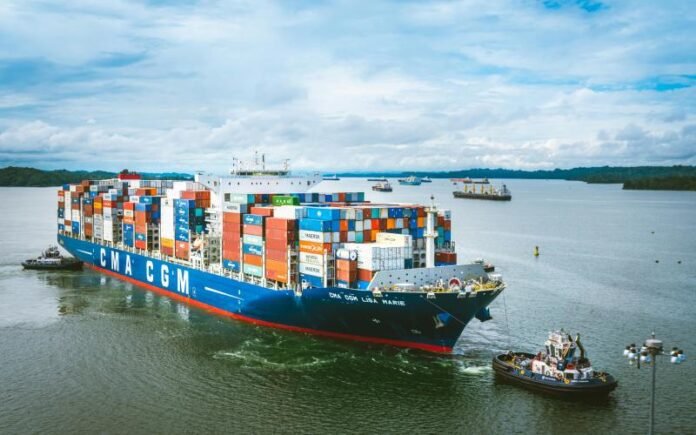
French shipping giant CMA CGM reported that its vessel San Antonio was attacked while passing through the Strait of Hormuz, leaving several crew members injured and the ship damaged. The incident, which took place on Tuesday, is the latest disruption in a key global shipping route affected by ongoing Middle East tensions.
The Strait of Hormuz, through which around a fifth of global oil trade passes, has seen heightened risks since the escalation of regional conflict, with hundreds of vessels reportedly impacted or delayed. The situation has significantly disrupted maritime traffic and energy flows.
The company confirmed that injured crew members were evacuated and are receiving medical treatment, but it did not provide further details on the attack. This follows a similar incident last month when another CMA CGM vessel came under warning fire in the same waters, though without casualties.
The United States has also been involved in maritime security operations in the area, though President Donald Trump said escort activities would be briefly paused, citing progress in talks with Iran.
CMA CGM, the world’s third-largest container shipping operator, previously reported that multiple vessels were affected by regional instability, with some temporarily stranded in the Gulf. The San Antonio, registered under the Maltese flag, was en route to Mundra in India at the time of the attack, according to shipping data.
How China quietly erased Taiwan from coffee’s world stage
When Bala stepped onto the podium in San Diego in April, holding the trophy for the 2026 World Latte Art Championship, the backdrop behind him said “Luckin Coffee” — the Chinese chain that was an official sponsor of the event.
He had just poured a raccoon, a giraffe and red pandas to claim the title with a winning score of 531 points. The official announcement listed him as representing Taiwan.
About a week later, however, the Specialty Coffee Association quietly changed “Taiwan” to “Chinese Taipei” in the World Coffee Championships’ records. There was no announcement or explanation for why the change was made.
Only a revision — soon followed by reports that the WCC had also stripped past rankings PDFs from its website, hiding the historical record of who had represented whom. The renaming of a barista may seem like a footnote to Beijing’s larger pressure campaign against Taiwan — the warships, the semiconductor controls, the diplomatic isolation.
But it is something more: a signal that China’s coercion has reached a domain few governments or analysts are tracking – the global infrastructure of specialty coffee. And it reveals something larger still: when the private organizations that govern global cultural industries face geopolitical pressure, their professed neutrality is the first thing to give way.
A hard-won stage
Taiwan’s coffee community came to the world stage late. The World Barista Championship has been held annually since 2000, but no Taiwanese competitor took the stage until 2007, when Lin Tung-Yuan — known internationally as Van Lin, Taiwan’s first national barista champion in 2004 — finally competed.
What followed was a remarkable run. Pang-Yu Liu won the World Cup Tasters Championship in 2014. Jacky Lai won the World Coffee Roasting Championship the same year. Berg Wu became the first Taiwanese World Barista Champion in 2016.
Chad Wang followed with the World Brewers Cup in 2017. Xie Yi-chen won the World Latte Art Championship in 2024. Bala’s win in 2026 was the latest in a lineage that took the Taiwanese coffee community more than two decades to build.
The SCA itself recognized this rise. In its 2022 announcement bringing the World Coffee Championships to Taipei, the association celebrated Taiwan’s “strong specialty coffee culture,” its “estimated 4,000 roasters,” and the country’s “16 World Coffee Championship finalists”, naming Berg Wu, Chad Wang, Pang-Yu Liu, and Jacky Lai by their Taiwanese affiliations.
Until April 2026, the association’s records listed every champion above as representing Taiwan. As the Taiwan Coffee Association revealed in its statement following the change, the body had been “fighting for the maintenance of the TAIWAN representative name for 19 years”—a fight, it said, that had now finally proved “fruitless.”
The recent revision is not a return to long-standing convention. It is the end of a 19-year struggle to preserve one.
Two moves, one logic
The renaming did not happen in isolation. Six months earlier, in October 2025, the SCA executed another consequential move. It took control of the Q Grader Program — the global certification that defines what counts as quality coffee, with roughly 10,000 certified graders worldwide — from the Coffee Quality Institute, which had operated it for two decades.
The certification was rebuilt around the SCA’s Coffee Value Assessment, a framework introduced in 2023 that, for the first time, formally treats origin, processing, and cultural context as legitimate components of a coffee’s value. The CVA, the SCA explained, recognizes that “coffee is more than a score” — that it is “culture, craftsmanship and context.”
Six months after announcing that origin and context deserved formal recognition in coffee’s value, the same organization quietly removed Taiwan from its records.
These two moves are not contradictions. They are the same logic. When origin becomes a legitimate component of commercial value, the question of who decides what an origin is called ceases to be administrative and becomes a matter of governance.
The CVA’s progressive language—respect for context, recognition of culture—is the sales pitch. The renaming is what the governance actually does. Respecting origin is a market discourse. Deciding how origin gets named is power.
On May 1, the SCA defended the change in a statement, calling it an “administrative decision” and citing the International Olympic Committee and FIFA as precedents. The framing is revealing. The SCA is correct that it operates like the IOC and FIFA — and that is precisely the problem.
These are private bodies governing global cultural life through technical standards while remaining structurally exposed to the demands of their largest markets. Their neutrality holds until the pressure is large enough to overcome the inertia of convention.
In the same weeks that Bala was being renamed in the WCC’s records, another transaction was being finalized.
The two events have not been publicly linked. They do not need to be. Their simultaneity is the story. Chinese capital is not just lobbying global coffee governance — it is buying the cultural infrastructure that governance regulates.
The chain that once defined American third-wave coffee is now controlled by Luckin’s controlling shareholder. The championship Luckin sponsored has now scrubbed Taiwan from its records.
What this reveals
For policymakers and analysts tracking China’s sharp power, the lesson is that coercion has reached domains nobody is monitoring.
According to the Taipei Times, the renaming followed “suspected political pressure from China,” with one source familiar with the matter noting that Luckin Coffee’s role as a main sponsor “suggested that China had influence behind the scenes.”
If a private organization governing the global standards of an entire cultural industry can be moved this quietly, no comparable body is structurally insulated. Standards organizations, certification bodies, sports federations, and industry consortia across Asia and beyond are all governed by the same logic—and exposed to the same pressures.
For consumers who treat ethical coffee as a small political act, the lesson is harder. The progressive vocabulary of specialty coffee — origin, terroir, direct trade, respect for context— has not protected Taiwan’s coffee community from being unnamed.
It has, in some ways, made the unnaming easier, by transferring the authority over what origin means from the producer to the certifier.
“Taiwan is not just a name,” he wrote on Facebook the day after the change. “It is an identity and a shared memory built by many competitors, coaches, judges, cafes, roasters, and all the consumers who have supported us along the way.”
That memory took 26 years to build. It was revised in a week.
Tzuyi Kao is a research fellow in sociology at National Tsing Hua University, Taiwan, supported by the National Science and Technology Council’s Talent Recruitment Program. Her research on labor and value in Taiwan’s specialty coffee industry has been published online first in Sociology (Q1, SSCI). She also co-runs a specialty coffee shop in Taipei.
President Trump Suspends Strait of Hormuz Operation as Iran Claims US ‘Retreat’
Operation “Project Freedom” governing the transit of ships through the Strait of Hormuz, will be “paused for a short period of time” President Trump announced on Truth Social. The US will maintain what he described as the broader blockade, citing requests from Pakistan and other countries as well as progress in contacts with Iran.
In a post on Truth Social, Trump wrote: “While the Blockade will remain in full force and effect, Project Freedom (The Movement of Ships through the Strait of Hormuz) will be paused for a short period of time to see whether or not the Agreement can be finalized and signed.”
Project Freedom is a US-led naval operation to help commercial vessels transit the Strait of Hormuz after Iranian attacks and restrictions disrupted shipping traffic in the waterway. The mission involved US military support for merchant ships while a separate US blockade on Iranian ports remained in effect
The announcement drew a swift response from Iranian state-linked media outlets, which portrayed the move as a retreat by Washington rather than a diplomatic step.
Iran’s ISNA news agency, in a report cited by CNN, called the decision an “American failure to achieve their objectives in the project” and said the suspension followed “firm positions and warnings from Iran.” Tasnim, a news agency affiliated with the Iranian regime, posted a brief response on X saying: “Trump retreats.”
The developments came as Iranian Foreign Minister Abbas Araghchi traveled to Beijing for meetings with Chinese Foreign Minister Wang Yi, where Araghchi praised Beijing’s support for Tehran during the current tensions.
“Iran appreciates China’s firm stance and especially the condemnation of the United States and Israel,” Araghchi said during the meeting.
He added, “China is a close friend of Iran and in the current circumstances, our cooperation will be even stronger. Iran will only accept a just and comprehensive agreement.”
At the same time, the United Arab Emirates engaged in diplomatic outreach following Iranian strikes against UAE targets.
The Emirati state news agency said UAE President Mohammed bin Zayed held calls with several international leaders, including Prime Minister Benjamin Netanyahu, during which the leaders expressed support for the Emirates.
According to the agency, “the leaders confirmed the solidarity of their countries with the United Arab Emirates and their support for all measures taken by it to preserve its security and stability and ensure the safety of its citizens.”
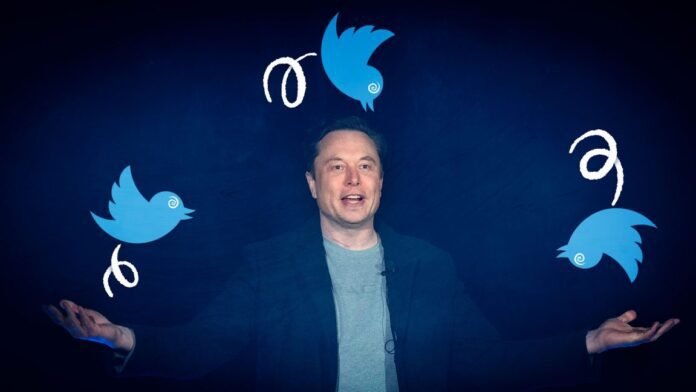
Trump SEC lets Musk settle $150 million Twitter lawsuit for $1.5 million
The Trump administration is letting Elon Musk pay a $1.5 million fine to settle a lawsuit that originally sought at least $150 million. If approved by a federal court, the proposed settlement submitted yesterday would require a trust in Musk’s name to pay a $1.5 million civil penalty to the government.
The January 2025 lawsuit, filed in the last days of the Biden administration, relates to how Musk purchased a 9 percent stake in Twitter in 2022 and failed to disclose it within 10 days as required under US law. The Securities and Exchange Commission alleged that “Musk was able to continue purchasing shares at artificially low prices, allowing him to underpay by at least $150 million for shares he purchased after his beneficial ownership report was due.”
Twitter’s stock price soared after Musk belatedly disclosed his stake, and he bought the company outright later in 2022. The Biden SEC’s January 2025 lawsuit demanded that Musk “pay disgorgement of his unjust enrichment as a result of his violation,” plus interest and a separate civil penalty. But the SEC had investigated the late disclosure and related matters for nearly three years before filing the lawsuit, leaving no time to litigate the case before the Trump administration took over.
Musk was accused of violating Section 13(d), which is enforced under a “strict liability” standard. That means it doesn’t matter whether a rule violation was intentional or inadvertent and may explain why the Trump SEC didn’t drop the case against Musk entirely.
The Biden SEC filed the case in US District Court for the District of Columbia. Musk unsuccessfully tried to get it moved to a Texas court, and then lost an attempt to have the lawsuit dismissed.
Musk lawyer touts deal with SEC
The SEC’s original lawsuit was filed against Musk alone. But the Trump administration amended it this week to include the “Elon Musk Revocable Trust” as a defendant and imposed the settlement requirements on the trust instead of Musk.
Under a proposed order filed by the SEC yesterday, the Elon Musk Revocable Trust would be “permanently restrained and enjoined from violating” Section 13(d), and the trust would be ordered to pay the fine to the SEC. The trust did not admit or deny the SEC’s allegations, court filings said.
Musk lawyer Alex Spiro “said in a written statement that regulators had only fined the trust while dismissing the claims against Musk personally,” according to The Wall Street Journal.
“Mr. Musk has now been cleared of all issues related to the late filing of forms in the Twitter acquisition, as we said from the outset he would be,” Spiro said. “A trust vehicle has agreed to a small fine for being late on one filing.”
Jury found Musk liable for false statements
US District Judge Sparkle Sooknanan rejected Musk’s motion to dismiss the case in February 2026.
“In his motion, Mr. Musk does not dispute that the Complaint adequately alleges that he disregarded the disclosure requirements of Section 13(d),” Sooknanan wrote. “Rather, he attacks the constitutionality of those requirements. He argues that Section 13(d) cannot be enforced against him because it burdens his constitutional rights under the First Amendment by forcing him to speak against his will; that Section 13(d) is unconstitutionally vague; that the SEC is selectively enforcing Section 13(d) against him; and that the SEC Commissioners are insulated by unconstitutional protections from removal. A straightforward application of the law reveals that none of these arguments warrant dismissal of this lawsuit.”
In a separate case related to Musk’s purchase of Twitter, a federal jury found that Musk is liable for making false statements about the number of bot and spam accounts on Twitter. Musk made the claims while trying to back out of his deal to buy the social network. The class action lawsuit alleged that Musk’s false statements caused them to sell at artificially low prices.
“Damages have yet to be calculated but Francis Bottini, a lawyer for the shareholders, estimated they could total about $2.5 billion,” Reuters wrote after the March 20 verdict.
3 People Killed, 2 Injured After Plane Crashes into Residential Building Minutes After Takeoff
A routine takeoff turned into a deadly disaster in Brazil when a small plane slammed into a residential building just minutes after leaving the runway.
Authorities say three people were killed and two others injured after the aircraft crashed Monday in Belo Horizonte. The plane had just departed from Pampulha Airport and was en route to São Paulo when it suddenly lost altitude and veered off course.
According to the Corpo de Bombeiros Militar de Minas Gerais, the pilot and co-pilot were killed on impact. Three others were pulled from the wreckage in critical condition and rushed to Hospital João XXIII. One of those victims later died, bringing the total death toll to three.
The victims have been identified as pilot Wellinton de Oliveira Pereira, 34; Leonardo Berganholi Martins, 50; and Fernando Moreira Souto, 36 — the son of Nilo Souto, the mayor of Jequitinhonha.
Two survivors — Arthur Schaper Berganholi, 25, and Hemerson Cleiton Almeida Souza, 53 — remain hospitalized but are reported to be in stable condition.
Dramatic footage captured the terrifying moment the plane dropped rapidly from the sky before slamming into a three-story apartment building. The impact sent debris flying and triggered a frantic evacuation as residents rushed to escape.
Despite the violent crash, officials say no one inside the building was injured — a near-miracle outcome. Authorities believe the death toll could have been far worse if the aircraft hadn’t struck the building’s stairwell instead of occupied units.
Emergency crews continue to comb through the wreckage, working to secure the structure and investigate what caused the sudden loss of control.