7.4 C
London
Sunday, April 26, 2026
Home Blog

Over 2,490 killed in Lebanon in Israeli attacks since March 2

0
over-2,490-killed-in-lebanon-in-israeli-attacks-since-march-2
Over 2,490 killed in Lebanon in Israeli attacks since March 2

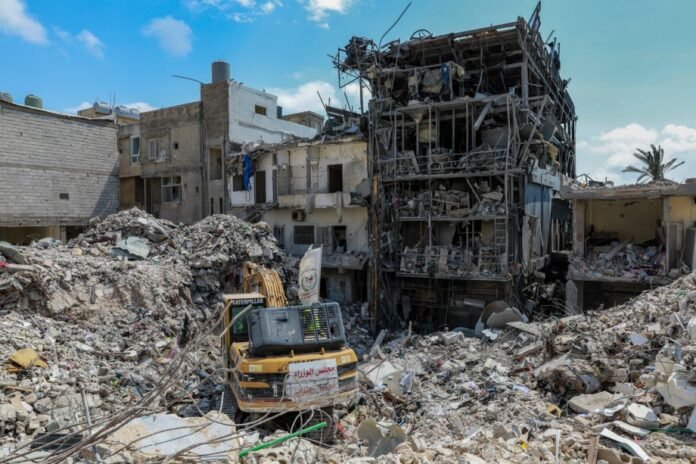
Lebanon said Saturday that five people were killed and six others wounded over the past 24 hours, raising the death toll from Israeli attacks to 2,496 killed and 7,725 injured since March 2, Anadolu reports.

The figures were published in a report by the Lebanese Cabinet’s Disaster Risk Management Unit, as reported by the National News Agency (NAA).

The update comes as Israel continues to violate a temporary ceasefire in Lebanon that began on April 17.

The previous official toll stood at 2,491 killed and 7,719 injured, in addition to more than 1 million displaced, before the updated figures were released.

READ: UK, Finland condemn ‘unacceptable’ Israeli attacks on journalists in Lebanon

The unit did not provide further details on how the figures were calculated.

According to field sources and local media, authorities continue to recover bodies of victims killed before the ceasefire took effect, while the rise in injuries is attributed to data updates and newly reported cases from recent days.

On April 17, US President Donald Trump announced a 10-day ceasefire in Lebanon between Israel and Lebanon, later extending it on Thursday by an additional three weeks.

Since March 2, Israel has continued to violate the fragile ceasefire, resulting in casualties and widespread destruction, while Hezbollah has responded by targeting Israeli military positions in southern Lebanon and Israeli communities.

READ: Israeli army warns civilians against returning to southern Lebanon villages despite ceasefire

Trump’s war: the kind of military misadventure that ends empires

0
trump’s-war:-the-kind-of-military-misadventure-that-ends-empires
Trump’s war: the kind of military misadventure that ends empires

Writing more than 2,000 years ago, the Greek historian Plutarch gave us an eloquent description of what modern historians now call “micro-militarism.”

When an imperial power like Athens then, or America now, is in decline, its leaders often react emotionally by mounting seemingly bold military strikes in hopes of regaining the imperial grandeur that’s slipping through their fingers.

Instead of another of the great victories the empire won at its peak of power, however, such military misadventures only serve to accelerate the ongoing decline, erasing whatever aura of imperial majesty remains and revealing instead the moral rot deep inside the ruling elite.

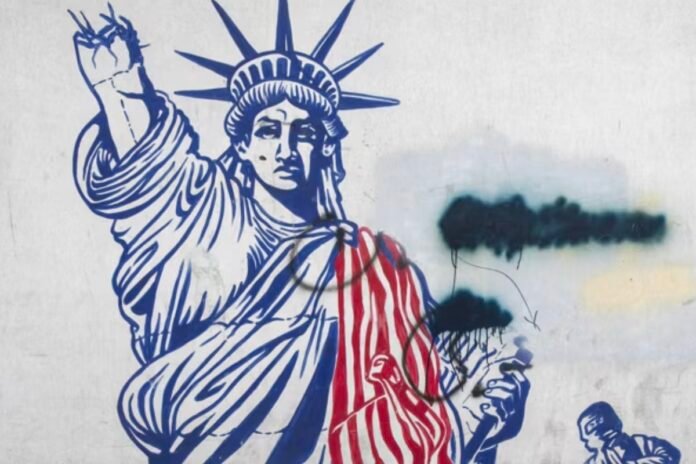
There is mounting historical evidence that America is indeed an empire in steep decline, while President Donald Trump’s war of choice against Iran is becoming the sort of micro-military disaster that helped destroy successive empires over the past 2,500 years — from ancient Athens to medieval Portugal to modern Spain, Great Britain, and now the United States.

And at the core of every such ill-fated war-making decision lay a problematic leader, often born into wealth and prestige, whose personal inadequacies reflected and ramified the many irrationalities that make imperial decline such a painful process.

During that demoralizing downward spiral, imperial armies, so lethal in an empire’s ascent, can err by plunging their countries into draining, even disastrous “micro-military” misadventures—psychologically compensatory efforts to salve the loss of imperial power by trying to occupy new territories or display awe-inspiring military might.

Although such micro-militarism often chose targets that proved strategically unsustainable, the psychological pressures upon declining empires are so strong that they all too often gamble their prestige on just such misadventures.

Not only did such disasters add financial pressures to a fading empire’s many troubles, but in a humiliating fashion, they also invariably exposed its eroding power while exacerbating the destabilizing impact of imperial decline in the capitals of empire (whether Athens, Lisbon, Madrid, London, or Washington, DC).

In our moment, when the bombs stop falling and the rubble is finally cleared from the streets of Tehran and Beirut, the impact on US global power of such a de facto defeat will become all too clear—as alliances like NATO atrophy, American hegemony evaporates, legitimacy is lost, global disorder rises, and the world economy suffers.

Let me now turn from the disasters of the present imperial moment to the lessons of history to explore the sort of lasting damage that Donald Trump’s micro-military misadventure in the Middle East might be inflicting on this country’s declining imperium.

Defeat of Athens in Sicily

The date was 413 BC. The place was ancient Athens, then the seat of a powerful empire, long dominant around the rim of the Aegean Sea but losing influence to a sustained military challenge by Sparta.

At the port of Piraeus, a “certain stranger,” as the historian and philosopher Plutarch recalled, “took a seat in a barber’s shop, and began to discourse [on] what had happened as if the Athenians already knew all about it.” Stunned by this stranger’s report of a military debacle in far-off Sicily, the barber “ran at the top of his speed to the upper city” of Athens, where the news sparked “consternation and confusion.”

What that stranger described was the greatest military disaster in the history of the Athenian empire. Two years earlier, in the midst of the protracted Peloponnesian Wars, the aristocrat Nicias — an indifferent, indecisive leader who used his inherited wealth to court popularity with lavish spectacles — persuaded the citizens of Athens to deliver a theoretically bold blow against a rival imperial power, Sparta, by attacking its ally Syracuse in Sicily in hopes of crippling the enemy, capturing riches, and recovering Athens’ ebbing hegemony.

Instead of victory, however, Athens’ vast armada of 200 ships and some 12,000 soldiers suffered a devastating defeat. Not only was the fleet destroyed (largely because Nicias proved “an incompetent military commander”), but his surviving soldiers were captured, confined on a starvation diet in a stone quarry, and sold into slavery. Athens never recovered.

Within a decade, the city had been starved into submission by Sparta’s impenetrable blockade of a naval choke point in the Dardanelles Strait, stripped of its empire, and subjected to autocratic rule by a pro-Spartan oligarchy.

Portugal’s debacle in Morocco

Our next date is 1578. The place is Portugal, the seat of a lucrative empire that had controlled commerce across the Indian Ocean for decades but now found its hegemony challenged by Muslim merchant princes allied with the Ottoman Empire.

In its capital, Lisbon, a headstrong young king, Sebastian, suffered from sexual impotence and a fiery temperament that made him a fanatical “captain of Christ.” With the idea of striking a lethal blow in his country’s global war against Islam, the young king persuaded the flower of his nation’s aristocracy to follow him on a latter-day crusade across the Mediterranean Sea to Morocco.

There, at the fateful Battle of Alcacer Quibir, Portugal’s army was slaughtered by local Muslim forces. Some 8,000 Portuguese troops were killed, 15,000 captured, and only 100 escaped.

The defeat was so devastating that it not only destroyed the king and his court but also precipitated the country’s incorporation into the Spanish empire for the next 60 years. In the aftermath of such reverses, the Portuguese Estado da India (or state of India) at Goa was reduced to selling permits to any ship captain who could pay, whether Hindu, Muslim, or Christian. With Portuguese commercial dominance removed from the Indian Ocean, Muslim merchants and pilgrims could once again move across it unimpeded.

Though the Portuguese empire would survive for another three centuries, it would never recover the commercial hegemony that had once allowed it to dominate the world’s sea lanes from the Spice Islands of Indonesia, across the Indian Ocean and the South Atlantic to the coast of Brazil.

Spain’s disaster in the Atlas Mountains

And now to jump several centuries, another significant date for imperial disasters is 1920. The place was Madrid, where Spain’s leaders were already reeling from the psychological stress of their country’s long imperial decline, culminating in the loss of its last colonies, Cuba, Puerto Rico, and the Philippines in the Spanish-American War of 1898 with the rising United States.

Seeking regeneration through further colonial conquest, Spain’s conservative leaders reacted to that demoralizing defeat against America by expanding their small coastal enclaves in northern Morocco to establish a protectorate over the whole region and its arid Atlas Mountains.

Spain’s inept monarch Alfonso XIII, who liked to play soldier, cultivated a clique of military favorites who shared his passion for the recovery of lost imperial glory by pacifying that rugged terrain. As resistance to Spanish rule by Berber Muslims escalated into the bloody Rif War of 1920, one of the king’s favorite generals led his troops into the Battle of Annual, where Berber fighters slaughtered some 12,000 of them.

Nonetheless, through the influence of the king and his military cronies, Spain clung desperately to those profitless Moroccan mountains. The Spaniards would, in fact, dispatch 125,000 more troops there, including its Foreign Legion led by the man who, in the 1930s, would become the leader of a fascist Spain, Francisco Franco, for a protracted pacification campaign that featured both mass slaughter and military innovation.

In a desperate quest for a victory that defied both economic and strategic rationality, Spain produced some 400 metric tons of lethal mustard gas to conduct history’s first aerial bombardment using poison gas, raining mass death down upon Berber villages.

And in military history’s first successful amphibious operation, the Spanish navy also landed 18,000 troops and a squadron of light tanks at Al Hoceima Bay in September 1925 to flank and soon defeat the Berber guerrillas there.

Such micro-militarism, however, not only plunged Spain into a protracted pacification campaign with soaring costs, heavy casualties, and mass atrocities, but also unleashed political forces that would destroy its struggling democracy.

As the masses protested that misbegotten war, King Alfonso backed a military favorite, General Primo de Rivera, in imposing a decade of dictatorship that finally gave way to a short-lived Second Republic.

In 1936, however, only a decade after the Rif War ended, General Franco flew his Army of Africa back from Morocco over the Mediterranean Sea, launching a Spanish civil war that would defeat the Republic and establish a fascist dictatorship that would rule the country for nearly 40 dismal years of economic stagnation.

End of the British Empire at Suez

Arguably, when it came to imperial decline, however, the most revealing date was 1956.

The place was London, the seat of the once-proud British Empire, where the suffocating stress of a painful, protracted global imperial retreat had pushed British conservatives into a disastrous micro-military intervention at Egypt’s Suez Canal, leading to what one British diplomat would term the “dying convulsion of British imperialism.”

In July 1956 (as described in my recent book Cold War on Five Continents“), Egypt’s charismatic president Gamal Abdel Nasser nationalized the Suez Canal, ending British colonial control there, electrifying the Arab world, and elevating himself to the first rank of world leaders.

Although British ships could still pass freely through the canal, the country’s conservative prime minister, Anthony Eden, a vain aristocrat and determined defender of empire, would be deeply unsettled, if not unhinged, by Nasser’s assertive nationalism. Indeed, his leadership throughout the crisis would prove so unbalanced that senior Foreign Office officials would become convinced “Eden has gone off his head.”

In response to the news of the canal’s nationalization, an apoplectic Eden would immediately convene a council of war at 4:00 in the morning. Calling Nasser a “Muslim Mussolini,” a reference to the former fascist ruler of Italy, Eden ordered “him removed and I don’t give a damn if there’s anarchy and chaos in Egypt.”

Making his meaning perfectly clear, Eden asked his foreign minister: “What’s all this nonsense about isolating Nasser or ‘neutralizing’ him as you call it?” He then added pointedly: “I want him destroyed, can’t you understand? I want him murdered.”

With the British secret service MI6 failing in multiple assassination attempts, however, Eden’s government began plotting with the French and Israelis to launch a secret, two-phase invasion of the Suez Canal Zone.

On October 29, the Israeli army led by the dashing General Moshe Dayan swept across the Sinai Peninsula, destroying Egyptian tanks and bringing his troops within 10 miles of the canal. Using that fighting as a pretext for its own intervention (supposedly to restore peace), in just three days, an armada of six Anglo-French aircraft carriers smashed the Egyptian air force, destroying 104 of its new Soviet MIG jet fighters and 130 additional aircraft.

With Egypt’s strategic forces destroyed and its military virtually helpless before the might of that imperial juggernaut, Nasser deployed a geopolitical strategy brilliant in its simplicity. He had dozens of rusting cargo ships filled with rocks and then scuttled them at the canal’s northern entrance, quickly closing one of the world’s main maritime choke points and so cutting off Europe’s oil lifeline to the Persian Gulf.

By the time 22,000 British and French forces began storming ashore at the canal’s north end on November 6, their objective of securing the free movement of ships had already been snatched from their grasp.

By the end of that micro-military disaster, Britain would be reprimanded by the United Nations; its currency would require an International Monetary Fund bailout to save it from utter collapse; its aura of imperial majesty would have evaporated; and the once mighty British Empire would be on the road to extinction.

In retrospect, the Suez Crisis would not only expose the full-scale decline of British power, but also show the world that the country’s ruling Conservative establishment, with its illusions of imperial and racial superiority, was no longer capable of global leadership.

America’s defeat in the Strait of Hormuz

Another date likely to prove all too significant when it comes to the history of imperial decline is February 28, 2026. The place was Washington, DC, home to what had been history’s most powerful imperial state that had dominated much of the globe for nearly 80 years through a mixture of military alliances, deft diplomacy, and economic leadership.

By then, however, cracks had distinctly begun to appear in its edifice of power as US global hegemony faced an increasingly strong economic challenge from China, its massive military suffered two searing defeats in Afghanistan and Iraq, and its economic globalization produced an angry populism at home.

After a populist campaign based on promises to restore both working-class prosperity and America’s global power, Donald Trump took office a second time in January 2025 promising a “golden age of America,” a “thrilling new era of national success” in which the country would “reclaim its rightful place as the greatest, most powerful, most respected nation on Earth, inspiring the awe and admiration of the entire world.”

Born to wealth and privilege himself, Trump returned to office convinced of his unique “genius” for leadership and believing that “I was saved by God to make America great again.”

Wielding raw economic and military might to compel obeisance from friend and foe alike, the president, inspired by a delusional sense of divine mission, began attempting to bend the world to his will.

But during his first year in office, nothing seemed to work as planned. Indeed, most of his initiatives produced the sort of backlash that only served to show how far the United States had fallen from 1991, when the break-up of the Soviet Union made it the world’s sole superpower.

On April 2, 2025, on what he called “Liberation Day,” Trump announced a roster of punitive tariffs to protect domestic manufacturing largely from Chinese imports that faced an initial duty of 34%—later raised to a fully punitive 100%. But at their October 2025 meeting in South Korea, China’s leader Xi Jinping forced Trump to back down by cutting US access to his country’s storehouse of strategic rare earth minerals.

In January, with his tariff initiative losing its luster, Trump plunged the NATO alliance into crisis by demanding that Denmark give him the island of Greenland, threatening to impose new tariffs on European allies unless they complied. Within a week, however, vociferous European resistance had led him to retract that threat at the Davos economic summit, claiming he was satisfied with NATO’s offer of a “framework of a future deal.”

On February 28, 2026, with his tariff initiative failing and his Greenland gambit checkmated, Trump joined Israel in a seemingly bold strike on Iran that soon had the makings of the sort of fateful “micro-military” maneuver that appears to go with imperial powers in decline.

In the first few days of war, US and Israeli bombing killed Iran’s leadership, destroyed its navy, and eliminated its air defenses, leaving the country seemingly prostrate before the might of America’s air-power juggernaut.

After a week of devastating bombardment that seemed to stun the world with its lethality and precision, on March 6 Trump demanded that Iran offer an “unconditional surrender” and signal its capitulation by “the selection of a GREAT & ACCEPTABLE Leader.” In exchange, he promised that the US would “work tirelessly to bring Iran back from the brink of destruction.”

But much as Nasser had done at Suez in 1956, Iran’s leadership reversed the war’s geostrategic balance by closing a critical maritime choke point in the Strait of Hormuz. By striking five freighters with drones in the first week of war, Iran’s leaders, taking a leaf from Nasser’s geopolitical playbook, effectively shut the Strait of Hormuz to tanker traffic, cutting off gas, fertilizer, and oil shipments that plunged the world economy into an unprecedented energy crisis. By the end of March, Iran’s chokehold over the strait was so tight that it began collecting “tolls” from freighters to permit passage.

Blindsided by the strait’s unexpected yet utterly predictable closure, on April 5, Easter Sunday, an unsettled Trump posted a social media message saying: “Tuesday will be Power Plant Day, and Bridge Day, all wrapped up in one, in Iran. There will be nothing like it!!!”

He added: “Open the Fuckin’ Strait, you crazy bastards, or you’ll be living in Hell—JUST WATCH. Praise be to Allah.” Two days later, Trump threatened that, unless Iran opened the Strait of Hormuz, he would attack its civilian infrastructure so severely that “a whole civilization will die tonight, never to be brought back again.”

After the collapse of subsequent negotiations between the two sides at Islamabad, Pakistan, on April 12, Trump plunged ever deeper into the Iran quagmireordering the US Navy to “begin the process of BLOCKADING any and all Ships trying to enter, or leave, the Strait of Hormuz,” and “interdict every vessel in International Waters that has paid a toll to Iran.” With characteristic bluster, he added: “We are fully ‘LOCKED AND LOADED,’ and our Military will finish up the little that is left of Iran!”

Even if Trump destroys Iran’s infrastructure or eventually negotiates a face-saving peace deal, by every metric that really matters, Washington has already lost its war with Iran. Like all weaker powers in asymmetric warfare, Tehran has been willing to absorb relentless punishment, while inflicting pain that the dominant power can ill sustain.

The US will soon run out of targets in Tehran, but Iran has a whole world of damage that its cheap drones can do to the elaborate, exposed petroleum infrastructure on the south shore of the Persian Gulf.

Like Britain at Suez in 1956, Washington will likely pay a heavy price for its “micro-militarism” in the Strait of Hormuz. Close allies, the bedrock of US global power for 80 years, have refused any military support for Washington’s war of choice, prompting Trump to call them “cowards.”

In response to his thundering threats of civilian and civilizational destruction (both war crimes), Trump has been condemned by world leaders. Oblivious to the dangers of war in a region that is the epicenter of global capitalism, Washington is now proving ever more dangerously disruptive of the global economy, making China look like a far more stable choice for world leadership. Moreover, while the US military has proven its tactical agility in destroying targets, it clearly can no longer capture meaningful strategic objectives.

With its alliances in tatters, its world leadership forfeited, and its aura of military might evaporating, the only trajectory for US global hegemony now seems to be downward (like so many great powers of the past).

By the time Trump’s micro-military misadventure in the Strait of Hormuz is over, the decline of US global power will have accelerated drastically and the world will be trying to move beyond the old Pax Americana toward a new, distinctly uncertain global order.

Alfred W. McCoy is professor of history at the University of Wisconsin-Madison is the author of “In the Shadows of the American Century: The Rise and Decline of U.S. Global Power”. Previous books include: “Torture and Impunity: The U.S. Doctrine of Coercive Interrogation” (University of Wisconsin, 2012), “A Question of Torture: CIA Interrogation, from the Cold War to the War on Terror (American Empire Project)”, “Policing America’s Empire: The United States, the Philippines, and the Rise of the Surveillance State”, and “The Politics of Heroin: CIA Complicity in the Global Drug Trade”

Originally published by Tom Dispatch and republished by Common Dreams, this article is republished under a Creative Commons license.
Leader of Russia’s Communists warns parliament of risk of revolution due to faltering economy

0
leader-of-russia’s-communists-warns-parliament-of-risk-of-revolution-due-to-faltering-economy
Leader of Russia’s Communists warns parliament of risk of revolution due to faltering economy


The veteran leader of Russia’s Communist Party has warned parliament that the ​country’s faltering economy risks stoking a 1917-style revolution and that the government needs to take urgent measures to correct ‌its course.

Gennady Zyuganov, 81, issued his warning to a plenary session of the State Duma, the lower house of parliament, ahead of a parliamentary election due in September, according to a recording of his speech posted on the Duma’s official website.

“We’re doing everything we can to support (President Vladimir) Putin and his ​strategy and policies, but you (the government) are not listening,” he said, in comments made on Tuesday. They drew some ​applause and were carefully listened to by Vyacheslav Volodin, the Duma speaker and a close Putin ally.

Zyuganov ⁠said a recent government meeting convened by Putin had been the gloomiest in a long time.

“If you (the government) do not urgently adopt ​financial, economic and other measures, by autumn a repeat of what happened in 1917 awaits us. We don’t have the right to ​repeat that. Let’s take some decisions.”

Despite his warning, there is currently no sign of serious social unrest in Russia, amid tight wartime censorship, protest bans, long jail sentences for dissidents and the growth in influence of the Federal Security Service, the main successor agency to the Soviet-era KGB.

AVOIDS CRITICISM OF PUTIN

Although ​Zyuganov’s party, the second largest in parliament, is the main successor to the Soviet Communist Party, it has long backed Putin and ​his core policies, offering carefully-calibrated criticism of the ruling United Russia party from within the tightly controlled political system.

His comments, which also referenced recent viral ‌criticism, opens new tab of ⁠the authorities by a celebrity blogger, looked designed to win votes from Russians feeling the economic pinch, distance Putin from the economic problems, and show that the political system is aware there are issues that need addressing.

Zyuganov was careful not to blame Putin personally, appearing to take aim instead at the government, the central bank, and the ruling party, whose ratings are under pressure according to state ​opinion polls.

The 1917 revolution swept away ​Russia’s monarchy and a provisional ⁠government, bringing the Bolsheviks to power and paving the way for the creation of the Soviet Union, which collapsed in 1991.

Putin, in power as either president or prime minister since the end of ​1999, has repeatedly promised stability and spoken of the destructive nature of revolutions.

He scolded his own top ​officials last week ⁠after the economy contracted by 1.8% in the first two months of the year and asked them to come up with new measures to boost growth.

Russia’s $3.1 trillion economy, which contracted in 2022 but grew in 2023, 2024 and 2025, has outperformed most expectations and avoided a crash ⁠despite Western ​sanctions imposed over Moscow’s war in Ukraine.

But the strain of the war and double-digit ​interest rates slowed growth to 1% last year.

The U.S.-Israeli war on Iran has lifted oil prices, however, a move likely to boost the Russian economy if sustained. The ​International Monetary Fund has raised its forecast for Russia’s economic growth this year to 1.1%, from 0.8%.

Source:  Reuters

Taliban Claims No Security Threat, Urges Citizens Abroad To Return

0
taliban-claims-no-security-threat,-urges-citizens-abroad-to-return
Taliban Claims No Security Threat, Urges Citizens Abroad To Return


The Taliban on Saturday called on Afghan nationals staying at a US-managed transit facility in Qatar to return to Afghanistan, saying the country is secure and that citizens no longer face safety risks.

In a statement, Foreign Ministry spokesman Abdul Qahar Balkhi said Afghans living abroad should feel confident returning home.

He maintained that there is currently no security threat to anyone in Afghanistan and said people are not being compelled to leave the country due to insecurity.

The Afghan government’s statement comes after several US media outlets reported that the Trump administration is considering relocating its former Afghan allies to the Democratic Republic of the Congo. The Congo is currently regarded as one of the world’s most conflict-ridden countries.

According to The New York Times, “After halting a US resettlement program for Afghans who helped the American war effort, President Trump is in talks to send as many as 1,100 of them to the Democratic Republic of Congo, an aid worker briefed on the plan said Tuesday.

More than 1,100 Afghans who were evacuated to Qatar after the fall of Kabul in 2021 are bracing for the closure of Camp As-Sayliyah in Doha, as the US-run facility was set to shut down on March 31.

The camp served as a temporary refuge for former Afghan commandos, interpreters, and family members of US service personnel, many of whom were evacuated during the chaotic withdrawal following the Taliban’s return to power.

Most of those housed at the camp have already been cleared for resettlement in the United States following extensive security vetting, with more than 400 children among them.

American senators strongly criticize the reported plan for moving Afghan allies from Qatar to Congo.

Senator Alex Padilla posted on his X account, “Unbelievable. When we betray our allies, we signal to every future partner that the US isn’t worthy of their trust.” Senator Jeff Merkley described the proposal as “evil and wrong.”

Several US senators, including Tammy Duckworth, Tim Kaine, and Ed Markey, have also criticized the reported relocation plan, calling for an immediate halt and stronger protections for Afghan allies.

Meanwhile, Nadir Khalili, a former Afghan special forces operative, told The Media Line that “It would have been better for us to have been killed in the war than to be transferred to a country like Congo.”

Khalili continued, “At the time, US officials clearly told us that, morally, the responsibility for our protection now rested with the United States, which is why we brought our children with us. But hearing this now has only deepened our anxiety.”

Aid agencies and human rights groups, including the United Nations High Commissioner for Refugees, have repeatedly urged faster international solutions for Afghan refugees, warning that delays in resettlement increase vulnerability and instability.

‘Roadkill’ Found Inside Louisiana Restaurant

0
‘roadkill’-found-inside-louisiana-restaurant
‘Roadkill’ Found Inside Louisiana Restaurant


A small-town restaurant in Louisiana is at the center of a stomach-turning controversy after police discovered what they described as roadkill stored right alongside food meant for customers.

The drama unfolded in Pineville, where local favorite China Queen suddenly found itself under intense scrutiny after a viral Facebook post accused the restaurant of skinning a dead animal behind the building. The now-deleted post — which reportedly included a photo — quickly spread online and sparked outrage among residents.

When the Pineville Police Department showed up to investigate, they made a troubling discovery: a deer carcass sitting in the restaurant’s freezer with other food items.

According to authorities, an individual at the restaurant claimed the deer had been picked up from the side of the road earlier that morning after apparently being struck by a vehicle the night before. The person reportedly said the meat was intended for soup — but police couldn’t determine whether it was meant for personal use or to be served to customers.

That uncertainty has only fueled concern.

Officials pointed out that while eating deer meat isn’t unusual in Louisiana, handling roadkill comes with strict rules. State law requires prior authorization to possess it — and improper storage can create serious health risks due to rapid bacterial growth.

Now, the situation has escalated beyond a local investigation. Both the Louisiana Department of Health and the Louisiana Department of Wildlife and Fisheries have launched formal probes into the incident.

Police say they’re continuing to assist as those investigations move forward, emphasizing public safety as their top priority.

Meanwhile, the restaurant is attempting damage control.

In a handwritten notice taped to its front door, China Queen apologized for the incident, insisting the deer was never meant to be served to diners.

“The item involved was never intended to be served to customers, but it was improperly stored,” the note read. “It has been fully cleaned and sanitized. We are cooperating with health authorities and have corrected our procedures to ensure this does not happen again.”

Still, the explanation hasn’t quieted the backlash.

Under Louisiana law, illegally possessing roadkill — including a deer — can carry serious penalties. Officials say it’s considered a class four violation, which can mean fines ranging from $400 to $950, up to 120 days in jail, or both.

Adding to the controversy, records show the restaurant had already been cited earlier this month for multiple “critical” health violations during an inspection. Those issues — including improper storage practices, unapproved equipment, and employees drinking in food prep areas — were reportedly corrected during a follow-up visit days later.

Now, with investigators digging deeper and the internet watching closely, many are left asking the same uneasy question: how did this happen in the first place — and what else might have been going on behind the scenes?

Trump administration attempt to gut Endangered Species Act hits roadblock

0
trump-administration-attempt-to-gut-endangered-species-act-hits-roadblock
Trump administration attempt to gut Endangered Species Act hits roadblock

The Trump administration and congressional Republicans have spent the last year trying to defang the Endangered Species Act, the country’s bedrock conservation law. But one of the most aggressive and far-reaching attempts just faced a major setback—and concerns from within the party were at least part of the reason.

Republicans in the US House of Representatives abruptly canceled a vote that had been scheduled for Wednesday—Earth Day—on legislation that aims to codify into law many of President Donald Trump’s moves to weaken endangered species protections. Some lawmakers, mostly in tourism-dependent areas along the Gulf of Mexico, expressed concerns about the bill.

“Don’t tread on my turtles. Protected means protected,” US Rep. Anna Paulina Luna (R-Fla.) wrote in a social media post on Monday ahead of the then-pending vote.

The vote cancellation came weeks after the Trump administration issued a controversial—and legally dubious—exemption for oil and gas drilling in the Gulf of Mexico from conservation measures required by the Endangered Species Act.

The ESA Amendments Act, introduced by US Rep. Bruce Westerman (R-Ark.), would limit habitat protections, require agencies to conduct economic and national security analyses when determining whether to list a plant or animal as endangered or threatened, extend the deadlines required for listing decisions and fast-track the delisting process. Westerman’s office did not respond to a request for comment on why the vote was canceled.

The nonprofit Defenders of Wildlife released a letter on Monday signed by more than 275 organizations urging representatives to vote no, citing concerns that it would “prioritize politics over science.” The group sees the canceled vote as a signal that “the proponents of this bill finally got the message that this bill is just wildly out of step with where the American public is,” said Mary Beth Beetham, director of legislative affairs at Defenders of Wildlife.

“It’s a complete rewrite of the Endangered Species Act, and there’s not one provision in the bill that would make it more likely that species would recover. In fact, it would most likely make it more likely that species would continue to decline,” she said. “This bill should just die of its own weight.”

Patrick Parenteau, an emeritus law professor at the Vermont Law and Graduate School, said the Republican representatives may have jumped ship for one specific reason.

“I can’t tell how much of the opposition is about defending the Endangered Species Act, as opposed to preventing oil and gas drilling off the coast of Florida,” Parenteau said.

The Florida Everglades ecosystem alone hosts dozens of endangered and threatened species, including manatees, Florida panthers and many birds. It also contributes more than $30 billion annually to real estate, tourism and other parts of the local economy, a recent report estimated. But that ecosystem and others in the state are threatened by fossil fuel production, experts say.

US Rep. Kat Cammack (R-Fla.) told E&E News that she is concerned about “opening up any potential avenues for drilling in the Gulf,” given how much the state relies on ecotourism, and that she wants to “see some improvements made before we’re willing to support the bill.”

Dozens of Floridians, including businesspeople, environmentalists and scientists, signed on to a letter opposing the legislation.

“Without protections for habitats and wildlife, the economic value of our natural resources to visitors will be greatly diminished,” the letter read. “Weakening the ESA would harm Florida’s wildlife and environment, as well as our communities and economy.”

Westerman told news outlets he hopes the bill will be back on the floor soon.

Fossil fuel vs. endangered species

Since Trump regained office, his administration has pursued a variety of actions to chip away at—or in some cases, take a sledgehammer to—the Endangered Species Act to clear away constraints on fossil fuel production, timber harvesting and other industrial activities.

Last April, the US Fish and Wildlife Service proposed a rule to rescind the law’s definition of “harm,” effectively eliminating many habitat protections for species—a key part of how the law has prevented extinction. The rule has not yet gone into effect.

In November, the agency announced a separate set of proposals that would dismantle several other rules underpinning the law, including changes that would hinder agencies’ ability to protect species from rapid global warming impacts.

Since the current session of Congress began in January 2025, meanwhile, lawmakers have proposed more than 60 pieces of legislation that would “undermine the ESA or weaken protections for imperiled wildlife,” according to a Defenders of Wildlife tracker. The ESA Amendments Bill is widely considered the most extensive of those proposals.

Agency decisions can be reversed by a later administration, and the Biden administration did just that after Trump’s first term. That’s why experts say changes codified by Congress pose a more existential risk to the Endangered Species Act’s long-term survival.

“Stopping this bill,” Parenteau said of the ESA Amendments proposal, “is the single most important thing you can do to preserve the Endangered Species Act.”

This story originally appeared on Inside Climate News.

EU loan throws Ukraine a lifeline but more help needed for war

0
eu-loan-throws-ukraine-a-lifeline-but-more-help-needed-for-war
EU loan throws Ukraine a lifeline but more help needed for war


The approval of a 90-billion-euro European Union loan throws Ukraine a lifeline, averting deep cuts to public services, but Kyiv may need more money to meet its military needs this year, economists and officials said.

Ukraine’s budget foresees a ​massive deficit of around 1.9 trillion hryvnias ($43 billion) in 2026 – around one fifth of economic output – but economists say it significantly underestimates the cost of the war with Russia.

Maksym Samoiliuk, ‌economist at the Centre for Economic Strategy, a Kyiv-based think tank, said military spending would be more realistically assessed now the delayed loan had been approved to take into account factors such as a pay rise for military personnel, expected this summer.

“The loan is crucial as it creates the space needed to address pressures in Ukraine’s defence budget,” Samoiliuk said.

Only half of the 90 billion euros will be disbursed to Ukraine this year, with the remainder coming in ​2027. The bulk of the loan is earmarked for military spending, with around 17 billion euros each year destined for general budget needs such as health and education.

In addition to ​Ukraine’s own military budget, a group of more than 20 allies funds purchases of U.S.-made weapons under the PURL program.

Hungary’s Prime Minister Viktor Orban had ⁠blocked the EU loan for months after accusing Ukraine of dragging its feet with the repair of an oil pipeline Kyiv said was damaged by a Russian drone. The pipeline carries Russian oil to ​Hungary and Slovakia.

The resumption of oil flows on Wednesday – which followed Orban’s defeat in an April 12 election – opened the way for EU ambassadors’ approval of the loan.

Yuliya Markuts, Vice President for Macro and Public Finance ​at KSE Institute, an economic think tank in Kyiv, estimated that the budget for defence spending would need to be revised higher by up to 10 billion euros, depending on how the conflict unfolded on the frontline.

Last year, Ukraine also raised its military expenditure forecasts, Markuts said, with part of that covered by government bond issuances as well as lending from the Extraordinary Revenue Acceleration (ERA) loans, a G7 initiative.

“How will it be this year? It’s hard to ​say now, but there could be some kind of repeating this,” she said, adding that it was also possible the EU loan might cover the revised budget.

‘CONFIDENCE IN TOMORROW’

Economists had said Ukraine would start ​to run out of money by June if the EU loan was not disbursed by then, requiring deep cuts to public services.

Many Ukrainians breathed a sigh of relief after the aid package won approval from EU ambassadors ‌on Wednesday. ⁠The humanitarian sector in Ukraine has already been hard hit by U.S. aid cutbacks under President Donald Trump.

Hanna Fedotova, a 58-year-old nursery caregiver, said the EU funding provided stability for Ukraine’s state institutions, “and, crucially, for education and development”.

“This aid is about having confidence in tomorrow, the certainty that we will be able to keep doing our jobs,” Fedotova said in a basement nursery in the southeastern city of Zaporizhzhia, around 40 km (25 miles) from the frontline.

The EU loan only needs to be repaid if Russia makes war reparations to Ukraine.

President Volodymyr Zelenskiy has said that, even with the EU loan, Ukraine still needs additional ​funding for the war.

“We talk about 90 billion ​and say that this amount covers everything. ⁠That’s false,” Zelenskiy told Reuters in an interview last month.

MORE MONEY NEEDED

Zelenskiy said the loan only allows Ukraine to order 60% of the weapons its domestic industry has the capacity to produce. Ukraine also needed to find 5 billion euros to strengthen its electricity sector after Russian attacks.

And, even though allies spent ​nearly $5 billion on the PURL weapons program last year, mostly air defence equipment, Zelenskiy said Ukraine needed $15 billion.

“We can’t protect everything, even though we ​must do so. So where ⁠to take the money from?” he said, adding he hoped defence cooperation agreements with Gulf states might provide additional funding.

The EU acknowledges its two-year loan only covers around two-thirds of Ukraine’s external financing needs. For 2027, international partners still need to commit the remaining financing, EU Economy Commissioner Valdis Dombrovskis said, though funding needs for this year would be covered.

Ukraine has other sources of financing. Prime Minister Yulia Svyrydenko said last week it ⁠would soon receive ​2.7 billion euros from the EU’s Ukraine Facility, after parliament approved some overdue reforms. Ukraine also agreed in February a ​four-year, $8.1 billion IMF loan.

All of this money comes with strings attached – including governance and tax reforms, some of them deeply unpopular. The IMF agreed last week to postpone the imposition of VAT on entrepreneurs after parliament baulked at the measure.

“Ukraine’s capacity to ​sustain the momentum of reforms will be the most pressing issue going forward,” Samoiliuk said. “Ukraine’s international partners should apply more pressure… and emphasise that Ukraine itself needs these reforms.”

Source:  Reuters

Crunchy Lentil Crackers (High-Protein, Gluten-Free & Easy)

0
crunchy-lentil-crackers-(high-protein,-gluten-free-&-easy)
Crunchy Lentil Crackers (High-Protein, Gluten-Free & Easy)

You are here: Home / All RECIPES / Crunchy Lentil Crackers (High-Protein, Gluten-Free & Easy)

These lentil crackers are ultra crunchy, nutritious, and incredibly easy to make! Packed with plant-based protein and fiber, they’re a wholesome snack made almost entirely from lentils—no grains, no gluten, and completely vegan. Perfect for dipping, snacking, or adding to a healthy platter!


🌱 Why You’ll Love These Lentil Crackers

  • High in protein & fiber
  • Grain-free, gluten-free & vegan
  • Super crunchy & satisfying
  • Simple blend-and-bake recipe
  • Easily customizable flavors

Made with just a few pantry staples, these crackers are a much healthier alternative to store-bought chips—no preservatives, just clean, nourishing ingredients.


🛒 Ingredients (Serves 4)

  • 1 cup (200 g) dried red lentils
  • ½ cup (120 ml) water
  • 1 garlic clove
  • 1 tsp salt
  • Onion powder, paprika, turmeric (to taste)
  • 1–2 tbsp oil

👩‍🍳 Instructions

1. Soak the Lentils

Rinse lentils thoroughly, then soak in plenty of water for at least 2 hours. Drain, rinse again, and pat dry.

2. Blend

Blend lentils with water, garlic, and seasonings until completely smooth.

3. Spread the Batter

Preheat oven to 375°F (190°C).
Pour mixture onto a lined baking tray and spread evenly (about 2–3 mm thick).

4. First Bake

Bake for 20 minutes, then remove from oven.

5. Cut & Season

Cut into desired shapes (squares, triangles, etc.).
Drizzle with oil and spread out evenly.

6. Final Bake

Bake for another 10 minutes until golden and crispy.

7. Cool & Enjoy

Let cool completely—this is when they become extra crunchy!


💡 Tips for Perfect Crackers

  • Spread batter thinly (2–3 mm) for best crunch
  • Blend until completely smooth to avoid grainy texture
  • Remove edges early if they cook faster
  • Let cool fully to crisp up properly

🌿 Flavor Variations

  • Herbs: rosemary, thyme, oregano, basil
  • Spices: cumin, chili flakes, curry powder
  • Cheesy flavor: nutritional yeast
  • Seeds: sesame, flax, chia, sunflower
  • Sweet version: cinnamon + a touch of sugar

🍽️ Serving Ideas

  • With dips like hummus, guacamole, or salsa
  • On charcuterie boards with olives, nuts, and spreads
  • Alongside soups and salads
  • With nut butter and fruit for a sweet snack

🧊 Storage

  • Room temperature: 5–7 days (airtight container)
  • Freezer: up to 3 months
    👉 Re-crisp in oven if needed

❓ FAQs

Why are my crackers soft?
They may be too thick or underbaked—reheat briefly to crisp up.

Can I make them oil-free?
Yes, but they may be less crispy and need longer baking time.

Can I use a food processor?
Yes, but a blender gives a smoother batter.

Iran shared with Pakistan ‘workable framework’ to permanently end US war: Foreign minister

0
iran-shared-with-pakistan-‘workable-framework’-to-permanently-end-us-war:-foreign-minister
Iran shared with Pakistan ‘workable framework’ to permanently end US war: Foreign minister

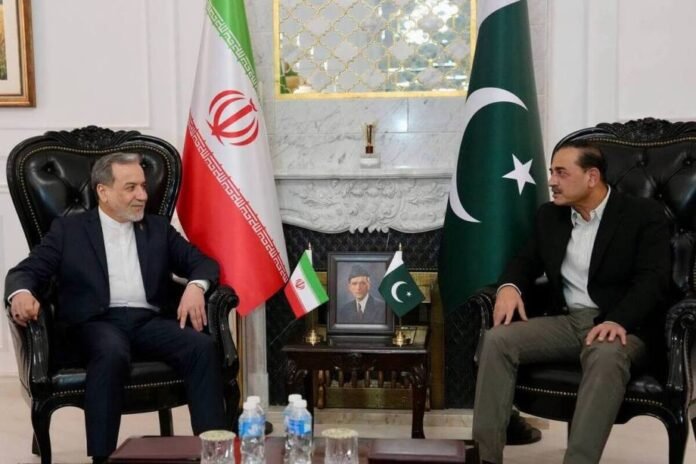
Iran has shared a “workable framework” with Pakistan aimed at permanently ending the US war, Foreign Minister Abbas Araghchi said on Saturday, Anadolu reports.

In a post on the US social media company X following a visit to Pakistan, Araghchi said discussions focused on efforts to restore stability in the region and end the conflict.

“We shared Iran’s position concerning a workable framework to permanently end the war on Iran,” he said, without providing further details.

Araghchi described the trip as “very fruitful,” praising Pakistan’s role in facilitating dialogue and its “brotherly efforts” to help bring peace back to the region.

He also expressed skepticism about Washington’s intentions.

“Have yet to see if the U.S. is truly serious about diplomacy,” he said.

Pakistan has been acting as an intermediary between Tehran and Washington amid ongoing tensions following recent military escalation.

READ: Trump cancels Witkoff, Kushner’s trip to Pakistan for talks with Iran

Araghchi arrived in Pakistan late Friday and met with Pakistan’s Prime Minister Shehbaz Sharif in Islamabad on Saturday, amid efforts to revive stalled peace talks between the US and Iran to end their eight-week war. He will also travel to Muscat and Moscow.

The first round was held in Islamabad two weeks ago but failed to reach an agreement to end the conflict that began on Feb. 28 and engulfed the entire Middle East. Those talks came after Pakistan brokered a two-week ceasefire on April 8, which was later extended by US President Donald Trump.

Meanwhile, US President Donald Trump on Saturday said that he has cancelled a planned trip to Pakistan by special envoy Steve Witkoff and adviser Jared Kushner.

“I’ve told my people a little while ago they were getting ready to leave, and I said, ‘Nope, you’re not making an 18 hour flight to go there. We have all the cards. They can call us anytime they want, but you’re not going to be making any more 18 hour flights to sit around talking about nothing’,” Trump told Fox News via phone.

Iran has refused to hold direct talks with the US and said observations would be conveyed to Pakistan.

Some of the sticking points are said to be the Strait of Hormuz, the US blockade of Iranian ports, and Iran’s enriched uranium.

READ: Iranian foreign minister meets Pakistan’s premier amid hopes for US talks

Six things I’ll remember when I think about Tim Cook’s version of Apple

0
six-things-i’ll-remember-when-i-think-about-tim-cook’s-version-of-apple
Six things I’ll remember when I think about Tim Cook’s version of Apple

Apple CEO Tim Cook announced this week that he’s stepping down from his position in September and handing the reins to John Ternus, currently the company’s senior vice president of Hardware Engineering and a 25-year employee.

This change had been telegraphed pretty far in advance, both by media reports (Bloomberg’s well-connected Mark Gurman flagged Ternus as a frontrunner in May 2024, and The New York Times gave him a glossy profile in January) and by Apple (when it announced the MacBook Neo last month, it was Ternus, not Cook, who delivered the prepared remarks).

I’ve been covering Apple for various outlets throughout Cook’s tenure as CEO, and I’ve been thinking a lot about how Apple has changed in the 15 years since he formally took over from an ailing Steve Jobs in the summer of 2011. Under Cook, the company has become less surprising but massively financially successful; some of Apple’s newer products have flopped or underperformed, but far more have become and stayed excellent thanks to years of competent iteration.

This isn’t a comprehensive list of everything Cook has done as CEO, but it’s my attempt at a big-picture, high-level summary and a snapshot of where Apple is now, to serve as a comparison point once Ternus kicks off his tenure.

Quiet hardware successes: Apple Watch, headphones, and more

Some of Apple’s best, most successful all-new hardware under Cook have been accessories like AirPods and the Apple Watch.

Some of Apple’s best, most successful all-new hardware under Cook have been accessories like AirPods and the Apple Watch. Credit: Apple

The Tim Cook era can’t lay claim to any single hardware announcement as important or far-reaching as the iPhone, the iPod, or even the iPad. Apple has definitely introduced good—even great—hardware in the last 15 years, though.

The main difference is that Apple products introduced during the Jobs era tended to belong at or near the center of your digital life. The Macintosh popularized the graphical user interface. The iPod was a constant musical companion on commutes, during workouts or study sessions, or when plugged into someone’s speaker at a party. The iPhone, obviously, became the most important personal computing device since the personal computer. And the iPad, as conceived by Jobs, was clearly intended to be a new kind of primary computing device (it was only under Cook that the iPad settled into its current in-betweener rut, computer-like but not computer-like enough to supplant the Mac’s mouse-and-pointer usage model).

Hardware introduced during Cook’s tenure, on the other hand, tended to be at its best when it extended or sat atop those Jobs-era products in some way. The AirPods and the wider universe of Beats headphones are the archetypal example—wireless headphones with just enough proprietary Apple technology in them that they’re much easier and more pleasant to use with other Apple products than typical Bluetooth headphones.

Similarly, the Apple Watch is a convenient way to tap into a tiny subset of your iPhone’s communication capabilities (plus fitness tracking). The HomePod is a speaker version of AirPods. I don’t know a kid with an iPad who doesn’t also have an Apple Pencil for doodling and sketching. Apple never released a TV set, but the Apple TV is the streaming box that makes the TV I already have feel the most like a TV and the least like a billboard. Apple never released a car, but it did introduce CarPlay, a useful add-on that is a prerequisite for me when I’m in the market for a car.

None of these products changed the face of their industries the way the iPod, iPhone, or iPad did, but they’ve all become ubiquitous, succeeding on the strength of Apple’s other products and services. That’s the kind of thing Cook’s Apple was good at inventing—reasons to stick around in Apple’s ecosystem once you’d already been drawn in.

Apple, the cloud services company

Apple’s Creator Studio app bundle is just one of the many subscription services the company now offers.

Apple’s Creator Studio app bundle is just one of the many subscription services the company now offers. Credit: Apple

Apple still makes the majority of its money from hardware, but especially in recent years, the steadiest growth has come from Apple’s services—things like iCloud, Apple Music, Apple TV (the service, not the box), and software subscriptions like the new Creator Studio bundle.

The iCloud branding was introduced at the tail end of Jobs’ tenure, but its growth (and the growth of most Apple services and subscriptions) all happened on Cook’s watch. In 2011, Cook’s first year as CEO, Apple brought in a then-record $102.5 billion in annual revenue; in 2025, the Services division alone pulled down more than $109 billion in revenue. Not bad for a collection of features that rose from the ashes of the failed MobileMe service (and .Mac and iTools before it).

I don’t think the rise and increasing importance of the Services division has been entirely good for Apple or its users. The need to convert customers into subscribers and to upsell current subscribers to higher service tiers means that Apple’s users are now subject to some of the same kinds of notifications and reminders that so richly annoy PC users in Windows 11.

The new Creator Studio versions of Pages, Keynote, and Numbers, while still free to use, are now festooned with purple buttons encouraging users to become paid subscribers. If you buy a new Apple product, the Settings app on all your other Apple devices will light up with free trials and AppleCare+ reminders. Every once in a while, I see a push notification for a movie or TV show I do not care about and have never given any indication of caring about.

Similar forces have led to ads that subtly clutter up Apple’s App Stores and some that occasionally expose users to low-quality and scammy apps. Similar ads will start showing up in the Maps app soon, and it remains to be seen how obtrusive and useful (or anti-useful) they’ll be.

A penchant for iteration

While it lacked somewhat in world-changing, all-new products, Cook’s Apple was also very good at relentlessly iterating on and improving Apple’s core products.

The iPad’s hardware evolution is a textbook example. When he took over in 2011, Apple sold one iPad: the iPad 2, an updated version of the original. Then it got a Retina screen. Then Apple made a mini version. Then it decided to make an even nicer, more expensive one called the iPad Pro. Then it made a cheap one to appeal to people who just needed something basic and functional. Then it revived the iPad Air as an in-betweener model to cover the gap between the cheap one and the expensive one. Over a yearslong process, Apple went from having a single one-size-fits-all iPad to offering a different model for just about every conceivable niche. The iPhone and Mac lineups have morphed in similar ways.

Calling all of these changes “iterative” can mask the impressiveness of the underlying achievements. Though it started under Jobs, the Apple Silicon initiative was a monumental accomplishment: taking low-power smartphone chips and relentless improving them, year after year, over the course of more than a decade, until they were power-efficient enough to power pocket-sized smartphones; cheap enough to build that they could go inside $99 smart speakers and $130 streaming boxes; and powerful enough to drive everything from the MacBook Pro to the Mac Studio desktop.

But even this transition was relatively unassuming on its face. If you’re a regular non-tech-savvy consumer who just buys a new MacBook Air when your old one breaks, the biggest achievement of the Apple Silicon switch is that it was almost entirely invisible.

Not every iteration has been a slam-dunk success. There’s an iPad for everyone, but the platform as a whole has felt stuck for a long time, with fast and capable hardware hampered by software that doesn’t take full advantage of it. The Mac went through a rough patch in the mid-to-late 2010s when the company neglected its desktops, and its laptops were saddled with unsatisfying and unreliable keyboards (Jony Ive and his maximalist pursuit of minimalism usually take the blame for these lackluster Macs, but they still happened on Cook’s watch). Apple’s software is also the source of on-and-off griping, with last year’s Liquid Glass redesign occasioning some particularly harsh criticism.

But Cook’s Apple operates on a reliable cadence; if you don’t like this year’s version of something, hey, you’re only a year or so away from a fresh iteration that could fix all your problems! Hope springs eternal.

A big swing that missed: Vision Pro

Apple’s Vision Pro headset was pitched as the future of computing, but if this is going to happen, it’s further in the future than Cook might have liked.

Apple’s Vision Pro headset was pitched as the future of computing, but if this is going to happen, it’s further in the future than Cook might have liked. Credit: Samuel Axon

Cook’s Apple has pitched a few ideas that didn’t go anywhere. Remember AirPower? Third-party Apple Watch apps? The fact that the post-2015 Apple TV was kind of supposed to be a game console? The last decade and a half of the Mac Pro?

But the company’s biggest swing-and-miss under Cook was the one time he made an explicitly Jobsian attempt to create a new device to live at the center of your digital life: the Vision Pro.

When Apple announced the Vision Pro in 2023, the company’s slick pre-recorded videos depicted a life built entirely around the headset. You would use Vision Pro to browse the web or look at spreadsheets and photos; you would watch a virtual screen on your Vision Pro rather than watching a TV; you would attend virtual meetings with your virtual avatars; you would wear your Vision Pro during your child’s birthday party so you could better record an immersive spatial video that you could then watch later (on your Vision Pro, natrually), reliving the moment that you kind-of-almost experienced while it was actually happening.

It’s difficult to judge this vision of the future on its own merits because the headset’s $3,499 starting price dramatically limited its appeal. But I’ve used a Vision Pro multiple times. It’s a product that demos exceptionally well, and it is a genuinely cool way to experience photos and video. But the idea of using one for multiple hours every day, or of trying to socialize in real life while the people around me try to meet my digital avatar’s dead eyes, is absurd.

Whether it’s because of the price or because people just don’t want a massive computer strapped to their face, the Vision Pro currently exists in some kind of purgatory. It was given a perfunctory update late last year to update its chip, but little effort was made to address any of its fundamental shortcomings, including the price. You’ll periodically see news about a new high-profile third-party app or new first-party apps and features. But consumer and app developer apathy have both kept Vision Pro from getting multiple must-have killer apps the way that the iPhone (and to a lesser extent, the iPad) did. A lack of killer apps means even less interest from buyers, which means even less reason for developers to bother.

Some reporting has already suggested that John Ternus didn’t love the Vision Pro. But he’s also said to be more “decisive” and less “deliberative” than Cook. Either way, this sounds like a death knell for the current product: It either goes away, or Ternus spearheads a dramatic rethinking that gives it a shot in the arm.

Vision Pro could still succeed in a different form at a different time; it’s well within the realm of possibility that Vision Pro will serve as the seed of a more successful product down the road. If this happened, though, it would be a different pathway to success than any other Apple product has followed.

Apple goes along to get along

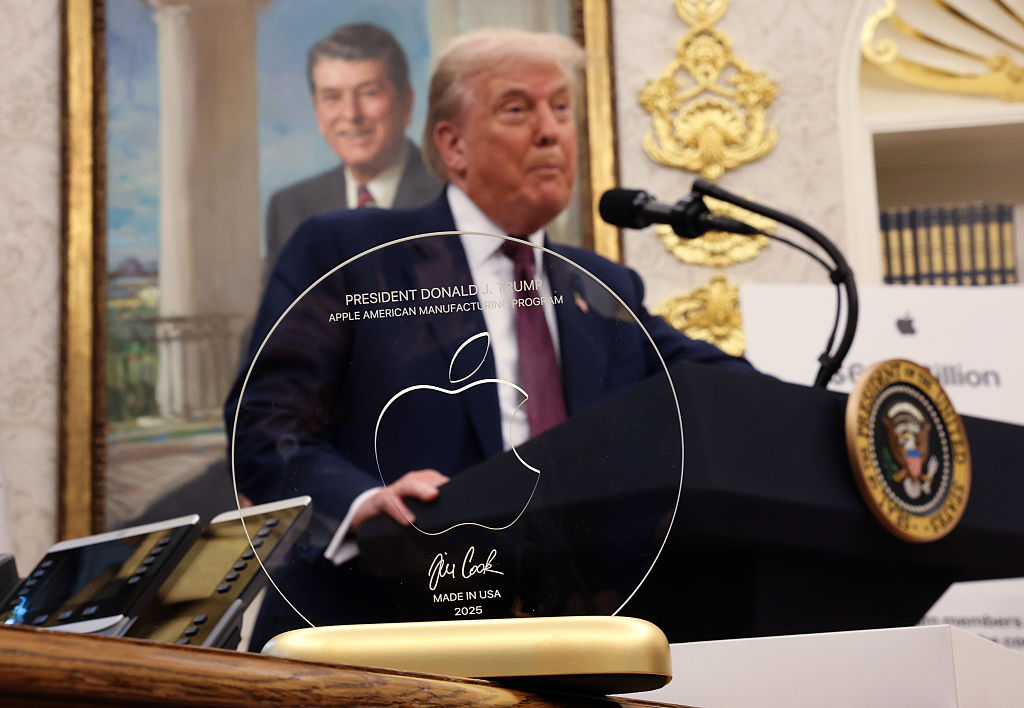
Donald Trump speaks behind an engraved glass disc gifted to him by Apple CEO Tim Cook during an event in the Oval Office of the White House.

Donald Trump speaks behind an engraved glass disc gifted to him by Apple CEO Tim Cook during an event in the Oval Office of the White House. Credit: Win McNamee / Staff | Getty Images News

Tim Cook generally seems keen to avoid expressing anything that might be perceived as a personal opinion in public. It’s not that the company is incapable of taking principled stands on topics like privacy and human rights (PDF). But under Cook, Apple has been willing to downplay these principles in the interest of the company’s bottom line. This is illustrated most clearly in Apple’s dealings with China and with the US government under Donald Trump.

Apple’s revenue soared precipitously in the mid-2010s partly due to strong sales in China. As COO under Jobs, Cook had overseen the outsourcing of most of Apple’s manufacturing to China and other countries, and by the mid-2010s, the iPhone was earning more in China than it was in the United States. But needing access to Chinese workers and customers also made Apple more reliant on the good graces of the Chinese government.

Reporting from The New York Times and elsewhere has highlighted the compromises Apple was willing to make to retain access to Chinese manufacturing and consumers. The company has engaged in censorship of the Chinese App Store, including removing news apps, and has moved user data to Chinese servers controlled by a state-owned company. The Chinese version of Apple Maps doesn’t recognize the sovereignty of Taiwan, and the Chinese version of iOS excludes Taiwan’s flag from the emoji keyboard. Apple has even allegedly removed the old “designed by Apple in California” markings from its products in response to criticism.

In Apple’s words, this kind of compliance aligns with what the company does in other countries: following the rules even when it doesn’t like them. But it’s a far cry from an earlier and more idealistic version of Silicon Valley, which occasionally declined to do business in China rather than comply with its government’s demands.

When it comes to Trump, Cook’s main move has been to appeal to the president’s stated interest in domestic manufacturing. During both Trump terms, Apple has loudly and publicly highlighted its domestic investments, including the manufacturing of certain Mac models and data center servers; commitments to TSMC and other chip companies with US-based operations; funding for US-based TV and film productions; and training opportunities for US-based employees and workers.

During Trump’s second term, Cook has also joined most other tech executives in lavishing Trump more directly with money and praise, the kind of performative obsequiousness that many CEOs have engaged in to secure contracts, tariff exemptions, and other forms of preferential treatment. Cook personally donated $1 million to Trump’s inauguration, which he also attended; Apple has donated an undisclosed amount to Trump’s White House ballroom project; and Cook personally delivered an autographed statue to the president along with more commitments to domestic investment. In the words of the president himself, Cook has been more than willing to “kiss [his] ass” in exchange for “BIG HELPS.”

And as in China, these efforts to curry favor have (so far) gotten Apple what it has wanted. The company has never come close to making a single iPhone or even a MacBook entirely in the US, but it has also repeatedly avoided the worst of the administration’s various tariff regimes.

Whether Jobs, Ternus, or any other CEO would have handled these situations any differently is up for debate. But one of Cook’s duties as Apple’s executive board chairman will be “engaging with policymakers around the world.” To me, that signals he will continue to be Apple’s face in dealing with governments and politicians, suggesting that Ternus’ Apple will maintain its mostly conciliatory, bottom-line-maximizing approach.

Pivot to video

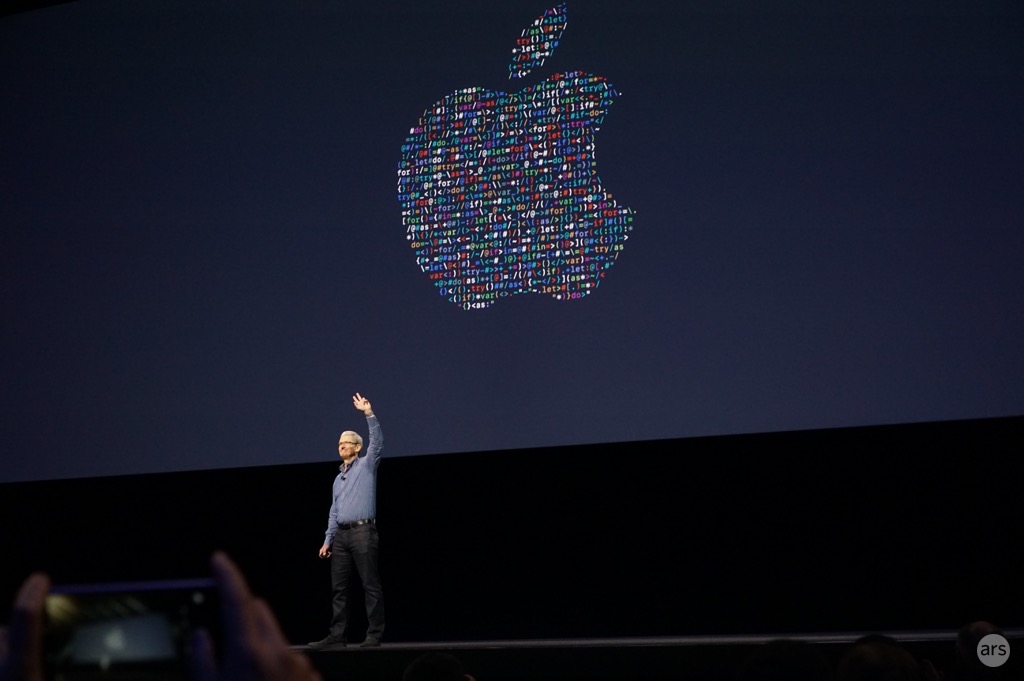
Cook at WWDC in 2015. The live-on-stage segments of Apple’s announcements have gradually faded to almost nothing, in favor of slick pre-recorded videos.

Cook at WWDC in 2015. The live-on-stage segments of Apple’s announcements have gradually faded to almost nothing, in favor of slick pre-recorded videos. Credit: Andrew Cunningham

To end on a lighter note: I’ve attended dozens of Apple events at this point, and one of the biggest changes over Cook’s tenure at Apple has been how it unveils its new products.

When people talk about Steve Jobs’ “reality distortion field,” what they are mostly talking about is his sense of showmanship. He wasn’t a wild-eyed infomercial spokesman or carnival barker like some of his peers could be, but he was gifted at using a presentation to tell a story and using that story to make his audience buy into what he wanted them to. Jobs made the products the star of any Apple presentation, but he was usually second-billed.

Cook clearly never had the zeal for the stage that Jobs did, and from early in his tenure, he seemed content to take the stage mostly to deliver introductory remarks and then pass the baton to someone else. Starting during the pandemic, the live-on-stage sections of Apple’s product events (and developer sessions) essentially ended, in favor of more heavily produced pre-recorded video.

These videos still usually feature a person on a stage in front of a screen accompanied by a slide deck. They’re also delivering the same basic information about the improvements and benefits of new products. You’re just not looking at a person presenting live on a real stage in front of a real screen anymore.

This is probably a bit easier on the people doing the presenting—to know they can flub a line or do another take —and to never have to be afraid that a demo will fail because of non-compliant Wi-Fi. But above all, it makes these presentations more predictable, and for better or worse, predictability is one of the hallmarks of Cook’s time as Apple’s CEO.

0FansLike
0FollowersFollow
0FollowersFollow
0SubscribersSubscribe
- Advertisement -
Google search engine

Recent Posts