EU loan throws Ukraine a lifeline but more help needed for war
The approval of a 90-billion-euro European Union loan throws Ukraine a lifeline, averting deep cuts to public services, but Kyiv may need more money to meet its military needs this year, economists and officials said.
Ukraine’s budget foresees a massive deficit of around 1.9 trillion hryvnias ($43 billion) in 2026 – around one fifth of economic output – but economists say it significantly underestimates the cost of the war with Russia.
Maksym Samoiliuk, economist at the Centre for Economic Strategy, a Kyiv-based think tank, said military spending would be more realistically assessed now the delayed loan had been approved to take into account factors such as a pay rise for military personnel, expected this summer.
“The loan is crucial as it creates the space needed to address pressures in Ukraine’s defence budget,” Samoiliuk said.
Only half of the 90 billion euros will be disbursed to Ukraine this year, with the remainder coming in 2027. The bulk of the loan is earmarked for military spending, with around 17 billion euros each year destined for general budget needs such as health and education.
In addition to Ukraine’s own military budget, a group of more than 20 allies funds purchases of U.S.-made weapons under the PURL program.
Hungary’s Prime Minister Viktor Orban had blocked the EU loan for months after accusing Ukraine of dragging its feet with the repair of an oil pipeline Kyiv said was damaged by a Russian drone. The pipeline carries Russian oil to Hungary and Slovakia.
The resumption of oil flows on Wednesday – which followed Orban’s defeat in an April 12 election – opened the way for EU ambassadors’ approval of the loan.
Yuliya Markuts, Vice President for Macro and Public Finance at KSE Institute, an economic think tank in Kyiv, estimated that the budget for defence spending would need to be revised higher by up to 10 billion euros, depending on how the conflict unfolded on the frontline.
Last year, Ukraine also raised its military expenditure forecasts, Markuts said, with part of that covered by government bond issuances as well as lending from the Extraordinary Revenue Acceleration (ERA) loans, a G7 initiative.
“How will it be this year? It’s hard to say now, but there could be some kind of repeating this,” she said, adding that it was also possible the EU loan might cover the revised budget.
‘CONFIDENCE IN TOMORROW’
Economists had said Ukraine would start to run out of money by June if the EU loan was not disbursed by then, requiring deep cuts to public services.
Many Ukrainians breathed a sigh of relief after the aid package won approval from EU ambassadors on Wednesday. The humanitarian sector in Ukraine has already been hard hit by U.S. aid cutbacks under President Donald Trump.
Hanna Fedotova, a 58-year-old nursery caregiver, said the EU funding provided stability for Ukraine’s state institutions, “and, crucially, for education and development”.
“This aid is about having confidence in tomorrow, the certainty that we will be able to keep doing our jobs,” Fedotova said in a basement nursery in the southeastern city of Zaporizhzhia, around 40 km (25 miles) from the frontline.
The EU loan only needs to be repaid if Russia makes war reparations to Ukraine.
President Volodymyr Zelenskiy has said that, even with the EU loan, Ukraine still needs additional funding for the war.
“We talk about 90 billion and say that this amount covers everything. That’s false,” Zelenskiy told Reuters in an interview last month.
MORE MONEY NEEDED
Zelenskiy said the loan only allows Ukraine to order 60% of the weapons its domestic industry has the capacity to produce. Ukraine also needed to find 5 billion euros to strengthen its electricity sector after Russian attacks.
And, even though allies spent nearly $5 billion on the PURL weapons program last year, mostly air defence equipment, Zelenskiy said Ukraine needed $15 billion.
“We can’t protect everything, even though we must do so. So where to take the money from?” he said, adding he hoped defence cooperation agreements with Gulf states might provide additional funding.
The EU acknowledges its two-year loan only covers around two-thirds of Ukraine’s external financing needs. For 2027, international partners still need to commit the remaining financing, EU Economy Commissioner Valdis Dombrovskis said, though funding needs for this year would be covered.
Ukraine has other sources of financing. Prime Minister Yulia Svyrydenko said last week it would soon receive 2.7 billion euros from the EU’s Ukraine Facility, after parliament approved some overdue reforms. Ukraine also agreed in February a four-year, $8.1 billion IMF loan.
All of this money comes with strings attached – including governance and tax reforms, some of them deeply unpopular. The IMF agreed last week to postpone the imposition of VAT on entrepreneurs after parliament baulked at the measure.
“Ukraine’s capacity to sustain the momentum of reforms will be the most pressing issue going forward,” Samoiliuk said. “Ukraine’s international partners should apply more pressure… and emphasise that Ukraine itself needs these reforms.”
You are here: Home/All RECIPES/ Crunchy Lentil Crackers (High-Protein, Gluten-Free & Easy)
These lentil crackers are ultra crunchy, nutritious, and incredibly easy to make! Packed with plant-based protein and fiber, they’re a wholesome snack made almost entirely from lentils—no grains, no gluten, and completely vegan. Perfect for dipping, snacking, or adding to a healthy platter!
🌱 Why You’ll Love These Lentil Crackers
High in protein & fiber
Grain-free, gluten-free & vegan
Super crunchy & satisfying
Simple blend-and-bake recipe
Easily customizable flavors
Made with just a few pantry staples, these crackers are a much healthier alternative to store-bought chips—no preservatives, just clean, nourishing ingredients.
🛒 Ingredients (Serves 4)
1 cup (200 g) dried red lentils
½ cup (120 ml) water
1 garlic clove
1 tsp salt
Onion powder, paprika, turmeric (to taste)
1–2 tbsp oil
👩🍳 Instructions
1. Soak the Lentils
Rinse lentils thoroughly, then soak in plenty of water for at least 2 hours. Drain, rinse again, and pat dry.
2. Blend
Blend lentils with water, garlic, and seasonings until completely smooth.
3. Spread the Batter
Preheat oven to 375°F (190°C). Pour mixture onto a lined baking tray and spread evenly (about 2–3 mm thick).
4. First Bake
Bake for 20 minutes, then remove from oven.
5. Cut & Season
Cut into desired shapes (squares, triangles, etc.). Drizzle with oil and spread out evenly.
6. Final Bake
Bake for another 10 minutes until golden and crispy.
7. Cool & Enjoy
Let cool completely—this is when they become extra crunchy!
💡 Tips for Perfect Crackers
Spread batter thinly (2–3 mm) for best crunch
Blend until completely smooth to avoid grainy texture
Remove edges early if they cook faster
Let cool fully to crisp up properly
🌿 Flavor Variations
Herbs: rosemary, thyme, oregano, basil
Spices: cumin, chili flakes, curry powder
Cheesy flavor: nutritional yeast
Seeds: sesame, flax, chia, sunflower
Sweet version: cinnamon + a touch of sugar
🍽️ Serving Ideas
With dips like hummus, guacamole, or salsa
On charcuterie boards with olives, nuts, and spreads
Alongside soups and salads
With nut butter and fruit for a sweet snack
🧊 Storage
Room temperature: 5–7 days (airtight container)
Freezer: up to 3 months 👉 Re-crisp in oven if needed
❓ FAQs
Why are my crackers soft? They may be too thick or underbaked—reheat briefly to crisp up.
Can I make them oil-free? Yes, but they may be less crispy and need longer baking time.
Can I use a food processor? Yes, but a blender gives a smoother batter.
Iran shared with Pakistan ‘workable framework’ to permanently end US war: Foreign minister
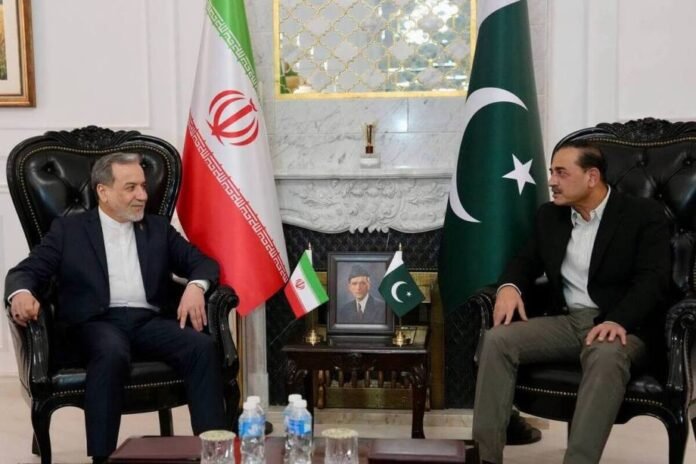
Iran has shared a “workable framework” with Pakistan aimed at permanently ending the US war, Foreign Minister Abbas Araghchi said on Saturday, Anadolu reports.
In a post on the US social media company X following a visit to Pakistan, Araghchi said discussions focused on efforts to restore stability in the region and end the conflict.
“We shared Iran’s position concerning a workable framework to permanently end the war on Iran,” he said, without providing further details.
Araghchi described the trip as “very fruitful,” praising Pakistan’s role in facilitating dialogue and its “brotherly efforts” to help bring peace back to the region.
He also expressed skepticism about Washington’s intentions.
“Have yet to see if the U.S. is truly serious about diplomacy,” he said.
Pakistan has been acting as an intermediary between Tehran and Washington amid ongoing tensions following recent military escalation.
READ: Trump cancels Witkoff, Kushner’s trip to Pakistan for talks with Iran
Araghchi arrived in Pakistan late Friday and met with Pakistan’s Prime Minister Shehbaz Sharif in Islamabad on Saturday, amid efforts to revive stalled peace talks between the US and Iran to end their eight-week war. He will also travel to Muscat and Moscow.
The first round was held in Islamabad two weeks ago but failed to reach an agreement to end the conflict that began on Feb. 28 and engulfed the entire Middle East. Those talks came after Pakistan brokered a two-week ceasefire on April 8, which was later extended by US President Donald Trump.
Meanwhile, US President Donald Trump on Saturday said that he has cancelled a planned trip to Pakistan by special envoy Steve Witkoff and adviser Jared Kushner.
“I’ve told my people a little while ago they were getting ready to leave, and I said, ‘Nope, you’re not making an 18 hour flight to go there. We have all the cards. They can call us anytime they want, but you’re not going to be making any more 18 hour flights to sit around talking about nothing’,” Trump told Fox News via phone.
Iran has refused to hold direct talks with the US and said observations would be conveyed to Pakistan.
Some of the sticking points are said to be the Strait of Hormuz, the US blockade of Iranian ports, and Iran’s enriched uranium.
READ: Iranian foreign minister meets Pakistan’s premier amid hopes for US talks
Six things I’ll remember when I think about Tim Cook’s version of Apple
Apple CEO Tim Cook announced this week that he’s stepping down from his position in September and handing the reins to John Ternus, currently the company’s senior vice president of Hardware Engineering and a 25-year employee.
This change had been telegraphed pretty far in advance, both by media reports (Bloomberg’s well-connected Mark Gurman flagged Ternus as a frontrunner in May 2024, and The New York Times gave him a glossy profile in January) and by Apple (when it announced the MacBook Neo last month, it was Ternus, not Cook, who delivered the prepared remarks).
I’ve been covering Apple for various outlets throughout Cook’s tenure as CEO, and I’ve been thinking a lot about how Apple has changed in the 15 years since he formally took over from an ailing Steve Jobs in the summer of 2011. Under Cook, the company has become less surprising but massively financially successful; some of Apple’s newer products have flopped or underperformed, but far more have become and stayed excellent thanks to years of competent iteration.
This isn’t a comprehensive list of everything Cook has done as CEO, but it’s my attempt at a big-picture, high-level summary and a snapshot of where Apple is now, to serve as a comparison point once Ternus kicks off his tenure.
Quiet hardware successes: Apple Watch, headphones, and more
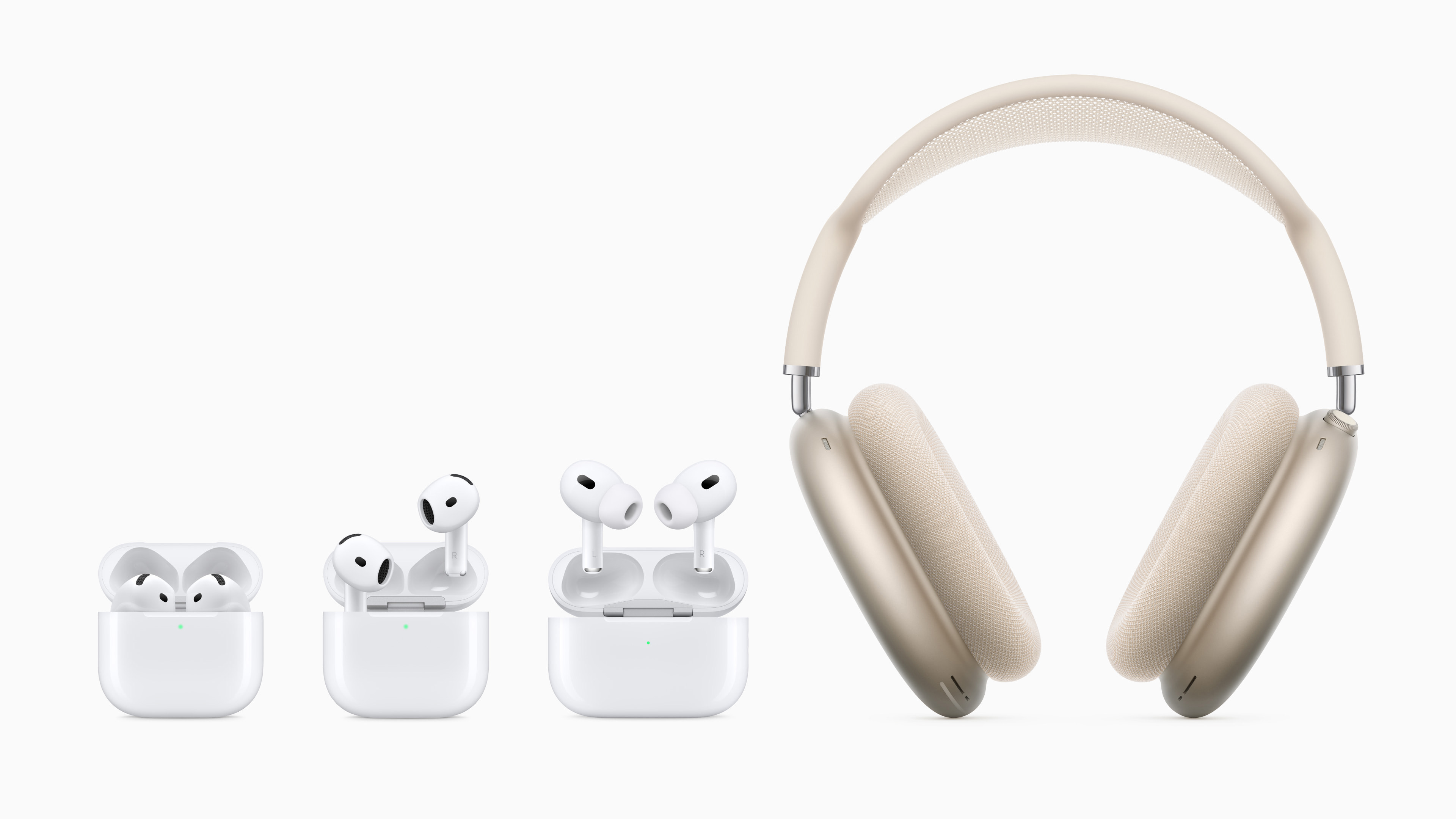
Some of Apple’s best, most successful all-new hardware under Cook have been accessories like AirPods and the Apple Watch.
Credit: Apple
Some of Apple’s best, most successful all-new hardware under Cook have been accessories like AirPods and the Apple Watch. Credit: Apple
The Tim Cook era can’t lay claim to any single hardware announcement as important or far-reaching as the iPhone, the iPod, or even the iPad. Apple has definitely introduced good—even great—hardware in the last 15 years, though.
The main difference is that Apple products introduced during the Jobs era tended to belong at or near the center of your digital life. The Macintosh popularized the graphical user interface. The iPod was a constant musical companion on commutes, during workouts or study sessions, or when plugged into someone’s speaker at a party. The iPhone, obviously, became the most important personal computing device since the personal computer. And the iPad, as conceived by Jobs, was clearly intended to be a new kind of primary computing device (it was only under Cook that the iPad settled into its current in-betweener rut, computer-like but not computer-like enough to supplant the Mac’s mouse-and-pointer usage model).
Hardware introduced during Cook’s tenure, on the other hand, tended to be at its best when it extended or sat atop those Jobs-era products in some way. The AirPods and the wider universe of Beats headphones are the archetypal example—wireless headphones with just enough proprietary Apple technology in them that they’re much easier and more pleasant to use with other Apple products than typical Bluetooth headphones.
Similarly, the Apple Watch is a convenient way to tap into a tiny subset of your iPhone’s communication capabilities (plus fitness tracking). The HomePod is a speaker version of AirPods. I don’t know a kid with an iPad who doesn’t also have an Apple Pencil for doodling and sketching. Apple never released a TV set, but the Apple TV is the streaming box that makes the TV I already have feel the most like a TV and the least like a billboard. Apple never released a car, but it did introduce CarPlay, a useful add-on that is a prerequisite for me when I’m in the market for a car.
None of these products changed the face of their industries the way the iPod, iPhone, or iPad did, but they’ve all become ubiquitous, succeeding on the strength of Apple’s other products and services. That’s the kind of thing Cook’s Apple was good at inventing—reasons to stick around in Apple’s ecosystem once you’d already been drawn in.
Apple, the cloud services company
Apple’s Creator Studio app bundle is just one of the many subscription services the company now offers.
Credit: Apple
Apple’s Creator Studio app bundle is just one of the many subscription services the company now offers. Credit: Apple
Apple still makes the majority of its money from hardware, but especially in recent years, the steadiest growth has come from Apple’s services—things like iCloud, Apple Music, Apple TV (the service, not the box), and software subscriptions like the new Creator Studio bundle.
The iCloud branding was introduced at the tail end of Jobs’ tenure, but its growth (and the growth of most Apple services and subscriptions) all happened on Cook’s watch. In 2011, Cook’s first year as CEO, Apple brought in a then-record $102.5 billion in annual revenue; in 2025, the Services division alone pulled down more than $109 billion in revenue. Not bad for a collection of features that rose from the ashes of the failed MobileMe service (and .Mac and iTools before it).
I don’t think the rise and increasing importance of the Services division has been entirely good for Apple or its users. The need to convert customers into subscribers and to upsell current subscribers to higher service tiers means that Apple’s users are now subject to some of the same kinds of notifications and reminders that so richly annoy PC users in Windows 11.
The new Creator Studio versions of Pages, Keynote, and Numbers, while still free to use, are now festooned with purple buttons encouraging users to become paid subscribers. If you buy a new Apple product, the Settings app on all your other Apple devices will light up with free trials and AppleCare+ reminders. Every once in a while, I see a push notification for a movie or TV show I do not care about and have never given any indication of caring about.
Similar forces have led to ads that subtly clutter up Apple’s App Stores and some that occasionally expose users to low-quality and scammy apps. Similar ads will start showing up in the Maps app soon, and it remains to be seen how obtrusive and useful (or anti-useful) they’ll be.
A penchant for iteration
While it lacked somewhat in world-changing, all-new products, Cook’s Apple was also very good at relentlessly iterating on and improving Apple’s core products.
The iPad’s hardware evolution is a textbook example. When he took over in 2011, Apple sold one iPad: the iPad 2, an updated version of the original. Then it got a Retina screen. Then Apple made a mini version. Then it decided to make an even nicer, more expensive one called the iPad Pro. Then it made a cheap one to appeal to people who just needed something basic and functional. Then it revived the iPad Air as an in-betweener model to cover the gap between the cheap one and the expensive one. Over a yearslong process, Apple went from having a single one-size-fits-all iPad to offering a different model for just about every conceivable niche. The iPhone and Mac lineups have morphed in similar ways.
Calling all of these changes “iterative” can mask the impressiveness of the underlying achievements. Though it started under Jobs, the Apple Silicon initiative was a monumental accomplishment: taking low-power smartphone chips and relentless improving them, year after year, over the course of more than a decade, until they were power-efficient enough to power pocket-sized smartphones; cheap enough to build that they could go inside $99 smart speakers and $130 streaming boxes; and powerful enough to drive everything from the MacBook Pro to the Mac Studio desktop.
But even this transition was relatively unassuming on its face. If you’re a regular non-tech-savvy consumer who just buys a new MacBook Air when your old one breaks, the biggest achievement of the Apple Silicon switch is that it was almost entirely invisible.
Not every iteration has been a slam-dunk success. There’s an iPad for everyone, but the platform as a whole has felt stuck for a long time, with fast and capable hardware hampered by software that doesn’t take full advantage of it. The Mac went through a rough patch in the mid-to-late 2010s when the company neglected its desktops, and its laptops were saddled with unsatisfying and unreliable keyboards (Jony Ive and his maximalist pursuit of minimalism usually take the blame for these lackluster Macs, but they still happened on Cook’s watch). Apple’s software is also the source of on-and-off griping, with last year’s Liquid Glass redesign occasioning some particularly harsh criticism.
But Cook’s Apple operates on a reliable cadence; if you don’t like this year’s version of something, hey, you’re only a year or so away from a fresh iteration that could fix all your problems! Hope springs eternal.
A big swing that missed: Vision Pro
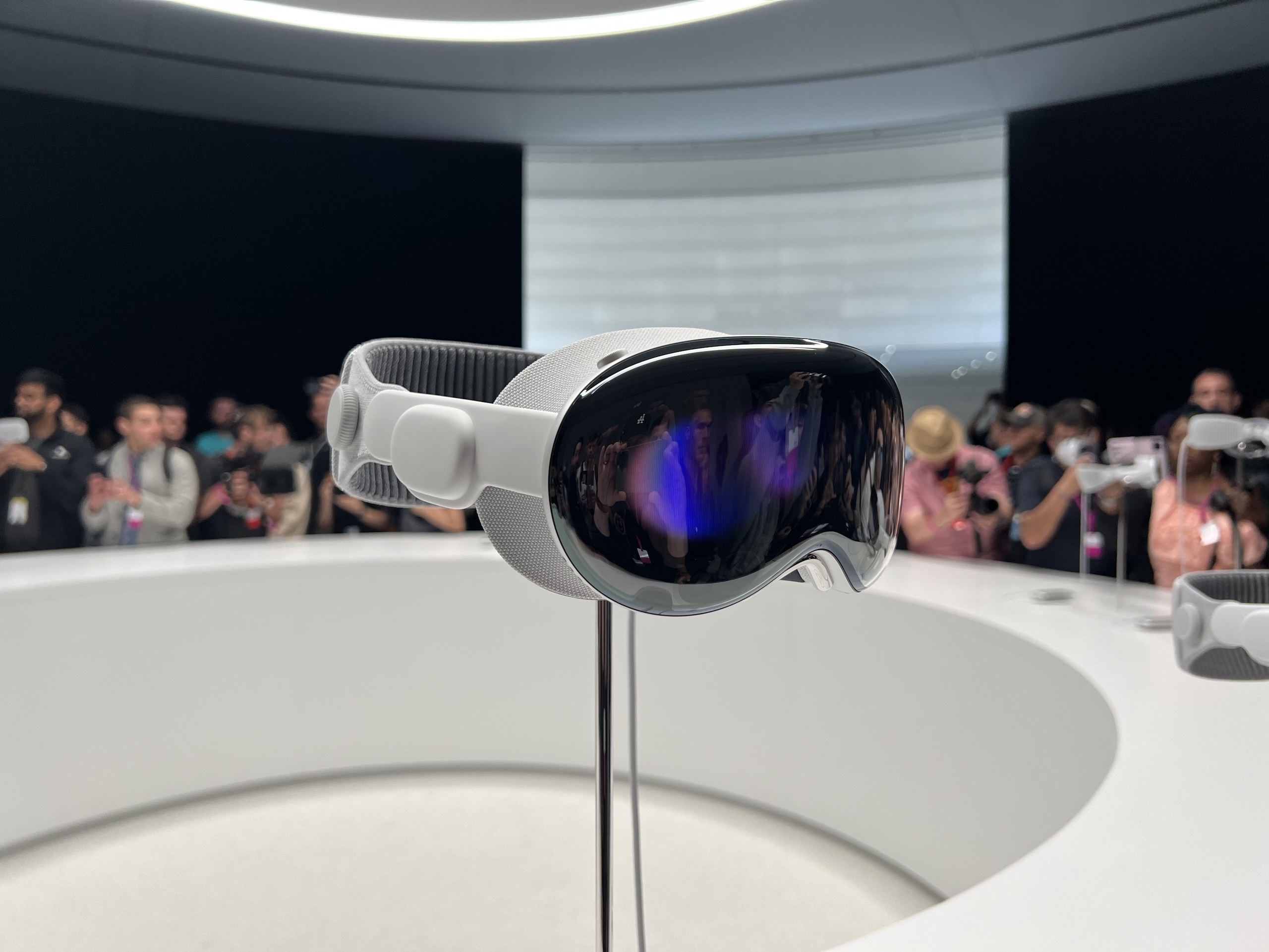
Apple’s Vision Pro headset was pitched as the future of computing, but if this is going to happen, it’s further in the future than Cook might have liked.
Credit: Samuel Axon
Apple’s Vision Pro headset was pitched as the future of computing, but if this is going to happen, it’s further in the future than Cook might have liked. Credit: Samuel Axon
But the company’s biggest swing-and-miss under Cook was the one time he made an explicitly Jobsian attempt to create a new device to live at the center of your digital life: the Vision Pro.
When Apple announced the Vision Pro in 2023, the company’s slick pre-recorded videos depicted a life built entirely around the headset. You would use Vision Pro to browse the web or look at spreadsheets and photos; you would watch a virtual screen on your Vision Pro rather than watching a TV; you would attend virtual meetings with your virtual avatars; you would wear your Vision Pro during your child’s birthday party so you could better record an immersive spatial video that you could then watch later (on your Vision Pro, natrually), reliving the moment that you kind-of-almost experienced while it was actually happening.
It’s difficult to judge this vision of the future on its own merits because the headset’s $3,499 starting price dramatically limited its appeal. But I’ve used a Vision Pro multiple times. It’s a product that demos exceptionally well, and it is a genuinely cool way to experience photos and video. But the idea of using one for multiple hours every day, or of trying to socialize in real life while the people around me try to meet my digital avatar’s dead eyes, is absurd.
Whether it’s because of the price or because people just don’t want a massive computer strapped to their face, the Vision Pro currently exists in some kind of purgatory. It was given a perfunctory update late last year to update its chip, but little effort was made to address any of its fundamental shortcomings, including the price. You’ll periodically see news about a new high-profile third-party app or new first-party apps and features. But consumer and app developer apathy have both kept Vision Pro from getting multiple must-have killer apps the way that the iPhone (and to a lesser extent, the iPad) did. A lack of killer apps means even less interest from buyers, which means even less reason for developers to bother.
Some reporting has already suggested that John Ternus didn’t love the Vision Pro. But he’s also said to be more “decisive” and less “deliberative” than Cook. Either way, this sounds like a death knell for the current product: It either goes away, or Ternus spearheads a dramatic rethinking that gives it a shot in the arm.
Vision Pro could still succeed in a different form at a different time; it’s well within the realm of possibility that Vision Pro will serve as the seed of a more successful product down the road. If this happened, though, it would be a different pathway to success than any other Apple product has followed.
Apple goes along to get along
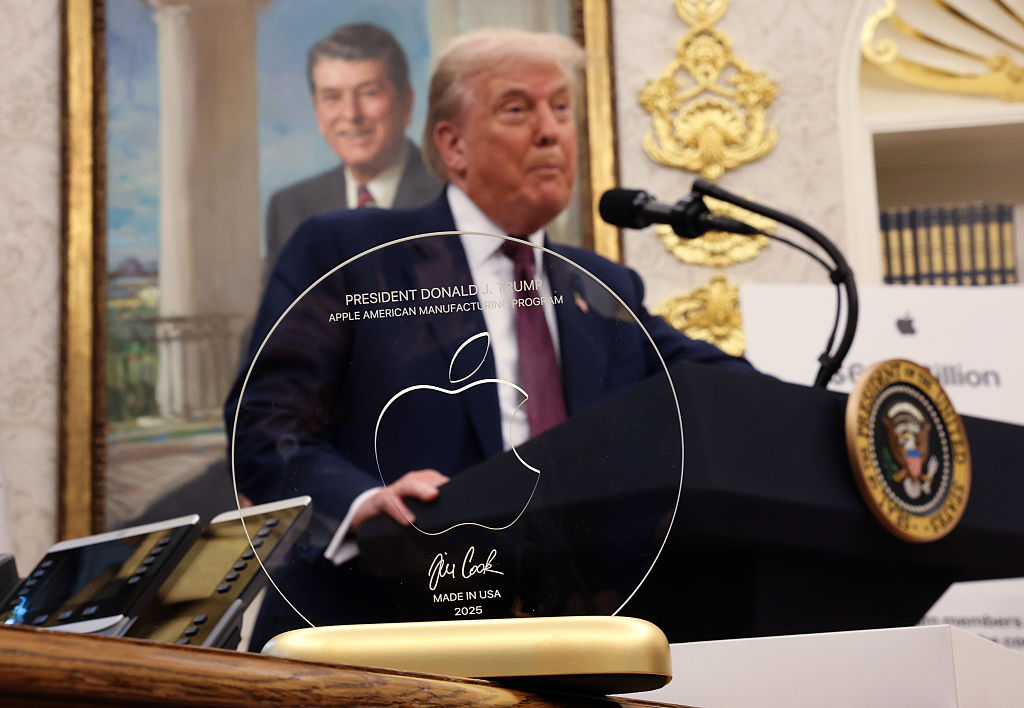
Donald Trump speaks behind an engraved glass disc gifted to him by Apple CEO Tim Cook during an event in the Oval Office of the White House.
Donald Trump speaks behind an engraved glass disc gifted to him by Apple CEO Tim Cook during an event in the Oval Office of the White House. Credit: Win McNamee / Staff | Getty Images News
Tim Cook generally seems keen to avoid expressing anything that might be perceived as a personal opinion in public. It’s not that the company is incapable of taking principled stands on topics like privacy and human rights (PDF). But under Cook, Apple has been willing to downplay these principles in the interest of the company’s bottom line. This is illustrated most clearly in Apple’s dealings with China and with the US government under Donald Trump.
Apple’s revenue soared precipitously in the mid-2010s partly due to strong sales in China. As COO under Jobs, Cook had overseen the outsourcing of most of Apple’s manufacturing to China and other countries, and by the mid-2010s, the iPhone was earning more in China than it was in the United States. But needing access to Chinese workers and customers also made Apple more reliant on the good graces of the Chinese government.
Reporting from The New York Times and elsewhere has highlighted the compromises Apple was willing to make to retain access to Chinese manufacturing and consumers. The company has engaged in censorship of the Chinese App Store, including removing news apps, and has moved user data to Chinese servers controlled by a state-owned company. The Chinese version of Apple Maps doesn’t recognize the sovereignty of Taiwan, and the Chinese version of iOS excludes Taiwan’s flag from the emoji keyboard. Apple has even allegedly removed the old “designed by Apple in California” markings from its products in response to criticism.
In Apple’s words, this kind of compliance aligns with what the company does in other countries: following the rules even when it doesn’t like them. But it’s a far cry from an earlier and more idealistic version of Silicon Valley, which occasionally declined to do business in China rather than comply with its government’s demands.
When it comes to Trump, Cook’s main move has been to appeal to the president’s stated interest in domestic manufacturing. During both Trump terms, Apple has loudly and publicly highlightedits domestic investments, including the manufacturing of certain Mac models and data center servers; commitments to TSMC and other chip companies with US-based operations; funding for US-based TV and film productions; and training opportunities for US-based employees and workers.
During Trump’s second term, Cook has also joined most other tech executives in lavishing Trump more directly with money and praise, the kind of performative obsequiousness that many CEOs have engaged in to secure contracts, tariff exemptions, and other forms of preferential treatment. Cook personally donated $1 million to Trump’s inauguration, which he also attended; Apple has donated an undisclosed amount to Trump’s White House ballroom project; and Cook personally delivered an autographed statue to the president along with more commitments to domestic investment. In the words of the president himself, Cook has been more than willing to “kiss [his] ass” in exchange for “BIG HELPS.”
And as in China, these efforts to curry favor have (so far) gotten Apple what it has wanted. The company has never come close to making a single iPhone or even a MacBook entirely in the US, but it has also repeatedly avoided the worst of the administration’s various tariff regimes.
Whether Jobs, Ternus, or any other CEO would have handled these situations any differently is up for debate. But one of Cook’s duties as Apple’s executive board chairman will be “engaging with policymakers around the world.” To me, that signals he will continue to be Apple’s face in dealing with governments and politicians, suggesting that Ternus’ Apple will maintain its mostly conciliatory, bottom-line-maximizing approach.
Pivot to video
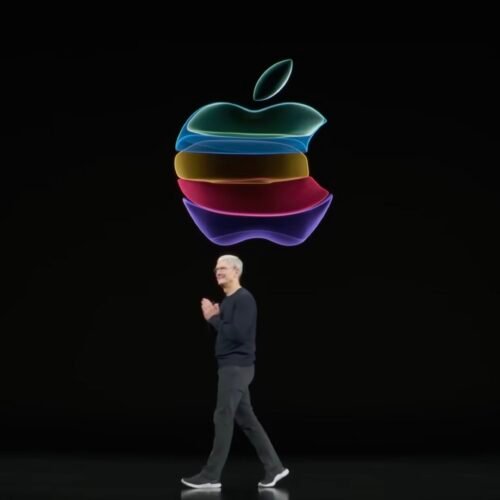
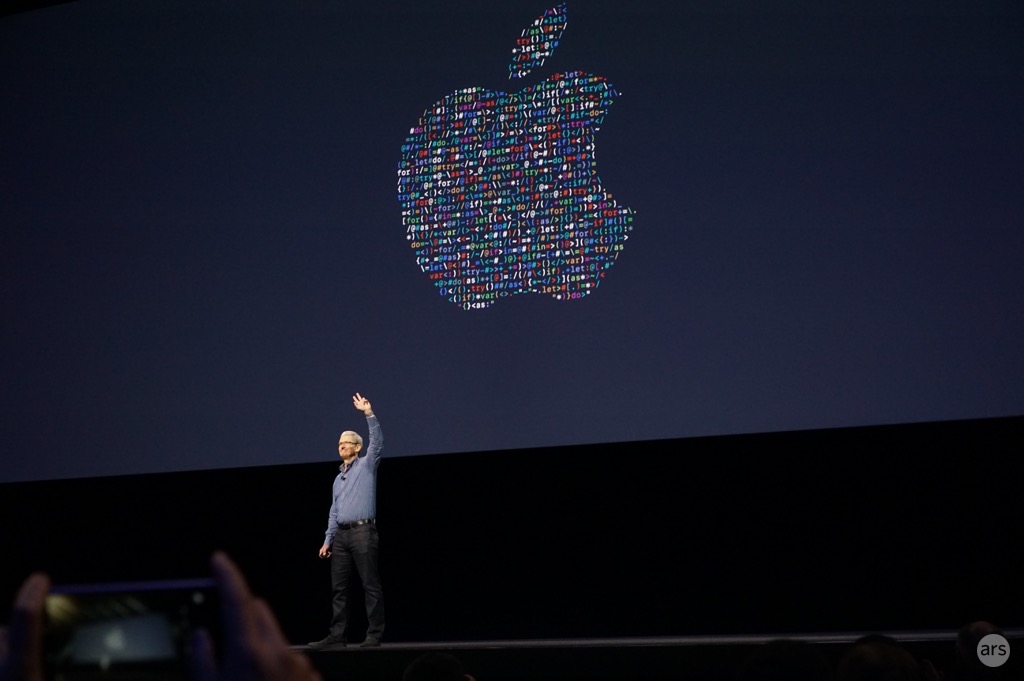
Cook at WWDC in 2015. The live-on-stage segments of Apple’s announcements have gradually faded to almost nothing, in favor of slick pre-recorded videos.
Credit: Andrew Cunningham
Cook at WWDC in 2015. The live-on-stage segments of Apple’s announcements have gradually faded to almost nothing, in favor of slick pre-recorded videos. Credit: Andrew Cunningham
To end on a lighter note: I’ve attended dozens of Apple events at this point, and one of the biggest changes over Cook’s tenure at Apple has been how it unveils its new products.
When people talk about Steve Jobs’ “reality distortion field,” what they are mostly talking about is his sense of showmanship. He wasn’t a wild-eyed infomercial spokesman or carnival barker like some of his peers could be, but he was gifted at using a presentation to tell a story and using that story to make his audience buy into what he wanted them to. Jobs made the products the star of any Apple presentation, but he was usually second-billed.
Cook clearly never had the zeal for the stage that Jobs did, and from early in his tenure, he seemed content to take the stage mostly to deliver introductory remarks and then pass the baton to someone else. Starting during the pandemic, the live-on-stage sections of Apple’s product events (and developer sessions) essentially ended, in favor of more heavily produced pre-recorded video.
These videos still usually feature a person on a stage in front of a screen accompanied by a slide deck. They’re also delivering the same basic information about the improvements and benefits of new products. You’re just not looking at a person presenting live on a real stage in front of a real screen anymore.
This is probably a bit easier on the people doing the presenting—to know they can flub a line or do another take —and to never have to be afraid that a demo will fail because of non-compliant Wi-Fi. But above all, it makes these presentations more predictable, and for better or worse, predictability is one of the hallmarks of Cook’s time as Apple’s CEO.
Japanese parties pressure PM Takaichi on Hormuz energy crisis
Her Liberal Democratic Party officials present Prime Minister Takaichi Sanae with proposals for managing the Hormuz crisis. Photo: LDP
Japan’s Liberal Democratic Party (LDP) policy chief Takayuki Kobayashi met with Prime Minister Sanae Takaichi on Friday, April 24, and delivered a series of proposals for the government’s response to the Hormuz crisis, including a call to consider dispatching minesweepers once the conflict is over.
The bulk of the proposals, however, focused on measures to contain price increases and ensure adequate supplies as the crisis shows few signs of abating. (The full set of proposals is available here.)
Takaichi has continued to focus on reassuring the public that the situation is under control, stating for example in the Diet Friday that the government is working on resolving bottlenecks in Japan’s distribution of naptha – even as producers have warned that shortages could lead them to scale back production.
Meanwhile, at a meeting of the cabinet committee on the situation in the Middle East Friday, the prime minister said that the government had secured oil supplies for May from alternate sources totaling roughly 60% of Japan’s May 2025 usage.
She instructed her government to aim to top this figure for June.
In the face of the Takaichi government’s focus on managing supplies instead of taking demand-side measures, the Centrist Reform Alliance (CRA) and its affiliated parties are calling for an early supplemental budget to address the crisis.
However, as Toyo Keizai columnist Kanbee warns, despite leading indicators pointing to slowing demand, the lessons from the oil shocks of the 1970s should caution the government against relying of fiscal stimulus to aid consumers.
Meanwhile, a Nikkei panel of economists favors both measures to promote conservation and reducing or phasing out gasoline subsidies.
This article is republished with permission from Tobias Harris’s newsletter Observing Japan.
Syrian Officials Announce Arrest of Amjad al-Yusuf for Alleged War Crimes
[DAMASCUS] The Syrian Ministry of Interior announced Friday the arrest of a man named Amjad Youssef, who was allegedly involved in serious violations that he documented in videos during the years of the Syrian war, including incidents linked to mass killings in a suburb of the Syrian capital, Damascus, in 2013.
According to an official statement issued by the ministry, Youssef was detained during a security operation carried out in the al-Ghab Plain area in rural Hama province, following several days of intelligence tracking. Authorities indicated that the operation comes as part of ongoing efforts to pursue individuals wanted in connection with cases related to the armed conflict that has been ongoing in the country since 2011.
Authorities have not yet disclosed precise legal details regarding the charges against the detainee beyond what is known as the “Tadamon Massacre,” named after the Damascus neighborhood where it was carried out. It was also not clarified whether he has been formally referred to the judiciary, but it was confirmed that he is under investigation in connection with incidents that occurred during the war.
Youssef’s name has appeared in media and human rights reports in recent years, as he has been linked in some of those reports to events that took place in the Tadamon district in southern Damascus in 2013. The case gained widespread international attention after video footage was published in 2022 documenting the execution of civilians in the field.
According to investigative journalism and human rights reports, Youssef was allegedly part of an armed group that participated in the arrest of civilians during security operations in the area before transferring some of them to isolated locations inside Tadamon, where extrajudicial killings were carried out and the victims were later buried in mass graves in the surrounding area.
These reports describe the events as having taken place linked to military operations during the war. The Assad government at the time did not issue independent judicial confirmation regarding the details of the incidents or the identities of those involved.
The footage, which spread widely after its publication, sparked broad condemnation from human rights organizations, which described the actions as potentially amounting to war crimes and called for independent investigations and accountability for those responsible.
The Assad regime did not officially acknowledge the details of the recordings or their accuracy.
US Special Envoy to Syria Tom Barrack welcomed the announcement of the arrest of Youssef, who is known as the “Butcher of Tadamon” for the atrocities committed against Syrian civilians. He described the move as a “new model of justice” in post-Assad Syria, based on the rule of law and national reconciliation.
Barrack wrote in an X post that the arrest represents a “strong step away from impunity toward accountability,” stressing that the United States stands alongside the Syrian people in their pursuit of justice. He added that US President Donald Trump supports these efforts aimed at reinforcing the rule of law and helping the country recover.
Youssef is believed to have been a former official in the Syrian security services during the rule of Bashar Assad, and his name has been linked to serious violations in the Tadamon area, including acts of torture, killing and arbitrary detention. The nickname “Butcher of Tadamon” is derived from survivor testimonies documenting these abuses.
The announcement of Youssef’s arrest comes at a time when the issue of accountability for violations committed during the Syrian conflict remains one of the most complex issues, amid ongoing political divisions and the difficulty of establishing effective international justice mechanisms inside the country. The move is described by the new Syrian authorities as efforts to implement “transitional justice” and hold former regime figures accountable.
Human rights organizations have welcomed the arrest in principle, considering it a potential step in addressing past violations, while stressing that the main importance lies in ensuring transparent and fair trials in accordance with international standards, away from political or selective considerations.
It is worth noting that the Syrian war, which began in 2011, has resulted in the deaths of hundreds of thousands and the displacement of millions, in addition to extensive documentation of serious violations committed by various parties to the conflict, most notably the Assad regime and the Islamic State group.
So far, authorities have not announced a date for the detainee’s court appearance, nor have they issued further details regarding the expected legal procedures against him. Observers are awaiting further developments in the case and whether it will lead to a public judicial prosecution. Millions of Syrians reportedly welcomed the arrest, with demonstrations taking place in some neighborhoods of Damascus, particularly in Tadamon, where the massacre allegedly occurred.
The Media Line reportedly possesses video footage and confessions from Youssef in which he admits to killing civilians, but it has refrained from publishing them due to their extreme graphic nature. Other footage is said to show Youssef leading civilians to execution and burning without trial.
Well, this is embarrassing: The Lunar Gateway’s primary modules are corroded
For a decade, NASA promoted the idea of building a space station around the Moon known as the Lunar Gateway. It touted the facility as both a platform for exploring the lunar environment and testing the technology needed for deep-space habitation.
Like many major space projects, it faced delays. Originally, the first component of the space station was due to launch in 2022. Later, it was decided that this module, to provide power and propulsion, would launch in tandem with a habitable volume known as the Habitation and Logistics Outpost (HALO) in 2024. This core was slated to be joined by another pressurized habitation module contributed by international partners I-HAB in 2026.
These dates, of course, have come and gone. And in March, NASA Administrator Jared Isaacman announced that the Gateway was being “paused” so the space agency could focus on the lunar surface.
The decision to end the Gateway experiment is entirely justifiable—NASA and its partners were spending billions of dollars to make it more difficult to reach the lunar surface and faced the prospect of watching Chinese astronauts wander around on the Moon from orbit instead of being there themselves.
But this week, we learned another reason that Gateway is going away, and it’s pretty shocking.
Came out during Congressional testimony
During testimony before the US House Committee on Science, Space, and Technology, Isaacman faced questions about NASA’s budget. As House members often do, Rep. Suhas Subramanyam, D-Virginia, asked about parochial matters. His district includes major elements of Northrop Grumman, the primary contractor for the HALO module. “You’ve also canceled an order for the Habitation and Logistics Outpost,” Subramanyam said. “Do you know what will happen to that large investment that was made?”
Since the demise of Gateway, Northrop has been pushing NASA to re-purpose the HALO module for use on the lunar surface as part of the space agency’s Moon base.
“I appreciate the contributions and look forward to working with them on how we could potentially repurpose hardware to surface applications,” Isaacman replied. But he did not stop there. He then publicly confirmed rumors (reported last month by Ars) that there is corrosion in both the HALO and I-HAB modules of the Gateway. “The only two habitable volumes that were delivered—both were corroded,” Isaacman said. “And that’s unfortunate because it would have delayed, probably beyond 2030, the application of Gateway.”
How could both a module being provided by Northrop Grumman, a major US defense contractor, and I-HAB from Europe be corroded? It seems like a fantastic claim. However, half a dozen sources who worked on or near the Lunar Gateway program confirmed to Ars that the corrosion Isaacman mentioned was real and serious.
In a statement, Northrop confirmed the issue as well. “Using NASA-approved processes, Northrop Grumman is completing repairs to HALO after a manufacturing irregularity,” a company spokesperson told Ars. “We expect to complete repairs by the end of the third quarter. HALO can still be repurposed for any mission, and it’s the most mature technology to support a deep space or lunar habitat.”
By referring to a “manufacturing irregularity,” Northrop answered the central mystery here: how corrosion could appear in both modules. This is because a French-Italian space and defense company, Thales Alenia Space, built the primary structure of HALO for Northrop Grumman. The module was delivered from Italy to the United States about a year ago.
Thales silent, but ESA comments
Thales is a powerhouse of the European space industry. It built several pressurized modules of the International Space Station, and it’s working with Axiom Space to build its commercial space station. The company also had a big piece of the Lunar Gateway in addition to HALO, developing the I-HAB module and a future communications and refueling module known as ESPRIT.
“Through these contracts, Thales Alenia Space will call on the full sum of our expertise to expand our knowledge base and push back the frontiers of the cislunar exploration,” Massimo Claudio Comparini, a senior official, said in 2020 when the contracts were announced.
Ars reached out to Thales on Wednesday evening for a comment about the corrosion issues. We received no reply until Friday morning, when a spokesperson said, “We are working on a statement. We will come back to you early next week.”
Northrop Grumman provided a comment within several hours of a request on Wednesday.
The European Space Agency, which was overseeing European contributions to the Gateway, finally offered a comment on Friday. The agency attributed the issue to a “combination of factors,” including materials.
“Following the identification of corrosion on HALO, a comprehensive investigation was promptly initiated,” a European Space Agency spokesperson said. “Preliminary findings indicate that the issue likely results from a combination of factors, including aspects of the forging process, surface treatment, and material properties.”
After the issue was discovered, the European Space Agency established a “tiger team” to investigate. “Based on the investigation and available data, the corrosion issue was understood to be technically manageable and did not constitute a showstopper for I‑HAB, which was, in any case, in better conditions than HALO from [a] corrosion point of view,” the spokesperson said.
The I-HAB module remains under construction and has not yet been delivered to NASA. Its fate remains unclear as European space officials contemplate their participation in the Moon base initiative.
After publication of this story on Friday, Axiom Space confirmed that it has also experienced corrosion issues. In a statement, the company said: “Axiom Space has experienced a similar phenomenon with the first module; we are leveraging the expertise of NASA and Thales Alenia Space to address the issue. Module 1 is on track to launch in 2028.”
Pope Warns of Satanic Surge: Vatican Scrambles to Train ‘Army of Exorcists’
A chilling claim out of Rome is turning heads — insiders say Pope Leo XIV has been urged to ramp up a global force of trained exorcists as top clerics warn of a disturbing rise in alleged demonic activity.
According to reports circulating inside the Vatican, the Chicago-born pontiff was briefed during a closed-door meeting on March 13 by leaders of the International Association of Exorcists (AIE), a little-known but powerful group dedicated to training priests in the ancient rite of exorcism.
The warning? Church officials claim cases tied to the occult — and what they describe as “the extraordinary action of the devil” — are becoming more widespread and more intense.
During the high-level meeting inside the Apostolic Palace, Bishop Karel Orlita and Father Francesco Bamonte reportedly told the pope that priests around the world are facing “unprecedented challenges” when dealing with suspected demonic influence.
Their solution is raising eyebrows: they say every parish should have access to a trained exorcist.
“People are being seriously affected,” the clerics warned, pointing to increased involvement in occult practices and underground sects as a possible cause.
The AIE, founded in 1994, has quietly operated for decades training clergy in how to perform exorcisms — a ritual many believe belongs to another era. But insiders say demand for their expertise is growing fast.
The group even gained mainstream attention after inspiring the 2023 film The Pope’s Exorcist, starring Russell Crowe — but behind the Hollywood dramatics, church insiders insist the concerns are very real.
Fueling the alarm are statistics and cultural shifts that some religious leaders say can’t be ignored.
In the United Kingdom, official data showed a staggering 167 percent increase in people identifying as satanists between 2011 and 2021. At the same time, more parents have reportedly chosen the name “Lucifer” for their children — a trend critics call unsettling.
Meanwhile, the Satanic Temple — a U.S.-based organization focused on secularism and personal freedom — has grown to more than 100,000 members since its founding in 2013.
As interest in alternative spiritual movements rises, traditional religious affiliation appears to be slipping. In the United States alone, the percentage of adults identifying as Catholic has dropped from roughly 24 percent to 20 percent over the past two decades.
For some within the Church, that shift is more than just cultural — they see it as opening the door to darker forces.
“The spread of occultism… opens doors and windows,” Bamonte reportedly warned, suggesting it can lead to extreme cases described by the Church as possession, obsession, or spiritual torment.
Whether skeptics see it as fear-driven rhetoric or believers view it as a spiritual crisis, one thing is clear — behind the Vatican’s ancient walls, the battle between faith and darkness is being taken more seriously than ever.
Iran diplomat leaves Islamabad, Trump cancels US delegation trip
US President Donald Trump on Saturday abruptly canceled a planned visit by two of his administration’s negotiators to the Pakistani capital for diplomatic talks to end his war on Iran, complaining that the trip would be “too much work.”
The president announced his decision after Iranian Foreign Minister Abbas Araghchi left Islamabad on Saturday, writing in a social media post that he’d relayed to Pakistani officials “Iran’s position concerning a workable framework to permanently end the war on Iran.” Araghchi added that he had “yet to see if the US is truly serious about diplomacy.”
Iranian officials said repeatedly in recent days that they had no intention of engaging in direct talks with the Trump administration this weekend as long as the US naval blockade remained in effect. Despite clear statements from Iran’s leadership, the Trump White Houseinsisted that special envoys Jared Kushner and Steve Witkoff would be holding another round of direct negotiations with Iranian officials in Islamabad after earlier talks ended without a deal.
“This has happened repeatedly: Trump claims the Iranians are begging for talks, Iran says it is false,” observed Drop Site’s Jeremy Scahill. “The US says Iran is lying, and then it becomes clear Iran meant what it said.”
In an assessment published before Trump canceled his envoys’ trip, Scahill wrote that “there is no question it is the US that is seeking direct talks right now, not Iran.”
“Iran still believes it is likely the US and Israel will resume the war and has indicated it has prepared new forms of retaliatory strikes and other actions, including in the Strait of Hormuz,” Scahill added. “Its military commanders have said that while the US has moved more military assets into the region during the ‘ceasefire,’ Tehran has also taken this period to prepare its own weapons systems for more fighting.”
Trump insisted Saturday that his administration holds “all the cards” and that Iranian leadership is in turmoil. But Sina Toossi, a senior fellow at the Center for International Policy, wrote that “Trump can’t hide exuding desperation for a deal.”
“So he invents ‘fractures’ in Tehran to explain being repeatedly stood up,” Toossi added. “Iran’s line is unchanged: demanding the blockade be lifted and holding on to its core red lines. They’re playing hardball. He’s spinning.”
Trump’s cancellation of the Kushner-Witkoff trip came hours after NBC News reported that “American military bases and other equipment in the Persian Gulf region suffered extensive damage from Iranian strikes that is far worse than publicly acknowledged and is expected to cost billions of dollars to repair.”
“The Iran war was a tactical and strategic disaster,” said Toossi. “Despite heavy efforts to control the narrative, it’s becoming clear just how much US bases and equipment in the region were damaged or destroyed. The war backfired and inflicted far more damage than its proponents want to admit.”
Celebrities newsman highlights the absurd
Speaking of damage, Defense Secretary Pete Hegseth at the latest press briefing at the Pentagon on Friday, in addition to issuing his latest threat to journalists who publish classified information obtained from sources, peppered his comments with the violent rhetoric that’s become commonplace in his public remarks.
The US military will “shoot and kill” if Iranian boats are found trying to disrupt passage through the Strait of Hormuz, which remains closed following the extension of a ceasefire this week, said Hegseth.
He added, “We will shoot to destroy, no hesitation, just like the drug boats in the Caribbean” – a reference to strikes that have killed at least 180 people the US has accused of trafficking drugs, in an operation that has been widely condemned as one of extrajudicial killings or murder.
“The War Department stands ready for what comes next, locked and loaded,” said the secretary, who has also denigrated what he refers to as “stupid” rules of engagement meant to protect civilians. “We’ll use up to and including lethal force if necessary.”
In this context it’s worth noting that amid Hegseth’s escalating efforts to control the media’s coverage of his department – including the Pentagon’s firing on Thursday of the ombudsman of the military newspaper Stars and Stripes and his demand that journalists agree to a policy prohibiting coverage that the department has not approved – a news outlet that’s new to Capitol Hill made its way into the press briefing room Friday.
The representative of the outlet, which is accustomed more to publishing celebrity gossip than to doing political coverage, asked the top military official a question that hadn’t previously come up about the deadly attacks he’s ordered in recent months.
“I’ve heard you talk a lot about bombing people and places,” said Jacob Wasserman of the celebrity news outlet TMZ, which has recently expanded its political coverage by opening an office in the nation’s capital. “And when you give these orders to carry out this extreme level of violence, what’s going through your mind and your body? Do you have, like, an adrenaline rush? Are you scared? Do you feel like you’re on a power trip?”
Hegseth appeared perplexed before smirking and dismissing the query as “a very TMZ question.” He quickly denied that a “power trip” plays into his decisions to strike targets in places including Iran, where at least 3,375 people have been killed in US-Israeli strikes, including at least 200 children; the Caribbean Ocean and Pacific Ocean, where the boat bombing campaign is continuing; and Ecuador, where US troops launched a joint campaign with the nation’s military last month, targeting suspected drug traffickers on land.
He said his “only thought process is to ensure that our war fighters have everything they need to be successful, defeat and destroy the enemy,” before adding some more of the violent rhetoric Wasserman had alluded to about bringing “maximum violence to the enemy.”
Wasserman’s colleague, Charlie Cotton, followed up with a question about whether Hegseth, who has claimed the Department of Defense has been renamed the Department of War although congressional approval would be needed for such a change, would consider again rechristening the agency as the Department of Peace, “since that’s what we’re all after.”
The question prompted Hegseth, moments after demanding “maximum violence,” to remark that “the one institution that should win the Nobel Peace Prize every single year is the United States military, because we are the guarantor of the safety and security, not just of our country, but of a lot of people in this world.”
Gold set for weekly drop as higher oil prices stoke inflation fears
Gold prices fell on Friday and were on track for a weekly drop, as elevated oil prices fuelled fears of inflation and higher-for-longer interest rates amid stalled U.S.-Iran peace talks.
Spot gold was down 0.7% at $4,661.33 per ounce, as of 0426 GMT. The metal is down 3.5% so far this week after a four-week winning run.
U.S. gold futures for June delivery fell 1% to $4,676.50.
Brent crude prices have risen over 17% so far this week to hover above $105 a barrel, as the key Strait of Hormuz remained largely closed despite an extension of the Iran ceasefire.
As long as this risk of prolonged closure of the strait is there, oil will continue to trade at elevated levels, pressuring gold prices, said Kelvin Wong, a senior market analyst at OANDA.
Higher crude oil prices can stoke inflation by raising transportation and production costs, increasing the likelihood of higher interest rates.
While gold is considered an inflation hedge, high interest rates make yield-bearing assets more attractive, weighing on bullion’s appeal.
“Gold is still being trapped in this sideways range, between the 50-day moving average at around $4,900 and at the bottom, the 20-day moving average at $4,645 level,” Wong said, adding that “everything now boils down to what’s going on in the Middle East.”
Iran flaunted its tightened grip over the strait on Thursday with a video of commandos in a speedboat storming a huge cargo ship, after the collapse of peace talks that Washington had hoped would open one of the world’s most important shipping corridors.
Trump told reporters that he believed Tehran wanted to make a deal but that its leadership was in turmoil. He said he was in no hurry for a deal, but if Iran did not want one, “I’ll finish it up militarily.”
The U.S. dollar is up 0.8% so far this week, making greenback-priced bullion more expensive for other currency holders.
The benchmark 10-year U.S. Treasury yields have gained over 2% this week, increasing the opportunity cost of holding non-yielding bullion.
Spot silver fell 1% to $74.69 per ounce, platinum lost 1.1% to $1,984.60, while palladium was down 0.3% at $1,464.02.