10.4 C
London
Saturday, April 25, 2026
Home Blog

Japanese parties pressure PM Takaichi on Hormuz energy crisis

0
japanese-parties-pressure-pm-takaichi-on-hormuz-energy-crisis
Japanese parties pressure PM Takaichi on Hormuz energy crisis

Her Liberal Democratic Party officials present Prime Minister Takaichi Sanae with proposals for managing the Hormuz crisis. Photo: LDP

Japan’s Liberal Democratic Party (LDP) policy chief Takayuki Kobayashi met with Prime Minister Sanae Takaichi on Friday, April 24, and delivered a series of proposals for the government’s response to the Hormuz crisis, including a call to consider dispatching minesweepers once the conflict is over.

The bulk of the proposals, however, focused on measures to contain price increases and ensure adequate supplies as the crisis shows few signs of abating. (The full set of proposals is available here.)

Takaichi has continued to focus on reassuring the public that the situation is under control, stating for example in the Diet Friday that the government is working on resolving bottlenecks in Japan’s distribution of naptha – even as producers have warned that shortages could lead them to scale back production.

Meanwhile, at a meeting of the cabinet committee on the situation in the Middle East Friday, the prime minister said that the government had secured oil supplies for May from alternate sources totaling roughly 60% of Japan’s May 2025 usage.

She instructed her government to aim to top this figure for June.

In the face of the Takaichi government’s focus on managing supplies instead of taking demand-side measures, the Centrist Reform Alliance (CRA) and its affiliated parties are calling for an early supplemental budget to address the crisis.

However, as Toyo Keizai columnist Kanbee warns, despite leading indicators pointing to slowing demand, the lessons from the oil shocks of the 1970s should caution the government against relying of fiscal stimulus to aid consumers.

Meanwhile, a Nikkei panel of economists favors both measures to promote conservation and reducing or phasing out gasoline subsidies.

This article is republished with permission from Tobias Harris’s newsletter Observing Japan.

Syrian Officials Announce Arrest of Amjad al-Yusuf for Alleged War Crimes

0
syrian-officials-announce-arrest-of-amjad-al-yusuf-for-alleged-war-crimes
Syrian Officials Announce Arrest of Amjad al-Yusuf for Alleged War Crimes


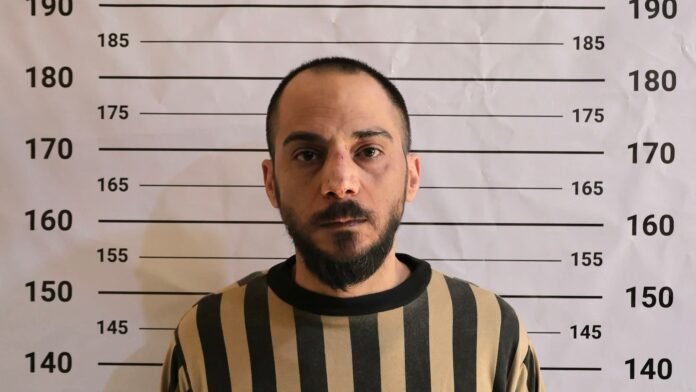
[DAMASCUS] The Syrian Ministry of Interior announced Friday the arrest of a man named Amjad Youssef, who was allegedly involved in serious violations that he documented in videos during the years of the Syrian war, including incidents linked to mass killings in a suburb of the Syrian capital, Damascus, in 2013.

According to an official statement issued by the ministry, Youssef was detained during a security operation carried out in the al-Ghab Plain area in rural Hama province, following several days of intelligence tracking. Authorities indicated that the operation comes as part of ongoing efforts to pursue individuals wanted in connection with cases related to the armed conflict that has been ongoing in the country since 2011.

Authorities have not yet disclosed precise legal details regarding the charges against the detainee beyond what is known as the “Tadamon Massacre,” named after the Damascus neighborhood where it was carried out. It was also not clarified whether he has been formally referred to the judiciary, but it was confirmed that he is under investigation in connection with incidents that occurred during the war.

Youssef’s name has appeared in media and human rights reports in recent years, as he has been linked in some of those reports to events that took place in the Tadamon district in southern Damascus in 2013. The case gained widespread international attention after video footage was published in 2022 documenting the execution of civilians in the field.

According to investigative journalism and human rights reports, Youssef was allegedly part of an armed group that participated in the arrest of civilians during security operations in the area before transferring some of them to isolated locations inside Tadamon, where extrajudicial killings were carried out and the victims were later buried in mass graves in the surrounding area.

These reports describe the events as having taken place linked to military operations during the war. The Assad government at the time did not issue independent judicial confirmation regarding the details of the incidents or the identities of those involved.

The footage, which spread widely after its publication, sparked broad condemnation from human rights organizations, which described the actions as potentially amounting to war crimes and called for independent investigations and accountability for those responsible.

The Assad regime did not officially acknowledge the details of the recordings or their accuracy.

US Special Envoy to Syria Tom Barrack welcomed the announcement of the arrest of Youssef, who is known as the “Butcher of Tadamon” for the atrocities committed against Syrian civilians. He described the move as a “new model of justice” in post-Assad Syria, based on the rule of law and national reconciliation.

Barrack wrote in an X post that the arrest represents a “strong step away from impunity toward accountability,” stressing that the United States stands alongside the Syrian people in their pursuit of justice. He added that US President Donald Trump supports these efforts aimed at reinforcing the rule of law and helping the country recover.

Youssef is believed to have been a former official in the Syrian security services during the rule of Bashar Assad, and his name has been linked to serious violations in the Tadamon area, including acts of torture, killing and arbitrary detention. The nickname “Butcher of Tadamon” is derived from survivor testimonies documenting these abuses.

The announcement of Youssef’s arrest comes at a time when the issue of accountability for violations committed during the Syrian conflict remains one of the most complex issues, amid ongoing political divisions and the difficulty of establishing effective international justice mechanisms inside the country. The move is described by the new Syrian authorities as efforts to implement “transitional justice” and hold former regime figures accountable.

Human rights organizations have welcomed the arrest in principle, considering it a potential step in addressing past violations, while stressing that the main importance lies in ensuring transparent and fair trials in accordance with international standards, away from political or selective considerations.

It is worth noting that the Syrian war, which began in 2011, has resulted in the deaths of hundreds of thousands and the displacement of millions, in addition to extensive documentation of serious violations committed by various parties to the conflict, most notably the Assad regime and the Islamic State group.

So far, authorities have not announced a date for the detainee’s court appearance, nor have they issued further details regarding the expected legal procedures against him. Observers are awaiting further developments in the case and whether it will lead to a public judicial prosecution. Millions of Syrians reportedly welcomed the arrest, with demonstrations taking place in some neighborhoods of Damascus, particularly in Tadamon, where the massacre allegedly occurred.

The Media Line reportedly possesses video footage and confessions from Youssef in which he admits to killing civilians, but it has refrained from publishing them due to their extreme graphic nature. Other footage is said to show Youssef leading civilians to execution and burning without trial.

Well, this is embarrassing: The Lunar Gateway’s primary modules are corroded

0
well,-this-is-embarrassing:-the-lunar-gateway’s-primary-modules-are-corroded
Well, this is embarrassing: The Lunar Gateway’s primary modules are corroded

For a decade, NASA promoted the idea of building a space station around the Moon known as the Lunar Gateway. It touted the facility as both a platform for exploring the lunar environment and testing the technology needed for deep-space habitation.

Like many major space projects, it faced delays. Originally, the first component of the space station was due to launch in 2022Later, it was decided that this module, to provide power and propulsion, would launch in tandem with a habitable volume known as the Habitation and Logistics Outpost (HALO) in 2024. This core was slated to be joined by another pressurized habitation module contributed by international partners I-HAB in 2026.

These dates, of course, have come and gone. And in March, NASA Administrator Jared Isaacman announced that the Gateway was being “paused” so the space agency could focus on the lunar surface.

The decision to end the Gateway experiment is entirely justifiable—NASA and its partners were spending billions of dollars to make it more difficult to reach the lunar surface and faced the prospect of watching Chinese astronauts wander around on the Moon from orbit instead of being there themselves.

But this week, we learned another reason that Gateway is going away, and it’s pretty shocking.

Came out during Congressional testimony

During testimony before the US House Committee on Science, Space, and Technology, Isaacman faced questions about NASA’s budget. As House members often do, Rep. Suhas Subramanyam, D-Virginia, asked about parochial matters. His district includes major elements of Northrop Grumman, the primary contractor for the HALO module. “You’ve also canceled an order for the Habitation and Logistics Outpost,” Subramanyam said. “Do you know what will happen to that large investment that was made?”

Since the demise of Gateway, Northrop has been pushing NASA to re-purpose the HALO module for use on the lunar surface as part of the space agency’s Moon base.

“I appreciate the contributions and look forward to working with them on how we could potentially repurpose hardware to surface applications,” Isaacman replied. But he did not stop there. He then publicly confirmed rumors (reported last month by Ars) that there is corrosion in both the HALO and I-HAB modules of the Gateway. “The only two habitable volumes that were delivered—both were corroded,” Isaacman said. “And that’s unfortunate because it would have delayed, probably beyond 2030, the application of Gateway.”

How could both a module being provided by Northrop Grumman, a major US defense contractor, and I-HAB from Europe be corroded? It seems like a fantastic claim. However, half a dozen sources who worked on or near the Lunar Gateway program confirmed to Ars that the corrosion Isaacman mentioned was real and serious.

In a statement, Northrop confirmed the issue as well. “Using NASA-approved processes, Northrop Grumman is completing repairs to HALO after a manufacturing irregularity,” a company spokesperson told Ars. “We expect to complete repairs by the end of the third quarter. HALO can still be repurposed for any mission, and it’s the most mature technology to support a deep space or lunar habitat.”

By referring to a “manufacturing irregularity,” Northrop answered the central mystery here: how corrosion could appear in both modules. This is because a French-Italian space and defense company, Thales Alenia Space, built the primary structure of HALO for Northrop Grumman. The module was delivered from Italy to the United States about a year ago.

Thales silent, but ESA comments

Thales is a powerhouse of the European space industry. It built several pressurized modules of the International Space Station, and it’s working with Axiom Space to build its commercial space station. The company also had a big piece of the Lunar Gateway in addition to HALO, developing the I-HAB module and a future communications and refueling module known as ESPRIT.

“Through these contracts, Thales Alenia Space will call on the full sum of our expertise to expand our knowledge base and push back the frontiers of the cislunar exploration,” Massimo Claudio Comparini, a senior official, said in 2020 when the contracts were announced.

Ars reached out to Thales on Wednesday evening for a comment about the corrosion issues. We received no reply until Friday morning, when a spokesperson said, “We are working on a statement. We will come back to you early next week.”

Northrop Grumman provided a comment within several hours of a request on Wednesday.

The European Space Agency, which was overseeing European contributions to the Gateway, finally offered a comment on Friday. The agency attributed the issue to a “combination of factors,” including materials.

“Following the identification of corrosion on HALO, a comprehensive investigation was promptly initiated,” a European Space Agency spokesperson said. “Preliminary findings indicate that the issue likely results from a combination of factors, including aspects of the forging process, surface treatment, and material properties.”

After the issue was discovered, the European Space Agency established a “tiger team” to investigate. “Based on the investigation and available data, the corrosion issue was understood to be technically manageable and did not constitute a showstopper for I‑HAB, which was, in any case, in better conditions than HALO from [a] corrosion point of view,” the spokesperson said.

The I-HAB module remains under construction and has not yet been delivered to NASA. Its fate remains unclear as European space officials contemplate their participation in the Moon base initiative.

After publication of this story on Friday, Axiom Space confirmed that it has also experienced corrosion issues. In a statement, the company said: “Axiom Space has experienced a similar phenomenon with the first module; we are leveraging the expertise of NASA and Thales Alenia Space to address the issue. Module 1 is on track to launch in 2028.”

Pope Warns of Satanic Surge: Vatican Scrambles to Train ‘Army of Exorcists’

0
pope-warns-of-satanic-surge:-vatican-scrambles-to-train-‘army-of-exorcists’
Pope Warns of Satanic Surge: Vatican Scrambles to Train ‘Army of Exorcists’


A chilling claim out of Rome is turning heads — insiders say Pope Leo XIV has been urged to ramp up a global force of trained exorcists as top clerics warn of a disturbing rise in alleged demonic activity.

According to reports circulating inside the Vatican, the Chicago-born pontiff was briefed during a closed-door meeting on March 13 by leaders of the International Association of Exorcists (AIE), a little-known but powerful group dedicated to training priests in the ancient rite of exorcism.

The warning? Church officials claim cases tied to the occult — and what they describe as “the extraordinary action of the devil” — are becoming more widespread and more intense.

During the high-level meeting inside the Apostolic Palace, Bishop Karel Orlita and Father Francesco Bamonte reportedly told the pope that priests around the world are facing “unprecedented challenges” when dealing with suspected demonic influence.

Their solution is raising eyebrows: they say every parish should have access to a trained exorcist.

“People are being seriously affected,” the clerics warned, pointing to increased involvement in occult practices and underground sects as a possible cause.

The AIE, founded in 1994, has quietly operated for decades training clergy in how to perform exorcisms — a ritual many believe belongs to another era. But insiders say demand for their expertise is growing fast.

The group even gained mainstream attention after inspiring the 2023 film The Pope’s Exorcist, starring Russell Crowe — but behind the Hollywood dramatics, church insiders insist the concerns are very real.

Fueling the alarm are statistics and cultural shifts that some religious leaders say can’t be ignored.

In the United Kingdom, official data showed a staggering 167 percent increase in people identifying as satanists between 2011 and 2021. At the same time, more parents have reportedly chosen the name “Lucifer” for their children — a trend critics call unsettling.

Meanwhile, the Satanic Temple — a U.S.-based organization focused on secularism and personal freedom — has grown to more than 100,000 members since its founding in 2013.

As interest in alternative spiritual movements rises, traditional religious affiliation appears to be slipping. In the United States alone, the percentage of adults identifying as Catholic has dropped from roughly 24 percent to 20 percent over the past two decades.

For some within the Church, that shift is more than just cultural — they see it as opening the door to darker forces.

“The spread of occultism… opens doors and windows,” Bamonte reportedly warned, suggesting it can lead to extreme cases described by the Church as possession, obsession, or spiritual torment.

Whether skeptics see it as fear-driven rhetoric or believers view it as a spiritual crisis, one thing is clear — behind the Vatican’s ancient walls, the battle between faith and darkness is being taken more seriously than ever.

Iran diplomat leaves Islamabad, Trump cancels US delegation trip

0
iran-diplomat-leaves-islamabad,-trump-cancels-us-delegation-trip
Iran diplomat leaves Islamabad, Trump cancels US delegation trip

US President Donald Trump on Saturday abruptly canceled a planned visit by two of his administration’s negotiators to the Pakistani capital for diplomatic talks to end his war on Iran, complaining that the trip would be “too much work.”

The president announced his decision after Iranian Foreign Minister Abbas Araghchi left Islamabad on Saturday, writing in a social media post that he’d relayed to Pakistani officials “Iran’s position concerning a workable framework to permanently end the war on Iran.” Araghchi added that he had “yet to see if the US is truly serious about diplomacy.”

Iranian officials said repeatedly in recent days that they had no intention of engaging in direct talks with the Trump administration this weekend as long as the US naval blockade remained in effect. Despite clear statements from Iran’s leadership, the Trump White House insisted that special envoys Jared Kushner and Steve Witkoff would be holding another round of direct negotiations with Iranian officials in Islamabad after earlier talks ended without a deal.

“This has happened repeatedly: Trump claims the Iranians are begging for talks, Iran says it is false,” observed Drop Site’s Jeremy Scahill. “The US says Iran is lying, and then it becomes clear Iran meant what it said.”

In an assessment published before Trump canceled his envoys’ trip, Scahill wrote that “there is no question it is the US that is seeking direct talks right now, not Iran.”

“Iran still believes it is likely the US and Israel will resume the war and has indicated it has prepared new forms of retaliatory strikes and other actions, including in the Strait of Hormuz,” Scahill added. “Its military commanders have said that while the US has moved more military assets into the region during the ‘ceasefire,’ Tehran has also taken this period to prepare its own weapons systems for more fighting.”

Trump insisted Saturday that his administration holds “all the cards” and that Iranian leadership is in turmoil. But Sina Toossi, a senior fellow at the Center for International Policy, wrote that “Trump can’t hide exuding desperation for a deal.”

“So he invents ‘fractures’ in Tehran to explain being repeatedly stood up,” Toossi added. “Iran’s line is unchanged: demanding the blockade be lifted and holding on to its core red lines. They’re playing hardball. He’s spinning.”

Trump’s cancellation of the Kushner-Witkoff trip came hours after NBC News reported that “American military bases and other equipment in the Persian Gulf region suffered extensive damage from Iranian strikes that is far worse than publicly acknowledged and is expected to cost billions of dollars to repair.”

“The Iran war was a tactical and strategic disaster,” said Toossi. “Despite heavy efforts to control the narrative, it’s becoming clear just how much US bases and equipment in the region were damaged or destroyed. The war backfired and inflicted far more damage than its proponents want to admit.”

Celebrities newsman highlights the absurd

Speaking of damage, Defense Secretary Pete Hegseth at the latest press briefing at the Pentagon on Friday, in addition to issuing his latest threat to journalists who publish classified information obtained from sources, peppered his comments with the violent rhetoric that’s become commonplace in his public remarks.

The US military will “shoot and kill” if Iranian boats are found trying to disrupt passage through the Strait of Hormuz, which remains closed following the extension of a ceasefire this week, said Hegseth.

He added, “We will shoot to destroy, no hesitation, just like the drug boats in the Caribbean” – a reference to strikes that have killed at least 180 people the US has accused of trafficking drugs, in an operation that has been widely condemned as one of extrajudicial killings or murder.

“The War Department stands ready for what comes next, locked and loaded,” said the secretary, who has also denigrated what he refers to as “stupid” rules of engagement meant to protect civilians. “We’ll use up to and including lethal force if necessary.”

In this context it’s worth noting that amid Hegseth’s escalating efforts to control the media’s coverage of his department – including the Pentagon’s firing on Thursday of the ombudsman of the military newspaper Stars and Stripes and his demand that journalists agree to a policy prohibiting coverage that the department has not approved – a news outlet that’s new to Capitol Hill made its way into the press briefing room Friday.

The representative of the outlet, which is accustomed more to publishing celebrity gossip than to doing political coverage, asked the top military official a question that hadn’t previously come up about the deadly attacks he’s ordered in recent months.

“I’ve heard you talk a lot about bombing people and places,” said Jacob Wasserman of the celebrity news outlet TMZ, which has recently expanded its political coverage by opening an office in the nation’s capital. “And when you give these orders to carry out this extreme level of violence, what’s going through your mind and your body? Do you have, like, an adrenaline rush? Are you scared? Do you feel like you’re on a power trip?”

Hegseth appeared perplexed before smirking and dismissing the query as “a very TMZ question.” He quickly denied that a “power trip” plays into his decisions to strike targets in places including Iran, where at least 3,375 people have been killed in US-Israeli strikes, including at least 200 children; the Caribbean Ocean and Pacific Ocean, where the boat bombing campaign is continuing; and Ecuador, where US troops launched a joint campaign with the nation’s military last month, targeting suspected drug traffickers on land.

He said his “only thought process is to ensure that our war fighters have everything they need to be successful, defeat and destroy the enemy,” before adding some more of the violent rhetoric Wasserman had alluded to about bringing “maximum violence to the enemy.”

Wasserman’s colleague, Charlie Cotton, followed up with a question about whether Hegseth, who has claimed the Department of Defense has been renamed the Department of War although congressional approval would be needed for such a change, would consider again rechristening the agency as the Department of Peace, “since that’s what we’re all after.”

The question prompted Hegseth, moments after demanding “maximum violence,” to remark that “the one institution that should win the Nobel Peace Prize every single year is the United States military, because we are the guarantor of the safety and security, not just of our country, but of a lot of people in this world.”

-Common Dreams

Gold set for weekly drop as higher oil prices stoke inflation fears

0
gold-set-for-weekly-drop-as-higher-oil-prices-stoke-inflation-fears
Gold set for weekly drop as higher oil prices stoke inflation fears


Gold prices fell on Friday and were on ‌track for a weekly drop, as elevated oil prices fuelled fears of inflation and higher-for-longer interest rates amid stalled U.S.-Iran peace talks.

Spot gold was down 0.7% at $4,661.33 per ounce, as of 0426 GMT. The metal is ​down 3.5% so far this week after a four-week winning run.

U.S. gold futures ​for June delivery fell 1% to $4,676.50.

Brent crude prices have risen over 17% so ⁠far this week to hover above $105 a barrel, as the key Strait of Hormuz remained ​largely closed despite an extension of the Iran ceasefire.

As long as this risk of prolonged closure of ​the strait is there, oil will continue to trade at elevated levels, pressuring gold prices, said Kelvin Wong, a senior market analyst at OANDA.

Higher crude oil prices can stoke inflation by raising transportation and production costs, ​increasing the likelihood of higher interest rates.

While gold is considered an inflation hedge, high interest ​rates make yield-bearing assets more attractive, weighing on bullion’s appeal.

“Gold is still being trapped in this sideways range, ‌between ⁠the 50-day moving average at around $4,900 and at the bottom, the 20-day moving average at $4,645 level,” Wong said, adding that “everything now boils down to what’s going on in the Middle East.”

Iran flaunted its tightened grip over the strait on Thursday with a video of commandos in a speedboat ​storming a huge cargo ​ship, after the collapse ⁠of peace talks that Washington had hoped would open one of the world’s most important shipping corridors.

Trump told reporters that he believed Tehran ​wanted to make a deal but that its leadership was in turmoil. ​He said ⁠he was in no hurry for a deal, but if Iran did not want one, “I’ll finish it up militarily.”

The U.S. dollar is up 0.8% so far this week, making greenback-priced bullion more ⁠expensive for ​other currency holders.

The benchmark 10-year U.S. Treasury yields have ​gained over 2% this week, increasing the opportunity cost of holding non-yielding bullion.

Spot silver fell 1% to $74.69 per ounce, platinum ​lost 1.1% to $1,984.60, while palladium was down 0.3% at $1,464.02.

Source:  Reuters
 

Man faces 5 years in prison for using AI to fake sighting of runaway wolf

0
man-faces-5-years-in-prison-for-using-ai-to-fake-sighting-of-runaway-wolf
Man faces 5 years in prison for using AI to fake sighting of runaway wolf

A 40-year-old man was arrested after using artificial intelligence to generate a fake image of a runaway wolf that South Korean authorities said obstructed an urgent investigation, the BBC reported.

AI-generated image of Neukgu.

AI-generated image of Neukgu.

After Neukgu, a 2-year-old wolf, burrowed out of a zoo in Daejeon city, officials launched an all-out effort to bring him back. The third-generation descendant’s safe return was deemed critical to a yearslong effort to revive wolf populations after native South Korean wolves became extinct in the wild in the 1960s.

Concern increased nationwide, with animal rights activists worried the wolf would be injured in the wild or perhaps killed during his rescue. South Korea’s president, Lee Jae Myung, promised that rescue teams would prioritize Neukgu’s safety, The Guardian reported.

Drones, police, emergency workers, and veterinarians all joined the search, alongside community members whose footage documenting the wolf’s movements helped guide search teams.

That’s why an AI-generated photo purporting to show Neukgu at an intersection—which began circulating hours after Neukgu went missing—prompted police to charge the man who created it. After seeing the image, the Daejeon city government issued an emergency text warning residents of a wolf in the area, and police even reportedly showed the photo at a press briefing while diverting resources to search the area, the BBC reported.

It’s unclear exactly how police identified the suspect, but the BBC reported that police reviewed security camera footage and obtained records confirming his use of AI tools. Upon arrest, the man told police that he made the image “for fun,” the BBC reported.

He now faces a maximum sentence of five years in prison or a fine of up to $6,700, as police seek to prove that the AI photo disrupted their search.

Fans used AI to celebrate safe return

After nine days of searching, Neukgu was finally returned to the zoo, where he is now recovering outside the social media spotlight.

But his Internet fame lives on as a memecoin launched shortly after his escape. On the memecoin website, Neukgu is described as a “brave wolf” in search of “freedom,” becoming a “symbol of independence” that the token supposedly represents. He’s “the wolf that wouldn’t stay caged,” the website says, while encouraging fans to buy tokens.

Early on, the wolf was nearly captured after drone footage detected him on a mountain, but he escaped the perimeter rescue workers set up, The Guardian reported. Cops also felt hot on the trail after a driver shared footage showing Neukgu trotting alongside a mountain road. Eventually, the wolf was “found and tranquilized on a hill near an expressway,” The Guardian reported. The only sign he’d left the zoo was a small fishing hook that veterinarians removed from his stomach.

You can still review Neukgu’s entire journey, however, thanks to an adorable fan-created map that tracked reported sightings. The fake AI sighting seemingly isn’t included on the map, which, translated, is titled “where you going wolf.”

Fans mapped the runaway wolf’s movements.

An opinion piece in ChoSun.com, a local South Korean outlet, suggested that although an elementary school was briefly shut down, communities never considered Neukgu to be a threat. Rather, the wolf seemed like “a lost puppy.” One X post with 2.4 million views showed the wolf as a young pup and urged, “Look at this wolf’s face… What the hell is this guy gonna do with a face like that…”

And although police have arrested one man for making an AI image that allegedly hindered their search, many other Neukgu fans have turned to AI to make celebratory posts like the “where you going wolf” map, ChoSun.com reported. AI-generated images of “Neukgu’s Daejeon Marathon,” “Neukgu City Tour,” and “Neukgu Escape Route Tracking” have reportedly been widely shared.

Nearly half of US children are breathing dangerous levels of air pollution, report warns

0
nearly-half-of-us-children-are-breathing-dangerous-levels-of-air-pollution,-report-warns
Nearly half of US children are breathing dangerous levels of air pollution, report warns

This story was originally published by the Guardian and is reproduced here as part of the Climate Desk collaboration.

Nearly half of children in the United States are breathing dangerous levels of air pollution, according to a new report, as experts warned Donald Trump’s expansive rollback of protections will make the situation worse.

The 27th annual air quality report from the American Lung Association, or ALA, released on Wednesday evaluates pollution across the country by grading levels of ground-level ozone — also known as smog —as well as year-round and short-term spikes in particle pollution, commonly referred to as soot. The report analyzed quality-assured data collected between 2022 and 2024.

It found that 33.5 million children in the U.S. — 46 percent of those under 18 — live in areas that received a failing grade for at least one measure of air pollution.

The report also found that 7 million children, or 10 percent of all children in the U.S., live in communities that failed all three measures.

Speaking to the Guardian, Will Barrett, assistant vice president of the ALA’s Nationwide Clean Air Policy, said: “Children’s lungs are still developing. For their body size, they’re breathing more air. And also, kids play outdoors, they’re more active, they’re breathing in more outdoor air … So, air pollution exposure in children can contribute to long-term developmental harm to their lungs, new cases of asthma, increased risks of respiratory illness and other health considerations later in life.”

Read Next

The report further found that communities of color are disproportionately exposed to unhealthy air. As a result, they are more likely to live with one or more chronic health conditions that make them more vulnerable to pollution, including asthma, diabetes, and heart disease.

Although people of color make up 42.1 percent of the U.S. population, they represent 54.2 percent of those living in counties with at least one failing grade, the report noted. It also found that a person of color is 2.42 times more likely than a white person to live in a community that fails all three pollution measures.

Smog remains the most widespread pollutant affecting Americans’ health. Between 2022 and 2024, 38 percent of the U.S. population — approximately 129.1 million people — were exposed to ozone levels that put their health at risk. This marks the highest number recorded in the ALA’s report in six years, and a 3.9 million increase from the previous year.

Several factors contributed to these unhealthy pollution levels, including extreme heat, drought, and wildfires, which have exposed a growing share of the population to harmful ozone, the report said.

The regions most affected by high ozone levels include southwestern states from California to Texas, as well as much of the Midwest. This is mainly driven by smoke from Canada’s 2023 wildfires crossing into the U.S., along with high temperatures and weather patterns that favored ozone formation in 2023 and 2024 — particularly in Southern states.

Read Next

More broadly, the report found that climate change is intensifying ozone pollution by boosting precursor emissions and creating atmospheric conditions such as higher temperatures and lower wind speeds that allow pollutants to build up and ozone to form.

The report also highlighted data centers as a growing source of air pollution. In recent years, data centers have consumed roughly 4.4 percent of total U.S. electricity, a figure that could rise to as much as 12 percent within the next decade.

Their impact stems largely from reliance on regional electricity grids where fossil fuels such as methane gas and coal still account for a large portion of generation, the report said. In addition, many data centers use dozens of large diesel-powered backup generators, which emit carcinogenic particulate matter.

“As the demand for increases in data centers continues to grow, the focus needs to be on non-combustion, clean renewable energy sources that are additive and not taking away from the grid,” Barrett said.

He also pointed to a series of environmental rollbacks by the current Environmental Protection Agency, warning that they are putting air quality at greater risk.

“There’s a devaluing of children’s health by this EPA as they are weakening, delaying, and repealing critical health protection,” he said, pointing to reversals including “missing deadlines for particle pollution standards, repealing vehicle standards, repealing EPA’s responsibility for protecting health against climate pollution, and even allowing for increased emissions of pollution from oil and gas facilities.” He also cited mercury — a toxic air contaminant released from coal plants — as a key concern.

“[There is] a wide-scale effort by the federal EPA to eliminate health protections while also distancing themselves from their own mission to protect public health,” Barrett added.

Since returning to office last year, the Trump administration has initiated at least 70 actions to roll back environmental and climate protections. Among them is the loosening of regulations on power plants that limit mercury and other hazardous air toxics.

Other rollbacks include overturning limits on major air pollution sources, disbanding EPA advisory committees on air quality, and ending the practice of estimating the monetary value of lives saved by limiting fine particulate matter and ozone while still calculating costs to companies.


American journalist Tucker Carlson feels ‘betrayed,’ criticizes Trump on Iran war: Report

0
american-journalist-tucker-carlson-feels-‘betrayed,’-criticizes-trump-on-iran-war:-report
American journalist Tucker Carlson feels ‘betrayed,’ criticizes Trump on Iran war: Report

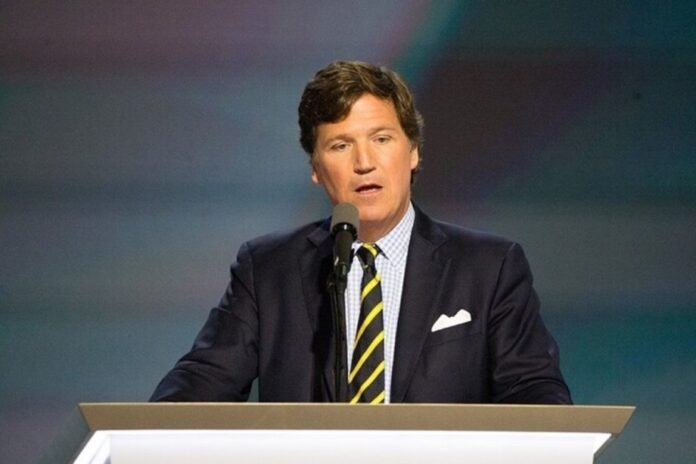
Political commentator and former Fox News host Tucker Carlson said he feels “betrayed,” criticizing US President Donald Trump’s Iran war, Anadolu reports.

In an interview with The Wall Street Journal, Carlson said, “I don’t hate Trump. I hate this war and the direction that the US government is taking,” adding that “I feel betrayed.”

The report said that Carlson has opposed the Jan. 3 US operation on Venezuela that led to the capture of President Nicolas Maduro, adding that he is now “the most prominent opponent of the Iran war” initiated by the US and Israeli strikes against Iran that began on Feb. 28.

READ: Tucker Carlson claims CIA read his messages, says US preparing foreign agent case against him

“Why can’t the US government act on behalf of its own citizens?” Carlson asked before adding, “This is a generational problem that didn’t start with Trump.”

“If anything, Trump just proved the system was stronger than him,” he remarked.

Earlier this month, Trump said in a Truth Social post that Carlson was a “low IQ person” who is “always easy to beat” and “highly overrated.”

Carlson had previously been one of Trump’s most prominent media allies. At the 2024 Republican National Convention, he said Trump’s survival of an assassination attempt during the campaign amounted to “divine intervention,” suggesting God had preserved him for a purpose.

READ: Trump cancels Witkoff, Kushner’s trip to Pakistan for talks with Iran

Netanyahu Says Early-Stage Prostate Cancer Was Treated Successfully After Radiation Therapy  

0
netanyahu-says-early-stage-prostate-cancer-was-treated-successfully-after-radiation-therapy  
Netanyahu Says Early-Stage Prostate Cancer Was Treated Successfully After Radiation Therapy  


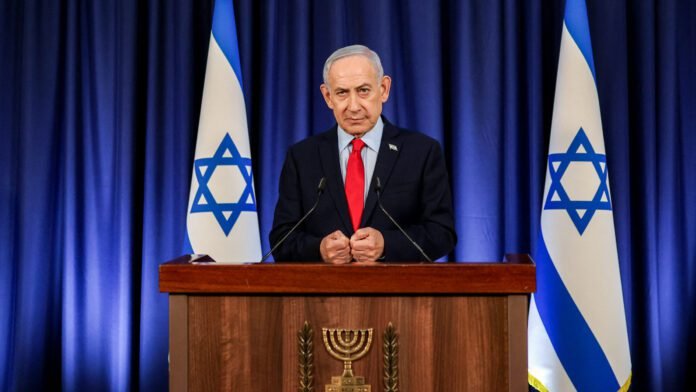
Israeli Prime Minister Benjamin Netanyahu announced Friday on X that he was diagnosed with early-stage prostate cancer and underwent treatment in Jerusalem, adding that the condition was fully treated and that he is now healthy. 

The 76-year-old leader said a malignant growth measuring less than 1 centimeter was identified during routine follow-up examinations after a December 2024 procedure for a benign prostate enlargement. Physicians described the finding as a very early-stage tumor with no evidence of spread or metastasis. 

Netanyahu received targeted radiation therapy at Hadassah Medical Center in Jerusalem. The course of treatment concluded about two and a half months before his public disclosure in April 2026. According to his doctors, subsequent imaging and blood tests indicate the disease has disappeared. 

In his statement, Netanyahu said he remains in “excellent physical condition.” 

While he was in treatment, Netanyahu requested that his annual health report be delayed so it would not be released “at the height of the war, to prevent the Iranian terror regime from spreading further false propaganda against Israel.” 

The disclosure adds to a series of recent medical procedures. In December 2024, Netanyahu underwent surgery for a benign enlarged prostate. Earlier, in March 2024, he had surgery to treat a hernia. In July 2023, he was fitted with a pacemaker following what was described as a “transient heart block” and “fainting episode.” 

Despite the medical history, Netanyahu said the cancer diagnosis was caught early and treated successfully. 

0FansLike
0FollowersFollow
0FollowersFollow
0SubscribersSubscribe
- Advertisement -
Google search engine

Recent Posts