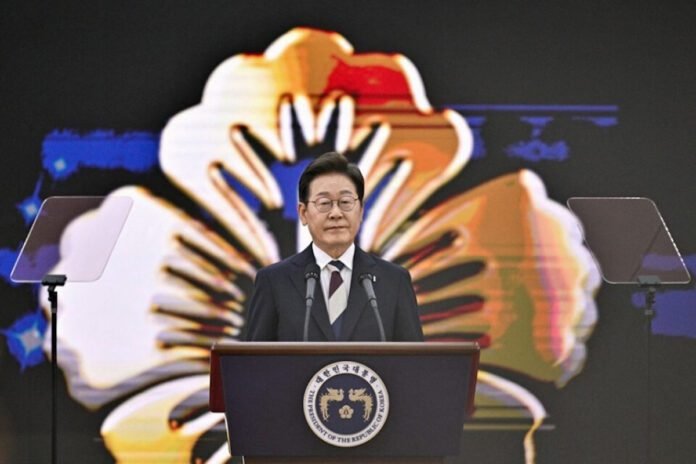
South Korean President Lee Jae Myung has an economic problem. Image: YouTube Screengrab
SEOUL — Few top economies are as surrounded by paradoxes in 2026 as South Korea.
As fallout from the Middle East sends shockwaves around the globe, Korea’s stock market is skyrocketing. This week, the Kospi index soared to new all-time highs as semiconductor giants Samsung and SK Hynix ride the artificial intelligence boom.
Making your way around Seoul, it’s easy to buy into the euphoria. Countless global conferences herald Korea’s place in the AI era. Across the city, young executives hover around laptops in WeWork-fashioned shared office spaces — the more tie-less, the better.
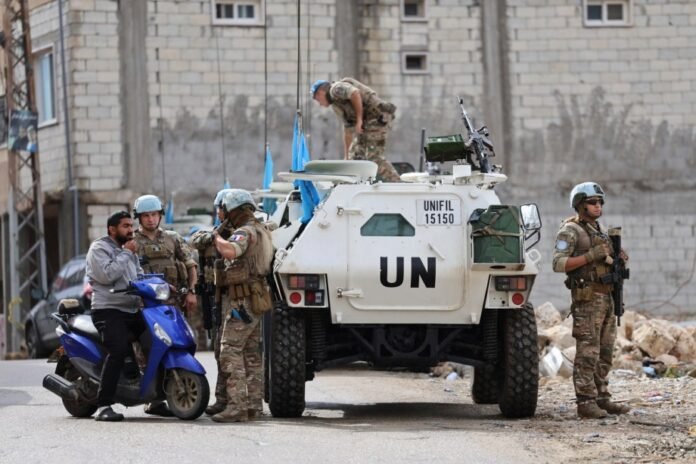
Indonesia reiterates call for UN probe after peacekeeper dies in Lebanon attack, condemns Israel
Indonesia on Saturday condemned the killing of another Indonesian peacekeeper in Lebanon in ongoing hostilities, reiterating its call for a UN probe into the killings, Anadolu reports.
Corp. Rico Pramudia, 31, serving with the UN Interim Force in Lebanon (UNIFIL), was critically injured in a “projectile explosion” at a base in Adchit al-Qusayr on the night of March 29 and died in a Beirut hospital on Friday.
The latest casualty brings the number of Indonesian peacekeepers killed in the ongoing conflict to four.
“Indonesia once again condemns the attack by Israel that resulted in the death of an Indonesian peacekeeper. Any attack against peacekeepers constitutes a serious violation of international law and may amount to a war crime,” Foreign Ministry spokesman Vahd Naby told Anadolu.
Indonesia, he said, reiterates its call for the UN to do an “immediate, thorough, and transparent investigation” to establish the facts, and stresses that full accountability must be ensured.
“Safety and security of the UN peacekeepers is not negotiable. Therefore, the government of Indonesia also continues its coordination with the United Nations and other troop- and police-contributing countries to strengthen the protection of peacekeepers, including through a comprehensive evaluation of their safety and security, as well as enhanced risk mitigation measures in UNIFIL’s area of operations,” the spokesman said.
The government of Indonesia extends its “deepest” condolences to the bereaved family, and expresses its highest respect for the deceased peacekeeper’s “dedication and sacrifice in maintaining international peace,” he added.
Following the attack, he further said, through “close and intensive” coordination with UNIFIL, the Indonesian government, the Lebanese government, and medical teams in Beirut ensured that immediate and optimum medical treatment was provided.
However, due to the severity of Pramudia’s injuries, he passed away despite all efforts to save his life, the spokesman said.
Jakarta, he added, continues its “close” coordination with UNIFIL to ensure that the repatriation of the deceased is carried out promptly and with full dignity.
With Pramudia’s death, six UNIFIL personnel have now been killed and several others seriously injured during the current escalation.
Israel has pounded Lebanon with airstrikes and launched a ground offensive in the south since a cross-border attack by Hezbollah on March 2. The region has been on alert since the US and Israel launched an air offensive on Iran on Feb. 28.
On Thursday, US President Donald Trump announced that a ceasefire between Israel and Lebanon had been extended by three weeks following ambassador-level talks at the White House.
The US-brokered 10-day ceasefire, which took effect April 16, had been set to expire Sunday.
Since March 2, expanded Israeli attacks on Lebanon have killed more than 2,200 people and displaced over 1 million, according to Lebanese authorities.
READ: Israeli tank fire killed UN peacekeeper in Lebanon, UNIFIL investigation finds
Palantir employees are talking about company’s “descent into fascism”
It took just a few months of President Donald Trump’s second term for Palantir employees to question their company’s commitments to civil liberties. Last fall, Palantir seemed to become the technological backbone of Trump’s immigration enforcement machinery, providing software identifying, tracking, and helping deport immigrants on behalf of the Department of Homeland Security, when current and former employees started ringing the alarm.
Around that time, two former employees reconnected by phone. Right as they picked up the call, one of them asked, “Are you tracking Palantir’s descent into fascism?”
“That was their greeting,” the other former employee says. “There’s this feeling not of ‘Oh, this is unpopular and hard,’ but ‘This feels wrong.’”
Palantir was founded—with initial venture capital investment from the CIA—at a moment of national consensus following the September 11, 2001, attacks, when many saw fighting terrorism abroad as the most critical mission facing the US. The company, which was cofounded by tech billionaire Peter Thiel, sells software that acts as a high-powered data aggregation and analysis tool powering everything from private businesses to the US military’s targeting systems.
For the past 20 years, employees could accept the intense external criticism and awkward conversations with family and friends about working for a company named after J. R. R. Tolkien’s corrupting all-seeing orb. But a year into Trump’s second term, as Palantir deepens its relationship with an administration that many workers fear is wreaking havoc at home, employees are finally raising these concerns internally, as the US’s war on immigrants, war in Iran, and even company-released manifestos has forced them to rethink the role they play in it all.
“We hire the best and brightest talent to help defend America and its allies and to build and deploy our software to help governments and businesses around the world. Palantir is no monolith of belief, nor should we be,” a Palantir spokesperson said in a statement. “We all pride ourselves on a culture of fierce internal dialogue and even disagreement over the complex areas we work on. That has been true from our founding and remains true today.”
“The broad story of Palantir as told to itself and to employees was that coming out of 9/11 we knew that there was going to be this big push for safety, and we were worried that that safety might infringe on civil liberties,” one former employee tells WIRED. “And now the threat’s coming from within. I think there’s a bit of an identity crisis and a bit of a challenge. We were supposed to be the ones who were preventing a lot of these abuses. Now we’re not preventing them. We seem to be enabling them.”
Palantir has always had a secretive reputation, forbidding employees from speaking to the press and requiring alumni to sign non-disparagement agreements. But throughout the company’s history, management has always at least appeared to be open to engagement and internal criticism, multiple employees say. Over the last year, however, much of that feedback has been met by philosophical soliloquies and redirection. “It’s never been really that people are afraid of speaking up against Karp. It’s more a question of what it would do, if anything,” one current employee tells WIRED.
While internal tensions within Palantir have grown over the last year, they reached a boiling point in January after the violent killing of Alex Pretti, a nurse who was shot and killed by federal agents during protests against Immigration and Customs Enforcement (ICE) in Minneapolis. Employees from across the company commented in a Slack thread dedicated to the news demanding more information about the company’s relationship with ICE from management and CEO Alex Karp.
“Our involvement with ice has been internally swept under the rug under Trump2 too much,” one person wrote in a Slack message WIRED reported at the time. “We need an understanding of our involvement here.”
Around this time, Palantir started wiping Slack conversations after seven days in at least one channel where most of the internal debate takes place, #palantir-in-the-news. Because the decision wasn’t formally announced before the policy rolled out, one worker who noticed the deletions asked in the channel why the company was removing “relevant internal discourse on current events.”
A member of Palantir’s cybersecurity team responded, writing that the decision was made in response to leaks.
This period led Palantir management to release an updated wiki, or a collection of blog posts explaining the ICE contract, where the company defended its work with Homeland Security. Management wrote that the technology the company provides “is making a difference in mitigating risks while enabling targeted outcomes.”
Palantir management ran defense by holding a handful of AMA (ask me anything) forums across the company with leadership like chief technology officer Shyam Sankar and members of its privacy and civil liberties (PCL) teams.
At least one of these AMAs was organized independently of PCL leadership by two team leads, including one who worked directly on the ICE contract for a period of time. “This was very rogue,” a PCL employee who worked on the ICE contract said in a February AMA, a recording of which was obtained by WIRED. “Courtney [Bowman, head of the privacy and civil liberties team] doesn’t know that I’m spending three hours this week talking to IMPLs [Palantir terminology for its client-facing product teams], but I think this is the only real way to start going in the right direction.”
Throughout the lengthy call, employees working on a variety of Palantir’s defense projects posed hard questions. Could ICE agents delete audit logs in Palantir’s software? Could agents create harmful workflows on their own without the company’s help? What is the most malicious thing that could come out of this work?
Answering these questions, the PCL employee who worked on the ICE contract said that “a sufficiently malicious customer is, like, basically impossible to prevent at the moment” and could only be controlled through “auditing to prove what happened” and legal action after the fact if the customer breached the company’s contract.
At one point during the call, one of the employees tried to level with the group, explaining that Palantir’s work with ICE was a priority for Karp and something that likely wouldn’t change any time soon.
“Karp really wants to do this and continuously wants this,” they said. “We’re largely at the role of trying to give him suggestions and trying to redirect him, but it was largely unsuccessful and we seem to be on a very sharp path of continuing to expand this workflow.”
Around the time of these forums, Karp sat down for a prerecorded interview with Bowman, seemingly to discuss Palantir’s contracts with ICE, but refused to broach the topic directly. Instead, Karp suggested that employees interested in the work sign nondisclosure agreements before receiving more detailed information.
Then came the deadly February 28 missile strike on an Iranian elementary school on the first full day of the Trump administration and Israel’s war in Iran. The US is the only known country in the conflict to use that specific type of missile. More than 120 children were killed when a Tomahawk missile struck the school, kicking off a series of investigations that concluded that the US was responsible and that surveillance tools like Palantir’s Maven system had been used during that day’s strikes. For a company full of employees already reeling over its work with ICE, possible involvement in the death of children was a breaking point.
“I guess the root of what I’m asking is … were we involved, and are doing anything to stop a repeat if we were,” one employee asked in the Palantir news Slack channel. Some employees posed similar questions in the thread, while others criticized them for discussing what could be considered classified information in a Slack channel open to the entire company. The investigation is ongoing.
The Palantir spokesperson said the company was “proud” to support the US military “across Democratic and Republican administrations.”
In March, Karp gave an interview to CNBC claiming that AI could undermine the power of “humanities-trained—largely Democratic—voters” and increase the power of working-class male voters. While critics reacted to the piece, calling the statements concerning, so did employees internally: “Is it true that AI disruption is going to disproportionately negatively affect women and people who vote Democrat? and if it is, why are we cool with that?” one worker asked on Slack in a channel dedicated to news about Palantir.
Palantir’s leadership incensed workers yet again this week after the company posted a Saturday afternoon manifesto reducing Karp’s recent book, The Technological Republic, to 22 points. The post—which includes many of Karp’s long-standing beliefs on how Silicon Valley could better serve US national interests—goes as far as suggesting that the US should consider reinstating the draft. Critics called the manifesto fascist.
Internally, the post alarmed some workers who huddled in a Slack thread on Monday morning, questioning leadership over its decision to post it in the first place.
“I’m curious why this had to be posted. Especially on the company account. On the practical level every time stuff like that gets posted it gets harder for us to sell the software outside of the US (for sure in the current political climate), and I doubt we need this in the US?” wrote one frustrated employee. The message received more than 50 “+1” emojis.
“Wether [sic] we acknowledge it or not, this impacts us all personally,” another worker wrote on Monday. “I’ve already had multiple friends reach out and ask what the hell did we post.” This message received nearly two dozen “+1” emoji reactions.
“Yeah it turns out that short-form summaries of the book’s long-form ideas are easy to misrepresent. It’s like we taped a ‘kick me’ sign on our own backs,” a third worker wrote. “I hope no one who decided to put this out is surprised that we are, in fact, getting kicked.”
These conversations involving shame and uncertainty from workers have seemingly popped up in internal channels whenever Palantir has been in the news over the last year. “I think the only thing not different is a lot of folks are still incredibly wary about leaks and talking to the press,” one current employee tells WIRED, describing how the internal company culture has evolved over the last year.
All of this dissent doesn’t seem to bother Karp, who recently told workers that the company is “behind the curve internally” when it comes to popularity. Here, he’s been consistent; in March 2024 Karp told a CNBC reporter that “if you have a position that does not cost you ever to lose an employee, it’s not a position.”
But for employees, the culture shift feels intentional. “I don’t want to assert that I have knowledge of what’s going on in their internal mind,” one former worker tells WIRED. “But maybe it’s gotten to a place where encouraging independent thought and questioning leads to some bad conclusions.”
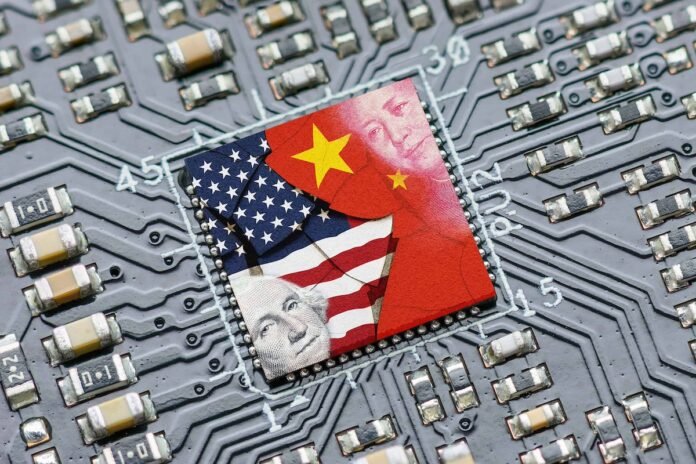
US chasing AGI myth while China builds the AI future
The United States is increasingly organizing its artificial intelligence strategy around a concept it cannot clearly define, cannot reliably measure and may never achieve in the singular, decisive form imagined.
That concept is Artificial General Intelligence, or AGI.
In Washington and Silicon Valley, AGI has become the policy anchor and rhetorical North Star. Lawmakers invoke it to justify massive investments. Tech executives tie timelines to presidential terms or national dominance. Analysts warn that the first country to reach it will shape the global order. The language is urgent: a race, a finish line, a winner-take-all victory.
There is only one problem: no one agrees on what AGI actually is.
Moving target
Ask ten AI researchers for a definition, and you will likely get ten different answers. Some describe human-level performance across all cognitive tasks. Others frame it economically — the automation of the most valuable human labor. Still others emphasize autonomy, continuous self-improvement or the capacity for original scientific discovery.
These are not interchangeable. A system that excels at writing code, generating essays or solving benchmarks is not the same as one that can redesign its own architecture, conduct groundbreaking research or reliably operate in open, unpredictable environments.
Yet public debate and policy routinely collapse these distinctions into a single, shifting target. As observers have long noted, AGI often seems to mean “whatever the next system cannot yet do.”
‘Situated’ intelligence
Even leading figures acknowledge the issue. OpenAI’s Sam Altman has at times called AGI “not a super useful term” because definitions vary so widely. The goalposts keep moving, making any strategy built around hitting them inherently unstable.
The confusion runs deeper than semantics. AGI rests on an implicit and rarely examined assumption: that intelligence is a unitary capability that can be reproduced in a single system, and that it would closely resemble human cognition.
This is a category error.
A bird and an airplane both fly, but they do so through entirely different mechanisms. The similarity is in the outcome, not the underlying process. Today’s AI systems are like airplanes: they perform tasks that resemble human cognition — reasoning, diagnosing, optimizing, creating — through statistical pattern matching on vast amounts of data, not through experience, intention, emotion or embodied understanding.
Human intelligence is “situated.” It emerges from bodies, cultures, social relationships, context and lived reality. AI simulates tone without feeling it, reproduces patterns without inhabiting them, and generates language without genuine intention. This gap is not a temporary shortfall awaiting more scale. It is structural.
Current systems, for all their impressive advances, still show persistent limitations: shallow reasoning in novel situations, brittle generalization, lack of robust long-term memory and dependence on human-curated data and architectures. Progress is real and valuable, but it looks more like iterative improvement in powerful tools.
AI is likely to evolve more like electricity or the internal combustion engine: transformative through diffusion, integration and widespread application, not a single breakthrough moment.
Strategic miscalculation
By framing AI competition as a sprint to a decisive AGI finish line, US policy risks distorting priorities. Resources concentrate on ever-larger frontier models developed by a handful of private labs, sometimes at the expense of broader adoption, infrastructure, workforce development and institutional integration.
This creates a winner-take-all mindset that history does not support. General-purpose technologies — electricity, the automobile, the internet — diffuse across borders and contexts.
Value accrues to those who integrate and apply them effectively, not merely to those who invent them first. There is no single “owner” of electricity; its impact came from decades of engineering, infrastructure and adaptation by many players.
Meanwhile, China has pursued a different emphasis. While not ignoring advanced research, Beijing has prioritized rapid deployment: embedding AI at scale across manufacturing, logistics, urban systems, education and industry.
Chinese models have narrowed performance gaps dramatically, and the country leads in areas like AI publications, patents and industrial robot adoption. The US retains an edge in frontier capabilities and private investment. But the deeper contest is increasingly about who can turn powerful tools into systemic advantage through diffusion and integration.
The real danger for America is not “losing the AGI race.” It is winning on speculative breakthroughs while falling behind in the practical, economy-wide application of AI, producing the world’s most advanced models yet failing to fully embed intelligence into its institutions, workforce and infrastructure.
Hype cycles compound the risk. Overpromising imminent AGI already has a long track record of disappointment, potentially leading to “AI winters” of disillusionment and disinvestment.
A more realistic strategy
None of this means abandoning frontier research. Breakthroughs in models, algorithms and efficiency matter enormously. But they should not define the entire strategy. A saner approach would prioritize steps China has already taken:
– Accelerating adoption and integration across government, industry and society.
– Modernizing data infrastructure, computing capacity and energy systems.
– Investing heavily in workforce training, AI literacy and education at all levels.
– Supporting a broader research ecosystem beyond a few large private firms, including open approaches that promote diffusion.
These steps lack the drama of a Manhattan Project for AGI. They are also far more likely to determine long-term competitive outcomes.
The future of AI will not be decided by a single invention or the crossing of a mythical finish line. It will be shaped by how intelligence is embedded, distributed and governed across economies and societies.
America faces a clear choice. It can continue chasing an ill-defined phantom that shifts with every new model and headline, or it can recognize the transformation already underway: AI is not becoming a mind. It is becoming infrastructure.
In rare chickenpox case, itchy blisters mushroom into large, rubbery nodules
Those who suffered through chickenpox as kids likely remember the agony of its itchy rash. Oven mitts or snow gloves may have been used to prevent you from inadvertently clawing your skin off, while dips in oatmeal may have offered some temporary relief. But in the end, you just had to endure the full cycle of the rash—from the breakout of the first raised, itchy papules that inflate into fluid-filled blisters that then break and leak, to the scabs that form over the crusty remains. More papules emerge as blisters burst, prolonging the torment.
For one 15-year-old in Nepal, the misery continued long after the blisters burst. After some of her crusty scabs began to form scars, they mushroomed into large, uncontrolled skin growths, which were also painful and itchy—and permanent. One on her chest, the largest, measured 4 by 4 cm (about 1.6 by 1.6 inches).
These rubbery, firm nodules are called keloids, which are poorly understood skin growths that result from wound healing that goes awry and expands beyond the borders of the original wound. In the teen’s case, five large keloids abruptly burst from her chickenpox scars, breaking out in different places on her body—on her right jaw, chest, abdomen, and right flank. The simultaneous emergence of the growths aligns with the diagnosis of “eruptive keloids,” an ultra-rare outcome of a chickenpox infection. Only five such cases appear to exist in the scientific literature. Her case, marking the sixth, was published this week in the journal Clinical Case Reports.
Her doctors noted that the teen was otherwise healthy after recovering from the chickenpox several weeks prior. She had been seen at a clinic for the infection, where her chickenpox (varicella) case was confirmed, and she was treated with the anti-viral medication acyclovir. It’s unclear why keloids erupted in the teen—or why they form in any patient. But it’s clear something was going wrong in her healing rashes.
Unwieldy wounds
Healing from wounds has three main phases. The first is an inflammatory phase that prevents or limits further damage. There’s a proliferative phase during which new tissue is formed. Among the many things that occur in this phase, specialized cells called fibroblasts produce collagen that helps create structural suppors for new tissue. This proliferative phase isn’t discreet; it can go on in the background throughout the healing process. Last, there’s a maturation phase when the new tissue settles into its final form and gains maximum strength.
When keloids form, it means something went wrong in the proliferative phase of healing. Specifically, the fibroblasts of keloids are thought to be more active, survive longer, and produce more collagen and more signaling molecules that promote growth. Collagen production in keloids can be 20 times larger than in typical skin.
It’s unclear what triggers this uncontrolled tissue growth, but genetics and environmental factors are thought to play a role. Keloids are seen more often in people with darker skin. In the teen’s case, her doctors note that varicella infections are known to trigger certain pro-inflammatory cellular signals and speculate that they could potentially induce a hyperproliferative state. But, for now, it’s just a hypothesis.
Treatment for keloids is, unfortunately, difficult. When the problem is faulty wound healing, any treatment that creates new wounds risks failing or worsening the problem. Surgical removal, for instance, has recurrence rates between 45 percent to 100 percent. Cryotherapy can sometimes be used to kill off scar tissue, but it can also leave undesirable skin alterations. Laser and radiotherapy have been used, but with clear risks and sometimes limited results. Successful treatment often requires a combination of methods. The mainstay treatment, however, is injections with corticosteroids, which help with the itching and burning.
In the teen’s case, doctors monitored her keloids for three months and found they were relatively stable, with no rapid growth—though they could potentially continue to grow over time. Given preferences and financial limitations, she decided to forgo aggressive treatment and live with the growths, managing symptoms with antihistamines and over-the-counter painkiller acetaminophen.
While keloids remain a menace, chickenpox has an effective prevention. The varicella vaccine was released in the US in 1995, and two doses offer 97 percent protection. Since its debut, chickenpox cases—and complications—have declined dramatically.
Hollywood icon David Hasselhoff is raising serious health concerns after a rare public appearance showed the once-unstoppable star struggling just to stay on his feet.
The 73-year-old legend — best known for his role on Baywatch — was spotted in Los Angeles this week looking noticeably frail, relying on a walker to stand as he stepped out with his wife, Hayley Roberts.
And insiders say the heartbreaking scene is the result of a brutal recovery following major knee and hip replacement surgeries that have taken a heavy toll on his mobility.
“He’s rehabbing and determined to bounce back,” a source revealed, adding that Hasselhoff is still holding onto big dreams — including returning to acting and even making another appearance connected to Baywatch once he’s fully recovered.
But behind the optimism, the reality has been tough.
For a man who built his career on a larger-than-life, physically demanding image, the adjustment hasn’t come easy. “Getting old sucks,” the insider admitted bluntly, noting the surgeries hit him harder than expected. Still, they insist he’s improving and feeling better than he has in a while, even if the road back is slow.
This isn’t the first sign of his declining health.
Last summer, Hasselhoff was seen limping through an airport before later being pushed in a wheelchair, already hinting at the struggles he’s now facing more publicly.
Sources also point to his hard-living past as a factor catching up with him. Years of heavy partying and well-documented battles with alcohol have reportedly contributed to his current condition.
“David lived a life most people could only dream of,” an insider said. “But it came with consequences.”
His personal life has also been marked by tragedy.
Hasselhoff’s former wife, Pamela Bach, whom he met during his rise to fame on Knight Rider, died by suicide in her Hollywood Hills home. The two were married for 17 years before divorcing, with his struggles with alcohol cited as a major factor in their split.
The actor later shared through a spokesperson that his family was “deeply saddened” by her death.
Now, as he focuses on healing, Hasselhoff appears to be facing one of the toughest chapters of his life — trading red carpets and beach rescues for physical therapy and slow steps forward.
But if there’s one thing fans know about “The Hoff,” it’s that he’s never been one to stay down for long.
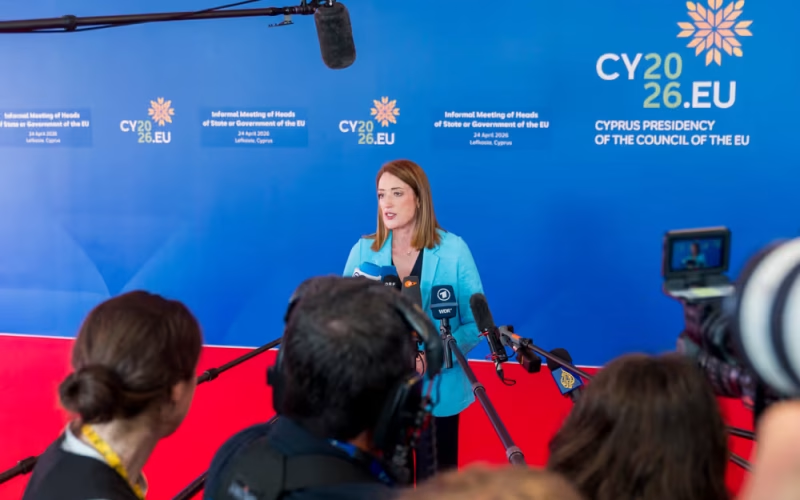
EP President Metsola to EU leaders: “Europe cannot face a new era with an old budget”
At the Informal Meeting of Heads of State and Government in Nicosia (Cyprus),President Metsola addressed three main topics: the situation in the Middle East, the ‘One Europe One Market’ Roadmap and the Multiannual Financial Framework.
Speaking to EU leaders, Parliament President Metsola focused on three topics: The situation in the Middle East and its impact on energy prices, the ‘One Europe One Market’ Roadmap and the Multiannual Financial Framework. She also welcomed the adoption of the 20th sanctions package against Russia and the release of the €90 billion loan for Ukraine.
On the situation in the Middle East and energy prices, President Metsola called a swift and lasting end to the war that secures rights, dignity and liberty for the Iranian people and addresses concerns over Iran’s nuclear and ballistic missile and puts an end to the obstructions in the Strait of Hormuz. She underlined the importance of safeguarding freedom of navigation and continuing investments in Europe’s energy resilience. The EU’s gas-storage rules have already helped stabilise markets and improve cooperation between Member States, while efforts to diversify Europe’s energy mix and reduce dependence are making the Union more resilient, independent and less exposed to shocks: “While we act for today, we cannot abandon what is working for tomorrow. We shouldn’t fix what isn’t broken. Our long-term strategy is working. We need to stay the course,” she said.
Referring to the ‘One Europe, One Market’ Roadmap, President Metsola welcomed the agreement reached between the three institutions. She said the Roadmap is ambitious, strengthens Europe’s capacity to withstand shocks, and delivers on the Joint Declaration agreed by leaders. President Metsola stressed that the focus must now shift from commitments to implementation, while ensuring respect for the legislative process and democratic oversight. “We are now at the point where commitments need to turn into delivery. On the priority files in the roadmap, the European Parliament will do its job. And we will do it well,” she said. She added that Europe’s citizens “judge Europe on one thing – whether it delivers.”.
Finally, on the Multiannual Financial Framework, President Metsola underlined that the European Parliament is moving swiftly: “Next week, plenary will vote. That will allow us to enter negotiations with the Council, once they adopt their mandate. So next week, we will have our position, we will know what we want, and we will be ready.” The President also called for a long-term EU budget that is fit for purpose and capable of responding to today’s geopolitical and economic realities. She reiterated Parliament’s support for a stronger focus on competitiveness and defence, while calling for openness to new Own Resources and warning against burdening future generations with old debt. President Metsola said: “Europe cannot face a new era with an old framework. We cannot keep responding to a changing world with outdated tools. What we need now is a budget that is fit for purpose – ready to deliver where, and when, it matters most.”
Iran war is accelerating SE Asia’s drift from America
Southeast Asia is watching the US-Israel conflict with Iran — and quietly drawing conclusions. Most countries have adopted a policy of non-interference, but behind the cautious and neutral stances, they are accelerating efforts to reduce their defense dependence on Washington.
The recent US-Indonesia defense agreement, followed by an apparent rift between the Indonesian defense and foreign ministries over granting the US overflight rights above the Strait of Malacca, resulting in a hold on access, clearly illustrates this tension.
President Trump’s unpredictable, transactional foreign policy has widened the divide between Washington and many Southeast Asian capitals. Eroding trust and diminishing alignment are increasingly visible, while US disengagement from Association of Southeast Asian Nations (ASEAN) multilateralism signals a diminishing role in the region.
Though suggestions of a diminished US role in the region have circulated for some time, they have not always been backed by concrete evidence or outcomes. Successive administrations managed to reassert engagement after periods of drift. Those were seen in the “Pivot to Asia” under Barack Obama, the Indo-Pacific strategy during the first Trump administration and its continuation under Joe Biden.
At present, however, US influence appears to be declining more markedly. One key and visible indicator is the absence of unequivocal support from allies and partners during the ongoing Middle East crisis. Even traditionally friendly countries have voiced criticism of the US’s war against Iran.
For instance, Singapore Foreign Minister Vivian Balakrishnan stated in late March: “I was surprised by the onset of hostilities. I did not think it was necessary. I do not think it is helpful. Even now, there are doubts about legality. For 80 years, the US underwrote a system of globalization based on UN Charter principles, multilateralism, territorial integrity, and sovereign equality. It led to an unprecedented period of global prosperity and peace.”
Another important indicator is the ISEAS-Yusof Ishak Institute’s State of Southeast Asia 2026 survey. Unsurprisingly, regional attitudes toward China and the US have shifted in recent years.
According to the survey, 52% of respondents now favor alignment with China, compared to 48% who still prefer the US. While the overall margin is narrow, the finding is nonetheless noteworthy: China is now perceived as more closely aligned with the interests of ASEAN member states than the US.
More striking, however, are the variations across individual countries. In Indonesia (80%), Malaysia (68%) and Singapore (66%), respondents show a clear preference for alignment with China over the US. By contrast, only 23% of Filipino respondents express a similar inclination toward China.
Two major factors underpin this shift. Most immediately, the conflict and disruption of the Strait of Hormuz have severely impacted ASEAN economies.
The ASEAN Centre for Energy reported that Middle Eastern crude made up 56% of ASEAN’s total crude imports last year. The resulting energy shock is the most visible consequence, with effects already felt across regional markets. Foreign investors, for example, are selling Thai assets amid concerns about energy price volatility stemming from the US-Iran conflict.
Second, rapidly declining confidence in the US is a critical factor. Perceptions of unpredictability — from the imposition of tariffs to a lack of sustained economic and security focus on the Indo-Pacific — have reinforced doubts about Washington’s reliability.
Trump’s transactional, temperamental and often flippant approach to foreign policy has prompted a serious recalibration among allies and partners in the region.
With US attention and resources overstretched across multiple conflicts from Europe to the Middle East, and a focus on America First at home and abroad, such a regional recalibration is both justified and understandable.
The apparent US failure to shield its partners in the Gulf from Iranian attacks is a grim reminder that self-reliance, complemented by credible strategic support from major powers, remains the ultimate guarantor of security.
For many middle and small regional powers, the choice is no longer limited to the US or China. While trust in Washington is clearly in decline, it does not automatically translate into alignment with Beijing.
Instead, most Southeast Asian countries are prioritizing flexibility and diversifying their strategic partnerships. Japan, Australia, India, Turkey, the United Kingdom and the EU are seen as partners with untapped potential.
The US-China dynamic is often framed as benefiting China, but that view is overly simplistic. Divisions within ASEAN persist, especially regarding the South China Sea.
While China has frequently exploited differences among ASEAN members, this fragmentation also creates challenges for Beijing. The Philippines’ more assertive stance, for example, has complicated China’s efforts to maintain a consistent regional strategy.
The US-Israel-Iran conflict has made clear that ASEAN member states do not view it as their conflict, prompting a reassessment of their global positions and creating space for more autonomous foreign policies.
Crises can present opportunities. For many ASEAN states, this may be the moment to address internal divisions and pursue a more coherent, collective approach — one that strengthens the bloc and reduces vulnerability to external shocks.
Dr. Rahul Mishra is an associate professor at the Centre for Indo-Pacific Studies, School of International Studies, Jawaharlal Nehru University, New Delhi, India, and a senior research fellow at the German-Southeast Asian Center of Excellence for Public Policy and Good Governance, Thammasat University, Thailand. He is also the series editor for the Palgrave Series in Indo-Pacific Studies. He can be reached at rahul.seas@gmail.com and tweets at @rahulmishr_
Prime Minister Netanyahu, Return to a Strategy of Regime Change
From the outset of the war between the United States and Israel and the announcement of a ceasefire, approximately six weeks elapsed. After the third week, a noticeable shift emerged in the war policies of the United States and Israel, one that appeared to reflect a change in their strategic objectives.
Following mass protests by millions of Iranians across the country rejecting the Islamic Republic at the call of Crown Prince Reza Pahlavi on January 8 and 9, and demonstrations by approximately 1.5 million Iranians worldwide on February 14 in support of the Iranian people’s struggle, it seemed that President Trump and Prime Minister Benjamin Netanyahu had come to believe that the people of Iran, under unified leadership, both desired and were capable of overthrowing the Islamic Republic.
Accordingly, during the second and third weeks of the war, the focus shifted toward targeting the Islamic Republic’s repressive apparatus. Members of the Islamic Revolutionary Guard Corps (IRGC) and Basij who had established checkpoints were struck by Israeli drones and micro aerial vehicles. By the third week, conditions had become so perilous for these forces that, fearing for their lives, many avoided sleeping in their homes. Instead, they took shelter in tents, under bridges, or even on cardboard along the streets of Tehran.
Beginning in the fourth week, the trajectory of the war changed. It appeared that President Trump and Netanyahu had become resigned to the continuation of the Islamic Republic’s rule over a devastated Iran. The objectives of the war shifted from dismantling the regime’s repressive machinery to targeting Iran’s economic infrastructure. Facilities such as the Qeshm desalination plant, steel factories, bridges, and railway lines were struck.
This deprioritization of dismantling the regime’s repressive apparatus became increasingly evident. In the fifth week of the war, on April 3, a convoy of approximately 15,000 armed members of the Popular Mobilization Forces, an IRGC proxy force, entered Iran from Shalamcheh with around 1,500 pickup trucks flying Iraqi flags, without resistance. They were publicly received by a cleric in front of the Islamic Republic’s propaganda cameras. The following day, April 4, thousands of members of the Afghan Fatemiyoun and Pakistani Zainabiyoun brigades paraded through Tehran in their own vehicles in complete security in support of the IRGC. These developments clearly signaled a shift in the war policies of the United States and Israel.
This shift occurred even as US and Israeli forces intensified their bombardments and expanded their target set to include nonmilitary infrastructure. It suggested that empowering the Iranian people to overthrow the Islamic Republic was no longer a central objective. Instead, it appeared that the United States and Israel had concluded that allowing the Islamic Republic to rule over a severely weakened and economically crippled country would limit its ability to pose a serious regional threat. President Trump’s references to a “Venezuela model” for Iran seemed to reinforce this interpretation.
Most Iranians support a strategy that weakens the Islamic Republic to the point of collapse through a mass uprising, while opposing any approach that would reduce Iran to a nonindustrial wasteland. A devastated Iran in which a wounded and embittered Islamic Republic continues to survive would likely resort to the mass killing of its own citizens to maintain control, while simultaneously escalating external tensions to manage internal unrest, thereby remaining a persistent threat to both Israel and neighboring countries.
It is likely that US negotiations with the Islamic Republic in Pakistan will not produce the desired outcome and that hostilities may resume. We therefore respectfully urge that, if the war recommences, efforts be made to avoid damage to Iran’s civilian and economic infrastructure. Instead, as in the first three weeks of the war, the focus should return to weakening the Islamic Republic’s repressive apparatus. By diminishing the regime’s capacity for repression, and with timely logistical support from Israel, the people of Iran can ultimately free themselves and, in doing so, eliminate the threat posed by the Islamic Republic to both themselves and the people of Israel.
Why are top university websites serving porn? It comes down to shoddy housekeeping.
Websites for some of the world’s most prestigious universities are serving explicit porn and malicious content after scammers exploited the shoddy record-keeping of the site administrators, a researcher found recently.
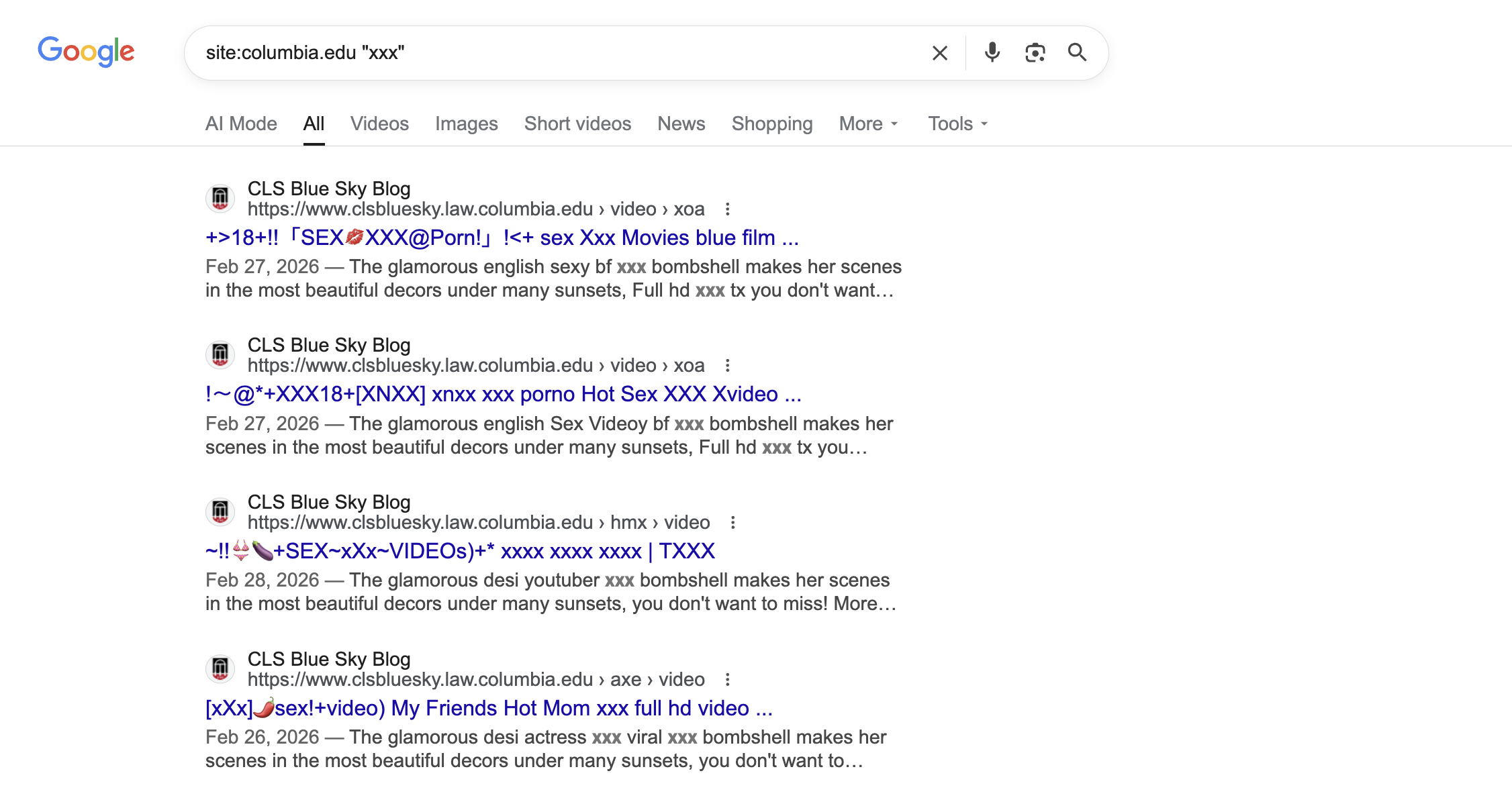
The sites included berkeley.edu, columbia.edu, and washu.edu, the official domains for the University of California, Berkeley, Columbia University, and Washington University in St. Louis. Subdomains such as hXXps://causal.stat.berkeley.edu/ymy/video/xxx-porn-girl-and-boy-ej5210.html, hXXps://conversion-dev.svc.cul.columbia[.]edu/brazzers-gym-porn, and hXXps://provost.washu.edu/app/uploads/formidable/6/dmkcsex-10.pdf. All deliver explicit pornography and, in at least one case, a scam site falsely claiming a visitor’s computer is infected and advising the visitor to pay a fee for the non-existent malware to be removed. In all, researcher Alex Shakhov said, hundreds of subdomains for at least 34 universities are being abused. Search results returned by Google list thousands of hijacked pages.
A handful of hijacked columbia.edu subdomains listed by Google
A handful of hijacked columbia.edu subdomains listed by Google
One of the sites redirected by a UC Berkeley subdomain.
One of the sites redirected by a UC Berkeley subdomain.
Hijacking a university’s good name
Shakhov, founder of SH Consulting, said that the scammers—which a separate researcher has linked to a known group tracked as Hazy Hawk—are seizing on what amounts to a clerical error by site administrators of the affected universities. When they commission a subdomain such as provost.washu.edu, they create a CNAME record, which assignes a subdomain to a “cononical” domain. When the subdomain is eventually decommissioned—something that happens frequently for various reasons—the record is never removed. Scammers like Hazy Hawk then swoop in by hijacking the old record.
With that, they have now hijacked that university’s subdomain. Given the reputations universities have, search queries then flow to the top of Google’s results.
The root cause is simple: organizations create DNS records and never clean them up. There is no expiry date on a CNAME record. Nobody gets an alert when the target stops responding. And most university IT departments don’t maintain a comprehensive inventory of their subdomains and where they point.
This is compounded by how universities operate—they are highly decentralized. Individual departments, labs, research groups, and student organizations can often request subdomains independently. When people leave, there is no decommissioning process for the DNS records they created.
Finding hijacked subdomains is straightforward. People need only enter site:[university].edu “xxx” or site:[university].edu “porn” for an affected institution, and scores of results will appear. In some cases, the subdomains returned no longer lead to porn sites, but as of Friday morning, many still did.
The lesson here is clear: Any organization with a website should compile a running inventory of all subdomains along with the purpose of each one and its corresponding CNAME record. Then staff should regularly audit the list in search of “dangling” records, meaning those that remain even after the official subdomain has gone dark. Any subdomain found to be inactive should have its CNAME removed.
Clearly, many universities and other organizations are flouting this common-sense practice. Shakhov said only a handful of the affected universities have expunged dangling CNAME records since he went public with his findings earlier this month. Even then, several of them have failed to get the URLs delisted by Google. That results in the indexed remaining visible in search results. Inquiries sent to UC Berkeley, Columbia, and Washington University didn’t receive responses before publication.