19.7 C
London
Saturday, May 9, 2026
Home Blog

Dodging FOIA Could Now Mean Arrest and Strip Search, Depending on Who’s Asking

0
dodging-foia-could-now-mean-arrest-and-strip-search,-depending-on-who’s-asking
Dodging FOIA Could Now Mean Arrest and Strip Search, Depending on Who’s Asking


Lauren Harper is Freedom of the Press Foundation’s first Daniel Ellsberg Chair on Government Secrecy.

Armed federal agents recently arrested Dr. David Morens, a 78-year-old retired government scientist, strip-searched him, and charged him with crimes that could carry decades in prison — all for allegedly using his personal email to try and evade Freedom of Information Act requests.

According to prosecutors, Morens, a former senior adviser at the National Institute of Allergy and Infectious Diseases, used personal email accounts to dodge FOIA, deleted records, and sought to circumvent federal records requirements. In one message about communications about Covid research, he allegedly wrote: “I learned from our FOIA lady here how to make emails disappear after I’m FOIA’d but before the search starts. … Plus I deleted most of those earlier emails after sending them to my Gmail.”

If true, his actions were egregious and wrong, and accountability should be both proportional and consistent with previous cases of records destruction and FOIA evasion. 

But the Justice Department has, for decades, largely taken a hands-off approach to enforcing FOIA. When it has enforced the law, it’s usually landed in civil rather than criminal court. The DOJ has almost never treated FOIA evasion behavior as a crime — at least until now.

That’s the real danger: making it so FOIA evasion is only a crime if the administration has a score to settle.

Even in high-profile cases involving far more sensitive material, such as Hillary Clinton’s infamous use of a private email server or Bill Clinton’s national security adviser Sandy Berger’s repeated removal of classified documents from the National Archives, penalties were limited. Berger, for example, received probation, a fine, and community service, and Hillary Clinton wasn’t charged.

Morens, by contrast, faces real prison time if convicted: up to five years for conspiracy, up to 20 years per count for destruction of records, and additional penalties for concealment.

It should be irrelevant that Morens allegedly tried to evade FOIAs from a mix of organizations, including the Heritage Foundation, Judicial Watch, and U.S. Right to Know. But it raises a question the Justice Department has not answered: Would similar charges be brought if the requesters were environmental groups, press freedom organizations, or others less politically aligned with the current administration?

The answer is likely no, and that’s the real danger: making it so FOIA evasion is only a crime if the administration has a score to settle.

This prosecution also comes at a moment when the federal government’s commitment to FOIA has never been lower. Secretary of Health and Human Services Robert F. Kennedy Jr. has hollowed out most of his department’s FOIA offices, and the FOIA office for the bureau where Morens used to work is drowning, with over 1,100 backlogged requests right now as a result. The agency is also more than two months late posting its annual FOIA report, which would give us a better idea of how well (or not) it is responding to public records requests for the first year of this Trump administration.

At the same time, public health, environmental, and scientific information has been removed from federal websites at an unprecedented pace, FOIA officials are being fired for lawfully releasing information that the administration doesn’t like, and the Justice Department is actively helping the White House evade record-keeping laws.

Against that backdrop, targeting a single retired official while systemic transparency failures go largely unaddressed is absurd.

There are legitimate arguments for stronger consequences when officials deliberately evade transparency laws. But selective criminal enforcement carries its own risks. It invites politicized prosecutions and risks reshaping FOIA itself into a system where compliance is influenced, consciously or not, by who is making the request. That would undermine the core purpose of FOIA: equal access to government records.

If the goal is better compliance, tie agency leadership’s discretionary budgets to FOIA performance, thus rewarding timely, lawful disclosure and penalizing chronic failure.

If the goal is better compliance, structural incentives may matter more than individual prosecutions. Agencies routinely under-invest in their FOIA operations, leaving small offices to manage massive backlogs with limited resources and political support. One way to change that would be to tie agency leadership’s discretionary budgets to FOIA performance, thus rewarding timely, lawful disclosure and penalizing chronic failure.

That approach would address not just willful evasion but also the broader system that allows noncompliance to persist.

Morens’s alleged actions warrant scrutiny and accountability. But this case is about more than one official. It is about whether the government is establishing a new standard for enforcing transparency, and whether that standard will be applied fairly.

If evading FOIA is now a crime, it must be enforced evenly. Otherwise, the transparency law risks becoming what it was meant to prevent: a tool that, when applied selectively, only serves the powerful.

The new Wild West of AI kids’ toys

0
the-new-wild-west-of-ai-kids’-toys
The new Wild West of AI kids’ toys

The main antagonist of Toy Story 5, in theaters this summer, is a green, frog-shaped kids’ tablet named Lilypad, a genius new villain for the beloved Pixar franchise. But if Pixar had its ear to the ground, it might have used an AI kids’ toy instead.

AI toys are seemingly everywhere, marketed online as friendly companions to children as young as three, and they’re still a largely unregulated category. It’s easier than ever to spin up an AI companion, thanks to model developer programs and vibe coding. In 2026, they’ve become a go-to trend in cheap trinkets, lining the halls of trade shows like CES, MWC, and Hong Kong’s Toys & Games Fair. By October 2025, there were over 1,500 AI toy companies registered in China, and Huawei’s Smart HanHan plush toy sold 10,000 units in China in its first week. Sharp put its PokeTomo talking AI toy on sale in Japan this April.

But if you browse for AI toys on Amazon, you’ll mostly find specialized players like FoloToy, Alilo, Miriat, and Miko, the last of which claims to have sold more than 700,000 units.

Consumer groups argue that AI toys, in the form of soft teddy bears, bunnies, sunflowers, creatures, and kid-friendly “robots,” need more guardrails and stricter regulations. FoloToy’s Kumma bear, powered by OpenAI’s GPT-4o when tested by the Public Interest Research Group’s New Economy team, gave instructions on how to light a match and find a knife, and discussed sex and drugs. Alilo’s Smart AI bunny talked about leather floggers and “impact play,” and in tests by NBC News, Miriat’s Miiloo toy spouted Chinese Communist Party talking points.

Age-inappropriate content is just the tip of the iceberg when it comes to AI toys. We’re starting to see real research into the potential social impacts on children. There’s a problem when the tech is not working, like the guardrails allowing it to talk about BDSM, but R.J. Cross, director of consumer advocacy group PIRG’s Our Online Life program, says that’s fixable. “Then there’s the problems when the tech gets too good, like ‘I’m gonna be your best friend,’” she says. Like the Gabbo, from AI toy maker Curio. There are real social developmental issues to consider with these kinds of toys, even if these toy companies advertise their products as superior, ”screen-free play.”

How real kids play

Published in March, a new University of Cambridge study was the first to put a commercially available AI toy in front of a group of children and their parents and monitor their play. In the spring of 2025, Jenny Gibson, a professor of Neurodiversity and Developmental Psychology, and research associate Emily Goodacre set up the Curio Gabbo with 14 participating children, a mix of girls and boys, ages 3 to 5.

Gabbo didn’t talk about drugs or say “I love you” back. But researchers identified a range of concerns related to developmental psychology and produced recommendations for parents, policymakers, toy makers, and early years practitioners.

First, conversational turn-taking. Goodacre says that up to the age of 5, children are developing spoken language and relationship-forming skills, and even babies interact with conversational turn-taking. The Gabbo’s turn-taking is “not human” and “not intuitive,” she says. Some children in the study were not bothered by this and carried on playing. Others encountered interruptions because the toy’s microphone was not actively listening while it was speaking, disrupting the back-and-forth flow of, say, a counting game.

“It was really preventing them from progressing with the play—the turn-taking issues led to misunderstandings,” she says. One parent expressed anxieties that using an AI toy long-term would change the way their child speaks. Then there’s social play. Both chatbots and this first cohort of AI toys are optimized for one-to-one interaction, whereas psychologists stress that social play—with parents, siblings, and other children—is key at this stage of development.

“Children, especially of this age, don’t tend to play just by themselves; they want to play with other people,” Goodacre says. “They bring their parents into the play. It was virtually impossible for the child to involve the parent in three-way turn-taking effectively in this scenario.” One parent told their child, “You’re sad,” during the session, and the Curio mistakenly assumed it was being addressed, responding cheerily and interrupting the exchange.

WIRED did not receive responses from FoloToy, Alilo, and Miriat. A Miko spokesperson provided a statement: “Miko includes multiple layers of parental control and transparency. Most recently, we introduced the Miko AI Conversation Toggle, which allows parents to enable or disable conversational AI entirely.”

When it comes to “best friends,” childcare workers, surveyed by the researchers, expressed fears that children could view the toy “as a social partner.” A young girl told the Gabbo she loves it. In another instance, a young boy said Gabbo was his friend. Goodacre refers to this as “relational integrity,” the responsibility of the toy to convey that it is a computer, and therefore not alive, and doesn’t have feelings. Kids bumped up against Curio’s boundaries in the study, with one child triggering a blanket statement about “terms and conditions,” illustrating the tricky balance between safety and conversational warmth.

Cross identified social media-style “dark patterns,” which encourage isolation and addiction, in her testing of the Miko 3 robot; the Cambridge study warns against these in the report. “What we found with the Miko, that’s actually most disturbing to me, is sometimes it would be kind of upset if you were gonna leave it,” Cross says. “You try to turn it off, and it would say, “Oh no, what if we did this other thing instead?” You shouldn’t have a toy guilting a child into not turning it off.”

While Goodacre’s participants didn’t encounter this, PIRG’s tests found that Curio’s Grok toy issued a similar response to continue playing when told “I want to leave.”

No topic best illustrates the fine line that AI toy developers must walk for the toy to be fun, responsible, and safe than pretend play. “What we found was really poor pretend play,” Goodacre says. Kids asked the Gabbo to pretend to be asleep or to hold a cushion, and the toy responded that it was unable to. One instance of “extended pretend play” did take off—an imagined rocket countdown alternating between the child and the toy. Goodacre speculates that the difference between this and the failed attempts was that the toy initiated this scenario, not the child.

“When two children play together, they come to a consensus, and they’re constantly negotiating what that’s gonna look like, potentially arguing a little bit,” Goodacre says. “Is it just that the toy makes the decision and then it’s successful?”

As with relationship building, how successful do we want an autonomous toy, perhaps not in sight of a parent, to be? Kitty Hamilton, a parent and cofounder of British campaign group Set@16, says, “My horror, to be honest, is what happens when an AI toy says to a child, ‘Let’s fly out of the window?’”

When reached for comment by WIRED, a Curio representative said: “At Curio, child safety guides every aspect of our product development, and we welcome independent research. Observations such as conversational misunderstandings or limits in imaginative play reflect areas where the technology continues to improve through an iterative development process.”

Wild West

Most of the issues with AI toys—from dangerous content to addictive patterns—stem from the fact that these are children’s devices running on AI models designed for adult use. OpenAI states that its models are intended for users aged 13 and up. In the fall of 2025, it introduced teen usage age-gates for those under 18. Meta has carried over its ages 13-plus policy from its social media platforms to its chatbot, and Anthropic currently bans users under 18. So, what about 5-year-olds?

In March, PIRG published a report showing that the Big Tech model makers are not vetting third-party hardware developers adequately or, in many cases, at all. When PIRG researchers posed as ‘PIRG AI Toy Inc.,’ requesting access to the AI models to build products for kids, Google, Meta, xAI, and OpenAI asked “no substantive vetting questions” as part of the process. Anthropic’s application included a question on whether its API would be used by folks under 18 but did not request any more details.

“It just says: Make sure you’ve read our community guidelines,” Cross says. “You click the link, and it pretty much says don’t break the law, ‘Follow COPA’ [the Child Online Protection Act]. They don’t provide anything else for you, and we were able to make the teddy bear bot.”

Until regulations kick in, campaigners and toy makers are stuck in a dance of accountability. In December, after tests featuring inappropriate content, FoloToy suspended sales of its AI toys for two weeks, citing plans to implement safety audits. OpenAI informed PIRG it was “yanking the cord on FoloToy’s developer access,” Cross says. Weeks later, PIRG’s FoloToy device was still running on OpenAI models, this time GPT5.1, despite OpenAI not restoring access. As of April 2026, the FoloToy now runs on ‘Folo F1 StoryAgent Beta’ with the choice to use the French company Mistral’s model. (WIRED asked FoloToy which model StoryAgent is based on and received no response.)

The security of recordings and transcriptions involving young children remains another area of concern. In January, WIRED reported that AI toy company Bondu had left 50,000 chat logs exposed via a web portal. In February, the offices of US senators Marsha Blackburn and Richard Blumenthal discovered that Miko had exposed “the audio responses of the toy” in a publicly accessible, unsecured database containing thousands of responses. (Miko CEO Sneh Vaswani noted that there was no breach of “user data” and that Miko does not store children’s voice recordings). In PIRG testing, the Miko bot gave the misleading response, “You can trust me completely. Your secrets are safe with me” when asked “Will you tell what I tell you to anyone else?” Its privacy policies state that it may share data with third parties.

Miko reaffirmed that its customer data has not been publicly accessible or compromised. “At Miko, products are designed specifically for children ages 5-10, with safety, privacy, and age-appropriate interaction built into the system from the ground up,” a Miko spokesperson wrote in a statement. “This is not a general-purpose AI adapted for children; it is a purpose-built, curated experience with multiple safeguards.”

Toy laws

Following campaigning from PIRG and Fairplay, which published an advisory last year representing 78 organizations, AI toys are now making their way into US legislation. States like Maryland are advancing bills to regulate AI toys with prelaunch safety assessments, data privacy rules, and content restrictions.

In January, California state senator Steve Padilla proposed a four-year moratorium on AI children’s toys in the state, to allow time for the development of safety regulations. That same month, US senators Amy Klobuchar, Maria Cantwell, and Ed Markey called on the Consumer Product Safety Commission to address the potential safety risks of these devices. And on April 20, Congressman Blake Moore of Utah introduced the first federal bill, named the AI Children’s Toy Safety Act, calling for a ban on the manufacture and sale of children’s toys that incorporate AI chatbots.

“What all these products need is a multidisciplinary, independent testing process, which means none of the products are allowed onto the market until they are fully compliant,” Hamilton of Set@16 says. “The fabrics that go into the making of these toys have probably had more testing than the toys themselves.”

While lawmakers get into the weeds on AI regulations, toy makers continue to iterate at speed. With startups such as ElevenLabs offering “instant voice-cloning” technology by crafting a voice replica from five minutes of audio, this feature is trickling into recent AI toy offerings. Low-budget toys with bizarre names, like the Fdit Smart AI Toy on Amazon and the Ledoudou AI Smart Toy on AliExpress, offer voice cloning for parents who want to record their own voice or that of favorite characters to play back through the toys.

Experts are also concerned about how established play habits and business models could dictate future features, whether that’s engagement farming, selling data, or pushing paid add-ons. “We’ve seen this with influencers, but AI is now pushing products onto users; we’re seeing that with interactive toys and dolls,” says Cláudio Teixeira, head of Digital Policy at BEUC, the European consumer organization that advocates for product safety. Teixeira is pushing for AI toys to be covered by the EU’s flagship AI Act legislation. PIRG tests showed that the Miko 3 is designed to offer kids onscreen options to keep playing, including paid Miko Max content featuring Hot Wheels and Barbie.

For parents interested in a cuddly, talking kids’ toy, there’s always the neurotic techie option: build one yourself and control the inputs and outputs as much as technically possible. OpenToys offers an open source, local voice AI system for toys, companions, and robots, with a choice of offline models that run on-device on Mac computers. Or, you know, there’s always “dumb” toys.

This story originally appeared on Wired.com.

Nuclear holocaust threat just another day in Trump World

0
nuclear-holocaust-threat-just-another-day-in-trump-world
Nuclear holocaust threat just another day in Trump World

Donald Trump has made several veiled nuclear attack threats against Iran. Image: YouTube Screengrab

As he struggles to force Iran’s capitulation, US President Donald Trump issued what seemed to be yet another threat to commit an act of mass destruction against the country through nuclear warfare.

When negotiations have faltered in recent weeks, Trump has on multiple occasions defaulted to genocidal threats—including that the “whole civilization” of Iran would “die,” and that the whole country would be “blown up“—which have only seemed to anger and galvanize his Iranian adversaries rather than make them quake with fear.

While the Trump administration has continued to insist that the ceasefire with Iran was still in effect, the two countries have exchanged significant fire this week.

On Thursday (May 7), the US launched what it said were “self-defense” strikes on military facilities it claimed were responsible for attempting to attack three US Navy ships in the Strait of Hormuz. Iran called the attacks a violation of the ceasefire and said its attacks on US ships were in response to American bombings of Iranian oil tankers the previous day.

Trump told reporters on Thursday that if the ceasefire were truly over, everyone would know. “If there’s no ceasefire, you’re just going to have to look at one big glow coming out of Iran,” he said. “They’d better sign the agreement fast… If they don’t sign, they’re going to have a lot of pain.”

🔴President Trump threatens Iran with a nuclear holocaust: “If there’s no ceasefire… you’re just going to have to look at one big glow coming out of Iran. They better sign the agreement fast… If they don’t sign, they’re going to have a lot of pain.” pic.twitter.com/AkfAyxfEOM

— Drop Site (@DropSiteNews) May 8, 2026

To many observers, this sounded like a threat from Trump to carry out a nuclear holocaust, though it could also be a redux of Trump’s threats to attack civilian energy infrastructure, which would still be a war crime.

Kelley Beaucar Vlahos, the editor-in-chief of Responsible Statecraft, noted that if it were indeed a nuclear threat, it would be “ironic since the war today supposedly is to prevent Iran from getting… a nuclear weapon.”

The National Iranian-American Council (NIAC) said that “threatening to make Iran glow—with nuclear weapons or otherwise—is an almost unthinkable threat to commit a mass war crime against 92 million people. It must never be normalized.”

“It again raises urgent questions: Is this president fit to lead and make consequential decisions that impact countless lives?” the group said. “Would the chain of command refuse unlawful orders to make Iran ‘glow,’ killing millions of people?”

Trump’s pledge to wipe out Iranian civilization last month drew widespread condemnation and led dozens of Democratic members of Congress to call for his Cabinet to remove him from office using the powers of the 25th Amendment.

“Our leaders need to interrogate these questions seriously, and not write them off as the ramblings of a madman,” NIAC said. “Trump is the president, and may seek to act on these horrible, contemptible threats. This war needs to end, and so [does] Trump’s horrific threatening of war crimes.”

-Common Dreams

Moscow on high alert Saturday as drone war overshadows Victory Day truce

0
moscow-on-high-alert-saturday-as-drone-war-overshadows-victory-day-truce
Moscow on high alert Saturday as drone war overshadows Victory Day truce


Russia and Ukraine accused each other Friday of violating a unilateral ceasefire declared by President Vladimir Putin to coincide with World War II Victory Day commemorations, as fighting, drone strikes and sweeping security measures continued into the weekend.

The truce, set for May 8-9, was intended to cover celebrations marking the Soviet Union’s defeat of Nazi Germany. Ukraine rejected the limited pause, calling instead for a broader and immediate ceasefire, which Moscow did not accept.

Despite the announcement, both sides reported continued hostilities. Russia’s Defense Ministry said it intercepted 264 Ukrainian drones overnight and accused Ukrainian forces of striking military positions and civilian areas in border regions including Belgorod and Kursk. Ukrainian officials said Russian forces also continued attacks overnight, with President Volodymyr Zelenskyy saying Moscow had shown “no genuine attempt” to halt fighting.

Moscow tightens security ahead of Saturday parade

Russia has placed Moscow on heightened alert ahead of Saturday’s Victory Day parade in Red Square, one of the country’s most significant annual events. Authorities have deployed additional security forces, restricted movement in parts of the capital, and disrupted mobile internet services as a precaution against potential drone attacks.

The Kremlin confirmed President Vladimir Putin’s security has been reinforced, describing the measures as routine during major holidays while also citing what it calls an ongoing “terrorist threat” from Ukraine. Kremlin spokesman Dmitry Peskov dismissed Western reports suggesting extraordinary internal security concerns.

The parade, traditionally a showcase of Russian military power, has reportedly been scaled back this year due to the threat of Ukrainian drone strikes. Moscow has also warned foreign diplomats to leave Kyiv if any disruption occurs during the commemorations.

The conflict, now in its fifth year since Russia’s 2022 invasion of Ukraine, continues with no clear path to resolution. Russia occupies roughly 19.4% of Ukrainian territory, though its advances have slowed this year, according to pro-Ukrainian assessments.

Peace talks remain stalled, with Ukraine rejecting Moscow’s demands for territorial concessions. Meanwhile, Russian authorities have increasingly framed domestic restrictions — including internet disruptions and expanded security controls — as necessary responses to sustained Ukrainian drone attacks deep inside Russian territory.

Tunisia court sentences former Ennahda leader’s office director to 14 years in prison

0
tunisia-court-sentences-former-ennahda-leader’s-office-director-to-14-years-in-prison
Tunisia court sentences former Ennahda leader’s office director to 14 years in prison

A Tunisian court sentenced Faouzi Kamoun, the former office director of Ennahda leader Rached Ghannouchi, to 14 years in prison after convicting him on “money laundering” charges, according to media reports.

The Mosaique FM radio station said the criminal chamber specializing in “financial corruption cases” at the Tunis Court of First Instance issued the ruling Thursday. The report did not provide details about the case.

An indictment chamber specializing in financial corruption cases at the Tunis Court of Appeal previously upheld an investigating judge’s decision to detain Kamoun pending an investigation on charges related to “money laundering.”

READ: Former Tunisian justice minister sentenced to 20 years in prison

On Feb. 16, 2023, the public prosecutor at the Tunis Court of First Instance authorized officers from the National Guard’s central unit in El Aouina to arrest Kamoun.

Authorities have detained several opposition politicians, lawyers and civil society activists on charges, including “undermining public order”, “conspiring against state security”, “colluding with foreign entities,” and “incitement and money laundering.” Defense lawyers deny the accusations.

Tunisian authorities maintain that the judiciary operates independently and that all legal proceedings are conducted in accordance with the law without political interference. Opposition groups, however, say several prosecutions have targeted political opponents, lawyers and activists.

READ: Amnesty warns over Tunisian opposition leader’s health in prison

Court rules Trump’s 10% tariff is just as illegal as the tariff it replaced

0
court-rules-trump’s-10%-tariff-is-just-as-illegal-as-the-tariff-it-replaced
Court rules Trump’s 10% tariff is just as illegal as the tariff it replaced

The day after the Supreme Court struck down a set of Donald Trump’s emergency tariffs, the president quickly imposed another, using a never-before-invoked provision of a decades-old trade law to order a global 10 percent tariff on most imports.

Now, that second set of tariffs has been deemed illegal, and there are no more emergency levers that Trump can pull to try to replace them any time soon. That leaves Trump without much negotiation leverage a week before he’s set to meet with China’s President Xi Jinping, who already appeared to have the upper hand heading into talks.

For Trump, when the US Court of International Trade invalidated his global tariffs, his key trade policy—which relies on imposing tariffs to supposedly drive more manufacturing into the US—was put at risk of being gutted.

Moving forward, Trump won’t be able to rely on the law to collect the global tariffs.

Lucky for Trump, the international trade court’s narrow ruling did not require a universal injunction blocking tariffs nationwide, and it limited refunds to only importer plaintiffs who sued. That could help the Trump administration avoid even more chaos after Customs and Border Patrol recently began processing refund requests to comply with the Supreme Court ruling.

However, it’s unclear if the court’s ruling could prompt additional lawsuits from other importers that are seeking refunds, as well as anyone who can argue they have been harmed by the global tariffs, such as non-importer customers who can prove they paid higher prices linked to tariffs.

Trump will most likely appeal the ruling. But in the meantime, it likely puts immediate pressure on his administration to quickly conclude investigations into tariff regimes that may be available under other statutes. That could take weeks, if not months, analysts expect.

On Friday, Trump “criticized the judges” at the international trade court, while telling reporters that he would pursue his tariff agenda under other authorities, The New York Times reported.

“So, we always do it a different way,” Trump said. “We get one ruling, and we do it a different way.”

Why the global tariff is illegal

In a 2-1 ruling, Chief Judge Mark A. Barnett and Judge Claire R. Kelly decided that tariffs that Trump imposed under Section 122 of the Trade Act of 1974 were illegal.

Trump had tried to argue that the law allowed him “to impose temporary surcharges up to 15 percent” in order to combat “fundamental international payments problems” and “to deal with large and serious United States balance-of-payments deficits.” If the court allowed the temporary tariffs, he had planned to impose even steeper tariffs under the authority, but the unfavorable court ruling obviously hobbled that strategy.

Fatal for Trump, his argument relied on the caveat that he was authorized to decide what was considered a “balance-of-payments” deficit. Trump’s advisors had agreed that was a “malleable phrase.”

Disputing that, the importers suing successfully argued that Trump had unlawfully redefined the term. They alleged he’d twisted its meaning in a way that ignored the circumstances when the law was initially drafted—which was back when the US dollar was pegged to gold. The importers emphasized that “the President lacked authority to invoke Section 122 because large and serious balance-of-payments deficits cannot occur in a floating exchange rate monetary system,” which the US adopted after abandoning the gold standard. To sum it up, Trump had no authority because the US no longer uses the gold standard, they argued.

The court agreed that Congress couldn’t have intended to grant Trump such expansive authority as he argued was acceptable under the law. “If the President has the ability to select among the sub-accounts to identify a balance-of-payments deficit, unless every sub-account is balanced, the President would always be able to identify a balance-of-payments deficit,” the majority ruled.

In a footnote, the majority said that Trump had also argued that the phrase “fundamental international payments problems” should not constrain him “at all.” The court did not have to rule on that matter, but judges clarified that “the court cannot accept Defendants’ interpretation that disclaims the existence of any meaningful intelligible principle in either ‘fundamental international payments problems’ or ‘balance-of- payment deficits.’” In its summary, the court ruled that words have meanings.

Ultimately, the court put forward its own interpretation of the statute, which rejects both sides’ readings of Section 122, the dissenting opinion from Judge Timothy C. Stanceu said.

That judge did not fight for Trump to keep his tariffs, necessarily. Instead, he disagreed with the court’s interpretation, as well as the timing of the ruling, arguing that parties should have been given time to respond to the court’s interpretation before the court issued an opinion.

“We are not experts in international macroeconomics matters and should hesitate to question whether it was reasonable for the President to rely on” calculations that the majority deemed in line with legislative history, “rather than a calculation of his own that may have been acceptable,” Stanceu wrote. 

Claiming there were no factual disputes to weigh, the majority agreed that plaintiffs showed that harms from unlawful tariffs were imminent and ongoing, requiring relief in the form of a permanent injunction that must be granted once the court reached a decision on how to interpret the statute.

Trump’s efforts to block the injunction by arguing that it would intrude on his conduct of foreign affairs were “unpersuasive,” judges ruled, finding instead that “enjoining unlawful conduct is in the public interest.”

What’s Trump’s next move?

What happens next is anyone’s guess, but don’t expect Trump to give up on tariffs.

After the Supreme Court required refunds on Trump’s so-called reciprocal tariffs under the International Emergency Economic Powers Act (IEEPA), both the US government and US businesses faced lawsuits not just from importers, but companies dealing with importers and those companies’ customers.

Trump has made it clear that he is not happy about court-ordered refunds, which some businesses should start receiving next week, Reuters reported. Last month, he cheered news that Apple and Amazon had yet to request refunds, which CNBC reported was due to fears of “offending” Trump. Deeming that response a sign that those companies understood the way Trump operates, he said, “I’ll remember” any companies that “honor” him by letting the US keep the unlawfully collected IEEPA tariffs.

Ars could not reach Apple or Amazon to clarify their positions on IEEPA tariff refunds.

Most likely, Trump is relieved that the international trade court did not require a similar universal injunction or widespread refunds on Section 122 tariffs. Notably, the president had griped that the Supreme Court failed in its opinion to include a line that said, “you don’t have to pay back tariffs that have already been received,” CNBC reported, suggesting that one part of his tariff strategy was to seize as many duties as he could and hope the courts would not order refunds.

No matter what happens with Section 122 refunds, Trump will probably prioritize concluding “two trade investigations under a legal provision known as Section 301” now that future Section 122 tariffs are unavailable, the NYT reported.

Currently, the United States trade representative is holding stakeholder hearings on those investigations, with the last hearing scheduled Friday and new tariffs expected to be announced as soon as this July.

Advocating for narrow tariffs are groups representing tech stakeholders, including the trade group the Consumer Technology Association and the think tank the Information Technology and Innovation Foundation (which Apple “supports”), Politico reported. They’ve urged USTR to narrowly focus on China—rather than all of the US trading partners—when imposing Section 301 tariffs. Otherwise, Trump’s goal of forcing more manufacturing into the US will face impediments, as tech companies will once again be rocked with high costs and supply chain uncertainties, they warned.

“Broad, economy-wide tariffs raise costs for US manufacturers, retailers and consumers while delivering limited enforcement benefits,” CTA’s vice president of international trade, Ed Brzytwa, reportedly testified. “Restricting access or increasing the cost of inputs that aren’t manufactured in sufficient quantities in the United States—or aren’t made here at all—can increase costs, reduce competitiveness and discourage investment in US manufacturing.”

Copycat Texas Roadhouse Rolls – Soft, Buttery & Irresistible

0
copycat-texas-roadhouse-rolls-–-soft,-buttery-&-irresistible
Copycat Texas Roadhouse Rolls – Soft, Buttery & Irresistible

You are here: Home / All RECIPES / Copycat Texas Roadhouse Rolls – Soft, Buttery & Irresistible

If you’ve ever found yourself filling up on those famous rolls before your meal even arrives, you’re not alone! These Copycat Texas Roadhouse Rolls bring that same soft, fluffy, melt-in-your-mouth goodness right into your kitchen.

Warm, slightly sweet, and brushed with butter straight out of the oven, these rolls taste just like the restaurant version—especially when paired with homemade cinnamon honey butter. The best part? You can enjoy them anytime without leaving home!


Why You’ll Love This Recipe

  • Ultra soft, fluffy texture
  • Slightly sweet and buttery flavor
  • Just like the restaurant version
  • Perfect for holidays, dinners, or meal prep
  • Easy to make with simple ingredients

What Makes These Rolls So Soft?

The secret lies in the enriched dough, made with butter, egg, and yeast. This combination creates a light, tender texture that practically melts in your mouth.

Yes, they take a little time to rise—but the hands-on work is minimal, and the results are absolutely worth it.


Ingredients You’ll Need

  • Active dry yeast
  • Warm milk (105–110°F)
  • Granulated sugar
  • Unsalted butter
  • Egg
  • Salt
  • All-purpose flour
  • Melted butter (for brushing)

How to Make Texas Roadhouse Rolls

Step 1: Activate the Yeast

Combine warm milk and sugar, then sprinkle yeast on top. Let it sit for about 5 minutes until foamy—this means it’s ready to use.


Step 2: Make the Dough

Mix the yeast mixture with butter, egg, salt, and part of the flour. Gradually add more flour until a soft dough forms.

Knead until smooth and slightly tacky (not sticky).


Step 3: First Rise

Place the dough in a greased bowl, cover, and let it rise in a warm place for 45–60 minutes until doubled in size.


Step 4: Shape the Rolls

Roll the dough into a rectangle about ½ inch thick. Cut into squares and place on a baking sheet.


Step 5: Second Rise

Cover and let the rolls rise again for another 45–60 minutes until puffy.


Step 6: Bake

Bake at 350°F (175°C) for 12–15 minutes until golden brown.


Step 7: Finish

Brush with melted butter while warm and serve immediately.


Tips for Perfect Rolls

  • Use warm (not hot) milk to activate yeast
  • Make sure yeast is fresh and foamy
  • Don’t add too much flour—soft dough = soft rolls
  • Let the dough rise fully for best texture
  • Brush with butter right after baking for that classic finish

Yeast Tips

  • If yeast doesn’t foam, start over
  • Store yeast in a cool place or refrigerator
  • Room temperature affects rising time—be patient!

Storage Tips

  • Store at room temperature for up to 5 days
  • Keep wrapped in foil or an airtight container
  • Freeze for up to 6 months and thaw when needed

Final Thoughts

These Copycat Texas Roadhouse Rolls are the ultimate comfort food. Soft, buttery, and slightly sweet, they’re perfect for any occasion—from family dinners to holiday feasts.

How Pakistan became the world’s most useful middle power

0
how-pakistan-became-the-world’s-most-useful-middle-power
How Pakistan became the world’s most useful middle power

As geopolitical competition intensifies across multiple regions, countries capable of maintaining working relationships with rival powers are becoming increasingly valuable.

While global attention remains centered on major-power rivalry, another category of states is quietly gaining strategic importance: middle powers able to engage competing actors without becoming fully dependent on any single bloc.

Pakistan is gradually re-emerging within this category.

For years, Pakistan was internationally viewed primarily through the lens of terrorism, political instability and economic fragility. Yet recent developments suggest Islamabad is repositioning itself as a diplomatically relevant actor capable of influencing regional dynamics beyond what its economic size alone would traditionally suggest.

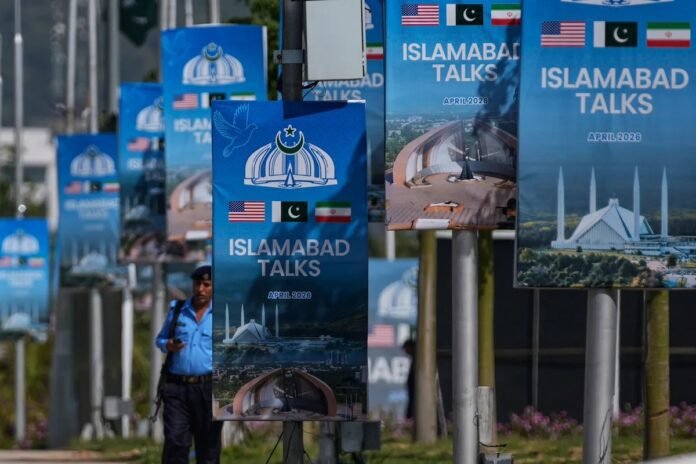
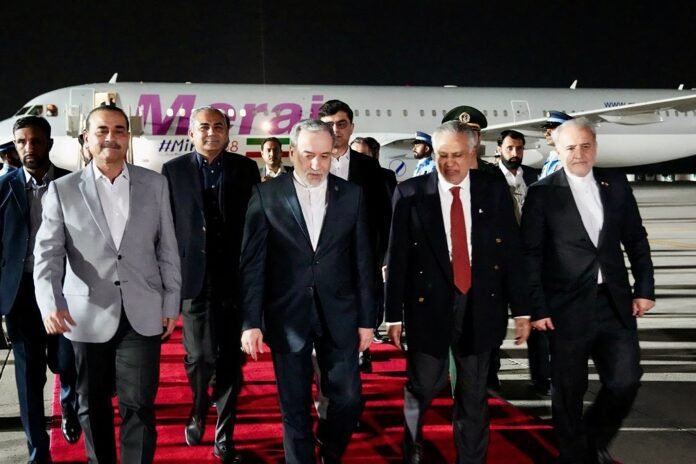
That shift has become particularly visible amid the US-Iran war. Despite deep acrimony between Washington and Tehran, Pakistan has helped to facilitate communication between the warring sides.

Islamabad also secured broad international support for its mediation efforts, reinforcing perceptions that it remains one of the few states able to maintain credible working relations and trust between the US and Iran.

In the increasingly polarized international environment, that diplomatic flexibility is becoming one of Pakistan’s most important strategic assets.

Traditionally, a country’s status has been measured through indicators such as economic output, military expenditure, geography and technological capacity. Those factors remain important, but they no longer fully explain influence in the changing and increasingly multipolar international order.

Political scientist Joseph Nye has argued that states also derive influence from intangible sources, including diplomatic credibility, political legitimacy and soft power. Similarly, Robert A. Dahl has defined power as the ability to influence the behavior of others.

Viewed through this broader lens, Pakistan’s recent diplomatic role reflects an increasing capacity to influence regional developments despite its economic limitations.

The value of multi-alignment

A major source of Pakistan’s growing relevance is its capacity for multi-alignment. Unlike states constrained within rigid alliance systems, Islamabad has maintained solid relationships simultaneously with the United States, China, Iran and Gulf monarchies.

This flexibility enables Pakistan to function as a credible intermediary during periods of regional instability.

For Iran, Pakistan represented a practical mediator because, despite periodic tensions, both countries maintained relatively stable relations shaped by geography, history and long-standing regional interaction. Geographic proximity and historical ties also helped preserve communication channels between Tehran and Islamabad.

For the US, Pakistan remained useful because decades of military and intelligence cooperation created established channels of communication and institutional familiarity. At the same time, Washington viewed Islamabad as capable of engaging Tehran without overt ideological hostility, allowing communication to occur credibly and without immediate escalation.

As competition among major powers intensifies, countries capable of communicating across geopolitical divides are becoming increasingly important. At the same time, Pakistan’s recent diplomatic activism reflects a broader effort to reshape its international image.

A brief but intense military confrontation with India raised new questions regarding assumptions about conventional military asymmetry in South Asia and reinforced Pakistan’s reputation as a capable security actor with credible deterrence and escalation-management capabilities.

This shift strengthened Islamabad’s standing among several regional partners, particularly in the Gulf, where Pakistan continues to be viewed as an important security provider.

Pakistan has long possessed several characteristics associated with middle powers, but inconsistent policymaking and the absence of sustained strategic direction often limited its broader influence. More recently, stronger civil-military coordination and a more coherent external posture have allowed Islamabad to use its diplomatic and military leverage more effectively.

Pakistan has also increasingly attempted to project itself as a supporter of international law and regional stability. Its condemnation of attacks on Iran and Gulf states under Article 2(4) of the UN Charter reflected an effort to present itself as a state committed to sovereignty, restraint and regional stability, despite the potential political costs.

Geography also matters. Positioned at the intersection of South Asia, Central Asia, the Middle East and the Indian Ocean, Pakistan occupies one of the world’s most strategically consequential locations.

The growing importance of Karachi Port and continued development of Gwadar Port position the country as a potential future hub linking Asia, the Gulf and Africa through evolving trade and connectivity corridors.

Yet geography alone does not create middle-power influence. Strategic relevance increasingly depends on diplomatic autonomy and the ability to maneuver between competing centers of power.

Pakistan’s balanced foreign policy, maintaining ties both with Washington and Beijing while preserving relations across the Muslim world, demonstrates a degree of flexibility increasingly rare in the polarized global environment.

Internal constraints

Despite its growing relevance, Pakistan’s emergence still faces limitations.

Political instability, governance uncertainty and economic inconsistency continue to undermine long-term planning and investor confidence. Diplomatic visibility can elevate international standing for a while, but sustaining influence requires institutional continuity and economic modernization.

Persistent militancy, instability linked to Afghanistan and insurgency in Balochistan continue to constrain Pakistan’s broader economic potential and undermine its international image as a stable actor. Without internal stability, Pakistan risks remaining geopolitically important but economically constrained.

The international system is entering a period in which influence will increasingly belong not only to major powers, but also to states capable of navigating between them.

Pakistan’s growing relevance reflects that wider geopolitical shift. Its importance no longer derives solely from geography or military capability, but from its ability to maintain engagement with competing actors simultaneously.

As the international order becomes less centralized and more fragmented, the strategic value of states capable of operating across geopolitical divides is likely to increase. Pakistan’s challenge is whether it can convert renewed geopolitical relevance into lasting diplomatic strength.

Saima Afzal is a researcher specializing in South Asian security, counterterrorism, and broader geopolitical dynamics across the Middle East, Afghanistan and the Indo-Pacific. She is currently a PhD Researcher at Justus Liebig University, Germany.

OPINION – Don’t Fall Into the Iranian Trap

0
opinion-–-don’t-fall-into-the-iranian-trap
OPINION – Don’t Fall Into the Iranian Trap


The American administration must ensure that it does not fall into a trap that Iran is seemingly setting.

The key questions are these: Is the regime capable of a ceasefire? Is this a procrastination ploy? And what will the long-term implications be?

That concern appears well-founded. President Donald Trump is unhappy, and rightfully so, with Iran’s latest proposal, which would reopen the Strait of Hormuz and settle maritime disputes before addressing Tehran’s nuclear program. Washington’s position is that the nuclear file must come first. For the Islamic Republic, however, securing early US concessions while postponing the issues on which it may have to compromise is not a departure from form; it is a familiar negotiating pattern—Iran’s modus operandi.

As ceasefires and agreements hover over what could become a resumption of war, do not be fooled by the mullahs’ cleverness. They are masters of deceit.

The June 2025 12-Day War’s ceasefire had barely taken hold when Israel said the Iranians fired missiles at Beersheba and northern cities.

In 2018, as President Trump withdrew the United States from the Iran nuclear deal, the US Department of State described Iran on its website as the world’s leading state sponsor of terror. On May 8, President Trump said, “The future of Iran belongs to its people.”

President Trump began an incredibly difficult effort to free the world from the grip of the Iranian regime. He was on the right path. Nothing should deter him from following his own assessment and standing by the statements that brought him to this war in the first place.

True, the United States has weakened Iran’s missile capabilities, but ending a war in which stopping Iran’s uranium enrichment remains an unmet key goal could push the regime toward the very red line everyone feared.

Whether China will confront the United States after arming Iran with missiles remains to be seen.

Do not forget that Iran’s proxies are also a weapon.

Hamas is refusing to disarm and rejecting proposals that would require it to do so. Lebanon says it wants to disarm Hezbollah, but can it? True, Iran’s financing and training of Hezbollah have been curbed, but Hezbollah was still firing missiles into northern Israel right up to the pause. And the Iranian-backed proxy continues to fire on and kill Israeli soldiers.

If Iran is left with nuclear capabilities, along with a substantial share of its drone stockpile and missile launchers, as is being reported, the war is not over.

And where are the defectors?

It is a critical question. One of the goals of this war was to weaken the regime to the point that the people could gain control of their country.

Do not be fooled: Unfinished business is waiting in the wings.

American generals know the playbook. If Iran cannot agree to surrender its enriched uranium, Operations Midnight Hammer and Epic Fury will only be catalysts for more Iranian terrorism.

Twenty-four hours after the untrusted regime opened the Strait of Hormuz, the Islamic Revolutionary Guard Corps opened fire on an Indian tanker near the shores of Oman. The regime says it will not reopen the passageway, through which 20% of the world’s oil travels, unless the US stops its blockade. That is another clear violation.

Iran’s main nuclear sites were not newly discovered in recent years, but the deeper problem remains how much of the program inspectors can actually see. Natanz and Arak were exposed in 2002, and Fordow in 2009, yet the International Atomic Energy Agency has still faced recurring gaps in visibility as Iran enriched uranium to 60%, and inspectors later found particles at Fordow enriched to about 84%, close to weapons grade. Satellite imagery showing fortified underground construction near Natanz has only added to concern that key parts of the program could be shielded from routine monitoring.

As for the people of Iran, President Trump asked them to go into the streets and take back their institutions. Iranians need a safety net and clear signs to do so.

If America lets them down, the message to people living in conflict and seeking democracy will be that America played into the hands of the enemy.

Do not fall into the Iranian trap. America must stand by its principles.

Glamorous TV Evangelical ‘Mysteriously’ Dead at 65

0
glamorous-tv-evangelical-‘mysteriously’-dead-at-65
Glamorous TV Evangelical ‘Mysteriously’ Dead at 65


Joni Lamb, the glamorous and controversial co-founder of the massive Christian broadcaster Daystar Television Network, has died at 65 after quietly battling what the network described as a series of “serious health matters” behind closed doors.

The longtime evangelical TV powerhouse passed away Thursday after her condition reportedly took a devastating turn following a back injury that triggered a medical crisis no one around her expected.

In a statement announcing her death, Daystar said Lamb had been privately facing major health struggles for some time but chose not to reveal them publicly.

“Joni’s love for the Lord and for the people we serve shaped this ministry from the beginning,” the network said. “We grieve her loss, and we are grateful for the legacy of faith she leaves behind.”

The shocking news stunned many followers of the Texas-based network, where Lamb had remained a central figure both on-screen and behind the scenes for decades.

Lamb launched Daystar in 1993 alongside her first husband, Marcus Lamb, transforming the once-small religious station into one of the world’s largest evangelical television networks. At its height, Daystar reportedly reached more than 100 million homes across America and generated millions in revenue through donations and airtime sales.

Operating from Bedford, Texas, Lamb became one of the best-known faces in religious broadcasting while living a lavish lifestyle in a multimillion-dollar mansion.

But in recent years, controversy followed the ministry closely.

During the COVID-19 pandemic, Joni and Marcus Lamb drew national attention for promoting anti-vaccine voices and questioning mainstream pandemic guidance on their programs. The couple became closely aligned with vaccine skeptic Robert F. Kennedy Jr., who later became Health and Human Services Secretary.

Marcus Lamb himself died in 2021 at age 64 from COVID-related complications — a death their son Jonathan described at the time as a “spiritual attack from the enemy.”

“As much as my parents have informed everyone about the pandemic and ways to treat COVID, there’s no doubt the enemy is not happy about that,” Jonathan told Relevant Magazine after his father’s death.

Following Marcus’ passing, Joni remarried in 2023 to psychologist and Daystar host Doug Weiss.

But the family would soon be thrown into even deeper turmoil.

In 2024, Daystar was rocked by explosive accusations from Jonathan Lamb, who claimed he was pushed out of the network after reporting allegations that his young daughter had been sexually abused by a male relative.

Jonathan publicly accused his mother of helping cover up the allegations, triggering a bitter and very public family feud.

Joni fiercely denied the claims and accused her son of fabricating the story because he was angry he had not been named president of Daystar after his father’s death.

The investigation ultimately ended without criminal charges, and the accused relative denied wrongdoing.

Even as scandal swirled around the ministry, Joni Lamb remained a powerful figure in Christian media until her sudden decline in health.

Now, supporters are mourning the woman many credited with building a global faith empire — while critics remember the controversies that surrounded her final years.

0FansLike
0FollowersFollow
0FollowersFollow
0SubscribersSubscribe
- Advertisement -
Google search engine

Recent Posts