5.8 C
London
Saturday, April 25, 2026
Home Blog

Iran war is accelerating SE Asia’s drift from America

0
iran-war-is-accelerating-se-asia’s-drift-from-america
Iran war is accelerating SE Asia’s drift from America

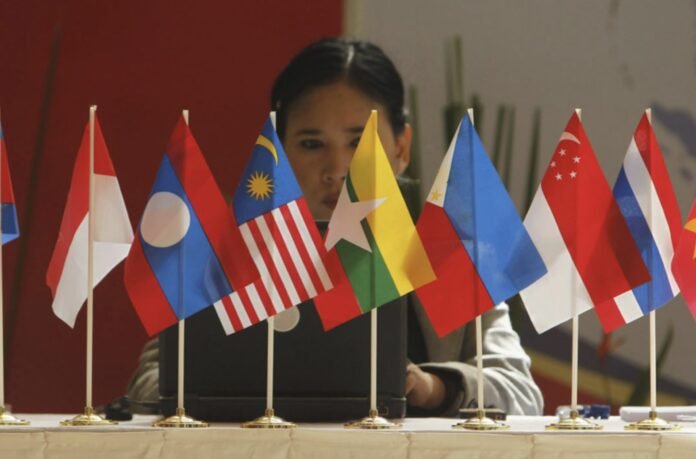
Southeast Asia is watching the US-Israel conflict with Iran — and quietly drawing conclusions. Most countries have adopted a policy of non-interference, but behind the cautious and neutral stances, they are accelerating efforts to reduce their defense dependence on Washington.

The recent US-Indonesia defense agreement, followed by an apparent rift between the Indonesian defense and foreign ministries over granting the US overflight rights above the Strait of Malacca, resulting in a hold on access, clearly illustrates this tension.

President Trump’s unpredictable, transactional foreign policy has widened the divide between Washington and many Southeast Asian capitals. Eroding trust and diminishing alignment are increasingly visible, while US disengagement from Association of Southeast Asian Nations (ASEAN) multilateralism signals a diminishing role in the region.

Though suggestions of a diminished US role in the region have circulated for some time, they have not always been backed by concrete evidence or outcomes. Successive administrations managed to reassert engagement after periods of drift. Those were seen in the “Pivot to Asia” under Barack Obama, the Indo-Pacific strategy during the first Trump administration and its continuation under Joe Biden.

At present, however, US influence appears to be declining more markedly. One key and visible indicator is the absence of unequivocal support from allies and partners during the ongoing Middle East crisis. Even traditionally friendly countries have voiced criticism of the US’s war against Iran.

For instance, Singapore Foreign Minister Vivian Balakrishnan stated in late March: “I was surprised by the onset of hostilities. I did not think it was necessary. I do not think it is helpful. Even now, there are doubts about legality. For 80 years, the US underwrote a system of globalization based on UN Charter principles, multilateralism, territorial integrity, and sovereign equality. It led to an unprecedented period of global prosperity and peace.”

Another important indicator is the ISEAS-Yusof Ishak Institute’s State of Southeast Asia 2026 survey. Unsurprisingly, regional attitudes toward China and the US have shifted in recent years.

According to the survey, 52% of respondents now favor alignment with China, compared to 48% who still prefer the US. While the overall margin is narrow, the finding is nonetheless noteworthy: China is now perceived as more closely aligned with the interests of ASEAN member states than the US.

More striking, however, are the variations across individual countries. In Indonesia (80%), Malaysia (68%) and Singapore (66%), respondents show a clear preference for alignment with China over the US. By contrast, only 23% of Filipino respondents express a similar inclination toward China.

Two major factors underpin this shift. Most immediately, the conflict and disruption of the Strait of Hormuz have severely impacted ASEAN economies.

The ASEAN Centre for Energy reported that Middle Eastern crude made up 56% of ASEAN’s total crude imports last year. The resulting energy shock is the most visible consequence, with effects already felt across regional markets. Foreign investors, for example, are selling Thai assets amid concerns about energy price volatility stemming from the US-Iran conflict.

Second, rapidly declining confidence in the US is a critical factor. Perceptions of unpredictability — from the imposition of tariffs to a lack of sustained economic and security focus on the Indo-Pacific — have reinforced doubts about Washington’s reliability.

Trump’s transactional, temperamental and often flippant approach to foreign policy has prompted a serious recalibration among allies and partners in the region.

With US attention and resources overstretched across multiple conflicts from Europe to the Middle East, and a focus on America First at home and abroad, such a regional recalibration is both justified and understandable.

The apparent US failure to shield its partners in the Gulf from Iranian attacks is a grim reminder that self-reliance, complemented by credible strategic support from major powers, remains the ultimate guarantor of security.

For many middle and small regional powers, the choice is no longer limited to the US or China. While trust in Washington is clearly in decline, it does not automatically translate into alignment with Beijing.

Instead, most Southeast Asian countries are prioritizing flexibility and diversifying their strategic partnerships. Japan, Australia, India, Turkey, the United Kingdom and the EU are seen as partners with untapped potential.

The US-China dynamic is often framed as benefiting China, but that view is overly simplistic. Divisions within ASEAN persist, especially regarding the South China Sea.

While China has frequently exploited differences among ASEAN members, this fragmentation also creates challenges for Beijing. The Philippines’ more assertive stance, for example, has complicated China’s efforts to maintain a consistent regional strategy.

The US-Israel-Iran conflict has made clear that ASEAN member states do not view it as their conflict, prompting a reassessment of their global positions and creating space for more autonomous foreign policies.

Crises can present opportunities. For many ASEAN states, this may be the moment to address internal divisions and pursue a more coherent, collective approach — one that strengthens the bloc and reduces vulnerability to external shocks.

Dr. Rahul Mishra is an associate professor at the Centre for Indo-Pacific Studies, School of International Studies, Jawaharlal Nehru University, New Delhi, India, and a senior research fellow at the German-Southeast Asian Center of Excellence for Public Policy and Good Governance, Thammasat University, Thailand. He is also the series editor for the Palgrave Series in Indo-Pacific Studies. He can be reached at rahul.seas@gmail.com and tweets at @rahulmishr_


Prime Minister Netanyahu, Return to a Strategy of Regime Change

0
prime-minister-netanyahu,-return-to-a-strategy-of-regime-change
Prime Minister Netanyahu, Return to a Strategy of Regime Change


From the outset of the war between the United States and Israel and the announcement of a ceasefire, approximately six weeks elapsed. After the third week, a noticeable shift emerged in the war policies of the United States and Israel, one that appeared to reflect a change in their strategic objectives.

Following mass protests by millions of Iranians across the country rejecting the Islamic Republic at the call of Crown Prince Reza Pahlavi on January 8 and 9, and demonstrations by approximately 1.5 million Iranians worldwide on February 14 in support of the Iranian people’s struggle, it seemed that President Trump and Prime Minister Benjamin Netanyahu had come to believe that the people of Iran, under unified leadership, both desired and were capable of overthrowing the Islamic Republic.

Accordingly, during the second and third weeks of the war, the focus shifted toward targeting the Islamic Republic’s repressive apparatus. Members of the Islamic Revolutionary Guard Corps (IRGC) and Basij who had established checkpoints were struck by Israeli drones and micro aerial vehicles. By the third week, conditions had become so perilous for these forces that, fearing for their lives, many avoided sleeping in their homes. Instead, they took shelter in tents, under bridges, or even on cardboard along the streets of Tehran.

Beginning in the fourth week, the trajectory of the war changed. It appeared that President Trump and Netanyahu had become resigned to the continuation of the Islamic Republic’s rule over a devastated Iran. The objectives of the war shifted from dismantling the regime’s repressive machinery to targeting Iran’s economic infrastructure. Facilities such as the Qeshm desalination plant, steel factories, bridges, and railway lines were struck.

This deprioritization of dismantling the regime’s repressive apparatus became increasingly evident. In the fifth week of the war, on April 3, a convoy of approximately 15,000 armed members of the Popular Mobilization Forces, an IRGC proxy force, entered Iran from Shalamcheh with around 1,500 pickup trucks flying Iraqi flags, without resistance. They were publicly received by a cleric in front of the Islamic Republic’s propaganda cameras. The following day, April 4, thousands of members of the Afghan Fatemiyoun and Pakistani Zainabiyoun brigades paraded through Tehran in their own vehicles in complete security in support of the IRGC. These developments clearly signaled a shift in the war policies of the United States and Israel.

This shift occurred even as US and Israeli forces intensified their bombardments and expanded their target set to include nonmilitary infrastructure. It suggested that empowering the Iranian people to overthrow the Islamic Republic was no longer a central objective. Instead, it appeared that the United States and Israel had concluded that allowing the Islamic Republic to rule over a severely weakened and economically crippled country would limit its ability to pose a serious regional threat. President Trump’s references to a “Venezuela model” for Iran seemed to reinforce this interpretation.

Most Iranians support a strategy that weakens the Islamic Republic to the point of collapse through a mass uprising, while opposing any approach that would reduce Iran to a nonindustrial wasteland. A devastated Iran in which a wounded and embittered Islamic Republic continues to survive would likely resort to the mass killing of its own citizens to maintain control, while simultaneously escalating external tensions to manage internal unrest, thereby remaining a persistent threat to both Israel and neighboring countries.

It is likely that US negotiations with the Islamic Republic in Pakistan will not produce the desired outcome and that hostilities may resume. We therefore respectfully urge that, if the war recommences, efforts be made to avoid damage to Iran’s civilian and economic infrastructure. Instead, as in the first three weeks of the war, the focus should return to weakening the Islamic Republic’s repressive apparatus. By diminishing the regime’s capacity for repression, and with timely logistical support from Israel, the people of Iran can ultimately free themselves and, in doing so, eliminate the threat posed by the Islamic Republic to both themselves and the people of Israel.

Why are top university websites serving porn? It comes down to shoddy housekeeping.

0
why-are-top-university-websites-serving-porn?-it-comes-down-to-shoddy-housekeeping.
Why are top university websites serving porn? It comes down to shoddy housekeeping.

Websites for some of the world’s most prestigious universities are serving explicit porn and malicious content after scammers exploited the shoddy record-keeping of the site administrators, a researcher found recently.

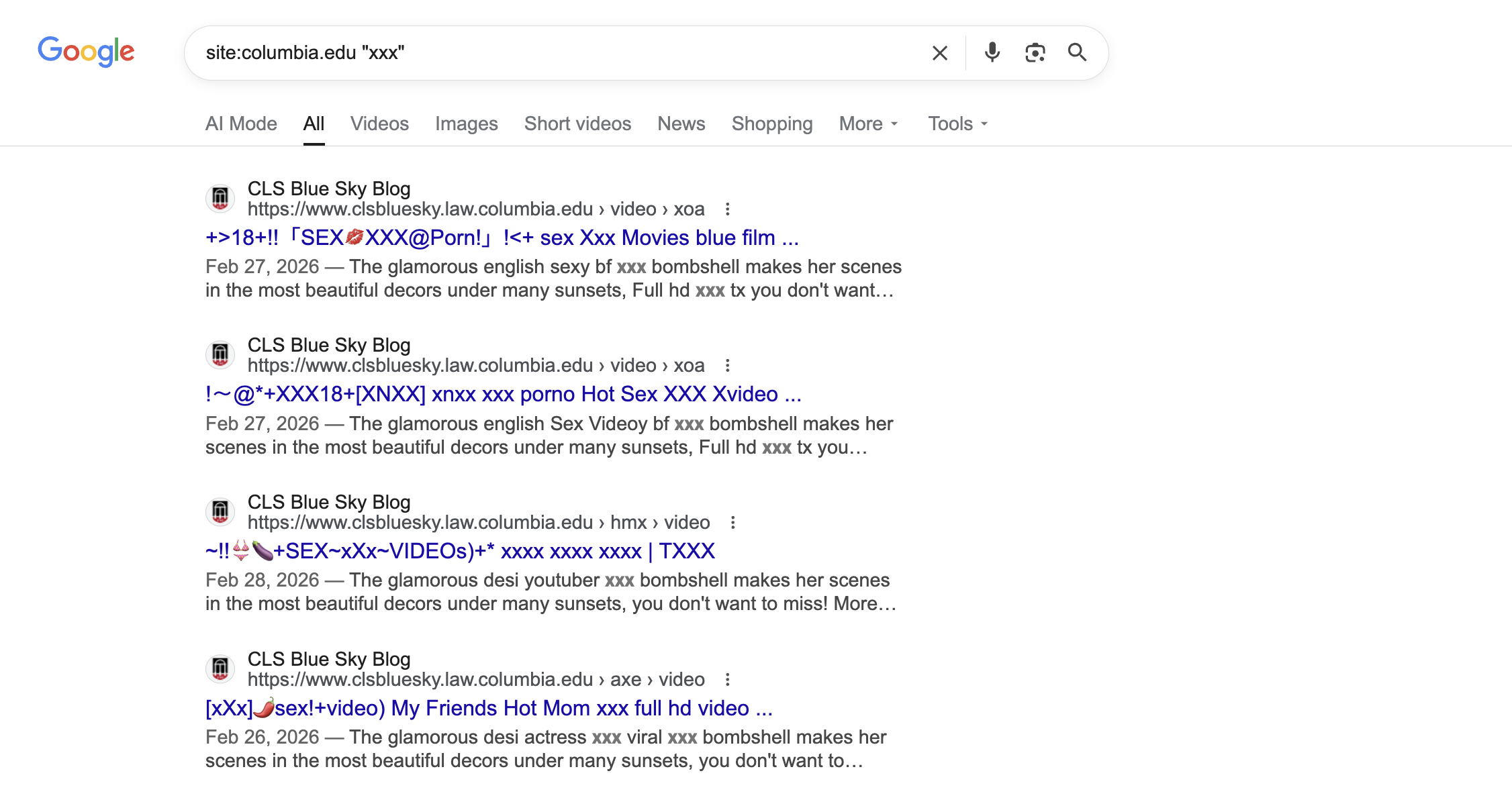
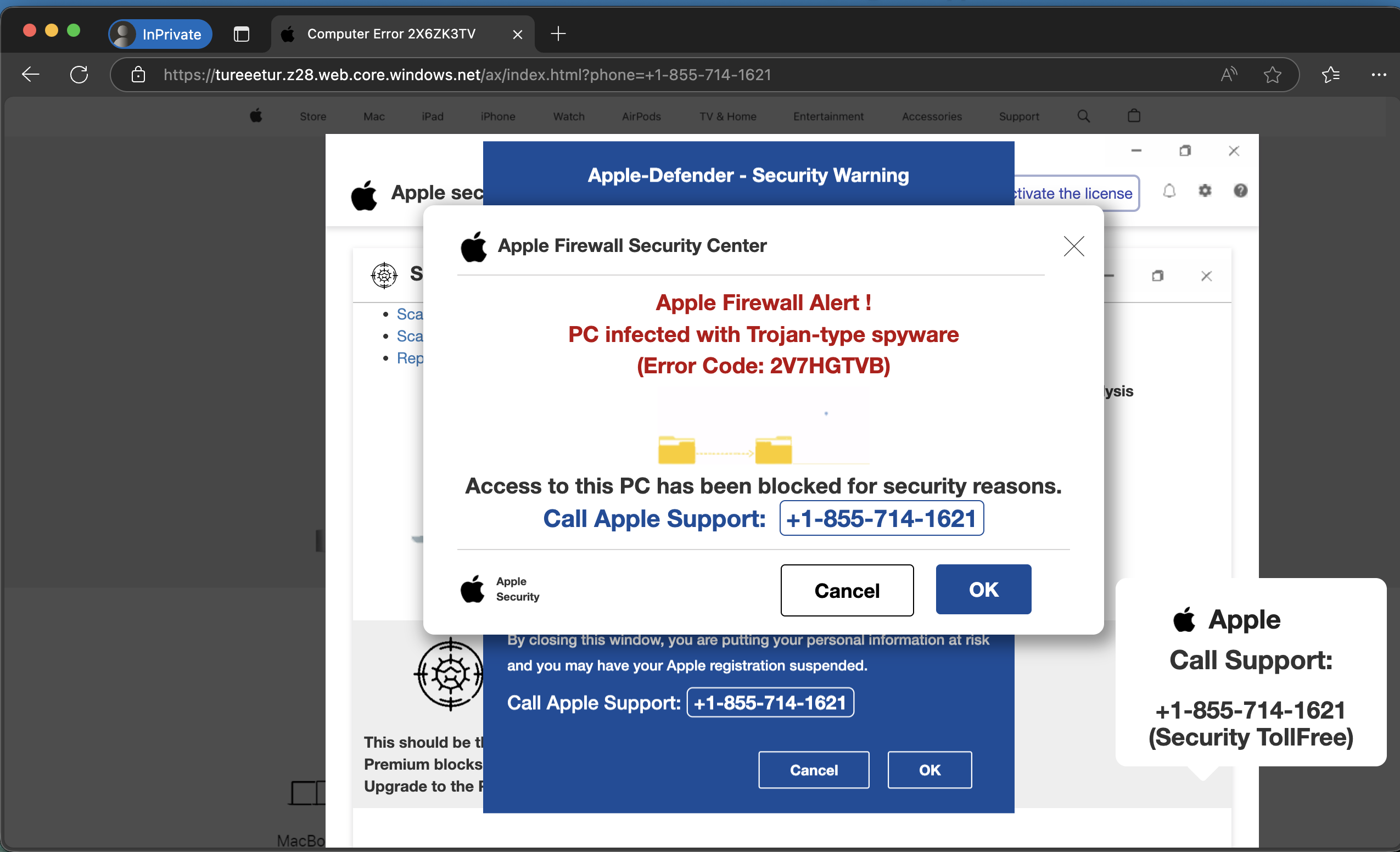
The sites included berkeley.edu, columbia.edu, and washu.edu, the official domains for the University of California, Berkeley, Columbia University, and Washington University in St. Louis. Subdomains such as hXXps://causal.stat.berkeley.edu/ymy/video/xxx-porn-girl-and-boy-ej5210.html, hXXps://conversion-dev.svc.cul.columbia[.]edu/brazzers-gym-porn, and hXXps://provost.washu.edu/app/uploads/formidable/6/dmkcsex-10.pdf. All deliver explicit pornography and, in at least one case, a scam site falsely claiming a visitor’s computer is infected and advising the visitor to pay a fee for the non-existent malware to be removed. In all, researcher Alex Shakhov said, hundreds of subdomains for at least 34 universities are being abused. Search results returned by Google list thousands of hijacked pages.

A handful of hijacked columbia.edu subdomains listed by Google

A handful of hijacked columbia.edu subdomains listed by Google

One of the sites redirected by a UC Berkeley subdomain.

One of the sites redirected by a UC Berkeley subdomain.

Hijacking a university’s good name

Shakhov, founder of SH Consulting, said that the scammers—which a separate researcher has linked to a known group tracked as Hazy Hawk—are seizing on what amounts to a clerical error by site administrators of the affected universities. When they commission a subdomain such as provost.washu.edu, they create a CNAME record, which assignes a subdomain to a “cononical” domain. When the subdomain is eventually decommissioned—something that happens frequently for various reasons—the record is never removed. Scammers like Hazy Hawk then swoop in by hijacking the old record.

With that, they have now hijacked that university’s subdomain. Given the reputations universities have, search queries then flow to the top of Google’s results.

Shakhov wrote:

The root cause is simple: organizations create DNS records and never clean them up. There is no expiry date on a CNAME record. Nobody gets an alert when the target stops responding. And most university IT departments don’t maintain a comprehensive inventory of their subdomains and where they point.

This is compounded by how universities operate—they are highly decentralized. Individual departments, labs, research groups, and student organizations can often request subdomains independently. When people leave, there is no decommissioning process for the DNS records they created.

Finding hijacked subdomains is straightforward. People need only enter site:[university].edu “xxx” or site:[university].edu “porn” for an affected institution, and scores of results will appear. In some cases, the subdomains returned no longer lead to porn sites, but as of Friday morning, many still did.

The lesson here is clear: Any organization with a website should compile a running inventory of all subdomains along with the purpose of each one and its corresponding CNAME record. Then staff should regularly audit the list in search of “dangling” records, meaning those that remain even after the official subdomain has gone dark. Any subdomain found to be inactive should have its CNAME removed.

Clearly, many universities and other organizations are flouting this common-sense practice. Shakhov said only a handful of the affected universities have expunged dangling CNAME records since he went public with his findings earlier this month. Even then, several of them have failed to get the URLs delisted by Google. That results in the indexed remaining visible in search results. Inquiries sent to UC Berkeley, Columbia, and Washington University didn’t receive responses before publication.

Post updated to fix definition of CNAME records.

Iran condemns ‘illegal’ US seizure of vessel allegedly carrying dialysis supplies

0
iran-condemns-‘illegal’-us-seizure-of-vessel-allegedly-carrying-dialysis-supplies
Iran condemns ‘illegal’ US seizure of vessel allegedly carrying dialysis supplies

Iran’s mission to the United Nations on Friday condemned the reported seizure of a commercial vessel by the US in the Sea of Oman, Anadolu reports.

“The US attack and illegal seizure of Iran’s commercial vessel ‘Toska,’ and the taking of its crew hostage on 19 April in the Sea of Oman—while carrying critical dialysis supplies and medical equipment—constitutes a flagrant breach of international law, including the peremptory prohibition of aggression, human rights and the right to life,” the mission said on US social media platform X.

The mission argued the incident directly threatened civilian health and survival.

“This coercive and unlawful act endangers lives, undermines freedom of navigation, and places vulnerable patients at grave risk. The perpetrators must be held accountable,” it said.

Earlier this week, the mission sent a letter to UN Secretary-General Antonio Guterres and the presidency of the UN Security Council addressing the issue.

UN spokesman Stephane Dujarric told reporters on Friday that the UN has “no particular information” on what was in the ship.

“But what we have seen, and we’re concerned about, is continued seizures of vessels by both the Islamic Republic of Iran and the US in the Strait,” Dujarric said.

The continued closure of the Strait of Hormuz is having a humanitarian impact on Iran and other countries in the Gulf, he said, adding: “That’s why we want to see the Strait reopen.”

Palantir Is Helping Trump’s IRS Conduct “Massive-Scale” Data Mining

0
palantir-is-helping-trump’s-irs-conduct-“massive-scale”-data-mining
Palantir Is Helping Trump’s IRS Conduct “Massive-Scale” Data Mining


military contractor Palantir is helping the IRS analyze dozens of different data sets on Americans to investigate a broad range of financial crimes, according to records shared with The Intercept.

Since 2018, the Internal Revenue Service’s Criminal Investigation division has used Palantir’s Lead and Case Analytics platform to aggregate and analyze a sprawling list of sensitive federal databases and data sets.

Public records detailing Palantir’s IRS contract, obtained by the nonprofit watchdog group American Oversight and shared exclusively with The Intercept, reveal the immense volume of data plugged into the military contractor’s software. The LCA uses both Palantir’s Gotham and Foundry applications to facilitate “analysis of massive-scale data to find the needle in the hay stack,” the contract paperwork says.

Documents indicate the IRS has paid Palantir over $130 million for these services to date.

Palantir’s LCA is ostensibly directed toward cracking down on fraud, money laundering, and other financial crimes. According to a 2024 agency privacy impact assessment, IRS “Special agents and investigative analysts … utilize the platform to find, analyze, and visualize connections between disparate sets of data to generate leads, identify schemes, uncover tax fraud, and conduct money laundering and forfeiture investigative activities.”

The IRS use of the software, launched under Trump’s first term and expanded under Biden, is now in the hands of an IRS Criminal Investigations office that has drastically scaled back its pursuit of tax cheats and pivoted, under Trump’s direction, toward investigating “left-leaning groups,” the Wall Street Journal reported in October.

“The real concern is the consolidation of vast amounts of sensitive personal data into a single system with minimal transparency — especially one built and operated by a contractor like Palantir, whose business model is premised on integrating data and expanding surveillance capabilities,” American Oversight director Chioma Chukwu said in a statement to The Intercept. “Its platforms have been used in deeply troubling contexts, from immigration enforcement to predictive policing, with persistent concerns about overreach, bias, and weak oversight.”

Palantir did not respond to a request for comment, nor did the IRS.

“The real concern is the consolidation of vast amounts of sensitive personal data into a single system with minimal transparency — especially one built and operated by a contractor like Palantir.”

The contract documents reviewed by The Intercept reveal that these “disparate sets of data” are vast. Palantir’s LCA allows the IRS to quickly search and visualize “connections from millions of records with thousands of links” between databases maintained by the IRS and other federal agencies. According to the contract documents, this data includes individual tax form and tax returns as well as Affordable Care Act data, bank statements, and transactions, and “all available” data compiled by the Treasury Department’s Financial Crimes Enforcement Network.

Its view apparently extends to cryptocurrencies including bitcoin, Ethereum, Litecoin, and Ripple. “The application would sit on top of a singular repository of identified wallets from seized servers utilizing dark web data obtained from exchangers such as Coinbase,” the documents note.

The program places an emphasis on mapping social relationships between the targets of an investigation. That includes analyzing a “network of people and the relationships and communications between them,” such as “calls, texts, [and] emails events.” The use of “IP address analysis” within LCA allows the IRS to “Identify suspects more easily” and “Establish (new) relationships among actors.”

These investigative functions are continuously updated, the materials say, through ongoing close work between Palantir engineers and IRS personnel.

The intermingling of sensitive data on millions of Americans comes at a time of increased global skepticism and opposition toward Palantir, which, despite its military-intelligence origins, has a thriving business with civilian agencies like the IRS. The use of Palantir software at the U.K.’s National Health Service, for example, has created an ongoing political controversy across Britain, while a similar contract with the New York City public hospital network was recently canceled following public protest.

The contract is also active at a time when IRS Criminal Investigations has been coopted to aid in the broader Trump administration’s aggressive agenda. In July, ProPublica reported that the agency was working with U.S. Immigration and Customs Enforcement to provide “on demand” data to accelerate deportations. Last year, the New York Times reported that Palantir, founded by Trump ally Peter Thiel, was central to an administration effort to increase data-sharing across federal agencies.

“The question isn’t just what it can do — it’s who it will be used against.”

The company’s right-wing politics and eagerness to facilitate U.S. and Israeli military aggression abroad, NSA global surveillance, and ICE deportations has also made many weary of its access to incredibly sensitive personal data. A recent post on the company’s Palantir’s X account summarizing a book by CEO Alex Karp triggered an immediate backlash from those unnerved by the manifesto’s fascistic bent. The bullet points extolled the virtue of arms manufacturing, argued the Axis powers were unfairly punished after World War II, called for a reinstatement of the draft, condemned cultural pluralism, and claimed that wealthy elites are unfairly persecuted.

“When the government can map relationships, track behavior, and generate investigative leads across data sets at this scale, the question isn’t just what it can do — it’s who it will be used against,” Chukwu said. “Entrusting that infrastructure to a company known for opaque, security-state deployments only heightens those risks.”

Claude Mythos crosses an AI point of no return

0
claude-mythos-crosses-an-ai-point-of-no-return
Claude Mythos crosses an AI point of no return

The limit of what artificial intelligence can achieve, known as frontier AI, has crossed another threshold. AI can now plan and execute sophisticated cyber operations with minimal guidance at speeds far beyond human capability.

That, at least, is the evidence from an independent test of Claude Mythos Preview, the latest and most advanced model in the Claude family of AI systems, developed by US tech firm Anthropic. Similar to ChatGPT, these can understand and generate human-like text, analyze information, and solve complex problems.

The finance sector is alarmed. It relies on highly interconnected digital systems that are especially attractive targets for sophisticated cyber-attacks. A successful breach could disrupt payments, freeze access to funds, and erode public trust in the banking system.

Major UK and US banks are preparing controlled trials under strict safeguards. They will be granted secure, supervised access to the Mythos Preview model in isolated environments, to evaluate its ability to detect vulnerabilities in their systems while minimising any risk of misuse. It’s a bit like dangerous viruses being examined in high-security laboratories.

The UK’s AI Security Institute, a research organisation within the government’s Department for Science, Innovation and Technology, has already tested Mythos Preview on a demanding benchmark known as The Last Ones.

As the name suggests, this series of challenges has been designed as the final hurdle AI systems need to complete before being deemed able to fully automate complex, real-world cyber-attacks from start to finish.

In the controlled test, Mythos Preview autonomously surfaced thousands of “zero day” vulnerabilities – flaws unknown even to the software’s own developers – across every major operating system and popular web browser. Some of these had remained undetected for up to 27 years, even though the software had been carefully checked millions of times.

Under controlled conditions, a skilled human operator would typically need around 20 hours to complete the exercise. In ten independent runs, Mythos achieved full success three times, making this preview version the first AI model to solve the entire attack chain end-to-end.

The results show genuine autonomous chaining of complex sequential actions. Mythos Preview thus represents a major leap in the ability of an AI to act as a truly autonomous agent, planning and executing complex, multi-step tasks over extended periods with minimal human intervention.

But the significance of this technological breakthrough extends well beyond cyber-attacks. The same capability could soon allow AI to autonomously manage software development, scientific research, supply chains or financial operations.

Mythos Preview signals a shift from powerful assistant to genuinely autonomous operator, with wide-reaching implications across many industries.

The dual-use dilemma

Rather than releasing it publicly, Anthropic has so far restricted access through its Project Glasswing, an initiative that gives selected technology companies and critical infrastructure providers including Apple, Google, Microsoft, Cisco and Amazon controlled access to the model.

Anthropic’s stated idea is to “to secure the world’s most critical software” by identifying and fixing security weaknesses in the operating systems, browsers and critical libraries that underpin virtually all modern digital systems, before they can be exploited. Only after that will Mythos see wider deployment as a general-purpose AI system.

Traditional vulnerability management is the process of identifying, assessing and fixing weaknesses in software and systems before attackers can exploit them – a slow, labour-intensive task performed by experts. Mythos could change this process dramatically – in both positive and negative ways.

Its emergence creates a classic dual-use dilemma: the same breakthrough that strengthens cyber defence can also lower the barrier for offensive operations.

On the positive side, it could enable defenders to discover and patch thousands of previously unknown vulnerabilities at unprecedented speed and scale, potentially making critical software far more secure and reducing the window for attacks.

Many current cybercrimes such as ransomware succeed by exploiting known or easily discoverable weaknesses in unpatched systems. These could be significantly reduced if Mythos-class models are widely used for defensive vulnerability discovery.

However, more sophisticated or targeted ransomware attacks – especially those using stolen credentials, social engineering, or already-compromised accounts – are far less likely to be affected, as they often bypass traditional software vulnerabilities altogether.

On the negative side, the same capabilities could dramatically lower the barrier for malicious actors, allowing them to find and chain weaknesses much faster than human teams. This would accelerate sophisticated cyber-attacks if the technology spreads beyond controlled environments.

There is no public evidence that Mythos Preview has reached criminal groups or nation-state adversaries – yet. But the history of cybersecurity technology suggests that well-resourced actors, either state-sponsored or criminal, may develop comparable systems or gain indirect access within the near future.

The future of cybersecurity

In the short term, governments are likely to revise their cybersecurity protocols and incident-response frameworks to incorporate mandatory AI-assisted vulnerability scanning. This would require organizations to continuously scan their systems using AI, rather than relying on occasional human checks.

While this could dramatically improve security by finding flaws faster, it is likely to raise costs significantly and carries the risk of system slowdowns, false alarms, or brief operational disruptions when fixes are applied.

Cyber insurers will almost certainly begin demanding evidence of such defenses as a condition of coverage, driving up insurance premiums, while critical-infrastructure operators accelerate deployment of automated monitoring and response systems.

This change will impact not only banks and financial institutions, but also critical infrastructure operators in energy, healthcare, telecoms and transport.

Of course, Mythos is not the final chapter. Future models developed by Anthropic and other leading AI companies are being designed to function as highly autonomous AI agents, capable of independently planning, adapting and executing long, complex sequences of tasks.

As well as discovering vulnerabilities, this could mean coordinating large-scale operations or managing sophisticated real-world workflows – all with minimal human guidance.

Moments like this demand both urgency and measured action. Careful governance, international cooperation and sustained investment in defensive applications will be essential. The genie is out of the bottle – the challenge now is ensuring it serves security rather than chaos.

Gerald Mako is research affiliate, Cambridge Central Asia Forum, University of Cambridge

This article is republished from The Conversation under a Creative Commons license. Read the original article.

Cornbread Cake with Whipped Honey Buttercream Frosting

0
cornbread-cake-with-whipped-honey-buttercream-frosting
Cornbread Cake with Whipped Honey Buttercream Frosting

You are here: Home / Desserts / Cornbread Cake with Whipped Honey Buttercream Frosting

Introduction

This Cornbread Cake is rich, buttery, sweet, and completely unforgettable. It tastes like classic cornbread and soft white cake came together in the best possible way—then got stacked into three beautiful layers with a fluffy honey buttercream frosting.

The cake has a golden corn flavor, a moist crumb, and just enough texture from the cornmeal to remind you of homemade cornbread. The frosting is buttery, creamy, lightly sweet, and full of honey flavor. It’s a showstopping dessert that feels cozy, Southern-inspired, and perfect for celebrations.


Why You’ll Love This Cornbread Cake

  • Moist and tender thanks to butter, oil, buttermilk, and sour cream
  • Full of corn flavor from cornmeal and masa harina
  • Sweet but balanced with raw honey in both the cake and frosting
  • Perfect for gatherings because it makes a tall, impressive 3-layer cake
  • Unique dessert idea for holidays, birthdays, Thanksgiving, or Sunday dinner

What Is Cornbread Cake?

Cornbread cake is a sweet, soft layer cake inspired by classic cornbread. It has the buttery corn flavor you love, but with the light, moist texture of a dessert cake.

This version uses cornmeal for texture, masa harina for deeper corn flavor, and honey for natural sweetness. It is finished with a whipped honey buttercream frosting that tastes like sweet honey butter in frosting form.


Ingredients

For the Cake

  • ¾ cup salted butter, softened
  • 2⅓ cups granulated sugar
  • ⅔ cup pure raw honey
  • ¾ cup vegetable oil or light olive oil
  • 5 large eggs
  • 1 cup buttermilk
  • ½ cup full-fat sour cream
  • 1¼ cups all-purpose flour
  • ¾ cup masa harina corn flour
  • 1 teaspoon kosher salt
  • 1 tablespoon baking powder
  • 1½ cups yellow cornmeal

For the Honey Buttercream Frosting

  • 2 cups European-style butter, softened
  • ¾ cup pure raw honey
  • 4½ cups powdered sugar
  • 2 teaspoons cornstarch
  • ½ teaspoon kosher salt

For Serving

  • Extra honey, for drizzling
  • Polenta or cornmeal, optional garnish
  • Vanilla ice cream or whipped cream, optional

How to Make Cornbread Cake

Step 1: Prepare the Cake Pans

Preheat your oven to 325°F (165°C). Line three 9-inch cake pans with parchment paper and grease the sides well with nonstick spray.

Step 2: Make the Butter Mixture

In a large mixing bowl, beat softened butter until smooth. Add sugar and beat for about 2 minutes until light and fluffy. Mix in honey, then add oil and beat again until combined.

Step 3: Mix the Wet Ingredients

In a separate bowl, whisk eggs until smooth and slightly bubbly. Add buttermilk and sour cream, then whisk until fully combined.

Step 4: Mix the Dry Ingredients

In another bowl, sift together flour, masa harina, salt, and baking powder. Stir in the cornmeal.

Step 5: Combine the Batter

Alternate adding the wet ingredients and dry ingredients into the butter mixture. Mix just until combined. Do not overmix.

Step 6: Bake

Divide the batter evenly between the prepared pans. Bake for 28–33 minutes, rotating the pans once during baking. The cakes are done when the edges are golden and a toothpick inserted in the center comes out without wet batter.

Step 7: Cool Completely

Let the cakes cool in the pans for 10–15 minutes, then carefully turn them out onto wire racks. Cool completely before frosting.


How to Make Whipped Honey Buttercream

Beat the European-style butter until smooth and creamy. Add honey and beat until fluffy.

Add 1 cup powdered sugar, cornstarch, and salt. Mix until combined, then gradually add the remaining powdered sugar. Beat for 2–3 minutes until light, fluffy, and spreadable.

If the frosting feels too soft, add a little more powdered sugar or a small extra pinch of cornstarch.


Assembling the Cake

Place the first cake layer on a cake stand. Spread about 1½ cups frosting over the top. Add the second layer and repeat. Add the final layer, then frost the top and sides of the cake.

Drizzle with extra honey and sprinkle the edges with a little polenta or cornmeal if desired.


Tips for Success

  • Use parchment paper so the cake layers release cleanly
  • Do not overmix once the flour is added
  • Use oil in the batter for extra moisture
  • Cool cakes completely before frosting
  • European-style butter makes the frosting richer and smoother
  • Serve small slices because this cake is rich and buttery

Storage

Store the frosted cake covered at room temperature for 3–4 days.

For longer storage, freeze slices individually. Freeze uncovered for 30 minutes, then wrap well in plastic wrap and place in freezer bags. Freeze for up to 2–3 months. Thaw uncovered slightly, then loosely cover while it finishes thawing.


FAQs

Can I use regular honey instead of raw honey?

Yes. Raw honey gives a deeper flavor and thicker texture, but regular honey works well too.

Can I make this cake ahead of time?

Yes. Bake the cake layers ahead and freeze them. Make the frosting fresh on the day you plan to assemble and serve.

Can I skip masa harina?

You can replace it with more all-purpose flour, but the cake will lose some of its deep corn flavor.

What can I use instead of buttermilk?

Add 1 tablespoon lemon juice or vinegar to a measuring cup, then fill to 1 cup with milk. Let sit for a few minutes before using.

Is this cake very sweet?

It is sweet and rich, but the cornmeal, salt, and buttery frosting help balance the flavor.


Recipe Card

Cornbread Cake with Whipped Honey Buttercream Frosting

Prep Time: 30 minutes
Cook Time: 30 minutes
Total Time: 1 hour
Servings: 24 slices

Ingredients

Cake

  • ¾ cup salted butter, softened
  • 2⅓ cups granulated sugar
  • ⅔ cup honey
  • ¾ cup vegetable oil
  • 5 large eggs
  • 1 cup buttermilk
  • ½ cup full-fat sour cream
  • 1¼ cups all-purpose flour
  • ¾ cup masa harina
  • 1 teaspoon kosher salt
  • 1 tablespoon baking powder
  • 1½ cups cornmeal

Frosting

  • 2 cups European-style butter, softened
  • ¾ cup honey
  • 4½ cups powdered sugar
  • 2 teaspoons cornstarch
  • ½ teaspoon kosher salt

Instructions

  1. Preheat oven to 325°F. Line and grease three 9-inch cake pans.
  2. Beat butter until smooth. Add sugar and beat until fluffy.
  3. Mix in honey and oil.
  4. In another bowl, whisk eggs, buttermilk, and sour cream.
  5. In a separate bowl, sift flour, masa harina, salt, and baking powder. Stir in cornmeal.
  6. Alternate adding wet and dry ingredients to the butter mixture. Mix just until combined.
  7. Divide batter between pans and bake 28–33 minutes.
  8. Cool cakes completely.
  9. Beat butter for frosting until smooth. Add honey and beat until fluffy.
  10. Add powdered sugar, cornstarch, and salt. Beat until light and creamy.
  11. Layer cakes with frosting, then frost the outside.
  12. Drizzle with honey and serve.

This is who’s developing Golden Dome’s orbital interceptors—if they’re ever built

0
this-is-who’s-developing-golden-dome’s-orbital-interceptors—if-they’re-ever-built
This is who’s developing Golden Dome’s orbital interceptors—if they’re ever built

The US Space Force released a list Friday of a dozen companies working on Space-Based Interceptors for the Pentagon’s Golden Dome initiative, a multilayer defense system to shield US territory from drones and ballistic, hypersonic, and cruise missile attacks.

The roster of Golden Dome Space-Based Interceptor (SBI) contractors, some of which were previously reported, includes Anduril Industries, Booz Allen Hamilton, General Dynamics Mission Systems, GITAI USA, Lockheed Martin, Northrop Grumman, Quindar, Raytheon, Sci-Tec, SpaceX, True Anomaly, and Turion Space.

The Space Force made 20 individual awards the 12 companies in late 2025 and early 2026 using an acquisition mechanism known as Other Transaction Authority, or OTA, agreements. OTAs allow the Pentagon to bypass federal acquisition regulations and cast a wide net to attract a larger number of potential contractors, and are especially useful for rapid prototyping. That is exactly what the Space Force wants to see with the first phase of the SBI program.

The agreements have a combined value of up to $3.2 billion, and will capitalize on a mix of public and private investment to move SBIs closer to testing in low-Earth orbit.

Officials have no released details of each company’s contribution to the program, but the contractors come to the SBI program with different skill sets. The agreements are for early stage development and tech demos, not for full-scale production, which will come with a significantly higher price tag.

“No additional information will be available at this time due to operational security requirements regarding the SBI program,” the Space Force said in a statement.

The usual players

Some of the companies on the list, such as SpaceX, Lockheed Martin, and Northrop Grumman, are well known in the space industry. They seem positioned to become lead or prime contractors. Others, such as Anduril and True Anomaly, are full-stack developers that are newer to the space industry but have lofty ambitions in the national security market. Sci-Tec and Quindar have expertise in software. Turion develops space sensing technology, and GITAI USA had its start as an in-space robotics company.

Booz Allen Hamilton is best known as an integrator and data services company serving the defense sector. General Dynamics provides “critical communications and electronics” for space missions, and was already selected to develop the ground control system for the military’s network of low-Earth orbit missile tracking and data connectivity satellites, according to its website. Raytheon, also known as RTX, builds missile warning sensors, ground control software (with a not-so-stellar recent track record), and manufacturers small satellites through its subsidiary, Blue Canyon Technologies.

“Adversary capabilities are advancing rapidly, and our acquisition strategies must move even faster to counter the growing speed and maneuverability of modern missile threats,” said Col. Bryon McClain, program executive officer for space combat power at Space Systems Command.

The OTA acquisition framework for SBIs “attracted both traditional and non-traditional vendors, while harnessing American innovation, and ensuring continuous competition,” McClain said in a Space Force press release. “With the commitment and collaboration of these industry partners, the Space Force will demonstrate an initial capability in 2028.”

This infographic produced by the German Institute for International and Security Affairs illustrates the elements of a space-based missile defense system.

This infographic produced by the German Institute for International and Security Affairs illustrates the elements of a space-based missile defense system. Credit: German Institute for International and Security Affairs (SWP), 2025/CC BY 4.0

In additional to SBIs to defend against missile attacks, Golden Dome will include lower-altitude and ground-based munitions suited for taking out drones and other smaller, slower-moving aerial weapons. All of this “must be integrated with Artificial Intelligence to counter the speed, maneuverability, and lethality of the threats,” the Space Force said in a press release.

The US and Israeli war with Iran has been an acid test for missile defense. Ground- and sea-based US and Israeli interceptors have shot down thousands of missiles and drones since the first wave of Iranian ballistic missiles launched toward Israel in 2024, with a success rate of more than 90 percent. But the war has also shown that missile defenses are not impenetrable, with at least seven US service members killed by hostile action. Several key early warning radars and US military airplanes in the Gulf states have been damaged or destroyed on the ground by Iranian drone or missile strikes.

The Iran war has also diminished existing stocks of US missile interceptors, which the Pentagon plans to integrate with Golden Dome to form ground, sea, and airborne layers to go along with the space layer in low-Earth orbit. Air Force Lt. Gen. Heath Collins, director of the Missile Defense Agency, told a House subcommittee April 15 that will take a “number of years to replenish” the interceptors used in less than two months of the Iran war.

Should this be the priority?

Gen. Michael Guetlein, the Space Force general serving as director of the Golden Dome program, said replenishing the interceptors used up in the Iran war will have no schedule impact and “no direct cost impact” to Golden Dome, which the Trump administration says will cost $185 billion to develop and deploy.

Many analysts dispute the cost and schedule projections. Guetlein said outside estimates, some of which peg Golden Dome’s cost at several trillion dollars, don’t take into account what the Pentagon is actually building. However, defense officials are keeping much of the Golden Dome architecture secret, so it’s hard to know what it entails. Getting any working SBI capability into orbit in the next two-and-a-half years would require herculean efforts by the Space Force and the defense industry. Contractors would have to drastically cut down on the time it usually takes to deliver space systems of lesser complexity.

SBIs are widely seen as the most challenging and expensive element for Golden Dome. Space-based missile tracking sensors, satellite networks for targeting and data relay, and terrestrial interceptors already exist or will soon be operational. But SBIs may not be the panacea administration officials argued when President Donald Trump signed the executive order for Golden Dome in January 2025. The order has a clear requirement for the Pentagon to develop plans for the deployment of “proliferated Space-Based Interceptors capable of boost-phase intercept.”

Gen. Michael Guetlein, direct report program manager for Golden Dome for America in the Office of the Secretary of Defense, appears before the House Armed Services Strategic Forces subcommittee on April 15, 2026 in Washington, DC.

Gen. Michael Guetlein, direct report program manager for Golden Dome for America in the Office of the Secretary of Defense, appears before the House Armed Services Strategic Forces subcommittee on April 15, 2026 in Washington, DC. Credit: Luke Johnson/Getty Images

“We are so focused on affordability. If we cannot do it affordably, we will not go into production,” Guetlein said in an April 15 hearing before the House Armed Services Strategic Forces subcommittee.

“We are looking at the threats from a multi-domain perspective to make sure I have redundant capabilities and I don’t have single points of failure,” he added. “So, if boost-phase intercept from space is not affordable and scalable, we will not produce it, because we have other options to get after it.”

Boost-phase intercepts would aim to destroy a missile within a few minutes after its launch, when it is still within or close to the atmosphere. In those early minutes, the heat from the missile’s exhaust plume would make it relatively easy to detect and target, but an interceptor in orbit would require a powerful impulse to reach it. The military is also interested in using SBIs for mid-course intercepts, when a missile coasting through space, and during glide phase as they reenter the atmosphere. By then, though, a missile may have released countermeasures or multiple reentry vehicles.

Rep. Seth Moulton, D-Massachusetts, is the top Democrat on the House Strategic Forces subcommittee. He questions the promise of Golden Dome to deter future attacks, pointing to Iran’s sustained missile and drone strikes across the Middle East, despite the operational success of US and Israeli defenses.

“That basic theory seems blown out of the water by our current experience, which is that we have incredibly robust missile defense across the Middle East,” Moulton said. “We’ve been singing its praises in a very bipartisan way, and yet it has not stopped Iran in the least from shooting a lot of missiles and drones at us and our allies.”

“I think we’re talking about a regime that may be beyond deterrence,” said Marc Berkowitz, the assistant secretary of defense for space policy, referring to Iran. “They have, for decades, pursued nuclear weapons and ballistic missiles.”

The Trump administration is requesting $17 billion for Golden Dome in fiscal year 2027, which begins October 1. Nearly all of the requested funding is packaged in a reconciliation bill, not in the White House’s regular annual funding request. While Republican lawmakers still voice support for Golden Dome, there is little appetite for the partisan budget battle a party-line reconciliation bill would spark ahead of this year’s midterm elections, Politico reported Thursday.

Putting the Golden Dome funding request in a bill that may never reach the House or Senate floor is “not great signaling by this White House about the supposedly drastic need for Golden Dome,” a former defense official told Politico.

Pentagon email floats suspending Spain from NATO

0
pentagon-email-floats-suspending-spain-from-nato
Pentagon email floats suspending Spain from NATO


An internal Pentagon email outlines options for the United States to punish NATO allies it believes ​failed to support U.S. operations in the war with Iran, including suspending Spain from the alliance and reviewing the U.S. position on Britain’s claim to the Falkland Islands, a U.S. ‌official told Reuters.

The policy options are detailed in a note expressing frustration at some allies’ perceived reluctance or refusal to grant the United States access, basing and overflight rights – known as ABO – for the Iran war, said the official, who spoke on condition of anonymity to describe the email.

The email stated that ABO is “just the absolute baseline for NATO,” according to the official, who added that the options were circulating at high levels in the Pentagon.

One option in the email envisions suspending “difficult” countries from important or prestigious positions ​at NATO, the official said.

President Donald Trump has harshly criticized NATO allies for not sending their navies to help open the Strait of Hormuz, which was closed to global shipping following the start ​of the air war on February 28.

He has also declared he is considering withdrawing from the alliance.

“Wouldn’t you if you were me?” Trump asked Reuters in an April 1 ⁠interview, in response to a question about whether the U.S. pulling out of NATO was a possibility.

But the email does not suggest that the United States do so, the official said. It also does not propose ​closing bases in Europe.

The official declined to say whether the options included a widely expected U.S. drawdown of some forces from Europe, however.

Asked for comment on the email, Pentagon Press Secretary Kingsley Wilson responded: “As President Trump has said, ​despite everything that the United States has done for our NATO allies, they were not there for us.

“The War Department will ensure that the President has credible options to ensure that our allies are no longer a paper tiger and instead do their part. We have no further comment on any internal deliberations to that effect,” Wilson said.

TRUMP ADMINISTRATION SEES EUROPEAN ‘SENSE OF ENTITLEMENT’

The U.S.-Israeli war with Iran has raised serious questions about the future of the 76-year-old bloc and provoked unprecedented concern that the U.S. might ​not come to the aid of European allies should they be attacked, analysts and diplomats say.

Britain, France and others say that joining the U.S. naval blockade would amount to entering the war, but that they would be ​willing to help keep the Strait open once there was a lasting ceasefire or the conflict ended.

But Trump administration officials have stressed that NATO cannot be a one-way street.

They have expressed frustration with Spain, where the Socialist leadership said it ‌would not allow ⁠its bases or airspace to be used to attack Iran. The United States has two important military bases in Spain: Naval Station Rota and Morón Air Base.

The policy options outlined in the email would be intended to send a strong signal to NATO allies with the goal of “decreasing the sense of entitlement on the part of the Europeans,” the official said, summarizing the email.

The option to suspend Spain from the alliance would have a limited effect on U.S. military operations but a significant symbolic impact, the email argues.

The official did not disclose how the United States might pursue suspending Spain from the alliance, and Reuters could not immediately determine whether there was an existing ​mechanism at NATO to do so.

“We do not work ​off emails. We work off official documents and government ⁠positions, in this case of the United States,” Spanish Prime Minister Sanchez said when asked about the report ahead of a meeting of European Union leaders in Cyprus to discuss topics including NATO’s mutual assistance clause.

The memo also includes an option to consider reassessing U.S. diplomatic support for longstanding European “imperial possessions,” such as the Falkland Islands ​near Argentina.

The State Department’s website states that the islands are administered by the United Kingdom but are still claimed by Argentina, whose Libertarian President Javier Milei ​is a Trump ally.

Britain and ⁠Argentina fought a brief war in 1982 over the islands after Argentina made a failed bid to take them. Some 650 Argentine soldiers and 255 British troops died before Argentina surrendered.

Trump has repeatedly insulted British Prime Minister Keir Starmer, calling him cowardly because of his unwillingness to join the U.S. war with Iran, saying he was “No Winston Churchill” and describing Britain’s aircraft carriers as “toys.”

Britain initially did not grant a request from the U.S. to allow its aircraft to attack Iran ⁠from two British ​bases, but later agreed to allow defensive missions aimed at protecting residents of the region, including British citizens, amid Iranian retaliation.

Addressing reporters ​at the Pentagon earlier this month, Defense Secretary Pete Hegseth said “a lot has been laid bare” by the war with Iran, noting that Iran’s longer-range missiles cannot hit the United States but can reach Europe.

“We get questions, or roadblocks, or hesitations … You don’t have much of ​an alliance if you have countries that are not willing to stand with you when you need them,” Hegseth said.

Amazon Delivery Steals Family’s Elderly Cat – Euthanized Before Owners Can Say Goodbye

0
amazon-delivery-steals-family’s-elderly-cat-–-euthanized-before-owners-can-say-goodbye
Amazon Delivery Steals Family’s Elderly Cat – Euthanized Before Owners Can Say Goodbye


A quiet evening in Kansas City, Missouri turned into a nightmare no pet owner ever wants to live through.

A family says their beloved 16-year-old tabby, Sidney, met a heartbreaking and shocking end after being picked up and taken away by a female Amazon delivery driver — all caught on a neighbor’s doorbell camera.

According to owner Marsha Reeves, Sidney had been lounging in the driveway like he always did Monday evening when the driver pulled up to drop off a package. But instead of simply leaving, the woman allegedly stepped out, scooped up the frail cat, and drove off.

Reeves says she didn’t realize what had happened until Sidney suddenly vanished. Then came the gut punch — reviewing nearby footage that appeared to show the driver picking up the friendly tabby and loading him into her van.

“He was very much a people cat,” Reeves told Fox 4 Kansas City, explaining Sidney’s trusting nature may have sealed his fate.

But what happened next is what has left the family devastated.

Sidney, who was elderly, frail, and on a special diet and medication, was allegedly taken on a tragic journey through multiple shelters. The driver reportedly brought him first to a veterinary clinic, then to different animal organizations — including Grandview Animal Hospital and Wayside Waifs — before ultimately dropping him off at KC Pet Project.

By the time he arrived, staff determined Sidney was too weak to survive.

Without his family present — and without them even knowing where he was — the decision was made to euthanize him.

Reeves says she frantically called animal hospitals within a 10-mile radius trying to track him down, but it was too late.

The family was robbed of their final goodbye.

“I cannot even imagine what he was thinking,” she said, describing the agony of knowing her longtime companion died alone in a clinical setting instead of at home.

“He did not deserve to die on a metal table with strangers… he should have been in my arms.”

Now, the family has filed a report with the Kansas City Police Department and is demanding accountability — not just from the driver, but from Amazon itself.

“They need to face us,” Reeves said. “This has affected our entire family.”

Amazon has since issued a brief response, saying only that the company is “looking into it.”

Meanwhile, a grieving family is left with nothing but questions — and the haunting reality that a simple delivery turned into a devastating loss.

0FansLike
0FollowersFollow
0FollowersFollow
0SubscribersSubscribe
- Advertisement -
Google search engine

Recent Posts