9.1 C
London
Monday, April 27, 2026
Home Blog

Over 2,500 killed in Lebanon in Israeli attacks since March 2

0
over-2,500-killed-in-lebanon-in-israeli-attacks-since-march-2
Over 2,500 killed in Lebanon in Israeli attacks since March 2

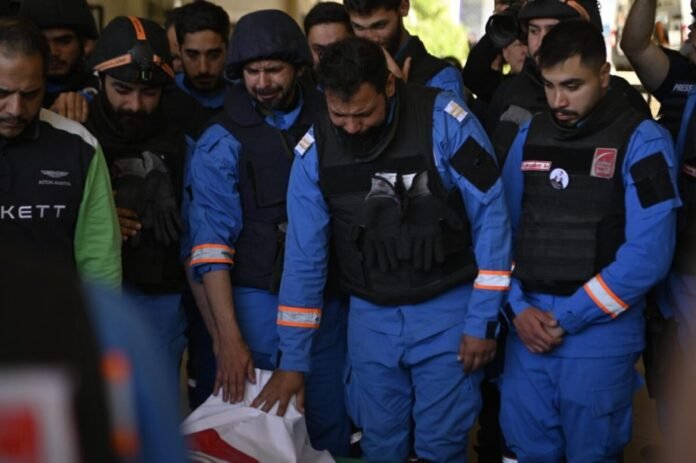
Healthcare workers and Lebanese citizens attend the funeral ceremony for volunteer medic Mehdi Abu Zabad, who was killed in an Israeli airstrike, in Sidon, Lebanon on April 16, 2026. Abu Zabad’s body was later laid to rest in the town of Kfar Reman. [Santiago Montag - Anadolu Agency]

Healthcare workers and Lebanese citizens attend the funeral ceremony for volunteer medic Mehdi Abu Zabad, who was killed in an Israeli airstrike, in Sidon, Lebanon on April 16, 2026. Abu Zabad’s body was later laid to rest in the town of Kfar Reman. [Santiago Montag – Anadolu Agency]

Lebanon said Sunday that 13 people have been killed and 30 more injured in the past 24 hours, Anadolu reports.

The death toll from Israeli attacks in Lebanon surged to 2,509 killed and 7,755 injured since March 2, said the Lebanese Health Ministry.

Israel has pounded Lebanon with airstrikes and launched a ground offensive in the south since a cross-border attack by Hezbollah on March 2. The region has been on alert since the US and Israel launched airstrikes on Iran on Feb. 28.

A 10-day truce was first announced on April 16 but was repeatedly breached by Israel.

On Thursday, US President Donald Trump said Israel and Lebanon agreed to extend their ceasefire by three weeks following a second round of high-level negotiations at the White House.

Elections Reach Gaza for First Time in 22 Years, With Hamas on the Sidelines

0
elections-reach-gaza-for-first-time-in-22-years,-with-hamas-on-the-sidelines
Elections Reach Gaza for First Time in 22 Years, With Hamas on the Sidelines


Municipal elections in Deir al-Balah offered rare political participation in Gaza while raising questions about Hamas’ influence, voter freedom, and the Palestinian Authority’s reach

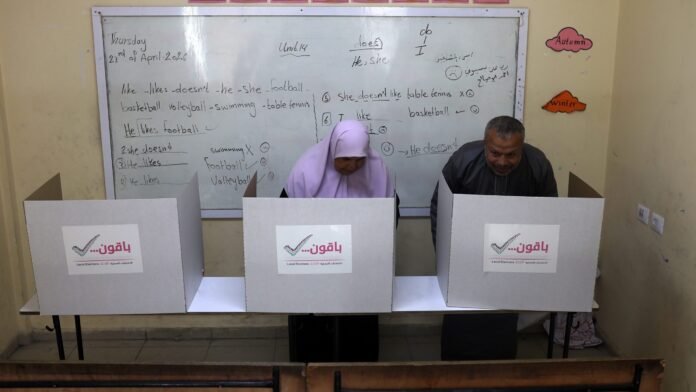
Palestinians voted Saturday in municipal elections in the West Bank and, for the first time in more than two decades, in the Gaza Strip, where voting was held only in the city of Deir al-Balah. The vote marked a rare moment of political participation in Gaza after years of division, war, and the absence of elections. It is also being read as a proxy gauge of Hamas’ standing two years into the war.

Polling stations opened across Deir al-Balah on Saturday morning. The Central Elections Commission operated 12 voting centers out of fiberglass tents. The campaign ran for 14 days, from April 10 to the evening of April 24.

Deir al-Balah was selected for two overlapping reasons. The central Gaza city sustained less war damage than Gaza City, Khan Yunis, or Rafah, making the logistics of polling possible. It also sits in the part of the Strip that Hamas still administers, on the western side of the Yellow Line that bisects Gaza, giving the Palestinian Authority a way to plant a flag in Hamas territory without contesting the roughly 53% of the Strip the Israeli military now holds.

No vote took place in the Israeli-controlled half.

The stakes were higher than the size of the city suggests. An entire generation of Gazans has come of age without ever casting a ballot. Anyone under 39 has never had the chance to vote.

Since 2007, Hamas has appointed every mayor and council member in every Gaza municipality, treating local governance as a function of the movement’s internal patronage rather than as a matter for residents to decide. Saturday was the first time in 22 years that a Gaza city chose its own leadership at the ballot box. Hamas, which still polices the streets of Deir al-Balah, stood aside while it happened. Its uniformed police nonetheless secured the perimeter of every polling station, even as the commission said it had not coordinated directly with either Hamas or Israel ahead of the vote.

Gazans are being arrested, jailed, tortured, shot, and killed daily for social media posts and anything they say that’s perceived as being critical of Hamas

Critics of the timing said standing aside was not the same as letting voters speak freely. Ahmed Fouad Alkhatib, a Gazan-born senior resident fellow at the Atlantic Council who heads the council’s Realign for Palestine project, called the decision to hold the vote now “extremely reckless and irresponsible.” Writing on social media in the days before the vote, Alkhatib argued that “Gazans are being arrested, jailed, tortured, shot, and killed daily for social media posts and anything they say that’s perceived as being critical of Hamas,” and said the elections should have been postponed until after the disarmament process the Board of Peace is trying to enforce.

“I’m very happy to be voting in local elections for the first time in my life

“I’m very happy to be voting in local elections for the first time in my life,” Ahmed al-Buhaisi, a resident of Deir al-Balah, told The Media Line. “This is a moment we have been waiting for a long time, because every citizen has the right to have a voice in choosing who represents them. This right has been denied to us for more than two decades. Today, I feel I am exercising my natural role as a citizen. I hope this step marks a real beginning for change.”

The vote covered 183 West Bank councils and Deir al-Balah. About 522,000 of roughly 1.03 million eligible Palestinians cast ballots, the Central Elections Commission said. Another 197 councils returned uncontested lists, mostly Fatah.

Commission Chair Rami Hamdallah announced final results Sunday. In Deir al-Balah, the “Deir al-Balah Renaissance” list, backed by Abbas’ Fatah movement, secured six of the 15 council seats. The “Future of Deir al-Balah” list took five. The “Peace and Building” list won two. A fourth list, “Deir al-Balah Brings Us Together,” which residents and analysts widely view as aligned with Hamas, won two. The new council will choose the mayor from among its elected members.

For the Palestinian Authority, the simultaneous vote in the West Bank and Deir al-Balah was an opportunity to display unified governance across both territories. The Fatah-led authority has not exercised real influence in Gaza since Hamas pushed it out in 2007. The PA used the day to assert that it remains the only Palestinian institution capable of organizing a vote in both territories at once.

Turnout in Deir al-Balah stood at 22.7%, with 15,962 of 70,449 eligible voters casting ballots, the lowest rate among Palestinian voting areas. Hamdallah blamed the low figure on an outdated civil registry that does not reflect the thousands of residents killed in the war or the entire families that fled the city. West Bank turnout reached 56%, slightly below the 58% recorded in the previous local cycle in 2022, the last time West Bank Palestinians went to the polls. Salfit Governorate posted the highest turnout at 71%.

Voting closed at 5 p.m. in Deir al-Balah, two hours earlier than in the West Bank, to allow counting to finish before dark in a city without reliable electricity. Workers in Gaza built roughly 100 wooden ballot boxes from materials available inside the Strip and printed ballot papers locally after Israeli authorities blocked standard election materials at the crossings, the commission said. To mark voters’ fingers, the commission used blue ink left over from a polio vaccination drive last year.

The vote took place under a new election law that Abbas signed on November 19, 2025. Decree-Law No. 23 of 2025 lowered the candidacy age to 23 to widen youth participation, set a four-year council term, and required candidates to pledge commitment to the program of the Palestine Liberation Organization, which carries with it recognition of Israel and the framework of past PLO agreements.

Hamas, which fielded no list, condemned the legislation in December as an attempt to exclude the movement and independents from local government. Twenty-eight Palestinian civil society organizations called the PLO-pledge requirement a restriction on political expression. Each of the four Deir al-Balah lists fielded 15 candidates, with at least four women on each slate, as the new law required. Across the West Bank, 3,773 candidates competed for municipal seats and 1,358 for village councils. Women made up about a third of declared candidates and headed eight lists. Women won 33% of contested council seats overall.

President Mahmoud Abbas, 90, cast his ballot at the al-Mustaqbal al-Saleh School in al-Bireh, the West Bank city adjoining the Palestinian Authority’s Ramallah headquarters. “We are very pleased that we are able to practice democracy despite all the difficulties we face locally and internationally,” he told reporters at the polling station. He said the local cycle would be followed this year by Fatah movement elections and a Palestinian National Council vote, his first public commitment to a national-level electoral calendar in two decades. Abbas was last elected to a four-year term in 2005. He has not faced a presidential vote since then.

Yusuf al-Slaibi, who directed the polling station at Anan Stadium in Deir al-Balah, told the Palestinian Authority’s official Wafa news agency that turnout was “satisfactory” given the conditions. Wafa reported that participation was heavier in the city’s western neighborhoods, including the refugee camp, the central mosque area, and Nakhil Street, than at polling stations to the east near Salah al-Din Street, which runs along the Strip’s main north-south axis closer to the Yellow Line.

The vote took place in a city that buried its previous mayor a year and a half ago. In December 2024, an Israeli airstrike destroyed the Deir al-Balah municipality building, killing Mayor Diab al-Jarou and members of his staff. The new council will inherit a city of about 75,000 residents that now hosts hundreds of thousands of displaced Palestinians from across the Strip.

The Media Line interviewed Faten Harb, a winning candidate on the Renaissance list, who said holding elections simultaneously in the West Bank and Gaza was “an important development and reflects Palestinian unity.” She pointed to pressing needs in the city, including basic services and humanitarian conditions.

“We face major challenges in Deir al-Balah, with urgent priorities such as securing water and electricity, improving sewage services, tackling the spread of rodents, and dealing with solid waste,” Harb said.

“In addition, the displacement crisis remains one of the most pressing challenges,” she added. “The city hosts more than 40,000 displaced people, which requires special attention to ensure they are accommodated and that their basic needs are met.”

The elections also revived longstanding questions about political control in Gaza and the role of Hamas, which has governed the Strip since its armed takeover in 2007.

The previous local vote in Gaza took place in late 2004 and early 2005, before Hamas won the January 2006 legislative election. International donors refused to recognize the Hamas-led government, and in June 2007, the movement seized full control of the Strip after armed clashes with Fatah forces. The territories have held no national vote of any kind since then. The split between Hamas and the Palestinian Authority has delayed or blocked municipal voting in Gaza repeatedly over the years.

Despite boycotting the current vote and not fielding official candidates, Hamas remained a central presence in how many residents interpreted the election. Two of the candidates on “Deir al-Balah Brings Us Together” had previously been photographed with Hamas officials or members of the Hamas-run police, according to the Center for Peace Communications.

Hamas spokesman Hazem Qassem described the Deir al-Balah vote as “an important step” and called for broader elections at all levels to “rebuild Palestinian legitimacy” after more than two decades without national polls. He said the process should reflect “the will of the people” and emphasized coordination to ensure a “fair and transparent vote.”

Qassem’s call for democratic renewal came from a movement that took power in Gaza by force. After winning the January 2006 legislative election, Hamas refused to share governance with Fatah and, in June 2007, routed Palestinian Authority security forces in six days of street fighting that killed more than 160 Palestinians. Fighters threw rivals from rooftops in Gaza City. In the years that followed, Hamas held no further elections of any kind, jailed Fatah organizers, beat journalists who covered internal dissent, and shot demonstrators during the 2019 “We Want To Live” protests against the cost of living. Alkhatib, of the Atlantic Council, said this month that Gazans critical of the movement on social media are still “arrested, jailed, tortured, shot, and killed daily.” Qassem’s statement made no mention of the movement’s December opposition to the underlying election law.

The statement came two days before Hamas negotiators were set to resume talks in Cairo on Monday with Nickolay Mladenov, the Board of Peace’s envoy for Gaza, on the group’s weapons.

Hamas officials have signaled they will hand over thousands of automatic rifles and other small arms carried by the police and internal security services of the Hamas government. Those weapons would pass to the National Committee for the Administration of Gaza and to a new Palestinian police force operating under the Board of Peace. The same officials say they have already laid the groundwork to fold former Hamas government employees into the new security apparatus.

Hamas has not put on the table the arsenal of its armed wing, the Izzadin al-Qassam Brigades. Negotiators have offered no commitment on the tunnel network, the rockets, drones, and anti-tank missiles the wing still holds, or the underground workshops that produce heavy weapons. Israeli officials estimated this week that the Qassam Brigades have rebuilt their ranks to roughly 27,000 fighters during the ceasefire, while Hamas continues paying monthly salaries to about 49,000 administrators who run the Strip’s day-to-day governance across 13 municipalities, including ministries handling the economy, education, health, and welfare.

The disarmament talks come after two weeks of renewed tensions and mutual accusations of ceasefire violations. Israeli authorities reported multiple incidents involving Palestinian factions between April 8 and 16, while continuing targeted strikes in Gaza. Palestinian officials and residents say some of those strikes have hit populated areas, including an April 23 attack on a police vehicle in Khan Yunis that killed eight people, among them three civilian bystanders.

According to Gaza’s Health Ministry, 984 Palestinians have been killed since the October ceasefire took effect. Israeli authorities say attacks by Palestinian fighters during the same period have killed four Israeli soldiers.

Hamas is also fighting other Palestinian armed groups, including the Popular Forces, which Israel began arming in 2024 and which has remained active despite the December killing of the network’s original founder, Yasser Abu Shabab of the Tarabin tribe. Smaller groups led by former PA security officers Hussam al-Astal and Shawqi Abu Nasira operate in eastern Khan Yunis.

On April 20, Astal’s fighters crossed from Israeli-controlled territory into a Hamas-held area east of Khan Yunis and traded fire with Hamas, which struck the retreating armed group’s vehicle with an anti-tank grenade.

“It is unfortunate to see individuals known for supporting Hamas included on one of the lists,” Hala Saeed, a resident of Deir al-Balah who decided not to vote, told The Media Line. “This raises doubts about attempts by Hamas to return to power through indirect means and increases the sense of concern and mistrust among residents.”

I don’t believe these elections will change anything on the ground or improve people’s current conditions

“I don’t believe these elections will change anything on the ground or improve people’s current conditions,” Saeed said, “especially with the war ongoing and casualties falling every day.”

MLB Pitcher’s Pregnancy Joy Turns into a Nightmare

0
mlb-pitcher’s-pregnancy-joy-turns-into-a-nightmare
MLB Pitcher’s Pregnancy Joy Turns into a Nightmare


What should have been one of the happiest chapters of their lives quickly spiraled into a terrifying ordeal for Kody Funderburk and his wife Alicia.

The Minnesota Twins reliever and his wife were riding high after learning they were expecting their first baby in September — until doctors delivered a gut-punch diagnosis that changed everything. Shortly after discovering she was pregnant, Alicia was told she had Hodgkin lymphoma, a form of blood cancer.

The shocking news turned their dream pregnancy into a high-stakes battle, forcing Alicia to undergo ongoing chemotherapy treatments while carrying their unborn child.

“Fundy is back from the Paternity List, and we want to take a moment to share more of his and his wife’s story,” the Twins said in a statement, revealing the emotional rollercoaster the couple had been quietly enduring. Despite the frightening circumstances, doctors remain optimistic about her recovery.

Against all odds, the couple finally got their miracle moment.

On April 20, Alicia gave birth to a healthy baby girl, Murphy Jo — a bright light at the end of a dark and uncertain journey.

In the days following the birth, Alicia shared a glimpse into their emotional high, writing on Instagram that the couple has been “on cloud 9… enjoying so many newborn snuggles.” She also thanked supporters, adding that the prayers and encouragement “mean the world” to them.

But behind the joy is a story of resilience few could imagine.

In a candid post, Alicia admitted the journey was nothing like they had envisioned, but said the overwhelming support kept them going. “We have been constantly reminded of how blessed we are every step of the way,” she wrote, calling their baby already “so loved.”

For Funderburk, the ordeal became a test of focus and faith — one he approached the same way he handles pressure on the mound.

“We caught it early enough,” he told the St. Paul Pioneer Press. “It was just more about, ‘OK, what do we need to do?’… ‘What’s next?’”

Now back in the bullpen after time on the paternity list, the lefty pitcher returns to baseball with far more than wins and losses on his mind — carrying a deeply personal victory that transcends the game.

What began as a nightmare has turned into a powerful story of survival, love, and a newborn who arrived right on time.

Strange New Worlds S4 teaser strikes a more serious tone

0
strange-new-worlds-s4-teaser-strikes-a-more-serious-tone
Strange New Worlds S4 teaser strikes a more serious tone
.

Paramount+ unveiled a new teaser for the upcoming fourth season of Star Trek: Strange New Worlds at CCXP in Mexico City over the weekend.

(Some spoilers for prior seasons below.)

The third season of Strange New Worlds was admittedly a bit uneven, with serious plot lines mixed in with some downright silly ones that divided fans.  Arguably the most significant moment was bidding farewell to Melanie Scrofano’s Marie Batel, Pike’s (Anson Mount) love interest. Her parting gift to Pike: an illusory alternate life where she and Pike got to grow old together. So expect Pike to be dealing with her loss in the upcoming season, among other challenges.

A four-and-a-half minute clip from the S4 was unveiled last October at New York Comic-Con. It was an extended sequence in which Pike and his crew responded to a distress signal from another ship, only to encounter a massive space storm that knocked out almost all their systems. They decided to take a shuttle to a nearby planet to gather some much-needed iridium to power their warp drive. We also know there will be a puppet episode, and if the new teaser is any indication, there will be a Wild West-like setting and even dinosaurs, because why not? On the whole however, the new teaser seems to confirm a return to a more serious Trekkie tone.

Star Trek: Strange New Worlds premieres on July 23, 2026, on Paramount+. The series will have a truncated fifth and final season of six episodes (which has already completed production). While it’s possible a few crew members might not survive the series finale—we hear La’An (Christina Chong) say the “any mission could be our last”—we will see the introduction of Leonard “Bones” McCoy (Thomas Jane) and Hikaru Sulu (Kai Murakami) in S5. That pretty much brings the show in line with The Original Series in the Star Trek chronology.

With the cancellation of Starfleet Academy after its second season airs next year, that should bring the current crop of streaming shows in the franchise to an end. The producers had pitched another series, Star Trek: Year One, focused on Kirk’s first year as Enterprise captain, but that looks unlikely in light of recent news that the SNW‘s Enterprise sets have been dismantled.


Oil gains on lack of progress on US-Iran talks, Hormuz shipping still disrupted

0
oil-gains-on-lack-of-progress-on-us-iran-talks,-hormuz-shipping-still-disrupted
Oil gains on lack of progress on US-Iran talks, Hormuz shipping still disrupted


Oil prices extended their gains on Thursday in ‌the wake of stalled peace talks between Iran and the United States, and as both nations maintained restrictions on the flow of trade through the Strait of Hormuz.

Brent crude futures rose $1.37, or 1.3%, to $103.28 a barrel at 0410 GMT, after settling above $100 for the first time in ​more than two weeks on Wednesday. West Texas Intermediate futures

Both benchmarks closed ​more than $3 higher on Wednesday after larger-than-expected gasoline and distillate stock draws in the U.S., ⁠and over the lack of progress on Iran peace talks.

“The oil market is repricing expectations with little sign of progress ​in finding a resolution in the Persian Gulf,” said ING analysts in a note, adding that hopes for a resolution ​are fading as peace talks stall.

“In addition, Iran’s seizure of two vessels attempting to transit the Strait of Hormuz suggests disruptions to shipments are set to continue.”

While U.S. President Donald Trump extended a ceasefire between the countries following a request by Pakistani mediators, Iran and the U.S. are ​still restricting the transit of ships through the strait, which carried about 20% of daily global oil supplies until the war began on February 28.

Iran seized ​two ships in the waterway on Wednesday, tightening its grip on the strategic chokepoint. Trump has also maintained a U.S. Navy blockade of Iran’s ‌trade by ⁠sea, and Iranian parliament speaker and top negotiator Mohammad Baqer Qalibaf said a full ceasefire only made sense if the blockade was lifted.

The U.S. military has intercepted at least three Iranian-flagged tankers in Asian waters and is redirecting them away from positions near India, Malaysia and Sri Lanka, shipping and security sources said on Wednesday.

With his extension of the ceasefire on ​Tuesday, Trump again pulled back ​at the last moment from ⁠warnings to bomb Iran’s power plants and bridges. Trump has not set an end date for the extended ceasefire, White House press secretary Karoline Leavitt told reporters.

U.S. EXPORTS SET A ​RECORD HIGH

On energy trade, total exports of crude oil and petroleum products from the United States ​climbed by 137,000 ⁠barrels per day to a record 12.88 million bpd as Asian and European countries bought up supplies after disruptions tied to the Iran war.

U.S. crude stocks rose while gasoline and distillate inventories fell, the Energy Information Administration said on Wednesday.

Crude inventories rose ⁠by 1.9 ​million barrels, compared with expectations in a Reuters poll for a 1.2 ​million-barrel draw.

U.S. gasoline stocks fell by 4.6 million barrels, while analysts had expected a 1.5 million-barrel draw. Distillate stockpiles dropped by 3.4 million barrels versus ​expectations for a 2.5 million-barrel drop.

Source:  Reuters

Sugar-Free Chocolate Chip Cookies (Soft, Chewy & Irresistible)

0
sugar-free-chocolate-chip-cookies-(soft,-chewy-&-irresistible)
Sugar-Free Chocolate Chip Cookies (Soft, Chewy & Irresistible)

You are here: Home / Desserts / Sugar-Free Chocolate Chip Cookies (Soft, Chewy & Irresistible)

Looking for a treat that tastes indulgent but skips the sugar? These sugar-free chocolate chip cookies are soft, chewy, and absolutely delicious—no one will believe they’re made without sugar! 🍪✨ Perfect for low-carb, keto, or diabetic-friendly diets, this easy recipe will quickly become a go-to favorite.


🍪 Why You’ll Love These Cookies

  • No added sugar but still sweet and satisfying
  • Soft & chewy texture just like classic cookies
  • Gluten-free & naturally egg-free
  • Can be made dairy-free & vegan
  • Quick and easy with simple ingredients

🛒 Ingredients (Makes ~14 Cookies)

  • 2 cups (240 g) almond flour
  • ⅓ cup (55 g) sugar-free chocolate chips
  • ⅓ cup (35 g) powdered erythritol (or xylitol/monk fruit)
  • ¼ tsp salt
  • ¼ tsp baking soda
  • ¼ cup (48 g) melted butter or coconut oil
  • 1 tsp vanilla extract
  • 2 tbsp water

🍯 Best Sugar-Free Sweeteners

For the best texture, use powdered sweeteners like:

  • Erythritol
  • Xylitol
  • Monk fruit blends
  • Allulose

👉 Avoid granulated versions—they can make cookies gritty.


👩‍🍳 Instructions

1. Preheat Oven

Preheat to 325°F (160°C).

2. Mix Dry Ingredients

In a bowl, combine almond flour, sweetener, salt, and baking soda.

3. Add Wet Ingredients

Stir in melted butter (or oil), vanilla, and water until a dough forms.

4. Shape Cookies

Form dough into balls and flatten slightly (they won’t spread while baking).

5. Bake

Place on a lined baking tray and bake for 12 minutes.

6. Cool

Let cookies cool completely—they firm up as they set.


💡 Tips for Perfect Cookies

  • Use powdered sweetener for smooth texture
  • Don’t overbake—they should look slightly underdone
  • Let cool fully before handling
  • Flatten cookies before baking for best shape

🍫 Variations

  • Swap chocolate chips for peanut butter chips
  • Add nuts or coconut flakes
  • Make plain sugar-free cookies (no chips)
  • Add a pinch of cinnamon for extra flavor

🧊 Storage Tips

  • Room temp: up to 4 days (airtight container)
  • Freezer: dough or baked cookies up to 2 months
    👉 Add a slice of bread to keep cookies soft

❓ FAQs

Can diabetics eat these cookies?
They use low-glycemic sweeteners, but always consult a healthcare professional.

Can I use coconut flour?
Not recommended—it behaves very differently.

Do they taste like “diet cookies”?
Not at all! They taste just like classic chocolate chip cookies.

How New Mexico is ‘building a forest’ by solving a seedling shortage

0
how-new-mexico-is-‘building-a-forest’-by-solving-a-seedling-shortage
How New Mexico is ‘building a forest’ by solving a seedling shortage

This story was originally published by High Country News and is reproduced here as part of the Climate Desk collaboration.

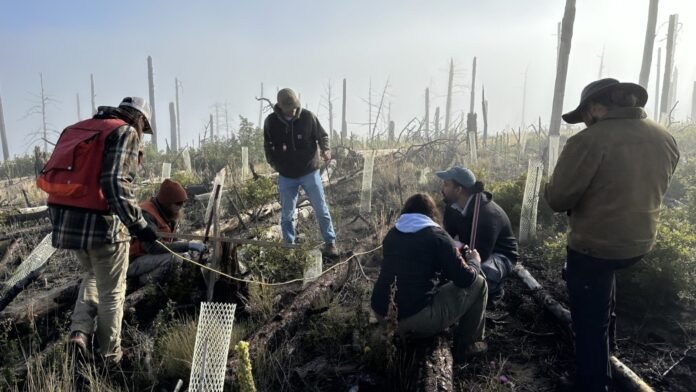
Recovery from the Hermit’s Peak-Calf Canyon Fire has been daunting. Residents are still waiting for disaster relief payments even as floods sweep through the ashy burn scar, contaminating the drinking water downstream. And then there’s the forest itself: in desperate need of new trees but lacking the necessary seedlings.

Wildfires have burned 7 million acres across New Mexico since 2000, and millions of seedlings are needed to replant the burned areas. The Hermit’s Peak-Calf Canyon Fire alone, the largest in state history, needs 17.6 million seedlings. Trees play an integral role in restabilizing burned hillsides and protecting the drinking water sources below them. But current reforestation facilities lack the capacity to keep up with demand, creating a dire shortage. Experts estimate it would take 50 years to replant the Hermit’s Peak-Calf Canyon burn scar at current rates.

That’s where the New Mexico Reforestation Center comes in. Conceived in 2022 as a collaboration between the state Forestry Division, University of New Mexico, New Mexico State University, and New Mexico Highlands University, the center is now about to break ground on an “absolutely massive” greenhouse facility that expands existing infrastructure in the northwestern part of the state, Director Jennifer Auchter told High Country News.

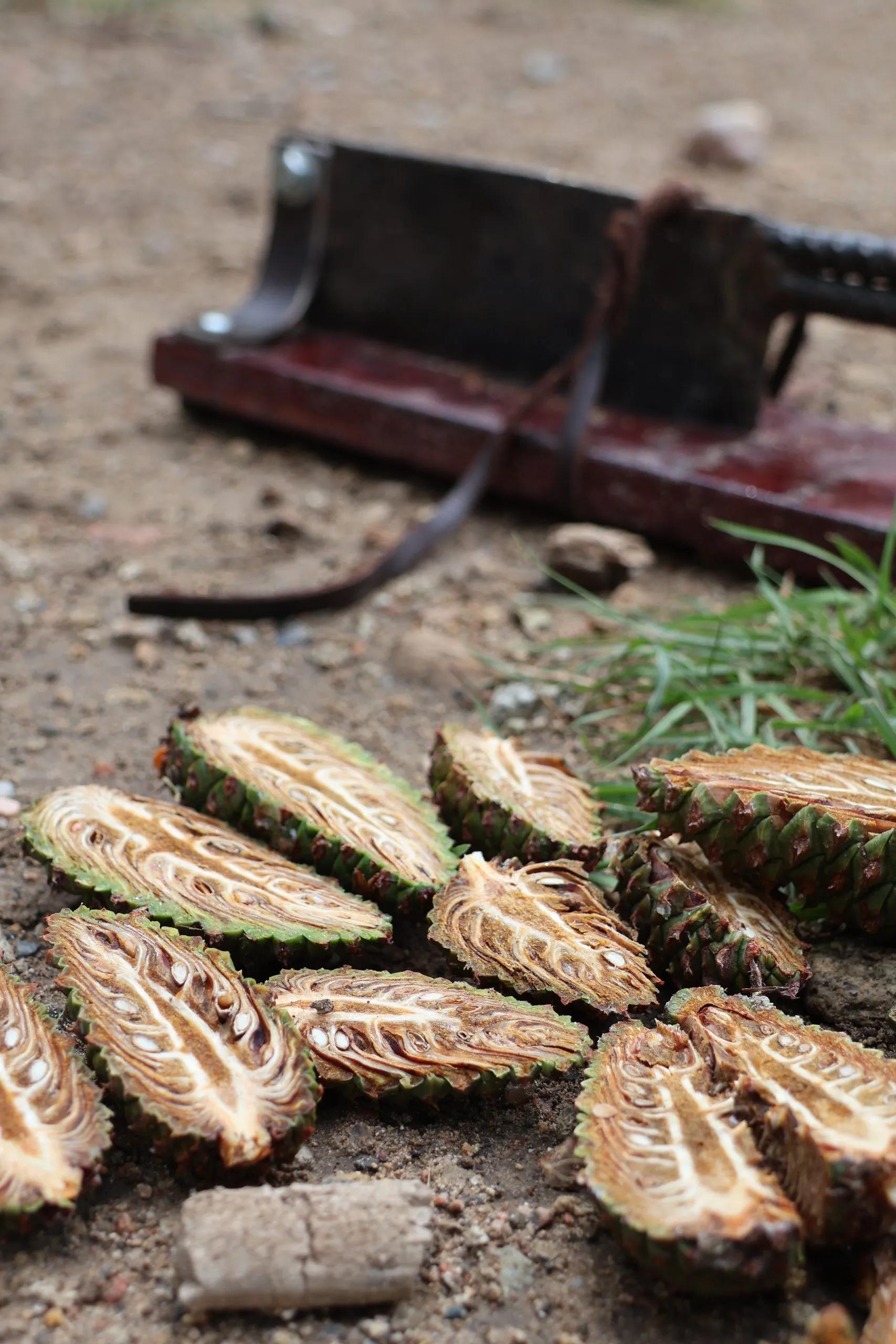
The greenhouses, which will eventually total 155,000 square feet in size, are an essential part of the seed-to-seedling-to-tree post-fire reforestation pipeline, which involves processing over 1,500 pounds of native seed for future planting while researching ways to help seedlings survive an even hotter and drier future. (The enterprise has a uniquely New Mexican flavor: Auchter said that a repurposed chili roaster is used to extract seeds from cones and pods at the existing seed-processing facility.)

High Country News caught up with Auchter in mid-April as she prepared for the greenhouse groundbreaking to talk about how the center will more than triple the state’s current seedling production capacity and why a “right tree, right place” approach is important for the success of modern reforestation.

This conversation has been edited for length and clarity.

Q. Why is re-planting a forest after a wildfire so important?

A. This is my favorite part of the whole story. My background is in earth science, watershed management, fluvial systems, and that sort of thing. So I think about this from a “forest being water infrastructure” perspective, particularly in New Mexico and the Southwest. Here, it’s the snowpack in the winter that feeds our rivers and streams. People have tried to quantify this a bunch of different ways, but it’s something like 70 percent of all the water we use is coming from a forest, whether it’s the snowpack or the precipitation that streams capture.

The likelihood of a forest actually regenerating (after a high-severity wildfire) is not very likely in our lifetimes. It could be decades to even centuries. For us, because of our water infrastructure here, we really need to conserve forests even just to have a water source.

Courtesy of Jennifer Auchter

Q. What are New Mexico’s current reforestation needs, given several large wildfires in recent years?

A. The state’s current burn scars need 385 million trees, and that doesn’t include future wildfires. That’s just the existing backlog.

Q. How many seedlings can current operations in New Mexico grow right now? Tell us about the gap the New Mexico Reforestation Center is seeking to fill.

A. We say 300,000, but we don’t even usually hit that mark. It’s usually more like 250,000 seedlings per year, and those are grown at the John T. Harrington Forestry Research Center, which is a pretty small and pretty old nursery.

Most of our tree seedlings are purchased from growers in Idaho. That’s not terrible, but they’re not exactly from the right climate, they’re not exactly from the right elevation, and then when they travel over land, they don’t do as well in planting. They’re kind of shocked when they get here.

Q. What kind of research has been going on to help set the New Mexico Reforestation Center and its replanting efforts up for success?

A. What the University of New Mexico is responsible for is doing a lot of the research on modeling: predicting seedling survival based on the site and based on the projected climate. So, when we’re selecting sites and planting out trees, we’re actually doing this for the 2100 climate, not for today’s climate. We want to make sure that these trees are surviving long-term. Then, once they plant it out, they will also do monitoring with drones, and on-the-ground monitoring as well.

Q. How else are researchers trying to ensure seedlings can survive in hotter, drier conditions?

A. New Mexico State University researchers are doing drought conditioning, so putting the seedlings under a lower amount of irrigation. They’re drought-stressing ponderosa pine and some of the other species as seedlings, so that when they plant them out, they are ready for that dry environment. There’s another thing that they’re doing specifically for aspen seedling survival in a post-fire environment: planting the seedling next to a log, for example, and trying to give it just a bit of shade while it’s in those early establishing months and years. They’re seeing higher survival for the seedlings that are planted in the shade areas.

There’s a lot of research going on to try to optimize this, bigger-scale. Once we jump from 300,000 seedlings to 5 million seedlings, ideally, by that time, we will have sorted out the very best methods that are the most successful across the whole reforestation pipeline, from seeds to seedling to planting.

Pine cones are sliced in two

Ponderosa pine cones are cut to extract seeds. Courtesy of New Mexico Reforestation Center / Josh Sloan

Q. Did you look to any other states for reforestation inspiration? What did you learn?

A. The Pacific Northwest is really great at reforesting. At least in the early days, I think there was an idea that we would model reforestation in the Southwest after reforestation in the Pacific Northwest. But we really just need to have our own regionally tailored methods, regionally appropriate stock — the genetics of the seedling — all of that is really important.

Q. How will the new forestry center benefit the broader region?

A. We do anticipate that, particularly in other areas of the Four Corners states, our seedlings will be appropriate. For example, northern Arizona, Flagstaff — that’s a similar elevation, similar species. That could be said for some areas of Colorado as well. So, I think we probably will focus on New Mexico first, but we do expect to actually be able to provide more seedlings longer term, once we start reforesting our own burn scars.

There’s not an official sort of hub or resource collaboration for the Southwest. There are a lot of groups working here — NGOs, government agencies, universities — there’s a lot of people doing a lot of different things, but they’re generally pretty disjointed. We envision the NMRC bringing those people together.

Q. What’s an important part of the reforestation process that’s sometimes overlooked?

A. I think it’s important to highlight the whole reforestation pipeline. The seed collection work that New Mexico Highlands University does is sort of this hidden part of it, right? The greenhouses and the seedlings are flashy, and it’s easy to take pictures and cover that, but the seed collection work is tedious, time-consuming, and requires a massive labor development approach. It’s rugged, it’s hard.

Q. What do you wish more people knew about reforestation?

A. I’ve heard a couple of different times, “Wow, that’s an expensive greenhouse.” It’s really not just a greenhouse. There’s so much more that goes into building a forest. It’s quite a daunting action, bringing that to the forefront in any way we can, raising awareness of how many bodies have touched the seed or the seedling or planted it out from the time that seed is collected to when it’s actually growing.

Q. What kind of long-lasting impact can reforestation have on a community post-fire, and how are you going about that in New Mexico?

A. I’ll use one example that we just finished last week. We had 48 students across grades from a charter school near Mora come to the seed collection facility, and we had the kids, who lived through wildfire, create a piece of art that was something special to them. During this whole workshop, while they were creating this art, we had some of our forestry experts talk about just the process of reforestation and what all goes into it. The point of it is really to get kids engaged locally at a younger age, so that as they go through school next year, those same kids will come back and get to see maybe some of the seeds they worked with are now in pots as seedlings, and maybe in three years, they get to go see that tree planted out in the forest. Keeping them engaged along the whole timeline of reforestation, to sort of imprint upon them how important conservation is. Because once it’s gone, it takes a long time to bring it back.


‘Together’: Naftali Bennett and Yair Lapid Unite Parties in Major Israeli Election Move

0


Former Prime Ministers Naftali Bennett and Yair Lapid announced Sunday that their parties would run together in the upcoming Israeli election under a new joint list led by Bennett, marking one of the most significant political realignments in recent years.

The new party will be called Beyachad, Hebrew for “Together,” and will combine Lapid’s Yesh Atid with Bennett 2026 under Bennett’s leadership. In a statement from Bennett’s office, the two described the move as “a first step in the process of repairing the State of Israel,” saying the merger would unite what they called the “repair bloc” and end internal battles ahead of the election.

“The move brings about the unification of the repair bloc, puts an end to internal fights, and allows all efforts to be invested in a decisive victory in the upcoming elections and in leading Israel toward the repair it needs,” the statement said.

Lapid published a similar message, writing that he and Bennett were taking “a first step in the process of repairing the State of Israel” through the merger of Yesh Atid and Bennett 2026 into one party headed by Bennett. He said the move would allow “all those who believe in leading Israel toward the necessary repair” to focus their efforts on that goal.

In a separate message to Yesh Atid members, Lapid framed the decision as both personal and strategic. He said joining Bennett was “a decision I made wholeheartedly,” based first on “trust and friendship,” but also on “a shared vision for the future of the state.” He told party activists that the leadership they would see at the upcoming press conference was “the future leadership of Israel.”

Lapid also made clear that the decision represented a concession by the Israeli center in favor of a broader electoral goal. “In order to win the most important elections in Israel’s history, the Israeli center must this time stand behind Bennett,” he said, describing Bennett as “a right-wing leader, but a liberal, decent, law-abiding right-wing leader.”

The agreement was finalized the night before the announcement, Israeli media reported, with Bennett and Lapid expected to present the joint list later Sunday. Both are also seeking to expand the framework, including through outreach to Gadi Eisenkot, who welcomed the move in a conversation with Bennett and said the goal of winning the election is shared.

The party’s initial branding places Bennett clearly at the top. Campaign materials identify the new framework as “Beyachad, led by Bennett,” using blue and green colors and a direct visual message of unity around the former prime minister.

With elections approaching, the new list reshapes the opposition landscape. Lapid, who has led Yesh Atid for more than a decade, is stepping aside to allow Bennett to head the list, while Bennett gains access to an established political base and national campaign structure.

Whether other political figures will join the framework remains an open question. Both leaders have indicated they expect further developments.

War…Netanyahu’s perfect definition of himself. So who will define him by peace?

0
war…netanyahu’s-perfect-definition-of-himself.-so-who-will-define-him-by-peace?
War…Netanyahu’s perfect definition of himself. So who will define him by peace?

When speaking about Israel today, it is easy to borrow the irony of British writer and historian Max Hastings, who has witnessed and chronicled many wars. Just as he once mocked America’s appetite for conflict by asking, ‘What if they started a war and nobody came?’, we may now invert the question for Israel: What if Benjamin Netanyahu woke up one day and found no wars left to start?

Hastings, who documented the failures of the US wars in Iraq and Afghanistan before Washington even reached its failure in Iran, possessed a sharp political instinct. Since his emergence in the mid-1990s, Netanyahu has possessed only one instinct: war as destiny and hostility as identity.

One dark night in October 1995, Netanyahu stood on a balcony overlooking Zion Square in Jerusalem while a banner reading ‘Death to Arabs’ was raised before him. At that moment, Yitzhak Rabin was striving for a historic peace agreement, while the Israeli right was pulling the country in the opposite direction.

Netanyahu was not just a young party leader; he was a pupil at the school of hatred, where he discovered the political power of incitement and the profitability of fear for the first time.

Nothing has changed since then.

The Netanyahu who once stood beneath a banner calling for death is the same Netanyahu who now speaks of ‘moral standards’.

The man who incited hatred against Rabin is the same man who presents war as the only path to security.

Therefore, it is not difficult to anticipate another war before the upcoming Israeli elections in October.

Netanyahu, who has plunged Israel into an existential internal crisis and unprecedented international isolation, knows that war is his last remaining instrument of political survival.

But the more dangerous question remains: Could Israel one day lose the United States’ support, meaning that every war Netanyahu enters would become Washington’s war by extension?

No one has a clear answer.

However, what is certain is that the old justification — that Israel’s survival depends on perpetual war — no longer convinces Israelis themselves.

The war in Gaza exposed the limits of power and illusion, and the extent to which everything can be justified in the name of ‘security’. Yet Netanyahu remains outside these limits. He envisages Israel as a ‘Greater Sparta’, a besieged yet heavily armed fortress.

In reality, however, Israel increasingly resembles a modern version of apartheid-era South Africa.

A land without a people and a people without a land: this is Netanyahu’s true project. The methods are unmistakable: mass killing and rendering the land uninhabitable. This is not an exaggeration.

Within Israel itself, writer David Grossman warns that the country is ‘living a nightmare’, asking: ‘Who will we be when we rise from the ashes?’

He concedes that what happened in Gaza was so vast and horrific that it cannot be understood through traditional frameworks.

Meanwhile, Yuval Noah Harari argues that Jewish extremists have led Israel into a doctrine of ‘violent coexistence’.

As elections approach, Israelis will have the opportunity to reconsider the logic of fighting on multiple fronts.

However, the public mood after Gaza leans towards fear, not reflection.

And, as Netanyahu knows better than anyone, fear is a fuel that never runs out.

In his memoir, Boris Johnson recounts an absurd episode: after Netanyahu visited him at the British Foreign Office, a listening device was found in the private bathroom of his office.

Perhaps it was a coincidence; perhaps it was not.

But it captures something essential: no one can teach Netanyahu polite behaviour, not even when politeness is imposed on fools.

Ultimately, Harari seems almost naive in the face of such brutality when he asserts that there is ‘no objective reason’ for Israelis and Palestinians to fight and that the land is ‘wide and rich enough for all’.

However, Netanyahu sees this land only as a battlefield and views peace as nothing more than a pause between two wars.

The views expressed in this article belong to the author and do not necessarily reflect the editorial policy of Middle East Monitor.

Prime Video drops full trailer for Spider-Noir

0
prime-video-drops-full-trailer-for-spider-noir
Prime Video drops full trailer for Spider-Noir

If your spider-sense is tingling, perhaps it’s because Prime Video released the official full trailer for its upcoming live action series, Spider-Noir, at CCXPMX26 in Mexico City over the weekend. As it did with the first teaser back in February, the streaming platform released the trailer in two formats: one in black and white (above)—very Raymond Chandler-esque—and another in color (below), which the showrunners are calling “True Hue.”

As previously reported, Marvel Comics created its “noir” line in 2009, reinterpreting familiar Marvel characters in an alternate universe, usually set during the Great Depression in the US. A version of the Spider-Noir character, voiced by Cage, briefly appeared in the animated masterpieces, Spider-Man: Into the Spider-Verse (2018) and Across the Spider-Verse (2023). (He is set to reprise that role in the upcoming Beyond the Spider-Verse.)

Co-showrunner (with Steve Lightfoot) Oren Uziel is a film noir fan, so that Marvel series naturally appealed to him. The live-action series is still set in 1930s New York, but the spidery superhero is not Peter Parker. (Uziel thought the Parker character was too associated with a boyish high school type, which didn’t really fit the noir vibe.) So Cage is playing Ben Reilly, a hard-boiled PI with a secret superhero identity, The Spider. Per the official premise: “Spider-Noir tells the story of Ben Reilly (Nicolas Cage), a seasoned, down on his luck private investigator in 1930s New York, who is forced to grapple with his past life, following a deeply personal tragedy, as the city’s one and only superhero.”

The vibe is “70 percent  Humphrey Bogart and 30 percent Bugs Bunny,” executive producer Chris Miller said during a Deadline Hollywood panel. “Bogart always had a twinkle in his eye and he was always doing something clever, and he and Bugs Bunny have more in common than you might think…. [It’s] a Humphrey Bogart type character, a detective story, but the detective happens to also have spider powers.” Nor is the intent to create a “giant web of interconnected series,” Miller added. “It’s just its own little jewel of a story.”

In addition to Cage’s Ben Reilly/The Spider, the cast includes Lamorne Morris as Reilly’s friend Robbie Robertson, a freelance journalist who clings to optimism in the face of his buddy’s cynicism; Li Jun Li as nightclub singer Cat Hardy, the classic underworld femme fatale (Li based her portrayal on Anna May Wong, Rita Hayworth, and Lauren Bacall); Karen Rodriguez as Reilly’s secretary, Janet; Abraham Popoola as a World War I veteran; Jack Huston as a bodyguard named Flint Marko; Brendan Gleeson as New York mob boss Silvermane, who is being targeted for assassination; Lukas Haas as one of Silvermane’s subordinates; Richard Robichaux as the editor of the Daily Bugle; and Kai Caster.

Spider-Noir premieres on May 25, 2026, on MGM+, with all episodes becoming available on Prime Video on May 27, 2026. Viewers can choose to watch in black and white or True Hue—or both, if one wants to compare.

0FansLike
0FollowersFollow
0FollowersFollow
0SubscribersSubscribe
- Advertisement -
Google search engine

Recent Posts