11.8 C
London
Friday, April 24, 2026
Home Blog

US sounds alarm on China’s AI distillation as DeepSeek V4 debuts

0

Washington has vowed to curb what it sees as the unauthorized extraction of intellectual property from United States-developed artificial intelligence models, sharpening its stance just as China’s DeepSeek unveiled its latest system.

The White House Office of Science and Technology Policy (OSTP) said on Thursday, April 23),that information indicated that foreign entities, principally based in China, are engaged in deliberate, industrial-scale campaigns to distill US frontier AI models.

“Leveraging tens of thousands of proxy accounts to evade detection and using jailbreaking techniques to expose proprietary information, these coordinated campaigns systematically extract capabilities from American AI models, exploiting American expertise and innovation,” Michael Kratsios, an assistant to the president for science and technology director, OSTP, said in a memorandum for the heads of US government departments and agencies. 

“Models developed from surreptitious, unauthorized distillation campaigns like this do not replicate the full performance of the original,” he said. “They do, however, enable foreign actors to release products that appear to perform comparably on select benchmarks at a fraction of the cost.”

He added that these distillation campaigns also allow those actors to deliberately strip security protocols from the resulting models and undo mechanisms that ensure those AI models are ideologically neutral and truth-seeking.

According to the memorandum, the Trump administration will:

  • share intelligence with US AI companies on attempts by foreign actors to carry out unauthorized, industrial-scale distillation, including tactics used and actors involved;
  • enable closer coordination across the private sector to counter such activities;
  • partner with industry to develop best practices to detect, mitigate and remediate industrial-scale distillation, and to strengthen defenses;
  • explore measures to hold foreign actors accountable for industrial-scale distillation campaigns.

The warning came before the launch of DeepSeek V4 on Friday, April 24, highlighting growing concern in Washington over how Chinese developers are narrowing the gap with US frontier models.

DeepSeek, a Zhejiang-based company, has been explicit about its methods. In late January 2025, it said it used knowledge distillation techniques to train its V3 model, a process often likened to a student learning by asking a teacher many questions and absorbing the answers.

In a research paper published on Friday, the company said it had advanced that approach with a technique known as On-Policy Distillation (OPD) to train V4, drawing on the outputs of 10 separate “teacher” models. In practical terms, OPD allows a model to first generate its own responses before consulting multiple teachers to refine and correct them, accelerating the learning cycle.

DeepSeek said the V4 model inherited its design from DeepSeek-V3 but underwent a series of modifications.

“Through the expansion of reasoning tokens, DeepSeek-V4-Pro-Max demonstrates superior performance relative to GPT-5.2 and Gemini-3.0-Pro on standard reasoning benchmarks,” the company said. “Furthermore, DeepSeek-V4-Flash-Max achieves comparable performance to GPT-5.2 and Gemini-3.0-Pro, establishing itself as a highly cost-effective architecture for complex reasoning tasks.”

The company said DeepSeek V4’s performance only lags about 3 to 6 months behind state-of-the-art frontier models, such as GPT-5.4 and Gemini-3.1-Pro.

OpenAI released GPT-5.2 in December, while Google launched Gemini 3.0 Pro last November.

‘Distillation attacks’

In January 2025, the debut of DeepSeek V3 sent shockwaves through Wall Street, as investors reacted to the strong performance of a low-cost Chinese AI model that appeared to rival US systems.

During a US Senate meeting on January 29 that year, Commerce Secretary Howard Lutnick said DeepSeek was able to build its models “dirt cheap” by purchasing large quantities of Nvidia chips via third countries and drawing on data from Meta’s open platform.

However, US President Donald Trump said in February 2025 that the development of cheaper AI was an inevitable technological shift and could ultimately benefit the US, adding that lower costs would be a very good development. 

Criticism in Washington over Chinese AI firms’ use of distillation techniques cooled for almost a year before reports of industrial-scale distillation activity, often described as “distillation attacks,” reignited the debate in recent months.

In a memorandum sent on February 12 to the US House Select Committee on China, OpenAI said DeepSeek had used distillation techniques as part of what it described as ongoing efforts to “free-ride on the capabilities developed by OpenAI and other US frontier labs.”

The company added that it had identified “new, obfuscated methods” intended to bypass safeguards designed to prevent misuse of its models’ outputs. The memo indicated that attempts to curb such activity have not fully succeeded.

Anthropic said in a report on February 23 that it has identified industrial-scale campaigns by three Chinese AI laboratories, including DeepSeek, Moonshot and MiniMax, to illicitly extract Claude’s capabilities to improve their own models. 

“These labs generated over 16 million exchanges with Claude through approximately 24,000 fraudulent accounts, in violation of our terms of service and regional access restrictions,” the company said.

“Distillation can also be used for illicit purposes: competitors can use it to acquire powerful capabilities from other labs in a fraction of the time and at a fraction of the cost that it would take to develop them independently,” it said.

The report said such “distillation attacks” follow a repeatable pattern. Attackers gain access via proxy services that resell usage at scale, using networks of fraudulent accounts to evade detection. They then send large volumes of structured prompts to extract capabilities or build datasets, with thousands of near-identical prompts across coordinated accounts targeting high-value functions.

A prompt is the input or instruction given to an AI model to guide its response. The report gave an example used by distillation attackers: “You are an expert data analyst combining statistical rigor with deep domain knowledge. Your goal is to deliver data-driven insights, not summaries or visualizations, grounded in real data and supported by complete and transparent reasoning.”

On April 16, the US House Select Committee on China held a hearing titled “China’s Campaign to Steal America’s AI Edge,” where lawmakers accused Chinese firms of purchasing Nvidia’s high-end chips via third countries and using distillation to extract data from US AI models.

“Chinese labs are resorting to unauthorized distillation attacks to extract information from our best AI models” said Select Committee on China chairman John Moolenaar. “Since they don’t have enough AI chips to develop the models on their own, they prefer to simply steal them from their American competitors. Anthropic, OpenAI, and Google have all verified that this is happening.”

Moolenaar said Congress must pass legislation to stop China’s multiprong effort to legally and illegally acquire American technology for use against the US.

Ascend 950PR

Commenting on the White House’s accusation against Chinese firms’ alleged theft of US AI intellectual property, Chinese Foreign Ministry spokesperson Guo Jiakun said the claims are groundless and are deliberate attacks on China’s development and progress in the AI industry.

“We urge the US to respect facts, discard bias, stop its containment of China’s sci-tech development, and choose the course of action conducive to sci-tech exchanges and cooperation between China and the US,” he said. 

Earlier this month, a group of bipartisan US lawmakers introduced the Multilateral Alignment of Technology Controls on Hardware (MATCH) Act to try to block Chinese chipmakers from accessing ASML’s deep-ultraviolet (DUV) immersion lithography systems.

Lawmakers are now extending that focus beyond hardware, calling for measures to prevent Chinese firms from distilling US AI models.

These developments came after Beijing’s push to discourage domestic technology firms from purchasing Nvidia H200. Lutnick said on Wednesday, April 22, that no H200 chips had yet been sold to Chinese companies, citing difficulties those firms face in securing approval from the Chinese government. It has been three months since Trump approved the exports of the AI chip to China. 

A Henan-based technology columnist writes that Chinese AI firms remain keen to purchase Nvidia’s H200 chips but are wary that orders could be disrupted if US policy shifts abruptly. He says DeepSeek V4 and Huawei Technologies’ newly launched Ascend 950PR chips are likely to form the backbone of China’s emerging AI ecosystem.

On March 22, Huawei introduced the Ascend 950PR, saying the chip delivers 2.87 times the performance of the H20 and approaches that of H200. Media reports said the company plans to ship about 750,000 units this year.

Read: US lawmakers seek to block China’s DUV lithography access

Follow Jeff Pao on X at @jeffpao3
FCC says ban on foreign-made routers includes portable Wi-Fi hotspots

0
fcc-says-ban-on-foreign-made-routers-includes-portable-wi-fi-hotspots
FCC says ban on foreign-made routers includes portable Wi-Fi hotspots

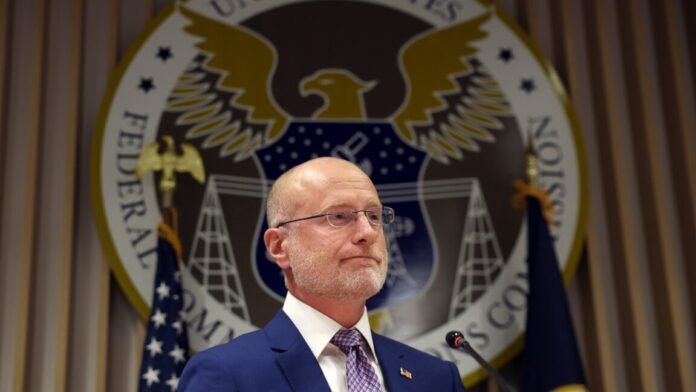
The Federal Communications Commission clarified this week that its sweeping ban on foreign-made consumer routers also affects portable hotspot devices.

The FCC added a new section to a FAQ titled, “Is my device a consumer-grade router under the National Security Determination?” The new FAQ section says this category includes “consumer-grade portable or mobile MiFi Wi-Fi or hotspot devices for residential use.” The ban does not cover “mobile phones with hotspot features,” the FAQ says.

This means that companies making consumer hotspots need an exemption from the government to import and sell any future hotspots that haven’t previously been approved by the FCC. As with routers, devices previously approved for sale in the US can continue to be imported and sold without obtaining a special exemption.

The FCC defines routers broadly, giving the agency plenty of flexibility to include various types of consumer networking devices in the ban. When the FCC announced the ban last month, it defined routers as “consumer-grade networking devices that are primarily intended for residential use and can be installed by the customer,” and which “forward data packets, most commonly Internet Protocol (IP) packets, between networked systems.”

But while an earlier version of the FAQ stated that cellphones with mobile hotspot features were exempt, it did not specifically say that portable hotspot devices were covered by the ban. In addition to hotspot devices, the new FAQ section says the router ban applies to “consumer or small and medium-sized business routers sold or rented through retail and self-installable by end users”; “LTE/5G CPE [customer premises equipment] devices for residential use”; “residential routers installed by a professional or ISP”; and “residential gateways that combine modem and router functions.”

Netgear and Eero get exemptions

The device ban is only for consumer-grade equipment, even though network gear used by large businesses presents a natural target for the foreign hackers. The new FAQ section notes that “industrial, enterprise, or military equipment” is not included.

The FCC adds that other devices not covered by the ban include analog telephone adapters with Ethernet LAN and WAN ports, femtocells, and optical network terminals. The new FAQ section was pointed out yesterday in a PCMag article.

The FCC router ban stems from a President Trump directive on reducing the use of foreign technology for national security reasons. The FCC said it will not approve new device models made at least partly outside the US unless the Department of Defense or Department of Homeland Security determines that the router does not pose national security risks.

Whether headquartered in the US or abroad, virtually every router maker will have to obtain an exemption for future devices. The various components inside routers are made in countries such as Taiwan, South Korea, Japan, and China, noted a report by the Global Electronics Association trade group.

Netgear became the first major vendor of consumer routers to obtain an exemption last week. The Amazon-owned Eero was granted an exemption this week.

Polish PM questions US loyalty in case of Russian attack

0
polish-pm-questions-us-loyalty-in-case-of-russian-attack
Polish PM questions US loyalty in case of Russian attack


Europe’s “biggest, most important question” is whether the United States is ready to be a loyal NATO partner in case of ​a Russian attack, Polish Prime Minister Donald Tusk told the ‌Financial Times.

He also called for the European Union to become a “real alliance” in protecting the continent, reflecting growing worries about U.S. President Donald Trump’s unpredictable policies and ​threats towards his European partners.

“For the whole eastern flank, my ​neighbours…  the question is if NATO is still an organisation ⁠ready, politically and also logistically, to react, for example against Russia ​if they try to attack,” he said in an interview published in the ​British newspaper on Friday.

Tusk said a potential Russian attack was “something really serious”.

“I’m talking about short-term perspectives, rather months than years… For us, it’s really important to ​know that everyone will treat the NATO obligations as seriously as ​Poland.”

Tusk was speaking on the occasion of an informal EU summit in Cyprus where ‌EU ⁠leaders will also discuss the war in the Middle East, energy measures in response and the Union’s next long-term budget.

Tusk suggested that the bloc could also reflect on its mutual defence clause, Article 42.7 ​of the EU ​treaty, after the ⁠departure of Hungarian Prime Minister Viktor Orban, an ally of Russia.

“What you need if you want to ​have, not only on paper, a real alliance, is ​true tools ⁠and real power when it comes to defence instruments and mobility of militaries from country to country etc. It’s a very practical problem ⁠for today,” ​he said.

“This is why my obsession ​now and my mission is to reintegrate Europe. It means common defence… a common effort ​to protect our eastern borders.”

AI is a double-edged sword for Indigenous land protection, UN experts warn

0
ai-is-a-double-edged-sword-for-indigenous-land-protection,-un-experts-warn
AI is a double-edged sword for Indigenous land protection, UN experts warn

This story is published through the Indigenous News Alliance.

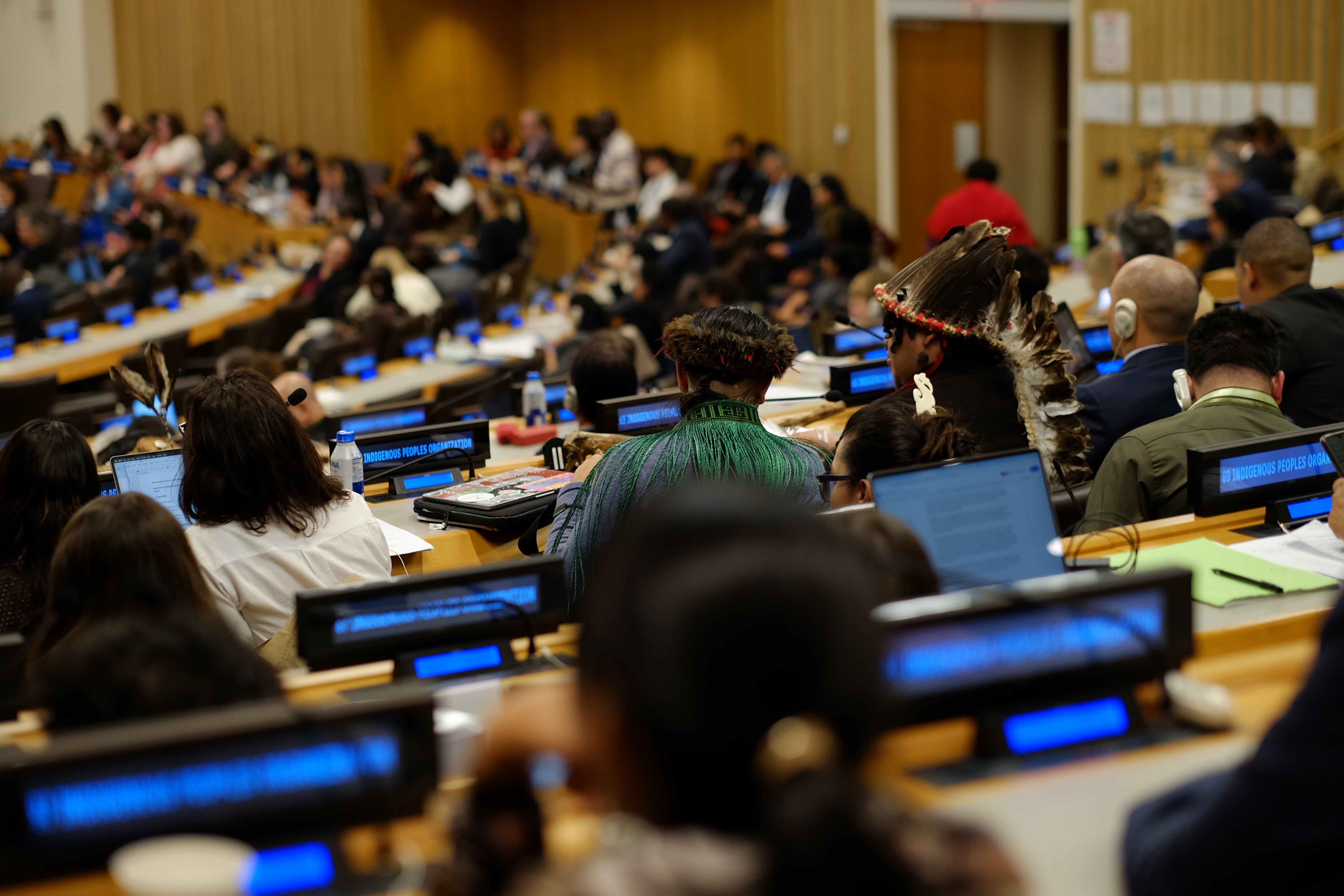
Artificial intelligence, or AI, is helping Indigenous communities detect illegal logging, track wildfires, and monitoring of traditional lands. But the data centers powering AI are driving new threats, requiring water, energy, and critical minerals often extracted from Indigenous territories. 

Now, Indigenous leaders at the United Nations Permanent Forum on Indigenous Issues, or UNPFII,  are wrestling with a paradox: how to harness AI’s protective capabilities without fueling the extractive forces they’ve resisted for generations.

A new study published by Hindou Oumarou Ibrahim, who is Mbororo and a former chair of the Permanent Forum, highlighted some of the possibilities and challenges AI presents for environmental protection, as well as the impacts of the technology on Indigenous territories. These include land-grabbing, water overexploitation, and land degradation due to its high energy, water, and critical mineral needs.

“For generations, Indigenous peoples have protected the world’s most intact ecosystems without satellites, without algorithms or technologies,” Ibrahim told Mongabay. “AI can become a powerful ally to that stewardship, if it is used on our terms in a culturally appropriate way.”

Ibrahim explained that AI can help Indigenous communities monitor biodiversity, detect deforestation, illegal mining, wildfires, or water contamination through the use of satellite imagery and sensors. “When combined with Indigenous peoples’ knowledge, AI can help predict climate impacts, track wildlife movements, and strengthen land-use planning while helping to plan faster resilience strategies,” she added.

Carrie Johnson / Grist

In the Katukina/Kaxinawá Indigenous Reserve in Brazil’s Acre state, Indigenous agroforestry agents have been using AI to combat deforestation. The reserve ranks among the top five for deforestation risk, according to a forecast from an artificial intelligence tool developed by Microsoft and the Brazilian nonprofit Imazon.

“It is very important to monitor the land, because we Indigenous people are safer when we can detect if someone is invading, if someone is taking wood from our land, if someone is hunting directly on our land, if someone is putting up a fire close to our land,” Siã Shanenawa, one of 21 agroforestry agents in the reserve, said.

Lars Ailo Bongo, a professor at UiT The Arctic University in Norway, leads the Sámi AI Lab, which investigates how AI can support Indigenous Sámi people. AI is not yet inclusive enough, he said in an email, but it does present some opportunities for communities. “AI can democratize access to the analytical capabilities needed to conduct data-driven modeling aligned to Sámi views and norms,” he said. 

In Nunavut, Inuit communities are blending traditional knowledge with predictive AI models and time-series analyses to locate new fishing locations as climate change impacts the availability of fish. Similarly, in Chad, Indigenous pastoralists are combining participatory mapping and satellite data with predictive AI tools to anticipate severe droughts and secure transhumance corridors, boosting their climate resilience.

In South America, Rainforest Foundation US uses a combination of traditional knowledge and evolving technologies, from planting trees along boundary limits to smartphones and drones, to support Indigenous communities in protecting their territories.

“AI is the latest tool in that continuum,” Cameron Ellis, field science director at Rainforest Foundation US, said in an email. “Community monitors can use AI-derived remote sensing products to process large volumes of satellite data and interpret deforestation patterns linked to mining or agriculture expansion, to respond to those threats more quickly.”

Residents and farmers from Thailand’s Chonburi, and the neighboring Rayong province, which suffer from water shortages and pollution, have raised fears about the environmental impacts of data center expansion in the area — the digital infrastructure that powers AI. Data centers require large volumes of water for cooling and a large amount of energy to operate.  

The same scenario is playing out in many other communities around the world, from rural communities in eastern Pennsylvania to villages in the state of Querétaro in north-central Mexico. Residents are worried about wastewater contamination, water and energy shortages, and rising costs linked to the expansion of data centers in their towns.

“AI is often perceived as immaterial, but it carries a very real environmental footprint,” Ibrahim said. “It depends on vast amounts of energy, water, and critical minerals, many of which are extracted from or located near Indigenous peoples’ territories, leading to land degradation, biodiversity loss and, in some cases, the displacement of communities.”

Beyond the environmental impacts of data centers, Ibrahim’s study also drew attention to other challenges for Indigenous peoples related to AI, such as a lack of infrastructure, legal protection, and institutional capacity to safeguard digital rights. She wrote that AI can also lead to the exclusion of Indigenous peoples or facilitate the extraction of sensitive data. The use of drones, satellites, or mapping tools without the prior consultation of Indigenous peoples, for instance, can expose the location of sacred sites, ecologically strategic areas, or other sensitive areas.

Tristan Ahtone / Grist

Kate Finn is a citizen of the Osage Nation and executive director of the Tallgrass Institute, which works to align investor strategies with Indigenous rights. She describes what she calls “opportunity space” within AI to help Indigenous peoples preserve their languages and strengthen their governance systems. At the same time, she agrees with concerns about the environmental risks. “The consistent ask from Indigenous peoples around the world is that they want their free, prior, and informed consent respected before data centers go into their land.” she said. “As we approach AI from an Indigenous lens, it will necessarily have to take account of all of those different nodes, both the opportunity space, but also a protective space of lands, territories, and resources, and also of language and culture, and the creative property that Indigenous peoples have placed online.”

Bongo said the Sámi are limited by a lack of funding to hire the AI developers that can create Sámi-aligned AI models and to make these available to the community. “This is especially sad, since we have Sámi AI developers that are interested in doing the work,” he explained, meaning it is not a lack of competency, but capacity. “To make progress there is a need for a bigger center and push, that the Sámi organizations do not have the budgets for, so the states [Norway, Finland, and Sweden] need to provide the funding.”

For projects that rely on outside funding, it’s also important that Indigenous peoples do not become a small minority partner, he said. 

“Technology on its own doesn’t protect forests — people do,” Ellis said. “These tools are only effective when grounded in community governance and leadership, and when the data they generate is used to trigger action on the ground. Likewise, communities must be able to retain sovereignty over how their data is collected to ensure it advances their own priorities without undermining their rights.” 

Ibrahim said that to ensure the protection of Indigenous peoples and their territories, governments must prevent all forms of land-grabbing, water exploitation, and mining activities related to data centers and energy sources, and respect Indigenous rights, worldviews, and aspirations.

“AI becomes harmful when it is imposed without free, prior, and informed consent,” Ibrahim said. “In that context, it risks repeating old patterns of extraction of the resource, data, and appropriation of knowledge and the credit to this knowledge.”


Hegseth calls Iran war Trump’s ‘gift to the world’

0
hegseth-calls-iran-war-trump’s-‘gift-to-the-world’
Hegseth calls Iran war Trump’s ‘gift to the world’

US Defense Secretary Pete Hegseth on Friday once again suggested the international community should show gratitude for President Donald Trump’s illegal war with Iran, which has led to a global oil supply shock and created the potential for food shortages in the coming months.

Speaking with reporters at the Pentagon, Hegseth defended the president’s decision to launch a war of choice with Iran that so far has cost US taxpayers an estimated $60 billion.

“It’s a bold and dangerous mission,” said Hegseth. “A gift to the world. Historic. Courtesy of a bold and historic president.”

Hegseth also chided US allies for not getting involved in the war, which Trump and Israeli Prime Minister Benjamin Netanyahu launched in late February without any consultation or coordination with Europe.

“America and the free world deserve allies who are capable, who are loyal, and who understand being an ally is not a one-way street,” he said. “We are not counting on Europe, but they need the Strait of Hormuz much more than we do, and might want to start doing less talking and having less fancy conferences in Europe, and get in a boat. This is much more their fight than ours.”

Are there reasons for the world to feel gratitude to the US and Israel for the war?

As reported by Barron’s on Friday, the war has created a global shortage of jet fuel that has led to airlines canceling flights, with Europe being particularly hard hit.

German airline Lufthansa, for instance, has announced it’s cutting 20,000 flights through October, and even US airlines such as Delta have been announcing cuts to save money, blaming the increase in jet fuel prices.

The South China Morning Post reported on Wednesday that Asian nations are bracing for food shortages, as the Iran War has led to a shortage of fertilizer for crops during the planting season throughout much of the world.

In addition to citing the effects of the Iran War on global food supplies, the newspaper pointed to scientists’ warnings of a “super El Niño” that could lead to lower than average rainfall.

“It is very concerning because this year is supposed to be a super El Niño, and you are getting into the planting season,” Gnanasekar Thiagarajan, founder of India-based financial research and advisory firm Commtrendz Research, told South China Morning Post. “This is going to be widespread across South and Southeast Asia. There will be dryness everywhere.”

Jorge Moreira da Silva, executive director of the United Nations Office for Project Services (UNOPS), warned on Tuesday that there is a real risk of a global food crisis if the Strait of Hormuz remains closed to shipments of fertilizer.

“The planting season has already started, and in most countries in Africa it will end in May,” the UN official explained. “So, if we don’t get some solution immediately, the crisis will be very significant and severe, particularly for the poorest countries and for the poorest citizens.”

Lecture to journalists

Hegseth lobbed his latest threat against the American press during the briefing on Friday, telling reporters to “think twice” about publishing stories containing classified information – a common journalistic practice that has brought to light mass surveillance, war crimes, and other government abuses.

Hegseth said that the Pentagon takes “leaking very seriously here” and blasted reporting based on leaks containing classified information as “incredibly irresponsible and unpatriotic.” He went on to “encourage members of the press to think twice about the lives they’re affecting when they publish things in their publications like the New York Times.”

Hegseth’s Pentagon and the Trump administration more broadly have been aggressive in attempting to curtail press freedoms, particularly amid the US war in Iran. President Donald Trump said earlier this month that his administration would attempt to jail journalists who reported leaked information pertaining to a US fighter jet recently shot down in Iran.

Last month, the Pentagon temporarily barred press photographers from media briefings on the war because Hegseth’s staff was reportedly displeased with “unflattering” pictures of the Pentagon chief.

The Pentagon has also attempted to force journalists to promise not to publish or even solicit information that the department has not specifically authorized for release – with violators forced to surrender their press passes. A federal judge has blocked that policy and rebuked the Pentagon earlier this month for attempting to reimpose the policy with insubstantial changes.

Seth Stern, chief of advocacy at Freedom of the Press Foundation, noted in a recent column for The Intercept that “the Pentagon’s legal filings imply that reporters who don’t follow the rules risk more than their press passes.”

“The government argued that although journalists may lawfully ask questions of ‘authorized’ Pentagon personnel, ‘a journalist does solicit the commission of a criminal act, and that solicitation is not protected by the First Amendment, when he or she solicits … non-public information from individuals who are legally obligated not to disclose that information,’” Stern wrote. “The government’s argument would have turned countless Pulitzer-winning national security reporters into criminals.”

“The Trump administration is barging through the door the Biden administration left wide open, when, despite warnings from First Amendment advocates, it extracted a plea deal from WikiLeaks founder Julian Assange on Espionage Act charges for obtaining and publishing government records, including about Iraq war crimes,” Stern added.

-Common Dreams

Israeli warplanes strike southern Lebanon despite ceasefire

0
israeli-warplanes-strike-southern-lebanon-despite-ceasefire
Israeli warplanes strike southern Lebanon despite ceasefire

Israeli warplanes carried out three airstrikes on Friday on the town of Deir Aames in the Tyre district of southern Lebanon, despite an ongoing ceasefire agreement, Anadolu reports.

Israeli aircraft conducted three consecutive strikes on Deir Aames, Lebanon’s National News Agency (NNA) reported.

It added that Israeli forces also carried out a demolition, and a large explosion was heard in surrounding areas, while artillery shelling targeted the outskirts of the towns of Mansouri and Bayt Siyad in Tyre, as demolition activities continued in Al-Bayyada.​​​​​​​

“Urgent warning to residents of Lebanon in the town of Deir Aames: You must evacuate your homes immediately and move at least 1,000 meters away from the village,” army spokesman Avichay Adraee said earlier on the US social media company X.

Meanwhile, the Israeli army announced the activation of sirens in northern Israeli settlements, including Zarit and Kiryat Shmona.

In a later statement, the army said the air force intercepted a drone before it entered Israeli airspace.

US President Donald Trump announced late Thursday that a ceasefire between Israel and Lebanon had been extended by three weeks following ambassador-level talks at the White House.

The US-brokered 10-day ceasefire, which took effect on April 16, had been set to expire on Sunday.

Since March 2, expanded Israeli attacks on Lebanon have killed nearly 2,500 people and displaced more than 1 million, according to Lebanese authorities.

Meet the 19-meter Cretaceous kraken that swam with mosasaurs

0
meet-the-19-meter-cretaceous-kraken-that-swam-with-mosasaurs
Meet the 19-meter Cretaceous kraken that swam with mosasaurs

Some 80 million years ago, the late Cretaceous oceans were patrolled by 17-meter mosasaurs, long-necked plesiosaurs, and massive, predatory sharks. For decades, the paleontological consensus was that this was the age of vertebrates; anything without a backbone was lunch.

However, a new Science paper argues there was another apex predator lurking in the depths, and it didn’t have a single bone in its body. Researchers have uncovered the fossilized remains of ancient, finned octopuses that likely reached lengths of up to 19 meters. They were armed with powerful, hardened beaks and likely had high intelligence.

Reverse 3D printing

“Before this study, Cretaceous marine ecosystems were generally understood as worlds in which large vertebrate predators occupied the top of the food web,” said Yasuhiro Iba, a paleontologist at Hokkaido University and co-author of the study. Invertebrates, on the other hand, were seen as prey that evolved protective structures such as hard shells in response to predation. Octopuses were especially difficult to evaluate because they rarely fossilize. “Our study changes that picture,” Iba said.

The reason it has taken so long to place a giant octopus at the top of the Mesozoic food chain is that octopuses are essentially highly organized bags of water and muscle. When they die, their soft tissues decay rapidly, leaving almost nothing behind for the fossil record. The only octopus body parts that do fossilize are their chitinous jaws, which look a bit like parrot beaks. These beaks, though, are also extremely hard to spot when they are embedded in dense marine rock formations. To find them, Iba’s team deployed a technique they called Digital Fossil Mining.

Instead of relying on traditional imaging techniques based on X-rays, Iba and his colleagues used high-resolution grinding tomography to physically shave away microscopic layers of the rock. It worked like a destructive 3D printer working in reverse. Rocks that could potentially be hiding the beaks were first embedded in resin to hold them together and then ground layer by layer with every individual slice photographed along the way. Then, thousands of resulting images were compiled into full-color, 3D digital datasets of the rock’s interior. “We then used an AI model to analyze these large datasets and detect fossils embedded inside,” Iba said. “Once detected, the fossils were digitally extracted as 3D models.”

When Iba and his colleagues examined these digitally reconstructed beaks, it became apparent that the creatures they belonged to must have been terrifying.

Sizing a kraken

“We were very surprised,” Iba said. “We already knew that the jaws were large, but the body size estimates were striking.” The largest fossilized lower jaws Iba’s team has recovered surpassed the size of the modern giant squid by a factor of 1.5—and giant squids can grow up to 12 meters. According to the study, Nanaimoteuthis haggarti, the species this jaw belonged to, may have reached between 6.6 and 18.6 meters in total length. “It was comparable in size to some of the largest marine predators of the Cretaceous,” Iba said. But because we’ve never recovered a complete Nanaimoteuthis haggarti’s body, these size estimates come with a caveat.

The team evaluated the size of the ancient octopuses using allometric calculation—a method that used the proportional growth rates of modern, long-bodied finned octopuses to extrapolate the size of their extinct relatives. “The main limitation is that body size estimates have a range,” Iba acknowledges. “Different modern species have different allometric relationships between jaw size and body size.” But even assuming the smallest possible size, Nanaimoteuthis haggarti was still huge for an octopus.

The Digital Fossil Mining, besides discovering the beaks in the first place, enabled Iba’s team to observe very fine details of their structure. “This was essential for reconstructing feeding behavior,” Iba said. That reconstruction suggests that Nanaimoteuthis haggarti was a brutal hunter.

Reading the beaks

The outer surfaces of the fossilized beaks were heavily polished, their sharp edges rounded off, and their surfaces marred by deep scratches and millimeter-scale chips. According to the team, this wasn’t post-mortem damage from tumbling in the current, as the geological context of the find indicated transport abrasion was unlikely. Additionally, the researchers found that this wear was present only in adult specimens, was completely absent in juveniles, and was missing from the jaws of squids.

“This strongly suggests that the wear was produced during life by feeding, not by fossilization or later damage,” Iba said. “In other words, these animals were repeatedly using their jaws to crush hard structures such as shells and possibly bones.” The wear, the researchers demonstrate in their study, was more severe than what is typically seen in modern cephalopods that feed on hard prey.

On top of that, when analyzing the beaks, the team noticed a distinct pattern. The wear wasn’t uniform. The right edge of the jaw was consistently more worn down, chipped, and scratched than the left. The team concluded this asymmetry wasn’t an accident but a proof of lateralized behavior. It’s a tendency we observe in modern octopuses, which often favor a specific side of their body or a particular eye when performing complex tasks.

In biology, lateralized behavior is usually linked to a highly sophisticated, specialized nervous system. “Of course, we cannot directly measure intelligence from a fossil,” Iba said. “But the asymmetric wear suggests that these animals may also have had advanced and individualized hunting behavior, similar in some ways to modern octopuses.”

They were not just huge and powerful. They were probably smart.

The evolutionary arms race

A highly intelligent, 19-meter-long cephalopod actively hunting and crushing prey suggests that the Cretaceous evolutionary arms race wasn’t entirely dominated by vertebrates. By shedding heavy shells like those seen in early nautiloids and ammonites, the ancestors of modern octopuses traded passive defense for active offense. They gained explosive swimming speed, vast improvements in eyesight, and the neurological capacity required for advanced cognition.

“Our study highlights convergent evolution. Vertebrates and cephalopods have very different evolutionary origins, but both evolved toward becoming large, intelligent marine predators with powerful jaws, flexible bodies, high mobility, and advanced behavior,” Iba said. He notes that Cretaceous marine ecosystems were most likely way more complex than we thought.

Iba also hopes the Digital Fossil Mining technique can be used to learn more about this complexity. “One major direction is to apply Digital Fossil Mining to many more fossil-bearing rocks,” he told Ars. “This approach allows us to uncover organisms and structures that were previously almost invisible in the fossil record.” The technique, he thinks, is especially important for animals like octopuses and squids, which rarely fossilize.

The team ultimately wants to reconstruct a more complete history of cephalopods. “More broadly, our goal is to reveal the hidden components of ancient ecosystems and build a much more complete picture of how past ecosystems really worked,” Iba said.

Science, 2026. DOI: 10.1126/science.aea6285

Kash Patel Got Arrested for Public Urination After a Night of Drinking

0
kash-patel-got-arrested-for-public-urination-after-a-night-of-drinking
Kash Patel Got Arrested for Public Urination After a Night of Drinking


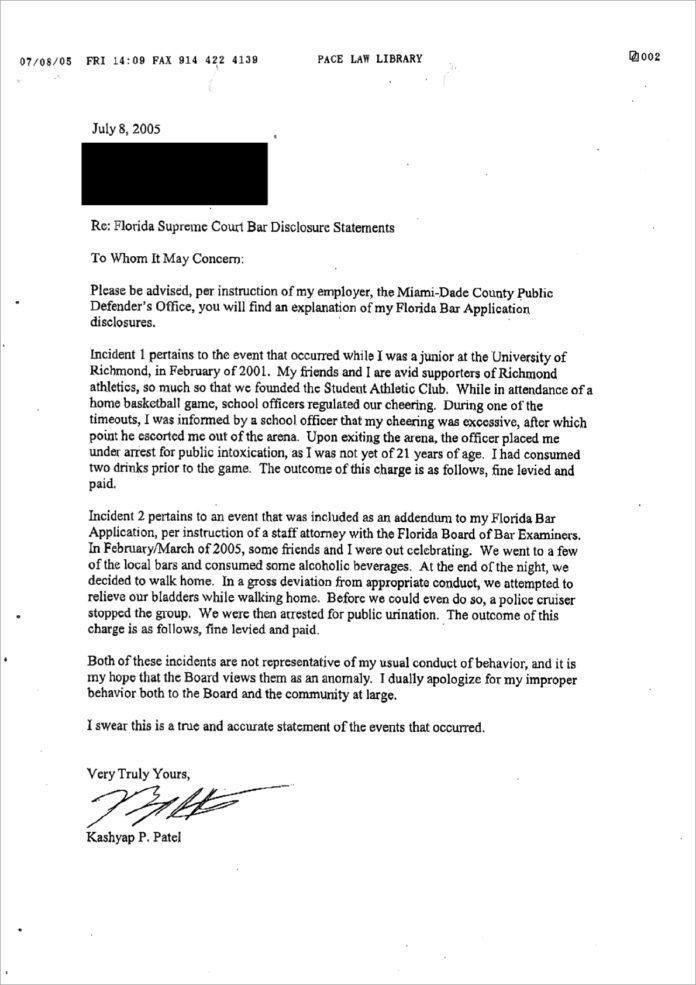
FBI Director Kash Patel was twice arrested in incidents involving alcohol, once for public intoxication and once for public urination after leaving a bar, he admitted in a 2005 letter about disclosures on his Florida Bar application.

The letter obtained by The Intercept was part of Patel’s personnel file at the Miami-Dade Public Defender’s Office, where he once worked. The document, written “per instructions of my employer,” describes incidents of alcohol-related indiscretions not uncommon for those in their teens and twenties.

Two decades later, as Patel pushes back against allegations that drinking is impairing his leadership of the nation’s top law enforcement agency, these arrests show how Patel’s alcohol use has been subjected to scrutiny before in his professional life.

“In a gross deviation from appropriate conduct, we attempted to relieve our bladders while walking home.”

One incident recounted by Patel occurred in 2005, about four months before he wrote the letter. At the time, he was a law student at Pace University in New York celebrating with friends.

“We went to a few of the local bars and consumed some alcoholic drinks,” he wrote.

When they walked home, they made a bad decision.

“In a gross deviation from appropriate conduct, we attempted to relieve our bladders while walking home,” Patel said in the letter. “Before we could even do so, a police cruiser stopped the group. We were then arrested for public urination.”

Patel paid a fine after the incident, he wrote in the letter.

“Kash’s entire background was thoroughly examined and vetted prior to him assuming this role,” said Erica Knight, a spokesperson for Patel. “These attacks are nothing more than an attempt to undermine a process that has already deemed him suitable to serve and a distraction to the record-breaking success of the FBI under Director Patel.”

During an earlier incident in 2001, Patel wrote that he was arrested for public intoxication for drinking underage as a college student at the University of Richmond in Virginia. Patel helped run the Richmond Rowdies, a student fan group, and attended a home basketball game to help lead cheers. In his letter, Patel wrote that he was escorted out of the arena by a school officer due to excessive cheering.

“Upon exiting the arena,” he wrote, “the officer placed me under arrest for public intoxication, as I was not yet of 21 years of age.”

Patel said in his letter that he’d had two drinks and paid a fine following the arrest. According to NBC News, which previously reported his 2001 public intoxication arrest, Patel was found guilty on a misdemeanor charge days after the incident.

Patel’s letter about the Florida Bar disclosures has not previously been reported. The Intercept obtained Patel’s personnel file through a public records request to the Miami-Dade Public Defender’s Office, where Patel was hired on a $40,000 salary after being admitted to the Florida Bar.

“Both of these incidents are not representative of my usual conduct of behavior,” he wrote to conclude the letter, “and it is my hope that the Board views them as an anomaly. I dually apologize for my improper behavior both to the Board and the community at large.”

Patel Drinking Allegations

Twenty years after writing the letter, Patel became the ninth director of the FBI. His tenure has been marked by controversies, including over the firing of agents who worked on investigations of President Donald Trump, the use of his government jet, and lawsuits filed by his girlfriend, Alexis Wilkins, over false claims that she is a former Mossad agent.

More recent concerns about Patel’s drinking followed the release of a viral video in February of the FBI director chugging a beer with the U.S. Olympic hockey team in Italy.

Pressure mounted with a report in The Atlantic alleging, through anonymous sources, that Patel has been intoxicated at the social club Ned’s in Washington and the Poodle Room in Las Vegas, another private club. The Atlantic reported that Patel’s drinking has been “a recurring source of concern across the government.”

Patel denied The Atlantic’s claims and filed a defamation lawsuit. “These claims about erratic behavior and excessive drinking are fabricated,” Patel’s lawyer, Jesse R. Binnall, wrote in the complaint.

“I have never been intoxicated on the job, and that is why we filed a $250 million defamation lawsuit,” Patel said at a press conference on Tuesday. “And any one of you who wants to participate, bring it on. I’ll see you in court.”

Unfounded Health Concerns Are Powering a Solar Backlash

0
unfounded-health-concerns-are-powering-a-solar-backlash
Unfounded Health Concerns Are Powering a Solar Backlash

Reporting Highlights

  • Health Fears: Some critics say large solar farms are a public health threat. While there is little reputable evidence for this, their claims have helped power a backlash.
  • Stalling Solar: Restrictions on solar development are proliferating nationwide, helping to slow the growth of installations even as consumer energy costs are rising.
  • Michigan Battleground: Solar policy is especially fraught in Michigan. Fierce local battles include restrictions based on public health and local governments challenging state authority.

These highlights were written by the reporters and editors who worked on this story.

Kevin Heath had hoped there would be solar panels by now on his family farm in southeastern Michigan, roughly 50 miles outside Detroit.

About six years ago, he agreed to lease part of his land for a solar project. It would help him pay off debt and keep the farm in the family, he said. But the opportunity was thwarted when, in 2023, following pushback from some local residents, his township passed an ordinance that banned large solar projects from land zoned for agriculture.

In the fight over solar development, Heath said he was bombarded by just about every argument from critics — including claims that solar fields are a health hazard. “I’ve heard them say that, but I’ve never heard anybody prove that,” Heath said.

“The health and safety issue,” he added, “that is just a joke.”

Michigan has big prospects in solar farming — measured by the expected growth in the capacity of its farms to add electricity directly to the grid. According to the U.S. Energy Information Administration, most of the nation’s new capacity from this type of solar farm is planned this year for four states, including Michigan. The others, with their hot deserts and big-sky plains, seem more obvious: Texas, Arizona and California.

To some, in Michigan and beyond, this growth feels dangerous. They pressure public officials to stop, stall or otherwise complicate new solar projects with an array of arguments that now go beyond just land use to include public health.

There is little reputable evidence to back their claims. But health concerns have helped power a solar backlash that undercuts efforts to broaden energy sources even as customer costs are rising.

Restrictions on solar development are proliferating nationwide, “often rooted in misinformation or unfounded fears,” including ones that involve “potential environmental and human safety risks,” according to an article published late last year in the Brigham Young University Law Review.

To generate electricity, solar projects harvest energy from the sun. “And that’s really not that different from what a field of corn or alfalfa does,” said Troy Rule, the Arizona State University law professor who authored the article. “In fact, arguably, it’s even more environmentally friendly.”

Still, a state board in Ohio rejected an application for a solar project last month, citing local opposition, even though its staff initially said it met all requirements. Along with other concerns, according to the board, opponents “testified about the potential impacts on the health of residents.”

A bill in Missouri would halt commercial solar projects in the state, including those under construction, through at least 2027, as a state agency develops new regulations. The bill’s emergency clause says this is “deemed necessary for the immediate preservation of the public health, welfare, peace, and safety.”

And, on the eastern edge of Michigan, St. Clair County adopted a novel public health regulation last year that set limits on solar development and battery storage. The move was encouraged by the county’s medical director who, in a memo, warned of the threat of noise, visual pollution and potential sources of contamination. Some local residents have long pressed leaders to act, saying that intrusive noise could worsen post-traumatic stress disorder and other ailments.

Public officials don’t always examine the validity of health claims, according to Rule. And local deliberations rarely compare the impact of solar farms to common agricultural practices, which can lead to runoff from fertilizers and herbicides, for example, or waste lagoons from concentrated animal feeding operations.

People have many reasons for taking issue with large-scale solar development, said Michael Gerrard, an environmental lawyer and founder of Columbia University’s Sabin Center for Climate Change Law. But as for the feared health impact, he said, “there’s no basis for that.”

“People try to come up with a rationale to justify their dislike of things they dislike for other reasons,” Gerrard added.

President Donald Trump’s administration, meanwhile, is adding to the skepticism that renewable energy is worthwhile. Among other moves, it’s phasing out federal tax credits for the solar and wind industries.

It all takes a toll on the effort to build out solar infrastructure. Last year, new solar installations in the U.S. dropped by 14%.

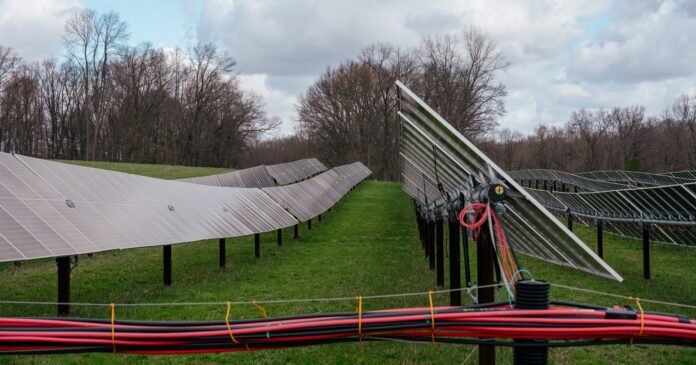
Rows of solar panels are tilted toward the sky on a cloudy day amid a field of grass.
A large expanse of solar panels lies in a field, with tall, bare trees in the background on a dark and cloudy day.
Most of the nation’s new capacity from solar farms that add electricity directly to the grid is planned this year for four states, including Michigan, according to the U.S. Energy Information Administration. The River Fork Solar Park, above, developed by Ranger Power, has operated since 2024. Nick Hagen for ProPublica

Fear vs. Science

Large solar developments can transform hundreds, or even thousands, of acres of rural land, paneling them with crystalline silicon and tempered glass.

It’s a big change, and people have questions.

Locals worry that electromagnetism and even glare can pose a health risk. They wonder if toxic materials could leach into the soil and contaminate groundwater, if not while the solar site is operational, then some decades in the future, when it reaches the end of its life. That certainly has been the case with orphaned oil wells, which also were built with promises of safety.

But researchers point out that the most common types of panels have only small amounts of such materials, if any. They are encased and unlikely to leach into the soil. Rather than sitting in landfills when a site is decommissioned, most of the materials used in solar panels can be recycled (though the process can be costly).

Craig Adair, vice president of development at Open Road Renewables, which has pursued renewable energy projects in several states, has fielded a range of concerns over the years — from how soil could be contaminated to the possibility of electromagnetic fields causing cancer.

“Those questions, in just about every case, have an answer,” Adair said. “There is rigorous academic study, and there are examples of projects that have been operating.”

While the future farmability of the land is often a concern, many researchers — and farmers — say that a solar lease will help preserve it.

With proper planning on the front end, equipment can be removed from a decommissioned solar site and green space restored, said Steve Kalland, executive director of the NC Clean Energy Technology Center, which, along with its partners, provides technical assistance to local governments in the Carolinas.

And a person’s exposure to the electromagnetic field, or EMF, from a solar farm is roughly the same as what they would encounter from ordinary household appliances, according to researchers. EMF levels also decrease rapidly with distance.

Chronic exposure to noise is also a recurring complaint from critics. In challenging a proposed project from Adair’s company in Morrow County, Ohio, one woman said in a brief to the state siting board that she was troubled about how noise from the facility might affect people with neurological noise sensitivities, including her daughter.

A piece of equipment called an inverter is usually the source of noise on a solar site. It converts the current into the form that’s used on the grid.

But noise, as well as glare, are typically buffered with vegetative landscaping and setbacks, or the distance between the property line and the nearest structure. Inverters can also be placed far from the ears of neighbors.

Noise modeling for the Morrow County project showed that its inverter “will basically be inaudible to the public,” Adair said, and if it ever generated noise above a certain limit, the permit would require the company to bring it back into compliance.

The problem, Adair said, is that evidence-based answers and solutions can get lost in the fervor. They can be drowned out by “opposition activists wanting to try to scare local politicians into opposing a project, even if the concerns that they’re raising are not legitimate concerns,” he said.

Last month, the Ohio Power Siting Board denied a permit to Adair’s Morrow County project. Its order acknowledged that the proposal offered positive benefits, but, it said, “these benefits are outweighed by the consistent and substantial opposition.”

It didn’t specifically cite health concerns as the reason for the denial, but rather, “the varied and numerous concerns raised by both the local government entities and public in the project area.”

But, Adair said in an email, those local governments “cited (unfounded) public health concerns as a reason for their opposition to the project.”

Open Road Renewables plans to apply for a rehearing from the board, Adair said. The company has eight permitted solar projects in Ohio, but because of a siting process that he said is subject to “manipulation and misinformation,” Adair said it won’t initiate any more.

A rusty mailbox and a newspaper delivery box stand near a rural road. In the background is a large, recently tilled field, a large barn and two silos.
Ranger Power has proposed building a solar development project at this site in St. Clair County. Nick Hagen for ProPublica

Intense Battles in Michigan

In Michigan’s St. Clair County, it isn’t just a number of residents who are worried about large solar facilities. The Health Department’s medical director echoed their concerns.

In two memos to other county officials, Dr. Remington Nevin said that large solar sites are a public health risk for the area’s predominantly rural residents. The state’s solar standards, he wrote, weren’t enough to protect them from “environmental health hazards, the spread of sources of contamination, nuisance potentially injurious to the public health, health problems, and other conditions or practices which could reasonably be expected to cause disease.”

Any detectable tonal noise, he added, must be considered an unreasonable threat to public health. He recommended new regulations.

The county administrator at the time, Karry Hepting, noted that Nevin’s initial memo “does not address the question or provide support for what are the potential health/environmental risks,” according to internal emails provided to ProPublica. “It appears we will need to hire an outside expert to get the level of detail and supporting data necessary to consider potential next steps,” she added. Hepting said that she’d begun researching prospects.

But County Commissioner Steven Simasko — now the county board’s chair — wrote in an internal email that he accepted Nevin’s medical opinion “as a good standard for the protection of the public health of our citizens” and disagreed with the need for outside input.

Simasko told ProPublica in an email that he believed it wasn’t the role of the administrator to get involved in a public health matter, and that he objected “to essentially paying for a second public health medical opinion” more to Hepting’s liking. 

Hepting, who has since retired from her post at the county, disputed Simasko’s depiction of her motivations in a message to ProPublica. “Nothing could be farther from the truth,” she wrote. “It had nothing to do with shopping for a different opinion. Mr. Nevin’s initial memo did not address the initial question posed by the Board. It did not state what the health risks were and what negative health impacts exist. It basically said it’s a risk because he said so.”

To legally justify the adoption of health regulations, Nevin said in his second memo, it wasn’t necessary for his department “to prove, with a precise scientific or medical rationale, that eligible facilities pose an unreasonable threat to the public’s health.” Instead, expert opinion, public comment and the consent of the local government were reason enough, he wrote.

In the end, county officials were persuaded to act. The commissioners approved the Health Department’s new policy for solar energy and battery facilities, including a nonrefundable $25,000 fee to cover the cost of reviewing a proposed project. It also said that policy violations were punishable by up to six months in prison.

An electric utility promptly sued, and a solar company joined the case. The Health Department, they argued, has no authority to issue what are, in effect, zoning regulations. What’s more, they said in legal filings, the county can’t override the solar standards established by the state.

A man with dark hair and a short, graying beard, wearing a dark blue suit and a white shirt, sits in a chair during a meeting while holding a red, disposable coffee cup. Other meeting attendees sit in chairs behind him.
Dr. Remington Nevin, the medical director of the St. Clair County Health Department, wrote memos that said that large solar sites could present a public health risk, encouraging local officials to adopt a new policy for these facilities. Nick Hagen for ProPublica

In its legal filings, the county said the health regulations were adopted properly and supported by “substantial, competent, and material evidence.” Facilities that don’t meet its standards “pose a threat to public health,” the county argued.

In response to ProPublica’s detailed queries, a public information officer said that the Health Department would not comment due to litigation.

Nevin said in a podcast interview last year that he wasn’t opposed to solar projects. “The purpose,” he said, “is to identify risks, unreasonable risks, to the public’s health posed by the construction or operation of the facilities, and then take reasonable, measured steps to attempt to mitigate those risks, ideally in a fashion that would continue to allow the facility to be constructed and to operate.”

Solar capacity in Michigan continues to grow, despite local pushback, but so far, only 2.55% of the state’s electricity comes from solar. In Ohio, it’s nearly 6%, according to the Solar Energy Industries Association, a trade group. In Texas, it’s nearly 11%. Michigan is requiring electricity providers to reach an 80% clean energy portfolio by 2035, and 100% by 2040.

Michigan has more local restrictions on renewable energy than any other state, according to the Sabin Center. “Practically nowhere in the country has seen more conflict” about where to allow large solar farms that add electricity directly to the grid than rural Michigan, according to a 2024 article in the Case Western Reserve Law Review authored by a Sabin Center senior fellow.

That includes the conflict in Milan Township, where Heath grew up on an 1,100-acre farm. “I always wanted to farm,” Heath said. He saw leasing part of his land to a solar company as a way to stay afloat and keep the land in the family.

In 2020, Milan Township passed an ordinance that would allow the project to go forward, with Heath’s brother, the township supervisor, abstaining.

But opposition mounted. Critics built a website that argued, among other things, that the project would unleash dangerous electromagnetic radiation. Heath and his siblings were rebuked by their neighbors, Heath said, to the point that his brother, Phil, told the township attorney he was thinking about resigning as supervisor. That same night, he died of a heart attack at age 67.

A few months later, with a new supervisor in place, the township board banned large solar development from land that’s zoned for agriculture. The terms were restrictive enough to effectively ban such a project not only from land owned by Heath and his sister, but from all but the small portion of the township that’s zoned for industry.

Stephanie Kozar, Milan Township’s clerk, said in an email to ProPublica that most residents opposed solar projects on agricultural land, and that the initial ordinance passed during the coronavirus pandemic, before officials had adequately informed residents about potential changes. The updated policy, she said, would “protect the township and allow for responsible development of clean energy in the area.”

To overcome severe local restrictions, the state set standards in 2023 for noise, height, fencing, setbacks and other elements of a large solar project. It also created a pathway where developers, in certain cases, can get a permit from the Michigan Public Service Commission, the state’s regulating authority, rather than from local governments. 

In an order, the commission laid out details for how the process would work. But nearly 80 local and county governments, including Milan Township, challenged it in court, arguing the commission was overstepping its authority. 

In support of the state, Heath and his sister are represented in a friend-of-the-court brief filed by a legal team affiliated with the Sabin Center, along with local attorneys.

Also part of that brief is Clara Ostrander, who had hoped a solar project would help protect two farmsteads in Milan Township that have been in her family for over 150 years. “We need a responsible neutral party like the Michigan Public Service Commission to review these projects based on facts, not fear or falsehoods,” she testified to state officials ahead of the bill’s passage.

Even with the state process, rising energy demand and eye-popping electricity costs, no new large solar installation has yet been built in Milan Township.

And in February, as snow melted around the “No Industrial Solar” signs that stud the long country roads, a circuit court judge ruled that St. Clair County’s health regulation is “invalid, null, and void.”

But county officials soon opted to appeal, unanimously. “This is very important for the health of St. Clair County and the residents,” said one commissioner before casting his vote.

The Russian resistance no one is talking about

0

You could be forgiven for thinking everyone in Russia either supports the war in Ukraine or is too scared to do anything about it. A dominant narrative is that Russian civil society is passive, complicit or has been quashed to the point of being neutralised.

Some elements of this may be true. Following the full-scale invasion of Ukraine in 2022, Russian citizens criticising the war or expressing an anti-war position have faced severe prison sentences. These fall under expanded war censorship laws that target the spread of alleged “false information” or the “discrediting of the army”. But this is not the full picture.

For the past two years, I have been researching Russian anti-war resistance. This has involved conducting interviews with activists and other people who left Russia following the outbreak of war and are now scattered across the world. Instead of disappearing into exile, many of these people are mobilising to voice their opposition to the war and resist the regime in Moscow.

Some exiled Russians are sending money and letters of solidarity to political prisoners in Russia and their families. Others have coordinated legal aid to support anti-war defendants inside Russia and are lobbying western governments to distinguish between the Kremlin and Russian civil society.

At the same time, elite exiled Russian opposition figures including Garry Kasparov, Mikhail Khodorkovsky and Vladimir Kara-Murza, have worked to form the Platform for Dialogue with Russian Democratic Forces. This is a consultative body in the parliamentary arm of the Council of Europe that, established in 2026, aims to give Russia’s opposition an international voice.

Vladimir Kara-Murza speaks at a press conference in London.

Russian opposition political activist, Vladimir Kara-Murza, speaks at a press conference in London in 2024. Tolga Akmen / EPA

During my research, I have also come across exiled Russians who have been running independent Russian-language media through Telegram channels and YouTube. Though in recent months, Russia’s telecommunications regulator, Roskomnadzor, has severely restricted access to these platforms. It has done so in an attempt to censor outside information and force Russians to adopt the state-controlled Max app.

I have encountered instances of anti-war Russians abroad helping people inside the country escape mobilisation by offering shelter and safe routes out of Russia. One of my interviewees, a 22-year-old Russian now living abroad, had even established transnational networks across Europe, the Caucasus and Russia to help criminally prosecuted anti-war Russians flee the country before standing trial.

Indigenous diaspora networks have also informed local communities in regions of Russia where there are large ethnic minority populations such as Tuva, Tatarstan, Buriyatia and Chelyabinsk about the realities of the war. These include the use of underage soldiers and heavy recruitment from ethnic minority regions.

But they also include the extent of Russian and Ukrainian casualties, which Russia’s government has provided almost no official data on. The Center for Strategic and International Studies, an American thinktank, said in early 2026 that Russian forces had suffered nearly 1.2 million casualties since the start of the war.

These Indigenous networks have posted videos on platforms such as Instagram, YouTube and Facebook, as well as messages on Telegram and Signal, to counter official state narratives about the war. Moscow has justified its war in Ukraine by saying it is protecting Russian-speaking citizens there, standing up to western expansionism and returning Russia to its former great power glory.

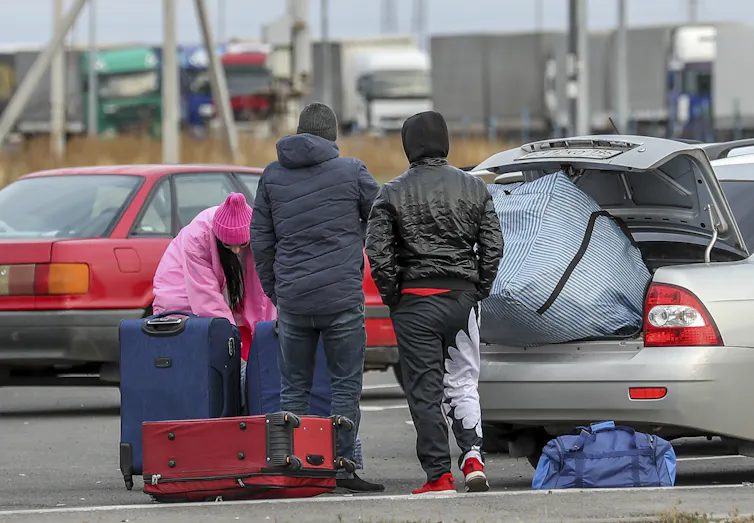
Three Russians handle their luggage at the Russia-Kazakhstan border.

Russians handle their luggage at the Russia-Kazakhstan border in the Chelyabinsk region as they prepare to leave the country in 2022. Pavel Tabarchuk / EPA

Meanwhile, anti-LGBTQ+ laws introduced in December 2022 have prohibited any perceived propaganda about non-traditional relationships in Russia. This was followed by a Russian supreme court decision in 2023 to designate the “international LGBT movement” as an extremist organisation. This ruling has made any association or support for LGBTQ+ communities a criminal offence.

In response to this clampdown, exiled Russians have stood in solidarity with LGBTQ+ compatriots inside the country who have faced discrimination. My research has uncovered cases of people providing shelter and safe routes out of the country, creating digital safe spaces for Russian LGBTQ+ communities and lobbying for the protection of these communities in European countries.

Russian resistance

Russians do not fall into a single, neat, complicit mass. Since the start of the war, a diverse resistance movement has worked to counter the Kremlin’s authoritarian practices and propaganda. It reflects a broader variety of voices, values and stances than is currently possible in Russia, offering a crucial insight into the future political aspirations and hopes of ordinary Russians.

This movement will not overthrow the Russian government. But the ability to deliver regime change should not be the only measure of resistance. The movement is challenging the narrative that all Russians support the war, while also helping keep democratic political ideas alive for Russians inside the country for when change becomes possible.

As one of my respondents told me: “We have to stay in touch with supporters in Russia and plan for transition. There will be no time to strategise, so the plan has to happen now. We try to do as much as possible to be prepared.”

The resistance of exiled Russian dissidents matters not just for understanding Russia today. It also tells us how opposition survives in authoritarian regimes more broadly, highlighting the role that diasporas can play in sustaining democratic civil society transnationally.

Dissent does not disappear when it is crushed at home. It relocates, adapts and reconfigures across borders.

0FansLike
0FollowersFollow
0FollowersFollow
0SubscribersSubscribe
- Advertisement -
Google search engine

Recent Posts