13 C
London
Saturday, May 2, 2026
Home Blog

Old and new Gulf faultlines exposed by Iran war

0
old-and-new-gulf-faultlines-exposed-by-iran-war
Old and new Gulf faultlines exposed by Iran war

The United Arab Emirates (UAE) announced on April 28 that it will leave the global oil producers’ cartel OPEC. Its decision is the latest sign that the war in the Middle East has not only deepened animosities between Iran and its Gulf neighbors, but among the Gulf states too.

Founded in 1960, OPEC is a rare success story among multilateral organizations in the region. Its policies paved the way for Gulf oil producers to have enough funds to buy back or renationalize their oil resources and finance the spectacular development of their states.

The organization has survived all major revolutions and wars in the region thus far, though Qatar left in 2019 when it was blockaded by its Gulf neighbors.

Saudi Arabia, the largest oil producer in OPEC, holds substantial leverage within the group. This has led to tension with the UAE, which has for some time pushed for higher production quotas for itself, given its spare capacity. These efforts have been to no avail.

However, its decision to leave OPEC is about more than merely frustration with the organization.

Though it was very close to Saudi Arabia in the mid-2010s, the UAE has in recent years drifted apart from its larger neighbor. This has been driven by a number of regional issues, including the countries’ diverging strategies in wars in Yemen and Sudan, and their respective relations with Israel.

The UAE normalized relations with Israel in 2020, while the Saudis say they will only normalize once a Palestinian state is established.

The two countries have also recently become serious economic competitors. And although both states have been hit hard by Iran in the current war, the conflict seems to have accelerated their rivalry.

A map of the Gulf region.
Iran responded to US-Israeli attacks in February by launching strikes on countries around the Gulf and blockading the Strait of Hormuz. Peter Hermes Furian / Shutterstock via The Conversation

Saudi Arabia is the largest and richest country in the Gulf. But many of its transformative economic projects require political stability and a high oil price to succeed.

The war has exposed the limits of its policy of tentative outreach to Iran, and of its partnership with a US that is so closely allied with Israel. So, the Saudis have strengthened defense ties with nuclear-armed Pakistan.

These deepening ties have been met with dismay in the UAE, which has close ties to India. The Emiratis have been critical of Pakistan during the war, calling on Islamabad to condemn the Iranians more forcefully – something that is not possible due to Pakistan’s role as a mediator in peace negotiations.

At least partly in frustration at its response to the war, the UAE recently demanded that Pakistan repay a US$3.5 billion loan. Saudi Arabia immediately came to Pakistan’s rescue by providing financial support.

The UAE’s announcement to leave OPEC coincided with a meeting of the Gulf Cooperation Council in the Saudi Arabian capital Riyadh, where members sought to find common ground on the Iran war. This was a major affront to the Saudis.

Other Gulf frictions

The war has sparked other frictions in the Gulf, including reviving old tensions between the UAE and Iran over three islands – Abu Musa, Greater Tunb and Lesser Tunb – that Iran occupied at the time of Emirati independence from Britain in 1971. These islands strengthen Iran’s strategic position along Gulf shipping lanes.

The UAE has long claimed sovereignty over the islands, while Iran claims they were always part of its territory. Iran’s control of the three islands is thought to be part of a secret deal between Britain and the Shah of Iran around 1970, whereby the shah would renounce a claim Iran maintained to Bahrain in return for the islands.

This and other historic border disputes in the region, including between the UAE, Saudi Arabia and Oman, remain some of the most sensitive topics in modern Gulf history. For a forthcoming book on the rise of the Gulf states, I have tried to access relevant UK Foreign Office documents, but have had numerous freedom-of-information requests denied on closed material dating back to the 1960s and earlier.

Damaged buildings on Kuwait's Failaka Island.
Failaka Island off Kuwait’s coast remains partially abandoned due to the heavy damage that was inflicted during the 1990 Iraqi invasion. Sebastian Castelier / Shutterstock via The Conversation

The northern Gulf state of Kuwait has also been hit hard during the conflict. Here, many attacks seem to have come from Shia militias based in Iraq. These attacks have revived traumatic memories of Iran-linked political violence in the 1980s, and Iraq’s invasion in 1990.

States that cannot bypass the closed Strait of Hormuz – such as Bahrain, Kuwait and Qatar – have experienced the most economic damage from the war. To balance its budget, Bahrain is already dependent on aid by wealthier Gulf states. The UAE, Saudi Arabia and Oman, on the other hand, have the geographical means to bypass Hormuz.

Oman, which controls one side of the strait, may well benefit in the long run. This could either be through a new arrangement with Iran to charge vessels a toll, or because its ports on the Arabian Sea will increase in significance – perhaps even resurrecting some of Oman’s former glory, when it was a major regional power. This is not something neighboring UAE and Saudi Arabia would like to see.

The reckless US-Israeli attack on Iran has thus opened up old faultlines, and could create new ones between states around the Gulf. It is also undermining the few avenues of regional cooperation that remain. This makes a fragmented and dangerous region even more so.

Toby Matthiesen is senior lecturer in Global Religious Studies, University of Bristol

This article is republished from The Conversation under a Creative Commons license. Read the original article.
The Alliance Breaker: How Trump Is Torching the West’s Friendships

0
the-alliance-breaker:-how-trump-is-torching-the-west’s-friendships
The Alliance Breaker: How Trump Is Torching the West’s Friendships

Something remarkable is happening in the corridors of Western power. America’s closest allies are no longer whispering their frustrations behind closed doors. They are shouting them from parliamentary podiums and press conferences — and Donald Trump is shouting back. The transatlantic alliance, built painstakingly over eight decades, is cracking in real time.

The proximate cause is the U.S.-Israeli war on Iran, launched on February 28, 2026, without consulting NATO partners, the United Nations, or even Washington’s most loyal friends. But the rupture runs deeper than any single conflict. It reflects a White House that appears either strategically indifferent to its allies or actively contemptuous of them.

“The Americans Clearly Have No Strategy”

No moment crystallized the breaking point more sharply than German Chancellor Friedrich Merz’s candid remarks to students in Marsberg, northwestern Germany. “The Americans clearly have no strategic plan,” Merz said, comparing the conflict to past U.S. misadventures in Afghanistan and Iraq and describing Washington’s approach as “ill-considered.”

He went further, suggesting that the U.S. was being “humiliated” by Tehran’s negotiating tactics — a remarkable public indictment from a chancellor who had, until recently, been one of Washington’s more hawkish European allies.

Trump’s response was volcanic. He wrote on Truth Social that Merz “doesn’t know what he’s talking about” and threatened to reduce the 36,436 U.S. troops stationed in Germany. He then told the chancellor to mind his own backyard: “The Chancellor of Germany should spend more time on ending the war with Russia/Ukraine, where he has been totally ineffective, and fixing his broken Country… and less time on interfering with those that are getting rid of the Iran Nuclear threat.”

The verbal exchange has exceeded all diplomatic norms and shaken the US-European axis to its foundations.

READ: Trump says he is ‘not happy’ with Italy, Spain amid split on Iran

Starmer: “Fed Up” and Saying So

Britain’s Keir Starmer had invested considerable political capital in cultivating a working relationship with Trump. That investment is now a write-down. When asked about Trump’s threats to destroy Iran, Starmer told ITV: “They are not words I would use — ever use — because I come at this with our British values and principles.”

The sharpest language came when Starmer placed Trump alongside Vladimir Putin as co-authors of British economic pain. “I’m fed up with the fact that families across the country see their energy bills go up and down, and businesses’ bills fluctuate, because of the actions of Putin or Trump across the world,” he told ITV News’ Talking Politics. On UK military involvement, Starmer was resolute: “I’m not going to change my mind. I’m not going to yield. It is not in our national interest to join this war, and we will not do so.”

Trump repaid this principled stand by telling The Sun that Starmer “has not been helpful” and that “the relationship is obviously not what it was.” The IMF underscored the material stakes, downgrading Britain’s 2026 growth forecast to 0.8% — a direct consequence of the energy shock unleashed by Trump’s war on British households.

Sánchez and Carney: Europe and Canada Draw the Line

Spain’s Pedro Sánchez emerged as the EU’s most uncompromising critic. After denying U.S. forces use of the bases at Rota and Morón, Trump threatened to sever all trade with Madrid. Sánchez did not flinch. When the ceasefire came, his verdict was withering: “Ceasefires are always good news. But this momentary relief cannot make us forget the chaos, the destruction, and the lives lost. The Government of Spain will not applaud those who set the world on fire just because they show up with a bucket.”

Canadian Prime Minister Mark Carney delivered the broader structural indictment. “Geostrategically, hegemons are increasingly acting without constraint or respect for international norms or laws, while others bear the consequences,” he said at Sydney’s Lowy Institute. He called the war “a failure of the international order,” noting pointedly that the United States and Israel had acted “without engaging the United Nations or consulting with allies, including Canada.”

READ: German vice chancellor criticizes Trump’s Iran strategy

American Voices: “We Are Becoming a Laughingstock”

The alarm is not only coming from abroad. Senate Democrats have waged a relentless campaign to reassert congressional authority over a war they regard as illegal, unauthorized, and diplomatically catastrophic.

Senator Tim Kaine of Virginia was precise in his diagnosis: “There was no clear rationale, no clear plan, no effort to engage allies, no effort to include Congress. When you make diplomacy impossible, you make war inevitable.”

Senator Chris Murphy of Connecticut was more blunt: “We’ve never seen a foreign conflict mismanaged in public like this before. We are becoming a laughingstock worldwide. While at the same time, we are hurting Americans who are now paying billions more in gas prices.”

Senator Tammy Duckworth tied the present catastrophe to America’s postwar pattern: “Our duty is to ensure that our nation never again gets into an ego-driven forever war.” All six War Powers Resolutions brought by Senate Democrats have failed, blocked by Republican loyalty — even as the war cost 13 American lives in its first month and drove U.S. gas prices to $4.30 a gallon.

The Bill Coming Due

Whether Trump’s alienation of allies is strategic deconstruction or simply the improvisation of a leader who mistakes belligerence for strength, the effect is the same.

He has threatened to withdraw the U.S. from NATO. He has punished Spain in trade. He has threatened to withdraw troops from Germany. He has strained the “special relationship” with Britain to near-breaking point.

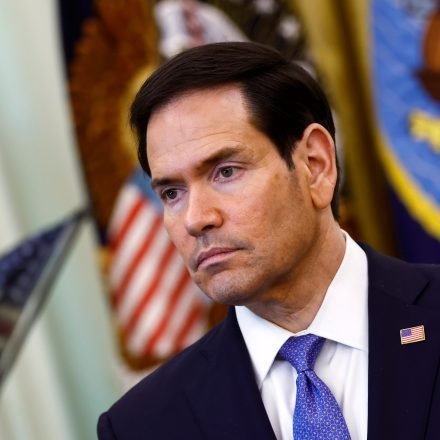
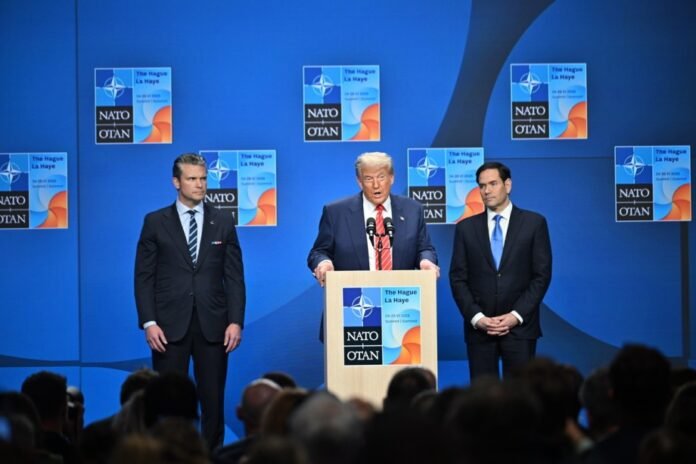
And Secretary of State Marco Rubio’s warning that Trump would “reexamine” U.S. commitments to allies who did not back the war landed in European capitals like a declaration of conditional friendship.

America’s friends are being driven away. Its adversaries are watching. And the West, for the first time since 1945, is genuinely uncertain whether it can count on Washington.

OPINION: Trump, the creator of national heroes and global icons

The views expressed in this article belong to the author and do not necessarily reflect the editorial policy of Middle East Monitor.

Amazon stuck with months of repairs after drone strikes on data centers

0
amazon-stuck-with-months-of-repairs-after-drone-strikes-on-data-centers
Amazon stuck with months of repairs after drone strikes on data centers

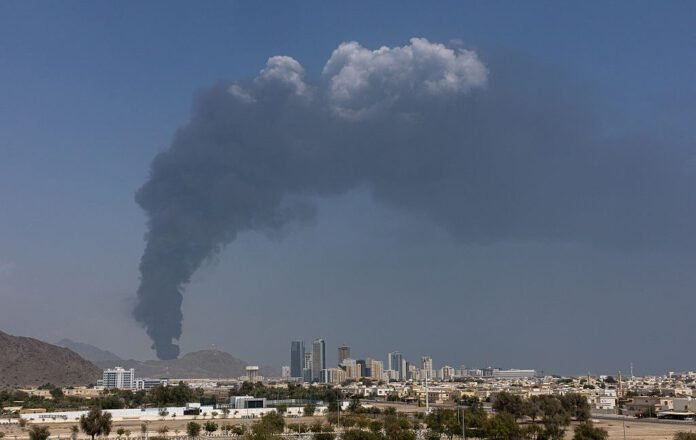
Amazon’s cloud customers will need to wait several more months before the US tech company can repair war-damaged data centers and restore normal operations in the Middle East. The announcement comes two months after Iranian drone strikes targeted three Amazon data centers in the United Arab Emirates and Bahrain—meaning that full recovery from the cloud disruption could take nearly half a year in all.

The Amazon Web Services (AWS) dashboard posted an April 30 update describing how its UAE and Bahrain cloud regions “suffered damage as a result of the conflict in the Middle East” and are unable to support customer applications. The update also said that “relevant billing operations are currently suspended while we restore normal operations” in a process that “is expected to take several months.”

That wording suggests Amazon will continue to avoid billing AWS customers in the affected regions—ME-CENTRAL-1 and ME-SOUTH-1—after it initially waived all usage-related charges for March 2026 at an estimated cost of $150 million.

AWS also “strongly” recommended that customers migrate resources to other cloud regions and rely on remote backups to restore any “inaccessible resources.” Some customers, such as the Dubai-based super app Careem—which offers ride-hailing, household services, and food and grocery delivery—were able to get back online quickly after doing an overnight migration to other data center servers.

The fact that AWS expects the full restoration of cloud services to potentially take half a year speaks to the damage inflicted by the Iranian drone strikes. Business Insider previously obtained an internal document that described damage to one data center knocking 14 EC2 cloud server racks offline, in addition to impacting five other server racks. EC2 represents the core AWS service for companies needing virtual servers and scalable computing capacity.

The document also detailed flooding and water damage from the activation of fire suppression systems at one of the AWS data centers and mechanical failures in the facility’s cooling systems.

The latest AWS status update comes just after another data center developer, the London-based Pure Data Centre Group, said it will pause Middle East data center investments until the ongoing Middle East conflict subsides.

The war began on February 28, with US and Israeli attacks on Iran triggering retaliatory Iranian strikes across the region. It has since settled into an uneasy ceasefire period with dueling naval blockades of the Strait of Hormuz shipping chokepoint as a growing economic and energy crisis spreads across the world.

FBI Redirected a Quarter of Staff to Target Immigrants Under Trump’s Deportation Push

0
fbi-redirected-a-quarter-of-staff-to-target-immigrants-under-trump’s-deportation-push
FBI Redirected a Quarter of Staff to Target Immigrants Under Trump’s Deportation Push


The Federal Bureau of Investigation multiplied the number of employees assigned to immigration by a factor of 23 in the first nine months of the second Trump administration, The Intercept has found.

There were 279 FBI personnel working on “immigration-related matters” before Trump took office in January 2025, according to bureau records The Intercept obtained through a Freedom of Information Act request. By September, that number had ballooned to more than 6,500.

In total, 9,161 people at the FBI worked on immigration between Trump’s inauguration and September 7 of last year, out of a total of 38,000 FBI employees. 

“That is a huge, huge number of people,” said Aaron Reichlin-Melnick, a senior fellow at the American Immigration Council who has testified before Congress on the cost of mass deportations. “This is just a somewhat shocking scale that we’re looking at.”

The flood of FBI personnel into immigration work came in the early days of the tenure of Director Kash Patel, who has shown a willingness to follow Trump’s orders without question or exception. According to David J. Bier, director of immigration studies at the Cato Institute, the redirection may have hampered the FBI’s ability to perform criminal investigative work.

“We’re talking about the FBI diverting people away from criminal investigations and ongoing criminal activity and into civil immigration enforcement.”

That’s a striking diversion of resources away from public safety,” Bier said. “We’re talking about the FBI diverting people away from criminal investigations and ongoing criminal activity and into civil immigration enforcement. This is showing the extent to which the resources of the FBI were put at the disposal of Immigration and Customs Enforcement contrary to the intent of Congress, and the abuse of the funds that Congress grants the FBI to accomplish its mission.”

The documents The Intercept received did not make clear if the employees assigned to immigration were part of the FBI’s total workforce or its smaller subset of 13,700 special agents. In September, the Cato Institute published a disclosure from ICE reporting that 2,840 out of 13,700 FBI special agents — 1 in 5 — were being redirected to work on ICE enforcement and removal operations.

“While the FBI does not comment on specific personnel numbers or decisions, FBI agents and staff are dedicated professionals working around the clock to defend the homeland and crush violent crime,” an FBI spokesperson said in a statement to The Intercept. “The FBI continuously assesses and realigns our resources to ensure the safety of the American people, and we surge resources based on needs.”

ICE did not respond to a request for comment

Trump has diverted thousands of agents at a number of federal agencies — including the FBI, the Drug Enforcement Administration, the IRS, and the Bureau of Alcohol, Tobacco, Firearms and Explosives — to aid in his administration’s deportation machine

The shift started as soon as he returned to office. By January 26, 2025, just six days after Trump’s second inauguration, the FBI had 1,390 employees working on immigration. In the first months of Trump’s second term, he ramped up arrests of immigrants around the country and authorized federal law enforcement at agencies that don’t work on immigration to help his administration carry out its deportation policies.

The FBI reassignments exploded the following month. As the Trump administration issued a directive to allow law enforcement to enter the homes of people it claimed were suspected gang members without a warrant, the number of FBI personnel working on immigration rose to 2,941. 

September’s 6,500-employee number wasn’t even the peak. The number continued increasing throughout the spring and reached over 5,700 in May, when the administration set a new quota to arrest 3,000 people a day

Another shocking detail, Bier said, was that the number of FBI agents being diverted to immigration work remained high even after Congress passed July’s One Big, Beautiful Bill Act, which directed an additional $170 billion in funding for immigration and border spending. 

“They’re going ahead with using criminal law enforcement for mass deportation purposes.”

The law “infused tens of billions of dollars” for immigration enforcement,” Bier said, ” — “and yet there’s no let-up.”

“This is not about ‘ICE doesn’t have the money,’” Bier said. “ICE has the money, and they’re going ahead with using criminal law enforcement for mass deportation purposes.”

It’s not clear what the FBI’s “immigration-related” work entails, but the rapid expansion suggests FBI staff are working on issues unrelated to the FBI’s mandate, Reichlin-Melnick added.

“If you look at how quickly the scale of this ramped up and compare it to what we know was happening at the time, it’s very clear that a lot of this — probably the significant majority — was immigration enforcement,” Reichlin-Melnick said.

The increase coincides with an increase in FBI presence at immigration raids. On Wednesday, FBI agents were among the federal law enforcement personnel carrying out raids in Minnesota related to the right-wing allegations of fraud against the Somali immigrant community

The number of FBI personnel working on immigration also raises national security concerns, Reichlin-Melnick added. The FBI had to reassign agents to work on counterterrorism, after previously diverting them to work on immigration, following the U.S. bombing of Iran last summer. 

“The national security implications of this are likely significant. In September 2025, 6,500 FBI personnel were working at least an hour of their day on immigration-related matters,” Reichlin-Melnick said. “There is no situation in which the administration has made the security of the nation better by reassigning these agents.” 

Bier agreed the diversion was potentially dangerous, pointing to the risks brought on by the current U.S. war on Iran.

“Anytime you’re involved in a war — and we certainly are — you should be careful about retaliation and monitoring those threats,” Bier said. “It makes little sense to divert people away from that during this time, especially.”

Update: May 1, 2026, 12:32 p.m. ET
This story has been updated with a comment from the FBI sent after publication.

“A Huge Setback”: New EPA Directive Could Weaken Hundreds of Chemical Regulations

0
“a-huge-setback”:-new-epa-directive-could-weaken-hundreds-of-chemical-regulations
“A Huge Setback”: New EPA Directive Could Weaken Hundreds of Chemical Regulations

For decades, a small program in the Environmental Protection Agency conducted the painstaking scientific work of assessing the toxicity of chemicals. 

The calculations done by scientists at IRIS, as it was commonly known, underpin vast numbers of chemical regulations, permits and other environmental rules in the U.S. and abroad.

Now the Trump administration is suggesting that their library of more than 500 chemical assessments can’t be trusted, opening the door to weakening hundreds of efforts to protect people from harmful chemicals at the state and federal level. The second-guessing could extend even to long-settled standards, environmental scientists said, such as how much arsenic is allowed in drinking water and how much lead is acceptable in paint and soil.

In an internal memo obtained by ProPublica, David Fotouhi, the deputy administrator of the agency, sharply criticized IRIS this week and directed EPA offices that have used any of the chemical assessments the program has produced to review them. He also advised “external entities” that have used the IRIS assessments to consider undertaking similar reviews and cautioned against using them in future regulations.

The six-page memo said the EPA would be adding “disclaimer language” to the website of the program — the Integrated Risk information System — stating that its toxicity findings are not necessarily meant to be used in regulation.

“This creates the opportunity for companies that pollute to push back on rules and regulations they don’t like,” said Robert Sussman, an attorney who has worked for chemical companies and environmental groups as well as the EPA. “Anybody who wants to ignore a regulation, permit or enforcement action can now just point to this memo and say the IRIS number it was based on wasn’t valid. It’s a huge setback for the process of protecting people from chemicals.” 

Fotouhi’s memo echoes industry criticism that the program’s scientists are far too conservative in gauging the toxicity of chemicals. Before President Donald Trump appointed him as the second highest official at the EPA, Fotouhi worked as a lawyer representing companies accused of causing toxic pollution

In an emailed statement, the EPA press office wrote that Fotouhi has complied with all applicable government ethics obligations and said his directive would not put people at risk or allow anyone to ignore environmental regulations. Any revisions to permits or regulatory standards must go through a process that includes public participation, the office noted.

“Science is at the heart of the Agency’s work, and this memo reaffirms that point clearly and unequivocally,” the press office wrote. 

The EPA created IRIS in 1985 as the nation’s clearinghouse for information on the toxicity of chemicals. Its assessments quantify the highest safe level of exposure to a chemical before it triggers health effects, including, in many cases, cancer. The agency previously prided itself on the program’s impartiality and, in an effort to protect its science from the influence of industry, purposefully kept the program separate from the agency offices that craft regulation

The memo now tasks those offices with conducting toxicity assessments and brings an end to the program that has powered the EPA’s efforts to protect people from harmful chemicals. 

IRIS assessments earned a reputation for being extremely detailed and undergoing numerous rounds of review by many scientists. The EPA offices routinely relied on them to set the amount of a particular chemical that industrial facilities are allowed to emit. States use IRIS assessments to decide which chemicals deserve their immediate attention and to calculate limits in rules and regulations. And IRIS reports guide environmental regulation in countries that don’t have the resources to fund their own scientists to review chemicals.

The memo is the latest attack on the program. The Heritage Foundation’s Project 2025 called for the elimination of IRIS on the grounds that it “often sets ‘safe levels’ based on questionable science” and that its reviews result in “billions in economic costs.” And last year, congressional Republicans introduced industry-backed legislation that would prevent the EPA from using IRIS assessments in environmental rules, regulations, enforcement actions and permits. (The bills were not put to a vote.) 

IRIS has at times been criticized by independent scientific bodies. More than a decade ago, for example, the National Academies of Sciences, Engineering, and Medicine took issue with the organization, length and clarity of IRIS reviews; a more recent report from the same group found that IRIS had made “significant progress” in addressing the problems.

Still, IRIS’ work stood out in a world where much of the science on toxic chemicals is funded by corporations with a vested stake in them. Studies have shown that industry-funded science tends to be biased in favor of the sponsor’s products. 

Over the past year, the EPA has essentially shut down IRIS by reassigning most of the dozens of the scientists who worked in the program to other parts of the agency. And the administration has refused to publish a report on a “forever chemical” known as PFNA, which was completed by IRIS in April 2025. 

But, until now, the EPA had not challenged the science in IRIS assessments. The memo changes that. Although the agency will continue to post the documents on its website, it calls their validity into question, arguing that the toxicity levels calculated in IRIS reports are overly cautious and fail to include the perspective of all “stakeholders.” 

This approach produces values that are more protective than they need to be, according to Fotouhi. “When many conservative assumptions are stacked on top of each other, the cumulative effect can produce an estimated ‘safe’ exposure level that is orders of magnitude below naturally occurring levels in the environment,” he wrote.

Fotouhi pointed specifically to ethylene oxide, a chemical used to sterilize medical equipment — and one used by Medline, a company he used to represent as an attorney at the firm Gibson, Dunn & Crutcher, according to financial statements he filed and that are contained in ProPublica’s database of Trump administration officials’ disclosures. IRIS updated its assessment of ethylene oxide in 2016, after it reviewed the medical literature and found that the chemical was a more potent carcinogen than previously believed. 

The EPA’s updated cancer risk estimate set off waves of concern — and lawsuits — in communities around the country where people are highly exposed to the chemical. And it led the Biden administration to issue more protective regulations. Companies that use or manufacture ethylene oxide and their representatives complained to the EPA and questioned the science that cost them so dearly. 

Under Trump, the agency, which has been championing industry, has already paused those efforts to protect the public from ethylene oxide. But this latest step, which threatens to destabilize health protections built on hundreds of IRIS assessments, is a boon to countless companies emitting a huge variety of toxic chemicals, according to Maria Doa, a scientist at the Environmental Defense Fund who spent more than 20 years working on chemical regulation at the EPA.

“This is the EPA adopting the industry’s talking points,” Doa said. “And it’s going to leave a lot of people at risk.”

Don’t mistake Suu Kyi’s house arrest for Myanmar’s freedom

0
don’t-mistake-suu-kyi’s-house-arrest-for-myanmar’s-freedom
Don’t mistake Suu Kyi’s house arrest for Myanmar’s freedom

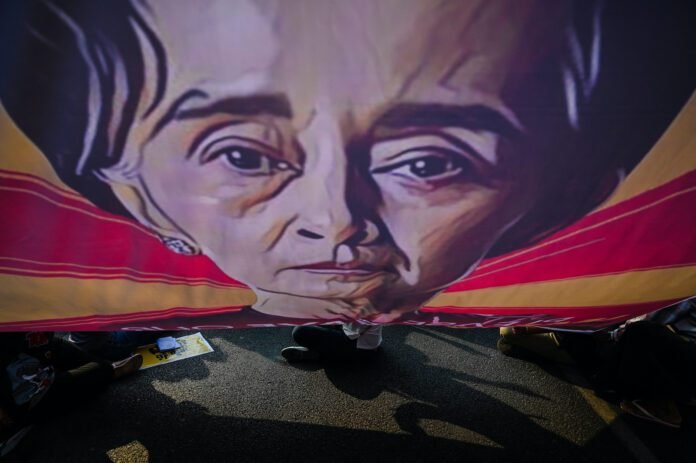
News that Aung San Suu Kyi has been moved from prison to house arrest has stirred deep emotions among Myanmar’s people and many abroad. For those who have long admired her courage in the face of persecution, it is natural to feel relief. After harsh conditions in prison, any improvement in her daily life is welcome on basic humanitarian grounds.

But house arrest is not freedom. She remains a political prisoner, held against her will, cut off from her people, unable to speak or act freely. Until she and all other political prisoners are released unconditionally, Myanmar cannot truthfully be said to be moving toward justice. This moment calls not just for compassion but clarity.

For more than three decades, Suu Kyi has been a central figure in Myanmar’s struggle for democracy — enduring separation from her family, prolonged confinement and constant pressure from those who hold power. Whatever disagreements people may have about her political choices, her personal sacrifices cannot be denied.

It would be wrong to greet news of her house arrest with indifference. Many ordinary people still see her as a symbol of courage and hope, and their feelings are understandable. But it would equally be a mistake to imagine this change transforms Myanmar’s political reality.

She remains under the control of the very military authorities who imprisoned her, and any words or gestures that appear to come from her must be viewed with caution. No one can freely choose their political path from inside a guarded house.

Revolution bigger than one person

Since the democracy-suspending military coup of 2021, Myanmar has been shaken by terrible violence. Peaceful protests were met with bullets. Villages have been bombed, burned and emptied. Millions have been displaced.

Out of this suffering, a broader, more diverse resistance has emerged: elected representatives, ethnic organizations, local defense forces, youth and women’s groups and countless ordinary citizens who have risked everything to oppose a return to dictatorship.

This does not mean Suu Kyi no longer matters. Rather, it means Myanmar’s struggle is now larger than any one leader.

For those resisting military rule, the challenge is to hold two truths simultaneously: to honor her story and hope for her full freedom, while continuing to build an inclusive political order that reflects the sacrifices of all communities — especially the young and marginalized who have paid so heavily.

To be sure, the military did not suddenly become compassionate. Moving Suu Kyi to house arrest serves several calculated purposes. They can present it as a humanitarian gesture, hoping to soften their image abroad and prompt some governments to relax pressure or reopen economic channels.

Inside the country, they may try to revive old habits — suggesting the safest path forward is a managed arrangement with generals and one famous civilian figure at the center, while deeper injustices remain untouched.

There is also a danger that some voices will ask the resistance to silence its demands and accept a compromise that leaves military supremacy intact, using San Suu Kyi’s constrained situation as moral pressure, even though she cannot openly speak for herself.

Mindful of this, both Myanmar’s people and the international community must be wary of treating this move as proof that the regime is ready for genuine change. A shift from a prison cell to a guarded house does not protect villagers from airstrikes, restore burned homes or give exiled children a chance to return to school.

What Myanmar’s resistance can do

In this delicate moment, Myanmar’s resistance faces a difficult but important task. First, it can respond with humanity — expressing relief that her conditions have improved while calling clearly and repeatedly for her immediate and unconditional release alongside all other political prisoners.

Second, it can insist on clarity: no statement made under house arrest should be treated as a free and binding political decision. This protects Suu Kyi from being misused and protects the revolution from being diverted by manipulated signals.

Third, it can keep focus on what the people have demanded since 2021: an end to military rule, justice for victims, a federal democratic constitution and guaranteed civilian control over all armed forces. These goals cannot be achieved by symbolic gestures alone.

For regional governments, human rights organizations and concerned citizens worldwide, this news is a test of discernment. It is appropriate to urge that she be treated with dignity. It is not appropriate to treat this change as sufficient reason to ease political, economic or diplomatic pressure on those who continue to rule by force.

If the international community truly wishes to help Myanmar, it must continue calling for the unconditional release of all political prisoners; insist on an end to civilian attacks and unhindered humanitarian access; support an inclusive political process that involves ethnic organizations, resistance structures, civil society, and religious actors — not only the military and one well-known civilian; and keep the long-term goal in view: a genuinely federal and democratic Myanmar where all communities can live without fear.

Hope with open eyes

For many in Myanmar, Suu Kyi’s name is bound to memories of hope and courage. Her move to house arrest will stir those memories again. Yet hope must walk hand in hand with truth.

The truth is that as long as she is detained, she is not free. The truth is that Myanmar’s struggle now belongs to a whole people seeking a new kind of country — not a return to a slightly gentler version of the old order.

True peace will require more than a change of rooms for one prisoner, however beloved. It will require freedom, justice and a political settlement that listens to all of Myanmar’s peoples.

Holding on to that vision, while working for her safety and eventual freedom, is the best way to honor Suu Kyi — and the countless others whose names are less known, but whose sacrifices are no less real.

James Shwe is a Myanmar American professional engineer and advocate for democracy in Myanmar, affiliated with the Los Angeles Myanmar Movement.

World Press Freedom Day Tests Whether the Public Still Has a Right To Know

0
world-press-freedom-day-tests-whether-the-public-still-has-a-right-to-know
World Press Freedom Day Tests Whether the Public Still Has a Right To Know


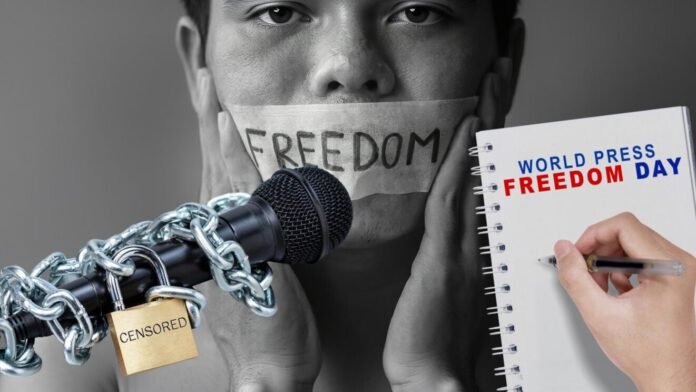
Press freedom remains essential to verified reporting, public accountability, and the ability of journalists to challenge censorship, intimidation, and violence

World Press Freedom Day, marked every year on May 3, serves as an annual test of whether governments, institutions, armed groups, technology platforms, and the public still accept a basic democratic principle: people have a right to know what is being done in their name.

The date comes from the Windhoek Declaration, adopted on May 3, 1991, by African journalists meeting in Windhoek, the capital of Namibia. The gathering took place when many African media systems were still dominated by state control, censorship, party organs, and pressure on independent newspapers. The declaration called for a “free, independent and pluralistic press,” meaning a media environment in which journalists and publishers could operate without government control and where multiple voices, not just official ones, could reach the public.

UNESCO later treated the declaration as a landmark in the global press freedom movement, and in 1993, the UN General Assembly proclaimed May 3 as World Press Freedom Day.

For 2026, UNESCO’s global World Press Freedom Day conference is being held May 4–5 in Lusaka, Zambia, under the theme “Shaping a Future at Peace.” The theme reflects the connection between press freedom, conflict, public trust, digital platforms, and the ability of societies to make decisions based on verified information rather than rumor, propaganda, or fear.

Press freedom is closely related to freedom of speech, though the two concepts serve different purposes. Freedom of expression protects the right of individuals to speak, argue, protest, publish opinions, and criticize authority. Press freedom protects the public function of journalism: gathering information, checking facts, protecting sources, questioning officials, investigating wrongdoing, and publishing findings without censorship, intimidation, imprisonment, or violence. A country can protect broad freedom of speech—allowing citizens to complain online, criticize officials, or argue in public—while press freedom remains under threat through blocked records, harassment of reporters, controlled broadcast licenses, or the jailing of journalists.

The smartphone age has made the distinction more complicated. Almost anyone can now photograph an airstrike, livestream a protest, publish a thread, or upload a video before a reporter reaches the scene. That democratization has real value. It can expose abuse, document state violence, and give voice to people ignored by traditional media. It can also flood the public square with rumors, propaganda, fake images, selective clips, and confident nonsense. As the information environment becomes more chaotic, professional verification becomes increasingly valuable.

The global picture is bleak. Reporters Without Borders (RSF) says its World Press Freedom Index compares conditions for journalists and media in 180 countries and territories. Its 2026 index found that press freedom declined over the past year in 100 of them, pushing the global average to the lowest level in the index’s 25-year history. Economic fragility has become a leading threat worldwide, with editorial interference by media owners reported as a recurring problem in many countries.

RSF’s Middle East and North Africa grouping places 18 of 19 countries in either the “difficult” or “very serious” categories. Qatar—the region’s highest-ranked country at 75th—is listed as the lone exception, but still, press freedom is considered “problematic” there.

Using The Media Line’s broader working definition of the region—all Arab League countries except Comoros, plus Afghanistan, Cyprus (including Northern Cyprus), Iran, Israel, Pakistan, and Turkey—the picture remains grim: only Mauritania, Qatar, Cyprus and Northern Cyprus fall into the less severe “problematic” category, while the rest are rated “difficult” or “very serious.” The lowest-rated country in our region is Iran, with Saudi Arabia and Afghanistan not much better.

Freedom House measures the problem from another angle, particularly through internet freedom. Its Freedom on the Net 2025 report found that global internet freedom declined for the 15th consecutive year, with citizens arrested or imprisoned for online expression in at least 57 of the 72 countries assessed. That matters for press freedom because journalism increasingly depends on digital tools: messaging apps, mobile footage, online archives, encrypted communication, social platforms, and cross-border distribution.

The dangers faced by journalists range from battlefield exposure to bureaucratic harassment. Some are killed in combat zones. Some are deliberately targeted. Some are jailed under national security, cybercrime, insult, defamation, or anti-terror laws. Others are bankrupted through lawsuits, smeared by state media, threatened online, denied accreditation, or forced into exile. The toolkit changes from country to country, but the pressure often has a familiar effect: reporting becomes costly, risky, and sometimes impossible.

The Middle East over the past year has offered numerous examples. In Iran, press freedom groups reported a widening crackdown in 2026, including the arrests of journalists Mohammad Parsi, Artin Ghazanfari, Somayeh Heydari, Pedram Alamdari, and others, along with summonses, detentions, and pressure on media outlets.

In Tunisia, journalist Zied el-Heni, editor-in-chief of the independent news site Tunisian Press, was arrested on April 24, 2026, after complying with a summons from a cybercrime unit. The Committee to Protect Journalists (CPJ) said he later began a hunger strike to protest his detention, while Reuters reported that his lawyer linked the case to criticism of the judiciary.

Kuwaiti-American journalist Ahmed Shihab-Eldin was detained for 52 days over social media posts involving publicly available wartime footage before being acquitted of charges that included spreading false information and harming national security. His case showed how vague security and misinformation laws can be turned against journalists even in countries often seen as less repressive than the region’s worst offenders.

In Bahrain, freelance photographer Sayed Baqer Al-Kamel was sentenced in April 2026 to 10 years in prison after being accused of publishing defense-related material and content deemed supportive of Iran during the war. CPJ described the case as part of the criminalization of journalistic work under national security language.

Syria has raised another concern: disappearance and detention without transparency. German journalist Eva Maria Michelmann and Kurdish-Turkish journalist Ahmed Polad disappeared in January 2026 and are believed to have been detained in Damascus. AP reported that Michelmann’s lawyer said she was likely being held in a Damascus prison, while CPJ called for transparency, legal access, and humane treatment.

Sudan’s civil war has made independent reporting exceptionally dangerous. Three years of fighting between the Sudanese Armed Forces and the Rapid Support Forces have left journalists working under siege, displacement, threats, detention, and impunity while trying to document abuses by both sides, according to CPJ.

Algeria has also seen arrests of journalists in 2026, including Omar Ferhat, director of the independent news website Algerie Scoop, and freelance journalist Abdelali Mezghiche, according to CPJ.

The pattern extends beyond the Arab world. In Pakistan, RSF reported that four Pakistani journalists in exile—Wajahat Saeed Khan, Sabir Shakir, Shaheen Sehbai, and Moeed Pirzada—were sentenced to life imprisonment in absentia in January 2026. CPJ has also reported on the detention of digital journalist Sohrab Barkat under Pakistan’s cybercrime law in connection with his reporting.

War-zone deaths require particular care. In Lebanon and Gaza, journalists including Amal Khalil, Mohammed Samir Washah, Ghada Dayekh, and Suzan Khalil were killed in Israeli strikes in 2026, but the circumstances vary, and some remain disputed. Press freedom groups have called for investigations and claimed that some incidents were cases of deliberate targeting. Israel denies deliberately targeting journalists and has alleged links between some media workers and armed groups. Those cases belong in any honest account of the dangers facing journalists, but they should be described with precision rather than folded automatically into a single category of deliberate suppression.

That caution does not weaken the larger point. Press freedom suffers when journalists are intentionally silenced, when governments jail reporters through vague laws, when armed groups threaten witnesses, when courts punish journalism as terrorism, and when war makes independent reporting nearly impossible. In each case, the public loses access to verified information at the moment it is most needed.

World Press Freedom Day exists because societies need people whose job is to find out what happened, test competing claims, and publish what others would prefer to hide. That work is imperfect, sometimes messy, and often unpopular. Without it, citizens are left with official statements, viral fragments, and guesses dressed up as certainty. That makes it easier for abuses to be hidden, events to be distorted, and accountability to collapse.

Minnesota passes ban on fake AI nudes; app makers risk $500K fines

0
minnesota-passes-ban-on-fake-ai-nudes;-app-makers-risk-$500k-fines
Minnesota passes ban on fake AI nudes; app makers risk $500K fines

This week, Minnesota became the first state to pass a law banning nudification apps that make it easy to “undress” or sexualize images of real people.

Under the law, developers of websites, apps, software, or other services designed to “nudify” images risk extensive damages, including punitive damages, if a victim decides to sue. Their offending products could also be blocked in the state. Additionally, Minnesota’s attorney general could impose fines up to $500,000 per fake AI nude flagged. Any fines collected would be used to fund services for victims of “sexual assault, general crime, domestic violence, and child abuse,” the law stipulates.

On Wednesday, the Minnesota Senate unanimously voted 65–0 to pass the law. That vote came after the bill just as quickly passed in the House last week, the 19th News reported. Gov. Tim Walz is expected to sign the law when it reaches his desk, and if that happens, the state will start enforcing the ban this August.

Ars could not immediately reach Walz’s office for comment.

Minnesota man used one app to undress 80+ friends

Democratic Senator Erin Maye Quade introduced the bill in Minnesota after residents discovered that one man had nudified images of more than 80 women from his social circles. In a statement, she said that she looked forward to Walz signing the bill, which finally offers legal recourse to those victims, as well as others impacted by the mainstreaming of nudifying apps.

RAINN, the national nonprofit that runs the National Sexual Assault Hotline, also helped get Minnesota’s bill passed. To prevent any industry lobbying against it, RAINN consulted with tech companies when drafting the law, 19th News reported. That helped ensure there weren’t unexpected impacts on popular commercial products, like Photoshop, that could be used to nudify an image. Acknowledging that the state’s concern is more about how alarmingly easy undressing apps make it to harm an increasing number of mostly women and children globally, the law exempts products or services that require “the technical skill of a user to nudify an image or video.”

“Today, we led the nation protecting women, children, and everyone in public life from the harm caused by AI nudification technology,” Maye Quade said. “Companies that make this technology available for free online and in app stores will no longer be allowed to enable predators who abuse and victimize adults and children with the click of a button.”

Celebrating the law’s passage, Maye Quade thanked “the victim-survivors who made this bill a reality.”

“They have shared their story in committee, with reporters, and with law enforcement with dignity and courage,” she said. “Their power, brilliance, and advocacy is why we passed this bill today. They have had a singular focus on passing this legislation so that what happened to them does not happen to any Minnesotan, ever again.”

A lengthy CNBC report last September exposed how a group of Minnesota friends first learned that a mutual friend was creating fake nudes of dozens of women. The man apologized, but he seemingly did not help identify all the victims. There was no evidence he ever shared the images, so laws like the Take It Down Act did not apply, and proving the man’s ill intent made pursuing penalties under revenge porn laws unlikely, 19th News reported. Horrified that there was no way to ensure the images hadn’t left his computer and no path to stop the man from continuing to generate fake nudes, the women joined Maye Quade in advancing the law to shut down the problem at its source.

One of the Minnesota women targeted, Molly Kelley, told 19th News that she dedicated two years of her life to “finding a solution to mitigate the harm when it’s actually caused, which is at creation.”

“These images don’t exist without a third-party involvement and some sort of machine learning model,” Kelley said.

However, even if Walz signs the law, tensions remain that could frustrate enforcement.

Kelley told 19th News that she’s confident the law can overcome legal challenges, should any US firms sue to block it, but enforcing the law against app makers in other countries will likely be difficult, if not impossible, for a single state. Notably, the service used to attack the Minnesota women, DeepSwap, is operated overseas, at times claiming bases in Hong Kong and Dublin, CNBC reported. Anticipated state struggles to regulate foreign apps is why a federal ban would be preferable, 19th News reported.

Additionally, if Donald Trump revives an effort to deregulate the AI industry by blocking state laws like Minnesota’s from requiring safeguards, the law could become toothless, advocates fear.

Unchecked US tools like Grok risk penalties

If Walz puts the law on the books, some US firms could be forced to make changes or face penalties.

Potentially even Elon Musk’s xAI may risk fines if Minnesotans can prove Grok was used to undress images without consent.

Grok’s lack of safeguards to prevent outputs with non-consensual intimate imagery or alleged child sex abuse materials has drawn government probes and proposed class actions from women and children. In January, X Safety claimed that Grok was updated to stop undressing images, but NBC News reported last month that their review found “dozens of AI-generated sexual images and videos depicting real people posted publicly on Musk’s social media app, X, over the past month.”

Musk has denied that he has seen a single instance of Grok-generated CSAM. But researchers’ estimates that Grok was generating thousands of harmful images an hour appear to be increasingly backed by lawsuits from victims surfacing non-consensual images.

At the same time, authorities are getting closer to closing cases with arrests linked to Grok. A week after NBC News’ report, Nashville cops charged a man for “sexual exploitation of a minor after he was identified as the suspect who utilized Grok AI to generate images of child sex abuse.”

According to the press release, cops were tipped off after “multiple CyberTips to the National Center for Missing and Exploited Children regarding possession of child sex abuse material in an online account” that was linked to Grok. Importantly, the cops noted that Grok generated the harmful images from September 2025 through March 2026, well after X claimed that the functionality had been removed.

Beyond Grok, researchers have flagged thousands of nudifying apps advertised on Meta platforms, prompting at least one lawsuit in which Meta claimed a Hong Kong-based app maker violated advertiser terms, CNBC reported. Any services based in the US openly advertising on Facebook or Instagram could become targets of Minnesota-based lawsuits if the law takes effect.

Similarly, nudifying apps that manage to skirt reviews and appear in Google and Apple app stores despite violating terms could draw legal attention.

xAI did not respond to Ars’ request for comment.

UAE exit weakens OPEC+ power over oil market but group to stay together

0
uae-exit-weakens-opec+-power-over-oil-market-but-group-to-stay-together
UAE exit weakens OPEC+ power over oil market but group to stay together


OPEC and its allies will lose some of their power over the oil market when the United Arab Emirates leaves the group on May 1, but the rest of the producer alliance is likely to stick together ​and continue to coordinate on oil supply policy, OPEC+ delegates and analysts said on Tuesday.

The UAE is the fourth-largest producer in the Organization of the Petroleum Exporting Countries and said it would quit the ‌group on Tuesday after nearly 60 years as a member. That will free Abu Dhabi from the oil production targets imposed by OPEC and its allies to balance supply and demand.

The UAE’s exit came as a shock, said five OPEC+ sources, who asked not to be named as they are not allowed to speak to the press.

The exit would complicate OPEC+’s efforts to balance the market through adjustments to supply because the group would have control over less of global production, four of the five sources said.

The UAE will become the largest oil producer to depart ​OPEC, a heavy blow to the organization and its de facto leader Saudi Arabia. Abu Dhabi pumped around 3.4 million barrels per day (bpd) or about 3% of the world’s crude supply before the U.S.-Israeli war on Iran ​forced it and other Middle East Gulf producers to curb shipments and shut down some production.

OPEC and the Saudi government communication office did not immediately reply to a request for ⁠comment.

Once outside OPEC, the UAE will join the ranks of independent oil producers that pump at will, such as the United States and Brazil. For now, there is not much the UAE can do to increase production or exports due to ​the effective closure of shipping through the Strait of Hormuz. If and when shipping recovers to pre-war levels, the UAE could increase output to the country’s capacity of 5 million bpd of crude oil and liquids.

There has been tension between the ​UAE and Saudi Arabia over the Emiratis’ production quota, which stands at 3.5 million bpd. The UAE has asked for a bigger quota to reflect the fact that it had expanded capacity as part of a $150 billion investment program.

“For years, Abu Dhabi has been looking to monetize its investment in expanding capacity,” said Helima Croft from RBC Capital Markets. The U.S.-Israeli war on Iran would, however, slow those plans down after drones and rockets damaged the UAE’s production facilities, she said.

The war has resulted in the biggest-ever global energy supply disruption in terms of outright ​daily oil production, according to the International Energy Agency. The conflict has also exposed discord among Gulf nations, including between the UAE and Saudi Arabia.

Rumours of the UAE’s exit from OPEC+ have circulated for years amid worsening relations with Riyadh ​over conflicts in Sudan, Somalia and Yemen. The UAE has also grown increasingly close to the United States and Israel.

IRAQ STAYS IN

The UAE is the fourth producer to quit OPEC+ in recent years, and by far the biggest. Angola quit the bloc in 2024, citing ‌disagreements over production ⁠levels. Ecuador quit OPEC in 2020 and Qatar in 2019.

Iraq, the third-largest producer in OPEC+ after Saudi Arabia and Russia, has no plan to leave OPEC+ as it wants stable and acceptable oil prices, two Iraqi oil officials said on Tuesday.

OPEC+ will not collapse as Saudi Arabia will still want to manage the market with the help of the group, said Gary Ross, a veteran OPEC watcher and CEO of Black Gold Investors.

“At the end of the day, Saudi Arabia was essentially OPEC – the only country with spare capacity,” said Ross. Saudi Arabia can produce 12.5 million bpd, but has in recent years kept production under 10 million.

OPEC+ membership gives countries more diplomatic and international weight – one of the reasons cited by analysts behind Iran’s decision ​to stay in OPEC even at the peak of its ​fight with Gulf countries.

U.S. President Donald Trump has accused ⁠OPEC of “ripping off the rest of the world” by inflating oil prices. Trump has said the U.S. may reconsider military support to the Gulf because of OPEC oil policies.

It was, however, Trump who helped convince OPEC+ to cut output in 2020 during the COVID pandemic as oil prices slumped and U.S. producers suffered.

“The UAE withdrawal marks a significant shift for OPEC … the ​longer-term implication is a structurally weaker OPEC,” said Jorge Leon, a former OPEC official who now works at Rystad Energy.

OPEC+ members will be more focused on rebuilding facilities ​hit by the war rather than ⁠on embarking on production cuts in the near future, said Croft. Hence, the broader OPEC+ breakup is not on the cards for now, she added.

DECLINING POWER

OPEC’s sway over the market has been declining for decades.

Formed in 1960, OPEC once controlled over 50% of global output. As rivals’ production grew, the group’s share has declined to around 30% of the world’s total oil and oil liquids output of 105 million barrels per day last year.

The United States, which used to rely on imports from OPEC members, has become its ⁠biggest rival over ​the past 15 years. The U.S. has raised production to as much as 20% of the world’s total on the back of its shale oil ​boom.

The U.S. production spike prompted OPEC to team up in 2016 with several non-OPEC producers to form OPEC+, a group led by Russia – previously one of Saudi Arabia’s top rivals in the oil industry.

The alliance gave the group control over around 50% of the world’s total oil production in 2025, ​according to the International Energy Agency. The loss of the UAE means it will decline to around 45%.

Via Reuters

Employee Dies After Chairlift Basket Plummets into ‘Rugged Terrain’ at Ski Resort

0
employee-dies-after-chairlift-basket-plummets-into-‘rugged-terrain’-at-ski-resort
Employee Dies After Chairlift Basket Plummets into ‘Rugged Terrain’ at Ski Resort


A routine morning at an Oregon ski resort turned into a nightmare when a maintenance basket suddenly plunged from a chairlift, killing one worker and leaving another fighting for their life.

The horrifying accident unfolded just before 9:30 a.m. on April 30 at Mt. Hood Skibowl in Government Camp, when a 911 call reported that a basket carrying two employees had fallen into what officials described as “rugged terrain.”

According to the Clackamas County Sheriff’s Office, both workers suffered devastating injuries on impact. One was found unconscious as a third person at the scene desperately began CPR.

Within minutes, emergency crews from multiple agencies rushed in, setting up a command post at the base of Ski Bowl East. But reaching the victims wasn’t easy.

“Crews are working in difficult terrain,” the Hoodland Fire District said, revealing they had to deploy specialized rescue gear, including an ATV, just to access the crash site.

By shortly after 10 a.m., medics finally reached the workers. One employee was still conscious and breathing—but the other had no pulse and was pronounced dead at the scene.

The surviving worker was airlifted by Life Flight to a nearby hospital. Their current condition has not been publicly updated.

Authorities say the incident is now being investigated as a workplace death, with OSHA brought in to determine what went wrong in the deadly fall.

Mt. Hood Skibowl has remained tight-lipped, issuing a brief statement saying they are focused on supporting the victims’ families and staff during the tragedy.

For locals, the shock is already spreading.

“Being that we’re a small mountain community, I imagine there are people who will need time to process this,” said Hoodland Fire District division chief Scott Kline.

What was supposed to be just another workday on the mountain ended in tragedy—raising serious questions about safety and how such a catastrophic fall could happen in the first place.

0FansLike
0FollowersFollow
0FollowersFollow
0SubscribersSubscribe
- Advertisement -
Google search engine

Recent Posts