2 Palestinians including child killed in Israeli attacks on Gaza despite ceasefire
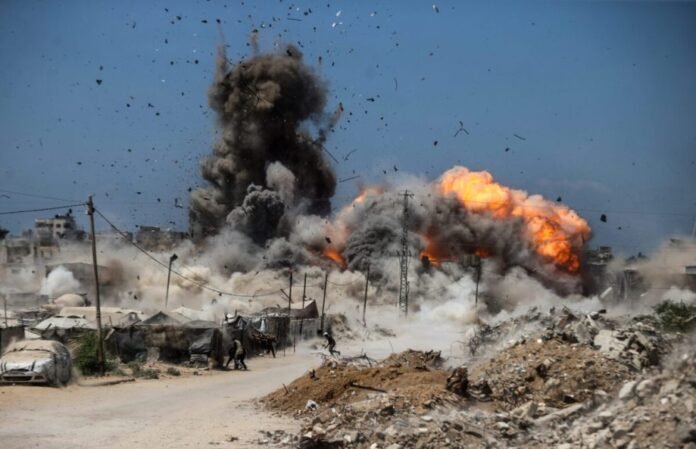
Two Palestinians, including a child, were killed and 14 others injured in Israeli attacks in central and southern Gaza Strip on Sunday, marking another violation of a ceasefire in force since Oct. 10, 2025, Anadolu reports.
A medical source at Al-Aqsa Martyrs Hospital told Anadolu that the two victims were killed and seven others injured when Israeli forces struck areas in the town of Az-Zawayda.
The warplane struck a site in the town shortly after the Israeli army issued an evacuation warning.
Civil defense crews rushed to the area to extinguish a fire caused by the attack.
In southern Gaza, seven Palestinians were injured in an Israeli airstrike targeting a gathering of civilians near Al-Albani Mosque, west of Khan Younis, a medical source at Nasser Medical Complex said.
Israeli warships also fired shells toward the Rafah coastline, while military vehicles opened heavy fire on Palestinian homes in Hamad City, northwest of Khan Younis. No casualties were reported.
In Gaza City, Israeli warships fired bullets and shells toward fishing boats and the coastline, witnesses told Anadolu. No injuries were reported.
The attacks came despite US President Donald Trump’s call for an end to Israeli strikes on the Gaza Strip.
The Israeli army has killed more than 73,000 Palestinians and injured over 174,000 others in a brutal offensive since October 2023.
Lebanon Pushes To Extend UNIFIL as Hezbollah Disarmament Stalls
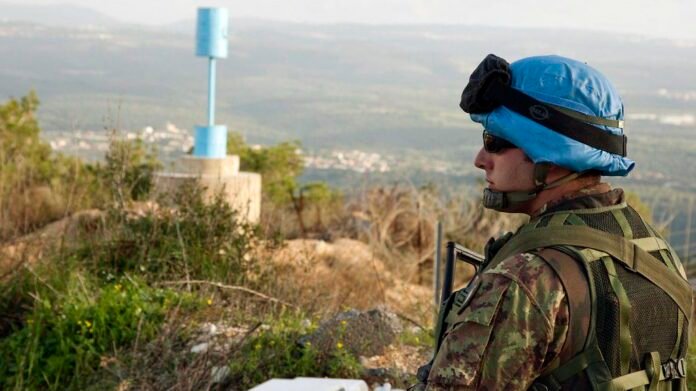
Lebanese officials, including President Joseph Aoun, are seeking to extend the mandate of the UN Interim Force in Lebanon (UNIFIL) as efforts to reach an agreement with Israel limiting Hezbollah are stalled.
Lebanon wants UNIFIL to remain in the country until stability is restored, regarding the peacekeeping mission as an “international umbrella supporting the Lebanese Army in implementing Resolution 1701.”
UNIFIL’s future and security arrangements in southern Lebanon were among the issues discussed during negotiations with Israel in Rome earlier this month.
The seventh round of US-brokered negotiations between Lebanon and Israel began in Rome on August 4, 2026. Discussions centered on implementing a framework agreement that calls for expanding southern “pilot zones,” coordinating phased Israeli military withdrawals and deploying the Lebanese army, as well as disarmament of Hezbollah.
Lebanese officials are also considering alternatives if UNIFIL’s mandate is not extended. One option involves forces from Italy, France and Spain, which have expressed willingness to maintain a presence in Lebanon. Those forces could be deployed through agreements directly between Lebanon and the participating countries or under a UN arrangement.
Aoun discussed the situation during meetings in Italy. The Lebanese presidency’s media office said he met Italian President Sergio Mattarella and held talks Friday night with Prime Minister Giorgia Meloni to discuss the plan.
Israel has maintained that its continued military presence and strikes in Lebanon are necessary to secure its northern border, dismantle Hezbollah infrastructure and respond to immediate threats posed by the group.
Hezbollah Secretary-General Naim Qassem has rejected the framework and ruled out disarming the organization. Qassem characterized the agreement as a surrender to Israel and declared it “null and void.” He said Hezbollah would not surrender its weapons and would continue fighting Israel.
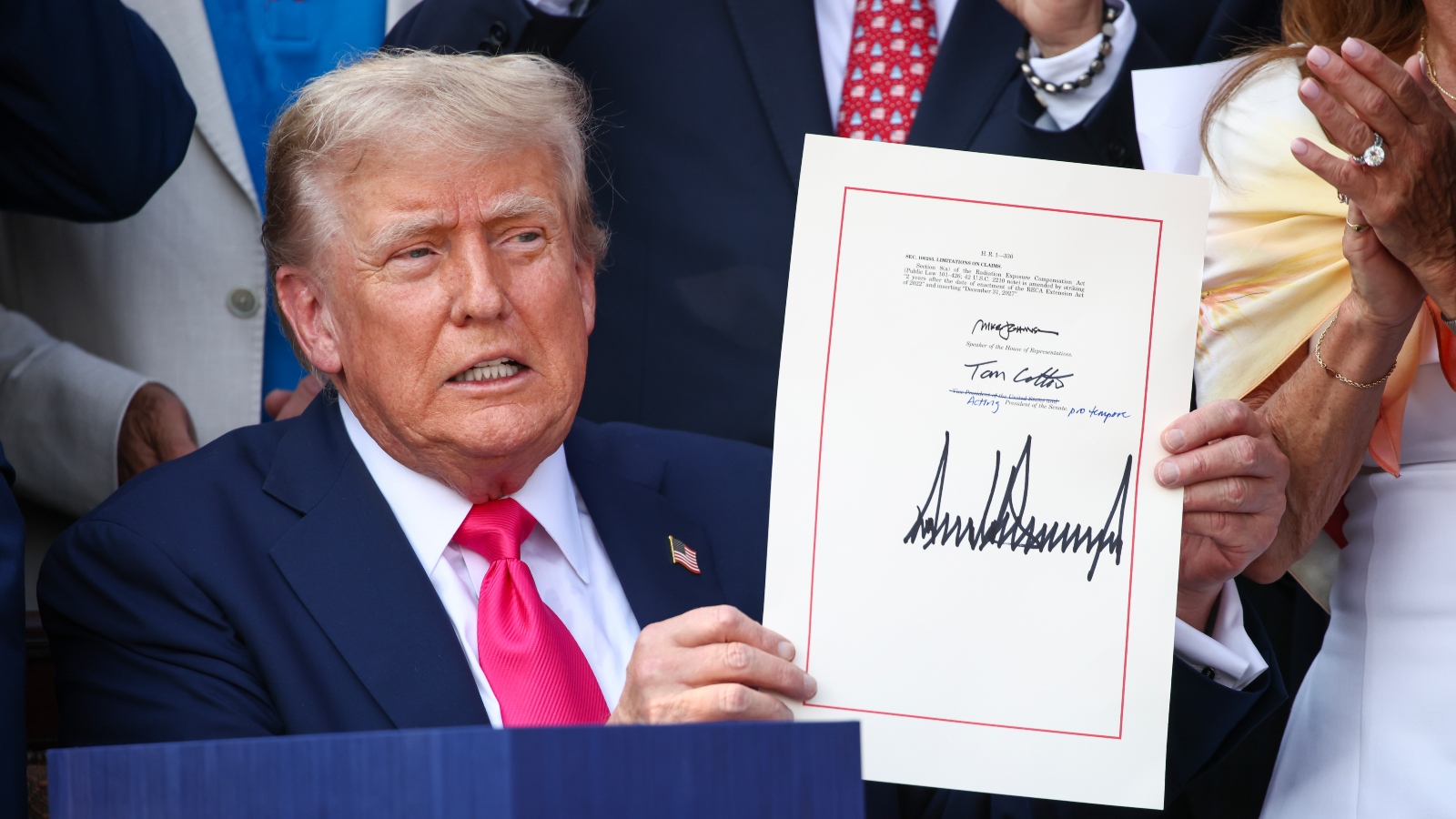
Trump ordered to release billions in climate grants meant for Black communities
This story was originally published by Capital Band is reproduced here as part of the Climate Desk collaboration.
Dominika Parry never stopped fighting for Jackson, Mississippi, residents even after the Trump administration terminated a multibillion-dollar program last year meant to help the Black city still reeling from a water crisis.
For years, if water did flow out of Black households’ faucets in Jackson at all, it was often brown. It left elders and babies with rashes and caused a slew of health problems across the city.
Parry and other community leaders and organizations got some semblance of hope in 2023 with a federal grant. Yet, two years later — before any funds could be distributed — President Donald Trump entered office and terminated a $2.8 billion program meant to help mitigate the harm from climate change and environmental issues in Black, low-income, and disadvantaged communities.
More than a year later, federal courts stepped in and rebuked the administration’s effort to dismantle climate funding. The case centers on the administration’s effort to roll back climate investments authorized by Congress under the Inflation Reduction Act, President Joe Biden’s cornerstone economic policy.
Read Next
Last month, a South Carolina federal judge ordered the Environmental Protection Agency to resume distributing funds designed to address environmental and health challenges in underserved communities.
The July ruling came just before the Washington, D.C. Circuit Court blocked the EPA from rescinding nearly $20 billion in Greenhouse Gas Reduction Fund awards. That program is different from the environmental justice grants promised to Jackson and other overburdened communities.
That means that over $22 billion meant for climate and environmental projects in disadvantaged communities may soon be distributed.
Parry did not respond to requests for comment after the ruling, but Matt Sedlar, climate analyst at the Center for Economic and Policy Research, said the outcomes of these lawsuits are “sending a message to the administration that the separation of powers exists and that it must follow the law.”
What the billions could be spent on in Black communities
In 2023, a $20 million federal grant offered a life-saving chance for Jackson’s poorest. The money was for a resilience hub that would offer year-round access to housing where the lights would stay on with clean drinking water in the time of disaster by funding a micro electric grid. It would also include backup generators, an independent water well, showers, and overnight shelter for up to 150 people at a time facing water issues in their home.
The goal was building “a place where people can come, stay overnight, have access to energy, be in healthy conditions,” Parry said last year. Parry founded the recipient group 2C Mississippi, a Ridgeland-based nonprofit focused on climate resilience in Mississippi.
Since February 2025, the billions made available through the Environmental and Climate Justice Block Grant Program have languished as the Trump administration has moved to gut a historic number of environmental rules and protections. The Associated Press estimates that the EPA programs and rules cut were projected to prevent roughly 30,000 deaths per year, particularly in Black and disadvantaged communities.
After prison, Leon Dillard participated in a solar installation program for formerly incarcerated people in Houston. The program no longer exists. Adam Mahoney / Capital B
The Greenhouse Gas Reduction Fund was designed as a $27 billion national clean-energy financing program. Its goal was also to make clean-energy investments like home-energy upgrades, solar installations, and electric vehicles more accessible in low-income and disadvantaged communities that have historically been shut out of affordable green financing.
The Trump administration has already moved to legally appeal the judge’s ruling regarding the environmental and climate justice grant program, claiming that the EPA now lacks the money and staff to implement the program. (The Trump administration has fired 25 percent of EPA workers since 2024, bringing the agency to its lowest staff total ever.)
Already, some of the programs that received the initial approval for funding in 2024 have ceased to exist, including a solar installation program for formerly incarcerated people in Houston.
Last year, Leon Dillard, a formerly incarcerated man who was a part of the program before it was cut, said the climate-friendly work gave him a “sense of purpose.”
“I really just needed to be a part of [the program], be a part of something,” he said. “You have to make a choice to take a chance, or your life will never change. But you need other people with you on that journey.”
It is likely that the administration will attempt to appeal the Greenhouse Gas Reduction Fund ruling as well.
Environmental and Climate Justice Block Grant Program projects include:
More than $14 million to install wastewater systems in Alabama’s Blackbelt communities where failing septic systems and untreated sewage have long sickened Black residents.
A $500,000 micro electric grid project in Gentilly, a historically Black New Orleans neighborhood that has faced chronic flooding, heat, and power-outage risk, particularly during hurricane season.
A $20 million grant for four connected disaster hubs in Florida’s historically Black areas of Lee County. The hubs would include cooling centers and, during disasters, sites for electricity, communications, water and food distribution, and emergency health support. The project also included money for stormwater treatment, new shade trees, and workforce training.
$20 million to weatherize, electrify, repair, and improve air quality in 500 homes in East Alabama and West Georgia. The plan also included 10 solar-and-battery resilience hubs for residents during outages and extreme weather.
Greenhouse Gas Reduction Fund projects include:
Mississippi Solar for All: Hope Enterprise Corporation received $62 million to expand residential solar access for low-income and disadvantaged Mississippians.
Arkansas Solar for All: Hope Enterprise Corporation received $94 million for a companion program bringing solar benefits to low-income households across Arkansas.
Georgia BRIGHT Communities Coalition: Capital Good Fund received $156 million to expand access to clean energy and related jobs in Georgia.
EnergizeNC: The North Carolina Department of Environmental Quality received $156 million for its statewide low-income solar initiative.
Industrial Heartland Solar Coalition: Growth Opportunity Partners received $156 million for a multistate solar effort serving Midwestern industrial communities.
Legendary Rocker Reveals Heartbreaking Cancer Update
Def Leppard guitarist Vivian Campbell has delivered a heartbreaking update on his long-running cancer battle, revealing the disease has returned despite undergoing a donor transplant he once described as his “only hope to survive.”
Campbell, 63, shared the news during an Aug. 12 interview with El Salvador-based radio station YSKL, more than a year after receiving the transplant in January 2025.
“Unfortunately, it didn’t stick,” Campbell said. “So the cancer has returned, and I’m continuing treatments to manage it.”
The rock veteran has been battling Hodgkin lymphoma for more than a decade.
Campbell first publicly revealed in 2013 that he was undergoing chemotherapy for the rare blood cancer. Looking back, he said there was one point when he truly feared the disease could kill him.
“There’s only been one time that I felt it was gonna kill me,” Campbell said. “In the winter of 2013, I got really scared about what was happening and the pace at which it was happening.”
That frightening period eventually led Campbell to conclude that a donor transplant was his best chance of staying alive.
“It was my only hope to survive,” he said.
Campbell has not publicly specified exactly what type of transplant he received. Bone marrow and stem cell transplants can be used in some patients with Hodgkin lymphoma, with healthy stem cells administered to help rebuild the body’s blood-producing system.
Despite the disappointing outcome of his 2025 transplant, Campbell is not giving up.
He said another transplant could potentially be in his future as doctors continue trying to keep the cancer under control.
For Campbell, one of the biggest things helping him through the ordeal has been music.
The guitarist said touring and performing give him a reason to keep moving and stop him from dwelling on his illness.
“The fact that I could still continue to work, that gives me something to live for,” he said. “Something that you enjoy, that you’re passionate about, that you can wake up in the morning and look forward to.”
And Campbell certainly has not been slowing down.
He continues performing with Def Leppard and is also working on new music with Last in Line, the band he formed with fellow musicians connected to his earlier days with Dio.
Campbell has also played with Whitesnake during his decades-long career.
“I’m certainly not slowing down,” he said. “I’m doing as much with my life as possible.”
The guitarist said his cancer diagnosis has actually made him more determined to experience everything he can.
Rather than allowing the disease to dictate what he does, Campbell said he has tried to live even more fully since being diagnosed.
He has watched other cancer patients become afraid to travel, eat certain foods or leave their beds because of their illness.
“I’ve never felt that way,” Campbell said. “I’ve always felt like I’m going to continue to live my life as much as possible. In fact, even more so after getting a cancer diagnosis.”
Campbell also acknowledged how fortunate he was that his cancer was discovered relatively early.
A persistent cough ultimately helped lead to his diagnosis, and he said his journey has largely been about controlling the disease rather than allowing it to take over his life.
“It’s always been more about managing my cancer,” he said.
Campbell joined Def Leppard in 1992 following the death of original guitarist and songwriter Steve Clark, who died in 1991 at just 30 years old.
He has remained a key member of the legendary British rock band ever since, performing alongside Joe Elliott, Rick Savage, Rick Allen and Phil Collen.
Def Leppard has spent decades as one of rock music’s biggest acts, earning induction into the Rock and Roll Hall of Fame and receiving a star on the Hollywood Walk of Fame in October 2025.
Campbell was still onstage earlier this year, performing with the band at The Colosseum at Caesars Palace in Las Vegas in February 2026.
And even as his cancer battle enters another difficult chapter, Campbell made clear he has no intention of stepping away from the life he loves.
For the rocker, the diagnosis has only made him more determined to “tick all the boxes” while he still can.
Israeli newspaper slams Netanyahu over Syria strikes, warns of ‘pointless conflict’ with Türkiye
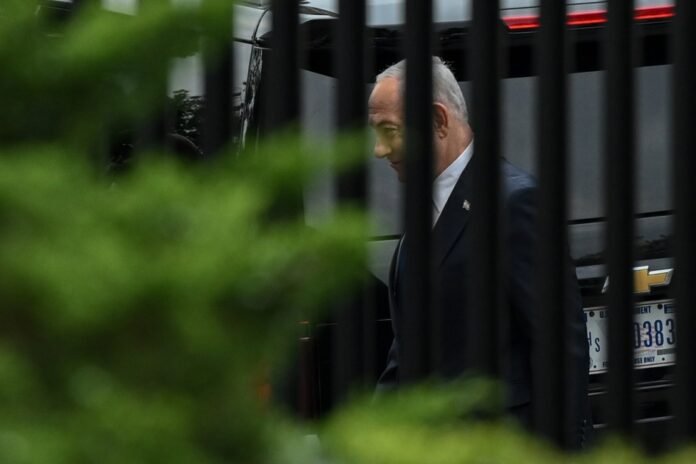
The Israeli newspaper Haaretz criticized Prime Minister Benjamin Netanyahu over his decision to strike targets in Syria, warning that the escalation could drag Israel into a “pointless conflict” with Türkiye, Anadolu reports.
“While we were wondering whether, ahead of the election, Benjamin Netanyahu would choose to wage war in Gaza or Lebanon, or perhaps ignite the West Bank, he decided to make a move in northern Syria, expanding a front with Türkiye,” the daily said in an editorial on Sunday.
It said Israel’s anti-Türkiye rhetoric in recent months had evolved into an attack on a military airfield in northern Syria on Tuesday.
The paper cited Netanyahu’s claim that the attack allegedly targeted the expansion of the Turkish presence in the region. Ankara and Washington have denied the Israeli claim and accused the Israeli prime minister of acting for electoral reasons.
On Tuesday, Israeli aircraft carried out eight strikes on the runway of the Abu al-Duhur military airfield in Idlib province, northwestern Syria, damaging its infrastructure.
Following the attack, sources at Türkiye’s Defense Ministry confirmed that there was no Turkish military mission at the Abu al-Duhur airbase, either before or during the Israeli attack.
Haaretz cited the warning of Thomas Barrack, the US ambassador to Türkiye and special envoy for Syria and Iraq, that the Israeli attack “could have escalated into a direct military confrontation” between Israel and Türkiye, hinting that this may have been Israel’s actual objective.
Barrack stressed that Türkiye “has no intention of attacking Israel or of entering into a military confrontation with it,” warning that Israel may be “acting irrationally” since it is in an election period.
Haaretz warned that the Israeli military action comes at a time when international powers are seeking to stabilize Syria, while Israel “is acting in a way that contradicts this logic.”
“Thus, Israel is distancing not just Syria, but all the other players involved there, chiefly the US.”
Haaretz called on Israel to formulate a new policy to address the multiple and new challenges in the Middle East.
“While Netanyahu was bragging about the pinpointed operation in northern Syria, a dangerous and pointless one, new alliances are being formed under his nose, and Israel is not a part of them,” the paper said.
“One cannot create security and foil threats only by bombing. This is no substitute for diplomacy and a well-thought-out policy, something which in the Netanyahu era has become devoid of any meaning. Israel must listen to the warnings sounded by envoy Barrack and beware of getting entangled with Türkiye.”
Following the attack on the Abu al-Duhur airbase, Syria said in two identical letters addressed to the UN and the UN Security Council that Israel’s continued attacks, including airstrikes, incursions and abductions, “hinder stabilization efforts and threaten the region with further tensions.”
Israel has expanded its assaults across Syria since the ouster of the Bashar al-Assad regime in December 2024.
Bomb Attack Wounds Syrian Security Forces Near Damascus
An explosive device detonated on a bus carrying Syrian internal security personnel north of Damascus on Saturday, wounding several members of the force in what authorities described as a terrorist attack.
The bombing occurred on the Maarounah-Al-Tal road in the Damascus countryside, state news agency SANA reported. State-run Al-Ikhbariya TV also reported the attack, citing a security source.
Authorities did not disclose how many security personnel were wounded. No organization immediately claimed responsibility for the bombing.
Images published by SANA showed extensive damage to the bus after the explosion. Windows had been shattered and one of the vehicle’s doors was blown out, while broken glass could be seen scattered across the front seat.
“Authorities are investigating the attack and working to identify those responsible,” SANA reported.
The bombing was the latest in a series of explosions to hit the Damascus area as Syria’s new authorities contend with continuing security challenges.
Earlier this month, an explosion aboard a bus in Jaramana wounded 14 people. The town, located near Damascus, is home to Christian and Druze communities.
In July, two explosions occurred near a hotel where visiting French President Emmanuel Macron had been staying. Macron was not at the hotel when the blasts occurred.
One person was killed and 36 others were wounded in that attack.
Due to need for ‘absolute success,’ China delays critical Moon launch to 2027
China’s “Manned Space” program issued a terse announcement on Sunday regarding its much-anticipated Chang’e 7 lunar exploration mission.
The agency stated: “In keeping with the principle of proceeding prudently and reliably, and ensuring absolute success, after a comprehensive assessment it has been determined that the Chang’e 7 mission does not meet the conditions for launch and therefore cannot be carried out during the planned launch window this year.”
The Chinese message offered no explanation for the cause of the delay from the Wenchang Space Launch Site, located on an island in the South China Sea. Consisting of a lunar orbiter, lander, rover, and a mini-hopper of a probe, the mission was due to launch as early as Sunday on a Long March 5 rocket. It is intended to land at the South Pole of the Moon.
Weather and launch windows
Most likely, Sunday’s delayed launch was due to Typhoon Narra, which has 45-mph winds (equivalent to a moderate Tropical Storm) and continues to meander around in the waterway separating Hainan island, where the spaceport is located, and mainland China.
According to the Joint Typhoon Warning Center, this storm is expected to continue tracking in this general area for the next two or three days, likely providing inclement weather at the Wenchang launch site. Plausibly, then, Chinese forecasters determined that the weather would not break before the current launch window to reach the lunar pole from Wenchang closes.
Although official Chinese sources have provided no confirmed information, there has been social media chatter indicating that another suitable launch window may not open until next February or March. Why so long? It likely is a combination of factors, including sunlight conditions in polar landing zones as well as the mission plan that requires a 90-day lunar orbit reconnaissance before landing.
Another, lesser possibility, is that some technical issue was discovered at the last minute with either the complex Chang’e 7 payload, or the rocket. The large Long March 5 rocket shares an engine, the YF-100, with the Long March 7A vehicle that was lost during ascent two weeks ago. This engine issue seems unlikely to be the cause of the delay, however, as China had been proceeding toward launch in recent days.
Latest twist in the second space race
The delay comes amid a tight contest between China and the United States to establish a meaningful presence at the South Pole of the Moon. Robotic missions such as Chang’e 7 are precursor flights for human missions that could follow in the next two to four years.
Chang’e 7 is planned to land near one of the most compelling regions of the Moon, Shackleton Crater, very nearly at the South Pole. Much of the lunar surface is pretty barren, but the South Pole, and Shackleton Crater in particular, offers some of the most coveted real estate there. This is because the high rims of the crater create permanently shadowed regions known as “cold traps,” where it’s thought that water (in the form of ice, of course) and other useful materials may have accumulated over billions of years. In all of NASA’s and China’s plans for long-term settlement on the Moon, relatively few square miles at the South Pole of the Moon matter the most.
No country has softly landed a spacecraft at the lunar poles, which are more difficult to reach than equatorial regions of the Moon. The delay of Chang’e 7 opens up the possibility that NASA could reach this terrain first, with the initial launch of Blue Origin’s Blue Moon Mark 1 vehicle. This large lander will carry two NASA probes to the South Pole.
Blue Moon was on track to launch this year before the loss of the New Glenn rocket, and its launch pad, at Cape Canaveral, Florida during a static fire test in May. Blue Origin has been hustling to rebuild its Launch Complex 36A facility in Florida, and aims to return New Glenn to flight before the end of this year. That is probably ambitious, but Blue Moon could plausibly launch during the first half of 2027, making for a close race with Chang’e 7 if it were to launch in February, and spend three months in lunar orbit before landing.
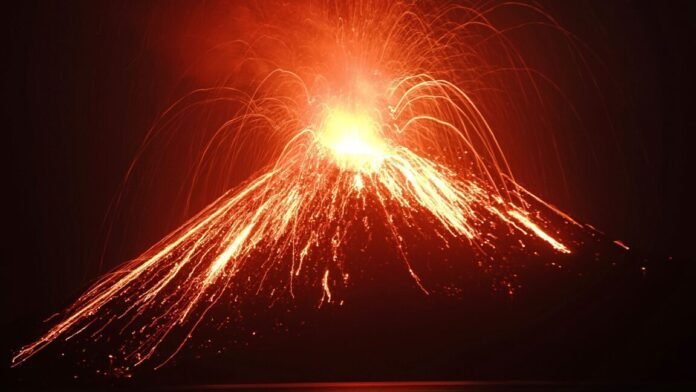
The first telegram arrived in Singapore on a Monday, sent from the city of Batavia in the Dutch East Indies (now Jakarta, Indonesia). “Terrific detonations from Krakatau (volcanic island),” it reported. Soon afterward: “Stones falling. Village near Anjer washed away.” The wires continued clattering out news of bridges destroyed, boats smashed, lighthouses “disappeared.” By noon on Tuesday, the scope of the natural disaster was clear: “Where once Mount Krakatau stood the sea now plays.”
Within days, the source of the destruction was known worldwide. On the morning of August 27, 1883, a volcanic eruption had obliterated two islands in the strait between Java and Sumatra, and most of a third. More than 36,000 people perished, the majority in devastating tsunamis that raced outward from the colossal explosion.
Thanks to Victorian-era telecommunications, it was the first time in history that people around the globe could begin to document, in near real time, the immediate and long-term effects of a catastrophic volcanic eruption. What they learned over the next few years laid the foundations for the modern science of volcanology. And it was an especially eye-opening lesson in how the biggest eruptions can influence climate, agriculture, and even the course of human history.
Global effects
In the months after Krakatau, drifting volcanic particles high in the atmosphere circled the globe, causing violently colored sunsets that contemporary artists captured in paintings, likely including the psychedelic background of Edvard Munch’s The Scream.
But the key climate-driving component of the volcano’s emissions was sulfur from the molten rock that fed Krakatau. Once sulfur erupts into the atmosphere, it can form particles called aerosols that reflect sunlight and cool Earth. In the months and years after the eruption, average summer temperatures fell 0.6° Celsius (1.1° Fahrenheit) in the non-tropical regions of the Northern Hemisphere.
Fast-forward more than a century, and researchers now understand that climate changes, especially rapid ones, have transformed societies by affecting agriculture, public health, and living conditions. With what they’ve learned from Krakatau and other eruptions, volcanologists today are identifying past catastrophic blasts that may have contributed to historic events like droughts, famines, epidemics and societal unrest.
“In so many different ways societies were affected … a failure in harvest or flooding or a cold summer or a really cold winter,” says Katrin Kleemann, an environmental historian at the German Maritime Museum in Bremerhaven.
While they can’t prove an eruption caused the demise of a regime, volcanologists have uncovered some intriguing links, including some that could inform our understanding of how today’s society might react to a rapidly changing climate.
536 and all that
The first challenge in making volcano-society connections is to find physical fingerprints of past eruptions. In the year 536, scribes in Europe, the Middle East, and Asia wrote about bizarre weather, including a haze that shrouded the sun for 18 months. Temperatures plummeted, harvests failed, and within a few years, the first documented global plague began.
These early medieval chronicles strongly suggest a major volcanic eruption—but the hard evidence lies deep in polar ice. Scientists can infer that big eruptions happened at certain times in the past by looking for sulfur and ash deposits in ice cores from Greenland and Antarctica. These cores, drilled into ice sheets, preserve an annual record of whatever was circulating in Earth’s atmosphere as it settled onto the surface each year. Researchers can read these frozen layers back in time like turning the pages of a book.
It turns out that polar ice cores do contain large amounts of sulfur dating to 536, a distinct signal of a major eruption. But which volcano went off at the time remains a mystery. There is no known written record from anyone living close to the eruption—Iceland, where it may have occurred, was not yet populated.
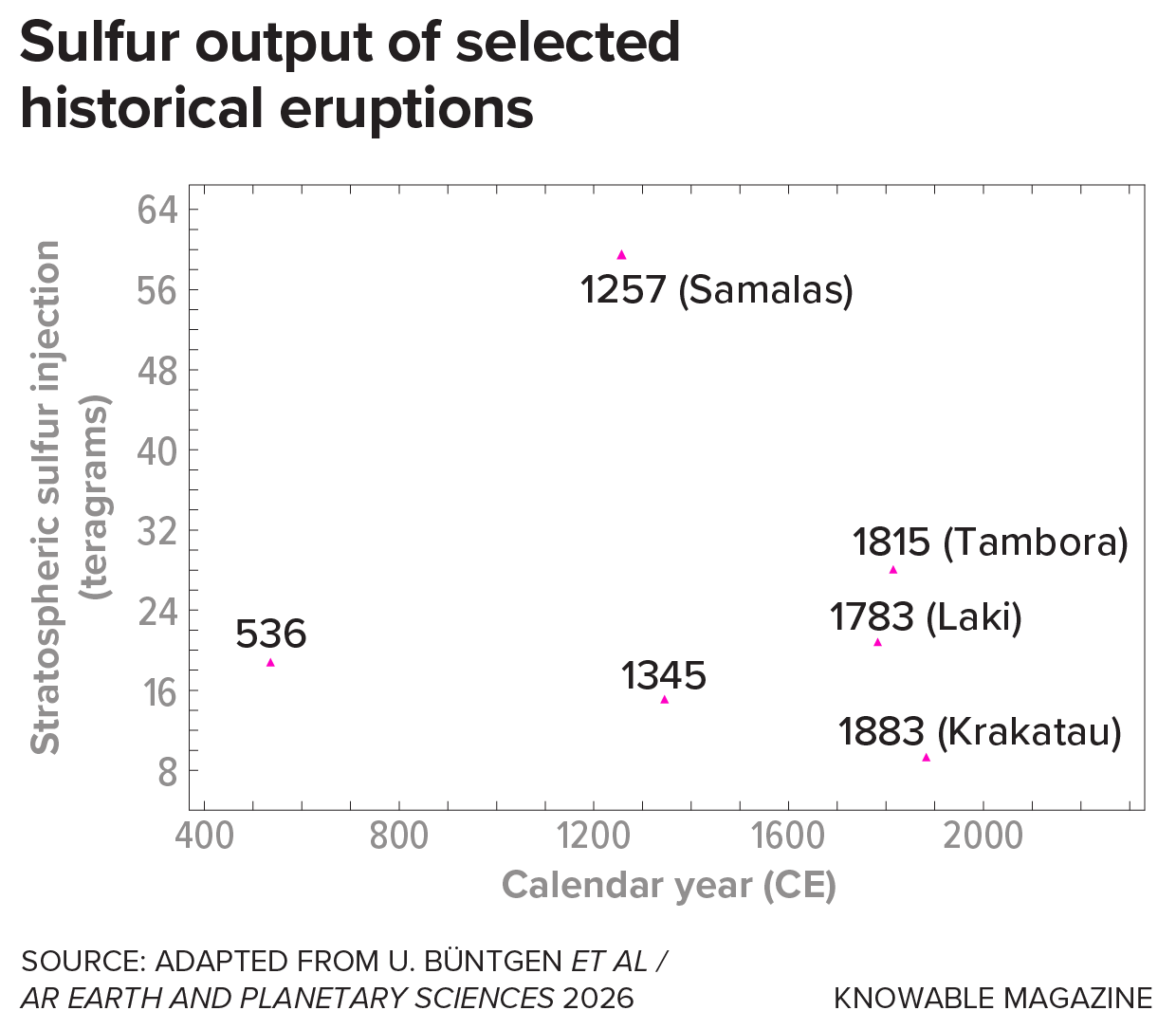
Large volcanic eruptions cool Earth’s climate by injecting tiny particles of sulfur high into the atmosphere, where they reflect a portion of incoming sunlight back into space for periods of months or years. The 1257 eruption of the Samalas volcano in Indonesia dwarfed others in recent history as measured by sulfur output, and has been shown to have chilled the climate across the Northern Hemisphere for several years afterward. Other significant eruptions shown have also influenced Earth’s climate enough to affect human societies.
Large volcanic eruptions cool Earth’s climate by injecting tiny particles of sulfur high into the atmosphere, where they reflect a portion of incoming sunlight back into space for periods of months or years. The 1257 eruption of the Samalas volcano in Indonesia dwarfed others in recent history as measured by sulfur output, and has been shown to have chilled the climate across the Northern Hemisphere for several years afterward. Other significant eruptions shown have also influenced Earth’s climate enough to affect human societies. Credit: Knowable Magazine
Empire falls
There is better evidence pinpointing the volcano that may have helped topple the Mongol Empire seven centuries later. Until 2013, researchers knew only that some eruption—the biggest in the last few millennia as measured by sulfur output—occurred in 1257. In 2013, an interdisciplinary team radiocarbon-dated the ash, pumice, and other deposits around Samalas, a volcano in Indonesia, tying it to the 1257 eruption.
Tree-ring studies, which analyze annual growth layers on trees to determine which years had good and bad growing weather, show extensive cooling across North America and Eurasia from 1257 to 1259. Among other impacts, bad harvests led to starvation in England, and wet, cool summer weather in Japan damaged rice production.
Some researchers have speculated that it was the Samalas eruption that helped seal the fate of the Mongol Empire, which ended after its last ruler perished in a 1259 epidemic in China that could have been linked with the eruption-caused climate changes.
The Black Death
A century after Samalas, volcanologists have found, there was yet another intriguing eruption-disease connection. Between 1346 and 1352, perhaps half of Europe’s population died in the Black Death plague, from infection by the flea-borne bacterium Yersinia pestis.
Historical records from Europe and Asia suggest that skies were darker than usual around that time, perhaps because of a volcanic haze. Ice-core records support that interpretation, documenting a big eruption, or perhaps several, around the year 1345—though the location remains unknown.
To see how this volcanic activity might have affected climate, an interdisciplinary team led by Ulf Büntgen, a tree-ring specialist at the University of Cambridge, used tree-ring data to confirm that the summers of 1345, 1346, and 1347 were unusually cold and wet in southern Europe.
Büntgen and his colleagues note that as crops failed in the bad weather, Europeans imported grain from farther east. The grain ships arrived with rats harboring Y. pestis, leading the researchers to argue that the mystery volcano erupting in 1345 may have set off a chain of events that ultimately killed tens of millions of people.
Iceland’s toxic fogs
Connecting volcanoes to human events may be a challenge even today, but in 1784 an American ambassador to France named Benjamin Franklin was astute enough to link a strange haze that rolled across the countryside in the previous year to a distant eruption.
The source turns out to be Laki, an Icelandic fissure that spewed lava for eight months starting in June 1783. The eruption killed at least one-fifth of Iceland’s people, and much of its livestock, through toxic fog and climate changes that ruined harvests. Though the event was well-documented in Iceland, observers in England, France and elsewhere across Europe who saw the volcano’s haze and sometimes smelled its foul odor could only guess what was going on in a disconnected, pre-electronic world.
“They wouldn’t get news alerts on their phone, they wouldn’t see livestreams of this eruption — they would have no idea,” says Kleemann, who has studied the eruption.
Connections grow clearer
Though it happened just a few decades after Laki, one of the largest eruptions in recorded human history offers a much more detailed picture of how a volcanic climate shock can change history. In 1815, a mountain in Indonesia named Tambora exploded, sending sulfur into the upper atmosphere and triggering broad climatic changes.
Tambora’s eruption caused cooling across much of Europe and North America, where crops failed and 1816 was dubbed the “year without a summer.” The volcanic weather that year kept the writer Mary Shelley cooped up while traveling in Switzerland, where she wrote the novel Frankenstein.
The bad weather brought famine to Switzerland, Ireland, and elsewhere; grain prices and malnutrition soared in parts of Europe, prompting tens of thousands of people to emigrate to North America. Eastern Europe and western Russia, in contrast, had relatively better growing conditions under the post-volcanic climate and enough grain to export it to other nations. Port cities like London and Hamburg enjoyed greater access to imported grains, while prices rose sharply in the hinterlands. Those bright spots show how access to transportation and trade networks can make societies more resilient in the face of disaster.
“Human society has a lot of susceptibilities and vulnerabilities,” says Clive Oppenheimer, a volcanologist at the University of Cambridge who coauthored a 2026 Annual Review of Earth and Planetary Sciences paper on volcanoes, climate and society with Büntgen. “Some climate shocks will come and go…. At other times, the climate shock will come … when there are greater societal vulnerabilities.”
These lessons may hold particular relevance today, because researchers see the historical fallout of past eruptions as a clue to how humanity might respond to present-day climate change. Big volcanic eruptions cool the planet rather than warm it, but they represent the same sort of rapid planetwide shocks that societies are coping with now as Earth heats up.
And as historical volcanology teaches, it is only a matter of time before the next big blast. In the era of satellites and social media saturation, the whole world will know the moment it happens—but it is only by studying past events like Krakatau and Tambora that we can have an idea of what will happen next.
When monsters square off, they are quick to showcase their asymmetrical superpowers.
Take Godzilla, for instance. Thanks to U.S. atomic testing in the Pacific, the dinosaur-like sea creature has explosive, radioactive breath that can destroy everything in its path. His archenemy Rodan, meanwhile, is a pterodactyl-like bird that can fly at supersonic speeds, a skill useful in avoiding atomic bad breath. Since the 1960s, the two giant monsters have duked it out across a series of Japanese films, causing much mayhem in the process.
Originally the product of Cold War fears of nuclear peril, these archetypal monsters can stand in for the principal geopolitical antagonists of today. Like their monster kin, China and the United States have very specific and complementary superpowers. China controls the majority of critical minerals in the world, with a special focus on rare earth elements. The United States has a technological edge when it comes to the most sophisticated semiconductors needed for artificial intelligence applications.
Put bluntly: China has the rocks, and America has the chips.
With these superpowers on display, the two countries have clashed in a series of trade negotiations, tense military standoffs, and high-level political meetings. They are engaged in a prolonged tug-of-war not to save the world — as in some comic-book universe — but in the service of their own national aggrandizement and transnational greed. While they dicker, the world slouches toward bedlam.
A Pause in Hostilities
When President Donald Trump met with Chinese leader Xi Jinping in Beijing in mid-May, the exchanges were unexpectedly cordial. The two countries had been engaged in an on-again, off-again war of tariffs since Trump had begun his second term, a conflict that threatened to spiral out of control. At the same time, the Chinese were deeply concerned about the impact of the U.S.–Israeli war against Iran on international stability, given spiking oil prices and their ripple effects on the global economy.
Yet, at this meeting in China, the two leaders converged on a common goal of “constructive strategic stability.” In order to forge this condominium of superpowers — a G2 — Trump was willing to delay arms deliveries to Taiwan. He also greenlighted the sale of sophisticated (though not the most advanced) Nvidia computer chips to China. In turn, China agreed to increase its purchases from the United States, including 200 Boeing aircraft and $17 billion of agricultural goods each year through 2028.
The hoopla surrounding the summit, generated by press offices on both sides, obscured the reality that the two countries completed few concrete bilateral deals. Trump did not secure long-term access to the critical minerals that China controls — specifically the rare earth elements that are essential to U.S. high-tech manufacturing and sophisticated military hardware — and the tech giants that accompanied Trump on the trip didn’t win any major concessions in the form of enhanced access to the Chinese market. Meanwhile, China failed to alter U.S. security policy in the Asia–Pacific region. The leaders of the new G2 might be expected to rethink or rework the global rules of the road, but this was not on the agenda in Beijing.
Still, the two superpowers stepped off the path of escalating confrontation. Perhaps more importantly, Trump has seemingly abandoned his earlier goal of decoupling the United States from the Chinese economy, which, along with ratcheting up containment of the “strategic competitor,” had become something of a bipartisan imperative.
For the time being at least, the world’s superpower monsters are not laying waste to the landscape around their feet. Given how much firepower they command, that’s no small achievement. The battle, however, continues to rage further afield in the mineral world.
Grabbing the Rocks
Rare earth elements, or REE, aren’t rare. But it can be quite difficult to extract any of these 17 unusual metals from their surrounding ores. The United States used to be the world’s leading extractor and processor of these resources, from a mine in California near the Nevada border. But that was back when REE were mostly used for such products as black-and-white televisions. The environmental damage caused by the extraction and processing — as well as the labor costs involved — impelled the United States, over time, to outsource operations to China.
By the time REE had become indispensable to the manufacture of very powerful magnets used in everything from wireless iPhone chargers to the F-35 fighter jet, China was controlling upward of 60 percent of the extraction and 90 percent of the processing. It has filed more patents for the latest processing techniques than any other country. It has also expanded beyond digging up its own territory and, through its Belt and Road Initiative — a globe-spanning collection of interconnected infrastructure projects — secured access to mines overseas.
In Tanzania, for instance, an Australian firm Peak Rare Earths discovered what may well be the largest untapped supply of REE in 2010. This is exactly what the United States and its allies had been looking for: ore that can be extracted and processed outside of China. Except that last year, the Chinese firm Shenghe Resources bought the Australian company — and the rights to the Tanzanian deposits — for a little more than $100 million. China is further cornering the market by importing ore from rare earth mines in Myanmar, exploiting new deposits in Brazil, and eying Malaysia and Indonesia for potential processing operations.
To guarantee access to the minerals that both the Pentagon and U.S. industry need, the Trump administration has ramped up the exploitation of U.S. REE deposits. Mountain Pass, the California mine previously shuttered after environmental lawsuits and Chinese outsourcing, restarted production in 2012, but it still couldn’t compete against China, which had flooded the market with REE to drive down prices. Last year, the Pentagon acquired a majority stake in MP Materials, the company that owns the mine, which now produces over 10 percent of the global supply of REE.
Trump has also pumped money into USA Rare Earths, which is developing the Round Top mine in Texas, which promises to rival the REE production of Mountain Pass. Even with an accelerated timeline, however, the new mine won’t start production before 2028. Meanwhile, the administration is playing the field: pouring money into a REE processing facility in Arizona, contracting with a similar operation in France, and hammering out supply contracts with a mining firm in Australia. This frenzied activity may lessen dependency on China but not eliminate it.
And it’s not just rare earth elements. China controls 95 percent of magnesium production, over 80 percent of tungsten, over 70 percent of graphite and silicon, and three-quarters of cobalt — minerals that are critical to pretty much all modern manufacturing. On the processing end, China is the leading refiner of 19 out of 20 of the most coveted minerals, with an average market share of 70 percent. And instead of being reliant on its control of raw materials and processed ores, China is also in command of the downstream production. For instance, it’s responsible for 94 percent of the manufacturing of the most powerful magnets that go into cars, computers, and medical equipment.
The new rush for “critical raw materials,” many of them essential for building out the infrastructure of a “clean energy” transition but also indispensable for the entire range of advanced military products to which the United States is addicted, has sharpened the competition between China and the United States throughout the mineral-rich Global South. Those countries generally see China as a willing provider of capital and finance. They view Trump — who has dismissed so much of the Global South as “shithole countries,” deported huge numbers of their citizens, and subjected nearly all of their governments to punishing tariffs — with considerable skepticism.
How long will it take for the United States to catch up and neutralize China’s mineral superpower? In the best-case scenario, America will only be able to meet half its need for rare earth elements by 2028, and it currently produces less than 1 percent of those powerful magnets. Until America catches up — or forges partnerships with other countries to meet its demand through initiatives such as the U.S.-led Pax Silica — China will be able to pinch off the supply of those key minerals more easily than Iran can close off the Strait of Hormuz.
Controlling the Chips
Silicon Valley has long been a byword for innovation: Apple’s iPhones, Google’s search engine, Facebook’s social media platform. But the heart of Silicon Valley was, at least originally, made out of silicon. Chips made the valley. In the 1980s, Japan produced semiconductors that were superior to anything American companies could get to market. Competition spurred Silicon Valley to leapfrog over Japan.
The chip-designer Nvidia began in the 1990s as a supplier of graphic processing units, or GPUs, for the video game industry. These Nvidia chips became, literally, the brain behind Microsoft’s Xbox. Later, they came to power Sony’s PlayStation 3, signaling that Silicon Valley had definitively surpassed its Japanese competitors.
Then Nvidia began developing the kind of hardware necessary for the next big tech revolution: artificial intelligence. The first major AI platform available to the public — ChatGPT — was built on the foundation of Nvidia’s next-generation GPUs. Suddenly, Nvidia was the most sought-after supplier and the most valuable company in the world, now worth more than $5 trillion.
It’s one thing to corner the market on the graphics necessary to play “Grand Theft Auto” or make the special effects of the 2021 “Godzilla vs. Kong” movie look terrifyingly real. It’s quite another to create the building blocks of the AI technology that is creeping into every corner of the economy, not to mention the military.
To maintain its economic and military edge, the United States has placed controls on the export of Nvidia’s most advanced semiconductors to China. It’s no surprise that, over the last six years, the People’s Liberation Army attempted hundreds of times to acquire those precious chips. To prevent China from producing their own, the Dutch also placed restrictions on the export of the machines used to print the chips.
There are two challenges to this strategy of restriction. The first is that, despite its name, Silicon Valley doesn’t actually manufacture the vast majority of these fancy computer chips. For more than 90 percent of advanced semiconductors, the world depends on Taiwan. It’s as if another monster has appeared on the scene with a superpower that can bring both Godzilla and Rodan to their knees.
The United States harbors a fear that the Chinese response to their chip dependency will be simply to invade Taiwan and take over its semiconductor industry. For its part, the Biden administration pushed through the CHIPS Act to re-shore computer chip manufacturing, which is turning Arizona into a real Silicon Valley. Intel and Taiwan’s TSMC are among the more than 75 firms building factories there, which will require considerable water (in a desert) and produce tons of “forever chemicals,” the synthetic compounds that do not break down naturally, polluting the environment and accumulating within people (amid a growing population).
Given Russia’s failure to seize Ukraine and the inability of the United States and Israel to achieve regime change in Iran, China is not likely to attempt a takeover of Taiwan any time soon. Instead, it has pursued a different approach, and this is the second problem with a restriction strategy. Prevented from acquiring Nvidia’s best chips, China is pouring money into making its own chip sector the best in the world.
Trump’s cuts in science funding and restrictions on work visas will handicap U.S. technological progress for years and possibly decades.
Those considerable state investments produced a Sputnik moment in January 2025 when the Chinese company DeepSeek released its ChatGPT competitor. The big breakthrough, however, was behind the scenes: China was able to use its own domestically produced chips to create comparable AI results at a cheaper cost.
Private sector expenditures on AI in the United States still exceed China’s investments by a considerable margin. But the Trump administration’s cuts in science funding and restrictions on work visas will handicap U.S. technological progress for years and possibly decades. China, meanwhile, will likely have machines ready to produce what its AI models need by 2030, the target date Beijing has set to close the advanced chip gap.
The Sequel
Both China and the United States have landed a number of punches in their monster battle. The Trump administration has maintained export controls on its most advanced chips and has created a blacklist of Chinese companies it accuses of working with the People’s Liberation Army, including the car company BYD and the tech firm Baidu. China has retaliated by putting two American and 14 European companies on its own blacklist for the “dual use” of rare earth elements for both civilian and military applications. These come on top of Chinese export restrictions imposed in 2025 on seven rare-earth metals and an announcement that five more elements will be added in November.
These tit-for-tat exchanges might suggest that the two sides are evenly matched. And that may have been the case a decade ago. Today, however, despite its iconic status and devastating powers, the American Godzilla looks pretty wobbly. Trump’s fixation on cutting government and his failure to staff the remaining positions with competent officials has meant that the effort to deny China the most sophisticated chips has been compromised. Simply put, the Commerce Department has failed to enforce the export restrictions on U.S. companies, and thousands of those powerful chips have likely made their way into Chinese hands.
Even without government incompetence, the United States would be hard-pressed to maintain its advantage. The bottom line: China will be able to make its own chips sooner than America can acquire its own rocks.
The real superpower that China possesses, in other words, is its government’s ability to marshal resources to make the technological leap forward and maintain a substantive defense of its own material advantages. Thanks to this superpower, as Evan Osnos points out in The New Yorker, “China produces at least 70 percent of the world’s drones, electric vehicles, lithium-ion batteries, and solar cells.” So confident is China in this superpower that it has recently rolled out a sodium-ion battery that needs none of the critical minerals of the lithium battery that powers electric vehicles. Beijing is thus negating its own mineral advantages. Instead, the Chinese government is relying on its industrial prowess to prepare for a world where rocks no longer rule.
The Biden administration tried to copy this superpower with the CHIPS Act and the additional targeted subsidies of the Inflation Reduction Act. Trump, too, has attempted to pursue a similar industrial policy with investments in critical minerals alongside scattershot tariffs and export controls. But he has also weakened the underlying superpower of government action through funding cuts and mass layoffs at critical government agencies. As a result, a lot of the shots that the Trump administration fires at China are actually blanks.
Trump’s fixation on cutting government and his failure to staff the remaining positions with competent officials has meant that the effort to deny China the most sophisticated chips has been compromised.
If this were a film, Godzilla would be teetering on the edge of a precipice, harried by a triumphant Rodan. In the final shot, Godzilla would live to fight another day, setting the scene for a sequel.
In real life, the United States is wasting billions of dollars on a war in Iran, the Trump administration is laser-focused on stuffing its own pockets from insider deals, and U.S. universities and companies are hemorrhaging funds and talent. At the same time, China is cornering the global market on renewable technology and consolidating its trade and investment relationship with the nearly 150 countries in the Belt and Road Initiative. The newer superpower seems to be making better use of its superpowers.
Another great movie trope is enemies quickly morphing into friends when faced with an existential threat. Godzilla and Rodan eventually team up to fight King Ghidorah, a hydra-like extraterrestrial beast with three heads. Is it too late for China and the United States, inveterate frenemies, to do the same in response to the very terrestrial threat of climate change?
It would certainly make for a Hollywood happy ending. But the Trump administration, insisting that carbon emissions are no problem, is attempting to reenergize the country’s fossil fuel sector. And despite its buildout of renewal energy infrastructure and its expanding exports of solar panels and wind turbines, China remains heavily dependent on fossil fuels, especially coal.
Let’s face it: Monsters are going to be monsters. If they’re not fighting each other directly, they’re laying waste to the environment and poisoning the communities that live atop precious resources. In the world of entertainment, Godzilla and Rodan learn how to use their superpowers for good when a planet-wide emergency pushes the monsters together to fight against an external threat.
The real world faces just such a red alert. Our monsters, however, just keep doing monstrous things.
Actress Killed in Horrific NYC Hit-and-Run as Scooter Rider Fled Scene
Actress Lisa Banes spent decades building an impressive career on stage and screen, appearing in more than 80 movies and television shows.
But in June 2021, the Gone Girl star’s life came to a sudden and horrifying end on a New York City street.
Banes, 65, was visiting friends in Manhattan on June 4 when she attempted to cross Amsterdam Avenue near the Juilliard School.
As she walked through a marked intersection, authorities said an electric scooter rider blew through a red light and slammed into her.
The impact left Banes with a catastrophic brain injury.
But instead of stopping to help the badly injured actress, the rider allegedly sped away.
Banes was rushed to the hospital, where doctors fought to save her life. She died from her injuries 10 days later, on June 14.
The tragedy stunned Hollywood, where Banes had become a familiar face through roles in Gone Girl, Cocktail, Murder, She Wrote, Desperate Housewives, China Beach and numerous Broadway productions.
Authorities soon began hunting for the scooter rider responsible for the deadly crash.
Prosecutors later revealed that the man traveled roughly four miles after striking Banes and took his scooter to a shop in Upper Manhattan for repairs rather than returning to the scene or checking on the actress.
Nearly two months later, on Aug. 5, 2021, police arrested Brian Boyd, then 26, at his apartment near the area where Banes had been struck.
He was initially charged with leaving the scene of an accident resulting in death and failing to yield to a pedestrian. His bail was set at $30,000 cash or $100,000 bond.
Boyd later pleaded guilty to manslaughter.
On Nov. 30, 2022, he was sentenced to one to three years behind bars.
Manhattan District Attorney Alvin Bragg condemned Boyd’s actions following the sentencing.
“Brian Boyd drove recklessly with no regard for pedestrians, fatally striking a beloved actress and New Yorker before speeding off to avoid accountability,” Bragg said.
He added that Banes would be remembered for the mark she left on New York through her work on Broadway and on screen.
Her sudden death also brought an outpouring of grief from friends and former co-stars.
Seth MacFarlane, who worked with Banes on The Orville, remembered her as an enormously talented performer whose kindness matched her abilities.
“A tremendous loss,” he wrote following her death.
Actress Dana Delany, who appeared alongside Banes on China Beach, also paid tribute.
“Terribly sad news about Lisa Banes,” Delany wrote, calling her a “consummate actor who commanded the stage.”
Banes’ career stretched across several decades, but her death at just 65 turned what should have been another visit to New York into an unthinkable tragedy — one made even more disturbing by the rider’s decision to flee as she lay critically injured.