18.9 C
London
Thursday, September 3, 2026
Home Blog

Trump’s DOJ Blocked Serious ICE Shooting Charge Over Federal Prosecutor’s “Strongest Possible” Objections

0
trump’s-doj-blocked-serious-ice-shooting-charge-over-federal-prosecutor’s-“strongest-possible”-objections
Trump’s DOJ Blocked Serious ICE Shooting Charge Over Federal Prosecutor’s “Strongest Possible” Objections

Over the “strongest possible” objections from the federal prosecutor handling the case, leaders at the Department of Justice in Washington, D.C., quashed plans to bring civil rights charges against an Immigration and Customs Enforcement agent accused of shooting a Venezuelan immigrant and then lying about it. 

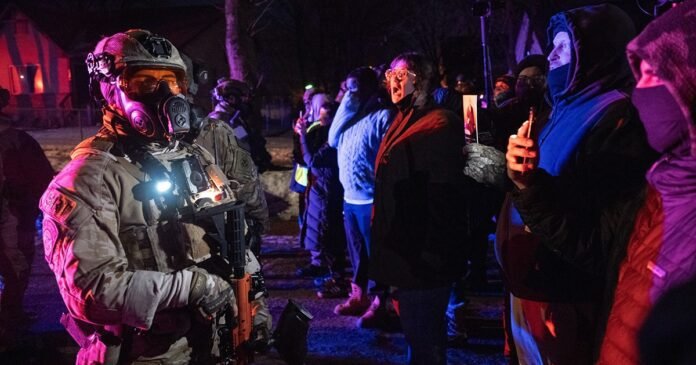
The agent, 52-year-old Christian Castro, allegedly shot Julio Cesar Sosa-Celis in the leg in Minneapolis this January during Operation Metro Surge, the Trump administration’s immigration blitz that sent thousands of federal agents into the state. The incident was one of three shootings by immigration agents in the city, the other two of which were fatal. 

Federal prosecutors in Minnesota had been preparing to charge Castro with deprivation of rights under color of law for the shooting of Sosa-Celis, according to several people familiar with the case. Those charges are similar to the ones leveled against Minneapolis police officers accused in George Floyd’s killing and can carry hefty prison sentences. 

Late on Tuesday, Matthew Evans, the assistant U.S. attorney in Minnesota in charge of the case, told lawyers for Sosa-Celis and other victims to prepare for Castro to be charged “only with False Statements,” according to an email that was reviewed by ProPublica. 

That charge would likely carry a far less severe punishment if he were convicted.

“This is being directed by the Main Justice and the US Attorney,” Evans wrote in a remarkably candid account of internal deliberations. “I objected in the strongest possible terms and fought it as hard as I could. It wasn’t enough.” 

He wrote that the false statement charges could come soon and would likely be filed under seal.

“It has been an honor and a privilege to try to get justice for your clients,” Evans concluded the email.

A DOJ official said civil rights charges require consultation with the civil rights division in Washington, and “any charging decisions that come out of such investigations are collaborative and deliberative and adhere to the facts and law of that specific case and controversy.”

The agency “has not yet reached a conclusion on this matter and will never rush an investigative process and the thorough review of all evidence,” the official said. 

Evans and a spokesperson for the U.S. Attorney’s Office in Minnesota declined to comment. An attorney for Sosa-Celis did not return phone calls from a reporter. Castro, who has an outstanding warrant in Minnesota for this case, could not be reached for comment.

Under the Trump administration, the Justice Department’s civil rights division has been thinned and has dropped some Biden-era oversight of law enforcement agencies. This move by the DOJ is likely to fuel further concerns that the department is operating more in support of President Donald Trump’s political agenda than to preserve the rule of law. Earlier this year, a ProPublica analysis found that in almost every instance of immigration agents shooting people, Trump’s administration blamed the injured and dead within hours of the incident. In many of those cases, federal or local police declined to investigate the agents.

Castro, who was put on leave by the Department of Homeland Security, is also facing multiple state felony charges in Minnesota, including assault with a dangerous weapon. After he left Minneapolis and returned to Texas, Minnesota officials had requested state officials there extradite Castro to face the charges, but Texas Gov. Greg Abbott refused to cooperate. Castro had been held for 90 days in jail while the two states fought over the extradition. He was released last week. 

Sosa-Celis was shot on Jan. 14, as Castro and another ICE agent chased Alfredo Aljorna, an immigrant from Venezuela, after a traffic stop. Aljorna ran to his home, which he shared with Sosa-Celis. The two men made it inside after a brief scramble, and Castro fired through the closed door, “knowing [the home] was occupied by several people,” according to state charging documents. One witness said there were two children in the house when Castro shot into it. Sosa-Celis was hit in the leg. 

ICE agents then deployed tear gas into the home and took the men and their partners into custody, according to the documents and other court records.

DHS originally said Castro and the other agent were ambushed by the men and beaten with a shovel or broomstick, making Castro fear for his life and fire in self-defense. DHS called Sosa-Celis and Aljorna “violent criminal illegal aliens,” and federal prosecutors charged them with assault. 

The next month, however, they dropped the charges against both men, and the DHS backed off its narrative in a rare admission of possible wrongdoing of its officers. “Video evidence has revealed the sworn testimony of the two agents appeared to be false,” then-acting ICE director Todd Lyons said in a statement.  

After Castro’s release from jail, Hennepin County Attorney Mary Moriarty, who is leading the state’s prosecution against him, said she worried that Castro will flee to Mexico.

Reached for comment Wednesday, Moriarty compared the Justice Department’s decision to overrule Evans to its actions after ICE agents killed Renee Good. A week before shooting Sosa-Celis, ICE agent Jonathan Ross shot Good in her car. Agents alleged she drove toward them, but video of the incident showed Good’s wheels turned away from them when they shot her. Federal authorities first agreed to a joint investigation, but Justice Department officials later refused to cooperate with state police, deeming any review of the fatal shooting unnecessary.

Syria’s Unexploded Weapons Kill or Injure a Person Every 6 Hours

0
syria’s-unexploded-weapons-kill-or-injure-a-person-every-6-hours
Syria’s Unexploded Weapons Kill or Injure a Person Every 6 Hours


Syria’s postwar recovery is being slowed by a danger that does not announce itself: mines and unexploded weapons scattered through homes, fields, roads and ruined neighborhoods are killing or injuring one person about every six hours, according to the HALO Trust, a mine-clearance charity working in the country.

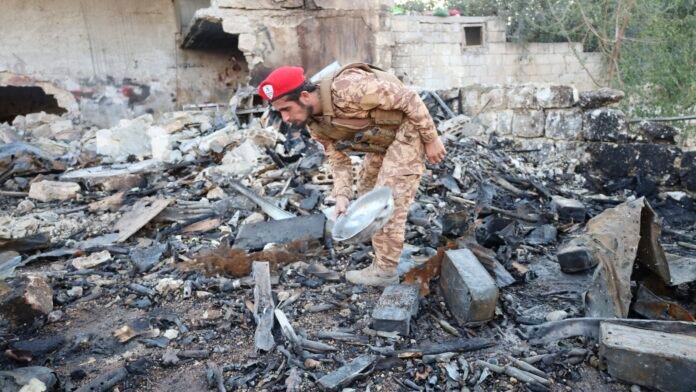
The threat has grown more visible since the December 2024 fall of former President Bashar Assad, when displaced Syrians began returning to damaged towns and villages. Families seeking firewood, farmers returning to land and construction crews clearing rubble have encountered explosive remnants from nearly 15 years of conflict.

The United Nations Mine Action Service and humanitarian organizations say at least 2,375 people have been killed or injured in such incidents since the change of government, including more than 850 children. The actual toll is believed to be higher because many accidents in remote areas go unreported.

A preliminary Landmine and Cluster Munition Monitor report found that Syria recorded the world’s highest number of casualties from land mines and explosive remnants of war last year, with about 1,600 victims.

“This year has seen almost 700 casualties from explosive accidents,” Simon Jackson, the HALO Trust’s Syria program manager, said. He said roughly one-third of the victims had died and about one-third were children.

More than 60% of incidents have occurred on agricultural land or grazing areas, Jackson said. That makes the crisis more than a security problem: It limits food production, delays rebuilding and discourages families from returning permanently.

“Unexploded ordnance prevents people from rebuilding their homes, rebuilding their businesses. It prevents farmers from re-sowing crops,” Jackson said.

Clearance teams, working with Syria’s new authorities, face an immense task. In former front-line districts, destroyed buildings contain layers of metal, shrapnel and ammunition that make detection difficult. In many areas, minefield maps are incomplete or nonexistent.

A Syrian Defense Ministry engineering official said operations are prioritizing populated areas, roads and farmland, but new contaminated sites are discovered daily. Since the new government took power, 47 soldiers have been killed and more than 90 injured during mine-clearance work, according to the ministry.

Jackson warned that even doubling the sector’s capacity would leave Syria facing at least a decade of work, and possibly two or three. For Syrians returning home, peace remains dangerously unfinished.

Trump becomes first sitting US president to appear on a coin as Mint releases $1 piece

0
trump-becomes-first-sitting-us-president-to-appear-on-a-coin-as-mint-releases-$1-piece
Trump becomes first sitting US president to appear on a coin as Mint releases $1 piece


The US Mint confirmed on Thursday that the “golden dollar” featuring the likeness of US President Donald Trump has been released, urging people to check their pocket change while collectors can buy it in rolls and bags sold exclusively through its own channels.

The products are priced at $61 for a 25-coin roll and $154.50 for a 100-coin bag.

In practice, finding one in everyday change may take patience, since dollar coins have caught on widely with American shoppers and circulate far more sparsely than notes.

Collectors also have another detail to chase as the US Mint struck 250,000 of the coins on 4 July carrying a special “July 4th” privy mark, dispersed through the rolls and bags.

Despite its colour, the coin contains no gold, being 88.5% copper with smaller quantities of zinc, manganese and nickel.

The coin was struck in Philadelphia and carries no mint mark.

Chief Engraver Joseph Menna designed the obverse from an official White House photograph, showing Trump facing almost directly forward beneath the inscriptions “LIBERTY”, “IN GOD WE TRUST” and the dual date 1776 to 2026.

The reverse carries the Presidential Seal, originally sculpted by former chief engraver Frank Gasparro, with the numeral 250 added to the eagle’s shield to mark the country’s 250th anniversary.

There is one precedent for this initiative, though an imperfect one.

Calvin Coolidge appeared alongside George Washington on a 1926 half dollar marking 150 years of independence, making him the first living president on American coinage.

However, that was a commemorative issue rather than a coin intended for daily use. The legal basis for placing a Trump coin in circulation has been contested.

US law generally bars portraits of living people from coins, and the administration has relied on the Circulating Collectible Coin Redesign Act of 2020, signed by Trump during his first term, which permits $1 coins bearing designs emblematic of the anniversary throughout 2026.

The design process also drew criticism.

The US Commission of Fine Arts had recommended a profile portrait and a different eagle design, neither of which was adopted, while the Citizens Coinage Advisory Committee, which normally reviews Mint designs, declined to consider it.

66 Palestinian villages forcibly expelled by Israel from West Bank since October 2023: Rights group

0
66-palestinian-villages-forcibly-expelled-by-israel-from-west-bank-since-october-2023:-rights-group
66 Palestinian villages forcibly expelled by Israel from West Bank since October 2023: Rights group

Israel has forcibly displaced residents of Khirbet al-Taban in the southern occupied West Bank, making it the 66th Palestinian village to be completely emptied of its residents since October 2023, Israeli rights group B’Tselem said Wednesday.

The group said in a statement that Israeli forces raided the village, south of Hebron, Wednesday morning and demolished the homes of all its residents within hours.

Khirbet al-Taban is home to 12 families totaling about 70 people, including 28 children, it said.

“The forces did not leave a single home standing,” B’Tselem said.

Israeli forces also demolished sheep pens, water tanks and storage facilities and destroyed caves in the area, according to the group.

B’Tselem said Khirbet al-Taban was the “66th Palestinian village that Israel has forcibly displaced since October 2023,” while residents of 18 other villages have been partially displaced.

The group said the displacement operations have forcibly removed about 4,931 Palestinians from their homes, including approximately 2,339 children and teenagers.

READ: Palestinian commission records 2,030 Israeli army and settler attacks in West Bank in August

B’Tselem Executive Director Yuli Novak said Israel was “continuing to erase Palestinian communities at an accelerating pace as part of the ethnic cleansing it is carrying out in the West Bank.”

Novak said the international community was standing “idly by while Palestinian lives are left exposed to Israeli violence.”

The demolition of Khirbet al-Taban comes amid an escalation in the seizure of Palestinian land across the West Bank, including occupied East Jerusalem, alongside occupiers’ attacks and the establishment of illegal settlement outposts and projects.

In July, Israeli authorities issued 31 orders to seize about 831,000 square meters of Palestinian land in the West Bank, according to The Palestinian Colonization and Wall Resistance Commission.

The Israeli army and occupiers also carried out 2,256 attacks against Palestinians, their land and property during the month, including 1,458 by the army and 798 by occupiers, according to the commission.

Since Israel began its genocide on the Gaza Strip on Oct. 8, 2023, Israeli forces and occupiers have intensified attacks in the West Bank, including occupied East Jerusalem, through killings, arrests, forced displacement, home demolitions and illegal settlement expansion.

READ: Settler fire attacks damage 11 mosques in West Bank in 2026

Wary of Artemis IV timeline, NASA is changing lunar spacesuit design

0
wary-of-artemis-iv-timeline,-nasa-is-changing-lunar-spacesuit-design
Wary of Artemis IV timeline, NASA is changing lunar spacesuit design

NASA has decided to use a simpler spacesuit for its initial missions to the lunar surface, Ars has learned.

The agency announced the decision during an internal meeting this week as it seeks to accelerate its program to land humans at the south pole of the Moon as early as 2028. At the direction of Artemis Program Manager Jeremy Parsons, NASA will work with Axiom Space to develop a “Sortie Suit” variant of the planned spacesuit for the lunar surface.

Sources said the Sortie Suit will be used for the initial landing missions flown on landers developed both by SpaceX and Blue Origin. Among the goals of the initiative are to lower the mass of the spacesuit, reduce its complexity, and simplify interfaces between the spacesuits and lunar landers.

Accelerating Artemis

Since arriving at NASA in December 2025, Administrator Jared Isaacman and his team have been reviewing the space agency’s Artemis Program, which had fallen significantly behind schedule. At the time, it appeared increasingly likely that NASA would not return to the Moon before at least 2030 and that this would allow China to reach the lunar surface in advance of NASA’s return.

Isaacman has been searching for ways to get Artemis back on track and, with the blessing of Congress, has already made some major changes, including streamlining production of the Space Launch System rocket, canceling the Lunar Gateway to reduce the burden on lunar landers, and working aggressively with SpaceX and Blue Origin to understand their needs and how NASA can help.

Less has been publicly reported about NASA’s work with Axiom Space, which, under a spacesuit-as-a-service contract, is the agency’s only current provider of suits for astronauts to venture out onto the lunar surface.

This does not mean suits are unimportant, however. For NASA to have a meaningful mission to the lunar surface, it needs more than a spacecraft, a rocket, and a lander—it needs modern spacesuits capable of allowing astronauts to wander around outside, take pictures, and conduct science.

Slimming down the suit

About four years ago, NASA awarded spacesuit development contracts to two providers, Axiom Space and Collins Aerospace. In 2024, after falling behind schedule and presumably because it was having difficulty making the finances work, Collins dropped out, leaving Axiom as the sole provider of suits. Axiom has remained committed to the process, but private sources have expressed concerns about its rate of progress.

We began to get some answers about progress this week during the Aerospace Safety Advisory Panel. One of the panel’s members, former astronaut Charlie Precourt, revealed that NASA leadership is meeting with Axiom six days a week, often in person, to address concerns about schedule and performance. Precourt added, “Requirements are being adjusted to reflect near-term mission needs, including shortening the spacesuit certification duration requirements.”

Although he did not name the “Sortie Suit,” this now clearly appears to be a reference to a slimmed-down version of Axiom’s AxEMU suit. Ars has reached out to Axiom for comment and will update this story if a response is received.

There have been repeated industry rumors that Axiom’s current design is significantly over its mass budget. One reason for this is the requirements NASA initially established for these suits, which the space agency’s inspector general later characterized in a 2024 report as “over-burdensome.”

Initial requirements asked … a lot

Among these challenging requirements, NASA mandated that the lunar spacesuits be capable of six spacewalks over a 6.5-day mission; that even after being stowed in a dormant condition, the suits must still be capable of further spacewalks for a period of 210 days; and have a thermal system capable of not just shedding heat from an astronaut exerting themselves but also operate nominally for at least two hours in an exceptionally cold, permanently shadowed region.

These and many other requirements led Axiom toward a suit design that was complicated, necessitated many layers of protection that drove mass upward, and had a stiffer design that reduced astronaut mobility. The result was a much heavier suit, one that was more difficult to build, was falling behind schedule, and cost more.

Essentially, with the “Sortie Suit” design, NASA is seeking to pare back requirements to allow Axiom to develop a suit that is good enough for initial Artemis missions and becomes more capable over time as NASA and Axiom learn about conditions on the surface of the Moon and can fold operational experience into upgrades.

Such an approach would better suit NASA’s needs now.

Will Ukraine attack civil aviation in Russia?

0
will-ukraine-attack-civil-aviation-in-russia?
Will Ukraine attack civil aviation in Russia?

President Volodymyr Zelensky has warned airlines, insurers and foreign governments that Russian airspace “will be de facto closed” because of Ukrainian drones.

Although Ukraine does not threaten civil aviation, he said, carriers flying to Moscow, St. Petersburg, or other major hubs must factor in the risk of drones in Russian skies.

“The safe days in Russia’s skies are over,” he said, and Ukrainian drones will operate “on a scale that has to be taken into account.”

Either Zelensky’s statement was simply propaganda or his warning had more dire implications. The Russians understood Zelensky’s statement as a threat to commercial aviation. Vladimir Putin called it “state terrorism.”

Shutdowns of Russian commercial airports due to drone and missile attacks are nothing new. They have been quite common during the Ukraine War.

Russia has taken protective action around civil aviation facilities since drone attacks on Russian territory began in the spring of 2022.

The Moscow and St. Petersburg airports are strictly for commercial aviation and are not used for military operations. Both cities have nearby military airports.

In the past year Russia has halted airport operations during swarm drone attacks. Mass-scale incursions – such as sweeping multi-hundred-drone barrages targeting Moscow and surrounding oblasts – have forced successive closures and temporary ground stops.

For instance, international carriers’ operations have been disrupted often, leading to rolling cancellations, terminal evacuations and passengers being directed to emergency shelters.

Between February 2023 and May 2025, Russian airports closed at least 366 times under emergency “Carpet” protocols.

“Carpet” (or Kovyor) protocols are a standard emergency aviation safety procedure in Russia designed to immediately clear airspace when an unauthorized object or security threat – such as an incoming drone – is detected.

A Ukrainian drone found outside of Moscow.

These disruptions have heavily impacted major aviation hubs like Moscow’s airports (Vnukovo, Domodedovo, Sheremetyevo, and Zhukovsky) as well as regional facilities across western and southern Russia, such as Kazan, Saratov and Sochi. Major regional shutdowns also occur from targeted strikes, such as when 13 southern airports simultaneously halted operations after a drone hit an air navigation facility in Rostov-on-Don.

There are about 60 foreign commercial carriers that fly to Russian airports. These include Emirates, Etihad Airways, Qatar Airways, flydubai, Oman Air, Gulf Air, Air Arabia, and Flynas. Regional operators like El Al (Israel) and Royal Jordanian also maintain service.

Turkish Airlines (along with subsidiaries like AJet and Southwind Airlines) and low-cost carrier Pegasus Airlines operate extensive networks connecting multiple Russian cities directly to Turkish hubs.

Major Chinese airlines – Air China, China Eastern Airlines, China Southern Airlines, and Hainan Airlines (alongside regional carriers like Beijing Capital, Sichuan, and Tianjin airlines) – run regular routes connecting China and Russia. Other Asian operators like Sri Lankan Airlines and Vietnam Airlines also maintain service.

Airlines from neighboring friendly states maintain heavy flight schedules into Russian hubs, including Air Serbia, Belarus’s Belavia, Azerbaijan Airlines, Uzbekistan Airways, Kazakhstan’s SCAT Airlines, and multiple carriers out of Armenia and Kyrgyzstan. Several African airlines operate routes into Russia, including EgyptAir, Ethiopian Airlines, Royal Air Maroc, Air Algérie, and Egyptian carriers like Air Cairo.

Russian airlines offer significant service in Russia and internationally and include Aeroflot, Pobeda, Rossiya, S7 (Siberia), Ural, Azimuth, Nordwind and Utair plus smaller specialized carriers.

Aeroflot crew.

The United States, the European Union, Canada, the United Kingdom, and other Western nations banned Russian aircraft and airlines from entering their airspace when the war began. In retaliation, Russia closed its airspace to carriers from over 30 countries, including all EU member states and the U.S. from the end of February, 2022.

Moscow’s four commercial airports handle between 1,500 and 1,800 flights per day. St. Petersburg handles 400 to 500 flights daily.

While Russia’s commercial airports remain in business, all of Ukraine’s commercial passenger air facilities have been closed since the start of the war. Travelers must fly into neighboring countries (such as Poland, Slovakia, Hungary, or Moldova) and cross into Ukraine by land via train or bus. The Ukrainian government’s primary presidential aircraft—an Airbus A319 operated by the state enterprise “Ukraine”—is based at a secure facility at the Krakow John Paul II International Airport in Poland.

While Russia’s commercial airports remain in business, all of Ukraine’s commercial passenger air facilities have been closed since the start of the war.

Ukrainian swarm drone attacks on Russian territory are an effort to raise the cost of the war for Russia and demoralize the public and push Russia’s leaders into negotiations. Zelensky wants a ceasefire and the eventual withdrawal of Russia’s army from Ukraine’s territory. Putin says he will not negotiate with “terrorists.”

A Russian Geran-3 jet-powered kamikaze drone lying in a cornfield after being recovered intact in Ukraine on Sept. 16, 2025. Photo: HUR MO

It is possible Ukraine can further step up drone attacks on Russian territory, but the Ukrainians also know that the Russians will retaliate and step up their own attacks. Russia has a range of weapons, including UAVs, that it can use and Russia has developed a new version of the Geran (Geran 3) which is jet powered and appears to be faster than any Ukrainian interceptor drone.

Increasingly the Russians are focusing on striking manufacturing and storage sites around Kyiv and energy and port operations in Odesa. Such attacks recently destroyed an important weapons storage site in a Kyiv suburb, and the Odessa attacks have all but halted grain and cooking oil exports from Odesa and stopped incoming arms shipments.

It is uncertain whether Zelensky’s warning will change the current pattern of attacks and retaliations. It is hard to see how Ukraine can keep launching hundreds of drones (sometimes as many as a thousand) every night against targets inside Russia, so it could be that Zelensky is saying more than he can do. The Russians are intensely focusing on Ukraine’s drone production facilities and warning outside suppliers, especially in the UK, that it might take action against them. What he really may do, Putin says, is a “military secret.”

This article by former US Deputy Under Secretary of Defense Stephen Bryen originally appeared on Weapons and Strategy, his newsletter.

FCC plans robocall scorecard to grade phone companies on spam call blocking

0
fcc-plans-robocall-scorecard-to-grade-phone-companies-on-spam-call-blocking
FCC plans robocall scorecard to grade phone companies on spam call blocking

The Federal Communications Commission today said it will create a robocall mitigation scorecard to rate phone companies on how effectively they block illegal spam calls.

The scorecards could include call-blocking statistics along with data on customer complaints and enforcement actions. The FCC said scorecards could grade providers on a number scale, with letter grades, or by classifying providers as low risk, medium risk, or high risk.

“The Scorecard will empower consumers and encourage providers to continue to combat illegal robocalls by providing the public with an assessment of the effectiveness of voice service providers’ efforts to protect consumers from illegal robocalls,” the FCC Consumer and Governmental Affairs Bureau said in a public notice.

The proposed tool would rate wireless, wireline, and VoIP providers on efforts to block robocalls and their “actual results in protecting [consumers] from illegal robocalls,” the FCC said. “In practice, that means moving beyond a simple administrative checklist (i.e., did the provider file the right paperwork, did they offer the right tools) and toward a composite set of metrics that reflects both operational practices and measurable outcomes, including how often legitimate calls are blocked.”

Whether the tool is useful for consumers will depend on how it’s designed, how easy each provider’s scorecard is to find, and what data sources it relies on. The proposed scorecard would apply to domestic voice service providers with retail customers, but not telcos that operate solely as wholesale or intermediate providers.

“Combatting the scourge of illegal robocalls remains the FCC’s top consumer protection priority… As proposed in today’s public notice, the FCC aims to develop a scorecard that will give consumers more information about the measures providers are taking to fight illegal robocalls, and it will also incentivize providers to improve their efforts,” FCC Chairman Brendan Carr said in a press release.

Scorecards need “the right information”

The FCC is seeking public comment on what sources of data to use for the robocall scorecard. FCC Commissioner Anna Gomez, the commission’s only Democrat, said the “scorecard could increase consumer awareness of how providers fight illegal robocalls” if it includes “the right information.”

The robocall scorecard won’t be the first FCC initiative designed to give consumers useful data about telecom providers. The FCC requires Internet providers to display pricing information on publicly accessible broadband labels, though Carr recently led a vote to stop requiring that ISPs list all their discretionary fees on those labels.

Consumer advocacy groups are likely to weigh in on the call for public comments, and so are phone companies that won’t want the scorecards to rate them poorly. The docket is available at this FCC webpage.

“We applaud the FCC’s possible renewed interest in cracking down on scam and spam robocalls. The FCC’s efforts have been disappointing for years, going back to even before Congress passed the robocall crackdown law in 2019,” Teresa Murray, consumer watchdog director for Public Interest Research Group (PIRG), told Ars today.

Murray, who wrote a report in February 2025 grading providers on their blocking efforts, said she is concerned about what information the FCC will use and whether it will be useful to consumers.

“Phone customers should absolutely feel empowered to speak with their wallets if they’re unhappy with their phone service,” Murray told Ars. “But switching cellphone or VoIP providers isn’t as easy as choosing to shop at a different grocery store next week, even if someone isn’t in a phone contract. Maybe the point of the scorecard would be to shame providers into doing better. And that would be a good thing.”

Complaints and other data

The FCC proposes using conduct-based metrics and outcome-based metrics. The first category measures “whether a provider has taken specific steps or responded to specific requests related to illegal robocall mitigation,” while the second examines “whether a provider’s efforts actually reduce illegal robocalls reaching consumers, such as whether the number, rate, or severity of illegal robocalls… is measurably lower because of something the provider did.”

The FCC appears likely to use data from the providers themselves and from third parties. The public notice said:

Specifically, we seek comment on what sources we can use for the metrics we choose to use… Are providers themselves a good source of such data? In some cases, are they the only source? Are there other sources, such as call analytics companies, that providers may use to help with labeling and blocking? Are there other parties that might have helpful data, including private companies or other governmental entities? Do such parties have data on all providers we would include in the Scorecard or just a portion of them? Are such data sources unbiased, i.e., do not have an interest in skewing results in favor of certain providers?

The FCC said the scorecards may show data from consumer complaints filed with the FCC, Federal Trade Commission, and other government bodies. It asked for comments on the limitations of using complaint data, since “the mere filing of a complaint does not necessarily indicate a failure to stop an illegal call from reaching a consumer.”

“Is a complaint sufficient evidence that a consumer is unhappy with the robocall protection their provider is giving them?” the FCC asked.

The FCC proposed measuring the accuracy of blocking tools and is seeking comment on how to do that. The proposed tool would rate providers both on blocking illegal robocalls and on avoiding erroneous blocking of legitimate calls.

“Data on provider blocking practices specifically, tracked over time, may also help identify which approaches are most effective at minimizing erroneous blocking of legitimate calls while still stopping illegal robocalls, and could inform best practices across the industry,” the FCC said.

Caller ID verification and robocall tracebacks

Other proposed sources of data include FCC enforcement actions; filings with the Robocall Mitigation Database, in which providers certify their implementation of STIR/SHAKEN technology for Caller ID verification; and data from the Industry Traceback Group, a telecom industry group that traces the sources of illegal robocalls.

Murray said she wants scorecard information to include traceback requests and complaints about phone companies that have potentially violated state or federal laws; warnings issued by the FCC or state attorneys general to phone providers about patterns of illegal calls; and specific details about companies’ deployment of STIR/SHAKEN.

The scorecard should show whether there are “services the company can legally offer to help customers that the company isn’t offering or it’s charging for,” Murray said. Phone companies should have to disclose the scorecards in prominent places, like their websites, billing statements, or marketing materials, she said.

“Perhaps this is just the start of a new conversation about what regulators and lawmakers can do about this horrific problem,” Murray said, noting that victims of phone scams have suffered “devastating losses,” while phone users in general face “daily annoyances of unwanted robocalls.”

Reality TV Star Shows Off Shocking Weight Loss Transformation

0
reality-tv-star-shows-off-shocking-weight-loss-transformation
Reality TV Star Shows Off Shocking Weight Loss Transformation


Amy Slaton is turning heads after revealing a dramatic transformation that has left the 1000-Lb. Sisters star looking almost unrecognizable.

The 38-year-old reality personality showed off the results of her yearslong weight-loss journey as Season 9 of the hit TLC series premiered Tuesday.

Amy has now lost more than 150 pounds since viewers first met her and sister Tammy Slaton in 2020.

At the beginning of the series, the Kentucky sisters weighed more than 1,000 pounds combined and were struggling with serious health concerns tied to their weight.

Today, both women look dramatically different after shedding hundreds of pounds between them.

Amy has previously opened up about how her relationship with food began at a young age.

She said their mother worked long hours when they were children, forcing Amy and Tammy to prepare meals for themselves before they were old enough to understand healthy eating.

“Mom was always at work, so we had to learn how to cook and stuff for ourselves,” Amy told People in 2023.

She explained that at just 10 or 11 years old, healthy meals were not exactly a priority.

Things became even more difficult after the sisters’ grandmother, who helped care for them, died in 1999.

Amy said she began “eating my feelings,” while Tammy admitted the sisters turned to food for comfort as they dealt with the loss.

When 1000-Lb. Sisters began, Amy weighed around 406 pounds.

But she quickly made progress, losing enough weight by the end of the first season to qualify for bariatric surgery.

Since then, she has dropped more than 150 pounds.

For Amy, however, the transformation was about much more than looking different.

She desperately wanted to become a mother.

“I was thinking I would never possibly have a child because of my weight,” Amy said during a 2020 episode. “Now it feels like it’s in reach.”

Her dream soon became reality.

Amy welcomed her first son, Gage, with then-husband Michael Halterman in November 2020.

The pregnancy came sooner than doctors had recommended following her weight-loss surgery, and Amy’s family grew concerned when some of her old eating habits began returning.

Her brother Chris Combs confronted her during the show.

“Amy, you done worked this hard to get the surgery,” he told her. “We need to get you back to where you need to be on your diet.”

Tammy also warned her sister that she had not been eating properly.

Amy admitted she had been giving in to pregnancy cravings but insisted becoming a mother was the entire reason she had fought so hard to lose weight.

“The whole point of me getting surgery was so that I could have me a baby,” she said.

Amy and Halterman welcomed their second son, Glenn, in July 2022.

The couple divorced the following year.

Amy later found love again and married sports journalist Brian Lovvorn during a Halloween-themed ceremony in October 2025.

Now, after years of highs and lows, Amy appears determined to give her two sons a healthier relationship with food than the one she had growing up.

She has said Gage will happily eat vegetables including Brussels sprouts, broccoli and cauliflower.

But like plenty of kids, he still has his favorites.

“He prefers chicken nuggets and French fries!” Amy joked.

After starting her journey at more than 400 pounds, Amy’s latest appearance marks one of the most dramatic transformations 1000-Lb. Sisters viewers have seen yet.

Berlin Links Drone Strike to Russian Hybrid Ops, Closes Consulate and Cultural Centre

0
berlin-links-drone-strike-to-russian-hybrid-ops,-closes-consulate-and-cultural-centre
Berlin Links Drone Strike to Russian Hybrid Ops, Closes Consulate and Cultural Centre


The German government said on Tuesday that it had concluded that Russia was responsible for an attempted drone attack at Leipzig/Halle Airport last month and ordered a series of measures in ‌response, including the closure of a consulate and a Russian cultural centre in Berlin.

Interior Minister Alexander Dobrindt said intelligence findings indicated that individuals involved in the attack were acting on behalf of Russian state agencies.

“Taken together, police investigations, patterns of the offences and intelligence findings establish Russian responsibility for the attempted attack at Leipzig Airport,” he said.

The announcement came at a sensitive political moment in Germany, with the far-right Alternative for Germany (AfD), which has called ​for closer ties with Moscow, leading polls ahead of a state election.

The eastern German state of Saxony-Anhalt holds an election on September 6. The AfD currently holds a strong lead in ​opinion polls, 40% compared with 23% for Chancellor Friedrich Merz’s conservative Christian Democrats.

AfD leader Tino Chrupalla in a Welt TV interview accused the ⁠German government of “double standards” in blaming Moscow.

“Above all, I would have welcomed it if the same had been done in response to Ukraine’s attack on Nord Stream,” Chrupalla said on Tuesday.

Germany has been ​hit by a series of incidents that have prompted authorities to consider how to better protect critical infrastructure against what officials describe as a growing threat from cyber and hybrid attacks.

The power ​grid in the eastern German state of Brandenburg was the target of sabotage on Tuesday after unexploded incendiary devices damaged power lines, the state’s interior minister said, without ruling out the possibility that foreign powers were behind the attack.

Standing alongside Dobrindt, Foreign Minister Johann Wadephul said Germany did not view Leipzig as an isolated incident.

“It fits into a broader pattern of Russian hybrid operations in Europe,” he said.

‘GERMANY WILL DEFEND ITSELF’

Wadephul said Germany’s response would ​include closing Russia’s consulate general in Bonn and terminating its agreement with the Russian House cultural centre in Berlin.

“Germany remains secure, and Germany will defend itself against adversaries who seek to create ​insecurity,” Wadephul said. “We will not allow Russia’s attacks to divide or intimidate us in our social cohesion.”

Russia’s ambassador to Germany was summoned on Tuesday and he was seen by a Reuters photographer entering the German ‌foreign ministry in ⁠Berlin.

Responding to Germany’s announcement, Russian Foreign Ministry spokeswoman Maria Zakharova said Moscow would respond to what she called Berlin’s “anti-Russian action,” according to Interfax news agency. She did not elaborate.

The Russian Embassy in Berlin had previously dismissed such accusations as “fabricated provocation” and as “a new wave of anti-Russian hysteria in Germany.”

“If such serious accusations are being made, they should be supported by evidence. To my knowledge, none has been presented,” Kremlin spokesman Dmitry Peskov said, according to Russia’s state-run RIA news agency, speaking to reporters in Kyrgyzstan.

“It is clear that Germany is pursuing a path of further escalation,” Peskov added.

EU COUNTRIES ​EXPRESS SOLIDARITY WITH GERMANY

Germany and Europe more widely ​face a serious threat from such “hybrid” actions, ⁠the interior minister said. “These actions target critical infrastructure, defence companies and support for Ukraine.”

Germany will also push within the European Union for additional sanctions listings and travel restrictions on Russian nationals, while increasing pressure on Russia’s “shadow fleet,” Wadephul said.

European Commission President Ursula von der Leyen said she would discuss ​the attack on Wednesday with NATO Secretary General Mark Rutte, and EU foreign ministers would prepare a joint response.

Polish Prime Minister Donald Tusk, Italian ​Prime Minister Giorgia Meloni, ⁠UK Prime Minister Andy Burnham and Swedish Prime Minister Ulf Kristersson, among others, expressed support for Germany.

“Looking forward to discussing collective countermeasures at the Gymnich meeting in Ireland tonight and tomorrow,” Polish Foreign Minister Radoslaw Sikorski said on X. “Full solidarity with Germany.”

“Whenever Russian hybrid activities target one of our allies, we are all exposed,” the Czech Foreign Ministry said on X.

Russia’s hybrid activities targeting European states have increased ⁠in recent years. Poland, ​Estonia, Latvia, Lithuania and Romania have all confirmed various forms of violations and hostile actions, Sweden’s Kristersson said.

Prime Minister Andy ​Burnham said that any Russian attempts to undermine support for Ukraine were “doomed to fail.”

Wadephul said Germany would “continue its civilian and military support for Ukraine and will resolutely continue its solidarity with Ukraine in its defence against Russia’s war of aggression.”

Source:  Reuters

0FansLike
0FollowersFollow
0FollowersFollow
0SubscribersSubscribe
- Advertisement -
Google search engine

Recent Posts