2.4 C
London
Friday, November 27, 2026
Home Blog

Yemeni army reports clashes 80 kilometers from Sanaa as casualties exceed 13,000 since August

0
yemeni-army-reports-clashes-80-kilometers-from-sanaa-as-casualties-exceed-13,000-since-august
Yemeni army reports clashes 80 kilometers from Sanaa as casualties exceed 13,000 since August
The Yemeni army said Thursday that its forces were engaged in clashes with the Houthis around 80 kilometers (50 miles) from the capital, Sanaa, while the World Health Organization (WHO) reported that 13,343 people had been killed or injured since August amid escalating hostilities in the country, Anadolu reports.

The army also reported clashes in the northern province of Al-Jawf and airstrikes on Houthi positions in the southwestern province of Taiz. The Houthis reported airstrikes in Sanaa and Taiz.

Amid the fighting, the International Committee of the Red Cross (ICRC) announced that it had facilitated the first exchange of human remains between the Yemeni government and the Houthis since hostilities intensified in July.

A spokesperson for the Yemeni Armed Forces said in a statement on US social media platform X that government forces, backed by the Popular Resistance, had carried out 767 targeting operations in recent hours as part of Operation Dawn of Yemen.

The operations included 30 airstrikes, 665 artillery strikes, 39 drone strikes and 33 rocket launcher strikes. The spokesperson said the strikes resulted in the “neutralization” of 117 Houthi leaders and members and the destruction of or damage to 87 military vehicles and other combat assets.

The spokesperson also reported continued military operations in Marib, Al-Jawf, Taiz, Lahj, Shabwa and the Midi area of Hajjah province.

He accused the Houthis of targeting civilians in Taiz and civilian infrastructure in Shabwa, causing civilian deaths, injuries and property damage. He also reaffirmed the army’s commitment to continuing the operation until its objectives are achieved.

READ: More than 360,000 displaced in Yemen since August as UN reports rising civilian casualties

Clashes in Marib and Al-Jawf

The army’s official news website, September Net, said government forces were engaged in clashes in the Mahzam Mas area of Majzar district in northern Marib province, around 80 kilometers from Sanaa.

It was the first time the army had specified the distance between one of the front lines and Sanaa since hostilities intensified in July.

The website said army forces targeted Houthi gatherings, supplies and positions in several areas of Marib province.

It later reported that artillery shelling on the province’s western front inflicted casualties on the group, without specifying how many.

Marib lies east of Sanaa, which has been under Houthi control since 2014. Government forces control Marib city and the province’s oil and gas fields, while the Houthis control several rural districts.

In northern Al-Jawf province, September Net reported clashes between government forces and the Houthis southeast of the provincial capital, Al-Hazm, which is controlled by the group.

Army artillery targeted Houthi positions and gatherings, causing losses in personnel and equipment, the website said, without providing figures.

Meanwhile, the army’s Taiz Military Command said warplanes carried out airstrikes on Houthi positions in the Al-Aqroud area of Al-Misrakh district.

September Net reported additional airstrikes west of Taiz city and in Jabal Habashy district, along with artillery shelling of Houthi positions in western and southern parts of the province.

According to an Anadolu Agency correspondent, government forces control Taiz city and other areas, while the Houthis have expanded their control over rural and coastal areas in recent weeks, including Mokha.

The province is strategically important because of its location along roads connecting Aden with central and northern Yemen and its coastline along the Red Sea.

The Houthi-run Saba news agency reported three airstrikes targeting a potato processing facility and warehouses in the Bani al-Harith district of Sanaa.

It also cited an unnamed local source as saying that airstrikes targeted homes in the Samea district of Taiz province.

READ: Houthis claim attacks on Saudi ports of Jeddah and Jizan in response to Hodeidah strike

First exchange of human remains since July

The ICRC said it had facilitated an exchange of the remains of people killed in recent fighting at the request of both parties to the conflict. The exchange took place from Nov. 24 to 26 and was the first since hostilities intensified in July, according to an Anadolu Agency correspondent.

The organization said it transferred some remains from Houthi-controlled Dhamar to government-controlled Lahj and others from Lahj to Sanaa.

It did not specify how many people’s remains were transferred, saying the relevant authorities would be responsible for identifying them.

The ICRC said the operation followed a joint declaration that the two sides signed in Muscat in December 2025 on handling human remains in a way that preserves the dignity of the deceased.

Neither the Yemeni government nor the Houthis immediately commented on the exchange.

Marib records highest weekly casualty toll

In a report obtained by Anadolu Agency on Thursday, the WHO said 2,361 people had been killed and 10,982 others injured as a result of escalating hostilities in Yemen between August and Nov. 23.

The organization said 101 people were killed and 463 others injured between Nov. 17 and 23, bringing the daily average down to about 81 casualties, compared with about 128 the previous week.

Marib recorded the highest number of casualties that week, with 60 deaths and 335 injuries.

The WHO did not specify whether the figures included civilians, military personnel or both.

Hostilities between government forces and the Houthis intensified again in July, particularly in Taiz, Lahj and Marib provinces, following a period of relative calm that began in April 2022.

The fighting and displacement have compounded the suffering of Yemen’s population, which has endured years of war since the Houthis seized control of Sanaa and other provinces in September 2014.

A Saudi-led coalition intervened in March 2015 in support of Yemen’s internationally recognized government.

READ: Worker killed, several others injured in attack on Saudi Arabia’s Jazan oil refinery

Source: Iwpost.com

Sweet Potato Omelette

0
sweet-potato-omelette
Sweet Potato Omelette
Sweet Potato Omelette cut into golden wedges with visible shredded sweet potatoes, Parmesan, and sliced green onions.
Sweet Potato Omelette combines tender shredded sweet potatoes, soft eggs, and savory Parmesan in golden skillet wedges with lightly crisp edges.

Sweet Potato Omelette brings golden, hash-brown-style edges and soft, cheesy eggs together in one skillet. Freshly grated sweet potato cooks quickly, turning tender in the center while the outer strands take on a little crunch. Then, a whisked egg mixture settles over the potatoes, holding everything together without any tricky flipping.

Parmesan adds a savory, nutty finish, while green onions and a pinch of smoked paprika balance the sweet potato’s natural sweetness. The result is part omelette, part skillet hash brown, with a colorful top and plenty of texture in every slice.

It’s a lovely way to make breakfast feel a little special using everyday ingredients. Just cut it into wedges and serve warm. It’s satisfying enough for brunch, yet simple enough to pull together on a busy morning.


Sweet Potato Omelette cut into golden wedges with visible shredded sweet potatoes, Parmesan, and sliced green onions.
Sweet Potato Omelette combines tender shredded sweet potatoes, soft eggs, and savory Parmesan in golden skillet wedges with lightly crisp edges.

Recipe Yield: 2 servings

INGREDIENTS

1 medium sweet potato (about 8 oz before peeling), peeled and coarsely shredded
4 large eggs
1/4 cup finely grated Parmesan cheese, divided
2 tbsp thinly sliced green onions, divided
1 1/2 tbsp olive oil
1/2 tsp fine sea salt, divided
1/4 tsp black pepper
1/4 tsp garlic powder
1/4 tsp smoked paprika

INSTRUCTIONS

1. Prepare the Sweet Potato:
Peel and coarsely shred the sweet potato using a box grater. Gently pat the shreds dry with paper towels to remove excess moisture.

2. Whisk the Eggs:
In a bowl, whisk together the eggs, 3 tbsp Parmesan, 1 tbsp green onions, black pepper, garlic powder, smoked paprika, and 1/4 tsp salt.

3. Crisp the Sweet Potato:
Heat olive oil in a 10-inch nonstick skillet over medium heat. Add the sweet potato and remaining 1/4 tsp salt. Spread into an even layer and cook undisturbed for 4 minutes. Turn gently in sections and cook another 3–4 minutes, until tender with golden, lightly crisp edges.

4. Add the Eggs:
Spread the sweet potato evenly across the skillet. Reduce heat to medium-low and pour the egg mixture over the top. Sprinkle with remaining Parmesan and green onions. Cover and cook for 6–8 minutes, or until the eggs are fully set and the center reaches 160°F.

5. Slice and Serve:
Remove from heat and let rest for 1 minute. Gently loosen the edges, slide onto a serving plate, and cut into wedges. Serve warm.


Helpful Tips to Perfect This Recipe

  • Keep the Sweet Potato Dry: Blotting the shreds before cooking helps them develop golden edges rather than steam. There’s no need to rinse or soak them.
  • Keep the Heat Gentle: Once the eggs go in, medium-low heat is important. If the center needs another minute or two, keep the lid on rather than increasing the heat.
  • Reheat Without Drying Out: Refrigerate leftovers promptly for up to 3 days. Reheat gently in a covered nonstick skillet over low heat until the center reaches 165°F. The edges will soften slightly.

Rate This Recipe

Enjoyed this recipe? Your rating helps other home cooks!

Source: Iwpost.com

Duran Duran guitarist and songwriter Andy Taylor dies at 65

0
duran-duran-guitarist-and-songwriter-andy-taylor-dies-at-65
Duran Duran guitarist and songwriter Andy Taylor dies at 65
cde.news desk · 2 min read

Andy Taylor, the guitarist and songwriter for pop-rock band Duran Duran and a Rock and Roll Hall of ​Fame inductee, died at age 65 on Monday, according to ‌a joint statement from his family and former bandmates released on Wednesday.

Taylor, who co-wrote some of the group’s biggest hits, including “Hungry Like the Wolf,” “Rio,” and “Girls on Film,” died ​from metastatic prostate cancer. He was diagnosed in 2018.

The first ​section of the statement came from his family, while the ⁠second was from Duran Duran members Simon Le Bon, Nick Rhodes, John ​Taylor and Roger Taylor.

“To the world, Andy was a brilliant guitarist, but ​to us, he was the most wonderful husband, a loving dad and the proudest grandfather,” Taylor’s wife, Tracy Wilson-Taylor, said on behalf of his family.

The members of the ​Grammy-winning band noted that Taylor brought a unique style to their sound.

“Andy ​was there at the very beginning of our story. From the moment he arrived ‌in ⁠Birmingham from the North East with a guitar and an unshakeable belief in what we could become, he brought an indelible fire and swagger to our music,” they said, adding that he faced his illness with ​courage, honesty and grace.

Born ​in 1961 ⁠in Tynemouth and raised in Cullercoats, Northumberland, Taylor began learning guitar at age 11 and later dropped out of ​school to tour England and Europe with several bands. ​He ⁠moved to Birmingham and joined Duran Duran in 1980.

The group signed with EMI Records and released its debut album, “Duran Duran,” in 1981. While the record ⁠was successful ​in the United Kingdom, global fame followed ​with 1982’s “Rio.”

Taylor later launched a solo career, releasing his debut studio album, “Thunder,” in 1987.

The late ​musician has four children with Wilson-Taylor.

Source:  Reuters

Source: Iwpost.com

As food prices rise, do shoppers still care about sustainability?

0
as-food-prices-rise,-do-shoppers-still-care-about-sustainability?
As food prices rise, do shoppers still care about sustainability?
The headlines say what people already know: Food is getting more expensive. Consumers have been feeling an uptick in the overall price of both dining out and preparing meals at home this year, according to numbers from the U.S. Bureau of Labor Statistics. 

And just in time for the holidays, things seem to be getting worse. The American Farm Bureau Federation found that the price of goods usually found in a Thanksgiving dinner increased this year for the first time since 2022. One economist told Bloomberg that Americans should expect food prices to keep creeping up into next year. 

The high price of fuel, driven by the war in Iran, has contributed to the sticker shock Americans are feeling at the grocery store. Farmers need diesel to harvest, process, store, and transport produce and other crops from the field to retailers. Climate change, as well as El Niño spurring extreme weather globally, is also at play.  

And yet, however flummoxed U.S. consumers may be about the high costs of living — a major driver of the midterms’ “blue wave” — consumer spending has only gone up. In fact, consumer spending, which makes up about two-thirds of the U.S. gross domestic product, or GDP, and has driven the economy for some time, increased by 3.8 percent in the third quarter of this year.

At the same time, food systems are still responsible for somewhere between a quarter and a third of global greenhouse gas emissions. With food prices creeping up, it’s worth asking whatever happened to the idea of consumers as climate or environmental activists. The concept of “voting with your dollars” is often described as a meaningful tool for combating carbon-intensive practices in the food supply chain, such as deforestation. But do today’s shoppers still care about where their food comes from and how it’s grown when they’re worried about their supermarket bill (and all the other ones)?

The research is mixed. Some studies suggest that shoppers are comfortable springing for the more eco-friendly option, such as climate-proof wine, even if it costs a premium. But buyer motivations are complex: When it comes to food, even when consumers are paying for more sustainable options, some research shows that they’re more likely to have made that choice for other reasons, such as its taste or health claims.  

If the question is whether consumers are motivated by sustainability or by price, the answer may be both, said Sandra Goldmark, a professor at the Columbia Climate School focused on circular economies. “People want a sustainable option. They want it to be healthy for their body and the planet,” said Goldmark. “And they have a price factor,” she added.

The practice of voting with your dollar “has limits,” said David Ortega, an agricultural economist and professor at Michigan State University. Such a practice works when “the sustainable option costs about the same [as the standard option] — less so when there’s a real premium and budgets are tight.”

Eggs, Ortega said, are a good example. When the price of eggs ballooned last year, higher-income households were more likely to be able to afford the more expensive, more sustainable options like cage-free eggs. “Most shoppers can’t, so they reach for the cheapest eggs or conventional products at the supermarket,” he said.

Additionally, the share of GDP that comes from consumer spending may overstate shoppers’ leverage in the food sector, said Ortega, as the bulk of that spending currently goes toward housing costs. What’s more, Ortega noted that the way cage-free eggs have become the industry standard had more to do with shifting state laws and retailer commitments than just “shoppers choosing to pay more.” 

Read Next

Still, history shows that public pressure campaigns can still push companies to flip their supply chains. This works best when the campaigns are targeted and sustained — like when the Coalition of Immokalee Workers, a worker-led human rights group, led boycotts of Taco Bell across the U.S. over its supply chain agreements with tomato farms that mistreated workers. After four years, Taco Bell’s parent company agreed to only work with suppliers that are compliant with a code of conduct developed by farmworkers. 

Companies gain something when they respond to consumer demands for change — they avoid reputational harm. In the early 2000s, outrage over a Greenpeace report on deforestation in the Amazon led to soy traders agreeing not to purchase soy from newly deforested lands. Although it fell apart earlier this year, that agreement lasted for nearly two decades — and it was considered widely successful. 

The end of the Amazon soy moratorium presented a major blow to conservation efforts in Brazil — but that doesn’t mean consumers today have no say in where their food comes from. The growing influence of the Make America Healthy Again, or MAHA, movement shows that these concerns matter more than ever to many households. 

Real change may come when policy changes and public investment in sustainable food systems matches consumer desires, said Jody Kirchner, director of market insights at Good Food Institute, a think tank focused on the alternative protein economy. When the option that’s better for the environment and the planet costs more than the status quo, “shoppers can’t break that loop on their own,” Kirchner added. But maybe they can do it together. 


Source: Iwpost.com

Trump floats Huang pardon as Dept. of Justice ducks probe queries

0
trump-floats-huang-pardon-as-dept.-of-justice-ducks-probe-queries
Trump floats Huang pardon as Dept. of Justice ducks probe queries

US President Donald Trump on Monday shared an edited image of Nvidia CEO Jensen Huang holding up a red bra, recreating the iconic photograph taken after the 2024 assassination attempt in Butler, Pennsylvania. In the background of the altered image, the American flag was replaced by a banner bearing Nvidia’s logo and instead of the fist Trump raised, a red bra is visible. The company’s board had announced earlier on Monday that it had voted unanimously to reinstate Huang as president, CEO and director, 11 days after his resignation and six days after the board’s chairman said it had no plans to bring him back.
US President Donald Trump said Tuesday that he would be open to pardoning newly reinstated Nvidia CEO Jensen Huang for any potential crimes as top officials at the Justice Department dodged questions about whether Huang is currently – or was ever – facing a federal investigation.

Trump, whose investment accounts hold hundreds of thousands of Nvidia shares, told the New York Post that a pardon is “always an option” should Huang – a close ally of the White House and one of the richest men in the world – face charges during the remainder of the president’s second term. The president added that he doesn’t think a pardon will “be necessary.”

“I’ve always found him to be 100% aboveboard and, you know, a very smart person,” said Trump, a convicted felon who has been accused of turning the pardon process into a pay-to-play racket.

The president’s remarks came as US Attorney General Todd Blanche, who previously worked as Trump’s personal lawyer, gave evasive responses to questions about Huang during a news conference on Tuesday.

“What does that mean?” Blanche said after a reporter asked whether Huang had been investigated by the DOJ. Huang, who was reinstated as Nvidia CEO less than two weeks after resigning earlier this month, has been accused of violating US export laws and potentially compromising the country’s national security with one of his several extramarital affairs.

“For what?” the attorney general asked the reporter, adding that he never saw any suggestion in news reports or “leaks” that Huang was under investigation. (On Monday, Trump told CNBC that the Justice Department “did a pretty good investigation” and concluded that Huang was “exonerated.”)

Watch Blanche’s comments:

Rep. Jamie Raskin (D-Md.), who is in line to chair the powerful House Judiciary Committee in the new Congress, slammed Blanche for playing “dumb” in response to basic and important questions about Huang and Nvidia, which the attorney general called “a good corporate citizen.”

“Attorney General Blanche seemed unable to explain his failure to render even basic due diligence in this case,” said Raskin. “When the president claimed Huang had been ‘exonerated,’ what was his basis for that sweeping conclusion, and exonerated for what, exactly? Was the conclusion based on real facts and evidence or simply a reflection of the fact that the president, [Commerce Secretary Howard] Lutnick, and others have converging personal, political, corporate and financial interests in making sure Huang stays put and the secret pipeline for our most sensitive AI chips to go to China stays securely covered up?”

“Do they just want to sweep the whole matter under the rug?” the Maryland Democrat added. “While the Attorney General turns a blind eye to alleged espionage, circumvention of export laws, and rampant corruption in the Administration, Congress is stepping in to get all the facts and to use our legislative powers to protect the battered interests and laws of the American people.”

–Common Dreams

Source: Iwpost.com

Legendary Rocker Michael Giles Dead at 84

0
legendary-rocker-michael-giles-dead-at-84
Legendary Rocker Michael Giles Dead at 84


The rock world is mourning the loss of a musician who helped change the sound of music forever.

Michael Giles, the original drummer and co-founder of the legendary British rock band King Crimson, has died at 84, leaving behind a remarkable legacy that influenced generations of musicians.

Giles died Monday, November 23, according to an emotional announcement published on the band’s official website Wednesday. His cause of death has not been disclosed.

The heartbreaking news comes more than five decades after Giles helped launch one of the most influential progressive rock bands in history.

“It is with profound sadness that we announce the passing of Michael Giles, visionary drummer, composer and co-founder of King Crimson,” the band’s statement began.

Born in England on March 1, 1942, Giles began his musical journey alongside his brother Peter and guitarist Robert Fripp. The trio formed Giles, Giles and Fripp in 1967, releasing their debut album the following year.

Although the group never achieved major commercial success, it laid the groundwork for something much bigger.

In 1969, Giles joined Fripp, Greg Lake, Ian McDonald and Peter Sinfield to establish King Crimson, a band that would help revolutionize rock music.

Their groundbreaking debut album, In the Court of the Crimson King, introduced listeners to an experimental sound that blended rock, jazz and classical influences. Featuring the unforgettable track “21st Century Schizoid Man,” the album became a defining moment in the development of progressive rock.

That same year, King Crimson performed alongside the Rolling Stones at London’s famous Hyde Park concert, introducing their distinctive sound to an enormous audience.

Despite the band’s growing success, Giles’ time with King Crimson was surprisingly brief. He departed following the group’s first album but returned as a session musician for its 1970 follow-up, In the Wake of Poseidon.

His departure was far from the end of his musical career.

Giles went on to record with former bandmate Ian McDonald and became a highly respected session drummer, working with major artists including Steve Winwood, Bryan Ferry, Leo Sayer, Neil Sedaka and Greg Lake.

In 2002, he reunited with several former King Crimson musicians to form the 21st Century Schizoid Band, bringing the group’s early music back to audiences decades after its original release.

Remarkably, Giles remained creatively active into his final year. In 2026, he released additional music, including Shadows / Solo, demonstrating his enduring passion for musical experimentation.

In a September interview with Prog magazine, just two months before his death, Giles reflected on his extraordinary career and said he still enjoyed making music and exploring new creative possibilities.

Following the announcement, King Crimson guitarist Robert Fripp shared a brief but touching farewell: “Fly well, Michael.”

The band’s tribute also praised Giles’ extraordinary creativity, describing his distinctive approach to drumming as an essential part of King Crimson’s pioneering sound.

“His unique contribution to the evolution of progressive music will never be forgotten,” the statement concluded.

Giles is survived by his five children, Tina, Amanda, William, Rosie and Oliver, along with his grandchildren, sister Marion and brother Peter.

Although his time in King Crimson lasted only a short period, the music he helped create more than half a century ago continues to influence rock musicians around the world.

Source: Iwpost.com

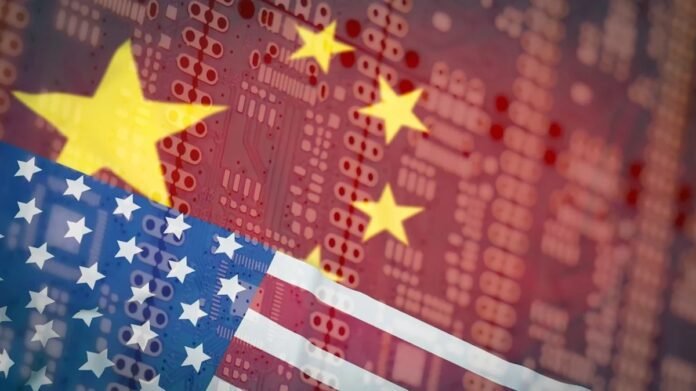
US chip curbs close pathways for Chinese AI

0
us-chip-curbs-close-pathways-for-chinese-ai
US chip curbs close pathways for Chinese AI

Image: CNBC
Has China shot itself in the foot as a result of its extensive chip diversion operations that have now come to light following the “Two Huangs” affair?

Leading Chinese AI companies had, after all, been able to legally access significant volumes of Nvidia’s advanced Blackwell chips remotely to train their AI models, including on (non Chinese-owned) Southeast Asian data center-hosted clouds.

Blackwells, to be clear, are barred from export to China or China-headquartered entities elsewhere; restricted amounts of less powerful H200 Hopper chips are permitted for export though to cleared Chinese end-users.

The Biden administration had sought to curtail this remote access pathway in January 2024 with its infrastructure-as-a-service draft rule, which would have compelled US cloud companies that provided computing power for foreign AI training to report and in certain instances restrict access to certain (i.e., Chinese) customers.

The rule failed to gain traction because of two main issues:

  • By what parameters were US cloud computing vendors to judge if a Chinese client was conducting a training run?
  • And wouldn’t such US vendor tracking of proprietary client information amount to a problematic intrusion of privacy and violation of IP and shred their business model?

To compensate for its failure to push the rule through, the Biden administration, less than a week before leaving office, inscribed a lesser Data Center VEU (verified end user) provision in its AI Diffusion Rule that would impose checks to prevent the diversion of advanced chips to China.

Once the second Trump administration took the reins of power, however, one of its first acts was to disown Biden’s AI Diffusion Rule.

Because certain previous China-related chip regulations had been grandfathered into the Diffusion Rule (and thereafter struck to avoid duplication), this disowning ensured that not only did (a) data center VEU checks cease to be a priority, but that enforcement ceased on (b) checks on advanced AI chips destined to overseas subsidiaries of China headquartered firms, as well as (c) the Foundry Due Diligence Rule that was intended to prevent the use of front companies by the likes of Huawei to get chips fabricated at overseas foundries.

On remote access, the Trump administration’s science and technology advisor reasoned at the time that large-scale server racks at overseas compute facilities were easily monitor-able for risk of physical diversion.As for large-scale multibillion dollar runs to train sophisticated models, these remote access facilities were either not suited for the purpose or could be monitored through stringent KYC data center vendor reporting requirements.

Now, with the Two Huangs affair having revealed the falsity of the monitoring and tracking argument – access to compute capacity via infrastructure-as-a-service providers was, after all, a conduit for the diversion of physical chips – each of these pathways that had been in play has been shut via the Commerce Department’s November 16th Remote Access interim final rule.

To prevent the physical diversion of chips, a license will be required to export advanced AI chips to Indonesia, Singapore, Malaysia, Thailand and Brazil. Chip smugglers better move elsewhere.

To prevent the hitherto legal remote access to advanced AI chips, new restrictions will apply to such exports when there is knowledge that the items destined for use in data centers is to provide computing power to a China-headquartered company.

The administration argues that this was the purpose all along of the Biden administration’s advanced computing/supercomputing rule of October 2022.

To prevent the likes of Huawei and other Chinese chip designers from surreptitiously – via third parties – placing orders with front-end chips fabricators (like TSMC) and chip packagers, overseas fabrication of any chip design for a Chinese company at the 14 nanometer or more advanced level will now require a license.

As for the loophole stemming from non-enforcement of the AI Diffusion Rule that could have potentially allowed advanced AI chips to flow to overseas subsidiaries of China-headquartered firms, it was shut earlier, in May.

Hence, a Remote Access rule that was intended to address the physical diversion of AI chips has in fact gone a lot farther in sealing the various avenues for their transfer or usage by China’s rising crop of dynamic AI companies.

Pathways both licit and illicit have been shut – although the question of enforcement remains a tricky one and is perhaps the reason for the intra-agency (Treasury and NSC v. Commerce) falling out related to the rule’s release.

To be sure, it is not the case that all advanced AI chips will now cease to enter China or cease to flow to overseas entities that are subject to Chinese jurisdiction. High-performance AI chips, even at the 3 nano width and installed in consumer products like Xiaomi or Vivo smartphones, will continue to flow on business-as-usual terms – albeit, after a license approval process that will no doubt chew up time and cause delays. A limited number of H200 will also flow to cleared end-users, per administration policy.

But as for China’s AI frontier-hugging firms, the earlier pathways that had been a valuable lifeline no longer look as viable as they were and only time will tell how they have coped.

And so, we ask once again: did China shoot itself in the foot and hurt its own budding AI model companies through its furtive diversion operations whose cover has now been well-and-truly blown?

Sourabh Gupta is head of the Tech n Trade program at the Institute for China-America Studies in Washington DC, which originally published this article. It is republished with permission.

Source: Iwpost.com

A familiar Iranian hacking group has found a new way to cause chaos

0
a-familiar-iranian-hacking-group-has-found-a-new-way-to-cause-chaos
A familiar Iranian hacking group has found a new way to cause chaos
One night in October, hackers staged one of the most unusual cyber attacks in history: cranking up the temperature in refrigeration systems at hundreds of supermarkets across France and destroying millions of euros of food.

Hackers have targeted commercial fridges and freezers before, but never at this scale and never in the heart of Europe. The brazen attack left cyber professionals unsure as to who might have executed such a madcap operation. But French intelligence agencies found traces of Farsi and other clues in the digital trail pointing to an elite hacking unit of the Islamic Revolutionary Guard Corps.

The unit allegedly behind the hack, Shahid Kaveh, was already well known to Western intelligence agencies. Named after Mahmoud Kaveh, an Iranian commander who died during the 1980s Iran-Iraq war, it is one of several hacking units overseen by the Revolutionary Guards’ Cyber Electronic Command.

The group, which often goes by the online persona CyberAv3ngers, has a history of targeting critical infrastructure. In 2023 and 2024, it hacked Israeli-made industrial control devices inside water, manufacturing, and transportation systems across several US states. Operational disruption was minimal, but the attackers left a message each time: “Every equipment ‘made in Israel’ is CyberAv3ngers legal target.”

State-backed Iranian hackers have rarely targeted Europe in this way, however. October’s hacks, experts say, mark an escalation in the Islamic republic’s cyber warfare strategy and a new willingness to hit European infrastructure.

“Iran has very clearly messaged that the global economy will be disrupted as a consequence of it being shut out from the world,” said Ellie Geranmayeh of the European Council on Foreign Relations.

While France and other European countries have largely stayed out of the US and Israel’s campaign against Iran, which started in February, the Islamic republic increasingly views all Nato countries as legitimate targets, she continued. “This is about sowing panic in Europe and increasing that global pain threshold.”

Similar attacks were staged this month against supermarkets in 10 other countries across Europe, though no group has yet been blamed.

Iran has denied any role in the freezer hacks, but France is seeking international arrest warrants for three Iranians allegedly involved: Hamid Reza Lashgarian, believed by US intelligence to be head of the Guards’ Cyber Electronic Command, and two Shahid Kaveh leaders, 37-year-old Mahdi Lashgarian and 35-year-old Reza Salarvand. Both Lashgarians were placed under US sanctions in 2024.

Often staffed with young engineers and software developers, the Revolutionary Guards’ cyber units have developed formidable skills in espionage and cyber warfare.

“Iran is a country of engineers, and people continue to underestimate its capabilities,” said Sanam Vakil, Middle East director at Chatham House think-tank. “It has a long history of successful cyber operations,” she added, noting that Iran had learnt through its own experience of cyber attacks, most notably the Stuxnet assault on its nuclear program by the US and Israel in 2009.

French intelligence agencies have said the group used a Chinese-made scanning tool to scour the public Internet for connected refrigeration units. Infrastructure linked to the group also conducted reconnaissance using Modbus, a digital language widely used to control industrial machinery—a technique Shahid Kaveh has employed since at least April, according to the authorities.

The modus operandi described by the French authorities was consistent with the Iranian attacks in the US in 2023 and 2024, said Cynthia Kaiser, former deputy cyber director at the FBI. Near-identical hacks to those have taken place this year, though CyberAv3ngers did not claim responsibility, and US authorities stopped short of explicitly blaming Iran.

Kaiser said it was also possible that a third state could have contracted Shahid Kaveh to conduct the European attacks. “Even if Iranians were behind the keyboard, these attacks really appear more consistent with Russian-type targeting,” she said. “It wouldn’t surprise me if we eventually uncovered collaboration behind the scenes.”

Russia, like Iran, has sophisticated cyber capabilities and has shown increasing willingness to use them against Europe.

Vakil at Chatham House acknowledged Russian involvement remained a possibility, noting that the strength of the relationship between the two countries was often under-appreciated by Western officials. “Their ties have grown through the context of these wars,” she said, referring to Russia’s full-scale invasion of Ukraine and Iran’s conflict with the US and Israel. In March, Russian state-sponsored hacking group NoName claimed responsibility for a series of attacks on Israeli targets.

Whether or not Shahid Kaveh was working on behalf of Moscow or another power, the operation would have to be sanctioned by the senior leadership of the IRGC, according to Gil Messing, chief of staff at Israeli cyber security group Check Point Software.

Cyber weapons have a limited shelf life, as once a specific software or hardware vulnerability has been exploited, it tends to be almost immediately patched by other potential targets.

“The decision to make such a thing and burn out this capability is something that would have to be authorized by senior levels,” Messing said. “This is not a very sophisticated attack, but it sends a very strong message.”

© 2026 The Financial Times Ltd. All rights reserved. Not to be redistributed, copied, or modified in any way.

Source: Iwpost.com

Oil rises on supply concerns as Iran claims mine strikes on ships

0
oil-rises-on-supply-concerns-as-iran-claims-mine-strikes-on-ships
Oil rises on supply concerns as Iran claims mine strikes on ships
cde.news desk · 2 min read

Crude oil prices rose on Thursday, extending gains from the previous session on supply concerns after Yemen’s Houthis said they had hit Saudi Arabia’s largest oil ​refinery and at least two ships hit Iranian mines in the Strait of Hormuz.

Brent ‌crude futures were 10 cents, or 0.1%, higher at $94.71 a barrel by 0640 GMT. US West Texas Intermediate crude futures rose 31 cents, or 0.4%, to $83.99 a barrel. There will be no settlement for WTI on Thursday due ​to the US Thanksgiving holiday.

Prices rose for the third straight session on Thursday and ​are up about 5% this week, after plunging by around a quarter in ⁠the three weeks since the beginning of November. Middle East exports have been increasing despite continued ​attacks on shipping, which triggered expectations of a global oil surplus this year.

Brent finished 3.5% higher in the ​previous session, while WTI climbed 2% after Yemen’s Iran-aligned Houthis said they had attacked Saudi Arabia’s Ras Tanura oil refinery and Riyadh’s financial district.

The refinery, Saudi Arabia’s largest, is part of a complex that also serves as a major ​export terminal for Saudi crude, and analysts expect the latest Houthi attacks to increase the geopolitical ​risk premium.

At the same time, shipping has been disrupted through the Strait of Hormuz, where oil supply had ‌been recovering ⁠to near pre-war levels.

An oil tanker hit a naval mine and caught fire in a “restricted zone” in the strait on Wednesday, the semi-official Fars news agency cited an Iranian Army statement as saying. That report came after state media said two oil tankers struck mines and exploded in the strait ​on Wednesday.

“The broadening of the ​Middle East conflict ⁠threatens to halt the recovery in oil flows in recent weeks. Persian Gulf crude exports rose last week but remain on a declining trend,” said ​ANZ analyst Daniel Hynes.

OPEC+ ministers will hold a series of meetings on ​November 29 to ⁠decide on their 2027 output policy, facing the challenge of balancing output with the United Arab Emirates no longer in the group, and with Iraq and Kazakhstan pressing OPEC+ to raise its estimate of ⁠their oil ​production capacity.

In the US, crude stocks rose by 1.1 ​million barrels to 418.9 million barrels in the week ended November 20, the Energy Information Administration said, also supporting prices as ​analysts had expected a 1.5 million-barrel rise.

Via Reuters

Source: Iwpost.com

Democratic Congress is obliged to investigate Nvidia

0
democratic-congress-is-obliged-to-investigate-nvidia
Democratic Congress is obliged to investigate Nvidia

Screens display news of the reinstatement of Jensen Huang, seen outside the NASDAQ MarketSite, in New York, on November 23, 2026. Photo: Angela Weiss / AFP via Getty Images via Common Dreams
The Nvidia scandal has achieved eye-popping proportions. The New York Times reports spy agencies are certain that Alice Huang was working with Chinese intelligence as she had an affair with Nvidia CEO Jensen Huang.

As Sen. John Kennedy (R-La.) said on NBC’s “Meet the Press,” “It appears to me, I emphasize ‘appears,’ that the Department of Commerce has allowed the Communist Party of China to circumvent our export controls on advanced chips.”

This is a sex scandal combined with a spy scandal combined with a smuggling operation. Now it is a scandal of presidential arrogance and impunity, and maybe personal corruption. As legislative investigations begin, with Jensen Huang set to testify December 3, this will be a test for Congress, too. Can it again play its proper constitutional role?

On Monday, President Donald Trump called in to the Nvidia board to pressure it to bring back the priapic CEO, which it then did. CNBC later asked Trump, “Did you give the board of directors an assurance that Jensen Huang would not be prosecuted?” He replied, “I gave them enough assurance.”

Folks, that’s the Roberts Court’s unitary executive theory at work, in this case used to hush up a national security scandal. Maybe Trump ordered prosecutors to look away. Maybe he promised pardons. Trump need not worry; thanks to Chief Justice John Roberts and colleagues, he may be effectively beyond the law anyway.

This story exploded just as Congress mulled what topics it would investigate. Democrats have a larger majority in the House than any party has achieved in three decades. Voters overwhelmingly were furious about corruption. And already the administration was girding to resist any and all oversight, which is a core constitutional power held by Congress.

We discussed how such oversight takes place in our most recent Briefing podcast, with former congressional lawyer Giancarlo Pellegrini and good government advocate Debra Perlin.

Such probes often produce conflict. Officials claim executive privilege, lawmakers threaten contempt, and eventually a grudging compromise is reached. Not this time. The White House and Justice Department said if members of Congress investigate public corruption, they would face criminal investigation. This is not a response, but a threat.

Congressional committees know it is easier to compel testimony from private parties. That is one reason Rep. Robert Garcia (D-Calif.), chair of the House Oversight Committee, made clear he would scrutinize corruption by Trump’s sons and son-in-law.

Here, too, Trump’s Justice Department is trying to block accountability. An opinion last summer by the Office of Legal Counsel, the government’s in-house law firm, announced that private citizens can assert executive privilege — a claim that no court has ever endorsed — if they have given advice to the president.

And a new executive order purports to require contractors to coordinate responses to legislative inquiry with the White House. Courts will likely reject both of these moves, but it will take time.

Some observers worry that the Supreme Court has also made it harder for Congress to conduct oversight.

The Mazars case from Trump’s first term made clear that lawmakers wield great power, but that investigations must have a “valid legislative purpose” beyond public education or chasing headlines. It should be easy for lawmakers to point to possible new laws as the product of these investigations, such as the bipartisan Chip Security Act being urged by Republicans.

In the end, what is so gobsmacking about all this is not necessarily the law but the politics.

For weeks, Secretary of State Marco Rubio and Treasury Secretary Scott Bessent have let the world know they were appalled by the cushy way Nvidia was treated. They blamed the commerce secretary, not the president. Now that “if only the czar knew!” routine won’t work. Will any senior official resign over this seeming breach of national security?

The public voted in overwhelming numbers to reject corruption and a political system that rewards the wealthy. Just two weeks later, President Donald Trump has thrust himself even more directly into the molten center of a spreading scandal.

He seems to think that public opinion won’t matter and that a scaffolding of Supreme Court opinions will protect him and those around him from accountability. Congress has great power in all this. The Nvidia controversy is the perfect time to use it.

Michael Waldman is president of the Brennan Center for Justice at NYU School of Law, a nonpartisan law and policy institute that focuses on improving the systems of democracy and justice. He tweets at @mawaldman.

– Common Dreams

Source: Iwpost.com

0FansLike
0FollowersFollow
0FollowersFollow
0SubscribersSubscribe
- Advertisement -
Google search engine

Recent Posts