15 C
London
Tuesday, August 25, 2026
Home Blog

Join new Iran sanctions or leave the dollar system: Bessent

0
join-new-iran-sanctions-or-leave-the-dollar-system:-bessent
Join new Iran sanctions or leave the dollar system: Bessent

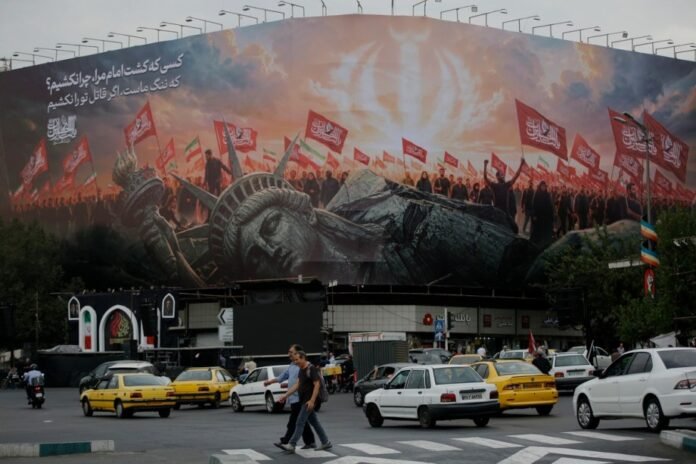
With the United States unable to militarily defeat Iran in President Donald Trump’s illegal US-Israeli war of choice, Treasury Secretary Scott Bessent on Monday escalated the administration’s economic attacks on Tehran, warning countries and companies around the world that continuing to do business with the nation could expose them to punitive sanctions.

“Let there be no ambiguity as to the position of the United States,” Bessent said during a news conference unveiling what the Trump administration is calling Operation Economic Outcast. “An economic engagement of any kind with this murderous regime will expose those responsible to the full reach of American power.”

The “economic D-Day” campaign targets five sectors – technology, gold, aviation, shipping, and digital assets – and is intended to choke off virtually every remaining source of hard currency for Iran.

Bessent warned that it is “no longer acceptable to operate in the gray spaces” of US policy. The secretary said he anticipates the announcement of sanctions against a major financial institution as soon as next week.

Asked if Chinese banks that do business with Iran would be sanctioned, Bessent replied that “no one is above the reach of US sanctions.”

While Bessent did not say which countries would likely be targeted, China, Turkey and the United Arab Emirates are Iran’s biggest trading partners.

The secretary was also asked why sanctions aren’t being imposed immediately.

“Well, we are giving everyone the opportunity to remedy bad behavior,” he replied. “Why would I want to blow up the global financial system?”

“We believe that it is important to level set and give people a cure period, but they should know that that will move very quickly and that we are serious,” Bessent added. “So we believe that a warning shot and a level set of expectations is appropriate, and if people do not want to meet our expectations, then we expect – and they should expect – that they will leave the dollar system.”

Iranian officials largely scoffed at Bessent’s “economic D-Day” threat. Deputy Iranian Foreign Minister Kazem Gharibabadi asked on social media, “Is this a victory or an admission of America’s failure!?”

“You say Iran’s military capability has been ‘dismantled,’ 100% of its military factories ‘destroyed’ and its nuclear program ‘buried’; but for this very Iran, the ‘largest financial assault in history’ and the mobilization of ‘all US institutions and authorities’ have been necessary!” he mocked.

While Trump has said the war is “over” or nearly over dozens of times, Iran currently appears to have the upper hand, as shipping has overwhelmingly avoided the US-supported route through the Strait of Hormuz, with most vessels using a course set by Tehran or avoiding the waterway altogether.

Trump’s war on Iran is proving costly not only in Iranian lives and US taxpayer dollars, but in the increasingly strained budgets of American families. Disruptions to oil shipments through the Strait of Hormuz have pushed gasoline prices above $4 a gallon nationally – roughly a dollar more than a year ago. Trump has dismissed Americans’ concerns about high fuel prices, saying $4 is “not very high” and vowing to “never apologize” for the economic pain his actions are inflicting.

That pain doesn’t stop at the pump. More expensive gasoline and diesel ripple through the economy, raising the cost of transporting food and other goods while keeping inflation elevated.

The pain is far worse for the people of Iran. Trump administration’s escalation comes as Iran’s currency, the rial, has plunged to record lows amid an economic crisis largely caused by the war and years of preceding US-led sanctions.

However, the administration’s effort to force every country to choose between trading with Iran and maintaining access to the US-dominated financial system could have consequences far beyond Tehran.

At a Monday press conference in Beijing, Chinese Foreign Ministry spokesperson Lin Jian said that sanctions “lead to escalation” that “serves no one’s interests.”

“China calls on parties to act rationally and with restraint and avoid taking any measures that may further escalate tensions or deal a blow to global economic growth and financial stability,” he continued.

The Chinese government “will closely watch relevant developments and do what is necessary to protect our legitimate rights and interests,” Lin added.

Operation Economic Outcast drew worldwide derision.

“President Trump, the ultimate gambler in geopolitics, is poised to double down on a bad hand on Iran yet again,” National Iranian American Council policy director Ryan Costello said in a statement.

“We’ve been down the maximum pressure road with Iran many times,” he noted. “What we’ve learned is that President Trump can impose extensive economic pain on Iran, but ordinary Iranians overwhelmingly bear the cost. The ruling elite in Iran remains largely insulated, while Tehran has repeatedly refused to capitulate to Washington’s demands.”

“Trump’s gamble is that this time, amid the destruction of war, and with the reinforcement of a blockade, time is on his side and ultimately Iran will be forced to concede defeat,” Costello added. “President Trump has proven unable and unwilling to stop his gambling on Iran that risks further undermining US and regional security and the global economy.”

Sina Toossi, a senior nonresident fellow at the Center for International Policy, said on social media that Operation Economic Outcast “is as much psychological warfare as economic warfare: Project Iran’s isolation as inevitable, convince markets Hormuz is being overcome, and amplify economic anxiety inside Iran.”

“But the bravado masks a basic problem,” he asserted. “The military option failed to compel Tehran, Iran still possesses substantial escalation dominance over the Arab Persian Gulf states, and ‘severing every economic lifeline’ requires countries like China to enforce a US strategy they openly reject.”

Washington “is effectively betting it can achieve through intensified economic strangulation what six months of war could not,” Toossi added. “And it is demanding unprecedented international compliance at a moment when US relations with much of the world are becoming much more coercive and transactional. The capacity to hurt Iran is clear. The path from pain to capitulation or collapse is not.”

Alan Eyre, a former State Department Iran specialist and current Middle East Institute distinguished fellow, argued that “the problem with Operation Economic Outcast is it continues the trend of making the US an economic outcast.”

Stockbroker and financial commentator Peter Schiff said on X that “because Trump failed to achieve his objective in Iran using military force, he has pivoted to using economic sanctions instead.”

“However, Operation Economic Outcast will not only fail,” he added, “but the economic noose that actually tightens may end up being the one wrapped around our neck.”

-Common Dreams

EU approves further €6.1 billion for Ukraine’s defence

0
eu-approves-further-e6.1-billion-for-ukraine’s-defence
EU approves further €6.1 billion for Ukraine’s defence


The European Commission on Monday approved ​a further €6.1 billion ($7.12 billion) ‌in financial aid for Ukraine to procure new defence systems, ​such as air ​defence, missiles, ammunition and radars.

The ⁠EU said this latest ​aid package came on ​top of €16 billion of previously approved procurement plans, of which €8.35 ​billion had already been ​disbursed.

“As Russia intensifies its attacks, we ‌are ⁠stepping up to help Ukraine protect its people and defend its skies. ​Europe ​stands ⁠with Ukraine and we will deliver ​what it needs, when ​it ⁠needs it,” said European Commission President Ursula von ⁠der ​Leyen in a ​statement.

Source:  Reuters

Iran’s Revolutionary Guard Corps calls economic war ‘main battlefield’ with US

0
iran’s-revolutionary-guard-corps-calls-economic-war-‘main-battlefield’-with-us
Iran’s Revolutionary Guard Corps calls economic war ‘main battlefield’ with US

Iran’s Islamic Revolutionary Guard Corps (IRGC) said on Monday that economic warfare represents the “main battlefield” in confronting the “enemy,” referring to the US, Anadolu reports.

In a statement, the IRGC accused Washington of seeking through a multilayered sanction regime to “spread despair among the people, put pressure on living conditions, and weaken social trust.”

It said all government bodies, including those responsible for the economy, trade, oil, industry, agriculture, banking, and diplomacy, play a decisive role in neutralizing the effects of sanctions.

These institutions also contribute to managing markets, securing essential goods, controlling inflation, and creating employment, it added.

The IRGC declared its readiness for strategic cooperation with President Masoud Pezeshkian’s government, saying coordination between the two represents the key to overcoming multilayered sanctions and strengthening national economic resilience.

It also expressed readiness to cooperate and coordinate with the government in all fields required by the difficult conditions facing Iran.

In addition to its military activities, the IRGC maintains an extensive economic presence in Iran, including investments and banking.

The organization, which plays an influential role in Iran’s domestic and foreign policy, is also active in construction, heavy industry, petrochemicals, automotive manufacturing, banking, insurance, trade, media, food, and telecommunications.

The statements came after US President Donald Trump last week warned of economic consequences for Iranian trade partners as he seeks to isolate Tehran with new economic sanctions.

RFK Jr. may upend how vaccine recommendations are categorized

0
rfk-jr.-may-upend-how-vaccine-recommendations-are-categorized
RFK Jr. may upend how vaccine recommendations are categorized

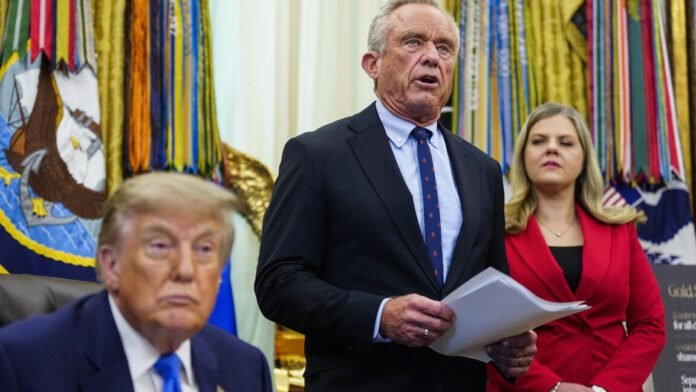
Under anti-vaccine Health Secretary Robert F. Kennedy Jr., the US health department is considering changing how vaccine recommendations are categorized and described. The move creates the possibility that vaccinations currently considered “routine” or “universal” could be given new designations that sound less definitive or more conditional, such as “recommended with qualification” or recommended based on “shared clinical decision-making.”

Kennedy has made no new rules or recommendations for the categories yet. However, he laid out ideas and possibilities in a Request for Information (RFI) posted online Friday and published in the Federal Register on Monday. In the 10-page document, Kennedy poses questions about the current categories and asks the public to weigh in on ideas for how to change or replace them. The deadline to comment on the questions and ideas is September 20.

Currently, there are three categories of vaccination recommendations granted by the Centers for Disease Control and Prevention, which is informed by a panel of independent expert advisors, the Advisory Committee on Immunization Practices (ACIP). The three categories are: routine, otherwise considered universal (a recommendation that everyone should get a vaccine); risk-based recommendations (only certain groups at higher risk should get a vaccine); and recommendations based on “shared clinical decision-making,” or SCDM (a flexible but uncommon recommendation for vaccination based on the characteristics, values, and preferences of a patient and the judgment of their healthcare provider).

Before Kennedy’s oversight, the CDC and ACIP used an evidence-based decision-making framework to determine which type of recommendation to give a vaccination. There is no clear, evidence-based reason to question the current categories, nor any evidence to support changing to the new categories Kennedy proposes. In his RFI, Kennedy prefaces his efforts only by citing an executive order on vaccines that Trump signed two weeks ago that aimed to slash and overhaul federal vaccine recommendations.

The order and the new RFI are part of a larger, relentless effort from Kennedy and Trump to undermine federal vaccine recommendations and prop up the false and thoroughly debunked claim that vaccines are linked to autism. Kennedy previously tried to unilaterally slash the CDC’s childhood vaccine recommendations, matching them to those of Denmark—a relatively tiny, homogenous country with universal healthcare that recommends fewer vaccines than any other high-income country. Kennedy also fired all 17 experts on ACIP and repopulated the panel with hand-selected allies who share his anti-vaccine beliefs. Last year, the panel also made several unwarranted changes to vaccine recommendations, including dropping the universal recommendation for a birth dose of the hepatitis B vaccine—a move widely decried by medical and health experts.

For now, a federal judge has temporarily blocked Kennedy’s changes to federal vaccine recommendations, most of his ACIP appointments, and changes made by his ACIP  amid a lawsuit led by the American Academy of Pediatrics. The judge ruled in March that Kennedy’s vaccine changes and ACIP appointments were likely illegal and done without proper procedure.

Attacks on vaccines

The RFI appears to be part of an effort to follow administrative procedures, which often include public comment periods. But it also offers more insight into Kennedy’s next direction for his anti-vaccine efforts.

In an announcement Friday, Kennedy’s Department of Health and Human Services summarized the RFI as part of an effort “examining whether the current recommendation framework appropriately reflects the strength of the evidence, accounts for individual circumstances and values, and supports informed discussions among patients, parents, and healthcare providers.”

More specifically, the RFI asks the public to consider whether vaccine recommendations should be made with a “presumption in favor of individual autonomy and religious freedom.” It also seeks input on how to handle recommendations when “randomized controlled trial evidence is absent, infeasible, or unethical to obtain.” This relates to a common attack Kennedy has made against childhood vaccines, in which he claims their safety and efficacy trials are flawed because they didn’t test the vaccines against an inert placebo. Scientific and medical experts have largely dismissed this attack, noting that such trials are unnecessary, in many cases unethical, and in some cases the claim is just false. But it seems Kennedy may use it to justify making vaccine recommendations sound less definitive.

As for what the new recommendation categories might be, the RFI gives special consideration to SCDM, which is currently used rarely. The Meningococcal B Vaccination is one of the few vaccines with an SCDM recommendation. The RFI describes this type of recommendation as an “intermediate category” that “provides no default” choice on a vaccination, avoiding a “binary choice between a universal recommendation and no recommendation at all.”

“This allows for an additional opportunity between patient and provider to discuss the state of the evidence and gives weight to the values and preferences of patients and parents/guardians, including considerations of personal autonomy, informed consent, and religious conviction,” the RFI reads. But it also notes that SCDM, when used, has raised confusion. The RFI asks the public to weigh in on potential future use.

Otherwise, the RFI asks for other category options, providing a few ideas, including “recommended, but not during infancy,” “recommended with qualification,” or “shared clinical decision-making with qualification.” The document does not elaborate on what any of those categories might mean.

Nokia China exit deepens telecom split as Nvidia bets on 6G AI

0
nokia-china-exit-deepens-telecom-split-as-nvidia-bets-on-6g-ai
Nokia China exit deepens telecom split as Nvidia bets on 6G AI

Finnish telecom equipment maker Nokia is walking away from mainland China after two decades of building out its networks there, closing nearly every remaining site by year-end in the clearest sign yet that Europe and China are severing their telecom supply lines.

Nokia is closing its research and development site in Hangzhou, cutting about 1,600 R&D jobs, and shutting additional offices in Beijing, Chengdu, Qingdao and Shanghai, according to Light Reading. What remains will be folded into Nokia Shanghai Bell, the joint venture Nokia fully bought out in late 2025, leaving a much smaller China presence focused on serving existing customers rather than developing new equipment locally. 

The development came after Nvidia acquired a 2.9% stake in Nokia for US$1 billion last year, part of a partnership between the two companies to build artificial intelligence (AI)-powered 6G network technology and help the United States reclaim leadership in telecommunications infrastructure. 

The rupture dates back to late 2020 and early 2021, when Finland and Sweden barred Huawei Technologies and ZTE from their 5G networks, citing national security concerns.

Washington had acted earlier. In 2019, the United States barred Huawei and ZTE from federal telecom infrastructure contracts under a defense procurement law, and pushed the European Union to adopt a bloc-wide restriction. European countries did not move as one, splitting instead over how much risk the Chinese vendors actually posed.

The United Kingdom briefly allowed Huawei into non-core 5G equipment before reversing course in mid-2020 and ordering it stripped from British networks by 2027. Germany opted for tougher vetting of all vendors rather than naming Huawei outright, while Hungary embraced the company fully, rejecting Washington’s push altogether.

In the years after the 2020 ban by Helsinki and Stockholm, Beijing tightened scrutiny of Nokia’s and Ericsson’s bids for contracts with China’s state-run carriers, formalizing the squeeze in 2022 when the Cyberspace Administration of China (CAC) began subjecting such purchases to opaque “black box” security reviews that gave the two European vendors no insight into how their equipment was assessed. 

Nokia’s China revenue and regional headcount have both roughly halved since 2018. Ericsson has fared similarly, with its China sales down by more than half and its local workforce cut by about a third.

Some Chinese commentators warn that Nokia’s exit will hurt China by causing job losses and closing off a channel for international technology collaboration that domestic firms cannot easily replace.

“Nokia’s retreat from China is nothing worth celebrating,” says a Jiangsu-based columnist using the pen name “Xiaozaojun.” “The most direct impact is the loss of thousands of jobs. Once the Hangzhou research and development center shuts down, an estimated 1,600 employees will face layoffs or reassignment, and that means 1,600 families under real financial pressure.”

“Many assume Huawei and ZTE will simply absorb this talent, but both companies have also tightened their own hiring. Employees used to the pace of a foreign company like Nokia are not necessarily what Huawei and ZTE are looking for right now,” he says. “These layoffs will also drive down wages and strain suppliers farther down the industry chain.”

He says Nokia’s departure will deepen industry fragmentation and leave China’s supply chain more reliant on a single source. He adds that the country’s manufacturing capacity and technology should remain engaged with global markets, while Chinese firms should continue expanding abroad.

“Decades of China-Europe collaboration once anchored global mobile standards, but a rising challenge from North America, sharpened by the AI wave, now risks splintering those standards,” he says. “We must think carefully about how to deal with this situation.”

Chinese state media criticized Nokia’s decision to leave China and took aim at Nokia Chief Executive Justin Hotard, who said last September that the European Union should reconsider why it allows Huawei and other “high-risk vendors” into its telecom networks, even as China keeps Nokia’s market share below 3%. 

“Hotard’s framing distorts the truth,” says Lai Jiaqi, a columnist with Guancha.cn. “Chinese telecom carriers actually want more equipment vendors to take part, since healthy competition in the bidding process helps raise technical standards and service quality, while also securing more cost-effective products.”   

“Western countries have used political means to suppress Chinese companies and hurt the feelings of the Chinese people, while Western firms hold no advantage in technology, service or price,” she says. “A decline in their China market share should come as no surprise.”

She says the Hangzhou closure has raised investor concern about Nokia’s future competitiveness as the company adjusts its supply chain and relocates some research and production capacity amid geopolitical pressure.

Nokia’s quiet revival

The general public may see Nokia and Ericsson as old-fashioned companies that lost to Apple and Samsung in the smartphone battle of the 2000s. But in fact, the two firms have spent the past two decades restructuring around telecom infrastructure and have regained growth momentum.

Both companies built their global reputations on radio access network equipment, the base stations and antennas that carry mobile signals, along with internet protocol (IP) routing and optical networking gear, the same technology base they once sold widely across China.

Last September, Fierce Network, a US telecom industry publication, reported that China may label Ericsson and Nokia as untrusted vendors, a retaliatory step that would mirror the West’s own restrictions on Huawei and ZTE.

John Strand, president of Strand Consult, was quoted in the report saying that China branding Nokia or Ericsson as “untrusted” could further blunt their market share in regions like Africa and Latin America, where Huawei and ZTE are already the favored vendors for telecom deployments. He added that Nokia and Ericsson already do not sell to Russia, North Korea or Iran.

Daryl Schoolar, an analyst at Recon Analytics, said that if Western vendors are locked out of China while Chinese vendors are locked out of Western countries, there would be less incentive for the two sides to work together. He said the industry could see a return to region-based standards, similar to what happened during the 3G era.

“Being labeled ‘untrustworthy’ would hurt Ericsson and Nokia far beyond the Chinese market,” says a Hubei-based writer. “Losing China as a revenue source would reshape their long-term strategy. While both companies may speed up moving their supply chains out of the country, a full withdrawal would be costly and complicated.”

Amid rising Sino-European tensions, Nokia’s presence in China has shrunk steadily over the past several years. Its Greater China revenue fell from US$2.5 billion in 2018 to $1.06 billion last year, while its regional headcount fell from 13,700 in 2020 to about 7,700 last year. Ericsson’s China revenue fell from $2.8 billion in 2020 to $1.2 billion last year, as it cut about a third of its local workforce, roughly 3,500 jobs, over the same stretch.

As of now, Ericsson has not decided to leave China entirely, as it sees the Chinese market as a key stepping stone to broader emerging markets. Some observers say Nokia’s decision to close all its China sites may force Ericsson to fine-tune its own strategy, especially when Washington pushes technology giants to pick a side between the rival AI camps led by China and the US.

Nvidia acquired a 2.9% stake in Nokia for US$1 billion last year to jointly develop new technology for the radio access network (RAN), the base stations and antennas that carry mobile signals. Their approach, called AI-RAN, adds AI processing to that same equipment. It runs on Nvidia’s ARC-Pro computing platform, combined with Nokia’s radio technology and Dell servers, and T-Mobile plans to trial it in 2026 as a step toward 6G. ARC refers to Aerial RAN Computer, a server platform that processes both radio signals and AI workloads on the same Nvidia chips.

Nokia has redirected investment elsewhere. In August 2024, it said it would expand its Chennai, India research lab into one of its largest facilities worldwide. In June this year, it announced a US$30 million upgrade of its Allentown, Pennsylvania site to boost production of chips used in AI-driven optical networks, nearly doubling the site’s workforce to more than 500.

Read: Half-trillion Nvidia chip financing threatens China AI ambitions

Follow Jeff Pao on X at @jeffpao3

Netanyahu Reveals Censored Iranian Plot To Assassinate His Son  

0
netanyahu-reveals-censored-iranian-plot-to assassinate-his-son- 
Netanyahu Reveals Censored Iranian Plot To Assassinate His Son  


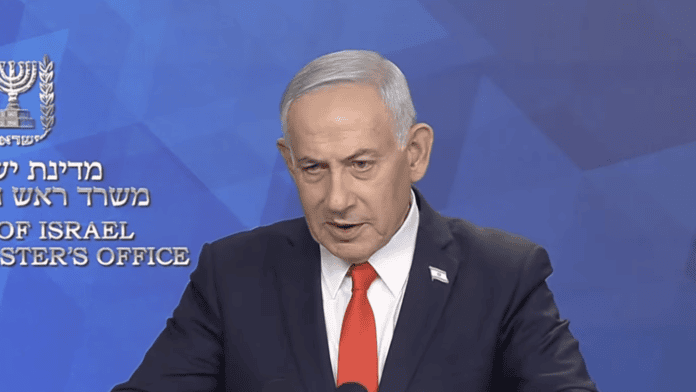
Prime Minister Benjamin Netanyahu said Monday that Iran tried to assassinate one of his sons, revealing an alleged plot that Israel’s military censor had previously prohibited media outlets from reporting. 

Netanyahu did not say whether the alleged Iranian attempt targeted Yair Netanyahu or Avner Netanyahu. 

The military censor was caught off guard by the prime minister’s statement after previously rejecting requests to publish details about the alleged assassination attempt. 

Netanyahu’s disclosure follows an N12 report last month about efforts by his wife, Sara Netanyahu, to secure extended government protection for herself and the couple’s sons. 

Sara Netanyahu pressed officials at the National Security Council and the Shin Bet to recommend providing security for her and her sons for five years. She sought a decision before the elections and regardless of their outcome. 

A day after the N12 report, the Ministerial Committee for Shin Bet Affairs authorized lifetime protection for the prime minister and Sara Netanyahu, with an option to extend the arrangement. The committee separately approved five years of security for Yair and Avner Netanyahu. 

Shin Bet Director David Zini recommended the security arrangements for Netanyahu and his wife despite opposition from professional officials. 

Officials at the National Security Council argued against committing in advance to five years of protection. While recognizing existing threats, particularly during the complex security situation surrounding the war with Iran, they considered a five-year commitment disproportionate. 

Some Shin Bet officials shared concerns about setting a fixed period for the security arrangements, according to people familiar with the issue. 

They instead favored regularly reviewing the threat level facing Netanyahu’s family and determining the appropriate protection based on the security assessment at the time. 

Despite those objections, the Ministerial Committee approved five years of protection for both Yair and Avner Netanyahu. 


Data centers become “killer application” for new power transformer tech

0
data-centers-become-“killer-application”-for-new-power-transformer-tech
Data centers become “killer application” for new power transformer tech

Data centers have become the largest driver of surging electricity demand that is straining US power grids. But the AI data center boom has also accelerated investment in a technology that could provide a silver lining for everyone—solid-state power transformers that replace industrial-age technology with modern power electronics.

Power grids currently rely on conventional transformer technology that is painstakingly assembled by hand and has a fundamental design dating back to the 1880s. Two copper wire coils manually wound around a steel core create electromagnetic fields that help step up voltage levels of alternating current electricity for long-distance transmission or step down voltage levels for the electricity use of homes and businesses. The largest power transformers cannot be mass-manufactured but are instead custom-built for each utility company’s electrical substations.

Manufacturing constraints, coupled with the scramble to upgrade US power infrastructure, have meant utility companies and other customers must wait up to several years for delivery of new power transformers. That is not only a problem for expanding power grid infrastructure to support growing electricity demand, but also delays the process of replacing aging power transformers.

By comparison, solid-state transformers rely on high-frequency semiconductor switching to perform voltage conversions, and can be mass-manufactured using semiconductor materials such as silicon carbide. Such transformers are physically smaller and lighter than conventional transformers, have modular designs that enable easy upgrades or replacements of parts, and can perform as all-in-one power electronic devices by handling multiple tasks.

Tech companies building the largest AI data centers are interested in solid-state transformers because they are embracing direct current (DC) power architectures to support server racks packed with energy-hungry AI chips. Solid-state transformers can directly convert alternating current (AC) power from a local grid’s distribution network into the DC power that such data centers require—all without the need for a separate electrical device to perform that AC/DC conversion.

“It’s kind of this one magic box that eliminates a lot of the infrastructure and also provides one control location that eliminates a lot of the interoperability challenges that you may see in a traditional data center, where various components within the data center are trying to regulate the same thing,” said Srdjan Lukic, a professor of electrical and computer engineering at North Carolina State University. “Now you have one conversion stage outside the data hall and then you just go straight to the rack.”

From “killer application” to mass adoption

Data centers have become the “killer application for solid-state transformers right now,” Lukic told Ars. Several US companies, including Amperesand, Heron Power and DG Matrix, have collectively raised more than $280 million in funding over the past year to commercialize solid-state transformer technology.

Solid-state transformers could also greatly reduce the amount of copper and other materials needed by data center projects, while their smaller physical footprints allow data center developers to do other things with the available space, Lukic explained.

In the long run, successful commercialization of solid-state transformers could even help ease the broader supply chain shortage affecting power transformers. That would make transformers more readily available for power grid upgrades and expansions beyond data center projects.

“There are relatively few specialized companies that manufacture [conventional] transformers, while solid-state transformers are like an electronics device,” Lukic said. “It completely opens up the space for who can play in the transformer space, and also opens up where transformers can be manufactured.”

The same benefits of solid-state transformers also apply to electric vehicle charging’s similar reliance on DC power. Lukic and his colleagues recently demonstrated how a solid-state transformer connected to a live grid power line could handle up to 1 megawatt of power when supporting the charging of an electric vehicle battery—the solid-state transformer performed the necessary step-down in voltage while also doing the AC to DC power conversion.

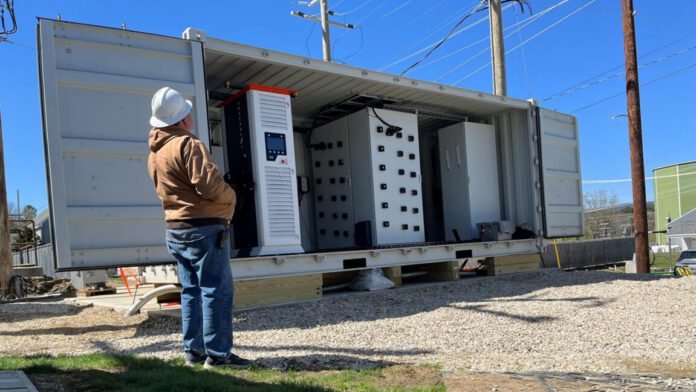
The NC State demonstration is taking place at a power delivery laboratory belonging to the nonprofit Electric Power Research Institute in Lenox, Massachusetts, and is the culmination of a collaboration with the New York Power Authority that began in 2018. The solid-state transformer—about 1 meter by 1.5 meters by 2 meters in size—has been sitting in a shipping container at the site since May 2026 and is scheduled to return to NC State in September after months of testing in summertime conditions.

“It looks like a big transformer box with a slightly different form factor, a big blob of what looks like steel,” Lukic said. “It replaces three blobs of steel with one blob of steel and removes a lot of the wiring and trenching that you would typically have to do for an electric vehicle application.”

The solid-state transformer has a modular design with an active front end interacting with the power grid, an AC/DC converter, and a high-frequency isolation transformer that either steps up or steps down the voltage. The crucial technology was the custom-made isolation component that can sustain the “full stress of the grid, the full distribution voltage” across the relatively compact device, Lukic explained.

Engineering and commercialization challenges still lie ahead for the technology. But Lukic is hopeful that data center adoption of solid-state transformers can help “derisk” the technology for mass adoption beyond the tech industry’s AI infrastructure buildout.

“Beyond data centers, we can think about electric vehicle charging in densely populated areas,” Lukic said. “A lot of loads within our homes are now DC, so having that ability to distribute DC in modern homes will have some significant benefits.”

US cancels joint marine drills with South Korea over Iran war-related force constraints

0
us-cancels-joint-marine-drills-with-south-korea-over-iran-war-related-force-constraints
US cancels joint marine drills with South Korea over Iran war-related force constraints


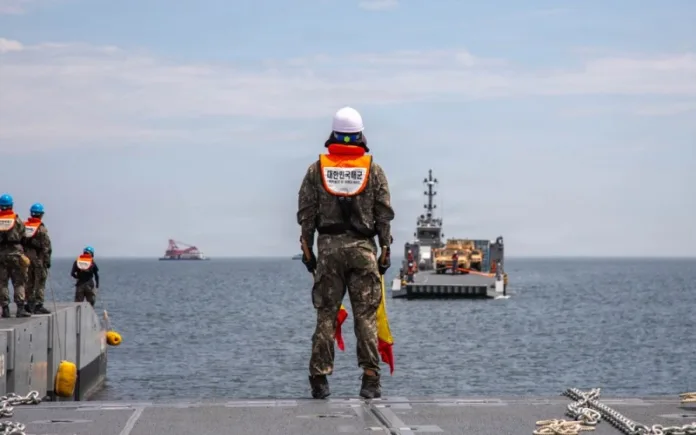
The United States cancelled a joint amphibious landing drill scheduled for next month with South Korea, ​Seoul’s Marine Corps said on Monday, after Washington ‌cited constraints on the availability of U.S. forces due to the war in Iran.

The U.S. Marine Corps formally notified its ​South Korean counterpart in June that force availability ​would be constrained for the division-level exercise, known ⁠as Ssangyong, a South Korean Marine Corps spokesperson told a ​press briefing.

The allies remain in close consultations on resuming the ​drills, the spokesperson said. He did not specify what measures might be taken to prevent future cancellations or to make up ​for lost training opportunities.

U.S. Forces Korea did not immediately ​respond to a request for comment.

The cancellation follows U.S. President Donald ‌Trump’s ⁠surprise order to scale back a separate annual joint military exercise that ended last Friday, citing the cost and Seoul’s refusal to take part in the Iran ​war.

Trump also wrote ​on his ⁠Truth Social platform that the Ulchi Freedom Shield drills sent “a signal that was totally inappropriate ​and hostile, to a Country that, as ​long as ⁠Donald J. Trump has been President, has been unthreatening and respectful.” Despite the reduction of the exercises, Pyongyang fired 10 short-range ballistic ⁠missiles ​last week and issued a statement denouncing ​the exercises.

North Korea has long condemned such joint exercises as rehearsals for ​invasion.

Source:  Reuters

AI is hitting entry-level jobs hardest, Stanford study finds

0
ai-is-hitting-entry-level-jobs-hardest,-stanford-study-finds
AI is hitting entry-level jobs hardest, Stanford study finds

For years, AI industry watchers of all stripes have been warning of a coming jobs apocalypse driven by ultra-intelligent AI systems that will be able to replicate most human tasks more cheaply. Now, newly updated research from Stanford University economists suggests AI seems to be causing significant entry-level job losses for younger workers in some fields, even as older workers appear largely unaffected so far.

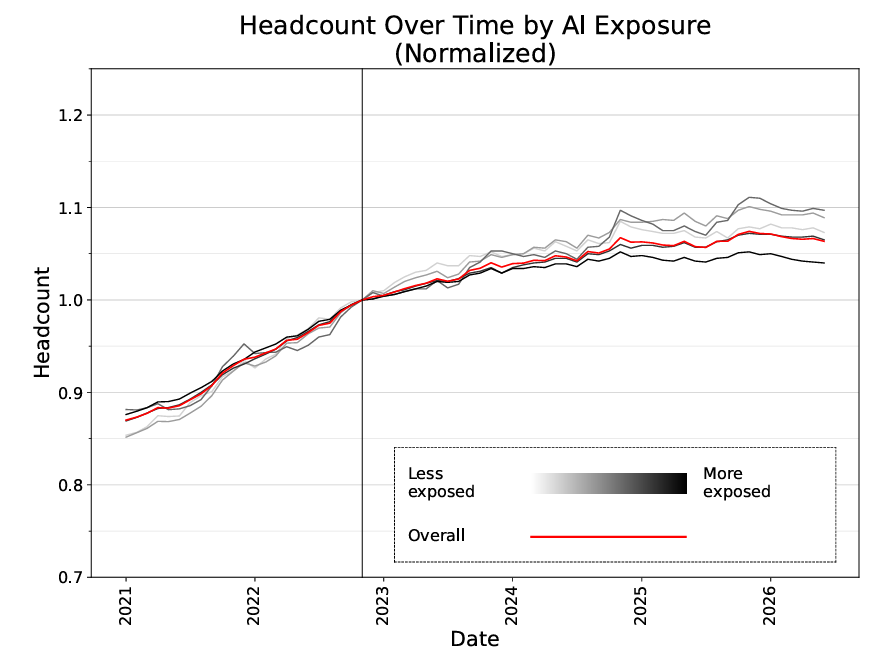
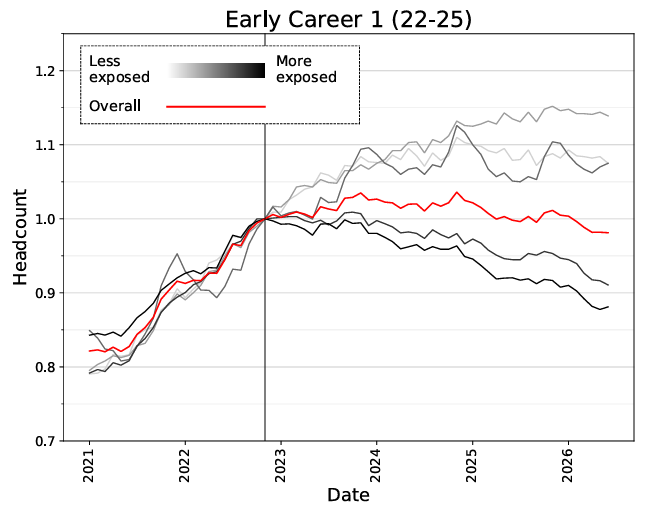
The August 2026 edition of “Canaries in the Coal Mine? Six Facts about the Recent Employment Effects of Artificial Intelligence” updates and revises a paper of the same name published last year with fresh data and refined statistics. In that update, the Stanford researchers find the employment trends they identified for entry-level workers last year are persisting and expanding. Specifically, employment levels for workers aged 22 to 25 in the most “AI-exposed” occupations are now 19 percent below those of their peers in fields less exposed to AI disruption.

Last year, that gap measured just 13 percent.

Not all jobs are AI jobs

To determine those numbers, the researchers used a large subsample of the anonymized, high-frequency payroll data regularly aggregated by HR management company ADP. The team then rated each occupation’s “exposure” to AI disruption using both a potential labor market impact gauge established by previous researchers (we took a somewhat critical look at that previous research earlier this year) and the Anthropic Economic Index, which looks at how various occupations actually use the Claude model in their everyday work (Google released a similar report based on occupational Gemini usage last month).

When crunching the numbers economy-wide, the researchers found little to no difference in relative overall employment between the jobs judged most and least affected by AI on these metrics. When separating out workers aged 22 to 25, though, the researchers found that, since 2022, employment in the top 40 percent of “AI-impacted” jobs had fallen by about 11 percent. In the 60 percent of jobs with the least AI impact, by contrast, total employment for those young workers grew by 10 percent over the same period.

Across the entire economy, relative employment effects in more heavily AI-impacted fields are relatively muted.

For entry-level workers, though, there is a large and widening gap between employment in fields that are or are not impacted by AI.

Digging deeper into the data, the researchers found that this phenomenon is mainly manifesting itself through lower hiring rates for entry-level workers in AI-impacted fields, rather than increased firings or employees quitting. They also found that the labor market effects among this age group were mostly seen in lower overall employment, rather than reduced pay rates.

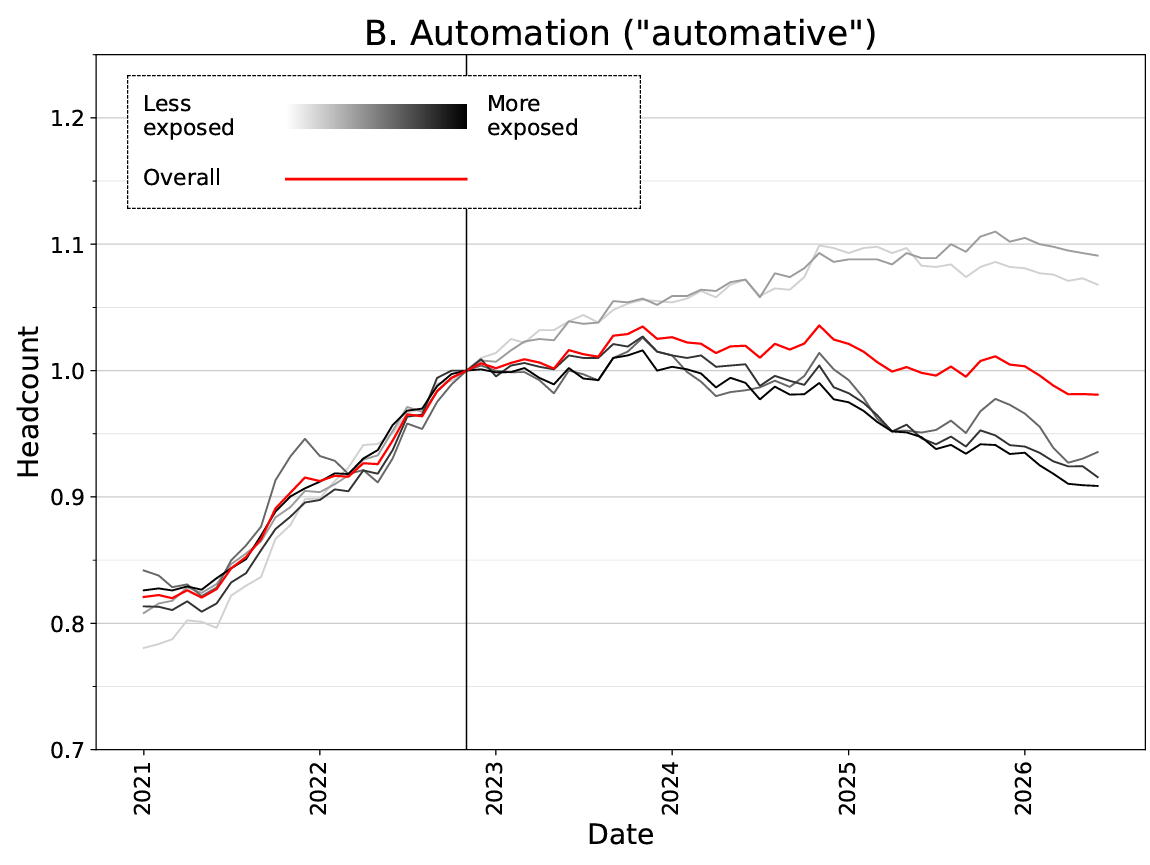
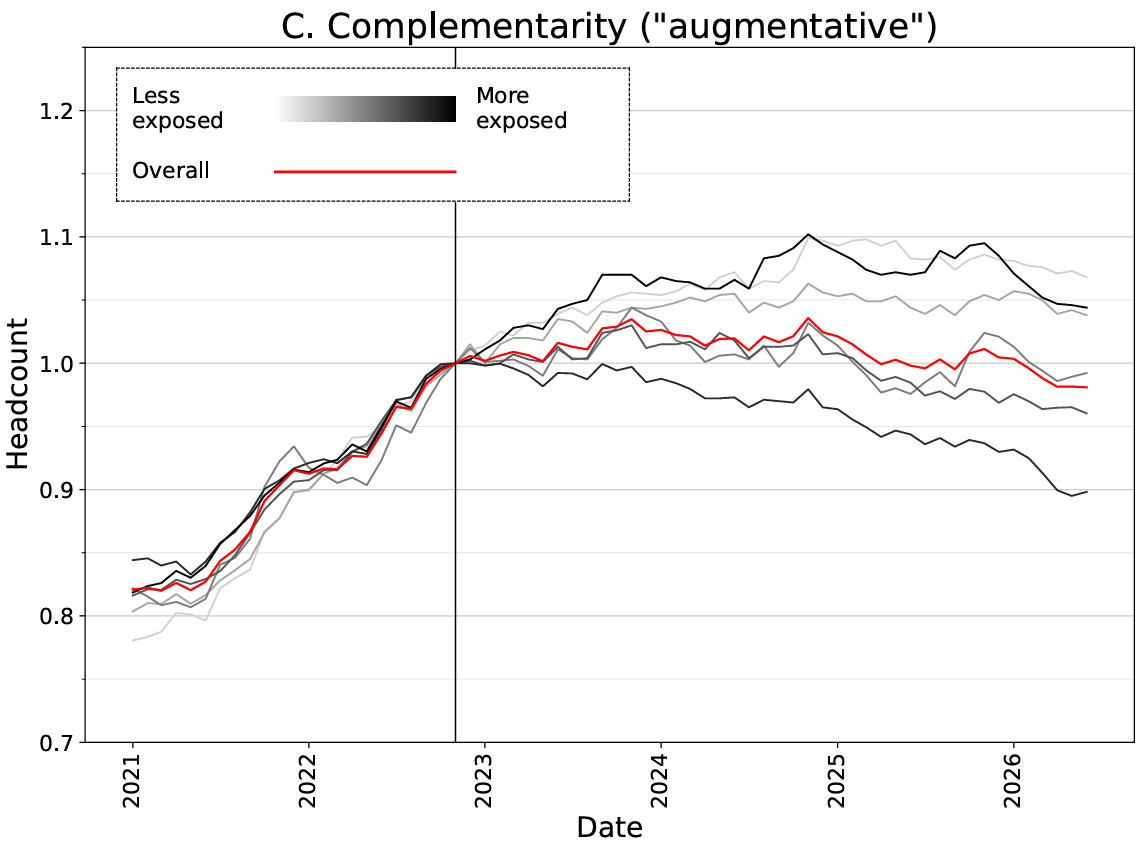
But not all jobs that show potential for AI “disruption” are created equal, the researchers found. In its Economic Index, Anthropic differentiates between queries related to tasks that are “automative” (i.e., fully replacing work previously done by a human) or “augmentative” (i.e., helping human workers be more effective at tasks they are still needed for). By this measure, jobs like “accountants and auditors” and “receptionists and information clerks” were among those judged most susceptible to AI automation, while jobs like “chief executive” and “registered nurse” were among those using AI augmentation most often.

Unsurprisingly, jobs where AI automation is prevalent are the ones showing the worst relative employment levels for entry-level workers these days. “The findings are consistent with automation-oriented uses of AI substituting for labor while complementary uses are associated with flat or rising employment,” the researchers write.

For 22-25 year olds, jobs where “automative” users of AI are especially prevalent show heavily declining entry level employment rates.

For jobs where AI is merely “augmentative,” the entry level jobs picture is much more muddled.

Stay in school, kids

The researchers also theorized that entry-level workers could be especially affected by AI’s impact on jobs requiring heavily “codified” knowledge—the kind of “formal, standardized, documented knowledge that can be taught through education, textbooks, or written procedures.” That would contrast with jobs where AI mainly complements an experienced worker’s more “tacit” knowledge, which is overwhelmingly “acquired through practice, mentorship, and repeated exposure to real situations,” the researchers write.

To test this hypothesis, the researchers used the required level of formal education in O*NET’s extensive occupational database as a proxy for how reliant that job is on codified knowledge. Breaking out the employment data, the researchers found that “occupations with higher codified knowledge have slower entry-level employment growth, while occupations with higher tacit knowledge have faster employment growth for mid-career and senior workers.”

At the same time, the researchers found that higher education might still serve as a buffer against the employment effects the Stanford researchers identified. As they write, occupations with a higher share of college graduates showed more “muted differences between more-exposed and less-exposed occupations” regarding AI. In jobs with few college graduates, on the other hand, “the least AI-exposed occupations [saw jobs] growing and the most exposed occupations [were] declining in employment.”

In a recent interview with The Washington Post, lead researcher Erik Brynjolfsson warns that the current trends suggest a near future in which jobs for those employed in the pre-AI era largely persist while many jobs for the incoming working-age cohort start disappearing. “The entry-level effects we’re measuring are real, persistent and widening,” he said, “and I’m more worried than I was about a labor market that keeps its overall employment level while quietly closing the on-ramp for people starting their careers.”

NFL Star Rushed Off Field and Sent to Hospital (Video)

0
nfl-star-rushed-off-field-and-sent-to-hospital-(video)
NFL Star Rushed Off Field and Sent to Hospital (Video)


A frightening scene unfolded during the Philadelphia Eagles’ preseason game Saturday night when running back Ja’Quinden Jackson was taken off the field in an ambulance and rushed to a hospital.

Jackson was injured on the opening kickoff against the New England Patriots and remained motionless on the field after the play ended near the 25-yard line.

Trainers and medical personnel from both teams immediately rushed to his side as concerned players watched from nearby.

Within moments, officials called for a backboard and an ambulance, bringing the game to a standstill.

Players from both teams dropped to a knee near the sideline while Jackson was carefully secured to a stretcher. Eagles teammates then gathered around him before he was loaded into the waiting ambulance.

In one encouraging moment, Jackson appeared to raise his left arm as medical workers attended to him.

The Eagles later announced that the 24-year-old had strength and movement in all of his extremities. He was transported to a nearby hospital for further evaluation.

It was not immediately clear exactly how Jackson was injured or whether he had been directly involved in the tackle on the kickoff.

The scary incident came just 12 days after Jackson signed with Philadelphia.

Jackson previously spent time with the Jacksonville Jaguars after going undrafted in the 2025 NFL Draft. Jacksonville waived him during the preseason last year before later signing him to a reserve/future contract in January. He was waived again in May.

Jackson began his college career at Texas before transferring to Utah in 2021. After three seasons with the Utes, he finished his college career at Arkansas.

He has yet to appear in a regular-season NFL game and was hoping to earn a spot with the Eagles when Saturday night’s frightening injury brought the game to a halt.

The Eagles had not immediately announced additional details about his condition beyond confirming that he had movement in all four extremities and was undergoing further evaluation.

0FansLike
0FollowersFollow
0FollowersFollow
0SubscribersSubscribe
- Advertisement -
Google search engine

Recent Posts