The quiet push to shield pesticide makers from lawsuits
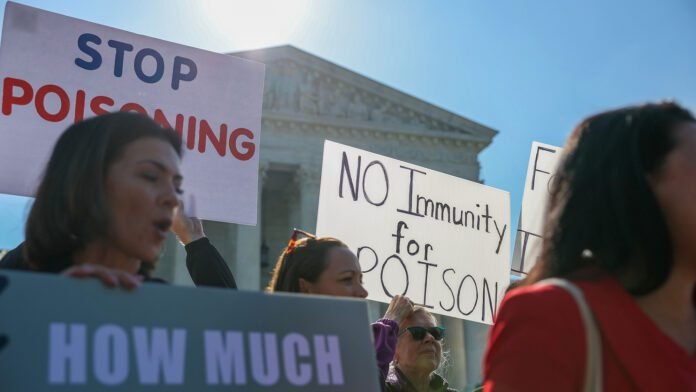
In April 2026, California farmer Terri McCall stood on the steps of the Supreme Court at a rally protesting pesticide use, telling the story of how her husband and dog both died of non-Hodgkin’s lymphoma, a disease she believes was caused by pesticides. Her husband, Jack, had used Roundup for more than three decades on their 20-acre ranch before dying of cancer in 2016.
Over 57,000 pesticide products are currently registered for use in the United States, ranging from powerful chemicals used in conventional agriculture, to common insect repellents approved for use on children. Scientific evidence is accumulating that some of them are linked to illnesses ranging from cancer to Parkinson’s disease.
But beginning in 2024, a powerful coalition of chemical manufacturers and industry groups launched a coordinated national effort to pass “immunity laws,” bills designed to shield companies from potential legal claims tied to harms from their pesticide products. Over the past three years alone, industry lobbyists attempted to pass pesticide immunity legislation in 15 different states.
The battle over ‘failure to warn’
At the center of the industry’s lobbying effort is a key legal question: What responsibility do pesticide companies have to warn users and consumers about potential health risks from their products? In many states, individuals can currently bring “failure to warn” claims if they believe a company withheld information about harms associated with a pesticide.
The chemical makers advocating for pesticide immunity laws argue that companies should be protected from those lawsuits as long as they use labels approved by the Environmental Protection Agency (EPA). But opponents say that standard is dangerously inadequate.
There are longstanding concerns about the EPA’s pesticide review process. For example, the official EPA labels for glyphosate still do not carry a cancer warning, despite mounting evidence that it may cause cancer and other groups like the World Health Organization calling it “probably carcinogenic.”
“The science is pretty clear,” said Daniel Hinkle, the senior counsel for policy and state affairs at the American Association for Justice. “The evidence continues to accumulate, and the pesticide makers continue to lose in the courtroom.”
Several landmark court cases have found chemical makers responsible for illnesses like cancers and neurological diseases, resulting in billions of dollars in payments from pesticide makers. Bayer alone has paid over $11 billion in cancer settlements linked to its products. In response, the chemical industry has poured millions of dollars into lobbying for pesticide immunity laws at the state and federal levels, and in the courts. “It’s very clear that this is a coordinated campaign by the industry to absolve themselves of legal liability for health harms from these chemicals,” said Hinkle.
In the last three years, advocates fought against proposed immunity bills in 15 different states. While defeated in a dozen states, the bills passed in Georgia, North Dakota and Kentucky. “The states where these bills are passing have some of the highest cancer rates in the nation,” said Joy Reeves, the director of policy and strategic development at the Rachel Carson Council. “The reality now is, if you’re a farmer and get sick, you have fewer options to hold the pesticide companies accountable.”
Environmental and legal advocates say the campaign behind the pesticide immunity laws is both sophisticated and well-funded. Hinkle says a central driver of the effort is the Modern Ag Alliance (MAA), a lobbying and public relations group founded by Bayer, the maker of Roundup, in 2024.
While many states do not make lobbying expenditures easy to track, those that do show huge sums are being spent on pesticide immunity legislation. According to public filings, MAA spent roughly $1.6M lobbying in Tennessee in 2025. Reporting by the Idaho Sun found that MAA was the top outside spender in Idaho politics that same year.
What pesticide immunity could mean for families
As industry groups push for legal protections around pesticide injury, there are growing concerns about what these bills could mean for public health, accountability, and local input.
In 2012, on a warm July afternoon in Iowa, organic farmer Rob Faux was working in his poultry yard. He heard an airplane roar overhead, and then droplets began raining over him and his chickens and turkeys. A crop duster kept the sprayer on as it passed over Faux’s farm twice, covering them with fungicides and insecticides.
Faux is now the communications manager and resident farm expert for the Pesticide Action & Agroecology Network (PAN). He says that many products that people use every day, from ant bait to mosquito repellent, will similarly fall under the scope of the new immunity laws.
“If these laws pass, and someone sells a mosquito repellent for children that makes them sick, for example, these pesticide immunity bills will eliminate pathways for families to hold the makers accountable,” he said.
He also points to the loss of local control as a key concern. “If I live in a town where the drinking water comes from a local lake, but pesticide applicators are using chemicals that are getting into the water, the community should be able to protect people,” he said. Many of the proposed immunity bills would prevent that, because local or state governments wouldn’t be allowed to set pesticide rules that are stricter than federal standards.
A pivotal moment in the pesticide immunity fight
These concerns brought together a broad coalition spanning left-leaning environmental advocates and members of the Make America Healthy Again network. Protestors gathered outside the Supreme Court for a rally the last week of April as the justices inside heard opening arguments in Monsanto v. Durnell. The closely-watched case could reshape the future of pesticide litigation nationwide.
The case centers on whether federal pesticide labeling laws and EPA labels override state-level failure-to-warn lawsuits. A ruling in Monsanto’s favor could dramatically weaken legal pathways for people alleging harm from pesticide exposure. “This is a case that is largely about states’ rights,” said Reeves. “It will affect states’ ability to regulate pesticides.”
Just a few days later, federal lawmakers overwhelmingly rejected an effort to insert pesticide immunity language into the Farm Bill. Seventy-three Republicans joined Democrats in opposing the pesticide immunity provision.
“It was a pretty astounding defeat,” said Max Sano, a senior policy and coalitions associate with Beyond Pesticides who helps organize a national coalition of farmers, farmworkers, scientists, and advocacy groups. “But these bills are still popping up everywhere [on a state level], so we can’t afford to slow down.” His organization is currently monitoring newly proposed pesticide immunity legislation in 10 states.
The rise of a new pesticide reform movement
As momentum grows against pesticide immunity laws, Reeves described the current moment as “today’s Silent Spring movement,” referencing Rachel Carson’s landmark 1962 book that helped ignite the modern environmental movement. “Today, the pesticide reform movement is diverse,” Reeves said. “It’s cross-partisan. It’s far-reaching.”
Advocates like Reeves, Sano, and Hinkle are taking a multi-pronged approach to fighting pesticide immunity laws: organizing national coalition calls, educating lawmakers, tracking bills across states, mobilizing grassroots campaigns, and coordinating legal and public awareness efforts.
And individuals can have a deep impact on the fight, too, Hinkle said. “It is incredibly important to be in communication with your lawmaker,” he said. “Every single call or email matters. Concerned constituents and grassroots organizing have really been the decisive forces in holding off this onslaught.”
Reeves echoes him, saying, “If you care about your family and your community, you should engage on this issue. It affects us all.”
The Rachel Carson Council (RCC), founded in 1965, is the national environmental organization envisioned by Rachel Carson to carry on her work after her death. We promote Carson’s ecological ethic that combines scientific concern for the environment and human health with a sense of wonder and reverence for all forms of life in order to build a more sustainable, just, and peaceful future. The Rachel Carson Council is a nonpartisan 501(c)(3) nonprofit organization.
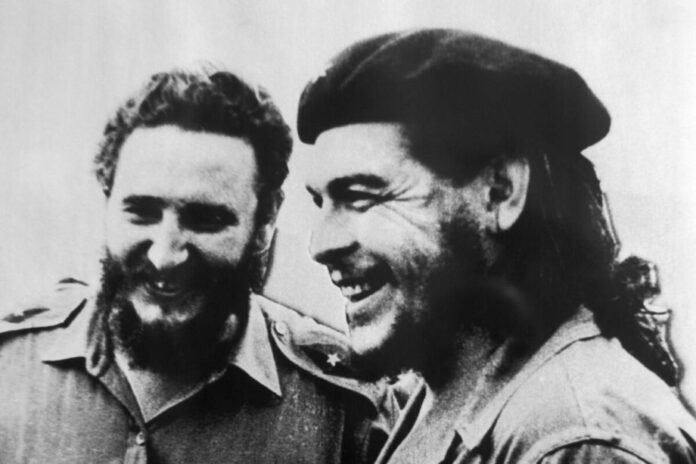
The sea does not forget. Sixty-four years ago, Soviet missiles pointed at the heart of an American empire from a sliver of a Caribbean island, and the world held its breath at the edge of annihilation.
The crisis passed. The missiles were removed.
However, the punishment never ended. What Washington called an embargo, what Havana has always called by its true name, a blockade, began on February 3, 1962, and has never stopped.
It is the longest sustained campaign of economic strangulation in modern history, outlasting the Cold War, outlasting the Soviet Union, outlasting every justification ever offered for it, and now, in the spring of 2026, it has metastasized into something that should terrify anyone still capable of being terrified.
In what appears to be a carefully calibrated show of force, the United States has deployed the aircraft carrier USS Nimitz and its strike group into Caribbean waters, a move that coincided with the unsealing of murder charges against former Cuban leader Raúl Castro for a 1996 incident in which Cuban forces shot down planes operated by the Miami exile group Brothers to the Rescue.
US Southern Command framed the move as a demonstration of operational readiness, citing the carrier’s prior combat operations from the Taiwan Strait to the Persian Gulf to underscore its capabilities and reach.
READ: Cuba will be failing pretty soon: Trump
“Welcome to the Caribbean, Nimitz Carrier Strike Group!” the command posted on social media, with the casual menace of a man pressing a boot to a throat.
This is the Imperial Theatre. It is the language of domination dressed in legal costume.
The empire always needs a pretext.
In 1962, it was Soviet missiles. In 1996, it was a civilian aircraft.
Today, for the Trump administration, which has declared Cuba “an unusual and extraordinary threat” to national security, the pretext is a 94-year-old man.
Cuba’s Deputy Foreign Minister Carlos Fernández de Cossío described the indictment as “fraudulent”, lacking any legal, political, or moral foundation, and warned that the US has a “well-known, dark practice” of using accusations like this to take military action against sovereign states.
He is not wrong. The playbook is familiar. First the dossier, then the carrier group, then the rubble.
Cuban President Miguel Díaz-Canel accused Washington of using the island’s economic weakness as an “outrageous pretext” to seize it, promising that “any external aggressor will clash with an impregnable resistance”.
These are not empty words from a government that has survived sixty years of siege, the Bay of Pigs, the assassination plots, the sabotage campaigns, the tourist boycotts, and now a fuel blockade that has plunged 10 million people into recurring darkness.
The Trump administration’s attempts, in the words of Russian foreign ministry spokeswoman Maria Zakharova, to “tighten the sanctions noose around Cuba, combined with a decades-long trade, economic, financial, humanitarian and now energy blockade, directly reflect Washington’s intolerance for dissent”.
“It is,” she said, “a cynical embodiment of a revived Monroe Doctrine.”
The Monroe Doctrine. That 19th-century declaration of hemispheric ownership, that proclamation that Latin America belongs to Washington as a private estate.
It never died. It merely slept. And now it walks again.
Enter Marco Rubio, the US Secretary of State, son of Cuban exiles, the man who has waited his whole political life for this moment.
Rubio has been unsparing: Cuba needs “new people in charge”, he said.
“Their economy doesn’t work… they’re in a lot of trouble, and the people in charge don’t know how to fix it, so they have to get new people in charge.”
It is the logic of the conqueror, packaged as the counsel of a friend.
And Cuba’s Foreign Minister Bruno Rodríguez did not hesitate to label Rubio a “spokesperson for corrupt and vengeful interests”.
However, here is what distinguishes 2026 from every previous chapter of this long war: Cuba is no longer alone in ways that matter.
Russia has pledged the “most active support” to Cuba, with foreign ministry spokesperson Zakharova declaring full solidarity and vowing to “strongly condemn any attempts at gross interference in the internal affairs of a sovereign state, intimidation and the use of unilateral restrictive measures, threats and blackmail”.
In March, Russia sent an oil tanker to the island, which Moscow called “humanitarian assistance”, a direct and deliberate defiance of the American blockade.
China added its voice separately, demanding that the US stop wielding the “big sticks” of judicial proceedings and sanctions and cease its threats of force against Cuba.
WATCH: Podcast by Jasim Al-Azzawi with Dr Rory Miller: What thread connects Iran, Cuba, and energy?
This is the architecture of the new world.
The United States is simultaneously running pressure campaigns against Iran, backed by China, and Cuba, backed by Russia.
The targets are no longer isolated. They are networked. They are backed.
And as the empire extends itself across three simultaneous confrontations, from the Taiwan Strait to the Persian Gulf to the Caribbean, the question is no longer whether American power is formidable. It is whether it is wise.
Cuba’s deputy foreign minister reminded the world that those charged in the 1996 incident “were fulfilling a duty, the duty to protect the airspace, the homeland, and the peace of the Cuban people”, and concluded with a warning that must be heard: “Any attempt to use this excuse for action against these comrades within Cuba will be met with fierce resistance from the Cuban people.”
The USS Nimitz, the oldest carrier in the American fleet, commissioned in 1975, is now prowling waters it has not patrolled with such intent since the height of the Cold War.
History does not repeat. But it returns. It rises from the water.
And the ghost that haunts the Caribbean in May 2026 is the same ghost that haunted it in October 1962: the arrogance of a superpower that cannot conceive of a world in which it does not own every shore it surveys.
The Cuban people know what that ghost wants. They have always known.
And for 64 years, they have answered it with the only word that the empire never learns to accept.
No.
OPINION: The end of American forward presence in the Persian Gulf
The views expressed in this article belong to the author and do not necessarily reflect the editorial policy of Middle East Monitor.
Screwworms in US: Human risk is low—but they can burrow through your skull
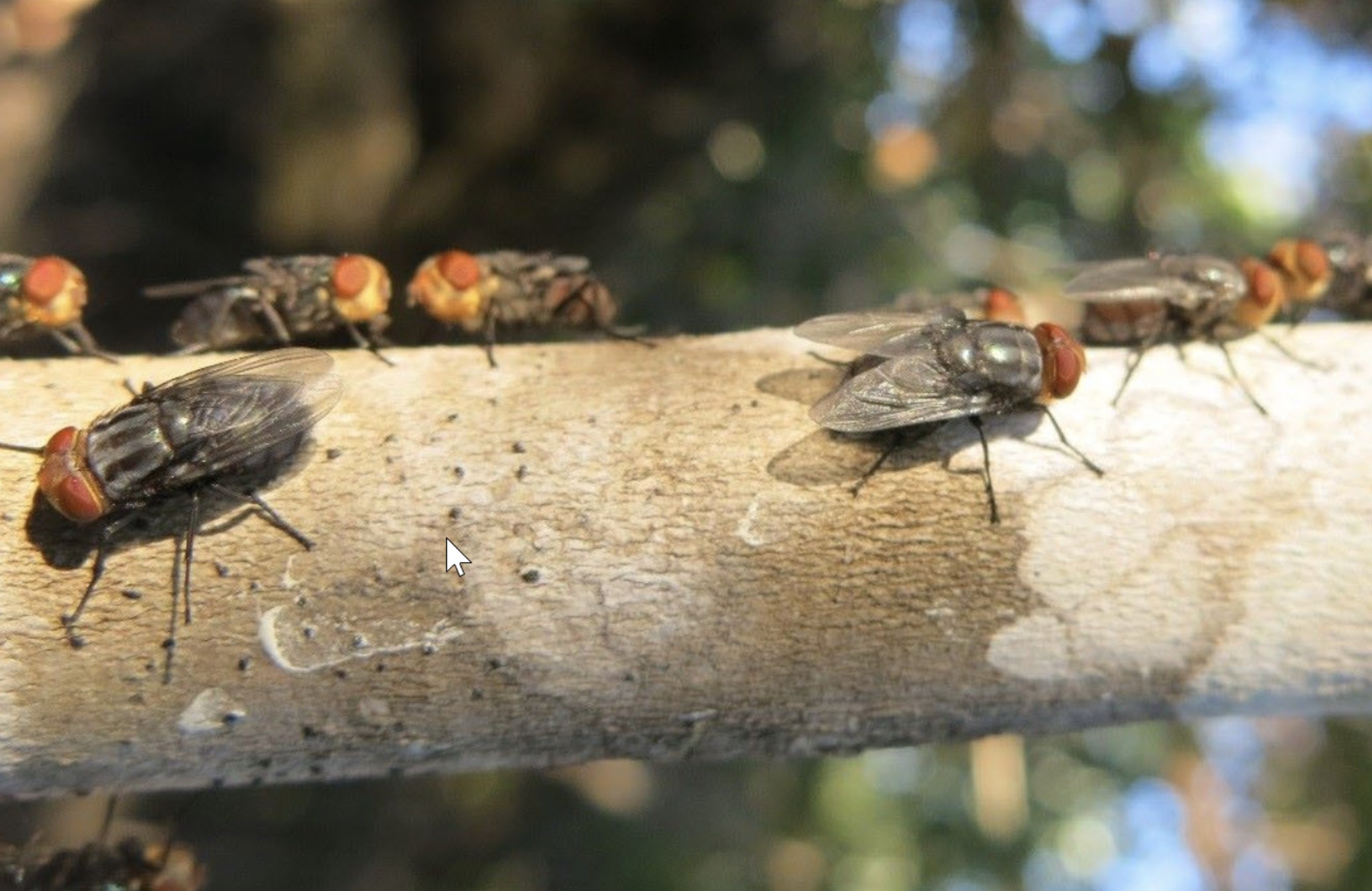
Ravenous, flesh-eating flies have busted through containment barriers and have now reemerged in the US. On Monday and Tuesday, the US Department of Agriculture reported three new cases, bringing the tally to five.
Almost all the attention over screwworm’s resurgence has focused on the threat to livestock, like the calves and, in turn, the financial risk to the cattle industry. The fly’s voracious, screw-shaped larvae can fell cattle if given the chance, and preventing infestations requires intense vigilance. The USDA has estimated that if the flies stage a comeback rivaling isolated outbreaks of the past, they could cost Texas producers $732 million per year and the Texas economy $1.8 billion.
But while livestock are the easiest and costliest prey, humans are also at risk. Human cases are far less frequent than those in livestock, but when they do occur, they are just as severe. As researchers noted in a 2025 review, infestations in humans “cause rapidly enlarging, painful wounds that can progress to deeper tissues, with risks of secondary infection, sepsis, and mortality.” The fly’s larvae can destroy muscle, cartilage, and bone if they aren’t caught in time. They can even break through a human skull.
Human risk
Understanding the threat requires examining the parasite’s lifecycle. The screwworm—technically New World screwworm or Cochliomyia hominivorax (Coquerel)—is a parasitic blowfly. Females mate only once in their 10–30-day lifespan but can lay up to 3,000 eggs. The flies are attracted to the smell of wounds, mucous membranes, and orifices of warm-blooded animals, and females deposit hundreds of eggs when they find an opening. The eggs hatch within a day, and the resulting eponymous screw-shaped larvae quickly begin ruthlessly boring into and feasting on their victim’s living flesh. This savagery can last up to a week before the mature larvae fall to the ground. There, they pupate in the soil and emerge, 7–54 days later, as adult flies.
This sequence of events used to occur regularly in the US and Central America; screwworm was endemic here but was eradicated after a concerted, decades-long campaign to annihilate its populations. This was done using Sterile Fly Technique, which involves breeding millions of male flies in specialized facilities, sterilizing them with gamma radiation, then dropping them from the air like bombs. It works by exploiting the fact that females mate only once; if they do so with a sterile male, there will be no offspring, and the population will collapse.
Screwworms were eradicated from the US Southwest in 1966, though Texas continued to struggle with outbreaks into the 1980s. Mexico declared eradication in 1991, and efforts to zap the flies continued moving southward. Panama declared eradication in 2006, and for years, the flies were held at bay at the Darién Gap, the border of Panama and Colombia, with consistent sterile male fly releases. But around 2022, the barrier was breached, and the flies have been eating their way back up.
With the northward movement, reports of human cases of screwworm infections, called myiasis, have trailed them in Central America. They offer a glimpse of the risk that people in the US now face as the flies invade.
Human cases emerge
Screwworms will attack any wound in humans—they can find a wound as tiny as a tick bite as a way in. For those caught unaware, the flies will also happily lay eggs in convenient openings such as the nose, mouth, ears, eyes, and even the bum, if available.
In early 2024, researchers in Costa Rica—which declared screwworm eradicated in 2000—reported what is thought to be the first identified human myiasis case in the country since the reemergence. The case was in a 71-year-old man from a small rural community close to the border with Panama. He sought care on January 12, 2024, for wounds on his feet, specifically between his toes, which had developed over the prior four months. The wounds had painful, oozing pus and smelled horrible. Doctors noticed a deep lesion between the first two toes on his right foot. They pulled out approximately 160 screwworm larvae. (A graphic image of the man’s toes is seen here.)
The man was sent to an emergency department for wound care, where doctors found some more larvae. He was also diagnosed with two bacterial infections, Staphylococcus aureus and Pseudomonas aeruginosa. He was treated with antibiotics and creams and had healed by the time of his six-week follow-up.
At that point, Panama, to the south, had 18,553 animal and 79 human cases. And to the north, things were starting to pick up in Nicaragua, with 3,307 animal and two human cases. In Honduras, there were just 15 animal cases.
Clinical horrors
In March 2025, doctors in Canada reported that a resident in his 80s returned home from a trip to Costa Rica with myiasis. He had fallen during the trip, scraping up both knees and shins. While the wounds mostly seemed to heal, an ulcer formed on his right shin. He sought care while still in Costa Rica, and doctors there extracted 30–40 larvae. He then quickly returned to Canada. Back home, doctors noted a deep cavity had formed. They pulled at least 14 more larvae out and aggressively cleaned out the wound. (See a graphic image of the wound here.)
That same month, doctors in Chicago reported what might be the worst-case scenario. A 15-year-old girl developed a screwworm infestation in her head. The teen had a genetic skin condition that caused her to have chronic scalp lesions. When she returned home, she had an intense headache that wouldn’t go away and a 4.5-mm bulging, moving ulcer on the top of her head. When doctors smothered it in ointment, about 45 larvae crawled out. (A graphic image of the ulcer is here.)
Luckily, magnetic resonance imaging showed that the larvae hadn’t yet invaded her brain. Still, doctors removed the full thickness of her scalp in the region to ensure all larvae were removed. Her headache cleared, and she recovered fully.
Screwworm infestations “can be deadly, especially when involving the scalp,” the doctors wrote in their case report. “Larvae may burrow through the skull, dura [outer membrane around the brain], and into the brain, leading to an associated 8 percent mortality.” They called for physicians to remain vigilant, especially with scalp wounds.
Any opening is an opportunity
If there is another case that could rival the horror of that scenario, it might be a case report from August 2025. Doctors in Honduras reported the case of a 55-year-old man who developed a screwworm infestation in his hemorrhoids. He was in such pain that doctors had to put him under general anesthesia to see what was going on, which required surgery. When the surgeons started removing the bulging, damaged tissue around his anus, they found 22 screwworm larvae.
The doctors attributed his infection to his occupational exposure as a septic tank worker. His “prolonged exposure to fecal sludge, poor hygiene, regular latrine use, and minor skin breaks,” as well as prolapsed hemorrhoids were risk factors in this case, they wrote. (We are not linking directly to an image of the surgical site, but an image of the 22 larvae extracted is here.)
The surgeons carefully dissected the area and extracted all larvae. They surgically removed his hemorrhoids and started him on antibiotics and the anti-parasitic drug ivermectin. Nearly two weeks later, his pain had resolved and his wound was healing well.
While these cases highlight the risks of wounds and vulnerabilities, many others show that the flies will happily infest in normal orifices, such as the ears and nose.
In March of this year, doctors in Ecuador reported the case of a 75-year-old man with epilepsy who developed a screwworm infestation in his mouth. The case was caught late, and he died eight hours after admission to a clinic, where more than 300 larvae were pulled from his gums, tongue, lower lip, and the roof of his mouth.
As the savage flies spread in the US, the Centers for Disease Control and Prevention urges people in areas where screwworms are spreading to prevent exposure by keeping wounds clean and covered, wearing insect repellent, covering up with loose clothing to block access, and avoiding sleeping outside, especially during the day.
Could the war in Ukraine bring political change to Russia?
Volodymyr Zelensky recently suggested that the war in Ukraine was beginning to turn in his country’s favour. The Ukrainian president insisted that Russia was “losing the initiative each day”.
These comments came days after Zelensky wrote an open letter to his Russian counterpart, Vladimir Putin, in which he called for direct talks to end the war. Zelensky concluded the letter by stating: “when Russia grows tired, change comes”.
There is truth to Zelensky’s claim. As journalist Gideon Rachman pointed out recently in the Financial Times, Russia has experienced dramatic political change four times in the past 100 years or so after defeat in a war or a serious foreign policy miscalculation.
The 1905 revolution that led to the imposition of limits on the power of the ruling Tsars was sparked by Russia’s humiliating loss in the Russo-Japanese war. The Bolsheviks then came to power in 1917, laying the foundations for the Soviet Union, after Russia’s disastrous military performance in the first world war.
Nikita Khrushchev’s decision to place Soviet nuclear missiles in Cuba in 1962 brought the world to the brink of disaster and convinced other leading figures in the Kremlin that he had to go. And in 1991, just two years after withdrawing Soviet troops from Moscow’s failed war in Afghanistan, Mikhail Gorbachev faced an attempted coup that led to the collapse of the Soviet Union itself.
Public humiliation on the world stage was an important element in each of these cases. It focused attention on Moscow’s weaknesses, demonstrating that Russia was not as strong as it appeared. This display of weakness emboldened those who wanted change.
But more was needed. A real sense of hardship and grievance experienced by society or political elites – or both – was necessary to deepen and broaden that desire for change and provide an impetus for action. The leaders of political change also had opportunities to organise, gain support and establish a power base.
Afghan children playing on the wreckage of Soviet tanks in the outskirts of Kabul, Afghanistan, in 2019.Jawad Jalali / EPA
So, will the war in Ukraine cost Putin his position as Russia’s leader? Some signs point in that direction. The war is increasingly becoming a public humiliation for Russia. When the so-called “special military operation” began in February 2022, Russian officers leading the invasion were told to pack dress uniforms to wear in a victory parade in the Ukrainian capital of Kyiv.
But more than four years later, Russia is struggling to achieve its far more limited goal of taking and holding the Donbas region of eastern Ukraine. During 2026, Russia’s rate of advance has slowed to a crawl and has even been reversed in some places. Meanwhile, Ukraine’s effective use of drones has given Kyiv the initiative.
There are now signs that the Russian government realises it cannot achieve its war aims in Ukraine. In May, a leaked document revealed that the Kremlin is making plans for a propaganda campaign to spin the war in a way that avoids conceding that none of its stated goals have been fulfilled.
The war is also unpopular among ordinary Russians. An April opinion poll, which was carried out by Russia’s Levada Center, showed 62% of Russians want the war to end. The poll found that only 27% of Russians favour continuing it.
Considering the pressure to give “the right” responses in such surveys out of fear of retribution from the state, it is remarkable that such a high proportion of those surveyed were willing to express dissatisfaction with the war. It also suggests that the true extent of war weariness among Russians could be even greater.
This desire for an end to the war may stem from the fact that the conflict is becoming increasingly real to Russians. While economic sanctions against Russia have been an inconvenience to most citizens, Ukraine’s ability to manufacture drones that can strike deep in Russian territory is truly bringing the war home. Russian oil refineries and depots have been particular targets, driving up prices and creating shortages and petrol rationing in several regions.
Limited signs of change
However, while there is a widespread desire among Russians for the war to end, there are no signs of mass protests that might put pressure on the state to end the war quickly or, indeed, bring about real political change.
Legislation rushed through days after the start of the mass invasion of Ukraine made it an offence to spread “false information” about the military or “discredit” the armed forces. And although some individuals continue to protest as “single pickets”, most Russians are discouraged from taking a public stance by the prospect of arrest and fines or custodial sentences.
Another factor that prevents large-scale protests or uprisings in Russia is the absence of any political opposition to the state. Russia’s remaining prominent opposition leaders are either in exile or in prison. The state also makes extensive use of legislation that allows it to declare individuals, organisations or groups that are critical of the state as “foreign agents” or “undesirable organisations”.
Those who are designated foreign agents face financial penalties and lose a number of legal rights, including the right to stand for election. Undesirable organisations face even harsher restrictions. They are not permitted to conduct financial transactions or spread information in the media or on the internet.
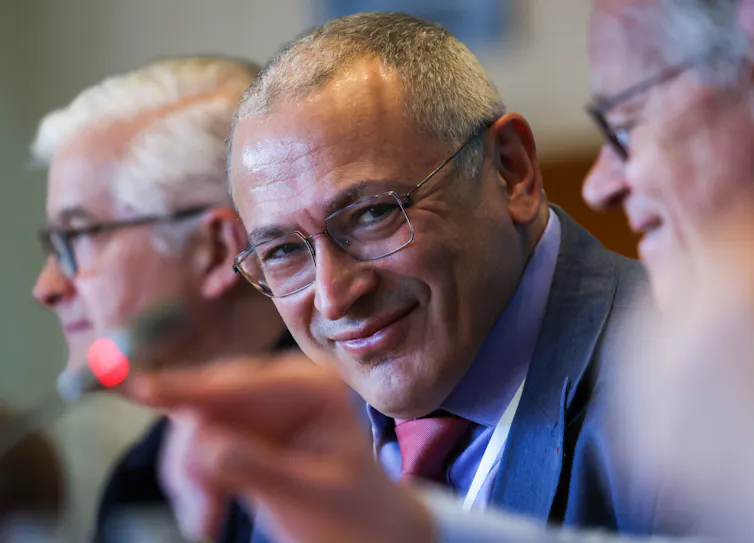
Mikhail Khodorkovsky, an exiled Russian opposition activist, pictured in June 2023.Olivier Hoslet / EPA
The extent of legal restrictions on society and opposition figures mean that political change is most likely to come from inside the ruling regime. This happened in 1964 when Khrushchev was removed from power. A group of fellow political leaders confronted Khrushchev, who agreed to step aside when he found that no powerful institutions were willing to support him.
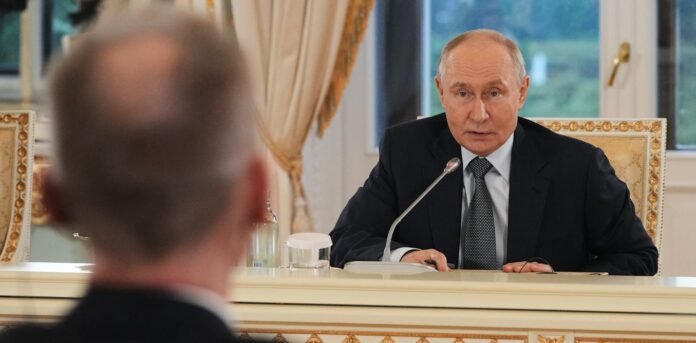
Putin is well aware of this precedent and has been careful to avoid naming a successor. He has also been very effective at keeping the various competing interests in Russian politics at odds with each other while ensuring that the country’s intelligence and security forces are loyal to him personally.
The obstacles to a coup are significant. But if Putin continues his refusal to consider making any concessions to end the war in Ukraine, those who surround him might decide that their own interests are better served by removing him from power.
We ran 100,000 computer simulations of the World Cup. And the winner will be …
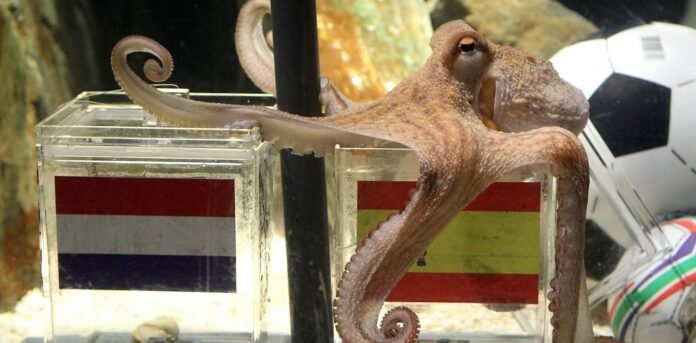
In times past, when we wanted to know which team would win the World Cup, we had to turn to seers with crystal balls, use divination via tea leaves, or hope for Paul the Octopus to tell us what would happen.
But modern data science can provide a better alternative. As part of a team of statisticians, I helped train a machine learning algorithm to predict the most likely course of the tournament.
Probabilistic forecasts and loaded dice
The algorithm we built proceeds in two steps.
In the first, sophisticated statistical models and expert insight from bookmakers and transfer markets are combined to determine the strengths of all teams and their players. In the second step, a machine learning algorithm decides how to best combine the strength estimates with other information about the teams.
This produced a probabilistic forecast for each possible match in the tournament. It can be thought of as a pair of loaded dice: Instead of having the numbers 1 to 6 with equal probabilities, these loaded dice have different probabilities for the number of goals for either team.
For example, according to our forecast, Mexico has a die rolling 1.9 goals on average in the opening match, whereas opponent South Africa has an average of only 0.7. But this does not mean that Mexico will surely win. Rather, a win for Mexico is the most likely outcome with 65% probability. A draw is less likely (21%), and a win for South Africa is the least likely outcome (14%).
‘Vuelve a casa, el fútbol vuelve a casa!’
Using different pairs of loaded dice, the result of each match in the World Cup can be simulated. We took into account the official tournament draw and all FIFA rules, including the possibility of overtime and penalty shootouts. We ran the simulation 100,000 times to determine the tournament’s most likely course.
The results show that Spain is the favorite for the title with a winning probability of 14.5%, closely followed by England and France, each at 12.4%, and Germany at 11.2%.
Due to the expanded tournament – this World Cup has 48 teams and five rounds in the knockout stage – this group of favorites is tightly packed. Portugal and Argentina also have good chances to win the title, at 8.9% and 8.2%, respectively.
For its part, the United States has a good chance of reaching the Round of 32: 78%. This is the highest in their group, which has three other teams. In the knockout stage, however, when every match is do or die, the probabilities of the U.S. team “surviving” go down relatively quickly. The probability for a home victory in the final at MetLife Stadium in New Jersey on July 19 is 1%.
A deeper peek into the engine room
Our machine learning algorithm and subsequent simulations are fueled by data, expert knowledge and statistical models.
First, all national matches over the past eight years are the basis for a “retrospective” estimate of the teams’ strengths. Second, a “prospective” strength estimate is obtained from quoted odds of various international bookmakers, reflecting their expert opinions about the upcoming tournament.
Third, ratings of the individual players are produced based on their contributions to goals at the club and national levels. And finally, the current quality and future potential of the players is reflected in their expected market values. These are available from the Transfermarkt website that uses a wisdom-of-the crowd approach to estimate the unknown real-market values.
These four variables are combined with a broad range of further relevant inputs reflecting the current states of the different teams and the countries they come from. This includes team-specific details, such as their FIFA rank and the number of players in the semifinals of this year’s Champions League. We also factored in country-specific socioeconomic factors, such as GDP per capita.
To determine if and how these features are relevant for the actual results in a World Cup, a machine learning algorithm was used.
Here, a so-called random forest is trained, consisting of lots of decision trees capturing slightly different subsets of the data. The algorithm has been trained on all matches played at the major soccer tournaments since World Cup 2006. It thus links a team’s strength, market value and other factors to the number of goals scored in matches at World Cups. This is the information that loads the dice for our simulations.
Find out more
This is not the first time that our team comprising Andreas Groll and Rouven Michels and colleagues at TU Dortmund University in Germany, Lars Magnus Hvattum at Norway’s Molde University College, Gunther Schauberger at TU Munich and I have collaborated to forecast a World Cup.
In the 2019 Women’s World Cup we correctly predicted the U.S. as the winner. In the 2023 Women’s World Cup and the 2022 men’s World Cup, the winners – Spain and Argentina, respectively – were not our favorites, although we did predict them to be serious contenders.
The bottom line is forecasts are about probabilities. Our program will not predict the winner with 100% certainty – but it might do better than an eight-limbed mollusk.
Patron problem: Kim Jong Un played Russia, rattled China and won
President Xi Jinping has, over the years, drastically cut short his foreign travels. More like Chairman Mao, he prefers to host world leaders in Beijing.
His foreign visits that averaged about 14 trips a year during 2013–19 fell to one during the pandemic year 2020, to zero for 2021, and were partially revived to five or six trips a year during 2022-2025.
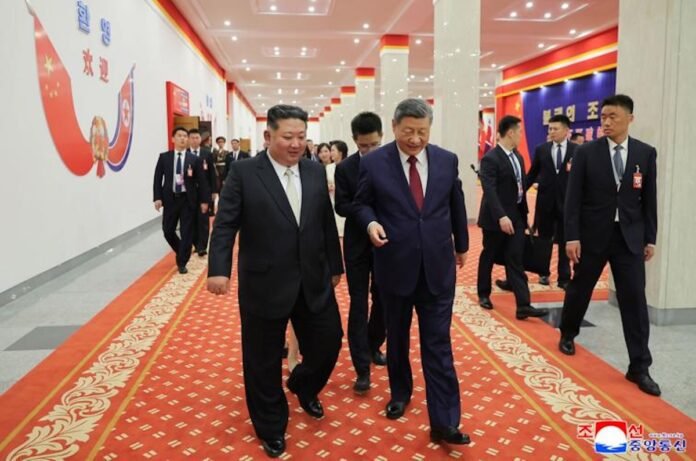
This makes what happened earlier this week worth our attention.Xi Jinping’s first foreign visit of 2026 — a year in which he has already hosted about a dozen world leaders including Donald Trump and Vladimir Putin — was not to Moscow or Washington.
The trip was to an erstwhile pariah: the heavily sanctioned and diplomatically isolated hermit kingdom of Kim Jong Un. That choice is a story and an alarm bell, and it has a name: the patron problem.
Kim’s audacious gambit
For decades, the China-North Korea relationship ran on a single, brutal logic: Pyongyang needed Beijing more than Beijing needed Pyongyang. Till recently, China accounted for over 95% of North Korea’s foreign trade. China supplied food, fuel, electronics, machinery, vehicles and textiles. This dependency was Beijing’s ultimate leverage — a leash elegantly disguised as fraternal socialism.
But Kim has spent the last four years systematically cutting that leash. The pivot began after Russia’s war with Ukraine created needs for ammunition, artillery shells and manpower. By late 2024, 11,000 North Korean soldiers were deployed to fight alongside Russian forces. In exchange, Pyongyang extracted a windfall that China could never imagine: it earned between $7.7 and $14.4 billion from its provision of equipment and manpower to Russia. This was way more than its total foreign trade of $3.2 billion for 2025.
North Korea was rewarded by President Putin paying a two-day visit to Pyongyang in June 2024, his first visit since July 2000 when he was hosted by Kim Jong Un’s father Kim Jong Il. Meanwhile, Kim Jong Un had met Putin in April 2019 (Vladivostok) and September 2023 (Vostochny Cosmodrome). Then two had met in Beijing during China’s Victory Day celebrations of September 2025.
Russia has since supplied North Korea with advanced drone technology, air defense equipment, space assistance, anti-aircraft missiles and electronic warfare systems. There are speculations that Pyongyang received a nuclear submarine reactor. But Kim was not merely seeking weapons; he aspired to independence.
Rocket Man to the rostrum
The culmination of this transformation arrived on September 3, 2025 in Beijing’s Victory Day parade commemorating 80th anniversary of the surrender of Japan during World War II. Kim Jong Un stood on the rostrum alongside Xi and Putin. He was accompanied by his teenaged daughter and possible successor Kim Ju Ae and they were welcomed at Beijing Railway Station by a member of the Standing Committee of the CCP Politburo, Cai Qi, and the foreign minister, Wang Yi.
This was the first time that Xi, Putin and Kim appeared together publicly; also the first instance since Chairman Mao hosted Kim Jong Un’s grandfather Kim Il-sung and Soviet leader Nikita Khrushchev at China’s National Day parade commemorating ten years of China’s liberation in 1959. Giving Kim Jong Un an equal billing alongside President Vladimir Putin, Xi Jinping had elevated the North Korean leader’s diplomatic standing.
The man once mocked by Donald Trump as “Rocket Man” and threatened with “fire and fury” was being accorded the same ceremonial standing as the leader of Russia. Among all 26 foreign leaders at the parade, only Putin and Kim were subsequently invited by Xi to tea and a banquet at the Great Hall of the People. At this event covered by global media, Kim had reaped the biggest “diplomatic windfall” of all.
President Trump has since publicly expressed readiness to revive his personal diplomacy, telling South Korea’s prime minister in March 2026 how he “has maintained a good relationship with Chairman Kim Jong Un” saying “he is wondering if Chairman Kim wants dialogue with the US and President Trump.”
Kim’s reply was self-assured: “If the US drops its hollow obsession with denuclearization and wants to pursue peaceful coexistence with North Korea based on the recognition of reality, there is no reason for us not to sit down.”
Beijing’s nightmare: the leash is gone
For Xi Jinping, this transformation of Kim Jong Un is no longer tactical. It presents a structural challenge. For the third time, China renewed their 1961 Treaty of Friendship, Cooperation and Mutual Assistance in 2021. Its Article 1 obligates immediate military assistance “by all means at its disposal” if either party is attacked. For seven decades, this made China North Korea’s sole guarantor. But with the 2024 Russia-North Korea Comprehensive Strategic Partnership, Kim has a second guarantor.
The diplomatic signals of Beijing’s discomfort have been too obvious. In early October 2024, Xi Jinping had pointedly omitted the traditional reference to North Korea as “friendly neighboring state” when replying to Kim’s congratulatory message on the 75th anniversary of the PRC. Experts described this as Beijing’s policy paralysis, saying that every option was a bad option as Beijing could not afford to lose its sway over Kim to Russia or to destabilize this nuclear power next door or, worse, to see Europe’s war imported into Asia.
But Kim continues to defy Beijing. In May 2024, with Premier Li Qiang in Seoul to attend the China-Japan-South Korea summit, North Korea’s launch of a military satellite showcasing its deepening military cooperation with Russia was a direct signal to China. The impact was visible in the readout from the Xi-Kim September 2025 meeting that conspicuously omitted any mention of “denuclearization,” which was in contrast to all their past five summits.
This marked the backdrop of Xi’s visit to Pyongyang, which also marked the 65th anniversary of the China-North Korea Treaty of 1961. Not only was Xi accompanied by senior leaders Cai Qi and Wang Yi, but the latter had even made a preparatory visit to Pyongyang two months earlier. Xi even penned an article for a North Korean newspaper describing bilateral relations as being at a “new historical starting point.”
On the eve of Xi’s visit, China resumed direct passenger train services and Air China flights to Pyongyang six years after they had sealed borders during the pandemic.
Xi optics vs Kim’s leverages
The optics of Xi’s visit therefore were less about friendship and more about leverage. According to experts, chances of Xi reviving his red line on denuclearization or on North Korea’s proximity to Putin were unlikely. Perhaps the visit was no more than Xi giving Kim a readout on his Trump summit and a signal that China, not Russia, remains Kim’s key ally. That Beijing feels compelled to make such an argument is itself the most eloquent measure of Kim’s growing leverages.
Kim has transformed this relationship from dependency to bargaining. North Korea’s growing nuclear arsenal, estimated at about 150 warheads, is projected to surpass 400 by 2040. The cumulative cryptocurrency theft by North Korea’s Lazarus Group hackers now exceeds USD 6 billion attributed to incidents since 2017; a sanctions-proof, borderless revenue stream funding his missile program. Kim has battle-tested troops and mutual defense pacts with China and Russia and aspirations to BRICS membership.
Kim is not a hermit anymore. He is a pivot point in a fracturing world order with great powers queuing up to prove it. This makes President Xi’s Pyongyang visit this week more reflective of Chinese anxieties. And for Kim, these anxieties are the greatest asset he has ever possessed.
‘Short, sharp and more strategic’: the EU’s new approach to climate talks
The EU wants to target fewer, clearer goals at the world’s annual climate summit in November, building alliances in advance to avoid a repeat of last year’s bruising talks where the bloc struggled to advance its agenda, a document showed.
The internal document, which was seen by Reuters, was prepared by the upcoming Irish presidency of the 27-nation European Union and spells out the strategy the EU should take for the United Nations’ COP31 climate summit in Turkey.
The EU’s negotiating mandate should be “shorter, sharper and more strategic” than in previous years, the document said.
“We should say fewer things, more clearly – and stand firmly behind them,” it said.
The previous global climate conference, COP30, in Brazil, ended without deals on EU priorities to accelerate cuts to planet-heating emissions and reduce fossil fuel use.
“Europe should continue to stand firmly for ambitious climate action and for the integrity of the multilateral process. But ambition alone is not a strategy,” the document said.
While discussions of a roadmap to phase out fossil fuels and plans to increase climate funding dominated the talks in Brazil last year, the 15-page EU negotiating mandate that its member countries had agreed ahead of the summit did not include positions on those issues.
Some diplomats said the EU’s failure to push through its agenda was in part due to a lack of preparation.
‘DEPLOYING STRATEGICALLY’ AS IRAN WAR LOOMS OVER SUMMIT
The challenge to agree on ambitious climate action at this year’s COP comes as countries around the world struggle to respond to the Iran war’s disruption of energy supplies, with some expanding renewable energy while others burn more coal.
Ireland will also focus on early outreach by EU member governments to other countries, building cooperation with both allies and opponents in the talks, the document said.
This will involve dividing up negotiating responsibilities among member states’ ministers to ensure they are “deployed strategically both in the lead-up to and during COP31 itself.”
“Political ownership matters. Ministers should not arrive at COP only to react to events as they unfold,” the document said.
Asked about the document, a spokesperson for Ireland’s climate ministry told Reuters the country was taking a streamlined approach to preparing for COP, and “concentrating our efforts where we can make the greatest contribution and on key priorities”.
“Climate diplomacy is not just about two weeks at a COP; it is a year-round process of engagement, relationship-building and delivery,” the spokesperson said.
One day after discovery, Meta pulls facial recognition code from its smart glasses
One day after WIRED revealed that Meta had quietly embedded an unreleased face-recognition system into an app installed on more than 50 million phones, the company removed it, according to a WIRED analysis of the latest version’s code.
The most recent version of Meta AI, a companion app for its line of smart glasses, strips out the unactivated software components that powered the system Meta internally called NameTag. The version published the day of WIRED’s report included several code libraries explicitly named for face recognition. Friday’s release includes none of them.
Andy Stone, Meta’s vice president of communications, told WIRED on Monday that the feature is purely exploratory, adding: “No final decision has been made on what to do here, if anything.”
On Thursday, WIRED reported that Meta had quietly integrated substantial portions of the NameTag system into the Meta AI app. Though never publicly enabled, the feature was designed to convert faces captured by the glasses into unique biometric signatures, commonly known as faceprints, and compare them against a database of faceprints stored on the user’s device. WIRED also found that faces the system failed to recognize were cropped, indexed, and stored locally for future processing.
NameTag first surfaced in February, when The New York Times, citing internal Meta documents, reported that the company was developing face recognition for its smart glasses and weighing a launch as soon as this year. One memo reportedly described releasing it during a “dynamic political environment,” when privacy and civil liberties advocates would be distracted. Last week, WIRED reported that much of NameTag’s machinery was already built into the Meta AI app, downloaded by millions of users, as early as January, even as Meta publicly said it had made no final decision about face recognition.
After WIRED’s report, Stone dismissed the findings, writing that the company couldn’t answer questions about how the system would work because “the feature does not exist.” Andrew Bosworth, Meta’s chief technology officer, called the reporting “incredibly misleading” and “absolutely dishonest.”
Meta declined to answer 10 questions WIRED posed before publishing on Thursday, including whether it had already created the database of face profiles NameTag uses, how long the app retains photographs and biometric data of unrecognized people stored on a user’s device, and whether that data would ever be sent back to Meta’s servers.
Additionally, Meta did not respond to a question about whether it was building NameTag specifically for blind or low-vision users, and did not respond to criticism from privacy advocates who have warned the system could let stalkers and abusers identify strangers in public. It did not respond when asked whether it planned to let users opt in or opt out of the system.
The newly released version of Meta AI removes nearly all traces of the feature Meta said did not yet exist. Gone is the face-recognition software itself, along with the code that ran the NameTag recognition process and the “Person recognized” alert the app would have shown if someone were identified. The update also strips out a folder where the app would have stored the cropped images and biometric signatures of faces it captured but could not identify.
Meta did not answer WIRED’s questions about why the code was removed or whether the changes were planned before WIRED’s story was published.
A few fragments of the NameTag system remain in the latest version of Meta AI, including an internal debug menu label and a dormant link meant to open a recognized person’s profile. The leftover code points to parts of the system that are no longer there.
Kade Crockford, director of the technology for liberty program at the American Civil Liberties Union of Massachusetts, says the removal didn’t undo the original decision to ship the code, and pointed to it as evidence that consumer privacy needs stronger legal protection than Congress has been willing to provide. Crockford notes that the Massachusetts House of Representatives last week unanimously passed a consumer privacy bill that, if enacted as written, would impose strong enforcement provisions, and urged other states to follow, especially with a private right of action that lets aggrieved users sue. “State lawmakers need to do their job and step up to protect consumer privacy,” they say.
“Meta’s sneaky tactics in slipping the face-recognition code into its smart glasses show exactly why data privacy bills need the teeth of strong enforcement,” Crockford says. “Companies like Meta prioritize their bottom line, so lawmakers need to speak in the only language its C-suite understands.”
Indian targeted by Trump poured money into Don Jr.-backed startup
Originally published by ProPublica, a nonprofit newsroom that investigates abuses of power, this article is republished with permission.
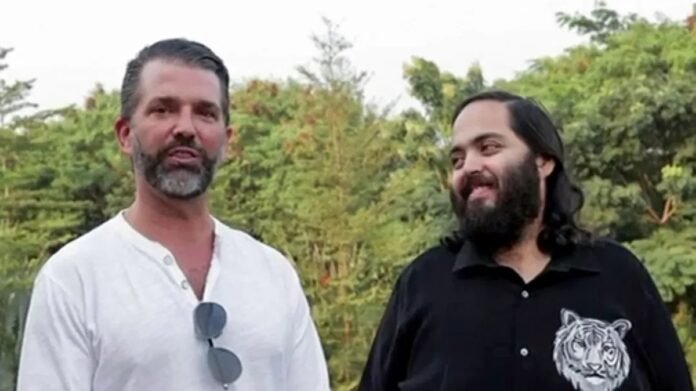
In late November in Jamnagar, India, the scions of two of the most powerful families in the world stood face-to-face. On one side was 30-year-old Anant Ambani, son of one the richest men in Asia. On the other was Donald Trump Jr.
For months, the Trump administration had been on the offensive against the sprawling Ambani energy empire, placing it at the center of an escalating tariff campaign against India. But after Trump Jr. touched down, the two men toured the Ambanis’ private zoo. At night they performed a Gujarati folk dance, grinning as they moved together to the music.
Four months later, an obscure Texas startup called America First Refining announced that it had received a nine-figure investment from the Ambanis’ company. The deal puzzled numerous energy investors familiar with the project, which aims to build the first major new oil refinery in the US in about 50 years. The company is run by a serial entrepreneur with a history of bankruptcy and lawsuits alleging fraud. After more than a decade of failed attempts to raise money, blown deadlines and rebrands, it had been floundering.
America First Refining’s unexpected breakthrough came after it forged a previously unreported relationship with Trump Jr., who secretly acquired a stake in the startup, according to records and seven people familiar with the company.
The new details reveal the role the president’s son has played in a theme of Trump’s second term: overseas investors with interests before the administration putting money into the Trump family’s business interests.
Over the past year and a half, Trump Jr. has amassed a fortune from stakes in companies ranging from crypto startups to a drone business to a firearms retailer. Some firms tied to the president’s son have received contracts or other support from the federal government, part of what critics describe as a run of Trump family self-dealing.
In December, Forbes estimated that Trump Jr.’s net worth had rocketed from roughly $50 million to $300 million since the election. But the Forbes figures were based on the investments that have been publicly disclosed. The America First Refining episode suggests there is much about the family business that remains secret.
The size of Trump Jr.’s stake in America First Refining and what he paid for it remain unclear. Top executives at the startup have also said that they speak regularly with Trump Jr., according to a person close to the company. And after the Ambani investment was announced, Trump Jr.’s personal lawyer took credit on social media for playing a part in the deal.
America First Refining has flexed its Trump Jr. connections during pitch meetings with foreign officials. Early last year, Trump Jr. joined the company’s leadership for a meeting in South Florida with potential investors from Saudi Arabia, according to two people familiar with the matter.
Another foreign government official pitched on the project told ProPublica that the company’s team emphasized it had backing from the Trump family and suggested that an investment would help with White House access.
The Ambanis’ investment coincided with the family’s securing major US policy wins that their company, Reliance Industries, had been lobbying for. “Reliance Goes From Trump Foe to Friend With Refinery Pledge,” ran the Bloomberg headline after the deal was announced. Reliance’s intent with the deal was to “smooth out” tensions between the US and India, the outlet reported.
A Trump Jr. spokesperson said that Trump Jr. “has no operational involvement in AFR and is simply a passive minority investor in an American company that aligns with his worldview.”
“The entire premise of this story relating to Don is false,” the spokesperson said, adding, “Don does not interface with the Federal Government on behalf of any company that he invests in or advises.” ProPublica did not find evidence Trump Jr. was aware of refinery executives’ suggesting that an investment would help with White House access.
In response to detailed questions, a spokesperson for America First Refining said, “The claims in this story are false,” but declined to specify what this charge referred to. The company’s CEO previously denied wrongdoing in the lawsuits against him reviewed by ProPublica, and the suits were either settled or dropped.
The Ambani family had long been cultivating its relationship with the Trumps. Reliance paid $10 million to the Trump Organization in 2024 as a “development fee” for a project in Mumbai, according to the president’s financial disclosure. (Despite the payment, Reliance has not yet announced a Trump project. Reliance told ProPublica that “the real estate project is real” and “remains under development.”)
Ivanka Trump attended Anant Ambani’s wedding party in India that year, where guests were treated to a Rihanna concert. Anant’s father, Mukesh — who is worth an estimated $90 billion and lives in a 27-story home — came to Washington, D.C., for Trump’s second inauguration, posing with the president at a private reception.
At the Private Reception in Washington, Mrs. Nita and Mr. Mukesh Ambani extended their congratulations to President-Elect Mr. Donald Trump ahead of his inauguration.
With a shared optimism for deeper India-US relations, they wished him a transformative term of leadership, paving… pic.twitter.com/XXm2Sj74vX
But by the summer of 2025, the family was under attack from the White House. Since Russia invaded Ukraine in 2022, Reliance had reportedly made billions in profits by purchasing vast quantities of Russian oil at a discount.
In August, as Trump grew frustrated with his administration’s struggles to bring the war to an end, the president doubled his tariffs on India to 50%. The move was explicitly designed to force companies like Reliance to stop buying Russian oil. White House trade adviser Peter Navarro publicly assailed “India’s politically connected energy titans” for “funding Putin’s war machine,” widely read as a reference to the Ambanis.
Amid this tension, Trump Jr. visited Anant Ambani on his November trip to India. At the end of the trip, Trump Jr.’s personal lawyer commented at a business conference in Miami: “I had a nice closing this morning with Don Trump Jr., who’s flying back from India today.” (The following week, the Texas startup — then called Element Fuels — filed paperwork to create America First Refining LLC. In an email, the attorney, John Willding, told ProPublica that there was “no transaction in India or with an Indian company that I was ever involved with.”)
Anant Ambani, who helps run Reliance’s energy business, personally worked on the Texas refinery deal for months before it was announced, a major Indian newspaper later reported.
As the Ambanis quietly finalized their deal with America First Refining, US-Indian relations appeared to warm. In February, the Trump administration struck a trade deal with India, dramatically lowering tariffs, and also reportedly gave Reliance a license to buy Venezuelan oil. When the Iran war broke out and rocked global energy markets, the US gave India a sanctions waiver to buy Russian crude. (The waiver was later expanded to all countries.)
In response to ProPublica’s questions, the White House said that “there are no conflicts of interest.” Reliance did not answer ProPublica’s questions about Trump Jr.’s and Anant Ambani’s roles in the investment deal, but said in a statement that the company did not receive “any unique or preferential treatment” from the US government.
“There is no connection between Reliance’s investment in AFR and any unique measures associated with general US trade, tariff, sanctions or licensing outcomes,” Reliance said. “The investment was evaluated and approved on its commercial merits, strategic fit and long-term value creation potential.”
In March, President Trump personally announced Reliance’s deal with the Texas startup on Truth Social, thanking the Ambani company for its “tremendous Investment.”
After the announcement, Willding, the Trump Jr. lawyer, shared the news on LinkedIn: “Just so proud to have been part of this one.”
Willding rowed back his claim in an email to ProPublica. “I have never worked for or advised AFR and had zero involvement in their deal with Reliance Energy,” he said. “I simply saw the press release and was excited for them.” America First Refining’s spokesperson called Willding’s comment “moronic and false.”
In June 2025, Willding registered a new entity in Wyoming called TX Fuels, LLC, listing the company’s address as Trump Jr.’s mansion in Jupiter, Florida. In his email, Willding said his “only involvement in AFR was handling the legal paperwork” for the Trump Jr. LLC’s investment in the startup.
Trump Jr. first hired Willding in May 2021, according tointerviews the lawyer has given. A corporate deal lawyer in Dallas, Willding has referred to himself as “outside business counsel to the Trump family” and has said he talks to Trump Jr. or Eric Trump almost daily. A former Bill Clinton and Barack Obama voter who fell hard for MAGA, the attorney has installed a portrait of President Trump over the mantel in his living room.
John Willding. Photo: YouTube
Willding’s practice has boomed during the second Trump administration, bringing the lawyer to Argentina, Saudi Arabia and South Korea. “Everybody in the world wants to do business with the United States right now,” Willding said at a conference in June 2025. “Every company wants to do business with the Trump family.”
There are other fingerprints of the Trump world on the refinery deal.
Howard Lutnick’s firm Cantor Fitzgerald — which his sons took over when Lutnick became Trump’s commerce secretary — is working as the financial adviser to America First Refining, including on the Ambani investment deal, Cantor Fitzgerald announced. (Cantor Fitzgerald declined to comment.)
And the Trump administration played a direct role helping America First Refining find potential foreign investors, according to public comments from the company’s CEO, John Calce. “We have received support from the White House,” he told a local news outlet. The National Energy Dominance Council, led by the interior and energy secretaries, has “helped us with, candidly, introducing us and helping us meet some of these people overseas,” Calce said on an industry podcast.
America First Refining has recently explored going public, according to three people close to the company. That could allow its current investors to start cashing out even if the refinery never gets built — a milestone many energy industry insiders still view as a long shot. Reliance made its investment in the startup at a valuation of at least $1 billion, according to America First Refining’s announcement.
Building a refinery at the Port of Brownsville on the Gulf Coast has been Calce’s mission for a decade. A former Yale offensive lineman, he started his career as a high school football coach after an unsuccessful attempt to make the NFL and now describes himself as a “lifelong entrepreneur.”
The project has been serially delayed, out of money, rebranded and trailed by angry former business partners. At one point, Calce’s companies were being sued simultaneously by eight other firms. In 2022, during bankruptcy proceedings for an earlier iteration of the project, the trustee appointed to impartially oversee the case sued Calce too. The trustee alleged that Calce and other insiders had improperly siphoned away cash and other assets. (Calce denied wrongdoing. The case was ultimately settled.)
During the Biden administration, as the company sought financial support from the Department of Energy, it pitched itself as a climate-friendly green project that would also help “people of underrepresented social demographics” in Brownsville, according to records from that period. The company failed to get enough money from outside investors, and the planned construction was delayed.
By the company’s own estimate, building the refinery will take years and cost $3 billion to $4 billion. Even if it’s built, profitability could be hard to achieve. Many energy investors told ProPublica there’s a reason the US hasn’t seen a major new refinery in decades. “Refineries cost a lot of money and essentially make pennies on the dollar,” said Ed Hirs, an energy economist in Houston. “Wall Street is not going to finance a new refinery.”
Even after the start of the second Trump administration, the company was in jeopardy, according to interviews and documents. It laid off workers last year, and, by late 2025, with delays continuing to plague the refinery, officials at the Port of Brownsville believed the project looked to be dead, according to records reviewed by ProPublica.
That has not stopped Calce and his team from making grandiose claims to the public. Earlier this year,a website went live for another Calce company called Brownsville Energy Storage Terminals. It claims to have a far-flung network of oil storage terminals in places like the Netherlands and Singapore, more than 850 employees and a C-suite of experienced energy executives. But ProPublica could find no evidence that the executives are real people or that the storage terminals actually exist. The phone numbers on the website are also currently listed online as the contacts for a Houston baklava caterer, a Dallas-area taxi service and an OB-GYN office. The numbers are dead.
America First Refining’s political ties, though, may have boosted its standing with Texas state regulators. In February, shortly before the Ambani investment became public, the company sought an extension on its permit from the Texas Commission on Environmental Quality.
Inside the state agency, emails obtained by ProPublica show, officials scrambled to approve the request.
“Need to get this one logged and processed asap,” wrote one official.
“You are going to have to do this one. I will explain why in person in a few,” wrote another. “You can guess if you check out the name.”
America First Refining got its approval the next day. A spokesperson for the Texas agency did not address questions about the emails. “This request was processed quickly due to the quality of information provided,” the spokesperson said.
He Profits Off Raw Milk That’s Making People Sick. The Government Isn’t Stopping Him.
Reporting Highlights
Raw Milk on the Rise: Driven by political shifts and wellness trends, unpasteurized milk has moved from a fringe obsession to a widespread movement rooted in institutional distrust.
The Myth of Safety: Despite stringent hygiene efforts, contamination from deadly bacteria like E. coli and salmonella remains an inherent, unavoidable risk in unpasteurized dairy.
A Political Shield: As raw milk continues to sicken consumers, high-level lawmakers and government officials are championing the industry’s expansion rather than curbing the danger.
These highlights were written by the reporters and editors who worked on this story.
ProPublica is a nonprofit newsroom that investigates abuses of power. Sign up to receive our biggest stories as soon as they’re published.
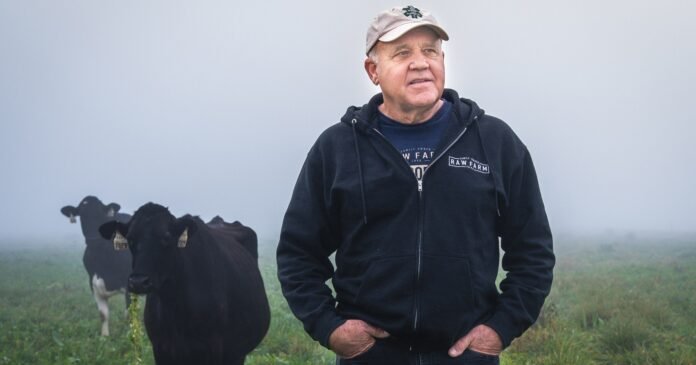
A white Ford pickup truck broke through a thick curtain of fog one morning in February, winding its way down a muddy farm road in California’s Central Valley. From it emerged a 64-year-old dairyman, burly and tan, who left the engine running as he lumbered toward me with open arms.
“You must be Mark,” I said, warning him I wasn’t one for hugging.
“I’m a hugger,” he said, pulling me in anyway. “I feel like I’ve known you for a lifetime.”
I had spent the past couple of weeks corresponding with Raw Farm founder Mark McAfee, who’d filled my inbox with messages and PowerPoints extolling the virtues of his most important, and controversial, product:
It is delicious.
It makes you feel good (the gut-brain serotonin and dopamine cycle).
It’s great for asthma and literally saves lives.
He was talking about raw milk, which, if you trust 150 years of bedrock science, offers little reason to consume. By definition, it has not been pasteurized, the simple process of heating milk to kill off harmful bacteria. Before the practice was widely adopted a century ago, thousands of babies died each year from illnesses linked to contaminated dairy. Today, most scientists and health experts agree that raw milk has no significant, proven nutritional benefits over its sanitized counterpart, cannot treat or cure disease and subjects its consumers to over 100 times the risk of foodborne illness, which can be especially dangerous for young children.
And yet, McAfee’s farm, the largest raw-milk dairy in the country, is pulling in about $30 million a year, meeting a growing demand from customers who say they want food that hasn’t been robbed of health benefits by industrial processing. Once drawing a fringe crowd, raw milk has been thrust into the mainstream in recent years by a potent mix of politics, wellness culture and a wave of suspicion that health institutions have been compromised by Big Pharma and Big Food. Its proponents have turned it into a symbol of freedom and defiance. More than 10 million Americans now drink it; national weekly sales rose by 65% from 2023 to 2024 alone.
Raw milk’s success confounded me: How had it gained such a foothold in this country, despite regular outbreaks of salmonella and E. coli, and even the discovery of bird flu in Raw Farm’s milk? More pressing still, what was the government doing to protect the public amid demands for products that scientists warn are risky, even deadly? Speaking with McAfee seemed like a good place to start; federal and state regulators had linked his business to more than a dozen recalls and outbreaks that had left hundreds of people ill.
“I’ve put a couple kids in the hospital, and they have been sick, but they recovered,” McAfee acknowledged before my visit. “But here’s the thing: I’m a pioneer. And I’m going against the grain here. I’m climbing a mountain they say you can’t climb.”
Sarahbeth Maney for ProPublica
McAfee isn’t any ordinary farmer. He is a raw-milk zealot who has escaped serious sanctions despite two decades of skirmishes with the Food and Drug Administration and the Department of Justice, which have repeatedly accused him of breaking federal laws and regulations. The Biden administration was on the verge of a crackdown against his farm when President Donald Trump assumed office and turned over leadership of the nation’s health agencies to one of McAfee’s most notable customers.
The year before he was confirmed as the secretary of the Department of Health and Human Services, Robert F. Kennedy Jr. ran for president, using his campaign platform to decry the government’s “aggressive suppression” of raw milk. In his new role, he said he was “advocating” for it and celebrated the release of a federal report to Make America Healthy Again with a toast of raw-milk shooters in the White House.
For his part, McAfee isn’t just selling Kennedy’s favored milk. He is selling the notion that his dairy products are safe and healthy — for you, your kids, your grandparents — because his farm thoroughly screens its milk for bacteria.
“They think we’re some kind of a fringe, weird trend, and we are dead serious here,” McAfee said after he greeted me at his farm, which he runs with his adult son and daughter, 20 miles southwest of Fresno. “And you’ll see that in what we’re doing today.”
He led me into a cream-colored bungalow he called his pathogen laboratory, where two workers in lab coats prepared milk samples.
The farm screens each batch for four types of bacteria: salmonella, E. coli, campylobacter and listeria, all of which thrive in the intestines of cattle and can contaminate milk through microscopic flecks of infected feces. The microbes can cause a constellation of symptoms in humans, from vomiting and diarrhea to sepsis, kidney failure and even death.
“We catch these things and divert the milk immediately,” McAfee said of the pathogens.
I assumed that after diverting batches, the farm discarded them.
Later that day, I learned otherwise.
“We have a red-flag system here, where if there’s anything that gets really out of whack, they can immediately tag the milk, and it doesn’t go to anything but cheese,” McAfee told me. “Because, you know, cheese is resistant to pathogens.”
Research has shown that raw cheese is not, in fact, resistant to pathogens; while aging can mitigate some risk, harmful bacteria can still survive the usual 60-day maturation process.
Hearing about the practice took me by surprise — the farm did what with that milk? — so I asked about it again.
McAfee confirmed that milk with pathogens was used to make cheese, except for batches with salmonella, which he said were dumped or sent out for pasteurization. (I later learned the FDA knew he was doing this and had told him to stop two years ago. But no one had alerted the public.)
“Our cheese is just wildly successful across America,” McAfee said, noting it was sold in hundreds of stores from natural food shops to chains like Sprouts Farmers Market. “H-E-B down in Texas sells 50,000 bucks a week.”
I wondered how long it might take for the cheese to be linked to another outbreak.
Unbeknownst to me, one was already underway.
A laboratory technician prepares broth to test for pathogens inside a lab at Raw Farm.Sarahbeth Maney for ProPublica
Chapter 1: The Pioneer
In the early 2000s, McAfee was producing pasteurized milk for the dairy group Organic Valley when a raw-milk enthusiast named James Stewart made an unusual request.
Stewart had founded a private food club in Venice, Los Angeles. Its members included movie stars, “crystal worshippers” and other “fanatical people,” McAfee recalled. They were looking for a steady source of raw milk at a time when consumers were waking up to the risks of food contaminated by additives, fertilizers and pesticides.
“How fast can you drive down here with as much milk as you can?” McAfee recalled Stewart asking.
McAfee, not fully grasping why people would want to drink milk that was unpasteurized, nonetheless went to his silo, filled half-gallon containers and packed them in ice chests. Then, with his wife, he made the long drive south to the L.A. coast.
Dozens of people were waiting for them, McAfee said, launching into a scene that unfolded with a Hollywood sheen. “I couldn’t even get out of the car,” he said. “They’re beating on the windows and opening up the back. … Just mayhem, cheering, excitement, crying.”
As their $20 bills started flying at him, so did their stories, about how raw milk had healed their health issues, including asthma. The moment transformed him, he said: He realized that he was selling more than just milk — it was “food as medicine.”
Twenty-odd years later, Stewart, too, recalls the moment. “I saw the light go off in his head,” Stewart told me. “He was looking for a way to expand what he was doing and not just be a commercial, pasteurized, homogenized milk provider.”
McAfee, a third-generation California farmer, was born into a family that had charted an unconventional course. His father, whom McAfee described as both a humanitarian and a rebel, founded multiple farm cooperatives and made national news in 1972, when he helped post bail for activist Angela Davis by putting his land up as collateral.
McAfee didn’t initially follow in his father’s footsteps. He worked for 16 years as a paramedic before taking the helm of family farmland that his grandparents left behind. The farm grew apples, almonds and alfalfa, and, by 2001, McAfee had expanded into commercial dairy. But his days of producing milk for pasteurization were short-lived; within a few months of meeting Stewart, McAfee converted his dairy to sell only raw milk.
He entered a market on the verge of extraordinary growth.
California had always permitted raw milk to be sold in stores, but Los Angeles County’s more stringent rules had, in effect, curbed its retail sales. In 2001, food-freedom advocates, including Stewart, successfully petitioned the county to weaken regulations, providing McAfee access to a new pool of customers. That would happen again and again, in state and local governments across America, as the internet, and then social media influencers, drew exponentially more people to the cause.
Around the time McAfee converted his dairy to raw milk, only 27 states allowed its sale.
In one way or another, nearly all of them ultimately would.
Many States Allow the Sale of Raw Milk
A consumer could buy raw milk:
Raw milk is available in Michigan only through “herd share” programs, where consumers receive milk after purchasing a partial share of an animal. Other herd-share programs are not shown in this map. Raw goat milk can be purchased in Rhode Island with a doctor’s prescription.Map and research by Alyssa Fowers, special to ProPublica
One thing stood between McAfee and all of that business: a federal regulation restricting the sale of raw milk from one state to another. The 1987 ban had the effect of keeping outbreaks contained, making it easier for local officials to address them.
But there was a loophole: Raw milk could be sold across state lines if labeled as pet food.
McAfee saw an opportunity, and he wasn’t subtle about it on the website for his farm, which at the time was called Organic Pastures. The farm “creatively labeled its products for sale outside of California in such a way that it is not illegal,” the site said, and it assured people they could still consume them. Justifying the strategy to an Oregon newspaper, McAfee said in 2005, “I am a revolutionist in this, and I won’t overlook any loophole that will get the milk out there.”
As his raw dairy grew, McAfee portrayed himself as an underdog waging a war against industrialized food. “The giants of the marketplace have processed our food to death to extend shelf life and expand distribution,” he said in a 2006 interview. “The raw milk revolution grows right out of this disorder.”
Two decades later, he still talks about raw milk with the passion of a convert. He answered even simple questions with lengthy explanations, speaking in a quick, torrential style and snapping his fingers or pinching the air for emphasis. Only later did I realize that much of what sounded spontaneous was a pitch he had been refining in years of promotional interviews and farm tours.
McAfee has professed the benefits of unpasteurized milk in publiclibraries and chiropractoroffices. Raw dairy, his farm has claimed, could cure, treat or prevent myriad diseases and ailments, from diabetes and ear infections to allergies, eczema and arthritis. The farm developed the website icanbreathe.org to promote the so-called Milk Cure for asthma. “Only raw milk works in this natural treatment,” the dairy stated. “Pasteurizing milk kills or changes the natural enzymes, antibodies, and fatty acids that are critical to the physiology of how this works in your body.”
McAfee founded a nonprofit, Raw Milk Institute, in 2011, broadcasting similar claims alongside studies he said support them. While a few European studies he cited observed a correlation between drinking raw milk and lower rates of asthma and allergies, they did not prove raw milk directly led to reduced illness, nor did they recommend its consumption due to pathogenic risk. Experts have suggested the association could likely be explained by the “farm effect,” in which children growing up around animals and agriculture have been shown to have stronger immune systems.
Exhaustive reviews of the published science on raw milk have broadly been unable to substantiate claims of its benefits, and most experts agree that it is neither healthy nor safe to consume. But McAfee said his customers know better. To him, the stories of families who believe raw milk has transformed their health are their own form of evidence, revealing truths that institutions have failed to capture. “If raw milk was a fad or a lie, then why would people repeatedly buy raw milk and then tell the world how they love it,” he said. “Our consumers read their gut and watch their kids thrive.”
He also said the government hasn’t invested enough in research to assess its benefits.
“I’m begging you to say: ‘This is not anti-science, this is extremely pro-science,’” he told me. “It’s using science that is not conveniently accepted yet.”
And for many health-conscious people, this possibility that raw milk may help them — or their loved ones — is often enough for them to try it.
Raw-dairy products are sold at Raw Farm.Sarahbeth Maney for ProPublica
Chapter 2: The First
Mary McGonigle-Martin was shopping in a Southern California grocery store in 2006 when she spotted ads suggesting McAfee’s milk could treat allergies and digestive problems. She thought of her 7-year-old son, Chris, who she suspected was dealing with dairy sensitivity, and later visited McAfee’s website to learn more. She knew the risks of forgoing pasteurization, but the site eased her concerns: It said the farm tested its milk and had never found a single pathogen.
So she started buying it, and her son started drinking it. And about a month later, he fell gravely ill. What began as a trip to the nearest hospital for bloody diarrhea turned into a race to save his life as his kidneys started to fail. Airlifted to a children’s hospital in Loma Linda, Chris was put in a medically induced coma. He spent nine days on a ventilator and 18 days on dialysis, during which time doctors gave him blood, platelet and plasma transfusions. “He was on the verge of death,” Martin told me. “I had flashes of him being in a casket and being at his funeral.”
Chris had a dangerous strain of E. coli, known as O157:H7, which led to hemolytic uremic syndrome. This rare condition, which mostly impacts children, occurs when bacterial toxins spread throughout the body and damage red blood cells, causing clots in the organs, primarily the kidneys. With quick intervention, most people survive. But it can cause lifelong complications.
While sitting in the intensive care unit, Martin overheard another mother mention her daughter had the same condition. It turned out the young girl had also drank milk from McAfee’s farm. Hoping to intervene before others got sick, the families reported the illnesses to the dairy and the state, which quickly issued a recall and quarantine order, suspending distribution of the farm’s products.
McAfee told me that when he learned of the two sick children, he “wanted to know the truth.” So he took his wife’s Volvo and drove four hours to the hospital. Then, somehow, he found a way into the ICU. “I knew how to get back past security,” he said. “A paramedic can get anywhere, and I sucked up to the nurses.”
Martin told me she was surprised when McAfee introduced himself in the waiting area, but nonetheless she shared details of her son’s ordeal. “I listened to her as compassionately as I could,” McAfee told me. But in his recollection, he observed that Martin’s son was not as critically ill as he’d been led to believe. “He’s eating McDonald’s, watching cartoons, doing just great, and they’re telling the story to the world that he’s ready to die,” claimed McAfee. “I was really upset about that.”
McAfee’s version of events was impossible, Martin told me: When he appeared at the hospital, Chris had just been taken off the ventilator and still struggled to breathe on his own; reams of her contemporaneous notes confirm this. Even after being extubated, he couldn’t have solid food for weeks due to severe pancreatitis. “I was so hungry,” Chris told me. “I started crying because I couldn’t eat.”
When I asked Martin why she thought McAfee gave such a different account of their meeting, her response was simple: “Mark is the master of spin.” (McAfee maintained that his recollection was accurate: “This is not spinning; this is simple truth.”)
Mary McGonigle-Martin looks through old articles and documents she has saved. Nearly 20 years ago, her son, Chris, contracted an E. coli infection after consuming unpasteurized milk.Sarahbeth Maney for ProPublica
Six people contracted E. coli during the first outbreak connected to McAfee’s farm, according to federal regulators; their median age was 8. While the outbreak’s specific strain of E. coli was not found in the products, some samples taken by investigators had high bacterial counts, indicating contamination.
Chris suffered permanent kidney damage. Now 27, he can’t drink alcohol and will spend the rest of his life under a nephrologist’s care because of his elevated risk of chronic kidney disease.
The illness lingered in other ways, too. “I would have random flashbacks and panic attacks from anything,” he told me. The smell of hospital soap. The sticky feeling of Band-Aids or tape on his skin. His mother found him a trauma counselor, which was “life-changing,” he said, except he still held onto a knot of resentment. Not toward his parents; he views them as victims like him. “Just so much anger towards Mark,” he recently told me. When he later saw McAfee’s milk being sold at a Sprouts, “I wanted to take a bat and smash the entire aisle.”
Martin couldn’t let go either. She hired Bill Marler, a Seattle attorney who specializes in food safety litigation. Alongside the family she met in the hospital, she sued McAfee’s farm in 2008, and the dairy settled for an undisclosed sum. “They couldn’t find the pathogen in our milk,” McAfee told me. “She claims she had it in her milk with her child, and that’s what the insurance company took to settle, and we weren’t going to litigate it.”
Emboldened, Martin, who was a high school guidance counselor, found her second calling as a food safety advocate, testifying against raw-milk-access bills across the country.
Following the settlement, McAfee wrote to Martin to apologize, but also begged her to move on.
“Mary, please appreciate that so many children thrive and grow very strong on raw milk,” he wrote. “The very remote theoretical risk of illness from tested, retail, approved raw milk is far outweighed by the health and recovery from the illness that children that drink raw milk enjoy.”
Martin appreciated the note, but recognized that even in his seemingly heartfelt apology, McAfee could not adapt his belief system to fit her experience. “He really believed this was like a fluke. It’s not going to happen again,” she said.
Tony Martin, left; Chris Martin; and Mary McGonigle-Martin, at their home in Murrieta, California, on March 26Sarahbeth Maney for ProPublica
Chapter 3: The Pathogens
Eager to keep showing me his farm’s serious approach to pathogens, McAfee ushered me into his truck to see the milking of his cows. Raw Farm keeps about 1,400 of them, which produce up to 8,000 gallons a day, each priced at $19. The smell of sweet milk hung in the air, mixed with the earthy musk of manure.
“We’ll see what kind of music they’re playing this morning up in the milk barn,” he mused.
“You play music for the milking?” I asked.
“Mexican music,” he said, as he got behind the wheel. “It’s very Pavlovian. … You start seeing milk coming out of their teats.”
In the open-sided barn, workers sprayed a small herd of cows with a fire hose, removing flies and flecks of manure from their bellies, which were then inspected, coated with iodine and wiped with a towel. The steady pulsing of milking machines mingled with a thumping musical beat as McAfee marched down the rows, pointing to their light pink udders. “Super clean,” he said with pride.
Hygiene appeared to be a clear priority everywhere we went, from the thick binders of safety plans — “not one of those documents collects dust,” he told me — to the sterile, full-body moon suits workers wear to package milk.
McAfee said the 2006 outbreak opened his eyes to the risk of his product and was part of the reason he developed standards for unpasteurized dairies.
But more awareness and better practices didn’t stop McAfee’s customers from continuing to get sick — in 2007, and 2011, and 2012, and 2016 — and the farm had to issue recalls more than half a dozen times after pathogens were found in its products.
And then between 2023 and 2024, regulators linked the farm to one of the largest publicly known raw-dairy outbreaks in decades, with more than 170 people falling ill from salmonella. McAfee disputed his farm’s connection to many of the outbreaks, including this one.
“I call complete crap,” McAfee said, claiming that his farm was not responsible for all the cases. “It was 25, maybe 30.” He also disagreed that the majority of patients were children, as the Centers for Disease Control and Prevention had detailed in a report published last year. “I challenge that data at the fundamental level.”
It was a typical McAfee defense. Throughout our conversation, he never lost his composure, even when discussing outbreaks. Instead, he calmly dismissed the government’s methodology, explaining that it was counting cases of “standard diarrhea,” which he said have “no claims for illness,” as they could be managed with “good hydration and plenty of good bone broths and electrolytes and stuff.”
He also seized on instances when the government could not identify an outbreak strain in his products, but instead found it in samples of farm water and cow feces or drew ties to his farm using genetic sequencing or interviews with patients — practices epidemiologists routinely rely upon. McAfee held that none of this was smoking-gun proof that his farm directly caused outbreaks. Instead, such episodes seemed to reinforce his perception that he was climbing a mountain alone, battling institutions that were already biased against raw milk before hearing his case.
When mandated quarantines ended, he would declare victory.
After his dairy reopened following an outbreak that sickened five children in 2011, he revealed how much people were suffering without his product in a celebratory video. McAfee shook the hand of a young man who was wearing a sideways cap. “This guy came all the way from Alaska to get raw milk!” McAfee said. The young man described a kind of withdrawal: “My immune system broke down. I lost a lot of lean body mass.” When a gray-haired woman said she was driving four half-gallons to her grandbabies in Texas — “that’s how desperate I am for them to be healthy” — McAfee kissed her on the head and called her a “raw-milk freedom rider.”
At least 233 people have been sickened in eight outbreaks that federal and state regulators have connected to McAfee’s farm since 2006, and at least 40 of them have been hospitalized.
The tally is almost certainly an undercount, experts and regulators told me. Many recover at home from foodborne illness and do not seek out testing.
McAfee’s Dairy Has Sickened Hundreds of People Over the Years, According to Regulators
Federal and state regulators have linked 233 outbreak cases to Organic Pastures or Raw Farm. The true number of cases is likely higher.
Source: CDC, FDA, California Department of Food and Agriculture, California Department of Public Health, Food Safety NewsGraphic by Alyssa Fowers, special to ProPublica
The outbreaks raised an obvious question: Why hadn’t regulators shut down the farm? America’s food safety system aims to balance public health with people’s freedom to eat foods that can harm them, like raw oysters and sushi. Regulators expect some will inevitably get sick, and so they focus on ensuring consumers, at the very least, are aware of the risk.
State regulators are responsible for overseeing raw milk sold legally within their borders. In California, they require it to be sampled and tested monthly for pathogens. Raw Farm is in good standing, according to the Department of Food and Agriculture, consistently meeting standards for sanitation and cow health. But spokespeople for that agency and the state Department of Public Health emphasized that the best way to prevent illness is to drink milk that has been pasteurized. Otherwise, they wrote in an email, “there will always be some risk of contamination.”
Many people who turn to raw milk don’t have a full understanding of that risk, John Lucey told me. A professor of food science who directs the Center for Dairy Research at the University of Wisconsin-Madison, Lucey grew up on a farm and has studied dairy products for three decades. “Cows poop all the time,” he said. “Farms are just a reservoir of bacteria: The soil has got bacteria, the walls have got bacteria, the cows are carrying bacteria.”
One of the draws of raw milk is a deeper connection to its source; by knowing a farmer personally, people assume their food will be more safe, Lucey said. But what raw-milk consumers often don’t realize is that many dairy farmers are in a relentless battle to produce clean milk.
“Sometimes you lose because the cow kicked off the milking machine. Something just happens,” he said. “Farmers do the best they can and they are super hardworking people, but just because Daisy is a nice cow and the farmer is a nice guy doesn’t guarantee that things are sanitary and that they can prevent things 100% of the time.”
Sarahbeth Maney for ProPublica
Over the past two years alone, nine states have experienced outbreaks that regulators linked to raw dairy, not including those connected to McAfee’s farm. In Washington state, about 10 people fell ill with E. coli connected to raw-cheese consumption, and in Florida, where raw milk can be sold only as pet food, about 20 people got sick. Among them was a pregnant mother whose toddler was hospitalized; she said she caught his bacterial infection and had a miscarriage at 20 weeks. (The Florida farm said its products had not tested positive for pathogens and that it informed customers its raw milk was not for human consumption; the Washington creamery voluntarily recalled its cheese.)
Just last week, Idaho’s health officials announced that nearly 60 people had become ill after consuming raw milk.
Discussing the risk of raw milk with McAfee was a challenge.
As we rode in his truck to the next stop on the tour, I brought up the prevalence of pathogens, as well as his farm’s pattern of outbreaks. He acknowledged that some risk exists, but stressed that it was “very, very, very small” and was “fantastically” outweighed by raw milk’s therapeutic value. And then, he insisted one should disentangle the benefits from the risk, as if that’s even possible.
“Show me the criticism of raw milk if it’s safe,” he told me, one hand on the wheel, the other punctuating his points in the air. “None.”
“Well, the critics would argue that there’s risk—”
“No, if it’s safe,” he said, cutting me off. “If it’s safe, how could you criticize it?”
“But they would argue that it’s not safe,” I said.
“Show me the risk,” he repeated. “I’ve yet to see it. We found it. We immediately diverted it.”
Employees hook up cows to milking machines at Raw Farm.Sarahbeth Maney for ProPublica
Chapter 4: The Art of War
We’d seen nearly every stage of production — from “grass to glass,” as McAfee called it — when he parked his truck next to the hangar that houses his Cessna 210 Centurion propeller plane. Next to it, steps from his hacienda-style home, is a bungalow he uses as an office.
He showed me his replica medieval broadsword, his podcasting setup and one of his favored books, Sun Tzu’s “The Art of War.” He said the ancient Chinese military treatise had informed his longstanding feud with the federal government.
Two decades ago, his use of the pet food loophole to ship across state lines attracted scrutiny almost immediately. In 2005, an undercover investigator from the FDA called the farm and was told the milk was safe for human consumption. Two years later, according to court records, the farm sent an email to consumers saying, “Raw milk can be shipped via UPS to all US states,” and “Tell everyone who has asthma that they will be cured by raw milk.”
In 2008, the DOJ pursued criminal charges and a civil suit. McAfee resolved the charges, promising that the farm wouldn’t sell raw milk across state lines again. But prosecutors wanted a court order that would force McAfee and the farm to comply, citing their “unabashed efforts to manipulate the law.”
To illustrate McAfee’s ongoing defiance, the government pointed to statements he had made online that year and the next. In one post on a blog, he said, “If we ever get raided it will be grand theater. … There will probably be some riots.” In another, he said he would not use guns “until the tipping point” and mentioned “another Wounded Knee, Ruby Ridge or Waco.” Prosecutors argued his conduct demonstrated a “cognizable danger” that he would violate the law again.
In 2010, the judge granted a permanent injunction, requiring, among other things, that the farm stop selling raw milk beyond California and take down any statements promoting its health benefits. McAfee told me the directive was an attack on his right to free speech. “I deeply and passionately believe in the truth, and they were telling me I could not speak the truth,” he said. “I’ve had to have therapy over that, you know. I didn’t want to do something stupid.”
A violation of the order could have led to an enforcement action, but in the years that followed, officials pulled their punches. (McAfee insisted they had no punches to throw.)
The FDA and the DOJ kept finding evidence of violations, in 2016, and 2019, and 2021, according to court records. Though federal prosecutors initially pushed for strong penalties, including holding Raw Farm and McAfee in contempt, they agreed to a consent decree in 2023, which required the farm to undergo independent audits to ensure it was complying with the law.
Then, in early 2024, FDA inspectors discovered the farm had a “standard practice” of producing cheese from milk suspected or known to contain pathogens, according to court documents; lab records showed its cheese had also tested positive even after the mandated aging period.
That February, federal regulators publicly linked Raw Farm’s cheese to a monthslong E. coli outbreak. Nearly a dozen people across five states fell ill.
Among them was Paul Panelli, who went to his grocery store in Newport Beach, California, looking for Tillamook cheese to make tacos. Finding it was sold out, he reached for Raw Farm’s cheddar, drawn in by packaging that made it seem organic and all-natural. He told me he didn’t realize the cheese was made with unpasteurized milk.
Both Panelli and his wife, Julie, came down with food poisoning. She was diagnosed with an E. coli infection that left her needing several kidney surgeries. “She literally is afraid to eat things,” her husband told me. The family’s lawsuit against Raw Farm is ongoing; in court records, the farm denied responsibility for their illnesses.
Raw Farm pushed back against the government, maintaining that it followed federal regulations by aging its cheese and claiming to have tested all of it before sale, so no contaminated product reached the market, according to court records. Federal law allows the interstate sale of unpasteurized cheese as long as it’s aged for at least 60 days, though this doesn’t fully eliminate the risk — or account for a farm using pathogenic milk to make it. The FDA told the farm to destroy any cheese made with contaminated milk, arguing that it was violating the law, according to court documents. The farm’s lawyer said it was in compliance, and insisted there was no “bad cheese” to throw out.
To force the farm to follow the government’s orders, it needed a judge’s ruling, but a backlog in the under-resourced Eastern District of California left the case on pause well into 2025. The arrival of the Trump administration that year created a political opening for McAfee.
By the time Kennedy took the helm of the health department, McAfee had already developed close ties to his inner circle. “I go way back with him,” McAfee told me. Kennedy’s running mate, Nicole Shanahan, had made a stop at Raw Farm during his presidential campaign, creating multiplevideos featuring McAfee. (She did not respond to my emailed questions.) He was even asked to become an adviser to the FDA, McAfee told me. The position never materialized, but McAfee still benefited from the change in administration.
Without publicly stating a reason, this past January the government dropped its efforts to take action against the farm. A former federal employee with knowledge of the suit told me that cases involving raw milk were deprioritized in the new administration because of Kennedy’s stance on it.
Natalie Baldassarre, a DOJ spokesperson, didn’t respond to my questions about the decision, but said in an email that the administration will “always be concerned about risks to public health and will continue to take enforcement action as appropriate to protect American consumers.” The health department and the FDA did not respond to my attempts to seek comment. Kennedy, through his department, also did not respond to my questions.
McAfee called the withdrawal a “big win.” Drawing on Sun Tzu’s teachings, he told me that he had learned not to engage in “their war,” but his own.
“You win the war they don’t expect you to fight,” he said. While officials were gathering evidence, he was focused on the “education” of consumers. He once delivered his message to dozens at a time. Now online influencers spread it to audiences of millions. “They have the guns and the money,” he said of the government. “I got the truth and the moms.”
His work could soon pay off. A month after I shook McAfee’s hand and left his farm, Rep. Thomas Massie, R-Kentucky, and Rep. Chellie Pingree, D-Maine, reintroduced the Interstate Milk Freedom Act, which would prohibit “federal interference” with the interstate sale of raw dairy in states where raw milk is already legal.
Massie, who served raw milk at his recent wedding, has a farm with 50 cattle, and Pingree, a former dairy farmer and the only Democratic sponsor of the bill, raises her own grass-fed beef. “The Interstate Milk Freedom Act would make it easier for families to buy the milk of their choice,” Massie said when he announced the bill, “by reversing the criminalization of specific dairy farmers.”
When asked if she was concerned the bill may increase access to a product that puts people at risk, Pingree told me that the bill was not about marketing raw milk or making any health claims. “I trust state departments of agriculture and health to monitor compliance, assess health risks, and enforce the rules in place to protect consumers,” she said in an emailed statement. Massie did not respond to my questions.
McAfee exits the hangar where his airplane is stored at Raw Farm.Sarahbeth Maney for ProPublica
Chapter 5: The Devoted
Six weeks after I left Raw Farm, it happened.
On March 15, federal regulators publicly linked its cheese to yet another E. coli outbreak.
Nine people were infected across three states; more than half were younger than 5. Of the three people who had to be hospitalized, according to regulators, one developed the same severe kidney condition that Martin’s son had battled two decades earlier.
Initially, federal health agencies didn’t urge the public to avoid the cheese or throw it away, as they had under previous administrations. Instead, a CDC notice said consumers should “consider” not eating it; the FDA gave no consumption guidance at all. Three federal health employees later told me political appointees had watered down the original language. (The agencies’ advisories have since been updated. Neither the CDC nor the FDA responded to my questions.)
The fact that the agency was under Kennedy’s leadership didn’t make Raw Farm any more compliant when regulators asked it to recall its products. It refused. “If there was ever a question about whether there was a pathogen in our products,” McAfee later told me, “I’d be the first one to recall immediately, voluntarily.”
He said he texted Kennedy to “call off the dogs,” but got no response.
When FDA inspectors showed up unannounced at the farm, it complied with an investigation. And when the agency threatened to force a recall, the company reluctantly issued its own, 18 days after the outbreak was announced.
The farm appended several unusual statements to its April 2 advisory:
This Voluntary Recall is being performed under protest.
This Voluntary Recall is performed as a path forward.
The farm retracted those statements five days later, but continued to dispute the cause of the outbreak and contest the agency’s findings. It had tested its products, found no pathogens and wasn’t at fault, McAfee said.
However, during its investigation, the FDA also sampled and tested the company’s cheese. While it didn’t find the recent outbreak strain, one sample tested positive for E. coli. In their inspection, agency officials also found the farm’s cheese had recently tested presumptively positive for pathogens even after 60 days, showing the limitations of its aging process. The farm destroyed these contaminated batches.
I reached out to McAfee and asked him whether the illnesses might be connected to his practice of using problematic milk to make cheese. But now, he told a different story.
“We would in the past divert to cheesemaking,” he told me. “We no longer do.” He didn’t pinpoint exactly when the farm made the change, throwing out dates from two years ago to last summer. “It’s been quite some time.”
I brought up the fact that he’d made similardisclosures in podcasts in the last year and to me just weeks earlier. But he doubled down.
“I think you have caught me in something where there’s an issue between practice and what I’m saying,” he said. “If I said it, I believed that at the time to be true, but I do know that now we do not use any questionable milk.”
In almost the same breath, McAfee noted that his farm would not have violated any laws if it had done so. “It’s not illegal,” he said. “That’s why the FDA dropped their thing.” (California regulators told me such a practice was “concerning.” The FDA refused to respond to questions about it.)
Speaking to a congressional subcommittee on April 16 about the outbreak, Kennedy noted that companies usually comply with recalls right away. “But there was foot-dragging,” he said. “This company was intransigent.”
U.S. Rep. Rosa DeLauro, D-Conn., asked Kennedy whether in the face of these new, serious illnesses, it wasn’t time for a shift in his messaging: “You are the Secretary of Health and Human Services. Is there not some moral responsibility or compunction to say, ‘Don’t drink raw milk’?”
“Every product can contain contaminants,” Kennedy replied. “What we do is inform the public, and we let people make the choice.”
On April 30, the FDA closed its investigation without taking any enforcement action. McAfee told me his raw-cheese products were back in stores. Sprouts and H-E-B, two major retail chains that have carried his cheese, did not respond to my emailed questions about the outbreak.
“We don’t feel bad at all,” McAfee told me about the entire episode. “Our sales are highest they’ve ever been, and feedback online with influencers is: If the FDA says something, do the opposite. It’s safer. They don’t trust them at all.”
Proponents of raw milk and supporters of Raw Farm attend its Camping With the Cows event. First image: Matt James, 34, of Jupiter, Florida. James starred on “The Bachelor.” Second image: Jaime Espinoza, 31, left, and Lindsay Espinoza, 34, of Bakersfield, with their 2-year-old son, Isaac. Third image: Alyssa Wolfer, 42, of Bakersfield. Fourth image: Melanie Copeland, 58, of Huntington Beach.Sarahbeth Maney for ProPublica
On a sunny weekend in early May, hundreds congregated at Raw Farm for its annual Camping With the Cows event. Blue skies extended to the horizon, and a small colony of tents, camper vans and motorhomes sprawled out across the lush alfalfa fields. Influencers in cowboy hats chugged cartons of milk. Matt James, the leading man on Season 25 of “The Bachelor,” ambled around with his mother in a T-shirt that read, “Raw Milk Club.”
Many attendees were unbothered by the recent illnesses. They said they consumed raw dairy because they wanted to reduce their inflammation, and avoid additives, and prevent lactose intolerance, and clear their skin, and bring their hormones into balance. They wanted nutrients that didn’t exist in “boiled to death” milk. They wanted to drink it “the natural way.”
Alyssa Wolfer, a 42-year-old mother of two from Bakersfield, viewed raw milk as a symbol of “true American freedom,” she said. “I very much lean on the side of freedom of people to choose what they consume and less regulation.”
“I’m seven months pregnant, and I drink raw milk because that’s how God has created it to be,” said Lindsay Espinoza, 34, reclining on a bale of hay with her husband and young son. “There’s so much fear behind raw milk, but it makes sense to us.”
Some, like 58-year-old Melanie Copeland from Huntington Beach, questioned whether the outbreak had occurred at all. “The odds of it being true are slim to none,” she said, “and people need to do their research.”
McAfee mingled among his flock. Some stopped him for pictures as he beamed down the camera and flashed a thumbs-up.