8 C
London
Tuesday, March 3, 2026
Home Blog

AMD Ryzen AI 400 chips will bring newer CPUs, GPUs, and NPUs to AM5 desktops

0
amd-ryzen-ai-400-chips-will-bring-newer-cpus,-gpus,-and-npus-to-am5-desktops
AMD Ryzen AI 400 chips will bring newer CPUs, GPUs, and NPUs to AM5 desktops

AMD has been selling “Ryzen AI”-branded laptop processors for around a year and a half at this point. In addition to including modern CPU and GPU architectures, these are attempting to capitalize on the generative AI craze by offering chips with neural processing units (NPUs) suitable for running language and image-generation models locally, rather than on some company’s server. But so far, AMD’s desktop chips have lacked both these higher-performance NPUs and the Ryzen AI label.

That changes today, at least a little: AMD is announcing its first three Ryzen AI chips for desktops using its AM5 CPU socket. These Ryzen AI 400-series CPUs are direct replacements for the Ryzen 8000G processors, rather than the Ryzen 9000-series, and they combine Zen 5-based CPU cores, RDNA 3.5 GPU cores, and an NPU capable of 50 trillion operations per second (TOPS). This makes them AMD’s first desktop chips to qualify for Microsoft’s Copilot+ PC label, which enables a handful of unique Windows 11 features like Recall and Click to Do.

The six chips AMD is announcing today—the 65 W Ryzen AI 7 Pro 450G, Ryzen AI 5 Pro 440G, and Ryzen AI 5 Pro 435G, along with low-power 35 W “GE” variants—all bear AMD’s “Ryzen Pro” branding as well, which means they support a handful of device management capabilities that are important for business PCs managed by IT departments. At this point, it doesn’t seem as though AMD will be offering boxed versions to regular consumers; the Ryzen AI desktop chips will appear mainly in business PCs that don’t need a dedicated graphics card but still benefit from more robust graphics than AMD offers in regular Ryzen desktop CPUs.

AMD’s initial lineup includes a total of six chips, split between variants with 65 W and 35 W default TDPs. None match the specs of chips like the Ryzen AI 9 HX 370, which includes 12 CPU cores and a 16-core Radeon 890M GPU.

AMD’s initial lineup includes a total of six chips, split between variants with 65 W and 35 W default TDPs. None match the specs of chips like the Ryzen AI 9 HX 370, which includes 12 CPU cores and a 16-core Radeon 890M GPU. Credit: AMD

Like past G-series Ryzen chips, these are essentially laptop silicon repackaged for desktop systems. They share most of their specs in common with Ryzen AI 300 laptop processors, despite their Ryzen AI 400-series branding. The two chip generations are extremely similar overall, but the Ryzen AI 400-series laptop CPUs include slightly faster 55 TOPS NPUs.

Unlike past launches, AMD is not providing its top-end laptop silicon for desktop use, at least not yet. None of these chips includes the full complement of 12 CPU cores that you can get in the Ryzen AI 9 HX 375 or 370; you also can’t get the Radeon 880M or Radeon 890M integrated GPUs. The three models AMD is announcing today top out at 8 CPU cores (likely split evenly between the faster Zen 5 cores and slower, smaller, and more power-efficient Zen 5c cores) and a Radeon 860M integrated GPU with 8 RDNA 3.5 graphics cores.

AMD could always decide to release higher-end processor options at a later date, but the fact is that it makes little financial sense to try to build mini gaming PCs around socket AM5 processors right now. These need pairs of fast DDR5 sticks to maximize their performance, and prices for fast DDR5 sticks have shot into the stratosphere over the past year. It’s hard to make any kind of gaming PC make financial sense right now, but the frames-per-second-per-dollar you get from a desktop iGPU make them particularly unappealing. This may explain why the CPUs are targeting business desktops first.

The Ryzen AI 400 desktop CPU announcement is in line with what AMD announced at CES earlier this year: low-key iterations on existing technology that do little to push the envelope. Maybe that’s the best that we can expect, given current RAM and storage shortages and the fact that most of the world’s chipmakers are all competing for manufacturing capacity at TSMC.

Horror at Epstein’s Ranch? Officials to Reopen Probe Over Chilling Claims Girls’ Bodies Were Buried on Property

0
horror-at-epstein’s-ranch?-officials-to-reopen-probe-over-chilling-claims-girls’-bodies-were-buried-on-property
Horror at Epstein’s Ranch? Officials to Reopen Probe Over Chilling Claims Girls’ Bodies Were Buried on Property


Jeffrey Epstein’s nightmare in New Mexico may be far from over.

The late sex offender’s sprawling Zorro Ranch is back under a dark cloud after officials signaled they are looking to reopen scrutiny of the infamous property amid horrifying allegations that two abused girls may have been buried in the hills surrounding the estate.

For years, Epstein’s private island has dominated headlines. But now, the remote New Mexico compound he bought in 1993 is being dragged back into the spotlight as disturbing questions resurface about what may have happened far from public view.

At the center of the renewed outrage is a deeply unsettling 2019 tip reportedly sent to the FBI by someone who said they worked at the ranch. That person allegedly claimed that two girls abused by Epstein were buried on the property. The claim has not been proven, and it is still unknown whether federal investigators ever fully pursued that specific allegation when the ranch was searched.

That uncertainty is exactly why the property is once again raising alarm.

New Mexico officials now appear to be pushing for answers about whether key evidence was missed, ignored, or buried along with Epstein’s secrets. State Rep. Andrea Romero has said authorities need to understand how Epstein was allegedly able to operate without accountability for so long and what failures allowed it to happen.

Those comments have only intensified the sense that Zorro Ranch may hold far more than the public has ever been told.

The property’s current owner, Texas state Sen. Don Huffines, has found himself pulled into the firestorm as the ranch’s sinister past returns to haunt it.

Huffines bought the estate after it was auctioned off four years after Epstein’s 2019 death. He has said proceeds from the sale were meant to benefit Epstein’s victims. Since then, he has tried to scrub the property of its stained legacy, renaming it San Rafael and announcing plans to transform it into a Christian retreat.

In a public statement, Huffines said he believes the land can be redeemed and claimed his family wants to turn a place once tied to evil into one associated with healing and faith. He also said no law enforcement agency has contacted him for access to the property.

Still, he insisted that if investigators come calling, they will be granted immediate entry and full cooperation.

But for many, the bigger question is impossible to ignore: What, exactly, happened at Zorro Ranch, and what might still be hidden there?

The renewed focus comes as interest in the Epstein scandal has exploded yet again following the release of more Epstein-related files. Even so, the case remains surrounded by controversy, with public anger growing over redactions, alleged missing records, and the many unanswered questions that continue to fuel suspicion.

Now, the ranch that once sat quietly in the background may be poised to become the next gruesome chapter in the Epstein saga.

If authorities move forward, Zorro Ranch could shift from a forgotten piece of Epstein’s empire into a possible crime scene at the center of one of the most chilling mysteries still tied to his name.

I can also make it even more tabloid-style, darker, or more New York Post-style.

China’s undersea Great Wall targets US sub supremacy

0
china’s-undersea-great-wall-targets-us-sub-supremacy
China’s undersea Great Wall targets US sub supremacy

Beneath the waves of the Pacific, China is quietly building a layered undersea warfare system designed not just to contest US submarines, but to secure its nuclear deterrent and reshape the region’s strategic balance.

In testimony before the US-China Economic and Security Review Commission, Rear Admiral Mike Brookes warned that China views undersea warfare as central to “systems confrontation,” integrating air, surface, seabed and undersea sensors into a networked architecture to control key maritime areas and compel adversary submarines to withdraw.

Brookes said China already fields more than 60 submarines—including Shang III nuclear guided missile submarines (SSGNs) equipped with a 24-cell vertical launch system (VLS) and Type 094 Jin-class nuclear ballistic missile submarines (SSBNs) armed with JL-3 missiles capable of targeting portions of the US from bastion waters. He added that China is expanding production capacity to sustain force growth through the 2030s.

An SSGN is a nuclear-powered guided missile submarine designed to launch large numbers of cruise missiles for precision land-attack and maritime strike missions. An SSBN is built for strategic nuclear deterrence and carries submarine-launched ballistic missiles (SLBMs) as its primary armament.

He added that next-generation Type 095 SSN and Type 096 SSBNs, unmanned undersea vehicles, and the “Blue Ocean Information Network” seabed sensor grid aim to erode US stealth advantages, complicate US undersea operations, and enable persistent surveillance across the South China Sea and beyond.

In contrast to SSGNs and SSBNs, an SSN is a nuclear-powered attack submarine designed for multi-mission operations, including hunting enemy submarines and surface ships, gathering intelligence, and supporting special operations.

Vice Admiral Richard Seif testified that China is working to narrow the US’s undersea “stealth margin” through submarine modernization, expanded anti-submarine warfare forces and what public reporting calls an “Underwater Great Wall” of fixed and mobile sensors in strategically vital chokepoints.

Seif said newer Shang III and follow-on Type 095 SSGNs, armed with land-attack cruise missiles, pose a multi-faceted threat that increases operational demands on US and allied anti-submarine warfare forces. He cautioned that if China raises detection probabilities in key areas, it could raise operational risk for US forces and complicate intervention in a crisis.

This effort shows China’s aim to protect its sea-based nuclear deterrent from US submarine surveillance. The key question is whether China’s Blue Ocean Network, South China Sea defenses, and SSN/SSGN upgrades form a strategy to shield SSBNs from US tracking and recalibrate the undersea balance in the Pacific.

The answer may lie not just in more submarines, but in building an undersea battlespace that is no longer opaque to adversaries alone.

Dissecting China’s undersea sensor network, Tye Graham and Peter Singer note in an October 2025 Defense One article that it comprises five interconnected layers stretching from the seabed to space.

Graham and Singer mention that the topmost layer is the “Ocean Star Cluster,” a satellite constellation centered on the Guanlan radar altimetry and ocean-profiling light detection and ranging (LIDAR) system, which uses pulsed laser signals to generate high-resolution three-dimensional mapping for wide-area cueing.

Below the Ocean Star Cluster, they say that the “Air-Sea Interface” layer employs smart buoys, wave gliders, and unmanned surface vessels as relays. Beneath that, they observe that “Starry Deep Sea” deploys floats, gliders, and autonomous underwater vehicles, while “Undersea Perspective” incorporates seabed observatories and cabled hubs. Graham and Singer add that the “Deep Blue Brain” integrates and manages data across domains.

In terms of coverage, the Asia Maritime Transparency Initiative (AMTI) mentions that China’s Blue Ocean Information Network is concentrated in the northern South China Sea, stretching between Hainan Island’s Lingshui County and the Paracel Islands, including Woody Island and Bombay Reef.

AMTI notes that floating and fixed “Ocean E-Stations” have been deployed around Hainan and at Bombay Reef, with platforms positioned to monitor key waterways such as the Qiongzhou Strait.

It also says official plans call for expanding coverage across the rest of the South China Sea, into the East China Sea, and eventually to other ocean areas beyond Chinese territory, with long-term ambitions extending along the Maritime Silk Road and even into polar waters. The main purpose of this sensor network may be to protect China’s undersea nuclear arsenal, specifically its SSBNs deployed in a bastion strategy.

In an October 2024 interview, Professor Chi Guocang of the People’s Liberation Army Navy (PLAN) Submarine Academy explains that China’s undersea nuclear deterrent now rests on achieving “continuous strategic duty,” meaning at least one Type 094 SSBN remains on 24-hour, year-round at-sea readiness capable of executing a nuclear counterattack on supreme command order.

Chi says that China can sustain this posture with six Type 094 SSBNs, arguing that “six is a more reasonable number to ensure that there is enough redundancy to deal with emergencies.”

He further describes a South China Sea “strategic bastion,” where deep waters and layered defenses allow SSBNs to maneuver and hide while maintaining deterrence coverage against major adversaries.

Furthermore, David Logan mentions in a November 2023 China Maritime Studies Institute (CMSI) report that Chinese strategists are explicitly concerned about the ability of US attack submarines to track and potentially destroy China’s SSBNs.

Logan cites a Chinese assessment arguing that the US possesses “a sufficient number of nuclear attack submarines to ensure continuous tracking of each Type 094 SSBN on a deterrence patrol in peacetime.”

Highlighting that possibility, a March 2025 report by the South China Sea Probing Initiative (SCSPI), a Chinese think tank, notes that in 2024, 11 US SSNs, two SSGNs and one SSBN operated in the Western Pacific and the South China Sea, with submarine tenders supporting extended deployments.

As for China’s SSNs and SSGNs, Christopher Carlson and Howard Wang mention in an August 2023 CMSI report that the Shang-class SSNs and SSGNs were designed to remedy earlier shortcomings by delivering higher speed, improved quieting, and enhanced sensors to enable credible blue-water operations.

Carlson and Wang note that successive variants incorporated drag-reduction sail modifications, towed-array sonar systems, and advanced pneumatic isolation mounts to improve stealth against enemy anti-submarine warfare capabilities.

They also point out that the Type 093B is sometimes classed as an SSGN but is unlikely to feature a dedicated VLS, suggesting its role remains focused on fast, quieter multi-mission attack operations rather than large-scale land-attack strikes.

Such missions could include escorting carrier strike groups, threatening US carriers and logistics ships, or launching cruise missile strikes against Pacific bases.

Yet, China remains constrained within the First Island Chain, spanning Japan, Taiwan, and the Philippines, with submarines needing to cross heavily defended chokepoints like the Miyako Strait and Bashi Channel to reach open Pacific waters. The effectiveness of China’s submarine stealth technology for such breakouts is uncertain.

Nevertheless, these developments indicate China is integrating seabed-to-space sensors, bastion operations, and modernized SSNs into a strategy for continuous nuclear deterrence, complicating US anti-submarine efforts and gradually diminishing the US’s undersea advantage in the Pacific.


Deadly Protests Erupt Across Pakistan After Killing of Iran’s Supreme Leader

0
deadly-protests-erupt-across-pakistan-after-killing-of-iran’s-supreme-leader
Deadly Protests Erupt Across Pakistan After Killing of Iran’s Supreme Leader


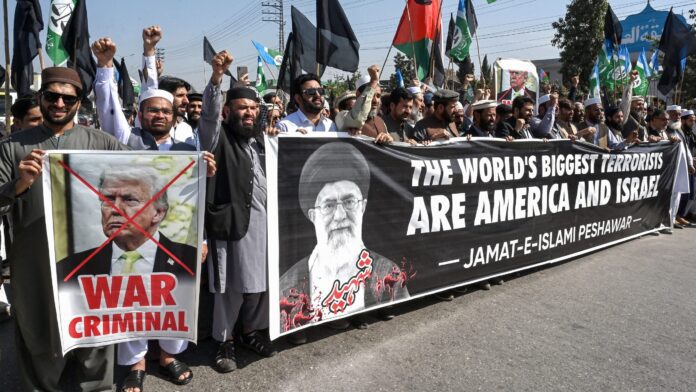
[ISLAMABAD] At least 23 people across Pakistan have been killed in protests triggered by US and Israeli strikes on Iran that killed Supreme Leader Ayatollah Ali Khamenei. The deadliest violence was concentrated in Karachi and Gilgit-Baltistan.

Demonstrations spread across major cities, including Karachi, Islamabad, Lahore, Peshawar, and Pakistan-administered Kashmir, as anger over the strikes and Khamenei’s killing spilled into the streets.

In Karachi, clashes outside the US Consulate left at least 10 people dead and dozens injured after hundreds of protesters breached outer security barriers, vandalized parts of the compound, and attempted to set portions of the building on fire.

Conflicting accounts circulated about how the shooting began. Some reports attributed the deaths to gunfire from US troops stationed at the consulate, while others said both US personnel and local police fired on protesters.

The Sindh government expressed sorrow over the fatalities and announced a high-level Joint Investigation Team (JIT) to conduct what officials described as an impartial inquiry. A provincial statement said the JIT would determine how the incident unfolded, what triggered it, and who was responsible, while emphasizing citizens’ constitutional right to protest.

Unrest intensified in Gilgit-Baltistan, where authorities deployed military forces to restore order following confirmation of Khamenei’s death. Protesters set fire to United Nations offices in Gilgit and Skardu, and a curfew was imposed in parts of Skardu.

Dr. Asif Raza, medical superintendent of Skardu Regional Hospital, confirmed that five bodies were brought in and that about 50 injured people received treatment. Two of the injured remained in critical condition. Four of the dead were civilians, and one was affiliated with a security agency.

Video circulating on social media showed protesters forcing their way through the Karachi consulate gate and smashing glass panels in reception and security areas before Karachi Police’s East Zone said officers regained control. Crowds later gathered near the Tower area and attempted to move toward the building, prompting police to use tear gas and rubber bullets after demonstrators rejected an alternative protest site. Police, special units, and paramilitary forces, including the Pakistan Rangers, were deployed around the compound as protesters demanded the American flag be removed and urged the prime minister and interior minister to intervene.

In Islamabad, authorities closed routes to the Red Zone as demonstrators at Aabpara Chowk attempted to march toward the US Embassy, prompting police action. Crowds on Constitution Avenue continued chanting slogans against the US and Israel, and a private news channel’s DSNG vehicle was attacked and its crew reportedly assaulted. Security officials established three layers of protection along routes to Serena Chowk, the Red Zone, and the Diplomatic Enclave. Federal Interior Minister Mohsin Naqvi visited the Red Zone and Diplomatic Enclave and said that while protest is a legal right, no one is allowed to take the law into their own hands.

The US Embassy in Pakistan said it is monitoring demonstrations at the US consulates in Karachi and Lahore, as well as calls for protests in Islamabad and Peshawar, and advised US citizens to avoid crowds and take personal security precautions.

Pakistan’s Shia community announced three days of mourning nationwide to protest Khamenei’s killing in a US-Israeli airstrike. At a press conference in Karachi late Sunday, Shia Alliance President Allama Shahenshah Hussain Naqvi, accompanied by other prominent Shia leaders, condemned violent acts committed during what he described as peaceful nationwide protest rallies. The leaders demanded action against those responsible for the killings of protesters, called for a formal case to be registered against the US consul general, and demanded the immediate closure of US diplomatic missions in Pakistan and the expulsion of the US ambassador.

Pakistan’s Shia community makes up roughly 15% to 20% of the population and has historically faced periods of sectarian violence and discrimination. In anticipation of further protests, authorities tightened security around American diplomatic facilities in Islamabad, Peshawar, Lahore, and Karachi, deploying reinforced forces alongside regular police.

US Warns ‘Hardest Hits Yet to Come’ as Embassy and Bases Targeted

0
us-warns-‘hardest-hits-yet-to-come’-as-embassy-and-bases-targeted
US Warns ‘Hardest Hits Yet to Come’ as Embassy and Bases Targeted


The United States has warned that its military campaign against Iran will intensify, even as American diplomatic and military sites across the Middle East come under attack and Israel expands parallel operations against Iranian and Hezbollah targets.

Overnight, the US military said it had destroyed Islamic Revolutionary Guard Corps (IRGC) command and control facilities, air defence systems, missile and drone launch sites, and military airfields. Operations have now entered a fourth consecutive day.

US Secretary of State Marco Rubio cautioned that the “hardest hits” on Iran are yet to come, signalling further escalation.

Embassy Hit, Bases Targeted

In Saudi Arabia, authorities confirmed that two drones struck the US embassy compound in Riyadh, causing a limited fire and minor material damage. No injuries were reported. The Saudi defence ministry later said it had intercepted and destroyed eight drones near Riyadh and Al-Kharj.

Meanwhile, police sources told Reuters that a drone targeted a US military base near Erbil Airport in northern Iraq. Separately, Iran’s Revolutionary Guards claimed responsibility for a missile and drone attack on a US air base in Bahrain. Washington has not formally confirmed those incidents, but the State Department has ordered American citizens to leave Bahrain and several other Middle Eastern countries immediately.

Map illustrating Iran's ballistic and cruise missile range, showing various missile types and their distance capabilities with concentric circles around Iran.

Israel Expands Strikes

The Israel Defense Forces (IDF) said it had begun a “wide wave of strikes” targeting both Tehran and Beirut, hitting what it described as Iranian regime and Hezbollah positions.

Evacuation orders were issued for around 50 villages in southern Lebanon, as well as areas of Beirut’s southern suburbs. Residents were told to leave immediately and avoid buildings affiliated with Hezbollah. Smoke was seen rising over parts of the Lebanese capital as strikes continued.

Israeli Prime Minister Benjamin Netanyahu said the joint US-Israeli campaign would not become “an endless war”, describing it instead as “quick and decisive action”. In an interview with Fox News, he argued that failure to act now would have allowed Iran to threaten or “blackmail” both Israel and the United States. He reiterated his goal of achieving “peace through strength”.

Washington Signals Endurance

In Washington, President Donald Trump struck a defiant tone, asserting that US stockpiles of medium- and upper-medium-grade munitions were at historic highs. He claimed the United States had a virtually unlimited supply of such weapons and suggested wars could be fought “forever” using existing inventories.

The remarks underscore a widening and increasingly complex confrontation stretching from Iran to Lebanon, Iraq, Bahrain and Saudi Arabia. With American assets now directly targeted and evacuation orders spreading across the region, diplomatic efforts appear eclipsed by rapid military escalation — and both sides signalling readiness for sustained engagement.

Former NASA chief turned ULA lobbyist seeks law to limit SpaceX funding

0
former-nasa-chief-turned-ula-lobbyist-seeks-law-to-limit-spacex-funding
Former NASA chief turned ULA lobbyist seeks law to limit SpaceX funding

A former NASA administrator says he is “encouraged” that the US Congress is considering legislation to prevent NASA from spending more than 50 percent of its launch funding on any single provider.

“America succeeds in space when American companies compete, innovate, and grow,” former NASA Administrator Jim Bridenstine wrote on LinkedIn. “I’m encouraged to see Congress taking meaningful steps to strengthen the industrial base that underpins both our civil and national security space missions.”

Bridenstine commended the chairman of the Senate Committee on Commerce, Science, and Transportation, Sen. Ted Cruz (R-Texas), and ranking member Sen. Maria Cantwell (D-Wash.) on a new provision that appears in the NASA Transition Authorization Act of 2025. Cruz plans to hold a markup hearing for the legislation on Wednesday.

“Congress is reinforcing competition and protecting the small and medium-sized manufacturers, propulsion companies, avionics developers, and suppliers that make up the backbone of America’s space enterprise,” Bridenstine wrote. “Competition lowers costs, accelerates innovation and provides redundancy.”

The provision appears to target SpaceX, which currently launches the only crewed vehicle capable of reaching the space station, Dragon; both US cargo vehicles (Dragon and Cygnus); as well as a majority of NASA’s science missions. If passed into law, this language could effectively prohibit SpaceX from launching crewed lunar missions from Earth on Dragon or Starship for NASA in addition to its existing portfolio.

Lucrative lobbying

What Bridenstine did not say on social media is that his consulting firm, The Artemis Group, netted $990,000 from United Launch Alliance in 2025, according to public records. This was nearly a third of all revenue raised by his lobbying last year, a total of $3,385,000. United Launch Alliance was formerly a major competitor to SpaceX in the US launch industry.

The Senate’s provision targets launch revenues but excludes space transportation services (such as the human landers being developed by SpaceX and Blue Origin).

Another former NASA official, Phil McAlister, replied to Bridenstine’s post that it was “disappointing” to see him attach his name to the provision. Instead of promoting competition, McAlister said the new language is actually anti-competitive.

“What it supports is using the political process to funnel money to favored companies with inferior products,” said McAlister, who directed commercial space at NASA from 2005 to 2024. “Competition is a full and open match between companies where the best company wins. If this legislation passes as is, it ensures that the best company will not win. Instead the second or third place company will get an award because they could not compete and win fairly. And the country will see that superior performance does not win, having the best lobbyist does.”

McAlister and other critics of the provision say no one wants a launch monopoly and that NASA has sought to on-ramp new providers through programs such as its venture class services program that allocates payloads to riskier providers. However, they note that, as United Launch Alliance has struggled to bring its Vulcan rocket online over the past five years, SpaceX has stepped up to keep the International Space Station flying and to launch critical missions like NASA’s $4 billion Europa Clipper spacecraft.

Ironically, United Launch Alliance held a US launch monopoly earlier this century before SpaceX came along and disrupted its business with lower-cost, more frequent access to space. Now United Launch Alliance must compete not only with SpaceX but a newer generation of more nimble companies building reusable rockets, including Blue Origin, Rocket Lab, Relativity Space, Firefly, and Stoke Space. NASA has made it clear to these companies that it is eager to buy launch services at competitive prices from them.

A highly regarded administrator

A former Republican House member from Oklahoma, Bridenstine served a generally well-regarded term as NASA administrator from April 2018 to January 2021 during President Trump’s first term.

The high point of his tenure in office came in May 2020, thanks to SpaceX. That summer, with the Crew Dragon vehicle, SpaceX and NASA successfully flew two astronauts to the International Space Station, breaking America’s dependence on Russia for low-Earth orbit transportation. Bridenstine relished this with an oft-repeated mantra of launching American astronauts on American rockets from American soil.

However, after leaving NASA, Bridenstine has appeared to become hostile to the dominant company founded by Elon Musk. He joined the board of a competitor, Viasat. Later, Bridenstine became the executive of Government Operations for United Launch Alliance, while his firm also collected a hefty lobbying fee.

All of this is not particularly abnormal for the revolving door in Washington, DC, where senior officials go between government positions and industry. Nevertheless, some observers were surprised by the striking nature of Bridenstine’s attack on NASA for the decision to award a Human Landing System contract to SpaceX in April 2021, three months after he left office. A new administrator had not yet been confirmed at NASA at the time, so a senior NASA engineer, Steve Jurczyk, served as acting administrator for the space agency.

Attacking his own process

Bridenstine sharply criticized this lander decision during testimony before Cruz’s committee last September.

“There was a moment in time when we had no NASA administrator,” he said at 42 minutes into the hearing. “It was after I was gone, and before Senator Nelson became the NASA administrator. An architecture was selected. And I don’t know how this happens, but the biggest decision in the history of NASA, at least since I’ve been paying attention, the biggest decision happened in the absence of a NASA administrator. And that decision was, instead of buying a Moon lander, we’re gonna buy a big rocket.”

He was referring to Starship and the plan to use the vehicle as a lunar lander.

Almost everyone in the space industry agrees that Starship offers a cumbersome solution to get two humans to the lunar surface, especially if the goal is to do so as quickly as possible rather than building a sustainable transportation system over time. However, Bridenstine’s criticism of its selection process omitted some key facts.

He oversaw the initial selection of Starship as one of three options for a lunar lander in April 2020. He made the appointment of Kathy Lueders as head of human exploration in June 2020, knowing she would be the source selection official for the lunar lander contract. And Lueders ended up selecting the one company with a proposal that fit within the NASA budget allocation for a lunar lander that Bridenstine had obtained from Congress.

The reality is that Bridenstine was the architect of the Artemis program; he obtained its budget from Congress, he wanted the human lander to be a commercial partnership, and the team he put in place made the final decision. The implication that Jurczyk was effectively not a real administrator capable of making the right decisions is unfortunate, as Jurczyk is not alive to defend himself. He died of pancreatic cancer in 2023.

However, Bridenstine’s comments are in line with criticism of NASA leadership in 2021 by United Launch Alliance, which characterized it as “incompetent and unpredictable” in leaked emails.

Stop illegal Chinese worker exploitation in Indonesia

0
stop-illegal-chinese-worker-exploitation-in-indonesia
Stop illegal Chinese worker exploitation in Indonesia

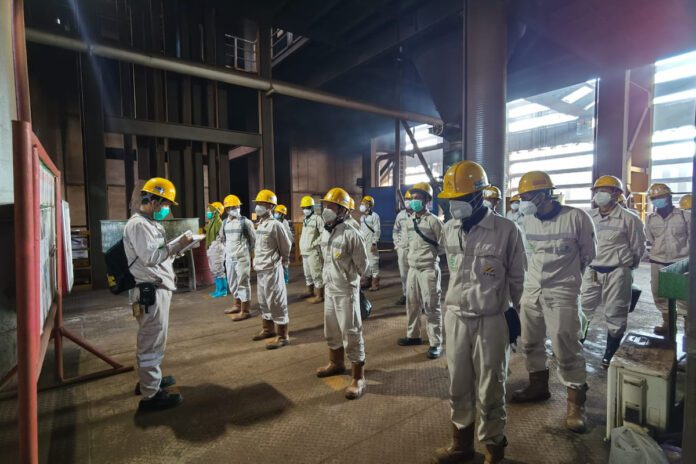
Workers wearing masks at PT Indonesia Tsingshan Stainless Steel plant in Sulawesi. Image: YouTube Screengrab

Indonesia’s recent discovery of Chinese workers without proper work permits in the Galang Batang special economic zone exposes a systemic enforcement failure with serious human costs.

Provincial labor inspectors found dozens of Chinese nationals working without the mandatory Foreign Worker Utilization Plan and valid employment documents, prompting fines and deportations.

This reactive response treats the problem as a paperwork violation but misses the deeper issue: weak enforcement allows undocumented labor to arrive and work, exposing workers to harm before anyone acts.

As host country, Indonesia carries the first and most urgent responsibility to stop illegal employment before it starts. Indonesian rules already require approved work permits and valid work visas before foreign labor can be hired. But these systems remain fragmented.

Foreign nationals regularly enter on short-term or visitor visas and begin work without verification. This is not an isolated loophole. It shows that enforcement at borders and at workplaces is too weak and too late. If unauthorized workers slip into jobs before anyone checks their status, the protections that Indonesian law promises never reach them.

Workers without legal status are highly vulnerable. They lack access to basic labor protections under Indonesian law and have no legal standing to claim wages, safe working conditions, or any form of recourse.

Deportation eliminates their physical presence but does nothing to protect them while they work without legal status or to change the conditions that allowed their exploitation in the first place.

A labor rights review under the United Nations Universal Periodic Review noted that undocumented foreign workers are particularly vulnerable to deception, withheld wages, and unsafe conditions, often with no recourse at all.

This is not just about paperwork. Even when foreign workers hold legal status on paper, Indonesia’s enforcement rarely ensures they receive basic rights. Research on Indonesia’s nickel downstreaming program found that foreign workers — including many from China — often lack access to occupational safety protections, dispute-resolution mechanisms or real pathways to enforce their rights.

Enforcement of labor law is inadequate, particularly in remote industrial zones where foreign labor is concentrated. These conditions show that legality on paper often means little in practice.

China’s role in this dynamic is shaped by the enforcement environment Indonesia creates. Chinese companies and recruitment networks will exploit workers through systems that tolerate loopholes and weak oversight. If Indonesian border controls and labor enforcement are slow or disconnected, firms take advantage.

But that is not a reason to accept weak enforcement. That is a reason to fix it. Indonesia must build regimes that verify legal status before departure, at entry points, and at workplaces, so that undocumented workers never begin unauthorized employment.

Indonesia’s enforcement must be preventive, not reactive. Immigration systems must be linked with labor permit databases so border officials can deny entry to workers without verified authorization. Work permits should be verified before visas are issued.

Labor and immigration officials should coordinate real-time data sharing so unauthorized work is detected before it turns into exploitation. Employers caught trying to hire illegal workers should face penalties that exceed the economic benefit of non-compliance to deter future violations.

China must play a supportive role. Chinese recruitment networks and firms should ensure that workers receive verified Indonesian work permits before departure, with clear and enforceable contracts. Chinese consulates should verify documentation and help workers understand Indonesian legal requirements and protections.

Cooperation on legal labor mobility protects Chinese workers from exploitation and strengthens diplomatic ties based on rule of law and human dignity.

This is not about shutting the door to foreign labor. Many industries in Indonesia rely on foreign expertise that local workers cannot immediately supply. But foreign labor must be legal, transparent and enforceable.

Illegal employment erodes the rule of law and exposes workers to harm without access to protections. And if legal status does not guarantee rights in practice, then the problem is not only documentation, but enforcement of protections after employment begins.

Indonesia must act before illegal workers arrive and before their rights can be violated. China must help ensure that workers entering Indonesia are documented and informed.

Together, these states can prevent Chinese workers from being channeled into illegal, exploitative employment and uphold the legal and human rights protections that labor migration is supposed to guarantee.

Muhammad Zulfikar Rakhmat is director of the China-Indonesia Desk at the Jakarta-based Center of Economic and Law Studies (CELIOS) independent research institute. Yeta Purnama is a researcher at CELIOS.

The Regime Change President Who Won’t (or Can’t) Actually Change Any Regimes

0
the-regime-change-president-who-won’t-(or-can’t)-actually-change-any-regimes
The Regime Change President Who Won’t (or Can’t) Actually Change Any Regimes


Whoops, he did it again.

We need to adjust our language for President Donald Trump’s so-called regime-change efforts. Let’s call them “regime adjustments.”

Trump was fresh off his successful regime-adjustment operation in Venezuela when he decided to double down on his newly interventionist streak. Along with Israel, Trump attacked Iran with one of the largest military operations in at least a decade. The war — and that’s what it is — came only days after a gathering in Washington of Trump’s “Board of Peace,” which includes Israel, marking, ironically, the board’s first war.

It’s hard to imagine what success, even by Trump’s loose standards, will actually look like in Iran.

Unlike Venezuela, though, this time it’s hard to imagine what success, even by Trump’s loose standards, will actually look like — if there can be any measure of success at all.

In a somewhat rambling video message posted on Truth Social announcing the new Iran war, Trump offered no evidence as to why a preemptive or preventative attack was necessary at this time. Iran, after all, was in the middle of negotiations with the U.S. over its nuclear program, with negotiations set to continue the following week and, according to insiders, making solid progress. Unlike the U.S., Iran had made no moves that could be interpreted as aggressive or preparatory for initiating military action against either Israel or the U.S.

No Reasoning, No Goals

Instead of articulating any reasoning or goals for his strikes, Trump declared a decapitation strategy and exhorted the people of Iran to rise up and “take control” of the government: DIY regime change.

He demanded that the security services and the Islamic Revolutionary Guard Corps “lay down” their arms and join the people — presumably the same people they had been brutally cracking down on only a month ago. There were no instructions on how the people were supposed to “take control” or who might be the leader to guide them. Nor did Trump give instructions to the security forces on how exactly they were supposed to lay down their arms and join the people. Hand over their arms to whom? Or did he have in mind a depot that would be set up somewhere IRGC personnel could drop off their AK-47s and assorted other weaponry?

Reza Pahlavi, the former shah’s son, pretender to the throne, and the most visible and possibly popular among opposition leaders, also exhorted his fellow Iranians to rise up at this opportunity to change the regime — in his own favor, of course.

It has been telling, however, that neither the U.S. nor even Israel — Pahlavi’s most ardent booster — have been promoting him as the replacement for the regime that they’re in the process of decapitating.

There has been no plan, at least none apparent or even hinted at, to have Pahlavi brought to Tehran in the hope that millions will, like Ayatollah Ruhollah Khomeini’s arrival from Paris in 1979, greet him at the airport and escort him to a palace.

The clearest endorsement Pahlavi has won to lead Iran was a probing interview on “60 Minutes” on the second day of the war — best understood as an expression of Bari Weiss and David Ellison’s hope for an Israeli-backed regime in Iran, not as a vouch of support from the Trump administration.

Assassination Building

In the first moments of the first day of the war, Israel was able to — reportedly with intelligence assistance from the CIA — assassinate Supreme Leader Ayatollah Ali Khamenei, his daughter and grandson, and a number of senior military commanders, including the powerful secretary of Iran’s newly established Defense Council, Ali Shamkhani. The top regime figures had gathered to meet in the morning in an aboveground building in the leader’s complex, assuming any threat against them would appear only under the cover of darkness.

Confirmation from the government of the assassination of the head of state — a shocking development in the 47-year history of the Islamic republic — resulted in both nationwide mourning by supporters of the ayatollah and simultaneous celebration by those who held him responsible for the deaths of thousands of citizens in the early January crackdown on massive protests across the country.  

What came next, though, was not the people “taking control” of the government. Instead, there was a rather ordinary constitutional move: A council of three was formed the next day that took over the duties of the supreme leader until a new one could be elected by the Assembly of Experts, the body that oversees succession.

Then on the second day of the war, with bombs falling on Tehran, Trump announced that “they” — presumably the council — “want to talk, and I have agreed to talk, so I will be talking to them.”

Hoping for an Iranian Delcy Rodríguez? Our “Whoops, he did it again” moment.

So, it wasn’t regime change the U.S. was after, as Trump claimed when launching his war, but regime adjustment. Perhaps the deaths of three U.S. service members in Iraq — by any measure, their blood on the hands of the person who ordered a war of choice — gave him pause and inspiration to find an alternative to continuing the violence.

Willy-Nilly War

What is increasingly apparent is that a war was launched, almost willy-nilly, with no actual, achievable objective. Trump, whose cellphone number it seems most journalists in Washington have, admitted to Jonathan Karl of ABC News in a phone call on Sunday that he didn’t know what came next for Iran.

“The attack was so successful it knocked out most of the candidates,” Trump reportedly told Karl. “It’s not going to be anybody that we were thinking of because they are all dead. Second or third place is dead.”

In other words, Trump doesn’t even have a Delcy Rodríguez in waiting.

The war with revolving goals entered a third and more violent day for the very Iranian people who were supposed to take over from the regime and become friends with Israel and the United States. Bombing in Tehran took on an indiscriminate flavor, with buildings, a hospital, and other infrastructure unrelated to the military being struck, according to videos and witnesses, including my own cousin who managed to leave me a voice message on WhatsApp despite the internet cuts.

With the death of at least three U.S. service members, hundreds of Iranian schoolgirls, and dozens of other innocent Iranians; with destruction across the Persian Gulf countries; with the loss of so far three U.S. fighter jets costing Americans anywhere between $250 and 300 million; and with the billions of dollars being otherwise spent on the war, the “Keystone Cops” flavor the war has taken on would be funny if it weren’t so tragic.

We can’t predict how the war will end. It is certain, however, to end with unnecessary death and destruction, and misery and trauma for survivors.

The only other certainty it seems, is that no matter the war’s result nor how incompetently it is carried out, the man who started it will declare that he has brought about peace with a glorious victory.

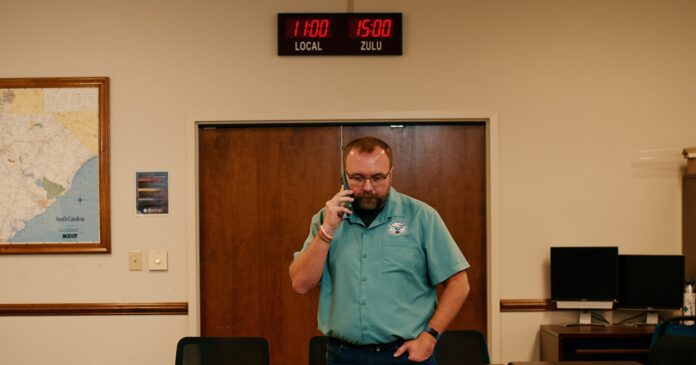
Emergency Managers: Help ProPublica Prepare to Report on the Next Disaster

0
emergency-managers:-help-propublica-prepare-to-report-on-the-next-disaster
Emergency Managers: Help ProPublica Prepare to Report on the Next Disaster

We know disasters are a matter of where and when, not if. And just like you, our reporting team at ProPublica wants to be prepared well in advance.

If you are a local, state or federal emergency manager, former emergency manager, emergency management researcher, or a part of the broader network of disaster response and recovery partners, we want to hear your concerns. Dozens of current and former emergency managers working everywhere from large cities to rural counties have already told us about the growing challenges they face amid more frequent disasters and uncertain federal funding.

Now we need your help to build a comprehensive picture of the real conditions across the country. What resources do you need to feel prepared for the next gray-sky day? How have or will changes to the Federal Emergency Management Agency impact the work you’re doing? How are alerts and warning systems working in your region? Have you been hit by multiple large-scale disasters in recent years? What new hazards are on your radar?

We know that emergency managers are critically important but aren’t often thought about until after tragedy strikes. We are building this source network to fuel in-depth coverage of the nation’s emergency preparedness and disaster response and recovery infrastructure that goes far beyond breaking news and brings attention to important issues across the country. As with all ProPublica journalism, our goal is impact.

Fill out the brief form below to tell us what we should be covering, or to stay in touch as changes unfold. You may hear from our team as we report on major overhauls to the emergency management system, develop emergency preparedness guides or provide crucial information to communities that have just experienced their worst day.

US offensive on Iran burned through an estimated $779M on first day

0
us-offensive-on-iran-burned-through-an-estimated-$779m-on-first-day
US offensive on Iran burned through an estimated $779M on first day

US forces spent an estimated $779 million, or about 0.1% of the entire 2026 US defense budget, during the opening 24 hours of its offensive against Iran, according to estimates and data compiled by Anadolu, Anadolu reports.

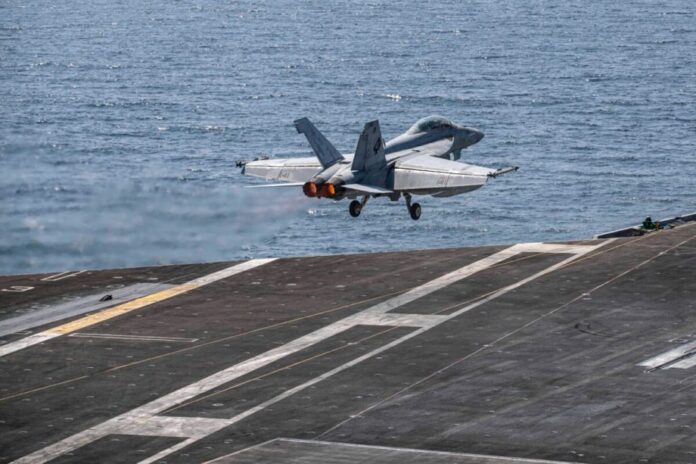
The US’ CENTCOM confirmed that the massive deployment included B-2 stealth bombers, F-22, F-35, and F-16 fighter jets, A-10 attack aircraft, and EA-18G electronic warfare planes. The operation also utilized MQ-9 Reaper drones, nuclear-powered aircraft carriers, guided-missile destroyers, and Patriot and THAAD missile defense systems.

Four B-2 stealth bombers, flying non-stop from Whiteman Air Force Base in the US state of Missouri, struck targets using 2,000-pound (907-kilogram) Joint Direct Attack Munitions (JDAMs), according to CENTCOM. Known for high maintenance requirements and a 40,000-lb (18,143-kg) payload capacity, the B-2 operations alone accounted for an estimated $30.2 million, based on flight hours, maintenance costs, and munition requisitions data from the US Defense Department’s 2025 and 2026 budget requests.

CENTCOM’s buildup of various fighter jets of F-18s, F-16s, F-22s, and F35s contributed to the initial strikes, according to a post by CENTCOM on US social media company X. Based on flight hours, maintenance costs, and munition requisitions data from the 2025 and 2026 US department budget requests, these sorties cost an estimated $271.34 million.

Specialized aircraft, including the EA-18G Growler, A-10C Thunderbolt, and the MQ-9 Reaper, played a critical role alongside the Low-cost Unmanned Combat Attack System (LUCAS). When factoring in P-8 Maritime Patrol aircraft, RC-135 reconnaissance planes, and aerial refueling tankers, as well as land-based HIMARS batteries, the cost for the combined air and ground assets, including the fighter jets, reached approximately $423.57 million.

The two US carrier groups in the region, the USS Abraham Lincoln and USS Gerald R. Ford, also took part in the attack. The cost of operating the aircraft carriers along with their contingent of destroyers and littoral combat ships is estimated to come to $15 million a day.

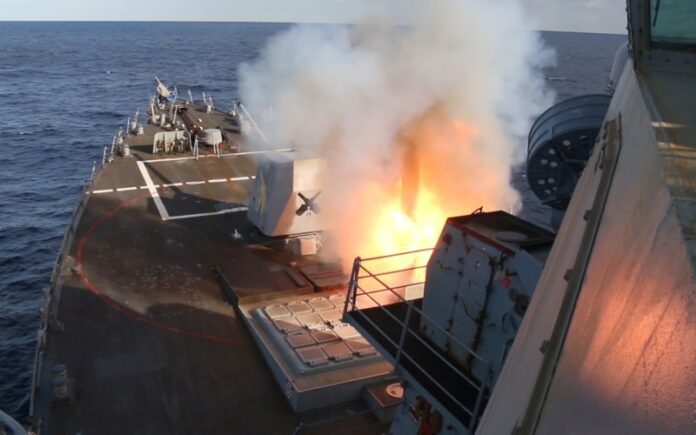
Additionally, CENTCOM also released videos of its navy deploying scores of Tomahawk cruise missiles. While exact numbers remain classified, estimates suggest that roughly 200 Tomahawks were fired, totaling $340.4 million in munitions costs.

Combining these expenses, the total estimated cost for the U.S. strikes conducted last Saturday alone stands at $779.174 million, or some 0.1% of the 2026 US defense budget.

0FansLike
0FollowersFollow
0FollowersFollow
0SubscribersSubscribe
- Advertisement -
Google search engine

Recent Posts