Humanity is about to get its first in-person, up-close look at the Moon in more than half a century.
Four astronauts will spend about seven hours on Monday observing the far side of the Moon, the half that constantly points away from Earth. At their closest approach on board their Orion spacecraft Integrity, Reid Wiseman, Victor Glover, and Christina Koch of NASA and Jeremy Hansen with the Canadian Space Agency will be about 4,000 miles (6,400 km) above the surface. The last time any person came that close was during the Apollo 17 mission in 1972.
You can tune into the webcast here, starting at 1 pm ET.
Although the primary purpose of the Artemis II crew’s observations will be to advance scientists’ understanding of lunar geology, there is no doubt a spectator and inspirational interest to this as well. The flyby of the Moon is expected to be watched by millions of people on Earth, and while any view will be impressive, it may also leave many wanting more.
“We will be getting SAW [solar array wing] camera video streaming during the flyby, except, of course, during the loss of signal when they go behind the Moon,” said Kelsey Young, NASA’s Artemis science flight operations lead, during a pre-flyby press conference. “They’ll be recording the rest on board.”
The SAW cameras are four specialized, modified GoPro cameras. One is mounted on each of four solar array wings that extend out from Orion’s service module.
“For parts of the flyby, we’ll actually be able to go on board with [the astronauts],” said Young, referring to a camera inside Integrity‘s crew cabin.
“Don’t expect high-res video,” added Judd Frieling, Artemis II ascent flight director, “but you will have, as Kelsey mentioned, the SAW cameras through our nominal low-rate video.”
Since 2017, NASA has been broadcasting in 4K from the International Space Station, so why can they not do the same from the Moon almost a decade later?
Data, daylight, and distance
For most of the Artemis II mission, communications between Integrity and NASA’s Mission Control in Houston are being handled by either NASA’s Near Space or Deep Space networks. During the flyby, any imagery being broadcast live to Earth will be via the latter, which relies on transmissions to radio antennas in California, Spain, and Australia.
Integrity is also carrying an experimental optical communication system that uses a laser (infrared light) to transmit data at a higher rate than radio waves can travel, allowing for larger video and imagery files to be transmitted back to Earth quicker. Prior to the flyby, the demo had successfully transferred more than 100 gigabytes of data collected during the mission thus far.
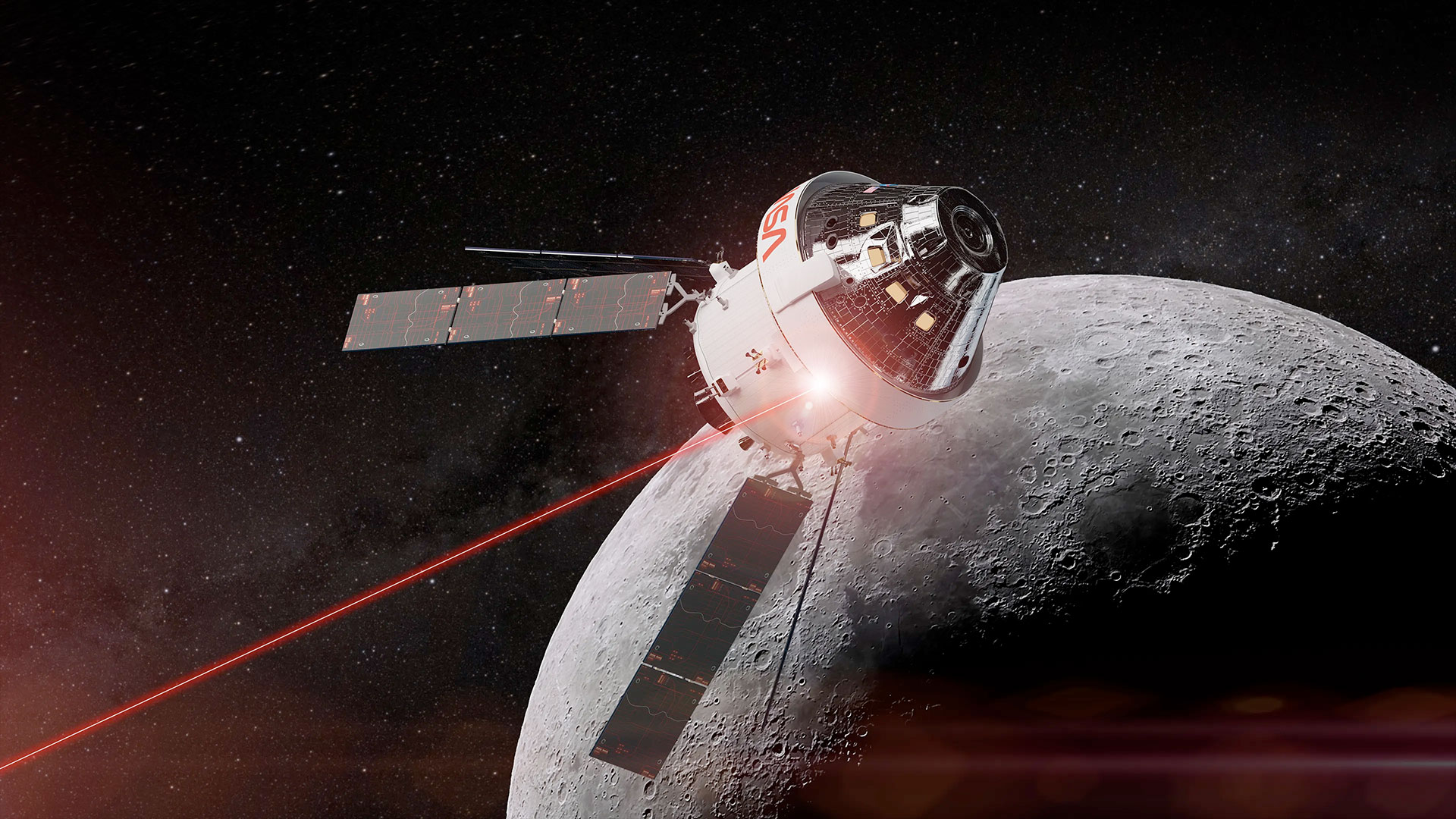
The optical communications system, though, can only be used at night, as sunlight can cause interference, and it is subject to other limitations, including being pointed in the wrong direction while Integrity’s windows are focused on the lunar surface.
So all of the live imagery from the flyby, as well as the telemetry from the capsule, crew communications with Mission Control, and more has to all be directed through the same radio direct pipeline.
“The challenge is really the distance,” said David Israel, the space internetworking principal for program management at Intuitive Machines, a Houston-based space services, delivery, and infrastructure company, in an interview. “The space station is able to get the continuous, high-rate video that people see because it is in Earth orbit and communicates through the NASA tracking and data relay system, so it moves in and out of view of one relay to another relay providing a near continuous feed.”
“So from the Moon point of view, you have the extra distance,” he said. “And then there’s also a limited number of ground stations on Earth that are currently able to support signals to and from the Moon at high data rates.”
The Deep Space Network might be sufficient if Artemis II was the only mission out there. The reality is that the same antennae that are used to receive signals from the Moon are also needed for the two active rovers on Mars, probes around the Sun and the planets, and spacecraft at the edge of our Solar System and beyond.
Lunar relay
In 2024, NASA took a step toward making sure it could deliver live high-resolution video by the time the next humans walk on the Moon.
The agency awarded a contract to Intuitive Machines to establish a lunar satellite constellation to provide communications for the exploration and scientific study of the Moon. NASA expects lunar relays will be used by both human and robotic landing systems, expanding the number of potential landing sites by connecting them to ground stations on Earth.
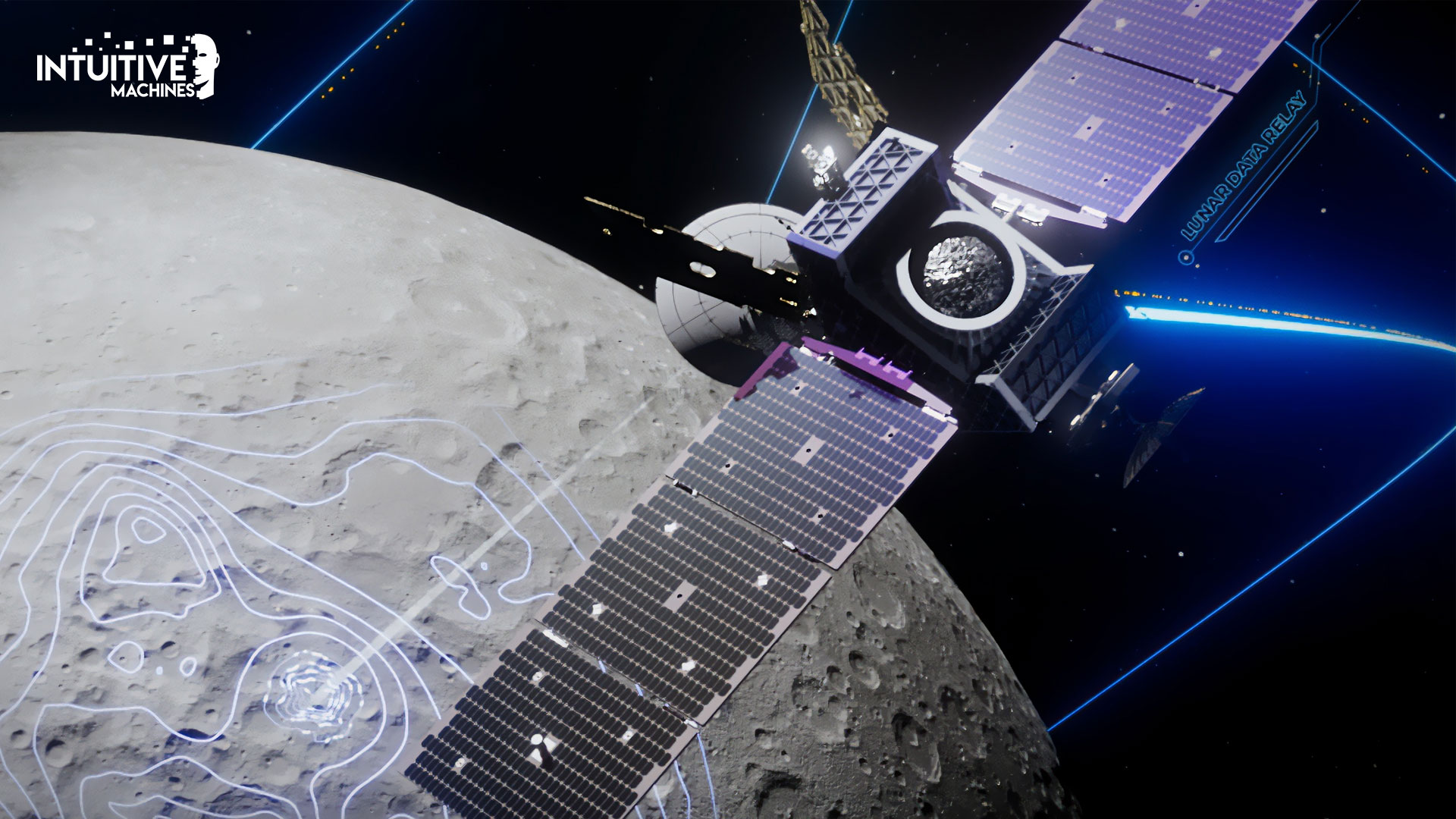
“So if you’re [an astronaut] down inside a crater or down or at any point where Earth isn’t in view, then the lunar relay can be in a position in orbit where it’s able to give you that access point to connect,” said Israel, who, before joining Intuitive Machines, served as the architect of NASA’s Near Space Network, advancing the use of optical communications and relay satellite architectures.
“Lunar relay also has the advantage that it is much closer to the Moon, so it makes it much easier to make that connection,” Israel said. “So then user systems on the Moon can have smaller communications packages to send back video. They don’t have to send it all the way back to Earth. Just send it to the relay, and then the relay is built to be able to close that link to Earth and send the video back.”
Building upon its recent acquisition of Lanteris Space Systems (formerly Space Systems/Loral and most recently, Maxar Space Systems), an established manufacturer of satellites, Intuitive Machines is on track to deploy its first lunar relay satellite later this year from the same rocket that launches its third robotic mission (IM-3) to land government and commercial payloads on the Moon.
“Our current deployment plan is for the five relays,” said Israel. “We’ll have enough of them up there and operational to have full coverage for when the first Artemis landing happens. If they have the antennas deployed and are able to point to us, we should be able to provide live high-res video of the landing as it happens.”
Astronaut’s perspective
Intuitive Machines is among a group of 34 volunteers chosen by NASA to follow the Artemis II mission as it flies to the Moon and back. The company is using its Space Data Network (SDN) and ground station infrastructure to track the radio waves transmitted by the Orion spacecraft during its 10-day journey.
The data collected will help NASA identify ways to augment future Moon mission support, including the need for additional lunar relays.
Intuitive Machines’ chief integration officer is intimately familiar with the need for bandwidth in space.
“The more you get, the more you expect, and then it opens the gateway to new types of science and new types of interactions that you couldn’t consider before,” said Jack Fischer, who, before joining Intuitive Machines in 2021, lived on the International Space Station for four and a half months as a NASA astronaut and was there for the first live 4K broadcast. “No matter how much bandwidth there is, there’s always a way to use it.”
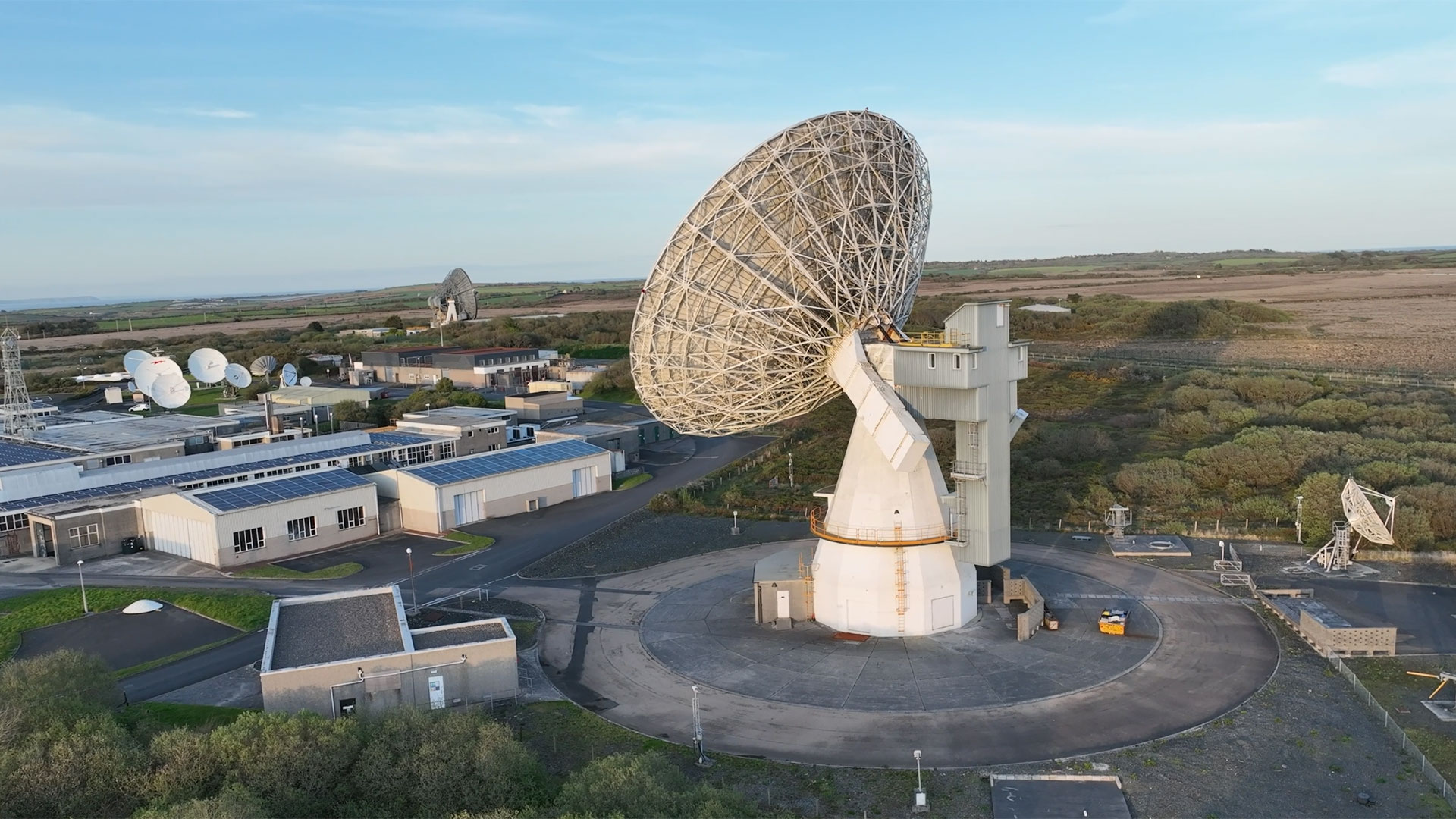
Eventually, all of the footage and photos taken by the Artemis II crew on Monday will reach Earth, even if that means landing with the astronauts aboard Orion. NASA plans to share it all with the public so everyone will get to see what Wiseman, Glover, Koch, and Hansen saw, albeit not at the same time they saw it.
Fischer foresees a day coming soon when the bandwidth will be available so we can all go along for the ride, while the same lunar relays support multiple missions and lunar surface activities, relieving the demand on the Deep Space Network.
“I can’t stress enough how important it is for us to build this infrastructure, to reduce the costs, making that economic case of everything we actually do put on the Moon. I’m very excited and proud of our team for what they’re doing to lay that groundwork,” he said.
NASA’s webcast starts at 1 pm ET.

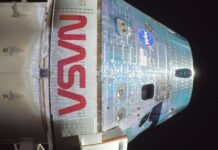





 the fresh eyes of four astronauts catch sight of the up-close moon, it will take a bit longer before the rest of us on Earth are able to see what the Artemis II crew saw at the same clarity.)