There is a peculiar moral inversion unfolding in the waters of the Persian Gulf. As oil tankers idle and insurance markets shudder, more than forty countries have mobilised with urgency and precision to reopen the Strait of Hormuz—a narrow maritime corridor through which roughly 20 per cent of the world’s oil and gas flows. Yet, in the same breath, there is a deafening hesitancy—almost a studied silence—when it comes to halting the war that triggered the crisis in the first place.
This contradiction is not merely strategic. It is existential. It speaks to the fraying logic of global order, where the symptoms of conflict command more attention than its cause, and where economic pain galvanises action faster than human suffering.
The closure of Hormuz is not an abstract geopolitical inconvenience. It is a chokehold on the lifeblood of global commerce. Oil prices have already surged past US$120 a barrel and could surge to US$150, while gas prices across Asia have spiked dramatically. For Gulf states, the implications are even more dire. Countries like Qatar and Bahrain depend on desalination for up to 99 per cent of their drinking water, and over 70 per cent of food imports traverse this narrow strait. The result is not just market volatility—it is the spectre of thirst, hunger, and systemic collapse.
Faced with such immediacy, governments have acted. Naval coalitions have formed. Diplomatic channels have lit up. Contingency routes are being explored. The world, it seems, can move swiftly when oil is at stake.
But where is that same urgency in calling time on the war itself?
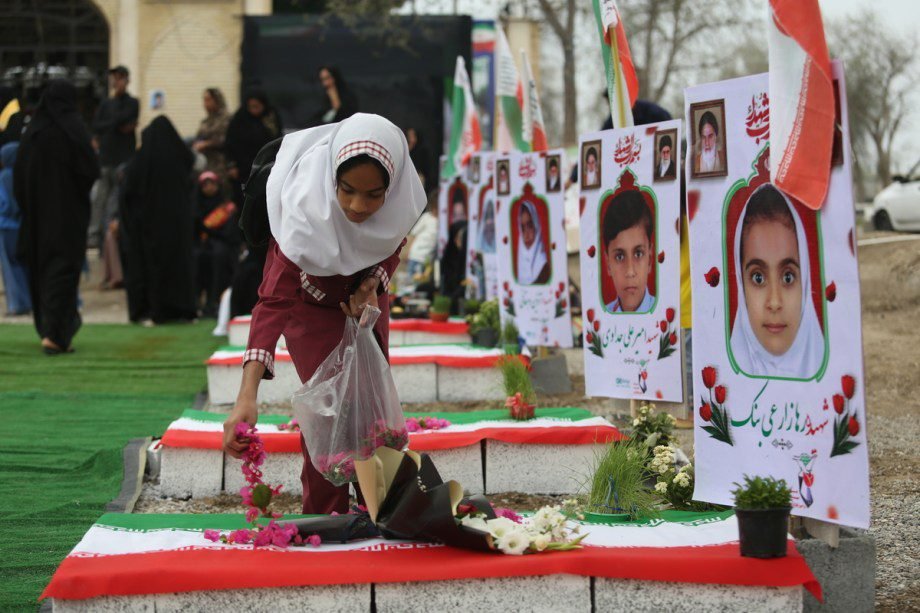
In the first month of the 2026 Iran conflict, the extent of civilian suffering has been staggering, most hauntingly demonstrated by the 28 February strike on the Shajareh Tayyebeh girls’ school in Minab, where a triple-tap airstrike collapsed the building in the middle of class, killing an estimated 165 to 175 people—more than a hundred of them girls aged just seven to twelve—and injuring nearly a hundred more; initial assessments suggest the attack was based on faulty intelligence that misidentified the school as a military site.
This was not an isolated incident but part of a wider pattern: within 31 days, over 85,000 civilian structures were reportedly damaged or destroyed, including more than 700 schools, while key medical and pharmaceutical facilities—among them the historic Pasteur Institute—have been reduced to rubble.
By early April, total deaths had surpassed 3,000 across the region, with at least 742 civilians killed in Iran alone, including 176 children, highlighting a grim reality that the deadliest strike of this war was not against military targets but against a classroom.
The strikes by the United States and Israel on Iranian targets—widely condemned by legal scholars as lacking justification under international law—have set off a chain reaction that now threatens to engulf the region. Under Article 51 of the UN Charter, the use of force is permitted only in response to an imminent armed attack—yet the threshold of imminence here remains deeply contested, casting a long shadow over the legitimacy of the strikes.
READ: Iran demands ‘end to imposed war,’ rejects idea of ceasefire
Jurisprudence of the International Court of Justice has long insisted that ‘imminence’ under Article 51 cannot be stretched to speculative or distant threats—yet in a region already scarred by the continuous devastation in Gaza post-ceasefire since October 2025 that killed 700 people and expanding strikes into Lebanon, the elasticity of this standard risks normalising a cycle of force that law was meant to restrain.
The legal principle of self-defence hinges on imminence, and yet evidence suggests diplomacy was still viable, with the International Atomic Energy Agency signalling ongoing engagement. If this is not a breach of the rules-based order, then the rules themselves are becoming dangerously elastic. And still, there is no equivalent coalition to stop the war.
The explanation lies in a cold, unvarnished calculus. Reopening a shipping lane is a technical challenge. Confronting Washington and Tel Aviv is a political gamble of a different magnitude altogether. The former is manageable; the latter risks escalation with two of the most powerful military actors on the planet. What unfolds here is not merely crisis management but the enduring pull of balance-of-power politics, where alliances tighten not around principle, but around the instinct to hedge, align, and survive in the shadow of greater power.
So the world hedges. It mitigates. It adapts. This is realism at its starkest. Yet realism alone cannot explain the quiet acquiescence.
There is also fear of economic retaliation, of diplomatic isolation, of domestic political backlash. There is the paralysis of institutions, with the United Nations Security Council effectively immobilised by veto power. And there is the fragmentation of global consensus, as countries pursue their own narrow interests under the guise of neutrality.
Iran, for its part, has exploited these fractures with tactical precision. By implementing a selective blockade—restricting access primarily to US and allied vessels while allowing others through negotiated arrangements—it has transformed a blunt instrument into a diplomatic wedge. Countries like India, Turkey, and China have sought tailored exemptions, diluting the cohesion of any collective response.
It is a reminder that power in the modern era is not just about force, but about shaping choices—about making division more attractive than unity.
Meanwhile, the human and environmental costs of the conflict continue to mount, largely relegated to the margins of policy debate. In just the first two weeks of hostilities, the war generated over 5 million tonnes of CO₂ emissions, equivalent to the annual footprint of some small nations. Infrastructure strikes have contaminated water systems and damaged critical civilian facilities, raising serious concerns under international humanitarian law. Civilian casualties are rising, with reports of attacks on schools and hospitals underscoring the indiscriminate nature of modern warfare.
And yet, these realities struggle to command the same urgency as a disrupted oil shipment. There is something profoundly unsettling in that hierarchy of concern.
Even the invisible arteries of global trade—maritime insurance markets centred in hubs like Lloyd’s of London—have begun to seize, with war risk premiums surging to crippling levels, quietly signalling that markets themselves no longer believe these waters are safe.
From Canberra to Brussels, from Jakarta to Brasília, policymakers are confronted with an uncomfortable truth: the global system is responding exactly as it has been designed to. It protects flows of energy, of capital, of trade—more effectively than it protects people. It reacts to market shocks with greater coherence than it does to violations of sovereignty or human rights.
READ: Iran holds keys to war despite US threats: Ex-EU commissioner
This is not a failure of the system. It is its logical conclusion. But systems, like strategies, can be reimagined.
A ceasefire is not an impossible ambition. There are pathways—diplomatic, legal, and humanitarian—that remain open, if there is sufficient will to pursue them. China and Pakistan have already proposed a framework for de-escalation. European actors have signalled support for renewed negotiations. The United Nations General Assembly, unencumbered by veto constraints, could serve as a मंच for collective pressure, even if its resolutions lack binding force.
What is required is not innovation, but conviction. Conviction to assert that the legality of war matters. Conviction to insist that economic security cannot come at the expense of moral clarity. Conviction to recognise that a world which mobilises to protect oil but hesitates to protect life is a world out of balance.
Across the Global North, there has long been a confident articulation of a ‘rules-based order’—a system said to rest on law, restraint, and institutional trust. It is invoked in speeches, embedded in alliances, and projected as the moral architecture of international life. Yet moments like this expose a deeper tension: when power collides with principle, the language of rules often bends, selectively applied or quietly set aside.
What was once framed as universal begins to feel conditional, even transactional. And still, within these societies—across policy circles, think tanks, and publics—there remains an enduring belief that order without legitimacy cannot hold, that credibility once fractured is not easily restored, and that stability built on exception is ultimately no stability at all.
Across the Global South, the same vocabulary of order carries a different weight—less as aspiration, more as lived contradiction. Here, the promise of equity and accountability has often arrived unevenly, filtered through histories of intervention, hierarchy, and inequality. The present crisis only sharpens that memory: when wars unfold without consequence for the powerful, and when civilian suffering struggles to command equal urgency, the idea of a shared system begins to feel distant, even illusory.
Yet this is not a story of resignation. It is a quiet insistence—echoing from capitals and communities alike—that if rules are to mean anything, they must apply to all; that restraint cannot be demanded of some and denied to others; and that a truly global order must be rebuilt not on selective enforcement, but on a renewed, collective sense of justice.
Because at its core, this crisis is not just about Hormuz. It is about whether the international community is willing to confront the contradictions it has long tolerated.
The tankers will sail again. Markets will stabilise. Supply chains will recalibrate. But unless the underlying conflict is addressed, the next crisis is already incubating—waiting for another spark, another miscalculation, another moment of silence where there should have been resolve. And when that moment comes, the question will not be whether the world can respond. It will be whether it chooses to.
OPINION: The Bab al‑Mandeb Strait where uncommon conflict became a common burden
The views expressed in this article belong to the author and do not necessarily reflect the editorial policy of Middle East Monitor.