As war spreads across the Persian Gulf, the first tremors are felt in oil markets. The deeper shock may come later — in the foundations of the global financial system.
For nearly five decades, the international monetary order has rested upon a quiet but immensely powerful arrangement: the predominance of the United States dollar in global energy trade. The petrodollar system, forged in the geopolitical upheavals of the 1970s, helped transform American financial dominance into the central pillar of the modern world economy.
Yet prolonged conflict involving Iran could place unexpected strain on that system. Not because the dollar is about to collapse — it is not — but because geopolitical instability in the Gulf could accelerate trends that are already reshaping the international monetary landscape.
The petrodollar order emerged after the collapse of the Bretton Woods system in 1971, when the United States ended the dollar’s convertibility into gold. In 1974, Washington and Saudi Arabia reached a pivotal understanding: Saudi oil exports would be priced exclusively in dollars, and the kingdom’s surplus oil revenues would be recycled into U.S. financial markets, particularly Treasury securities. Other oil exporters soon followed suit.
The arrangement created a powerful financial feedback loop. Oil — the world’s most indispensable commodity — became structurally tied to the dollar. Countries importing energy needed dollar reserves, ensuring persistent global demand for the currency. Meanwhile, oil-exporting states accumulated vast dollar surpluses that flowed back into American banks and capital markets.
The consequences were far-reaching. Today the dollar still accounts for about 58 percent of global foreign-exchange reserves, according to the International Monetary Fund, while a substantial majority of global oil transactions remain denominated in the U.S. currency. As the economic historian Barry Eichengreen has observed, the dollar’s dominance rests not only on American economic strength but also on the deep liquidity and institutional credibility of U.S. financial markets.
But monetary systems rarely survive economics alone.
As political economist Robert Gilpin argued, international economic orders ultimately reflect underlying structures of power. Currency dominance tends to follow geopolitical leadership. The British pound anchored global finance during the height of the British Empire; the dollar assumed that role after the United States emerged from World War II as the world’s dominant economic and military power.
The petrodollar system therefore rests on three interlocking pillars: stable energy production in the Gulf, the predominance of dollar-based oil trade, and the broader security architecture maintained by the United States across the region.
A major regional war involving Iran threatens all three.
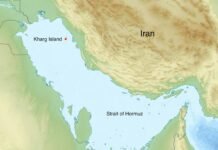
The Middle East remains one of the most strategically sensitive regions in the global economy. Nowhere is this clearer than the Strait of Hormuz, the narrow maritime corridor connecting the Persian Gulf to the Arabian Sea. According to the U.S. Energy Information Administration, around 20 percent of globally traded petroleum — roughly 20 million barrels per day — passes through this chokepoint, along with a significant share of the world’s liquefied natural gas shipments.
Even limited tensions in Hormuz have historically triggered dramatic oil price spikes. A sustained military confrontation could do far more than disrupt shipping lanes. It could undermine confidence in the Gulf as the stable anchor of the global energy system.
The war involving Iran may ultimately matter less for its immediate military consequences than for the pressures it places upon the foundations of the existing monetary order.
And confidence is the invisible infrastructure of global finance.
Investors, sovereign wealth funds and multinational corporations operate on assumptions about predictability. Once those assumptions begin to weaken, capital gradually searches for alternative centres of stability.
History shows how such shifts occur. Global finance once revolved around Amsterdam during the Dutch commercial ascendancy of the seventeenth century, before moving to London during Britain’s imperial era. After World War II, financial gravity shifted across the Atlantic to New York, where the United States constructed the institutions of the modern monetary system.
Each transition reflected a broader redistribution of geopolitical power.
Today, another structural change is already underway: the eastward shift in global energy demand.
For much of the twentieth century, Western economies dominated global oil consumption. Today the centre of gravity has moved decisively toward Asia. China has become the world’s largest crude oil importer, purchasing more than 11 million barrels per day. India is among the fastest-growing energy consumers, while Southeast Asia’s industrialising economies continue to expand their fuel demand.
Much of that energy still originates in the Gulf.
This shift carries important monetary implications. If the largest buyers of Middle Eastern oil increasingly reside in Asia rather than the Atlantic world, the logic of settlement currencies may gradually evolve as well.
Indeed, early signs of diversification are already visible.
China has promoted the internationalisation of the renminbi, including the launch of yuan-denominated crude oil futures on the Shanghai International Energy Exchange in 2018. Several emerging economies have explored local-currency trade arrangements, while Gulf producers have occasionally signalled openness to conducting some energy transactions in non-dollar currencies.
These developments remain modest relative to the enormous scale of global dollar liquidity. But they point toward what economic historian Adam Tooze has described as a slow reconfiguration of global financial geography.
Geopolitical conflict may accelerate that process.
Modern strategic competition increasingly unfolds through financial instruments as much as through military force. Sanctions, banking restrictions, and exclusion from global payment systems have become powerful tools of statecraft.
Iran has experienced this pressure repeatedly. U.S. sanctions have targeted its oil exports, banking sector and access to international financial infrastructure such as the SWIFT payments network.
Yet financial coercion carries an unintended consequence: countries subjected to such pressure inevitably seek mechanisms to reduce their vulnerability to existing systems.
If those pressures continue to accumulate, the coming decades may not witness the end of the dollar. But they may mark the moment when the world quietly began to move beyond a financial order built in the shadow of the 1970s’ oil shocks.
Iran has experimented with barter trade, local-currency settlements and deeper financial integration with partners such as China and Russia. More broadly, emerging economies have begun exploring alternative payment infrastructures, regional development banks, and cross-border digital currency initiatives.
The financial strategist Zoltan Pozsar has argued that these developments may gradually produce a more fragmented global monetary system — one less centred exclusively on the dollar.
Still, predictions of the dollar’s imminent demise remain premature. The United States continues to possess advantages no rival system can easily replicate. American financial markets remain the deepest and most liquid in the world, and U.S. Treasury securities remain the benchmark safe asset for global investors.
Network effects further entrench the system. Because so many international transactions already occur in dollars, shifting away from the existing framework entails substantial costs.
What is far more plausible is gradual evolution rather than sudden collapse.
Instead of a single dominant reserve currency, the international system may slowly evolve toward a multipolar monetary landscape in which the dollar remains central but shares greater space with other currencies in regional trade and finance.
For Muslim-majority economies, the implications are significant.
The Gulf has long served as the economic heart of the wider Muslim world. Cities such as Dubai, Doha, and Riyadh became global financial crossroads precisely because they embodied stability within a historically volatile region.
If prolonged conflict undermines that perception, the repercussions could extend far beyond the Middle East.
At the same time, a more diversified financial order could create new opportunities for economic cooperation across Asia, Africa, and the broader Global South. For many countries, the challenge will not simply be navigating geopolitical turbulence but positioning themselves strategically within an evolving international system.
Global financial orders rarely collapse overnight. They shift slowly, often imperceptibly, as economic weight and geopolitical influence redistribute across regions.
Islamic intellectual tradition offers a useful reminder. The Qurʾan repeatedly emphasises balance and justice as the foundations of durable order. Economic systems, like political ones, rarely endure when power becomes excessively concentrated. Over time, history has shown that global orders adjust to reflect shifts in underlying realities.
The war involving Iran may ultimately matter less for its immediate military consequences than for the pressures it places upon the foundations of the existing monetary order.
If those pressures continue to accumulate, the coming decades may not witness the end of the dollar. But they may mark the moment when the world quietly began to move beyond a financial order built in the shadow of the 1970s’ oil shocks.
The views expressed in this article belong to the author and do not necessarily reflect the editorial policy of Middle East Monitor.