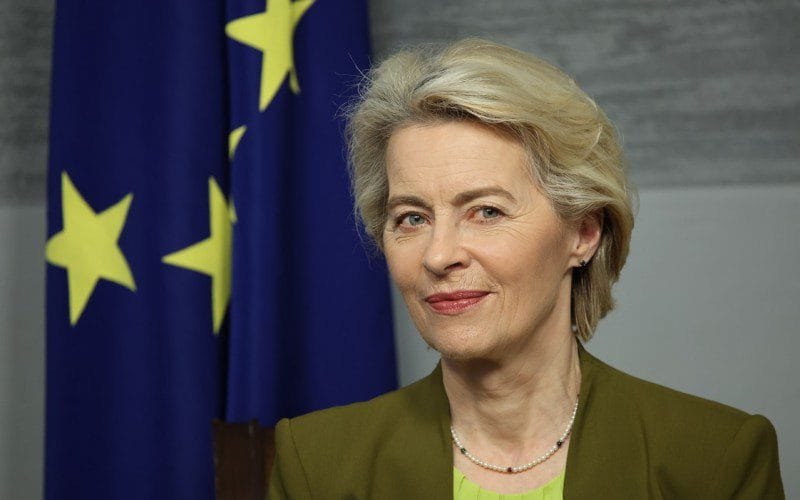
European Commission President Ursula von der Leyen is facing internal resistance to her flagship Industrial Accelerator Act, a key pillar of the EU’s Clean Industrial Deal, according to Politico.
The proposed legislation, designed to revive European industry and strengthen competitiveness, has reportedly drawn criticism from nine Commission policy departments during internal consultations. The unusually broad pushback could delay the formal presentation of the plan — currently scheduled for 26 February — for the third time. Brussels is under pressure to finalise a coherent strategy before an EU leaders’ summit on 19–20 March.
The Industrial Accelerator Act seeks to give preference to European-made products in public procurement and publicly funded programmes in sectors such as energy-intensive industries, net-zero technologies and automotive manufacturing. It would also define key concepts, including “local content requirements” and “green steel”, that would feed into wider strategic legislation.
A central point of contention is the definition of “trusted partners”. A draft seen by Politico suggests that “Made in EU” should cover products originating in the European Union and the European Economic Area, including Norway, Iceland and Liechtenstein, while also allowing for selected external partners to be treated as equivalent.
However, divisions have emerged within the Commission. DG TRADE reportedly supports including all countries with which the EU has free trade agreements, while DG GROW, led by Industry Commissioner Stéphane Séjourné, favours stricter criteria.
The debate reflects broader tensions between member states. France is pushing for stronger industrial production within EU territory, while Germany has cautioned against measures that could restrict trade partners.
Séjourné downplayed the disagreements, saying he remained confident that a high level of ambition could be maintained while accommodating differing views. However, the internal backlash highlights the political sensitivity surrounding Europe’s evolving industrial policy at a time of rising global trade pressures.