Italy, Spain and France have moved to restrict military activity linked to the war in Iran, underscoring divisions among European allies as the conflict continues.
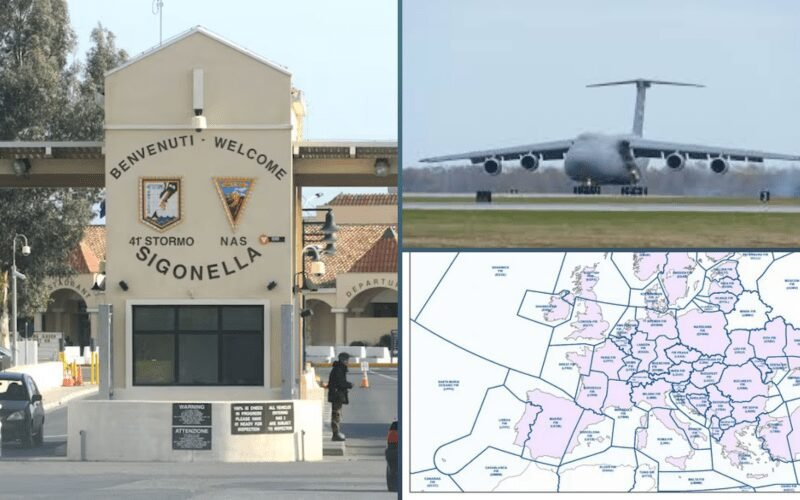
Italian authorities denied the United States permission to use the Sigonella air base in Sicily after becoming aware of flight plans involving U.S. aircraft bound for the Middle East, according to informed sources.
Defense Minister Guido Crosetto blocked the request after it emerged that no prior authorization had been sought and that the flights did not fall under routine or logistical operations covered by bilateral agreements.
The flight plans were communicated while the aircraft were already airborne, the sources said, prompting concerns in Rome over procedure and compliance with existing treaties.
Prime Minister Giorgia Meloni has said the United States can continue to use bases in Italy for standard operations, but any activity outside that scope requires parliamentary approval.
Spain has taken a firmer stance. Defense Minister Margarita Robles said Madrid has closed its airspace to U.S. aircraft involved in operations against Iran and will not allow the use of bases at Rota and Morón for such missions.
Foreign Minister José Manuel Albares said the aim is to avoid contributing to an escalation of the conflict.
Prime Minister Pedro Sánchez has been among the most outspoken critics in Europe of the U.S. and Israeli strikes on Iran, calling them “reckless” and “illegal.” He said Spain had rejected all flight plans linked to the operation, including refueling missions.
France refused Israel use of its air space to transfer US weapons for Iran war
In a further development, France has also imposed restrictions. A Western diplomat and two sources familiar with the matter said Paris refused to allow Israel to use its airspace to transport U.S. weapons for use in the Iran war over the weekend. The sources said it was the first such refusal by France since the conflict began.
A U.S. official said the military is meeting its objectives and does not require support from Spain or other countries.
Some U.S. bombers involved in operations are stationed at RAF Fairford in the United Kingdom, forcing aircraft to adjust routes to avoid Spanish airspace, including flying over the Atlantic or through France.
The restrictions come as tensions in the region remain high. The Strait of Hormuz, a key route for global oil shipments, has been affected by the conflict, contributing to rising energy prices.
The moves by Italy, Spain and France highlight differing positions within NATO over the Iran war, even as the alliance continues broader security cooperation.