On Monday, a consortium that oversees the US’s premier atmospheric research center announced it was suing the Trump administration over plans to shut it down. The National Center for Atmospheric Research, or NCAR, provides a home for interdisciplinary and collaborative research focused on anything atmospheric. Many of the country’s leading academic researchers in the field have spent time working there or have been involved in collaborations that involve NCAR.
But all of that is dependent upon government support for the research done there and, back in December, the head of the Office of Management and Budget labeled it woke and “one of the largest sources of climate alarmism in the country,” calling for it to be broken up. Since then, planning has continued for the dismemberment of NCAR, with everything from its computing facilities to its headquarters building being up for grabs. But now, the group that runs NCAR is fighting back, alleging in a lawsuit that this is all happening simply because President Trump is mad at Colorado and its governor.
The center at risk
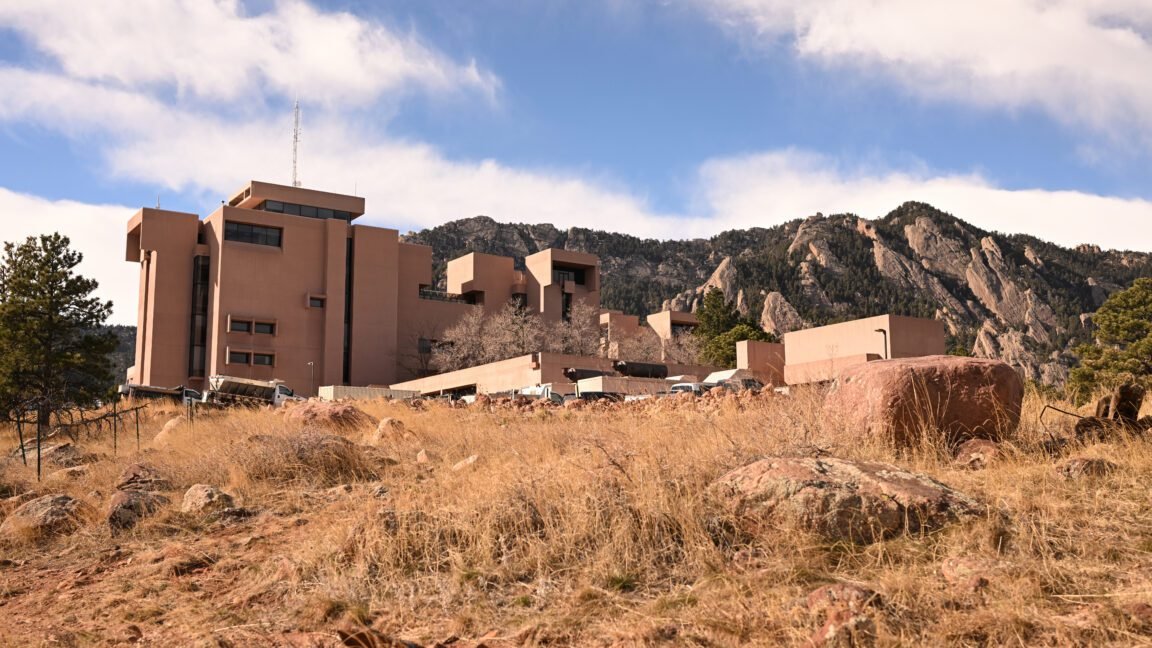
NCAR is situated in Boulder, Colorado, and provides a home for a huge range of science, from weather forecasting to climate change to the impact of space weather on the upper atmosphere. The work there is backed by two research aircraft and a supercomputing center to run the weather and climate models. All of that is managed by the University Corporation for Atmospheric Research (UCAR), a nonprofit that represents over 130 individual educational institutions. UCAR helps manage and maintain the facilities and apply for and distribute grant money, and it provides work space for people to pursue collaborative projects at its facilities. Graduate students, post-docs, and faculty may all spend time working at NCAR facilities or using its supercomputing resources as part of specific research projects.
In the wake of the announcement that it would be broken up, many researchers stated that it was a one-of-a-kind resource that has had a profound influence on atmospheric science, both in the US and globally.
The new suit is an attempt to block the breakup before it crosses the point of no return. It names the agencies that contribute the most to NCAR’s budget (the Department of Commerce, the National Oceanic and Atmospheric Administration, and the National Science Foundation), as well as the Office of Management and Budget. It alleges multiple violations of the Administrative Procedures Act, as well as First Amendment violations: the former because there has been no clear justification for the administration’s actions, and the latter because the government has ordered everyone at UCAR and NCAR not to talk about its closure.
The suit overall focuses on two themes that have consistently emerged in other lawsuits that have targeted Trump administration decision-making. The first is that the people involved seem to try to do whatever they want without first consulting the legal requirements for their actions, and the administration leaves an extensive social media record that suggests their actions are a form of retribution.
So, in this case, the suit notes that there is a signed cooperative agreement between the government and UCAR, and it doesn’t authorize the government to transfer operations of the supercomputing center to another entity. UCAR was told by one agency that NCAR’s continued operations were “no longer aligned with effectuating current programmatic goals and agency priorities,” but the suit notes that agencies were renewing and expanding research contracts within six months of deciding to shut things down.
More generally, there are formal procedures laid out in the Administrative Procedures Act for making major changes of government policy, and the suit alleges that these were violated. Rather than follow them, the government simply issued a letter to the scientific community asking for input on the future of NCAR, setting a deadline in March. But the suit notes that as early as February, government officials started making statements indicating that planning was underway for transferring NCAR’s assets, suggesting the request for input was a sham.
All of this was used to make the case that the government’s actions are “arbitrary and capricious,” and thus in violation of the Administrative Procedures Act. It’s an issue that has tripped up the administration in multiple cases.
Retribution
But the suit goes beyond simply alleging faulty decision-making by the Trump administration; it suggests that the real reason NCAR was targeted was its location in Colorado. It includes a large collection of quotes from Trump and other administration figures expressing anger at Colorado’s use of mail-in voting, and its conviction and imprisonment of Tina Peters, an election official who illegally accessed voting machines in a misguided attempt to find evidence of fraud in the wake of Trump’s 2020 election loss. It also cites a government spokesperson who, when asked about the NCAR closure threat, responded by saying, “Maybe if Colorado had a governor who actually wanted to work with President Trump, his constituents would be better served.”
The OMB announcement that NCAR would be closed also came a day after a direct attack from Trump on Colorado’s governor.
The suit also alleges that this is part of a pattern of attacks on Colorado. Earlier in 2025, the US government moved a major Space Command facility from Colorado to Alabama. “When issuing his decision,” the suit continues, “the President stated that ‘the problem I have with Colorado’ is that ‘they do mail-in voting’ and that this ‘played a big factor’ in the decision.”
The suit notes that, on the same day as the NCAR announcement, the Department of Transportation killed $110 million in grants for projects in Colorado. Less than a week later, the Federal Emergency Management Agency rejected disaster relief requests from the state. And at the end of the month, Trump issued the first veto of his second term, rejecting a Colorado water management project. The suit presents these as indications that NCAR was just a casualty of this wide-ranging attack on a state that has opposed some of Trump’s agenda, and that the decision to close it was “untethered to any reasoned decision making.”
One thing that’s notable is that the suit does not even mention another potential motivation. NCAR is a major center of research on climate change, which the administration has repeatedly denigrated as a green scam, which would also have difficulty passing the reasoned decision-making standard. That said, there is a growing record of administration decisions that have been blocked based on the arbitrary and capricious standard. Courts have also been more willing than in Trump’s first term to look to public statements by administration figures (including Trump himself) as guides to the motivations behind decisions as well.
Regardless of how the case turns out, the discovery process is likely to provide a window into the actions of the head of the Office of Management and Budget, Russell Vought, who has largely stayed out of the public spotlight despite a controversial tenure in that office.