
Lauren Harper is Freedom of the Press Foundation’s first Daniel Ellsberg Chair on Government Secrecy.
The Trump administration is on its way to creating every authoritarian’s dream: a centralized database containing intimate details about every resident of this country, fully searchable by artificial intelligence. This powerful tool would empower the government to conduct previously unimagined levels of surveillance and harassment against its own people.
Freedom of the Press Foundation is suing the administration for documents behind the database. We know that this isn’t just something that the Trump administration would exploit; once built, it’s unlikely any administration could resist the urge to weaponize our personal information.
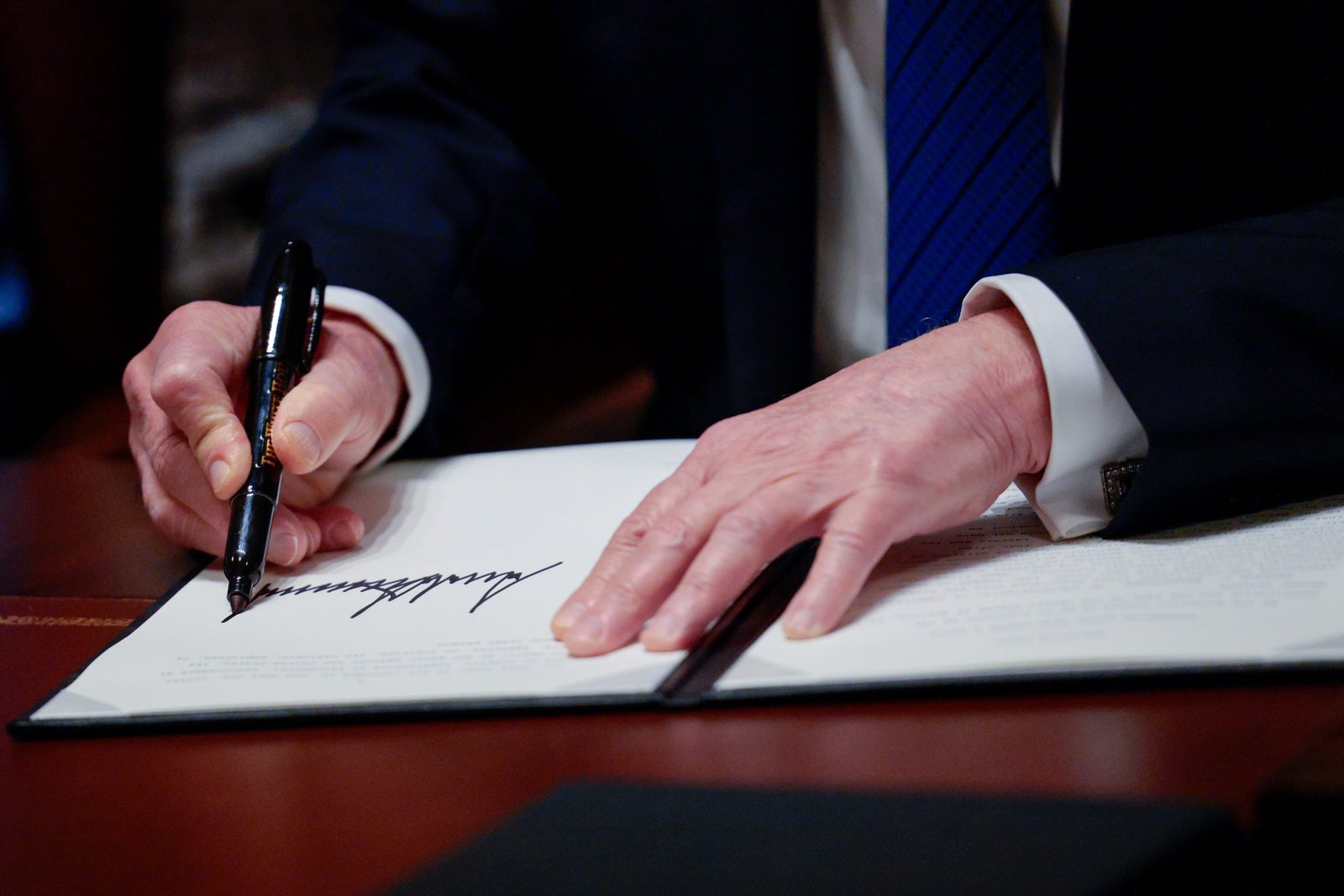
This nightmare privacy scenario began one year ago, when President Donald Trump issued an executive order that expanded data sharing across the federal government. The administration touted the order, “Stopping Waste, Fraud, and Abuse by Eliminating Information Silos,” as a way to target fraud within a supposedly bloated government.
The order was no such thing.
Instead, it took a machete to long-standing privacy protections that mandate agencies can only share our data when absolutely necessary, to install a massive data-mining operation in their place.
To do so, Trump’s executive order required agency heads to submit reports to the Office of Management and Budget on the following:
- Which agency regulations governing unclassified data access should be eliminated or modified.
- Which policies governing the sharing of classified information need to be scrapped to meet the administration’s goals.
The public has never seen the reports agencies submitted by OMB, despite their impact on our privacy. However, thanks to intrepid reporting and litigation, we do have glimpses of how this is starting to play out:
- The Central Intelligence Agency has been granted increased access to domestic law enforcement databases, further blurring the line between foreign intelligence and domestic policing.
- The so-called Department of Government Efficiency got direct access to Treasury Department payment systems, including Social Security numbers, names, and birthdays, according to a whistleblower.
- Immigration and Customs Enforcement got access to Medicaid recipients’ data and banking information.
- The Transportation Security Administration is now sharing biometric passenger info with immigration enforcement, turning every airport check-in into a potential trap.
But these incursions are only the tip of the iceberg.
Reports indicate the administration’s goal for dismantling privacy protections is to build a centralized national database, which would allow the administration to create detailed reports on every American, potentially for political purposes, including retaliation, harassment, and imprisonment.
At the same time this database is becoming a reality, the Department of Homeland Security is rapidly expanding its surveillance capabilities, and the administration is unleashing AI across federal systems to analyze the data points they are harvesting from our private lives.
Perhaps worst of all, by “eliminating information silos,” the administration is creating a single point of failure for the privacy of every American. A centralized database that compiles our most intimate information, from our health to our finances, doesn’t just make us vulnerable to government abuse; it creates a massive, singular target for hackers and foreign adversaries.
“‘Information silos’ aren’t an inefficiency. They are a bulwark against the exact kind of abuses and negligence the Trump administration has engaged in,” said Ginger Quintero-McCall, a public records attorney with the Free Information Group. “Preventing easy, frictionless, unaccountable access to troves of sensitive data isn’t a bug — it’s a feature.”
And while the Trump administration recklessly seeks and compiles our data, it has simultaneously stopped sharing its data with the public. Vital information about the climate, immigration, federal spending, and the economy has been pulled from public view.
The government is turning into a one-way mirror: They see everything, while we see nothing.
This is an untenable and anti-democratic information imbalance. To fight back, we need to fully understand just how badly our data and our privacy has been compromised. The agency reports submitted to the OMB are essential for this investigation — which is why Freedom of the Press Foundation is filing a Freedom of Information Act lawsuit against OMB for these records.
This suit will not only force the disclosure of these important documents, but it will also serve to remind the administration that the federal government is required to safeguard the personal data we entrust to it. It is not allowed to become a data-mining firm that leverages our information for political gain while hiding its work from the public.
As Kevin Bell, one of our counselors at Free Information Group, said, “This threat to Americans’ very right to an individual identity has never been so dire. The Trump administration is correlating each of its citizens’ with their transactions, emails, location tracking, missed car payments, online views or posts, and entire personal histories; the President has ordered the collection and free dissemination of every bit of data about every one of us held anywhere for any reason.”
The public deserves to see these documents. We intend to compel them to show us — and all Americans.