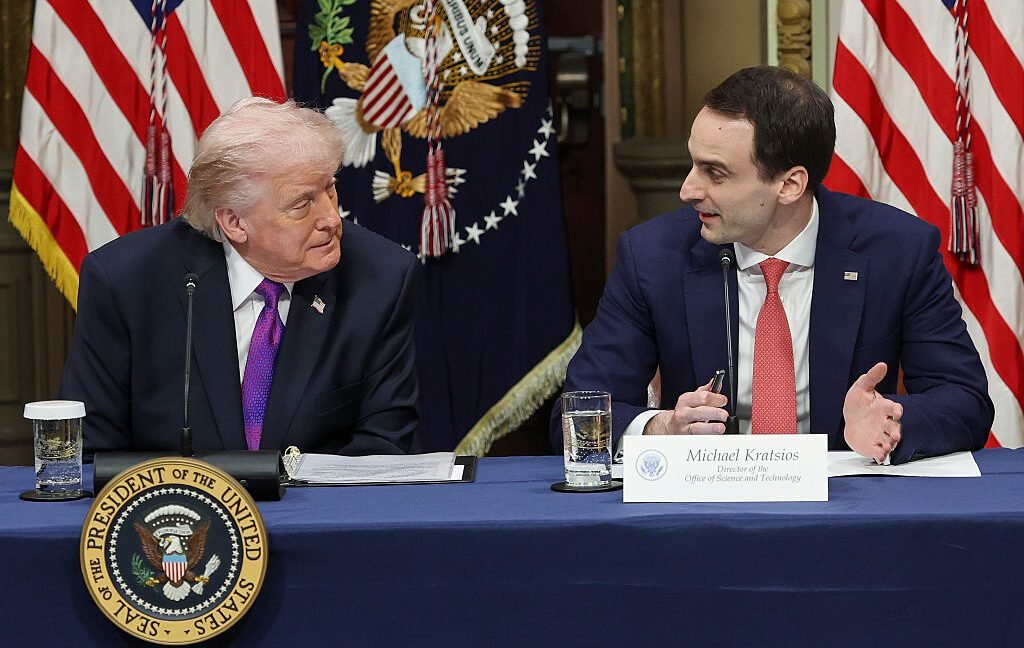
PCAST, the President’s Council of Advisors on Science and Technology, is generally not a high-profile group. It tends to be noticed when things go wrong, such as when the PCAST head named by Biden had to resign due to abusive behavior. Biden, who was generally supportive of science, didn’t even name the members of PCAST until eight months after his inauguration. So it’s no surprise that an administration that’s been hostile to science took even longer to staff its version of the group.
The list of appointees was finally released on Wednesday, and it’s notable for its almost complete absence of scientists. There are still nine unfilled vacancies on the council, so it’s possible more scientists will be named later. But for now, PCAST is heavily tilted toward extremely wealthy technology figures.
These include investor Marc Andreessen, Google’s Sergey Brin, Michael Dell of Dell, Larry Ellison of Oracle, Jensen Huang of NVIDIA, Lisa Su of AMD, and Mark Zuckerberg of Meta. But many of the lesser known names have similar backgrounds. Previously named chairs of PCAST are investor David Sacks and a former investment company CFO and current head of the Office of Science and Technology Policy, John Kratsios. Of the new appointees, Safra Catz also comes from Oracle, Fred Ehrsam co-founded Coinbase, and David Friedberg is another investor.
Three of the new members actually have some background in academic research. Both Jacob DeWitte and Bob Mumgaard got PhDs from MIT before founding nuclear companies: DeWitte is the CEO of the small modular nuclear startup Oklo, and Mumgaard is the CEO of Commonwealth Fusion Systems. John Martinis is a Nobel Prize winner for his work on quantum physics; he played a critical role in the development of Google’s quantum computing efforts and has since been involved in two additional quantum computing startups.
This is not the council you’d name if you were at all interested in the role of fundamental research in enabling technology development. It’s more appropriate if your focus is on investing in well-proven commercial technologies. In keeping with that, the announcement says, “Under President Trump, PCAST will focus on topics related to the opportunities and challenges that emerging technologies present to the American workforce, and ensuring all Americans thrive in the Golden Age of Innovation.”
While PCAST isn’t a high-profile group, it can play a useful role in analyzing emerging science and technology that doesn’t neatly fall within the remit of any single agency. You can get a sense of that by looking at the reports it prepared during the Obama administration, which addressed fundamental issues like antibiotic resistance and applied work like advanced manufacturing.
While this council appears to be poorly prepared to understand the needs and function of fundamental academic research, it’s pretty clear that none of that is a priority for this administration, and naming academics to this group is unlikely to change that trajectory. So while there’s still a chance that researchers could be named in the future, there may not be any useful role for them.