On Wednesday, the Trump administration announced that a large collection of tech companies had signed on to what it’s calling the Ratepayer Protection Pledge. By agreeing, the initial signatories—Amazon, Google, Meta, Microsoft, OpenAI, Oracle, and xAI—are saying they will pay for the new generation and transmission capacities needed for any additional data centers they build. But the agreement has no enforcement mechanism, and it will likely run into issues with hardware supplies. It also ignores basic economics.
Other than that, it seems like a great idea.
What’s being agreed to
The agreement is quite simple, laying out five points. The key ones are the first three: that the companies building data centers pledge to pay for new generating capacity, either building it themselves or paying for it as part of a new or expanded power plant. They’ll also pay for any transmission infrastructure needed to connect their data centers and the new supply to the grid and will cover these costs whether or not the power ultimately gets used by their facilities.
The companies also pledge to consider allowing the local grid to use on-site backup generators to handle emergency power shortages affecting the community. They will also hire and train locally when they build new data centers.
The agreement suggests that these promises will protect American consumers from price hikes due to the expansion of data centers and will somehow “lower electricity costs for consumers in the long term.” How that will happen is not specified.
Also missing from the agreement is any sort of enforcement mechanism. If a company decides to ignore the agreement, the worst it is guaranteed to suffer is bad publicity, something these companies already have experience handling. That said, Trump has been known to resort to blatantly illegal tactics to pressure companies to conform to his wishes, so ignoring the agreement carries risks.
That’s important because the companies will struggle to live up to the agreement. (Though Google, for its part, told Ars that it has typically followed the guidelines as a normal part of its process for building new data centers.)
And even if they could, it wouldn’t insulate the US public from energy price increases.
Meet basic economics
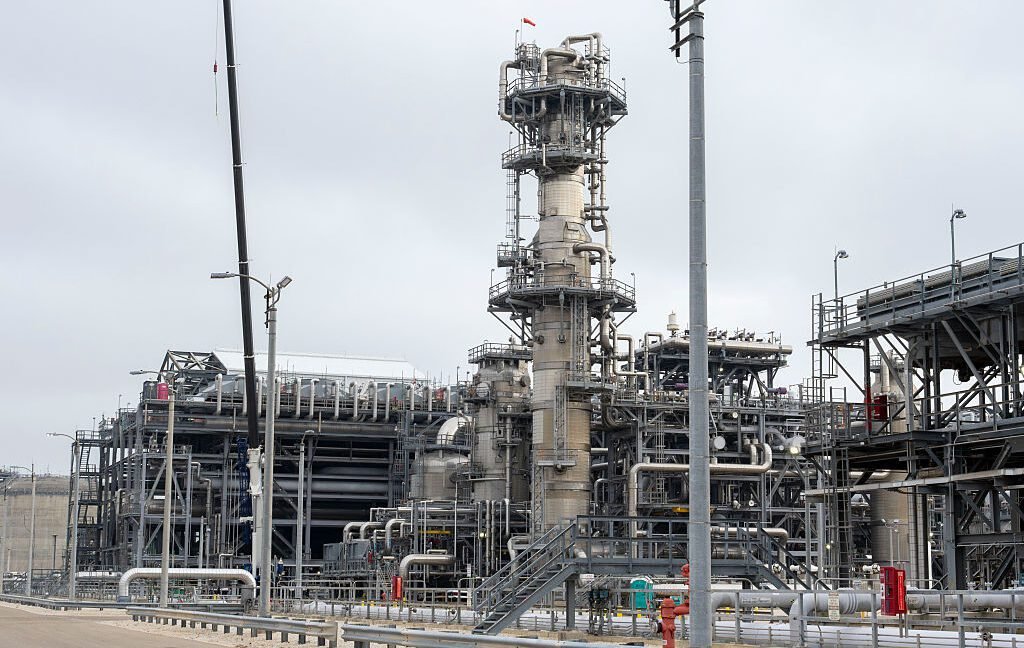
As recent coverage has made clear, most of the companies plan to handle (or are already handling) the added power demand with natural-gas-generating equipment. But there’s a limited supply of such equipment; various sources quote wait times of up to seven years. That’s longer than even the planned timeline for a new nuclear power plant. While there’s likely to be some expanded manufacturing capacity due to the surging demand, the companies that build gas turbines will be very hesitant to invest in meeting demand that is likely to be transient.
Even if they did, basic economics indicate that expanded use of this fuel would raise consumer costs, as it would mean more competition for the supply of natural gas used either directly by consumers for heating or by grid operators that supply consumers with electricity. That will likely force utilities to meet demand with plants that are rarely used at present, typically because those plants are less efficient and more expensive to run.
This is also coming at a time when the US’s liquefied natural gas exports have already forced utilities to shift to expensive coal generation, contributing to a 6 percent rise in consumer electricity costs in 2025 alone. (You can contrast that increase with the announcement’s claim that “President Trump has demonstrated consistent leadership in expanding domestic energy supply and lowering energy prices for consumers.”) Europe is a major customer for those exports, and it has likely just lost access to roughly 10 percent of its imports from Qatar.
So it’s very unlikely that data center builders will be able to meet the added demands with natural gas. Even if they could, it would shift costs onto consumers unless we somehow scaled natural gas production to match while keeping overseas consumers from buying the excess.
Are there alternatives? We haven’t built any coal plants in decades, and many of the ones still in operation are reaching their normal end-of-life points; the electricity they produce is also expensive relative to the alternatives. It’s highly unlikely that anyone would invest in new coal plants given the cost and environmental consequences.
Nuclear is a questionable option. There are plans to restart a couple of shuttered plants—the secretary of energy is holding a press conference at one at Indian Point in New York on Friday, suggesting further efforts in that regard. But there simply aren’t enough shuttered plants to make a difference. The administration is promoting small modular nuclear power and hopes to have some test reactors built within the next few years. But it will likely take considerably longer than that before they can be widely deployed.
That leaves a combination of solar and batteries as one of the most viable alternatives, although it’s still more expensive than most natural gas plants at present. That combination is already being installed at record paces—solar output in the US has grown by over 30 percent for two years in a row. It’s not clear how much faster we could be installing them, and in any case, it’s clear that the administration doesn’t view them as a solution. The announcement specifically takes a shot at policies favoring renewable energy, saying, “President Trump terminated the job-killing ‘Green New Scam,’ ended massive taxpayer subsidies for unreliable energy sources, and rescinded the Biden Administration’s anti-American energy regulations.”
Whatever is built will also face the general challenge that transmission remains a huge problem, with many proposed power plants waiting in the queue for years for interconnects to the wider grid.
Supplying the data center boom with power in a way that’s minimally disruptive to the wider public will be an extremely difficult challenge. Dismissing it with a toothless agreement that hopes the companies involved will solve all the problems is not cause for optimism that we’re prepared to meet that challenge.