New data from the US Bureau of Labor Statistics showed that inflation soared in March thanks in large part to increased energy costs stemming from President Donald Trump’s war with Iran.
According to the BLS, the Consumer Price Index (CPI) posted a month-over-month gain of 0.9% in March, led by a 10.9% increase in energy prices including a massive 21.2% increase in gasoline.
On a yearly basis, total prices rose by 3.3% from where they were in March 2025 – the highest annual inflation rate since April 2024.
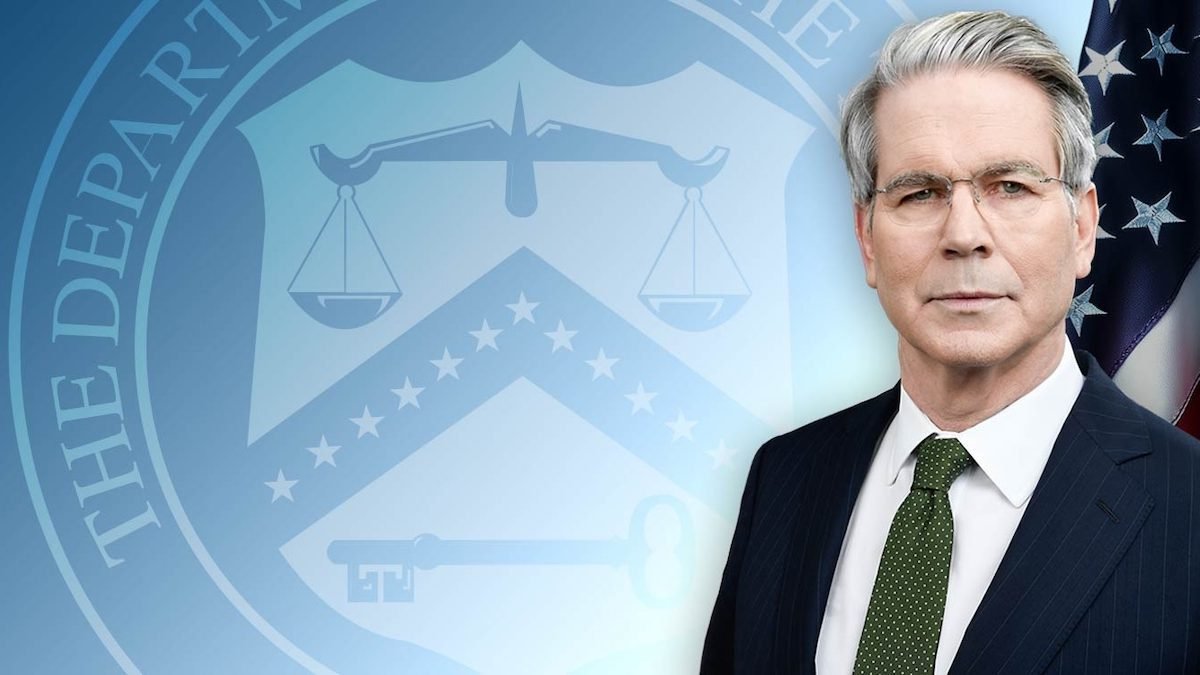
Meanwhile, the top Democrat on the US Senate Finance Committee revealed Thursday that an adviser to the US Treasury Department admitted he was unaware of the agency doing any work to prepare for the economic fallout of Trump’s war, which has plunged the global economy into chaos and cost American drivers billions at the pump.
What was Treasury doing?
Sriprakash Kothari, a top adviser to Treasury Secretary Scott Bessent and Trump’s nominee to serve as assistant secretary of the Treasury for economic policy, told US Sen. Ron Wyden’s (D-Ore.) staff behind closed doors that “not only did he not perform any work related to energy markets leading up to the war, but that he wasn’t aware of anyone at Treasury who did,” Wyden wrote in a letter to Bessent.
Wyden quotes Kothari as saying he did no work to prepare for economic impacts of the war “leading up to the conflict,” only started to work on it “subsequent” to its start on February 28.
“When later asked to clarify this response, he reiterated that he had not performed any analysis or work related to energy markets, or any other economic facet, in the lead-up to military action in Iran,” Wyden added. “He further told staff that the work he performed subsequently occurred after learning about the February 2026 strikes in the news. Mr. Kothari was then asked whether he was aware of anyone at Treasury performing analysis or work related to energy markets in the lead-up to potential military action in Iran, he responded that he was not aware of anyone performing any such work.”
Wyden wrote that given the “rapidly growing affordability crisis” in the US – a crisis intensified by Trump’s war on Iran – “it is unacceptable that Treasury may not have performed the most basic planning before it was launched.”
“Every problem resulting from the conflict which we are seeing now,” wrote Wyden, “was not only foreseeable but was predicted by the intelligence agencies, which reported as recently as last March that Iran was ‘capable of inflicting severe damage to an attacker’ and of ‘disrupting shipping, particularly energy supplies, through the Strait of Hormuz.’”
In just six weeks, Trump’s Iran war has cost American taxpayers over $30 billion and counting, and US drivers collectively spent over $8 billion more on gas during the first month of the illegal assault, which sent oil prices surging.
CNN reported last month that the Trump administration “significantly underestimated Iran’s willingness to close the Strait of Hormuz in response to US military strikes while planning the ongoing operation.”
“While key officials from the departments of Energy and Treasury were present for some of the official planning meetings about the operation before it started,” CNN reported, citing unnamed sources familiar with the discussions, “the agency analysis and forecasts that would be integral elements of the decision-making process in past administrations were secondary considerations.”
Inflation comments
University of Michigan economist Justin Wolfers commented in a social media post that inflation in March was “up sharply, and there’s more to come,” while describing the data as “the first numbers showing economic effects of the war in Iran.”
New York Times economics reporter Ben Casselman observed that the 3.3% rise in inflation was “the fastest inflation rate of Trump’s second term,” and that “the jump was driven almost entirely by higher energy prices, the direct result of the war with Iran.”Heather Long, chief economist at Navy Federal Credit Union, flagged a particularly worrying aspect of the BLS report, which is that “wage growth is almost entirely eaten up by inflation now.”
“Wage growth was +3.5% in March for the past 12 months. Inflation was +3.3% in March for the past 12 months,” Long explained. “This is the squeeze many households are feeling. Their pay won’t be able to keep up with this level of inflation. (And yes it was the same situtation in 2022).”
Elizabeth Pancotti, managing director for policy and advocacy at Groundwork Collaborative, said that the spike in inflation “comes as no shock to anyone who has filled up their gas tank in the past month,” and predicted the damage wouldn’t be limited to fuel prices.
“The toll of Trump’s war in Iran won’t stop at the pump,” Pancotti said. “Price hikes on summer vacations, groceries, and electronics are coming down the pike as his war stokes chaos in supply chains around the world. By pursuing this illegal war, the president has made it clear that he’s putting American families last.”
The Republican Party tried to put its best spin on the numbers by boasting that core inflation, which excludes the prices of food and energy, did not rise as much as anticipated.
“Core inflation just came in LOWER than expected for the month of March!” the GOP wrote in a social media post. “President Trump continues defying the ‘experts’ and beating expectations.”
However, the GOP’s post got several angry replies from followers who argued that core inflation mattered little when energy prices are spiking and gas prices are averaging $4.15 per gallon.
As Vox senior editor Benji Sarlin noted, former President Joe Biden’s White House regularly pointed to core inflation numbers while trying to ease voters’ anxiety about rising prices, but with little success.
“Congrats to all the Trump White House folks explaining the difference between topline inflation and core inflation during an oil shock today, I’m sure the Biden WH alums will be very sympathetic,” Sarlin wrote. “People on social media also love it when you say inflation is actually pretty good if you just exclude gas, try it out.”