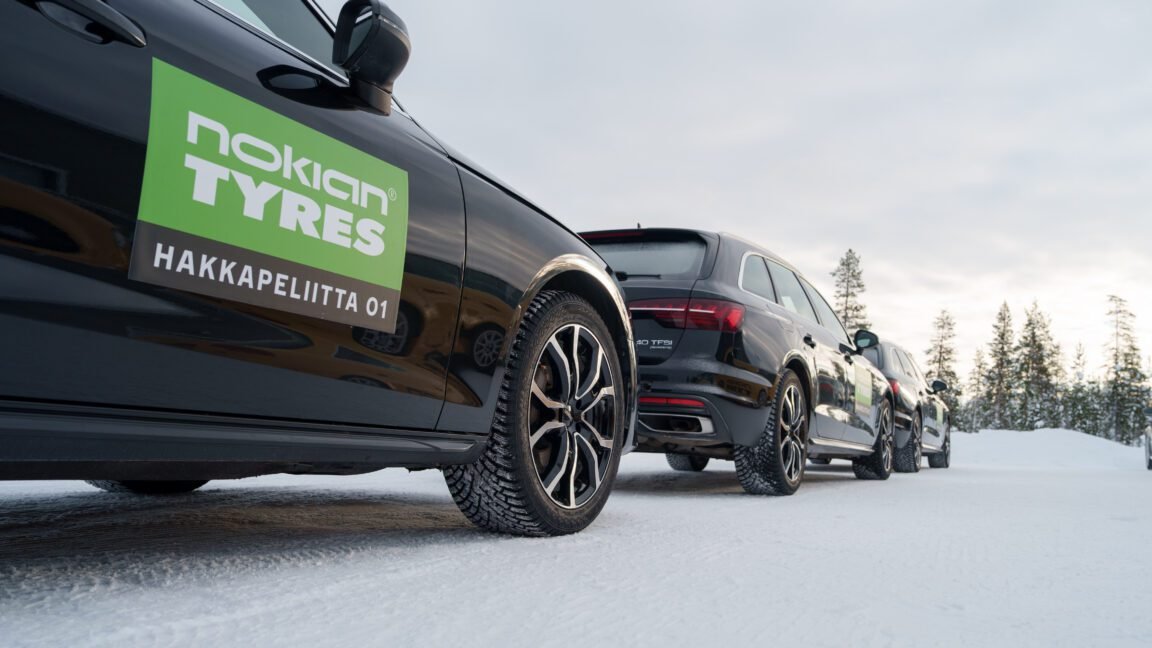
IVALO, Finland—In 1987, fictional superspy James Bond careened around a frozen lake in an Aston Martin in the movie The Living Daylights. Bond’s tires were carrying a secret—retractable tire studs that operated with the touch of a button. After cutting a circle in the ice with a wheel to sink the bad guys, Bond deployed his outriggers for balance and his on-demand studs for an impressive getaway.
Nokian Tires played with that idea, presenting a concept in 2014 with similar functionality. However, as Nokian development manager Mikko Liukkula remembers wryly, each tire was so complex that a production set would have cost more than the vehicle itself. Fast-forward to 2026, and Nokian has debuted a giant step forward in studded-tire engineering: a studded winter tire that automatically adjusts to changes in temperature and surface pressure.
I put these new Hakkapeliitta 01 tires through the wringer in and around a frozen-over Lake Tammijärvi at Nokian’s 1,700-acre testing center. After drifting, slaloming, hard braking, and swooshing along snowy trails, I can attest to the quality of the gripping power.
Testing the studs at White Hell
Roughly 150 miles north of the Arctic Circle in Finnish Lapland, the trees and ground are blanketed with bluish-white snow roughly 180 days per year. Santa lives nearby, apparently. What better place to test winter tires? That’s what Nokian Tires figured when it established its testing center in this white wonderland, hundreds of miles north of its headquarters in Nokia.
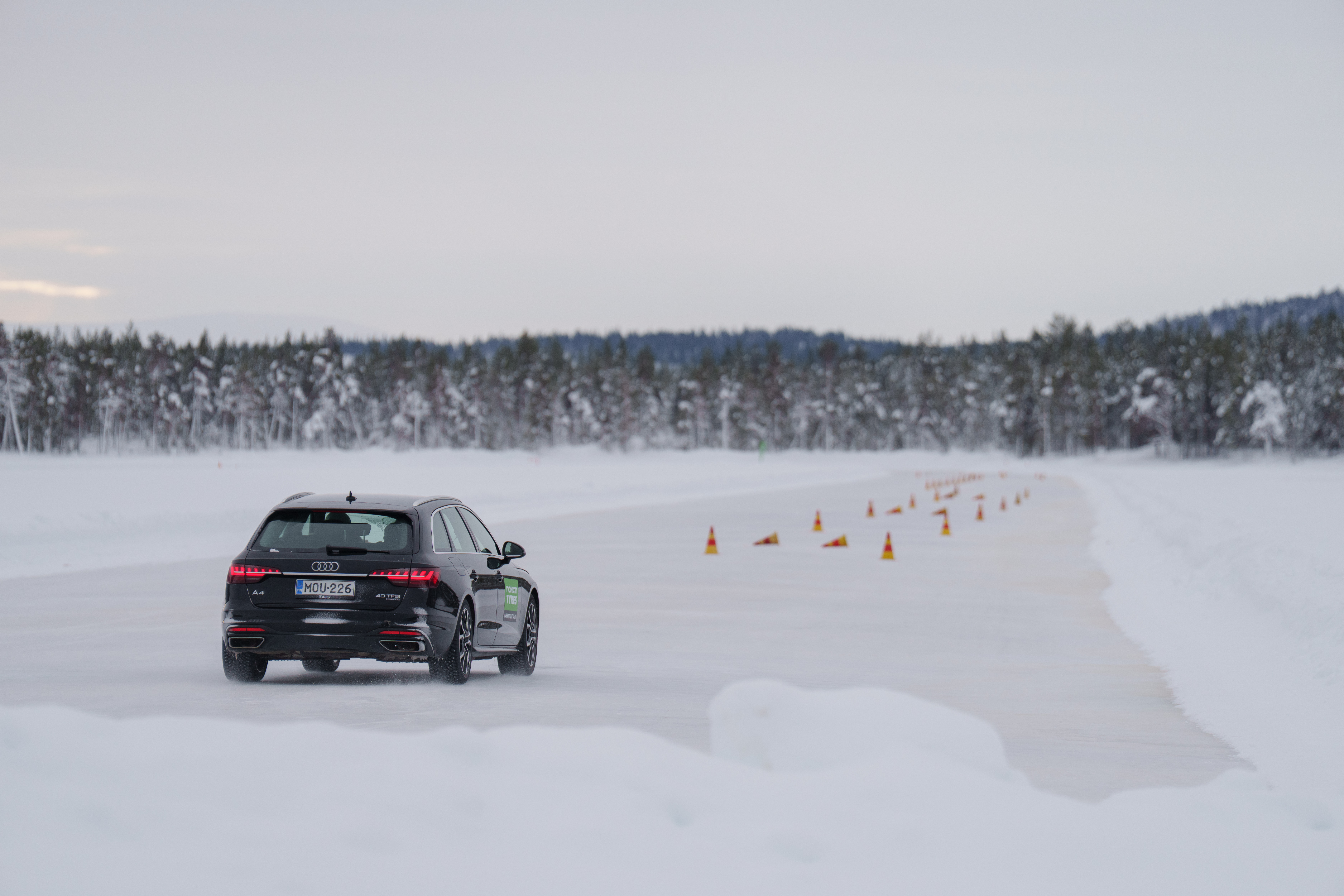
The tire manufacturer opened this facility—called White Hell, a nod to the Nürburgring (nicknamed Green Hell) track in Germany—in 1986. At the time, a few employees from the testing department trailered dozens of Nokian tires to the outpost on a frozen lake to test them in extreme conditions. That was two years before it split from parent company Nokia. Today, it’s the site where Nokian launched its newest creation, the Hakkapeliitta 01.
The new tire is built on the success of Nokian’s already-established Hakkapeliitta line, which originated 90 years ago in 1936. Before the 01, the Hakkapeliitta 10 set the standard for winter tires and is still highly regarded. Since this is such a significant leap for Nokian, it’s starting over again at 01, a practice that has happened only two other times in nearly a century in business.
Here’s how it works
Three layers of the Hakkapeliitta 01 work together to enable the stud movement. The rubber tread (made partly of renewable materials like natural rubber, plus bio resin and bio-based oils partially derived from pine resin and canola oil) meets the road, cushioning a thin lock compound layer and an adaptive base that holds the studs in place. The adaptive base layer is the key to the system, as it stiffens in cold temperatures and becomes softer and stickier as the air and surface temperatures rise. Roughly 220 studs dot each, hitting the road 14 times per second at 62 mph (100 km/h). Nokian’s 2,300-foot (700 m) ice runway—which is smoothed out with water and a custom machine with wide wings, like a crop harvester—has been used thousands of times to prove the adaptive base transitions quickly from the ice to the air outside the covered runway and vice versa.
While the adaptive base is new, the studs themselves are not.
“If you look at the stud itself, the pin is the same as that we used in the Hakkapeliitta 10,” says Nokian director of marketing Hans Dyhrman. “We took a little bit of a change on the collar to increase the biting edge that comes with each one of those studs.”
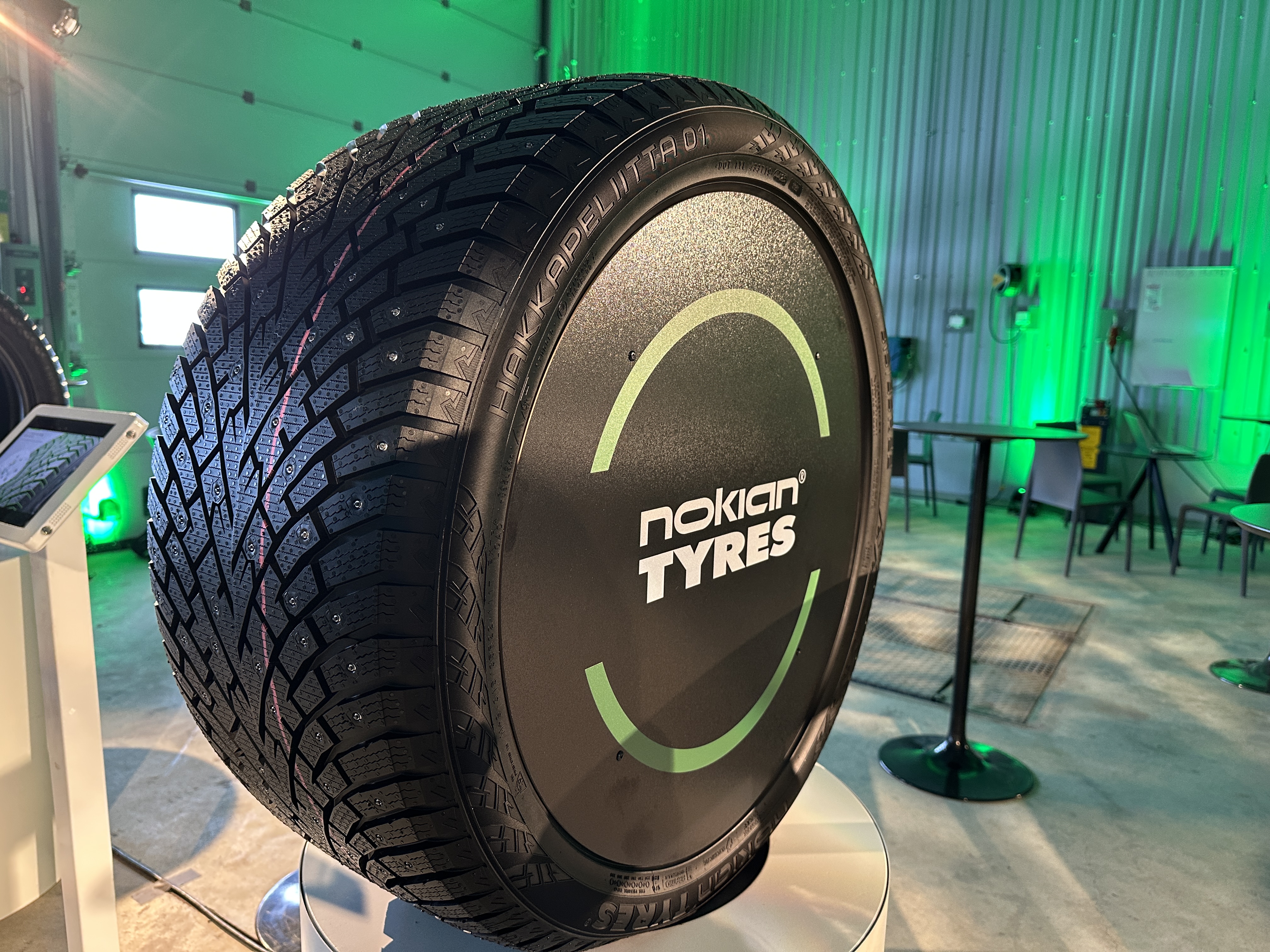

One thing that makes the tires unique, Dyhrman says, is how a robot inserts each stud to make sure it’s optimally oriented to each position. Center studs offer strong support and performance, while the shoulder studs are rotated horizontally for better biting edges and steering precision.
“After each one of these studs is installed, each one is then scanned and recorded in our database so that we can make sure that each Nokian Tires Hakkapeliitta 01 that comes off the assembly line has just the right amount of stud protrusion, measured through and through,” Dyhrman says.
Climate change requires changing tires
As the climate shifts, Nokian says, road surfaces are different than they were 10 or 20 years ago. Sudden freeze and thaw cycles replace longer, more consistent winter weather patterns. Studded tires are still the most effective option for driving on ice. However, studs present two issues: road noise and road wear. The studs chip into the asphalt when snow and ice are absent, causing holes in the road.
In Texas, where I live, studded tires are prohibited. That’s no big deal, since we see ice maybe once a year. It’s the same story for other Southern states like Mississippi, Louisiana, and Florida. Even in Michigan, perhaps surprisingly, the state says “in practical terms, no” when asked if studded tires are legal. Most other states in the US allow studded tires during specified months of the year.
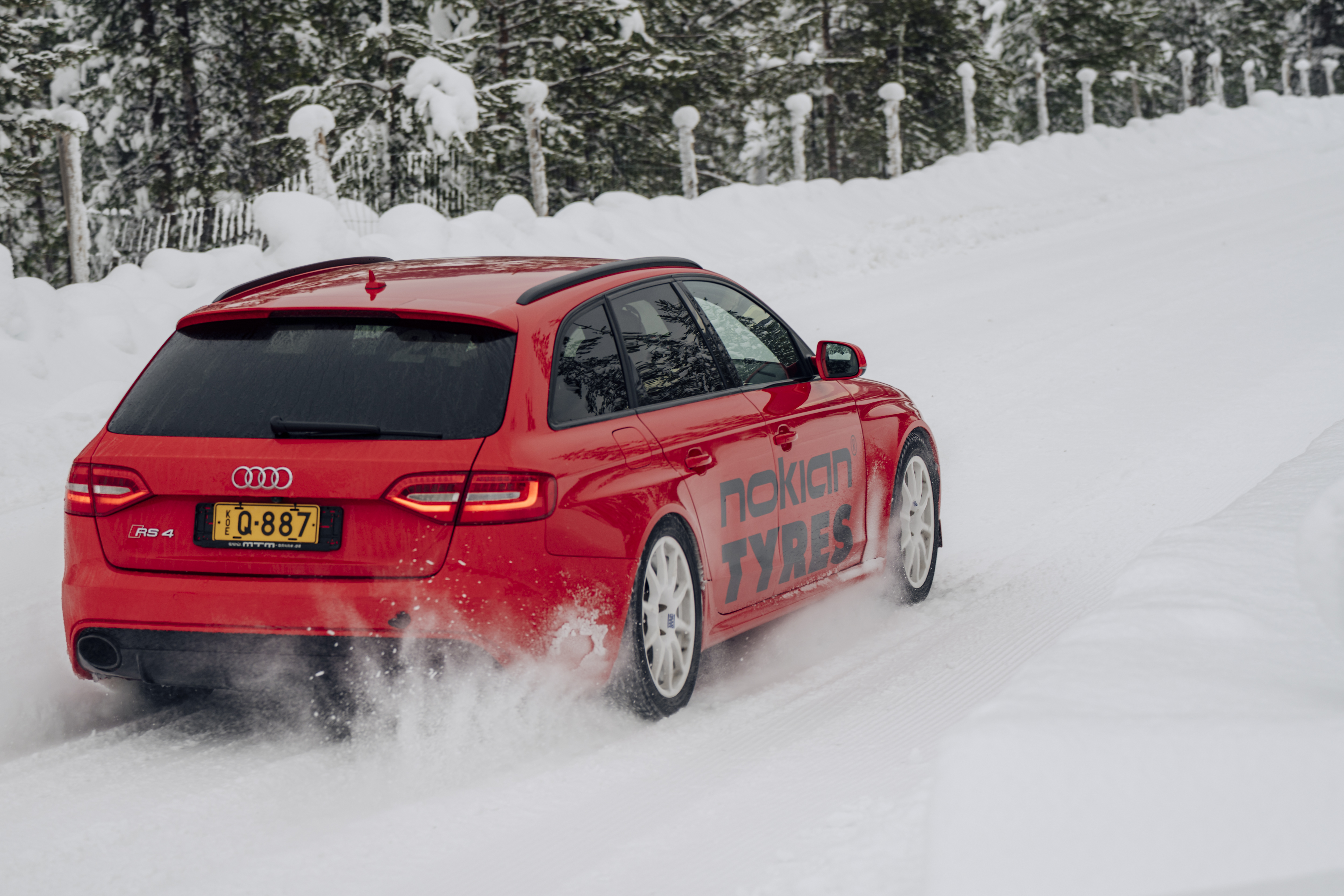
Nokian says its new winter tires represent up to a 30 percent reduction in road wear, as the ice grip improved by as much as 10 percent. On top of that, the Hakkapeliitta 01 represents noise levels reduced by as much as 1 decibel from the Hakkapeliitta 10. Some, but not all, of the new tires include another layer, called SilentDrive technology, that reduces interior noise even further.
The new Hakkapeliitta 01 tires will be available to consumers in autumn 2026, in the Nordic countries and North America.