The data pipeline from NASA’s Artemis II mission opened to full blast a few hours after looping behind the far side of the Moon on Monday night, when the Orion spacecraft established a laser communications link with a receiving station back on Earth.
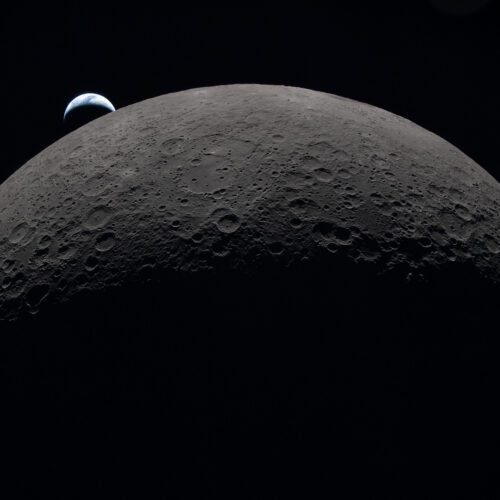
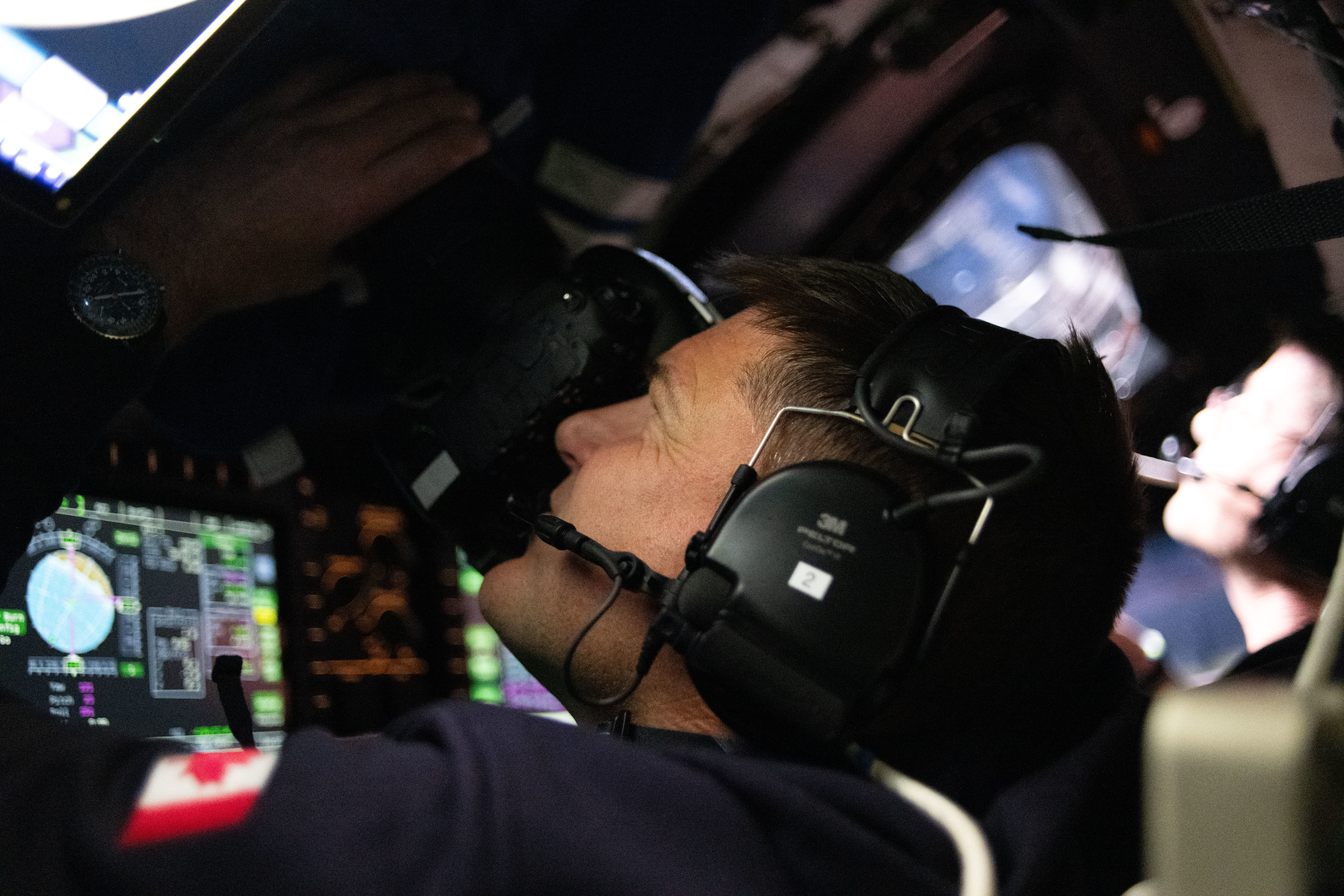
A cache of high-resolution images began streaming down through this connection. NASA released the first batch to the public Tuesday. Most of the images were taken by the four Artemis II astronauts using handheld Nikon cameras fitted with wide-angle and telephoto lenses. They also had iPhones to capture views out the windows of their Orion Moon ship, named Integrity.
After reaching their farthest point from Earth, astronauts Reid Wiseman, Victor Glover, Christina Koch, and Jeremy Hansen are accelerating back to Earth for reentry and splashdown Friday evening to wrap up the first crewed lunar mission in more than 53 years.
Throughout their encounter with the Moon, the astronauts radioed down their impressions of what they were seeing. Their callouts vacillated from descriptions riddled with scientific jargon to exclamations of awe and joy. Geologists inside NASA’s Mission Control Center in Houston were giddy with excitement. This was the first time humans have explored another planetary body in nearly 54 years. Thanks to a fortunate bit of celestial mechanics, the Artemis II astronauts saw portions of the far side of the Moon that previously were observed only by robotic missions.
But those robotic spacecraft are loaded with sophisticated scientific instruments viewing the Moon in light waves across the electromagnetic spectrum. They have laser altimeters, radars, and magnetometers, and dust and plasma sensors to interrogate the Moon and its surroundings. And unlike Artemis II, robotic orbiters have surveyed the Moon for decades. Their discoveries include detecting signs of water ice inside craters at the Moon’s south pole, one of the most compelling reasons to send humans back to the surface.
How much are eyeballs really worth?
Despite the short window for lunar observations on Artemis II, NASA came up with 10 science objectives for the crew to pursue from the cockpit of Integrity. NASA selected a team of scientists to formulate a list of things for the Artemis II crew to look for on and above the Moon, gave the astronauts a crash course in geology, and took them on field trips to Iceland, Canada, and the American Southwest for hands-on field experience.
So, what can a few hours of peering out the window from 4,000 miles away really tell us about the Moon? A little, but not a lot.
“I think the biggest value here is the PR,” said Clive Neal, a planetary geologist at the University of Notre Dame. “I mean, it’s getting the public excited. At our launch party, I had one of my grandkids, and one of my great-grandkids there as well, and the excitement just in there was palpable. Palpable. I’m having a flashback to the ’60s now.”
The Moon has no meaningful atmosphere, and its surface is frozen in geologic time. The only notable changes happen when something strikes the Moon from space. Little has changed since the Apollo astronauts last left the Moon in 1972, and in any case, NASA and international space agencies have kept a close watch ever since.
Every 10 years, the National Academies convene a panel of planetary scientists to set priorities for Solar System exploration. These decadal surveys help NASA decide where to send missions, and what kind of scientific questions they should seek to answer. None of the results from Artemis II are likely to answer these big questions.
“Is there going to be decadal-level science out of Artemis II? Probably not,” Neal told Ars in an interview this week. “This is a technology demonstration mission … This is primarily to have a crew there to check out the engineering and make sure that things are working.”
From a scientific perspective, what’s most intriguing about Artemis II is figuring out how to incorporate humans into planetary exploration. For more than 50 years, generations of scientists have learned to only explore other worlds through the electronic eyes of robots. With NASA’s return to the Moon, they must learn to take advantage of human observations.
This requires a shift in how ground teams design instruments, plan science campaigns, and select targets for their observations. It also necessitates a change in culture. Astronauts on the lunar surface or in lunar orbit will provide real-time feedback loop for the army of scientists looking over their shoulders from Earth. During the Apollo program, it took multiple landings to fine-tune how this works.
Should we take a closer look at this rock? Should we go see that outcrop? Humans can make these key decisions in seconds or minutes, rather than days, weeks, months, or in some cases, years.
The experience of the Artemis II flyby also informed spacecraft engineers about the utility of the Orion spacecraft as an observation platform, and the optical quality of the capsule’s windows. The astronauts reported some issues with glare from the Sun and the Earth. They MacGyvered a makeshift window shroud using a T-shirt to help overcome the glare so they could better see the lunar surface.
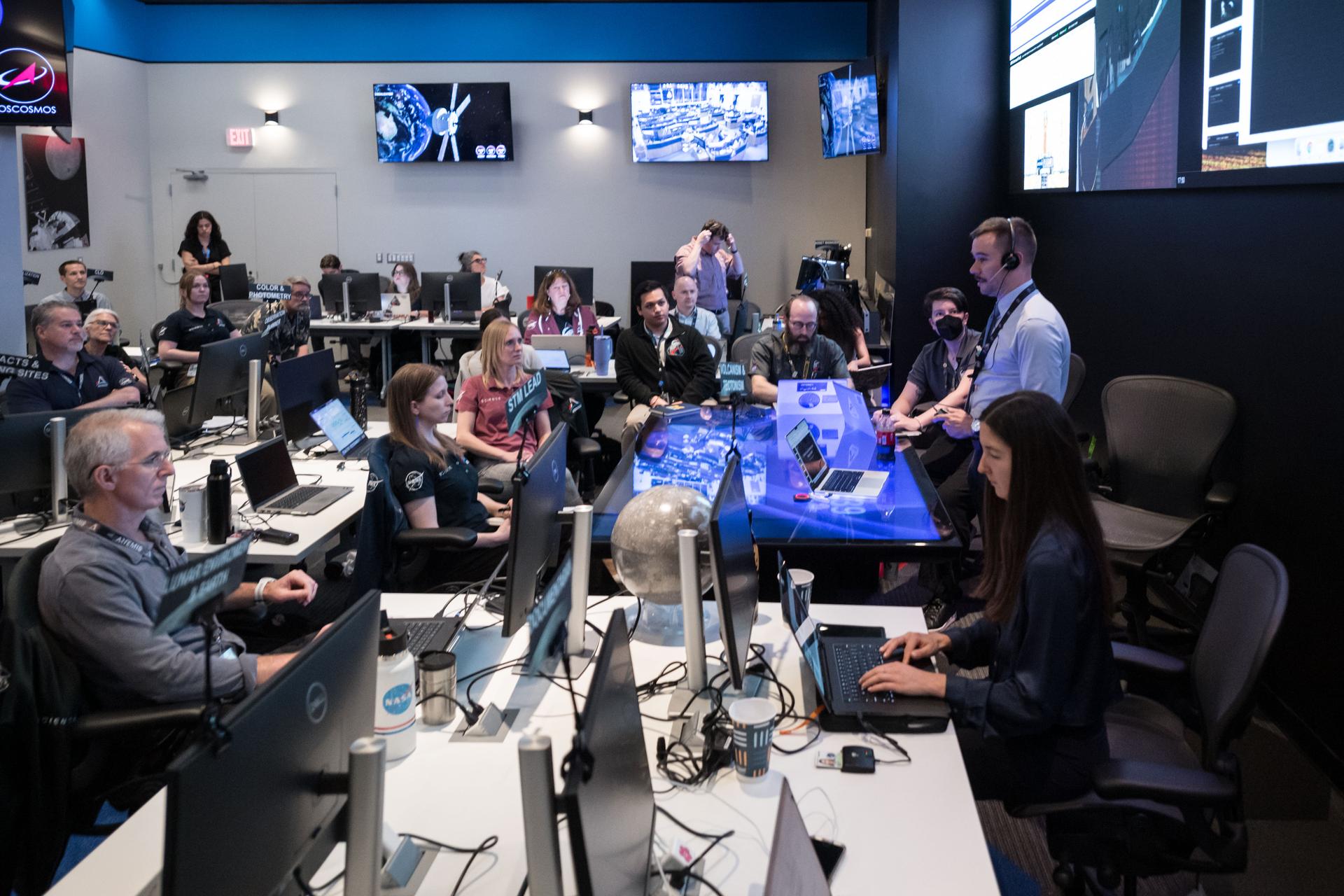
“We confirmed that we can achieve science through orbital observations and through integrating science into flight operations,” said Kelsey Young, NASA’s science lead for the Artemis II mission.
Human eyes are also remarkably good at sensing color gradients and brightness changes. “Right away, they started describing the green around Aristarchus plateau and different brown hues ,and these colors really help tell us nuances about the chemistry of lunar material,” Young said after the flyby.
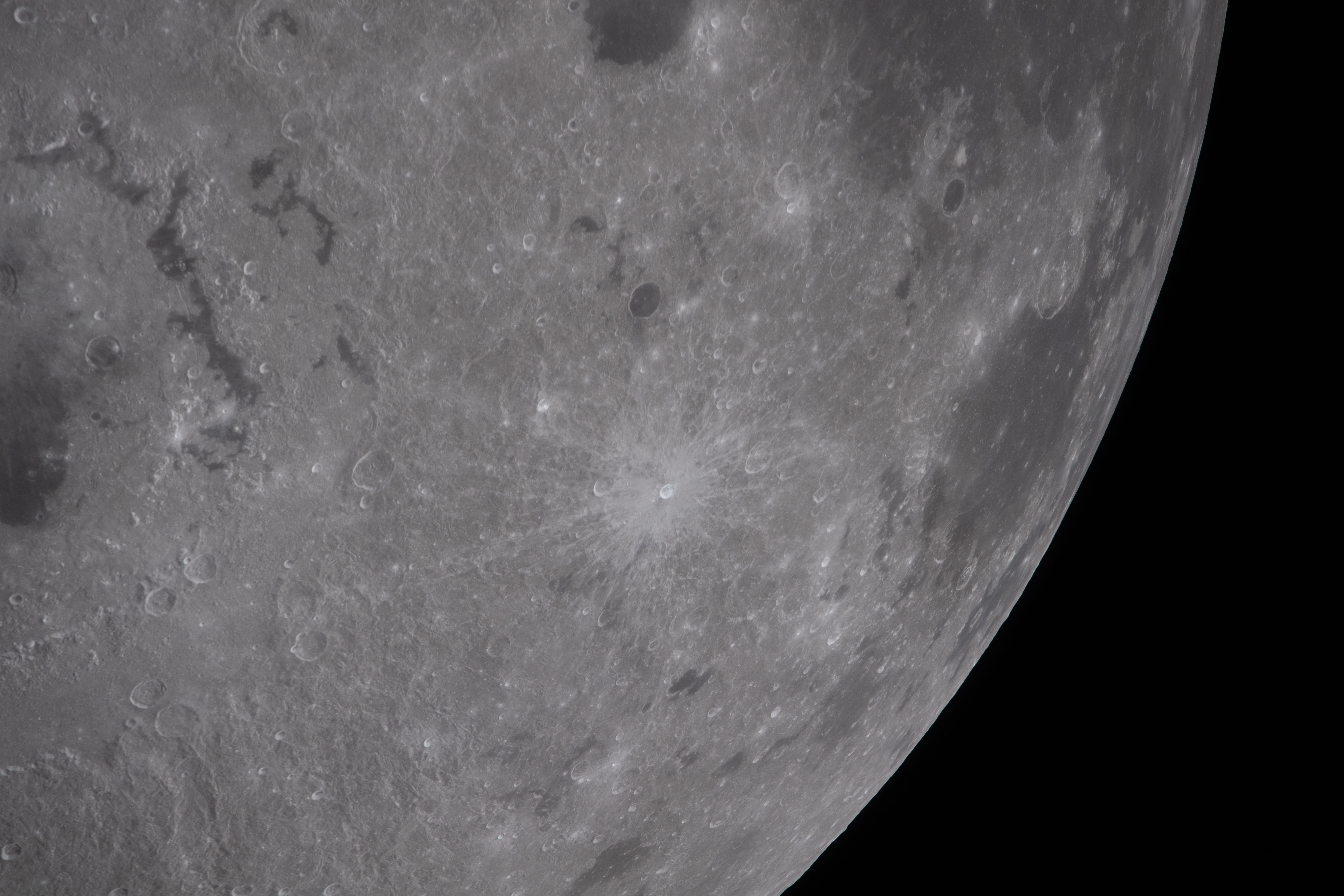
Glover, Artemis II’s pilot, noted his perception of the Moon’s three-dimensionality during the flyby: “You really get a sense that we’re flying over something with elevation and terrain.” The astronauts were able to glimpse craters, mountains, and ridges at different angles as the Orion capsule arced behind the Moon. “Every vantage point is different,” Young said.
Robots lead the way
Far below Artemis II, NASA’s Lunar Reconnaissance Orbiter was circling just 30 miles from the lunar surface. LRO is perhaps the most advanced robotic spacecraft ever sent to the Moon. Since 2009, LRO has imaged the Moon with a black-and-white camera capable of resolving extraordinary granular detail on the lunar surface. But the orbiter’s wide-angle multispectral camera is not as sharp. Each Nikon camera flown on Artemis II, when paired with a 400mm lens, could theoretically offer comparable resolution to LRO’s color imagery collected 100 times closer to the surface.
“Our plan is never going to be take better images than LRO. That’s impossible,” said Ariel Deutsch, a member of NASA’s Artemis II science team, before the mission’s launch. “Our goal is to instill and promote and maximize the human science that can be done on this mission as the crew views the moon and the lunar environment with human eyes for the first time in several decades.”
Scientists also asked the astronauts to report their perception of color and tone on the night side of the Moon, where only the muted hues of sunlight reflected off the Earth illuminates the surface.
“The only illumination source on the Moon will be Earthshine, which is a different spectrum,” Deutsch said in a presentation last month at the Lunar and Planetary Science Conference. “How does that affect the perception of color and tone?”
The crew members summarized their observations in periodic updates radioed down to Mission Control on Monday. They also recorded more detailed verbal descriptions onboard the spacecraft, and were tasked with making drawings and annotations to go along with their photographs. This data will come back to Earth when Orion returns Friday.
“We tell the crew that their verbal descriptions are actually going to be the monumental scientific dataset from this mission, and that’s because, as humans, the crew provides critical perceptual context that just can’t be replicated with robotic sensors,” Deutsch said. “The crew has perception and spatial awareness and they have the ability to react and to adapt to what they’re seeing in an instant.”
This quick perception allowed the astronauts to see several brief flashes of light, each lasting a fraction of a second, on the dark side of the Moon. The flashes occurred as tiny fragments of cosmic material, or micrometeoroids, impacted the lunar surface.
“It’s a pinprick of light,” Hansen said. “I would suspect there were a lot more of them … it is just a momentary flash, no color, about the size of a star, and it really only lasts milliseconds, a half a second at most.”
This was not surprising to Neal. “It’s a reminder that the surface is continually bombarded, and this is something that we’ve tried to monitor,” he said.
Lunar impact flashes are routinely visible through telescopes on Earth. Astronomers were watching the Moon as Artemis II made its close approach Monday, and if scientists can correlate their own observations with those from the astronauts, they can get a better handle on how many impacts are missed by ground-based telescopes. Constraining the number of impact events will be important as engineers design shielding for a future Moon base.
“Impact flashes are caused by micrometeoroid impacts hitting the Moon and they really help tell us about the dynamic lunar environment, which is of course also important when we think about future missions,” Young said.
Scouting for the future
Deep craters carved from the lunar crust by much larger, ancient impactors were also on the target list for the Artemis II astronauts. Some of the craters have prominent rays emanating out from their center. The rays consist of material excavated from the Moon’s deep underground during an asteroid or comet impact. The energy of the collision threw this material dozens or hundreds of miles from the impact site.
Subtle color changes along the rays might provide hints of where future lander missions, with or without crews, might investigate different eras of the Moon’s geologic history. One place on the Moon that stood out to the Artemis II astronauts was Ohm crater, a nearly 40-mile-wide basin on the lunar far side.
“It’s those kind of nuanced observations that could ultimately inform future landed missions, future crewed missions, to understand where can we go to maximize the scientific value,” Young said. “These ultimately get at chronology of the Solar System, at how the inner Solar System has evolved over time, which connects to the Moon being the witness plate for our planet and for the inner Solar System.”
Scientists believe the Moon formed about 4.5 billion years ago, just 65 million years after the Solar System itself came into being, when a giant proto-planet collided with the proto-Earth.
“The crew observing things like they did with Ohm, where they can say, ‘With my eyes, I can see this distinction,’ can ultimately tell us that future observations of high-priority landing sites could tell us something similar,” Young said. “This is how we start to really bite away at these really, really fundamental science questions of not just our understanding of the Moon but also … Earth.”
This is all well and good. But the Artemis program’s most lasting scientific discoveries will almost certainly only come when astronauts get down to the surface. That may happen in 2028, depending on how fast SpaceX and Blue Origin can move forward with their commercial landers.
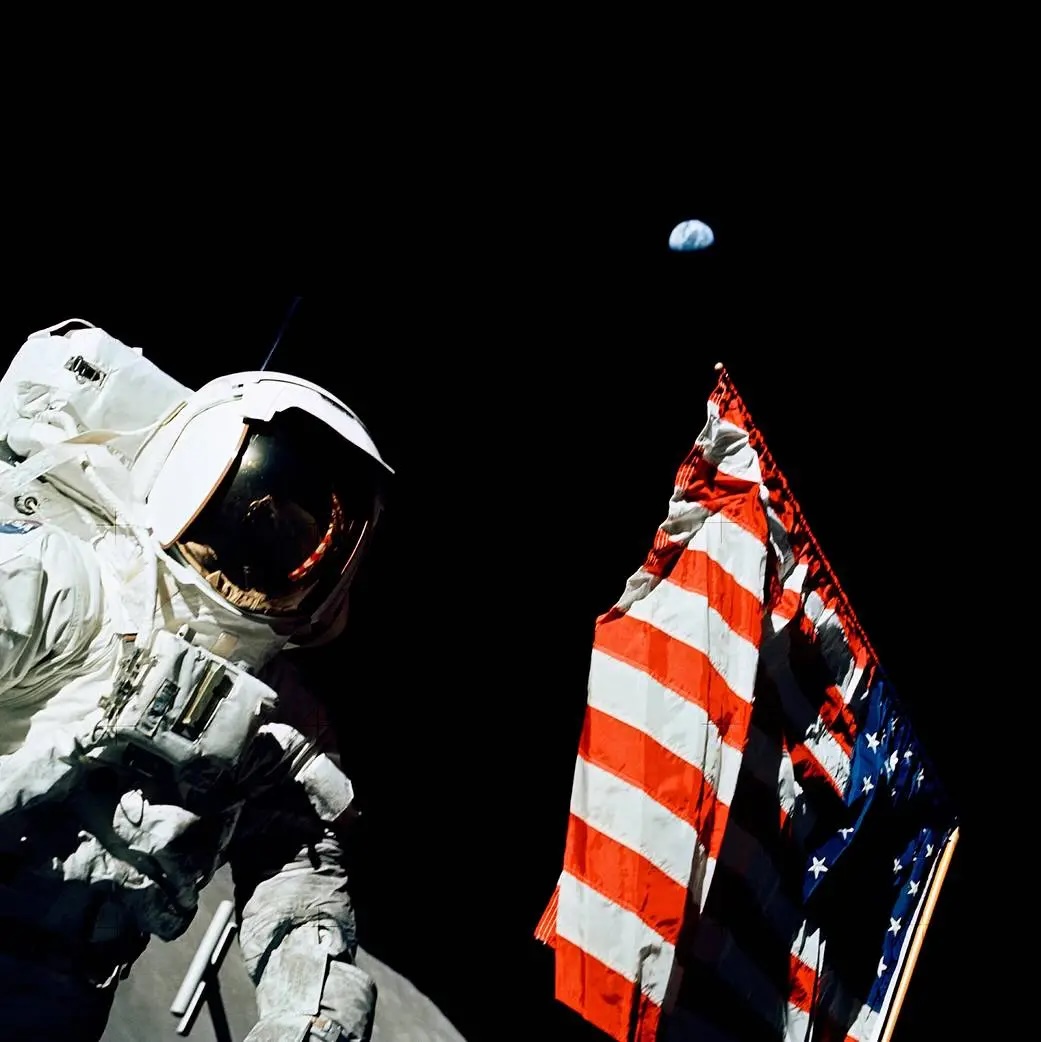
Neal said one of the big takeaways from Artemis II, apart from the performance of the Orion spacecraft itself, will be to teach NASA how to make geology part of human spaceflight again. The last Apollo landing mission in 1972 included astronaut Harrison “Jack” Schmitt, the only professional geologist to travel to the Moon.
“We have much more productive science return with humans in the picture at the Moon than we do with them out the picture,” Neal said. “And we see that with the Apollo missions, the landed missions.”
Observations from future missions orbiting closer to the Moon than Artemis II might also offer some scientific return. There wasn’t much point, Neal said, in adding spectrometers or other types of instruments to the Artemis II crew’s toolkit. They were simply too far away to make any unique spectral measurements not already available in NASA’s archive.
Still, the views returned from Artemis II inspire awe.
“The big thing for me was reliving when I was a kid growing up, watching my Mum praying every time they went behind the Moon,” Neal said. “I had a few flashbacks, but the big thing is listening to the excitement of science team. Kelsey Young, who was on the NASA broadcast, just couldn’t stop smiling.”
“You might think that, after looking at hundreds of images taken of the lunar surface, I would get sick of it,” Young said. “I have not, nor do I anticipate getting sick of it.”
“It was quite infectious,” Neal said. “The Earthrise image that they took is one for the ages.”