
Nuclear “non-proliferation” – preventing the spread of nuclear weapons beyond states that already have them – has been held up as the rationale for the US-Israeli war on Iran.
In his statement announcing the start of the operation on February 28, Donald Trump said: “we will ensure that Iran does not obtain a nuclear weapon. It’s a very simple message. They will never have a nuclear weapon.”
This highlights two lessons about the problems with non-proliferation logic as an approach to dealing with nuclear weapons. First, non-proliferation can be exploited to provide political cover for otherwise unpopular military aggression. And second, non-proliferation logic risks undermining itself by driving target states to acquire nuclear weapons.
Non-proliferation is globally popular. Currently, 190 states – including Iran – are party to the 1968 non-proliferation treaty (NPT). This enshrines into international law a regime to stop the spread of nuclear weapons.
All non-nuclear armed member states agree to take part in the treaty’s monitoring and verification regime. This aims to ensure they do not divert civilian nuclear technology and activity, like the production of fuel for power plants or isotopes for medical settings, to military ends.
The problem is that nuclear technology is, as US-based researcher Itty Abraham shows in his work, “ambivalent”. There is no physical boundary between civil and military uses. If a state can enrich uranium for nuclear fuel, it can do so for nuclear warheads.
Non-proliferation logic also assumes that any state with the ability to produce nuclear weapons will do so. This belief is known as “capacity determinism” and is debunked by the historical record.
If it was true, we could expect the Netherlands, Japan, Germany, Argentina and Brazil to have directed their enrichment capabilities into weapons. Taiwan, Libya, Sweden and Switzerland also would not have reversed their nuclear weapons programmes, and South Africa would not have voluntarily disarmed.
Exploiting non-proliferation
This brings us to the first lesson from the Iran war. Through a non-proliferation lens, it is possible to see any state with its own nuclear programme as a threat. This is particularly true for countries already seen as badly behaved by the international community.
Non-proliferation is widely seen as an “indisputable public good” that benefits every state in the world. It is therefore easy for the US to dress up its war of aggression against Iran, which is illegal under international law, as an act of global protection. It did the same in Iraq in 2003.
There is no reason for this to be limited to the US, either. Any of China, France, Russia or the UK – the other permanent members of the UN security council who are permitted to have nuclear weapons under the NPT – could do the same.
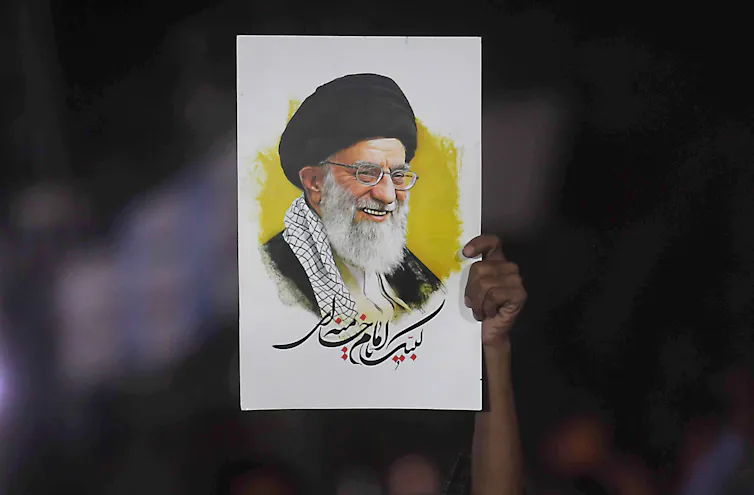
The second lesson is that non-proliferation logic tends to undermine itself. Iran’s supreme leader, Ali Khamenei, was killed by airstrikes early in the war. While he had pursued other bloodthirsty policies, Khamenei refused to authorise Iranian scientists and the military from restarting the country’s nuclear weapons programme that had stopped in 2003.
Iran was enriching uranium to somewhere around 60% purity. This is far above the 3% to 5% required to fuel nuclear power reactors, but below the 90% ideally required for a nuclear warhead – though it is close. It is also technically possible, albeit not optimal, to build a nuclear warhead with this level of enrichment.
In this way, Iran appears to have been deliberately playing with nuclear ambivalence. According to nuclear analyst Ludovica Castelli, Iran was demonstrating a range of values including “recognition, autonomy, sovereignty and political dignity” by touting its proximity to building a nuclear weapon without actually doing so.
Khamenei seems to have made a bet that achieving “nuclear threshold” status, where a state has the potential to develop nuclear weapons at short notice, would be enough to do this and to deter US or Israeli attacks. However, non-proliferation logic forces us to assume the worst.
So Iran has been punished as if it was pursuing nuclear weapons when, according to experts including Rafael Grossi, the director-general of the International Atomic Energy Agency, this does not appear to have been the case. Iran has borne all the costs of being a “proliferator”, while reaping none of the perceived security benefits of nuclear weapons.
Once the smoke clears, we should not be surprised when the regime – provided it survives – concludes that it has nothing left to lose from pursuing nuclear weapons in earnest. This war of non-proliferation risks achieving the exact opposite outcome, though this is not a foregone conclusion.
Nuclear deterrence
It is also possible that a third, dangerous lesson will be learned from this war: that nuclear weapons are valuable or even indispensable to the national security of non-superpower states. Ukraine, Venezuela and Iran have all now recently been attacked by nuclear-armed superpowers.
Other vulnerable states may well, not unreasonably, conclude that they too should obtain nuclear weapons to deter such threats. Similarly, the war has amplified calls for the UK and Europe more widely to expand their own nuclear arsenals to guarantee strategic independence from the US.
This is the wrong lesson for two reasons. First, any state embarking on a new nuclear weapons programme will make itself vulnerable to future wars of non-proliferation by adventurous superpowers before they have enough operational nuclear weapons to deter an attack.
And second, while nuclear weapons may provide a short- or medium-term mirage of “national security”, in the long-term they all but guarantee global disaster. Nuclear weapons cannot be controlled. One accident or error can spell armageddon.
The war in Iran should awaken us to this danger. It should not scare us into thinking that we must always live under the nuclear shadow. We urgently need to think about alternative security policies that do not entrench global nuclear danger and harm.
If this seems unrealistic, remember that some of the steepest historic reductions in nuclear stockpiles have been achieved straight after periods of extreme tension. The 1987 intermediate range nuclear forces treaty, signed between the US and Soviet Union towards the end of the cold war, is a good example.
Under its terms, the two states destroyed over 2,600 nuclear weapons. We have the capability to repeat and surpass these achievements: nuclear fatalism is an indefensible response.