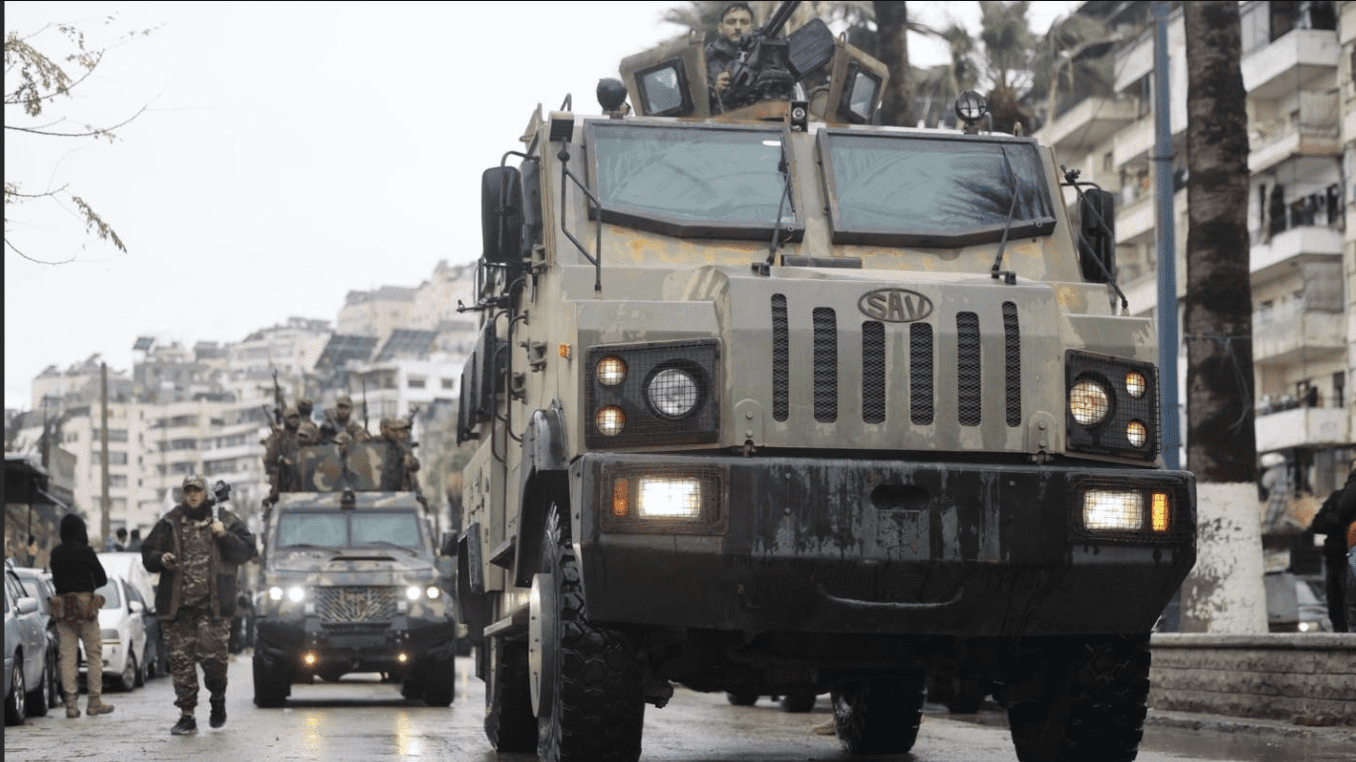
[DAMASCUS] Border areas in Syria with Lebanon and Iraq have recently witnessed the deployment of significant reinforcements from northwestern Syria toward strategic border positions, as part of security measures believed to aim to strengthen field control and enhance readiness along the border strip.
Civilian sources told The Media Line that military convoys consisting of dozens of armored vehicles and heavy machinery were seen moving from areas in the Idlib countryside, specifically from the Jabal Zawiya and Jisr ash-Shughur axes, heading southwest toward areas close to the Syrian-Lebanese border. The convoys reportedly used routes passing through Homs governorate, particularly the Al-Qusayr area, which is considered one of the closest and most sensitive points along this border axis.
Available information indicates that the reinforcements included units from the Syrian Ministry of Defense, along with personnel redeployed under a new plan to strengthen control over unofficial crossings and monitor cross-border movement amid ongoing security challenges.
At the same time, additional reinforcements were seen moving toward the Syrian-Iraqi border, where extra units were deployed at key monitoring points along the eastern frontier.
These movements come at a time when local sources report security concerns related to infiltration attempts or sporadic attacks that may be carried out across the border, including the use of drones in some previous incidents attributed to areas outside Syrian territory.
Unconfirmed media reports stated that Syrian authorities carried out a security operation in the capital resulting in the arrest of a cell believed to be affiliated with Hezbollah. According to these reports, the operation followed intelligence surveillance and targeted individuals suspected of involvement in illegal activities inside Syrian territory. Hezbollah has not issued any confirmation regarding this information.
These developments are particularly significant given the nature of Syria’s border regions, which span vast areas and feature complex terrain, making security and military control a persistent challenge for field authorities. These regions have also long been exposed to the activity of armed groups or smuggling networks operating across borders, prompting repeated efforts to enhance military presence.
Observers believe these steps may be part of a broader redeployment process of Syrian forces aimed at strengthening effective control on the ground and reorganizing military presence in line with evolving security developments inside the country and along its borders. It is also believed that these movements may be linked to wider efforts to close security gaps and prevent potential infiltration attempts that could threaten stability in border areas.
Analysts suggest that the intensified military deployment in these regions also reflects the sensitivity of the security situation, particularly amid ongoing tensions with neighboring countries, with Syria’s borders remaining among the most complex security zones in the region.
Local sources further confirm that the military movements were not officially announced in detail but were visibly observed through convoys moving in recent days, indicating a structured deployment plan covering multiple border axes simultaneously.
As forces continue to reinforce their positions, the declared and undeclared objectives of these movements remain under observation, especially amid ongoing changes on the ground and the possibility that they are linked to security developments or a restructuring of military deployment in the country.
Overall, these military movements reflect a clear trend toward tightening control over the Syrian borders with Lebanon and Iraq, in an effort to enhance security stability and prevent any breaches that could affect the internal situation, amid a regional environment that remains tense and unstable.