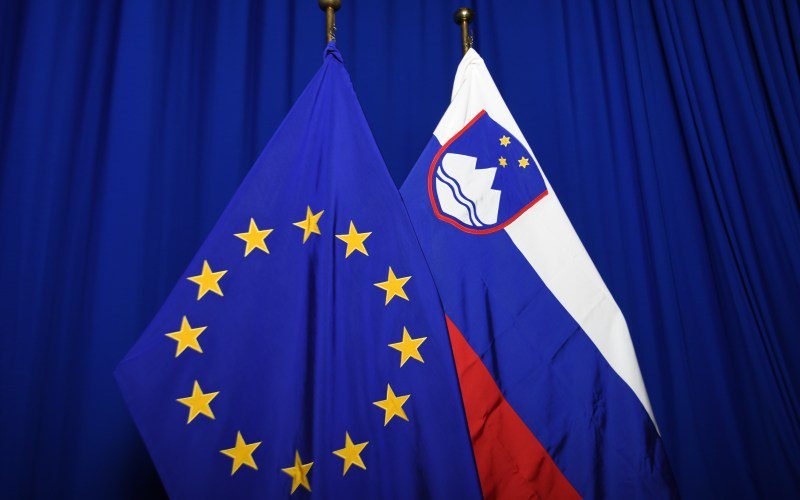
Slovenia’s political parties looked set for urgent coalition talks on Monday after no clear winner emerged from an election that could sway the Alpine country’s domestic and foreign agenda.
Prime Minister Robert Golob’s liberal Freedom Movement (GS) party was in a near dead heat with the right-leaning Slovenian Democratic Party (SDS) led by populist ex-prime minister Janez Jansa with nearly all votes counted from Sunday’s poll.
As it stands, neither will secure the 46 seats needed for a majority in the 90‑seat parliament, making smaller parties that cross the 4% threshold potential kingmakers.
Some analysts feared political instability after the close vote. “In the end of the day, we will very likely see a new government that will not be stable,” said political analyst Miha Kovac.
In an address early on Monday Golob said his party is ready to start coalition talks to implement the GS election program, which focuses on improvements in public health, education and the economy.
“For all these measures, we need more than just a weak majority,” Golob said, adding he would invite “all democratic parties” in parliament for discussions.
Based on 99.85% of ballots counted, GS won 29 seats, trailed tightly by SDS with 28 seats. Along with smaller parties that have typically supported them, GS would have 40 MPs while SDS would have 43 seats.
Jansa, who was running for a fourth term as premier, said that SDS will wait for the final results before starting coalition talks, hoping that a narrow margin may emerge.
Jansa, an admirer of U.S. President Donald Trump and an ally of Hungarian nationalist Prime Minister Viktor Orban, accused the election commission of incorrect counting, saying his monitoring team had noticed a discrepancy leaving the SDS 50,000 votes short. He did not provide evidence for the claim.
Slovenia, a European Union member with a population of around 2 million people, gained independence from a crumbling Yugoslavia in 1991. A lack of conflict and a strong industrial base has helped the country fare better than many other Balkan states since.
Golob, who came to power in 2022, aligned Slovenian foreign policy with European countries while Jansa is expected to shift the country’s international alignment.
Under Golob, the country has pursued pro-European policies focused on social reforms, while Jansa wants to introduce tax breaks for businesses and cut funding for NGOs, welfare and media.
Source: Reuters




 party was in a near dead heat with the right-leaning Slovenian Democratic Party (SDS) led by populist ex-prime…)