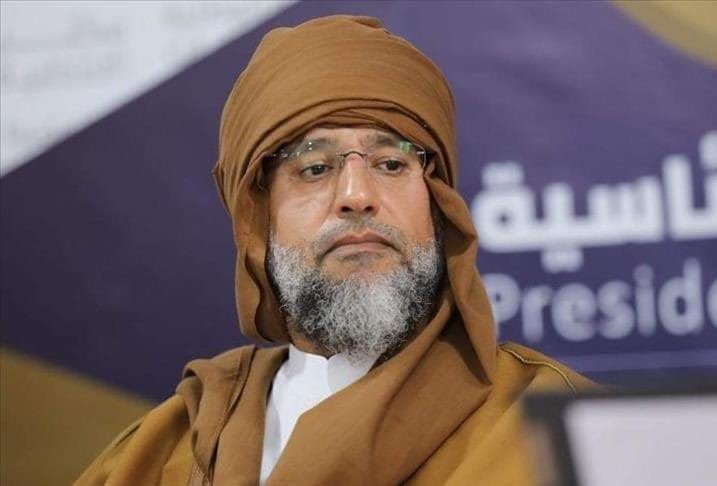
Saif al-Islam Gaddafi, the second son of Libya’s former ruler Muammar Gaddafi, has been killed at the age of 53 in an attack at his residence in Zintan, western Libya. The assassination, confirmed by his lawyer and political team, was reportedly carried out by a four-man commando unit. While some family members claim he died near the Algerian border, most sources agree the fatal incident occurred in Zintan. The exact motives and perpetrators remain unclear, with Libyan authorities yet to comment publicly.
Saif al-Islam was long considered his father’s heir apparent and the most influential figure in Libya after Muammar Gaddafi, who ruled the country for over four decades until his overthrow and death in 2011. Educated at the London School of Economics, Saif al-Islam played a pivotal role in Libya’s rapprochement with the West, leading negotiations that resulted in the abandonment of the country’s nuclear weapons programme and the lifting of international sanctions. He cultivated an image as a reformer, though this reputation collapsed during the 2011 uprising, when he supported the brutal crackdown on anti-government protests.
Following the fall of Tripoli, Saif al-Islam was captured while attempting to flee and spent nearly six years imprisoned by a militia in Zintan. He was wanted by the International Criminal Court for alleged crimes against humanity and was sentenced to death in absentia by a Tripoli court in 2015. However, he was released under an amnesty law in 2017 and later re-emerged in Libyan politics, announcing his candidacy for the presidency in 2021, though elections were postponed indefinitely. Libya remains divided between rival governments and militias, with Saif al-Islam’s death likely to impact the country’s fragile political landscape.
During his father’s rule, Saif al-Islam shaped policy and led high-profile diplomatic missions, including negotiations for Libya’s disarmament and compensation for victims of the Lockerbie bombing. Despite never holding an official government post, he was often described as Libya’s de facto prime minister. His legacy is marked by both reformist ambitions and a controversial role in suppressing dissent, leaving a complex imprint on Libya’s history.