It’s a regrettable reality that there is never enough time to cover all the interesting scientific stories we come across. So every month, we highlight a handful of the best stories that nearly slipped through the cracks. March’s list includes puzzle-solving raccoons; the physics of folding a crepe; the rediscovery of a lost page from an Archimedes manuscript; and the 2026 winner of the annual Dance Your PhD contest, among other highlights.
Puzzle-solving raccoons
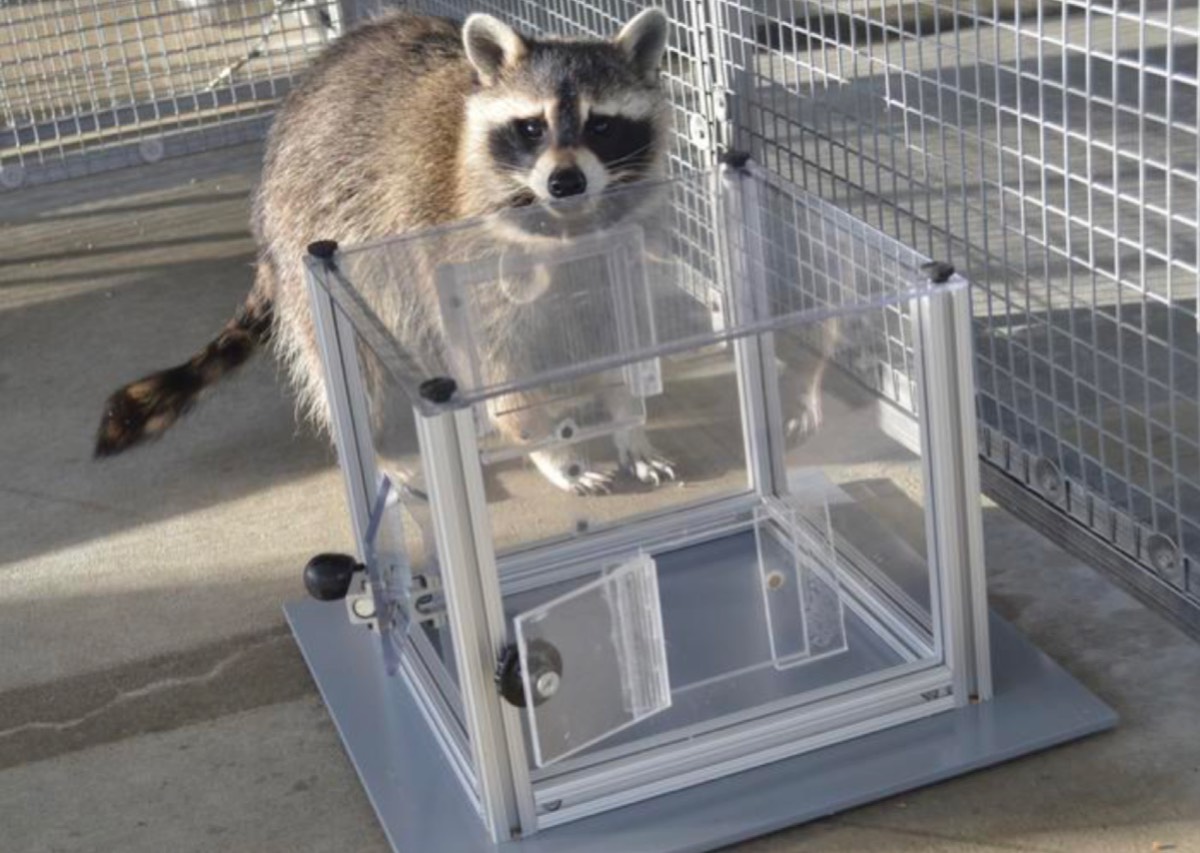
Raccoons (aka “trash pandas”) are notorious pests in urban and suburban settings because of their penchant for rooting around trash and compost bins; even latches and other safeguards can’t entirely keep them at bay. It might be more than food searching behavior, scientists at the University of British Columbia concluded. According to their paper published in the journal Animal Behavior, raccoons are not only nimble and dextrous with their paws, they also excel at solving puzzles, which might be why they thrive so well in human-centric environments.
The team tested captive raccoons by placing a tasty marshmallow in a transparent puzzle box, outfitted with latches, sliding doors, and knobs. There were nine separate ways to retrieve the marshmallow, some easy, some medium difficulty, and some hard. Each raccoon engaged in several 20-minute trials so the team could observe their behavior.
Even after retrieving the marshmallow and eating it, the raccoons still kept trying to open the other mechanisms. They were more likely to explore multiple openings when the solution was easy and tended to stick with known easier solutions when the puzzle was hard. But even at the most difficult level, they still kept exploring. The authors interpreted this as a form of flexible problem-solving, with the raccoons balancing their curiosity and effort against potential risks. The team concluded that this behavior is better described as “information foraging.”
Animal Behavior, 2026. DOI: 10.1016/j.anbehav.2026.123491 (About DOIs).
Human sperm gets lost in space
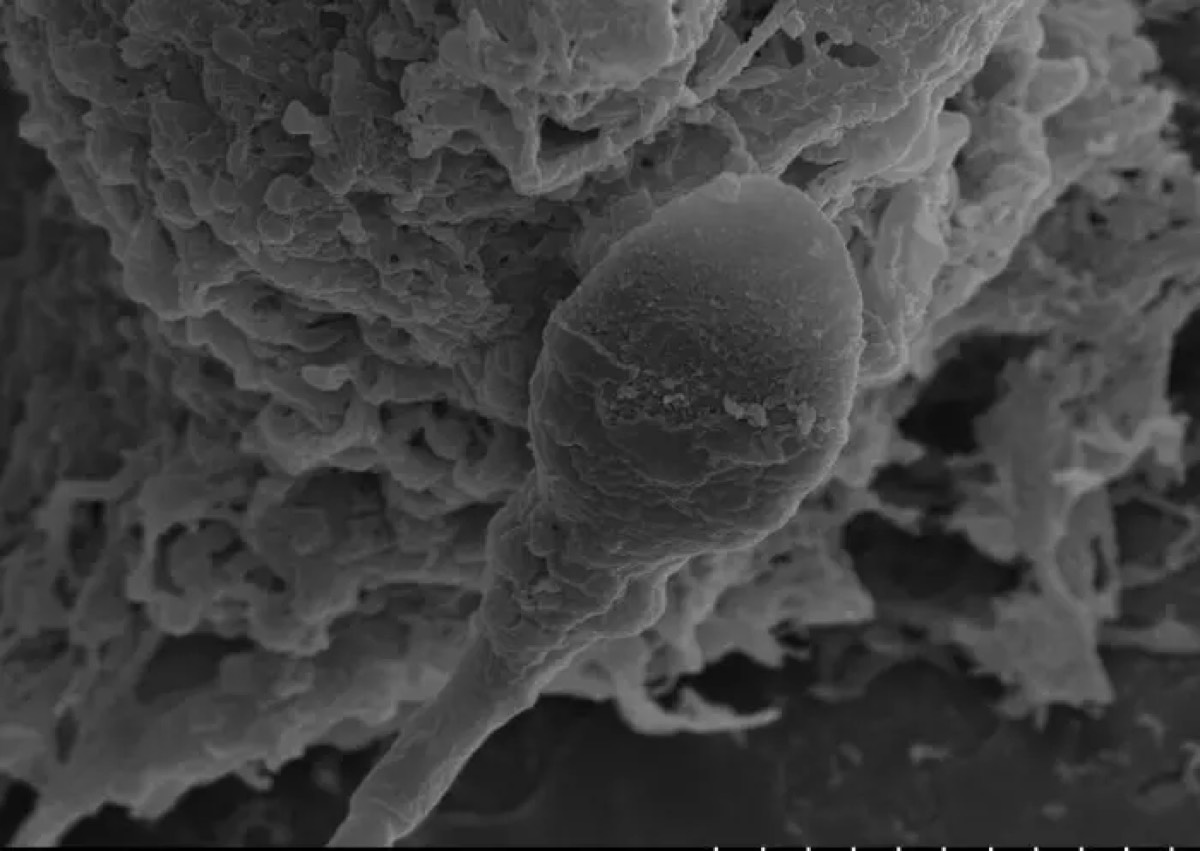
When thoughts turn to the future of space exploration, particularly the potential for extended trips in microgravity, one can’t help but wonder how humans might breed in space. Scientists have tested mice having sex (and making babies) in space, as well as geckos, but what about the potential for human reproduction? Researchers at Adelaide University in Australia discovered that one major challenge might be getting sperm to successfully navigate to an egg in space, according to a paper published in the journal Communications Biology.
The authors took sperm samples from humans, mice, and pigs and put them through a special machine that simulates zero gravity conditions, essentially flipping the sperm cells to disorient them, and then pushing them through a maze that simulates the female reproductive tract. The result: there was a significant decrease in the number of sperm that were able to find their way to the eggs under those conditions, and that decrease wasn’t due to any change in motility. Exposure to microgravity also resulted in a 30 percent reduction in the number of fertilized mouse eggs, suggesting that microgravity might impact embryo development as well.
The good news is that adding a bit of progesterone can help the befuddled sperm overcome the negative effects of microgravity. The next phase will explore how gravity on the Moon, Mars, and artificial gravity systems affect sperms’ sense of direction and early embryo development.
Communications Biology, 2026. DOI: 10.1038/s42003-026-09734-4.
Lost Archimedes page is found
Thanks to scientific and technological advances, archaeologists and conservationists have many new cutting-edge tools for the study of ancient manuscripts, such as revealing older text underneath surface writing. Multispectral imaging, for instance, showed the first known Greek remnants of Hipparchus’ star catalog in 2022, hidden beneath Christian texts on medieval parchment, and also revealed hidden text on four Dead Sea Scroll fragments previously believed to be blank. High-energy X-rays have been used to analyze ancient Egyptian papyri and the badly charred Herculaneum scrolls that survived the 79 CE eruption of Mount Vesuvius.
Scientists have also applied these methods to study the Archimedes palimpsest, a 13th-century prayer-book written on reused parchment. The original text is two mathematical treatises by Archimedes that have not survived anywhere else. Now housed at Baltimore’s Walters Art Museum, all pages of the Archimedes palimpsest were photographed in 1906 by Danish scholar Johan Ludvig Heiberg, establishing a historical record of its contents kept at the Royal Danish Library.
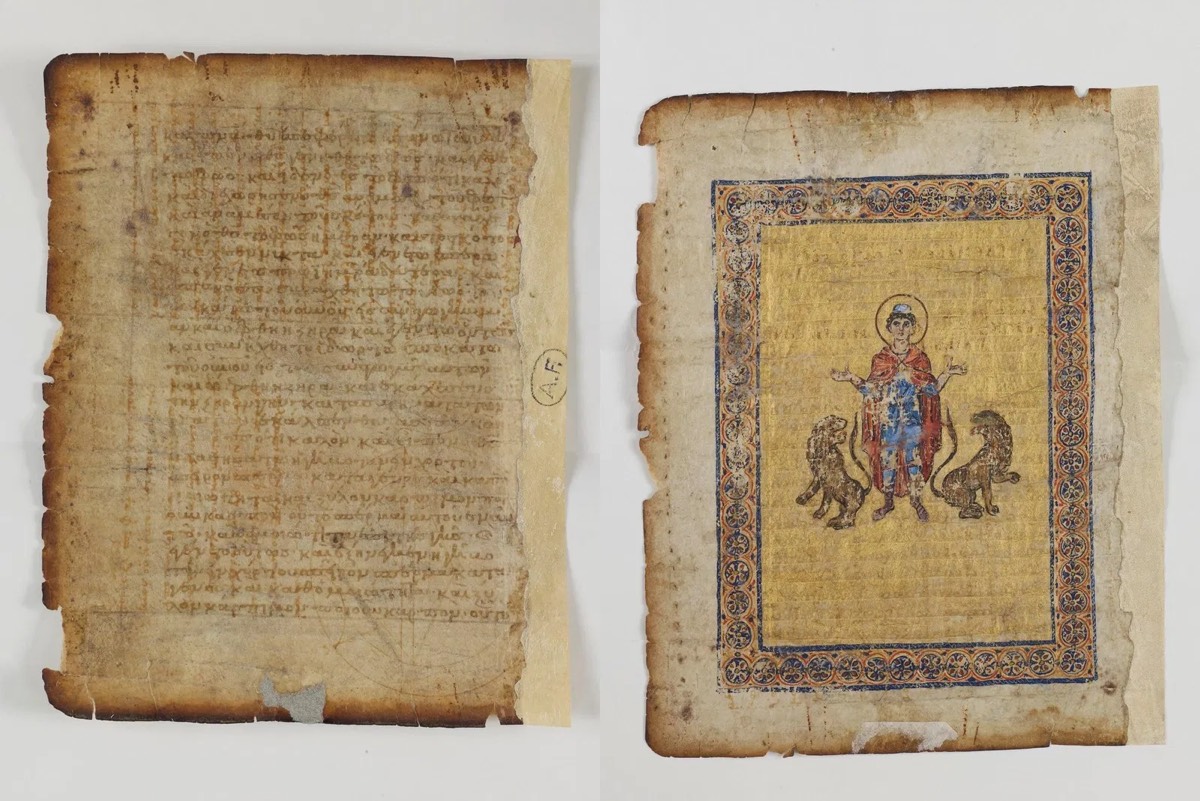
But since Heiberg took those photographs, three of the pages went missing. One of those pages, leaf 123, has now been found at the Musée des Beaux-Arts in Blois, France. One side contains Greek text and geometric diagrams, overwritten by medieval prayers; the other is an illumination showing the prophet Daniel surrounded by lions; there is underlying, earlier and unreadable text, and scientists plan to study the leaf more closely, using multispectral and X-ray imaging methods in hopes of recovering that text.
Ravens remember where wolves kill
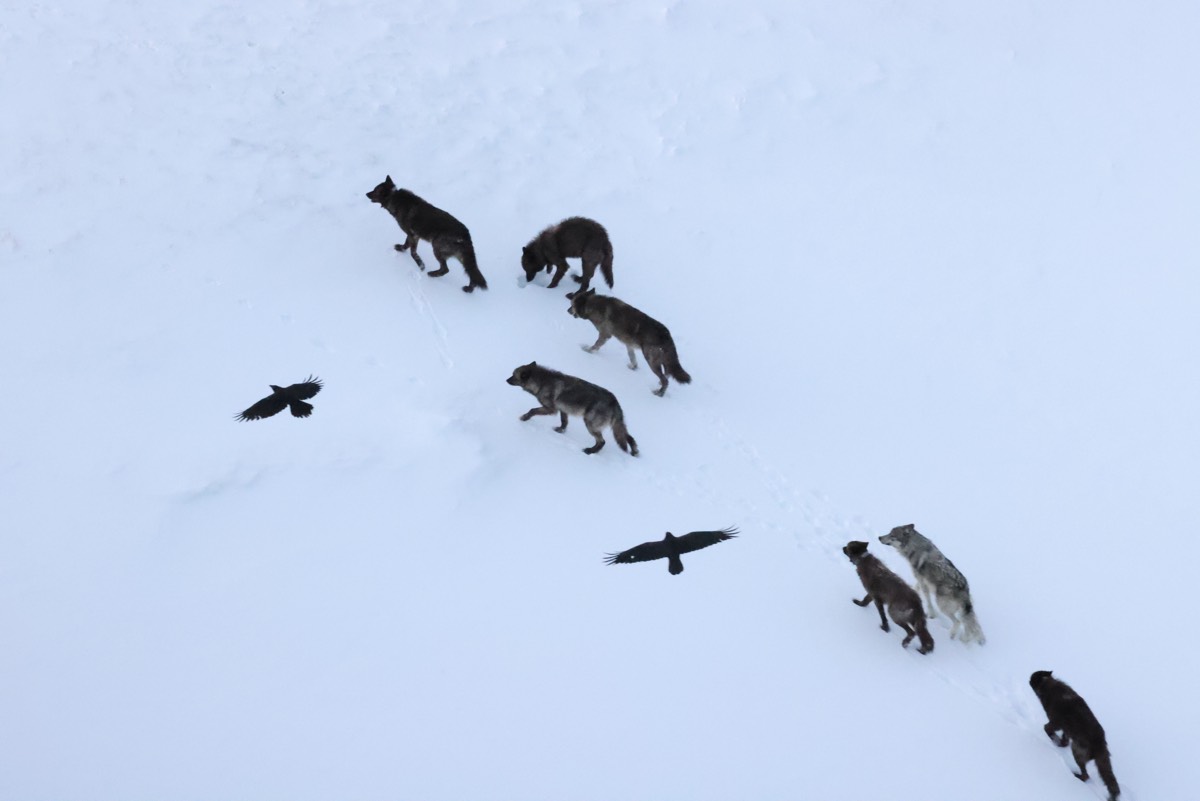
Ravens are natural scavengers, showing up regularly at sites where wolf packs have killed and eaten prey. Scientists thought the ravens followed the wolves by air, focusing on wolf tracks and the sound of howls, thereby ensuring they were close by whenever there was a fresh kill ripe for scavenging. But a paper published in the journal Science reported that ravens might actually remember sites of prior kills and return to them regularly—and that kind of spatial memory plays a much greater role in their scavenging strategy than previously known.
Biologist Dan Stahler, who works at Yellowstone National Park, had noticed the ravens appearing to seek out the company of wolves, which had been reintroduced into the area in the mid 1990s, monitored with tracking collars. Tracking the ravens was a bit more challenging. Stahler’s team managed to trap 69 ravens by disguising the traps with rubbish and using fast food as bait and then attached tiny GPS trackers to the trapped ravens before releasing them back into the wild.
Stahler et al. collected tracking data on both wolves and ravens for two and a half years, noting locations where wolves killed their prey. There was just one case where a raven followed a wolf for more than 1 kilometer or longer than an hour. Analyzing the tracking data, Stahler realized that the ravens were regularly revisiting locations where wolves often killed rather than following them for longer periods, suggesting they were learning and remembering those locations for future reference. Ravens do follow wolves over short distances, using short-range cues, but it’s not the only tool in their scavenger’s toolbox.
Science, 2026. DOI: 10.1126/science.adz9467.
The physics of folding a crepe
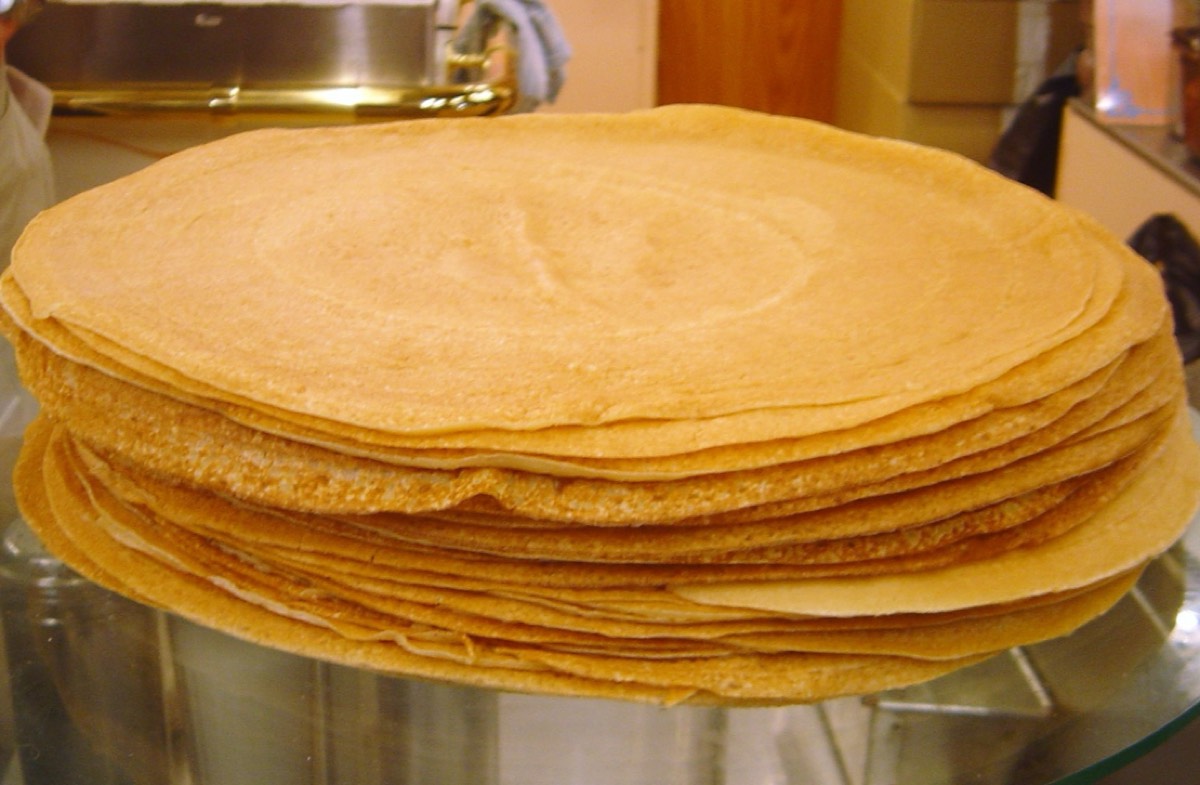
Physicists are undeniable gourmands, applying their scientific expertise to all manner of food and drink: the perfect cacio e pepe, al dente spaghetti, or wok-tossed fried rice, for instance, not to mention the underlying physics of Oreos, beer foam, or champagne, or brewing the perfect espresso. Physicist Tom Marzin of Cornell University decided to explore a crucial question of crepes, a favorite dish from his native France. Specifically, he developed a formula to determine how many times one can fold this ultra-thin pancake without it flipping back over, reporting his findings at a meeting of the American Physical Society in Denver.
The best part is that Marzin recruited his own mother to help, since his own crepe-making skills weren’t quite good enough. “I didn’t control the thickness well,” he told New Scientist. Granted, his mother had to use commercial crepes made by a machine to get more uniform thickness, but she gamely invested in calipers and rulers and performed a series of experiments per Marzin’s instructions—letting one end stick to a tabletop while the other hung over the edge, then measuring how much it sagged. Marzin himself conducted similar experiments with plastic discs and store-bought tortillas.
According to Marzin, you just need one number: the elasto-gravity length, a combination of a material’s density, stiffness, and gravitational force. In the case of crepes, it determines how much of the area of a folded sheet ends up being looped over, which in turn determines if there’s enough flat area left over for another fold. So if a crepe was 26 centimeters in diameter and 0.9 millimeters thick, it could be folded as many as four times. By comparison, a 1.5 mm-thick tortilla of the same diameter could only fold twice, because the elasto-gravity length is 3.4 times larger.
Down to the last drop
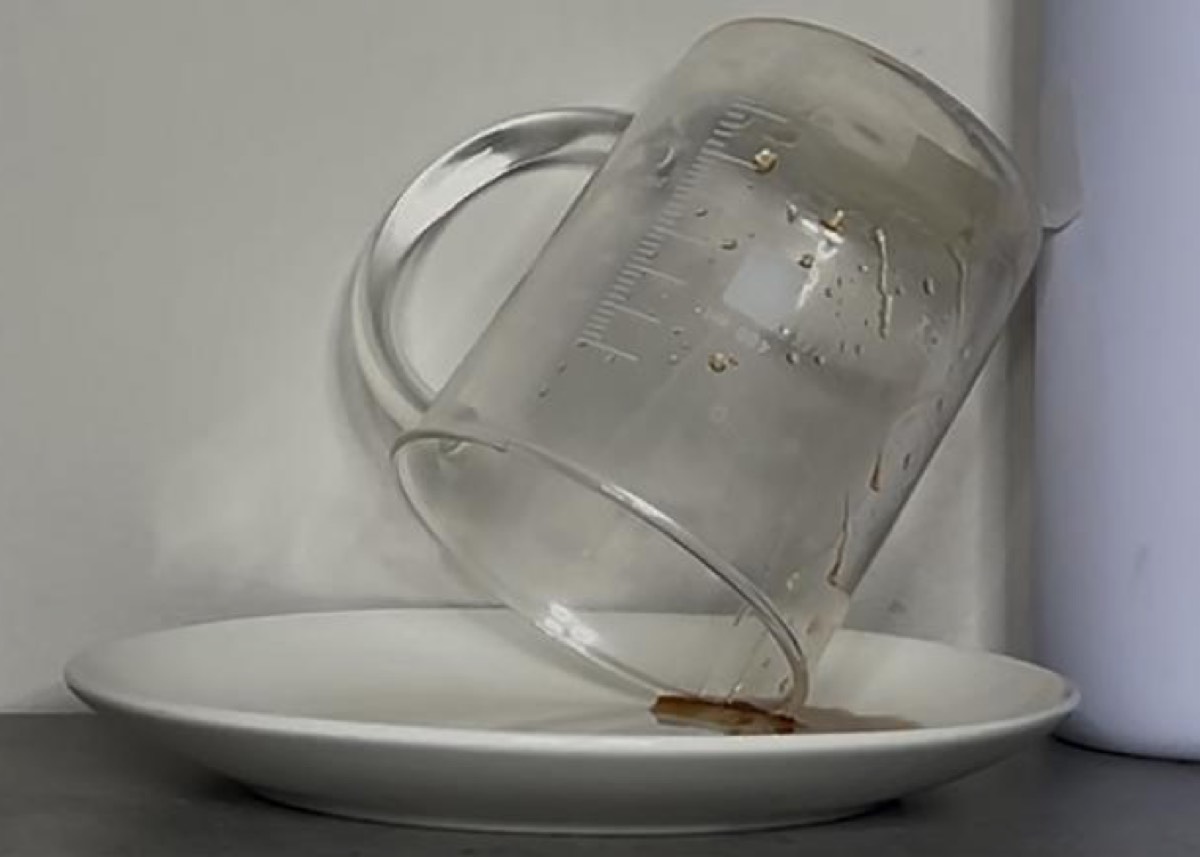
Speaking of kitchen physics, Jay Tang of Brown University decided to take a novel approach to teaching his graduate student, Thomas Dutta, about the fluid dynamics of thin layers of fluid moving across a surface. Tang’s lab studies how bacteria swarms and other single-celled organisms expand on moist surfaces, and since the underlying physics is the same as trying to get the last few drops of a viscous liquid out of a container, a project exploring those dynamics seemed perfect. They described the results in a paper published in the journal Physics of Fluids.
Dutta first made some theoretical predictions about how long it would take fluids with differing viscosities to flow along a tilted surface, using the classic Navier-Stokes equations central to fluid dynamics. Then he ran actual experiments, letting different kitchen fluids flow down a plate tilted at a 45-degree angle, weighing the liquid as it flowed off the plate so he’d know when all but 10 percent had left the container. Water reached that point in just a few seconds, while cold maple syrup took several hours.
Dutta also used computer simulations to study a similar conundrum proposed by Tang: how to remove residual water after cleaning a cast-iron wok. (Those who have used a cast-iron wok will understand that drying it with a cloth could remove the all-important oil seasoning that keeps food from sticking, while letting the water slowly evaporate can produce rust.) Tang’s solution had been to wait a few minutes and let residual water gather at the center before emptying the wok again. Dutta’s simulations showed that Tang should be waiting a good 15 minutes instead. Who says you can’t learn something new from a simple training project?
Physics of Fluids, 2026. DOI: 10.1063/5.0308586.
Dance Your PhD 2026 Winner
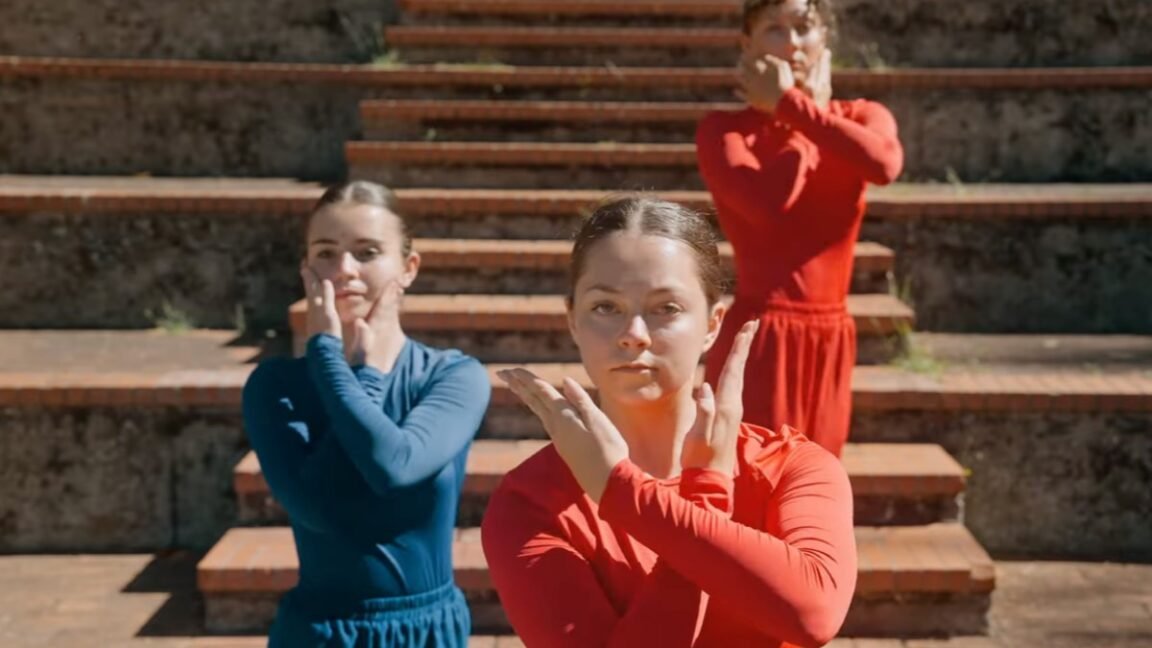
It’s time again to honor the winners of the annual Dance Your PhD contest, where eager young scientists attempt to convey the concepts of their doctoral theses through dance. This year’s overall winner is physicist Sofia Pappa, a graduate student at the Sant’Anna School of Advanced Studies in Italy. There are four broad categories: physics, chemistry, biology, and social science, with a fairly liberal interpretation of what topics fall under each. All category winners receive $750.
Pappa won the physics category and, as the overall champion, will receive an additional $2,750. Her video (embedded above) featured a dance representing the piezoelectric effect, with “dancers dressed in red or blue to represent positive and negative charges, respectively, with twists and turns reflecting the differences between crystalline and semicrystalline materials.”
As we’ve reported previously, the Dance Your PhD contest was established in 2008 by science journalist John Bohannon, who is now a data scientist at South Park Commons. Bohannon told Slate in 2011 that he came up with the idea while trying to figure out how to get a group of stressed-out PhD students, who were in the middle of defending their theses, to let off a little steam. So he put together a dance party at Austria’s Institute of Molecular Biotechnology, including a contest to see which candidate could best explain their thesis topics through interpretive dance. The contest has continued ever since.