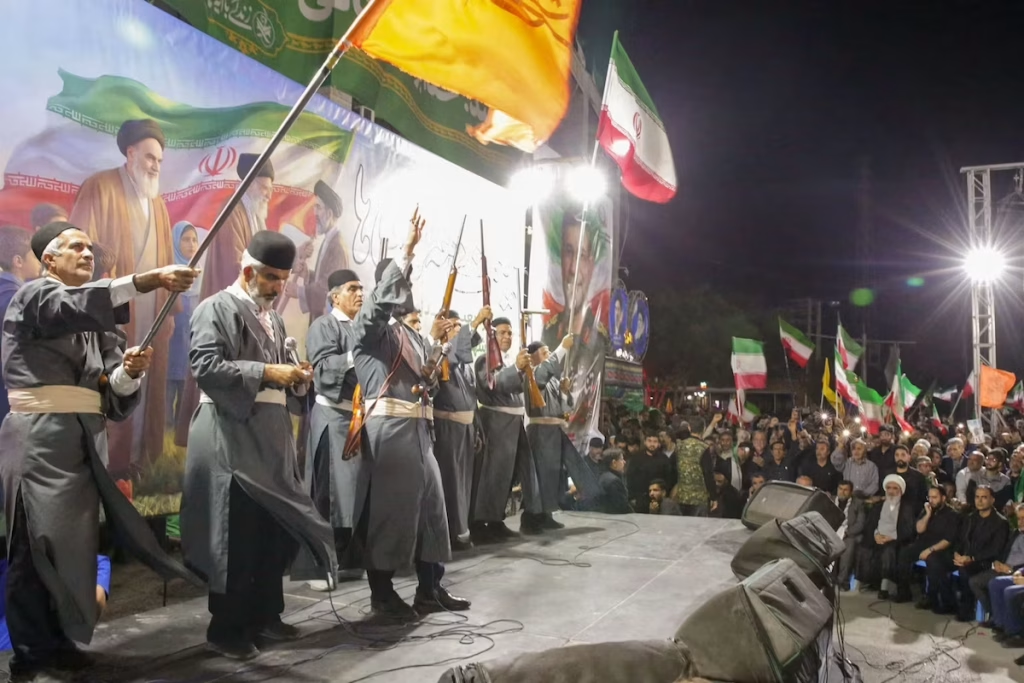
Pakistan’s prime minister, Shehbaz Sharif, announced that a two-week ceasefire had been agreed between the US and Iran in the early hours of April 8. Delegates from both sides are expected to attend further talks in the Pakistani capital of Islamabad on Friday.
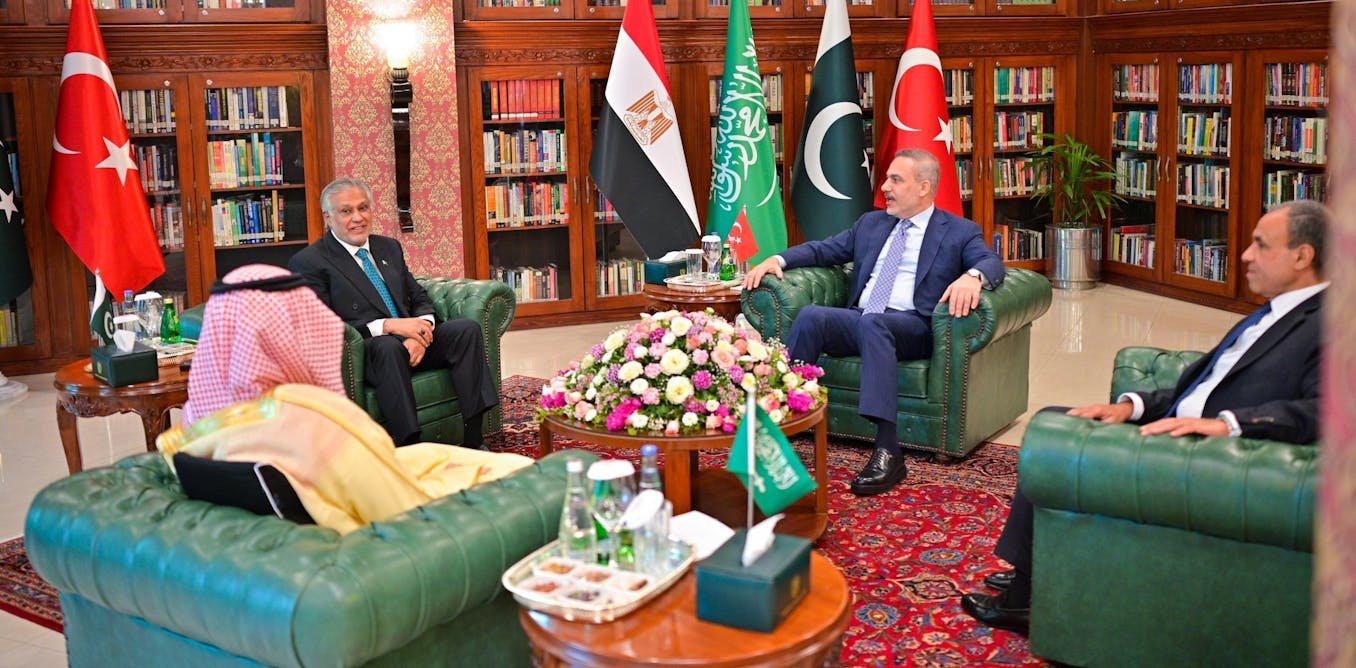
This comes less than two weeks after Pakistan hosted talks with Saudi Arabia, Egypt and Turkey in which the four countries called for an end to hostilities in the Gulf. The meeting established the quartet as the primary negotiating channel between Tehran and Washington, and may signal the beginning of a new regional order designed to curb Israeli and Iranian dominance after the war.
Even before the war began in late February, Israel and Iran were both isolated in the region. There is no chance of any rapprochement between Israel and Saudi Arabia, which was the original goal of the 2020 Abraham accords. These accords sought to normalise relations between Israel and other countries in the Middle East.
The United Arab Emirates and Bahrain signed agreements with Israel as part of the accords. But the Saudis have long said they will not normalise ties with Israel before the establishment of a Palestinian state, which was ruled out by the Israeli parliament in a 2024 vote. Reports suggest that Saudi Arabia now wants to replace Israel with Syria as the transit country for a fiber-optic cable connecting the kingdom to Greece.
Turkey also halted its relationship with Israel in 2024 over the conflict in Gaza. And relations between Israel and Qatar soured in September 2025 after an Israeli strike on Hamas leaders in Doha, which drew unanimous condemnation from the UN security council.
Iran’s only main allies are Russia and, to a much lesser extent, China and the Houthi rebel group in Yemen. Since the conflict with the US and Israel began, China has distanced itself from Iran. The Houthis recently became involved in the war in support of Iran, but they have been weakened by Israeli attacks in recent years.
The solid relationship between Qatar and Iran has been severed after Iranian missiles struck the country’s main gas facility, Ras Laffan, on March 18. And Iran’s partial detente with Saudi Arabia, which was brokered by China in 2023 after years of hostility, has now been destroyed following Iranian attacks on Saudi energy facilities.
It is against this backdrop, in which both Iran and Israel are considered regional pariahs, that Pakistan, Saudi Arabia, Turkey and Egypt have ramped up their efforts to secure stability in the Middle East.
A new order?
These four countries share some common areas of interest that help explain their desire to reshape the region. They all have political and economic ties with the US and are members of Donald Trump’s Board of Peace. Established in 2026, the board aims to tackle global conflicts and achieve lasting peace and reconstruction in Gaza.
Each country also brings important contributions to their burgeoning alliance. Pakistan possesses nuclear weapons, Saudi Arabia has the world’s second-largest oil reserves, Egypt controls access to the vital Suez canal waterway and Turkey is a member of the Nato alliance. All have fairly advanced defence industries and a combined population of 500 million people. Taken together, they represent the most politically and militarily influential Muslim-majority countries in the world.
But these four nations are not necessarily natural allies, and their relationships have experienced turbulence over the years. Egypt’s relationship with Saudi Arabia, for example, has often been described as a “difficult marriage”. Egypt was once the driver of pan-Arab nationalism, a movement that promotes a secular and unified Arab political identity.
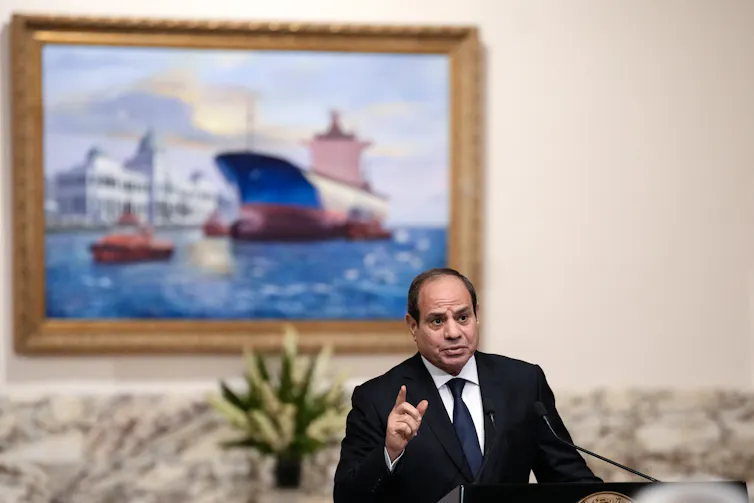
The Saudi kingdom has historically viewed this movement as a threat. But since Abdel Fattah el-Sisi came to power as Egypt’s president in 2014, their differences have been overcome. Sisi offered political and military support to the Saudi operation against the Houthis in 2015, with Egypt and Saudi Arabia subsequently deepening their defence ties.
Particularly under the leadership of Recep Tayyip Erdoğan, Turkey has positioned itself as a regional leader and problem solver. But Turkey, too, has endured periods of frosty relations with other regional powers. Ankara’s relations with Cairo deteriorated sharply after the Egyptian president, Mohammed Morsi, a close ally of Turkey, was ousted in a 2013 coup.
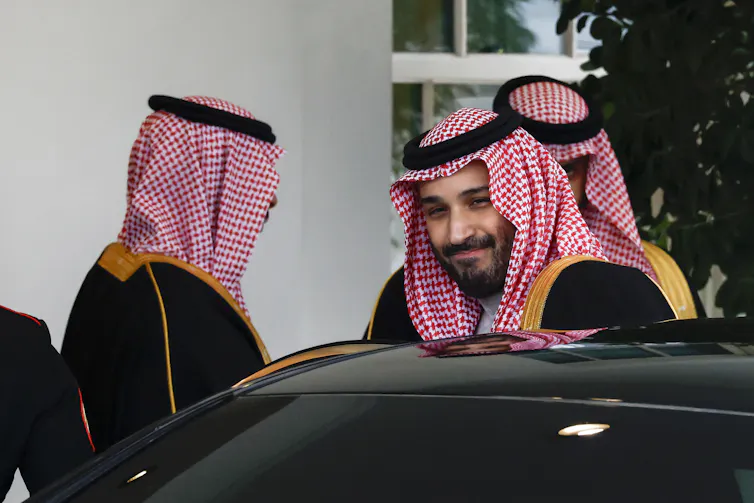
Similarly, tensions between Turkey and Saudi Arabia became particularly acute following the 2018 murder of journalist Jamal Khashoggi in the Saudi consulate in Istanbul. A 2021 US intelligence report found that Saudi crown prince Mohammed bin Salman approved the murder, though he denies this allegation.
A process of rapprochement took place between Turkey and Saudi Arabia in 2022, and then between Turkey and Egypt in 2025. Erdoğan visited Cairo and Riyadh in February 2026 and has proposed several different geoeconomic frameworks to connect Asia with Europe. These include the so-called Middle East Corridor, a planned economic corridor aimed at fostering economic integration between Asia, the Persian Gulf and Europe.
Pakistan, meanwhile, has so far not come to Saudi Arabia’s aid when it has come under attack from Iran in the current conflict. This is despite the signing of a strategic mutual defence agreement between the two countries in 2025.
Saudi Arabia, Egypt, Pakistan and Turkey have not always seen eye to eye. But their relationships of convenience are now becoming increasingly significant as Israel and Iran’s regional isolation grows.