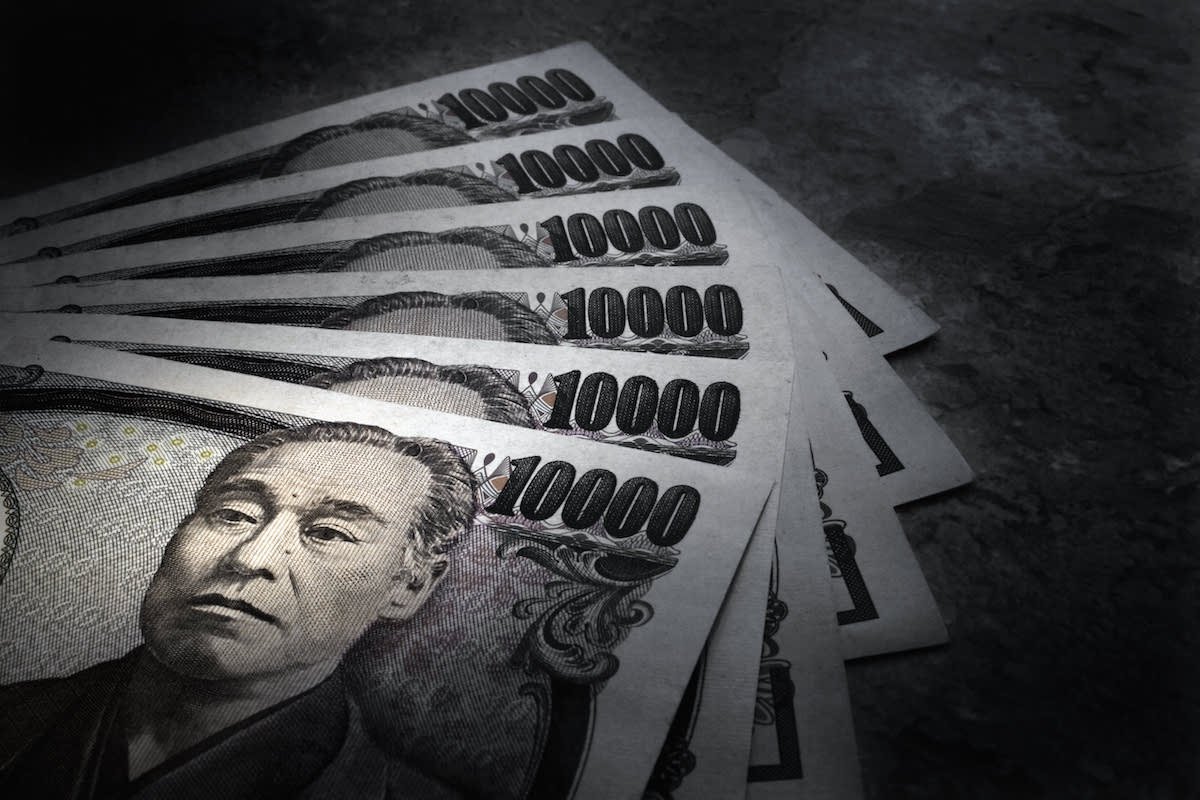
TOKYO — The Japanese capital is seeing a bull market in deja vu as policymakers man the battle stations against speculators dumping the yen.
With the Japanese currency on the verge of slipping to the psychologically important 160 to the dollar level, Ministry of Finance officials are pulling out all the stops to keep it from falling further.
Good luck with that, as traders buzz about the yen plummeting to 170, 180 or even the almost-unthinkable 200 level.
This foreign exchange battle comes at the worst possible moment for Japan, which is already grappling with stagflation. With crude oil around US$115 per barrel, Japan’s $4.2 trillion economy is uniquely at risk as the Iran war goes awry. Roughly 95% of Japan’s oil comes from the Middle East.
As the yen ratchets lower, the risk of higher imported inflation ticks higher. This dynamic worsens as high energy costs food, transportation, and a wide range of industrial goods.
Yet Japanese Prime Minister Sanae Takaichi has another problem — one nearly three decades in the making. Since around 1997, the most consistent policy across the 15 premierships has been prioritizing a weak yen through quantitative easing.
This week, 10-year JGB yields once again returned to 1999 highs as so-called “bong vigilantes” have Tokyo squarely in their sights. That has Japanese Finance Minister Satsuki Katayama pledging to work with G7 countries as the war in Iran sends global bond yields skyward.
Katayama notes that G7 finance ministers and central bankers have “shared views that developments in the Middle East and sharp fluctuations in oil prices are having a broad impact on markets.”
She added that “our stance has been that we will continue to stay in close contact (with G7 officials ) and ensure that we clearly communicate our message.”
Yet the spike in JGB yields also reflects fears about Takaichi’s pre-Iran war fiscal priorities, including budget-busting tax cuts. Japan’s debt-to-GDP ratio is already around 260%. It hardly helps that Japan also has one of the world’s fastest aging and shrinking populations, raising concerns about the future tax base.
In May 2025, Shigeru Ishiba, Takaichi’s predecessor, warned that Japan’s debt load is “worse than Greece.” Ishiba made those comments while trying to talk lawmakers out of cutting taxes. At the time, concerns about fiscal loosening resulted in some of Tokyo’s weakest bond auctions since the 1980s.
All this has markets buzzing about a possible “Liz Truss moment” in Japan. The reference here is to the late-2022 debt crisis precipitated by the then-UK Prime Minister Truss, who tried to sneak an unfunded tax cut past bond traders.
The irony, of course, is that today’s debt excesses are a hangover from the 1980s bubble years that left Japan with today’s ginormous debt pile. The trauma from the bad-loan crisis that followed — including deflation — is why the BOJ first slashed rates to zero. That year, as fate would have it, was 1999 — the year to which yields are now returning.
“As long as Japan remains in denial on debt, every adverse shock will see the yen fall further,” notes Robin Brooks, economist at the Brookings Institution. “That’s because the BOJ has no choice but to cap yields, even as the ‘shadow’ yield – what markets would price without BoJ intervention – goes up whenever a bad shock hits. Ultimately, what’s needed in Japan is a shift in public opinion on debt, but for that to happen, things need to get worse before they can get better. The yen will keep falling.”
Whether a move toward 200, or beyond Plaza Accord-like levels, is plausible remains an open market question. But all this puts Takaichi in quite a bind. At least publicly, she has to signal alarm that the yen is weakening. Yet her economic strategy since taking office in October has largely relied on a weak yen.
And doesn’t BOJ Governor Kazuo Ueda know it? In December, the BOJ hiked its benchmark to a 30-year high of 0.75%. Takaichi has made it clear she’s against the BOJ continuing to tighten, calling the mere idea of higher short-term rates “stupid.”
Yet, as Takeshi Yamaguchi, economist at Morgan Stanley MUFG, points out, the consumer price index inflation is likely to exceed 3% later this year. And this, he notes, “could temporarily reach 4% year-on-year. In the event of an economic downturn, downside pressure on underlying inflation would intensify with a lag.”
Inflation is already twice the rate of 2025’s 1.1% GDP growth rate. Last week, new BOJ board member Toichiro Asada warned that risks are rising amid surging oil prices and waning household demand. “Japan could be in a stagflationary trend,” Asada said. “It’s hard to deal with such a situation with monetary policy.”
The International Monetary Fund sides with the BOJ. Last week, the IMF called on Team Ueda to push ahead with tightening, as the fallout from the Iran war poses “significant new risks” to the country’s economic outlook.
The IMF’s executive board commended Japan’s “strong economic resilience” to global shocks and agreed the BOJ was appropriately withdrawing monetary accommodation. “They noted that as underlying inflation converges toward the BOJ’s target, gradual rate hikes toward neutral should continue” in a flexible, well-communicated and data-dependent approach, the IMF said.
Yet, it’s tempting to file this under better late than never. The Washington-based lender of last resort is right, of course. Just 20 years too late to an argument that was settled long ago.
If time travel were possible, Japanese officials might return to 2006, the last time the BOJ tried to normalize rates. And set the stage for the institution to ensure that efforts to move borrowing costs away from zero live on. They did not. Two decades later, it’s easy to see why Japan would be better off if only the BOJ had held its ground.
By 2006 and 2007, the BOJ managed to hike rates to 0.5%, ending quantitative easing and putting Japan on the road to recovery and policy normalization.
In 2008, though, the global financial crisis was doing its worst to Asia’s growth outlook. That year, with the BOJ under new leadership, policymakers began reverting to zero rates and QE.
Five years later, the BOJ supersized those previous monetary stimulus efforts. By 2018, the BOJ’s balance sheet swelled to more than double Japan’s economy, another first in G7 circles.
Only recently did Japanese officialdom realize it had another “lost decade” on its hands. The earlier one stemmed from the financial mayhem caused by the bad-loan crisis, which left Japan mired in deflation.
Yet the effort to repair damage from the last 10 years of economic growth meant squandering another 10 years that would’ve been better spent increasing Japanese competitiveness and innovation.
Keeping the monetary IV drip in place for so long didn’t revive Japan’s animal spirits — it sedated them. That’s why today, as China Inc has headline-grabbing successes from electric vehicle maker BYD to artificial intelligence upstart DeepSeek, Japan is preoccupied with where the yen is heading versus the dollar next year.
Of course, the outlook for the yen isn’t just about events in Tokyo. “The dollar may ease modestly further in the near term because of optimism the US will ‘end’ the Iran war,” argue Commonwealth Bank of Australia analysts in a note.
“However, there are three participants in the war: the US, Israel and Iran. What matters for the world economy and currencies is whether the Strait of Hormuz is open. The US leaving the conflict does not reopen the Strait.”
Analysts at UBS Group think the yen’s decline will accelerate even if officials in Tokyo intensify threats of FX intervention, reaching 175 to the dollar by year’s end.
UBS analyst Shahab Jalinoos says that if oil prices move toward US$150 a barrel, “using FX intervention to try to control inflation could potentially be a case of providing the market a higher level at which to sell JPY, at the expense of running down FX reserves without necessarily changing the trajectory.”
The yen’s trajectory could quickly become a global problem. Sharp yen moves put at risk the so-called “yen-carry trade.” Twenty-seven years of holding rates at, or near, zero turned Japan into the globe’s top creditor nation.
For decades, investment funds borrowed cheaply in yen to bet on higher-yielding assets around the globe. As such, sudden yen moves disrupt markets worldwide. It became one of the most crowded trades, one uniquely prone to sharp correction.
Between erratic US tariff policies, the war in the Middle East, and the specter of a fresh borrowing binge in Japan, investors have many financial risks to be paranoid about as 2026 unfolds. In this context, a runaway yen is good news for no one.
Follow William Pesek on X at @WilliamPesek