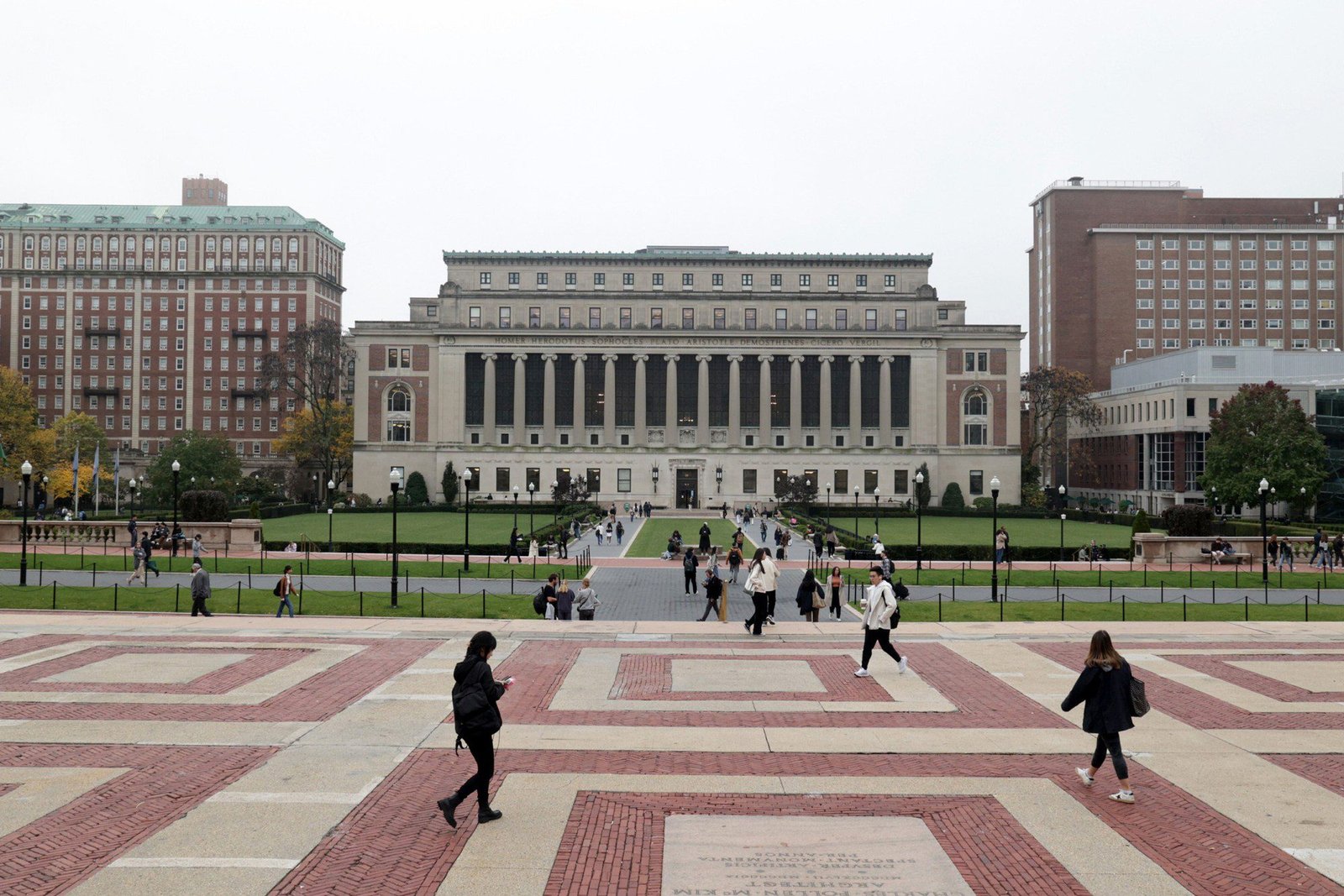
The New York State attorney general’s office has begun investigating how Columbia University let a predatory doctor continue to see patients despite decades of warnings.
“The Office of the Attorney General is conducting a thorough investigation into the institutional response to Robert Hadden’s misconduct,” a spokesperson said in a statement to ProPublica. The agency did not give further details.
A ProPublica investigation from the fall of 2023 revealed how Columbia ignored women and ultimately protected Robert Hadden, a longtime OB-GYN at the university. In 2012, Columbia allowed Hadden to continue seeing patients just days after one of them called 911 to report Hadden had sexually assaulted her.
In early 2023, Hadden was convicted in federal court of sexually abusing patients. He is currently serving a 20-year sentence. Columbia has paid out more than $1 billion for over 1,000 claims of sexual abuse.
After our investigation, Columbia committed to a variety of reforms, including improved patient safety, a $100 million fund for victims and an independent investigation.
But advocates, students and survivors say Columbia needs to do far more to grapple with its role in Hadden’s conduct. Four hundred Columbia medical students recently wrote to university officials demanding disciplinary reviews for administrators who failed to heed warnings about Hadden.
Unlike at other universities that have dealt with serially abusive doctors, no higher-ups at Columbia appear to have lost their jobs or been disciplined. Dr. Mary D’Alton, who was cc’d on a letter that authorized Hadden’s return to work, remains the chair of the obstetrics and gynecology department.
D’Alton did not respond to a request for comment.
Columbia declined to comment for this story.
The attorney general’s office has significant powers over New York’s nonprofits, including Columbia. A few years ago, it forced the Trump Foundation to shut down. More recently it sued the National Rife Association, which then had to enact a series of reforms.
Survivors told ProPublica they were heartened that New York is looking into Columbia.
“Accountability is overdue, particularly in light of the Epstein files,” said Evelyn Yang, pointing to recent revelations that several Columbia affiliates had ties to the financier.
Read more
Yang was among at least 8 patients who were assaulted by Hadden after he returned to work. She was seven months pregnant at the time.
Shortly after our story was published more than two years ago, Columbia promised to “thoroughly examine the circumstances that allowed Hadden’s abuse to continue.”
No report detailing those findings has yet been published.
Last week, Columbia acknowledged in an announcement that there “are many questions” about the timing of the investigation it commissioned. It said that the report is expected to be released “soon.”
New York State Assemblymember Grace Lee blasted the university’s failure to issue the report, telling ProPublica the university has not taken responsibility for what happened.
“To me, it’s just outrageous that we are here now in 2026 and we still have no report and no one has been held accountable,” she said.
By comparison, the external investigation into the University of Michigan’s response to the crimes committed by its former physician Robert Anderson took about 15 months.
Another Hadden survivor, Marissa Hoechstetter, said the attorney general’s decision to examine Columbia provides some relief because the institution has repeatedly failed to do so itself.
“I do believe institutional accountability is a missing part of making a bigger change in the fight of gender-based violence,” Hoechstetter said. “I don’t know what will come of this investigation” — referring to New York’s probe — “but it shows that institutions that protect and cover up abusers in order to protect their own people and reputation will be held accountable.”
Hoechstetter and Yang both advocated for the passage of the Adult Survivors Act, a New York State law that in 2022 opened a one-year window in which survivors of sexual assault could file civil suits against their abusers or the institutions that protected them, even after the statute of limitations had passed.
For years, the university had failed to notify Hadden’s former patients of his misconduct. Finally, in November 2023, just 10 days before the law’s extended window closed, Columbia announced it would send letters to almost 6,500 patients.
A closed town hall meeting at the medical school this January gave a window into who was behind that lack of notification. “It actually is a Board of Trustee decision” because of the potential cost of litigation, Monica Lypson, the vice dean for medical education, told students in a recording that ProPublica obtained.
Lypson did not respond to a request for comment.
Separately, the deadline to submit a claim to Columbia’s survivors’ settlement fund, which was established for survivors who do not want to file lawsuits, has been extended to April 15.