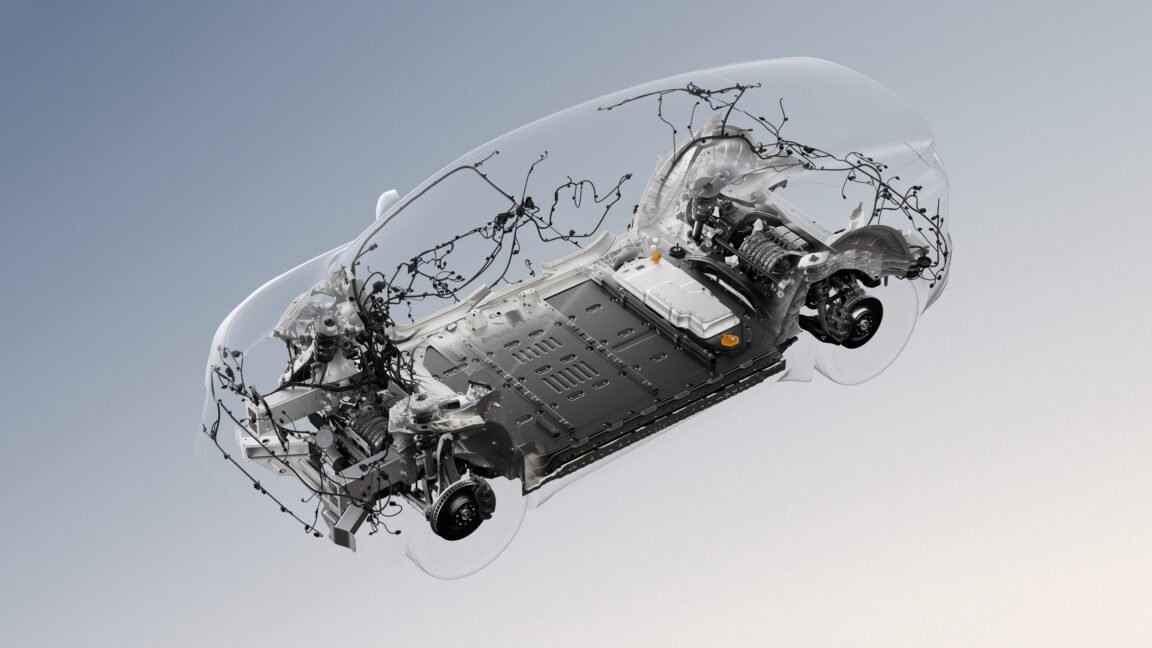
Lucid’s entry into the highly competitive, high-volume midsize SUV market will be key to achieving profitability, the company told investors today. And it’s going to do that with a trio of electric SUVs that will use its new midsize EV platform, which it says has been engineered to deliver a starting price below $50,000.
“Today, we’re keeping the same Lucid product and technology DNA intact, while applying increased scale, capital efficiency, and cost discipline, and materially reduced costs, to enable a great business with a clear and credible path to profitability and free cash flow, supported by what we are executing now and what we are building for the future,” said Marc Winterhoff, interim CEO at Lucid.
The company has provided a few details about the first two SUVs due on the new midsize platform. The Lucid Earth is aimed at “trendsetting achievers” and will be the more spacious one. The Lucid Cosmos we expect to be sportier—this one is targeting “upscale nurturers.” The unnamed third SUV will likely be something a bit more off-roady, filling the same niche that Rivian has gone for with its R2.
“With Midsize, we didn’t compromise what makes a Lucid special, we engineered it to scale,” said Derek Jenkins, senior vice president of design and brand at Lucid. “These vehicles deliver unmistakable Lucid design and driving characteristics, while embracing a radically simpler, more efficient approach to manufacturing and cost.”
Part of that is Lucid’s new drive unit, called Atlas, shown in the video above. This unit uses 30 percent fewer parts than Lucid’s current drive unit and weighs 23 percent less. Even better, its bill of materials is 37 percent cheaper. With this drive unit, plus an 800 V battery pack, Lucid’s goal is up to 4.5 miles/kWh (13.8 kWh/100 km) for the most efficient midsize variant. More efficient motors make it possible to use a smaller battery for the same range, and that appears to be the approach here.
“Our efficiency leadership directly translates into cost leadership with our Midsize platform,” said Emad Dlala, senior vice president of engineering and software at Lucid. “Smaller batteries, fewer parts, and tighter integration mean lower cost, better performance, and a superior customer experience, all at the same time.”
We also know there’s a new HMI approach, which ditches the multiscreen layout we see in the Air and Gravity for a single display that spans most of the dashboard. But other than the targeted sub-$50,000 starting price, we have no more information on pricing or even when these SUVs might arrive.
Robotaxis, Gravity, and more
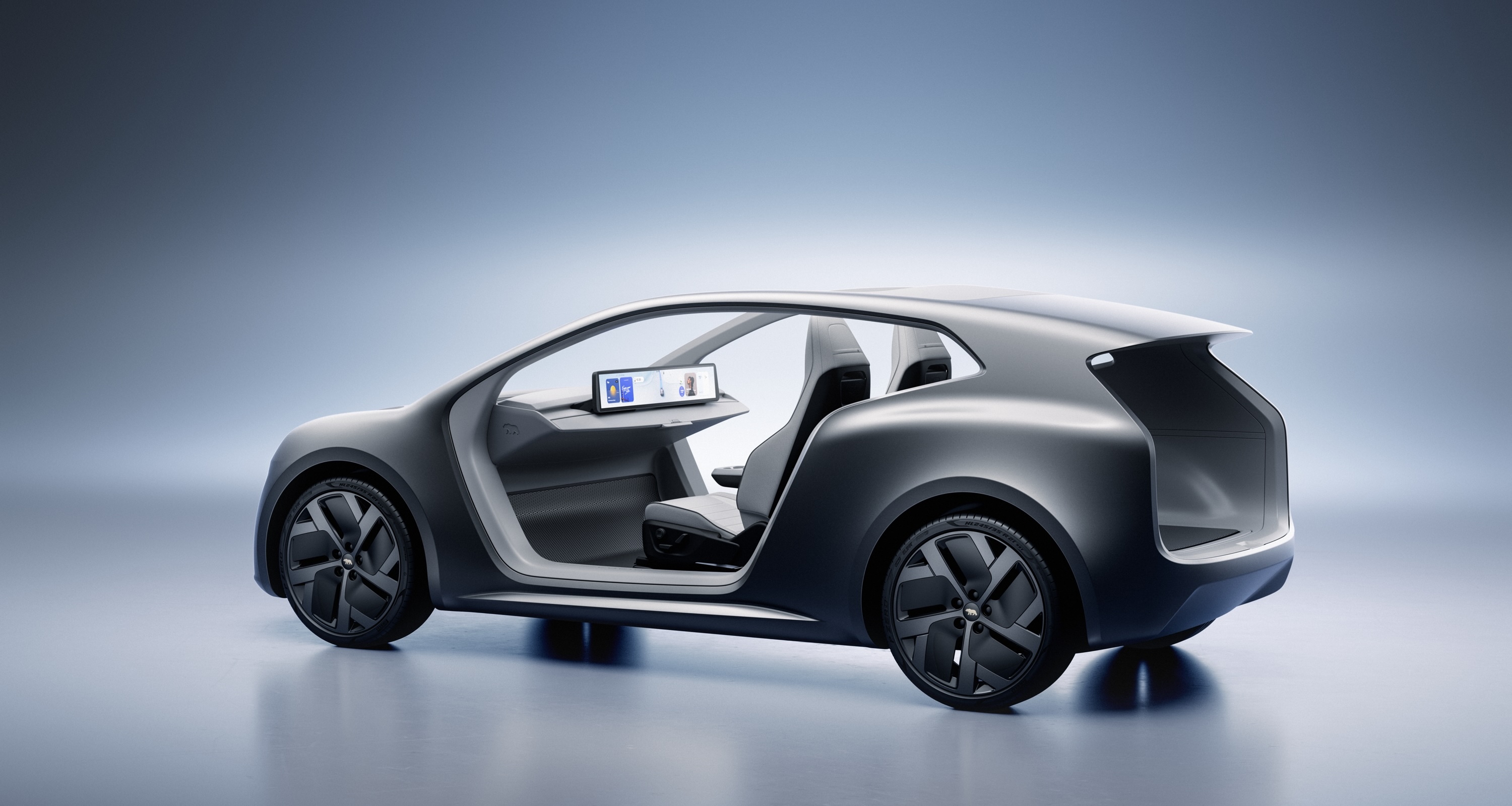
The three new SUVs are just one part of Lucid’s plan to turn a profit. I thought perhaps the inclusion of a two-seat robotaxi was the startup thumbing its nose at Tesla’s Cybercab, but the company appears serious about Lunar, which also uses the midsize platform. I’m told the majority of ride-hailing trips involve just one or two passengers, so perhaps these two-seat robotaxis will prove a hit; I remain unconvinced.
Even if Lunar doesn’t take off, Lucid will expand its robotaxi partnership with Uber, which began with the Gravity SUV. And, as Uber CEO Dara Khosrowshahi said, “Lucid’s unmatched efficiency, autonomy-ready vehicle architectures, and customer-centric approach give us confidence in our ability to deliver autonomous mobility together at global scale.”
Selling more Gravity SUVs to people who plan to drive them themselves is also an important goal for 2026, Lucid says—I’ve spotted at least two here in DC this week, anecdotally. It also wants to make more money from software and services, particularly autonomous driving and in-car AI.