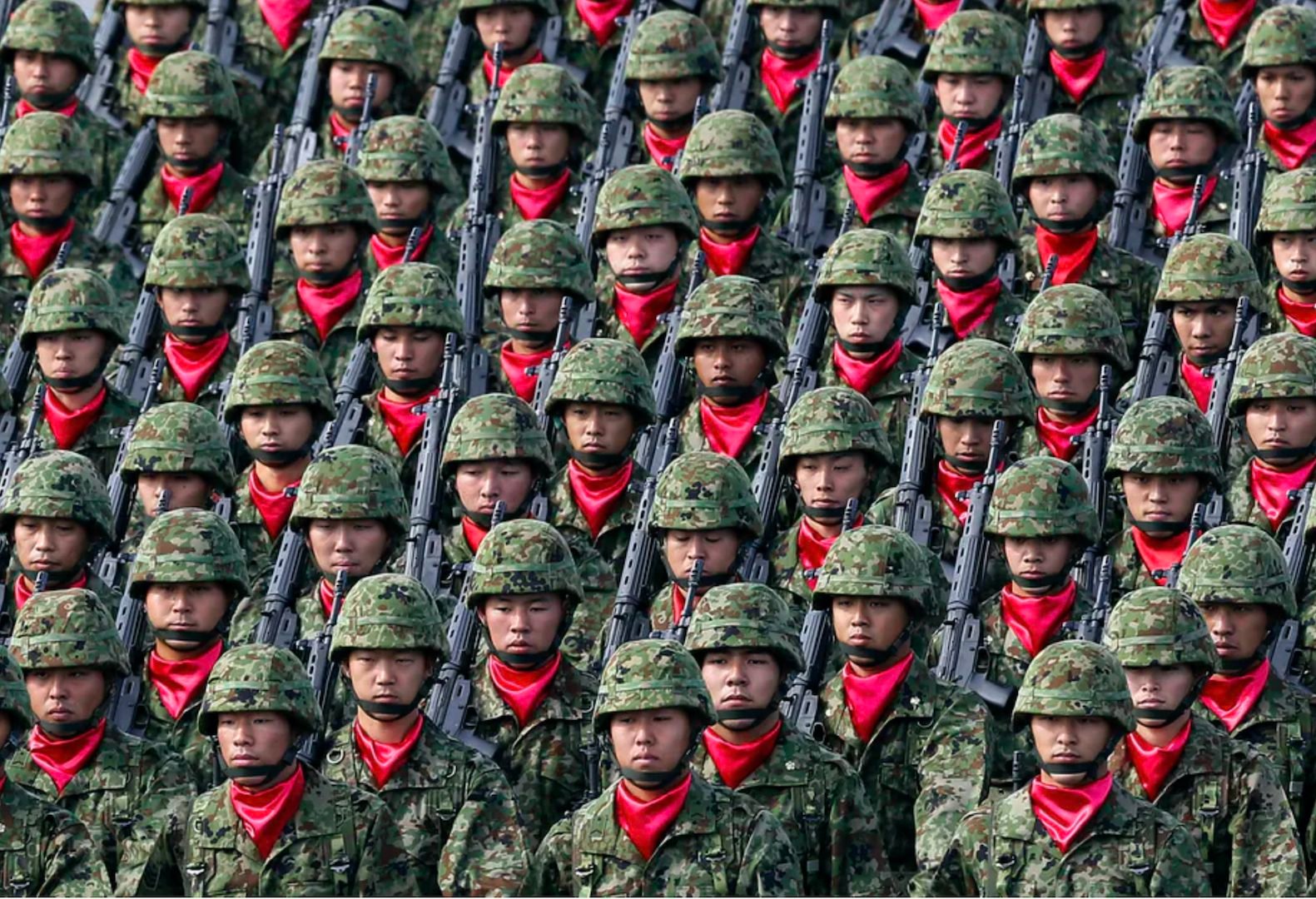
Japan’s pacifist constitution is often cited as a constraint on what the nation of 123 million and the world’s fourth-largest economy can and cannot do militarily.
The latest crisis in the Middle East has made that harder to ignore. As disruptions around the Strait of Hormuz continue, US President Donald Trump has repeatedly criticized US allies for doing too little to help secure one of the world’s most vital energy corridors.
Japan, heavily dependent on Persian Gulf crude, has clear stakes in the outcome. Yet Tokyo has responded with caution, citing Article 9 of its constitution and the limits it imposes on military action.
Prime Minister Sanae Takaichi has acknowledged the importance of securing the Strait of Hormuz but emphasized that legal constraints limit what Tokyo can do. It was almost customary. Japan would act if it could, but its constitution prevents it from doing so.
That argument is wearing thinner by the day. Article 9 of the Japanese Constitution, drafted under American occupation in 1946, renounces war and prohibits Japan’s maintenance of war-fighting potential. It has long been treated as the foundation of Japan’s postwar identity.
Yet in practice, it has functioned less as a barrier than as a justification — adjusted to fit decisions already made. For decades, Tokyo has acted when it deemed it necessary, stretching, reinterpreting and at times bypassing the very constraints it invokes.
After the 1991 Gulf War, Japan faced international criticism for relying on financial contributions while avoiding direct participation. That response was not restraint but recalibration.
Tokyo dispatched minesweepers to the Persian Gulf, though belatedly, marking its first major overseas military deployment since World War II. Legal reasoning followed strategic embarrassment.
After September 11, Japan passed the Anti-Terrorism Special Measures Law and supported coalition operations in Afghanistan, including nearly a decade of maritime refueling missions in the Indian Ocean that sustained combat operations.
In 2004, under Prime Minister Junichiro Koizumi, it deployed ground troops to Iraq under a specially constructed legal framework. The mission was labeled “non-combat.” The distinction held in law; in practice, it blurred.
The same pattern has persisted. In 2013, Japan provided ammunition to South Korean peacekeeping forces in South Sudan, stretching existing interpretations. In 2015, the Shinzo Abe government redefined the scope of self-defense, allowing limited collective self-defense in situations deemed to threaten national survival.
Subsequent changes to peacekeeping rules, including the introduction of so-called “rush-and-rescue” missions, further expanded the conditions under which Japanese forces could use weapons to assist allied personnel under attack.
Japan has spent decades proving it can act while insisting, almost ritualistically, that it cannot. Today, the gap between rhetoric and reality is increasingly untenable. Japan is deploying long-range missiles with counterstrike capabilities across its southwest islands.
It is easing restrictions on defense exports, including the transfer of lethal equipment. It has even found indirect ways to support Ukraine, exporting Patriot interceptors to the US to backfill American supplies sent to Kyiv.
For much of the postwar period, Japanese leaders framed their constraints as externally imposed. That argument once had a basis in reality. Today, less so. With few exceptions beyond its direct adversaries, there is little serious opposition to Japan becoming what some would call a “normal state.”
To be sure, domestic politics and legal interpretation still matter. Public opinion remains cautious, and internal dynamics impose real limits on how far and how quickly policy can shift. But these are political constraints, not constitutional absolutes. Treating them as immutable legal barriers obscures the extent of Japan’s existing capabilities and responsibilities.
The real problem is not what Japan can do. It is what Japan believes it is allowed to do. And that belief is increasingly out of step with strategic reality — and it is beginning to shape decision-making in dangerous ways.
A series of crisis simulations conducted by a Japanese think tank offers a revealing glimpse. In scenarios involving a potential conflict over Taiwan, participants struggled to determine when conditions met the threshold of a “survival-threatening situation,” the legal standard required to exercise collective self-defense. The recognition notably came only after Japan’s survival was no longer hypothetical, but imminent.
In a real-world crisis, that kind of clarity would arrive too late to matter. Conflict surrounding the Taiwan Strait or the East China Sea would unfold on compressed timelines. Delays measured in days would translate into lost opportunities, weakened deterrence and could be fatal for both Japan and its allies.
The external environment is also moving in the opposite direction. Washington is demanding more of its allies as it manages commitments across multiple theaters. European states are rearming at unprecedented speed. Indo-Pacific partners increasingly expect Japan to play a central role in regional security.
In practice, Japan is already assuming that mantle. It fields advanced military capabilities, operates and trains closely with the US and other like-minded forces and is rapidly expanding its strategic reach across the region, not least with the Philippines.
Japan’s postwar pacifism once served a purpose. It reassured neighbors and enabled economic recovery. But narratives, like institutions, can outlive their usefulness. When they do, they stop providing stability and start imposing costs.
The question facing Tokyo is no longer whether Article 9 permits action. The past three decades have already answered that. The real question is whether Japan is willing to shed the illusion that it does not.
And until it does, Japan’s greatest constraint comes not from its constitution but from itself.
Kenji Yoshida is a journalist based in Tokyo, Japan.