Prime Minister Sanae Takaichi’s visit to the United States for a summit with President Donald Trump on March 19 was never going to be easy. Now, with Trump calling upon Japan and other countries to send warships to ensure safe passage for ships through the Strait of Hormuz, she increasingly faces a no-win situation.
“No decision has been made whatsoever regarding the dispatch of escort vessels,” Takaichi said Monday at a Budget Committee meeting in the upper House of Councillors. “We are currently examining what Japan can do independently and what is possible within the legal framework.”
“Legally speaking, this is very difficult,” she said. “We are carefully examining what can be done within the scope of current laws and what is the best course of action at this time. At the same time, we are continuing to engage with Iran to help deescalate the situation while also exchanging information with various countries.” It bears mentioning that Japan has diplomatic relations with Iran.
The prime minister had wanted this summit to receive some reassurance from Trump that he would not forget Japan’s interests when he goes to Beijing in April and that he was satisfied with her government’s efforts to strengthen its defense capabilities and fulfill the terms of the US-Japan trade and investment agreement. While these goals remain, they have been entirely overshadowed by the US-led war against Iran.
As she prepares for the summit, these other concerns have given way to how to respond to Trump’s call for assistance in ensuring freedom of navigation in the Strait of Hormuz. Trump’s message was not unexpected – indeed, the Takaichi government had been setting down markers that limit its legal room for maneuver since not long after the US-led war on Iran began – but it nevertheless highlights the degree to which this summit could be a turning point for the US-Japan relationship and a critical moment for her still-young government.
The problem Takaichi faces is that even before the US and Israel attacked Iran, the Trump administration believed that her landslide victory meant Japan could no longer use domestic politics as an excuse for inaction. Komwiro – the brake – has been replaced with Ishin no Kai (Japan Innovation Party) – an accelerator. She has robust public support, an overwhelming majority in the House of Representatives, and a ruling Liberal Democratic Party (LDP) united behind her.
The upshot is that the president and his advisers would be impatient with foot-dragging and inaction. We have already seen this with Japan’s commitments as part of the US$550 billion investment framework, prompting swift movement to begin announcing projects after reports of Trump’s anger at inaction. Naturally, with the Trump administration now preoccupied with the consequences of the war with Iran, Trump may feel a similar impatience with Japan’s response, particularly given his own longstanding conviction that Japan does not hold up its end of the alliance.
But this puts Takaichi in an uncomfortable position. On the one hand, the core principle of Japanese foreign policy since 2012 has been doing whatever it takes to ensure that the US remains committed to Japan’s security, requiring successive governments to go to extraordinary lengths to avoid friction with Washington. On the other hand, she still faces real and significant domestic constraints, Trump’s beliefs about the general election notwithstanding.
First, Japan – in contrast to some other governments – still takes domestic and international law seriously, and there are some major legal hurdles for the Japanese government to send warships to an active war zone, including the absence of a UN Security Council resolution and the questionable legality of the US-led war, both of which could prevent Japan from engaging in collective self-defense as permitted by the 2015 peace and security laws.
As Nikkei notes, during debate on those measures then-Prime MInister Shinzo Abe as well as then-Foreign Minister Fumio Kishida and then-Defense Minister Gen Nakatani said that preventive war, being illegal under international law, could not justify the invocation of Japan’s right to collective self-defense.
Japan is also not in danger of an imminent attack that would justify logistical support as an “important influence situation” (IIS).
Finally, as serious as the potential risk to Japan’s economy is, it is unlikely that the situation in the Strait of Hormuz satisfies the requirements for the use of force for individual self-defense.
The fact this kind of scenario – conflict in the Middle East that closed the Strait of Hormuz and endangered Japan’s access to energy – was among the most commonly discussed during months that the Diet spent debating the peace and security legislation in 2015 does not make it any easier for Japan to make its commitment now.
Even if the legal foundation were firmer, the Takaichi government also still faces domestic political constraints.
Public opinion still matters, and it is unclear whether Takaichi wants to spend her political capital to put Japan’s Maritime Self-Defense Force in harm’s way in support of a war that is drawing single-digit support from the Japanese people. In a new Asahi Shimbun poll, only 9% support the US-led war, while 82% do not – and a majority (51%) disapprove of Takaichi’s position of not making a judgment on the legality of the war.
In a “dog that did not bark” situation, she does not seem to have even tried to do some of the political nemawashi – informal consensus building – to prepare the public for the possibility that Japanese warships could be dispatched.
If she were to order her government to find the legal justification for dispatching the Maritime Self-Defense Forces, she of course would risk serious public backlash, presumably including within the ranks of the LDP. On NHK Sunday, LDP policy chief Takayuki Kobayashi said that the hurdles for dispatching the SDF to an active conflict are “extraordinarily high.”
The public backlash could be even more significant if the MSDF suffered losses or killed Iranian military personnel or civilians. If she were to reject Trump’s appeal outright, she could trigger one of the most severe crises the US-Japan alliance has ever faced, with substantially more severe consequences for Japan’s security than events in the Middle East.
This could also be the moment where Japan’s attempt simultaneously to uphold international law while depending on the United States for its security stretches to a breaking point. Of course, there are those – for example, former Ishin no Kai leader Ichiro Matsui, in this column in the Shukan Fuji – who think it is detrimental to Japan’s national interests to be fussing about international law when the alliance with the US is at stake.
The question is whether there is a third option – backfilling for US forces transferred to the Middle East from East Asia, supporting US forces or US allies in the region via other means – that could satisfy the Trump administration without requiring a legally questionable and unpopular military deployment.
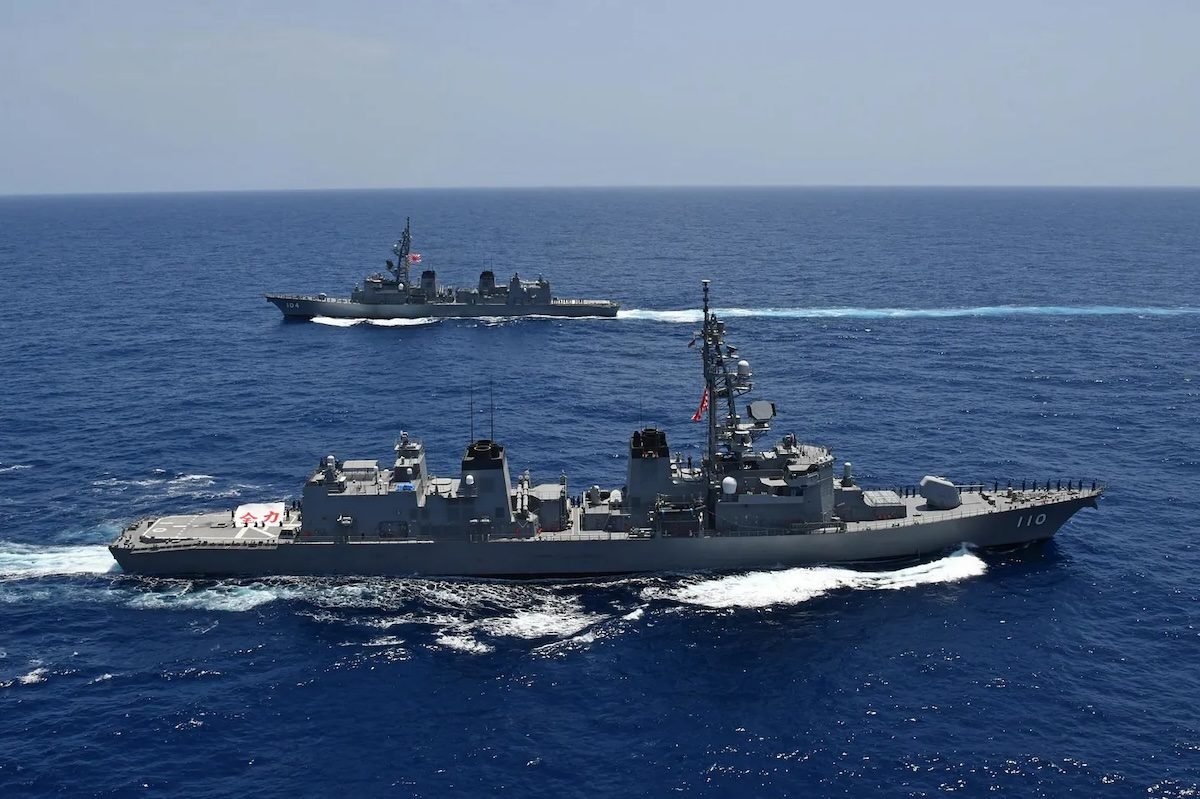
Shinzo Abe already did this once, when the first Trump administration sought to assemble a coalition to ensure freedom of navigation in the Strait of Hormuz in 2019. Japan sent MSDF warships to the Gulf of Oman to gather intelligence but not as part of the coalition.
Not only did Abe secure Trump’s understanding for Japan’s response but he also secured at least tacit understanding from Iran as well. That Iran could be quietly reassured during this crisis – during a visit by Iran’s president to Japan no less! – highlights the degree to which the present crisis may be harder for Japan to elude.
Whether Trump can be assuaged with this kind of solution, particularly when he and members of his administration are convinced that Takaichi faces few if any meaningful constraints, remains to be seen.
Tokyo also has to grapple with the uncomfortable reality that even if Japan takes extraordinary measures to support US activities in the Persian Gulf, there are no guarantees that it will translate into goodwill with the Trump administration that results in more moderate demands on defense spending, host nation support, or trade and investment.
At the same time that the Iran war has unfolded, the Trump administration has launched new Section 301 trade investigations against trading partners including Japan, raising the prospect of another round of tariffs.
In a matter of weeks, Takaichi’s summit has gone from a critical but not necessarily make-or-break test of her diplomatic acumen to what could be a historical turning point for the bilateral relationship. Before, during, and after the summit she will have to navigate between an impatient US president, hostile public opinion, and Japan’s enduring commitment to the rule of law, with significant consequences for her political standing, the alliance with the United States, and her country if she fails.
Maybe she will find a way to avoid a fundamental rupture in the US-Japan relationship, but it is increasingly impossible for Japanese leaders and the Japanese people to avoid some fundamental questions about Japan’s security in a rapidly changing world order.
Tobias Harris’s Japan Foresight LLC originally published this article, which Asia Times is republishing with permission. For more information about Japan Foresight’s services or for information on how to sign up for a trial or schedule a briefing, visit its website or reach out to him.