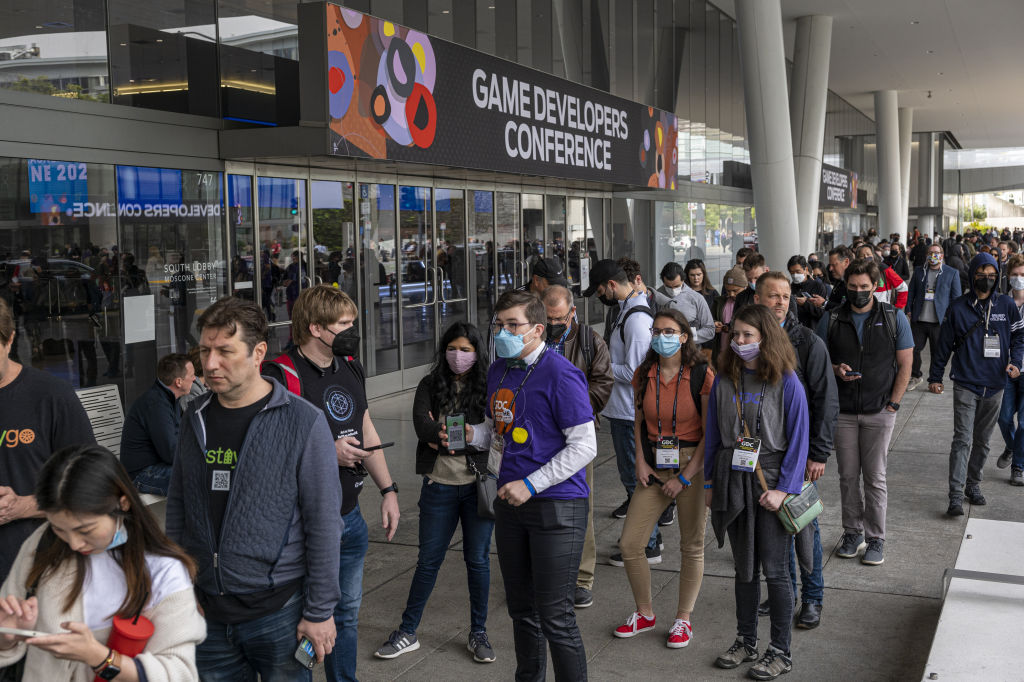
This week, tens of thousands of game developers and producers will once again gather in San Francisco, as they have since 1988, for the weeklong Game Developers Conference. But this year’s show will be missing many international developers who say they no longer feel comfortable traveling to the United States to attend, no matter how relevant the show is to their work and careers.
Dozens of those developers who spoke to Ars in recent months say they’re wary of traveling to a country that has shown a callous disregard for—or outright hostility toward—the safety of international travelers. That’s especially true for developers from various minority groups, those with transgender identities, and those who feel they could be targeted for outspoken political beliefs.
“I honestly don’t know anyone who is not from the US who is planning on going to the next GDC,” Godot Foundation Executive Director Emilio Coppola, who’s based in Spain, told Ars. “We never felt super safe, but now we are not willing to risk it.”
Out of the COVID, into the Trump admin
Some international developers had been reconsidering their GDC attendance before this year. Many developers who spoke to Ars traced their reluctance to travel for the show back to 2020, when conference organizers canceled that year’s event amid concerns about the COVID-19 pandemic (a smaller Summer GDC was thrown together for later in the year). While health concerns limited some developers’ travel after that, the cancellation also prompted many to reconsider whether the trip had been worth it in the first place.
“The value of in-person events has kind of stepped off since COVID pushed things virtual,” one developer, who asked to remain anonymous, told Ars.
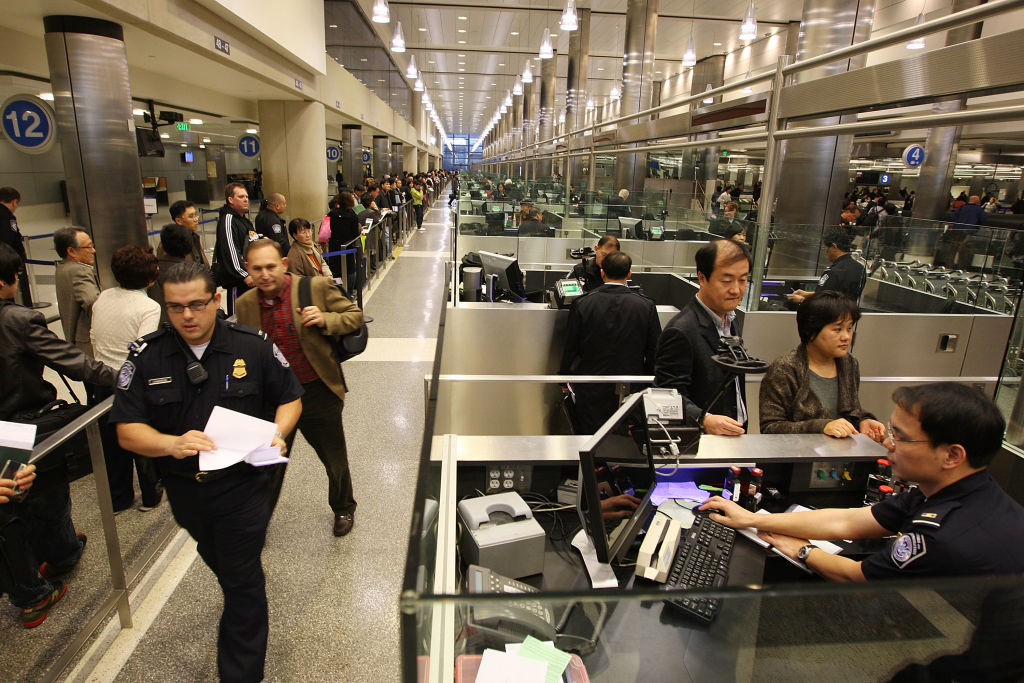
But it was the 2025 show—the first held during President Donald Trump’s second term—that really changed how many developers felt about attending GDC. What started as stories of expanded crackdowns on illegal immigration quickly expanded to aggressive additional scrutiny of tourists at the border. That included tales of visitors being detained or sent back home at the airport, especially if they had a record of public statements likely to run afoul of the current administration.
“Hearing European citizens getting arrested by border control over their views on the US is not something I would like to test for myself,” said Nazih Fares, a French-Lebanese citizen and creative director at indie studio Le Cabinet du Savoir.
Even with these stories circulating, many international developers who had planned to attend the 2025 GDC decided it was too late to cancel. But that doesn’t mean their attendance felt normal last year. “The agent at the border was very intrusive, more than the usual ‘Ah, brown people’ racism,” said Neha Patel, a freelancer and audio director at Pamplemousse Games, of her 2025 trip. “They asked a lot of questions regarding my employment, roles, and studio. I lied and said that I did not have American clients nor did I admit I work as a freelancer. I was too scared.”
Be prepared
Some companies took additional steps to ensure the safety of employees who chose to attend GDC 2025. “Last year, every studio representative got an additional safety briefing and [our company] helped prepare legal paperwork for everyone in case they got in trouble with ICE or immigration,” a developer for a big-budget studio, who asked to remain anonymous, told Ars. “Luckily, nobody did, but there was definitely some fear going around among the people that went and those that opted not to. For 2026, we’re not planning any physical presence as far as I know.”
Other developers told Ars about the personal precautions they were taking before coming to the US for the show.
“I felt compelled to send copies of my itinerary, passport and other IDs, speaker information, etc., to at least three other people who weren’t attending, with the instructions that if I didn’t contact them by a specified time to let them know that I had landed and cleared security, that they should take my information to the Australian consulate,” said JC Lau, a senior producer at Amsterdam’s Twirlbound who has attended every GDC since 2017.
“I scrubbed my social media timelines just in case I posted something that could get me in trouble,” the Godot Foundation’s Coppola told Ars of his preparations for the show.
A GDC representative told Ars that the 2025 show still “saw strong attendance from international attendees that was generally in line with previous cycles.” But the American border policies and stories that were just starting to come into focus a year ago have now become the background that every potential GDC attendee must consider before booking a trip to the show.
Many developers said they decided to cancel GDC travel plans after reading news reports of tourists being detained or turned away at the border or having their phones searched or confiscated. “I read a few long reads about how UK/German tourists ended up detained, and that was the final straw for me,” Austrian-based Cohop Game founder Eline Muijres said. “ I have a unique name, and it is very easy to find my political views on the Internet. It doesn’t feel safe for me.”
Others cited more direct evidence of problems they or their colleagues have encountered during recent travel to the US. “We have heard enough firsthand stories of trouble at the border, and it’s only getting worse by the week,” said Tony Walsh, a Toronto-based developer at indie studio Phantom Compass. “[It’s] totally unsafe for us to cross the border.”
“There’s no shortage of stories at the moment about the risk of detainment, deportation, phones being searched, and harm that make me hesitate to risk it,” said Domini Gee, a Canadian game writer and narrative designer. “Statistically, I’m aware I’ll likely be OK, but the consequences if I’m not could be high.”
“Now my white friends are being treated like I used to be”
Whatever their reasons, international developers overwhelmingly told Ars that a pervasive fear of traveling to the US for pretty much any reason has developed among them and their colleagues.
For some, this was simply an intolerable escalation of some long-standing issues. “I’ve never really felt safe traveling to the US,” said Rami Ismail, a longtime indie developer, consultant, and GDC attendee since 2010. “I have a lot of Arab names, and I have a slightly Arab vibe, and I’ve been made very aware that a lot of folks in the US do not want us to exist there, or even elsewhere… I’ve spent a lot of time with my passport confiscated or in interrogation rooms. Under this new, violent administration, it’s simply not safe to travel.
“I ain’t going to GDC because I’m 99 percent sure I would not leave detention anytime soon,” Ismail continued. “It used to be bad; now my white friends are being treated like I used to be.”
Indeed, some international developers who had never had problems traveling to the US are now feeling unwelcome. “I work for Xbox, and I am white, so it shouldn’t be a problem for me. Until it is,” said an Xbox employee who works in a foreign country (and asked to remain anonymous). “You can’t seem to be safe… We are also having Xbox events this year in the US. Many international folks are not coming in person because of the political situation.”
Some international developers expressed particular worry about US travel because of their public political comments. Patel said she worried that her public work on and support of the Composers for Palestine charity album could raise red flags if the wrong border officer looked into her name. “I am terrified that the color of my skin and political beliefs will send me to a detention camp,” she said.
“It feels way too dangerous entering the US as people who are outspoken against fascism and autocracy and make art that stands for democracy and rule of law,” said Jörg Friedrich, whose game Through the Darkest of Times deals directly with issues of political upheaval in 1930s Berlin. “I would be really worried with us being outspoken in public against autocracy and for democracy that we might end up being sent back or worse.”
Other developers worried about how their gender identity might lead to mistreatment in the US. Some pointed to executive orders that could cause problems for travelers whose presented gender identity doesn’t match what’s on their identification documents, even if there is no issue in their home country.
“I’m a visible trans man, and I don’t make any attempts to hide myself, but my ID still says ‘female,’” Toronto-based freelance producer and consultant Felix Kramer told Ars. “The fear is that, should anything go wrong—not just at the border, say I get injured as a non-citizen—there are now just more ways for people to legally exercise bigotry. I’m not worried about visiting America—I’m worried about what happens if something goes wrong while I visit America.”
“There is no specific policy that says ‘detain any trans person,’ but the political environment the administration has fostered makes us far more subject to profiling, which was already high enough to make travel stressful,” said Montreal-based art director Erica Lahaie. “I can’t stomach the possibility to subject myself or my wife to something like that where customs now has effective carte-blanche to treat us as disrespectfully as possible.”
Stay away from the Bay
Aside from problems impacting travel to the US in general, many potential GDC attendees said the show’s downtown San Francisco setting has started to feel unsafe or unwelcoming, especially given the cost of travel. Longtime attendees cited the risk of being assaulted, getting harassed by growing numbers of unhoused people on the streets, or encountering open drug use as potential concerns about coming to the city.
“For someone coming from Scandinavian luxury communism, the apparent refusal to deal with social issues is mesmerizing,” Danish indie developer Martin Pichlmair told Ars of his impression of the city. “Given the amount of money visible, it seems like a very cold-hearted thing to not spend some of it on making the place nice for everyone. It is hard to describe how alienating that feels.”
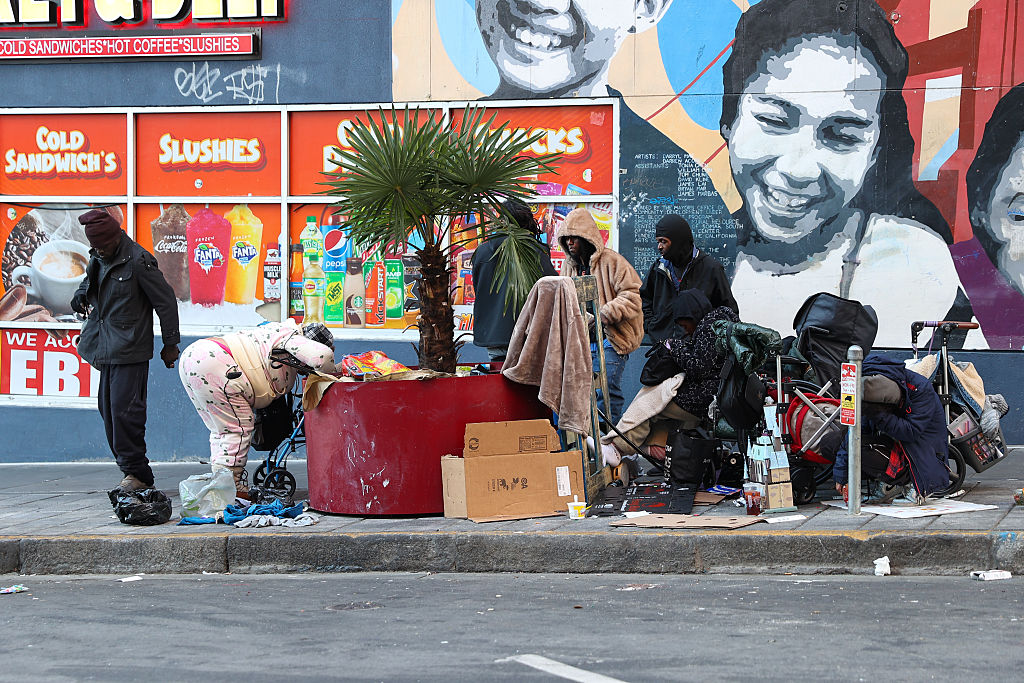
GDC organizers have set up a 24/7 safety hotline for attendees to report safety concerns and are providing highly visible security escorts for people who feel unsafe traveling around San Francisco. A GDC spokesperson also told Ars that the organizers “understand the current US political climate creates uncertainty” and that they “continue to work with local officials and legal experts to monitor the changes and will update accordingly.”
But despite such efforts and statements, the vast majority of developers we spoke with said there would need to be serious changes to US leadership or border policy before they felt comfortable returning to an event in this country. “At this point, the political environment would have to change pretty drastically,” Gee said. “If I have to get a burner phone, have people tracking my destination, and have to worry that I’m going to get singled out by someone looking to fulfill a quota, then it’s not safe for me or others.”
And while some developers said they’ll get by attending international or virtual events, many openly regretted no longer being able to attend a gathering of like-minded developers that was a highlight of their year, or of their entire career.
“Like a lot of [developers], I have friends all over the world, and many in the US. GDC is where I get to hang out with them in person,” said Ashley Cooper, a Motive Studio writer based in Canada. “It sucks since it’s where I find community and the one time a year I see a lot of friends,” added Alexei Peters, a Canadian technical systems designer. “But I’ve had to accept I just won’t see my American friends unless we can meet in Canada or elsewhere because it just feels wrong on many levels to spend any time in the USA right now.”
“Despite its prohibitive costs, terrible location, and general lack of inclusivity, I still have to admit that [GDC] did help my career,” Patel said. “I was the recipient of scholarships and grants that made it financially viable to do so. But no amount of grants and opportunities can convince me to step on American soil.”