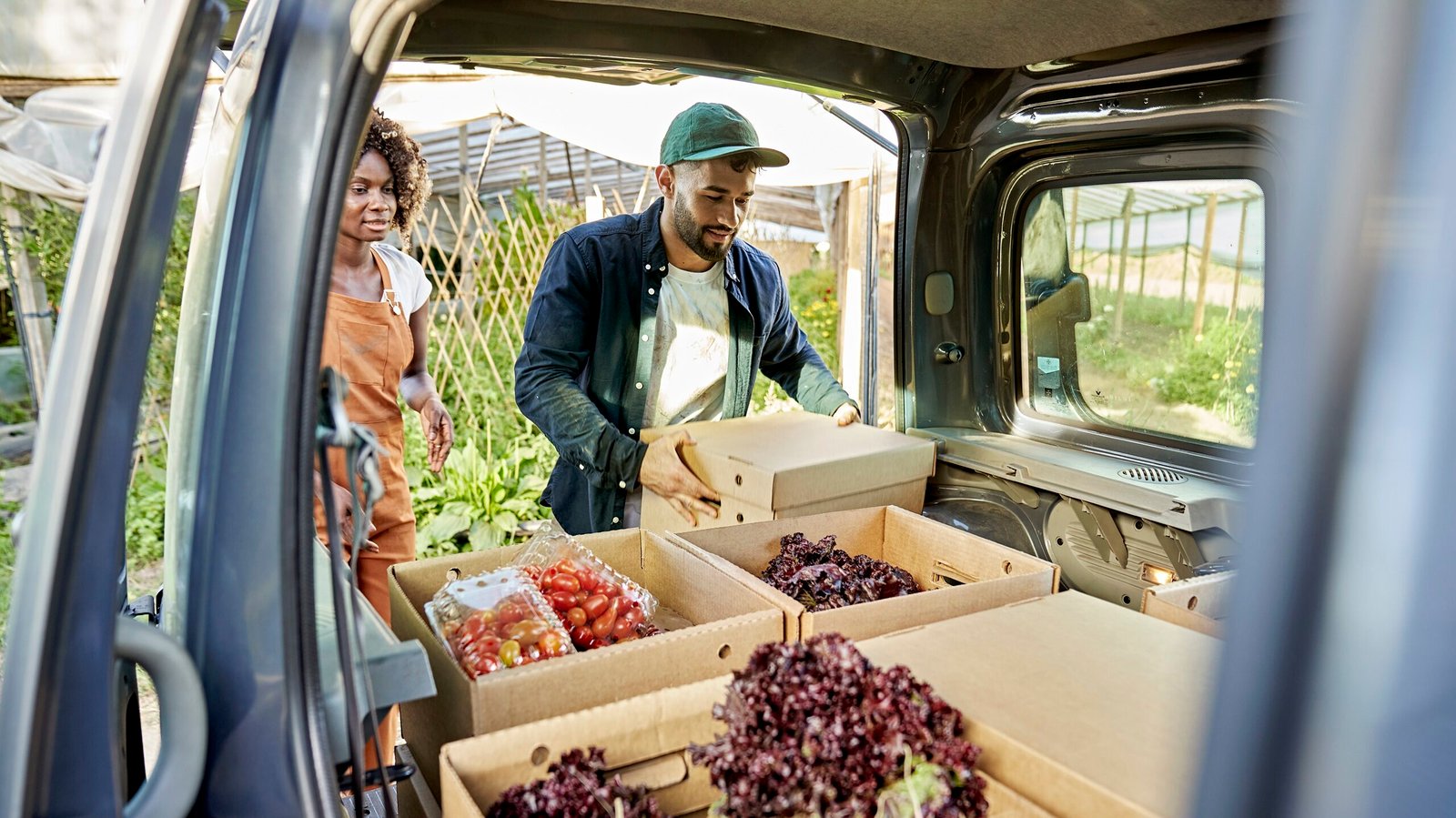
From skyrocketing inflation to dangerous delivery routes, Joseph Gitler reveals how Leket Israel is fighting to feed a new demographic of the “temporary poor”
As Passover approaches—a time usually dedicated to celebrating freedom and abundance—Israel faces a starkly different reality this year. Amid an ongoing, multifront war, food insecurity is rising, agricultural fields are under fire, and the everyday heroes keeping the country fed are risking their lives to do so. Joseph Gitler, founder and chairman of Leket Israel, the country’s national food bank, sheds light on these mounting crises and the precarious state of the nation’s food supply in a wide-ranging interview with The Media Line.
Gitler’s description of the daily perils faced by the blue-collar workers keeping the country’s supply chains alive is sobering. Making deliveries has become a matter of life and death as missiles continue to threaten the roads. Gitler himself recently had to pull over and dive into a ditch on a northern highway during a Hezbollah siren. Yet drivers continue their routes to ensure shelves remain stocked for those in need. The war has also struck Gitler’s family personally: His son-in-law, Sgt. Maj. David Schwartz, was killed in battle in Khan Yunis in January 2024.
The people are out there cleaning the streets, and people are out there delivering your milk. And they’re doing this under fire.
“If you don’t go out to work, you’re going to lose your job,” Gitler states. “And so yes, the people are out there cleaning the streets, and people are out there delivering your milk. And they’re doing this under fire. There’s no other way to put it.”
This perilous logistics network is currently serving a rapidly growing demographic of the “new poor or the temporary poor” created by the conflict. This economic blow has severely affected middle-class Israelis, including those in the hospitality and tourism sectors and small business owners called up for extensive military reserve duty. With many local nonprofit partners unable to function normally, particularly in the battered north, Leket has had to pivot its operations radically.
We’re spending around half a million dollars a week more than our normal budget
The organization is now directly purchasing crops and thousands of cooked meals daily to fill the void. “We’re spending around half a million dollars a week more than our normal budget,” Gitler notes. “Which is a very scary thought on the one hand, but on the other hand, we need to find ways to feed the poor.”
The war’s toll on domestic agriculture compounds these supply chain and economic challenges. From the October 7 attacks on the Gaza envelope to the current barrage of Hezbollah missiles in the north, fields have become too dangerous to work. Furthermore, global market disruptions are inflating costs across the board. When asked about the scarcity and rising cost of agricultural fertilizers, Gitler highlights the broader economic ripple effect. “Bringing fertilizer here, the fertilizer isn’t just going to cost more money; shipping it is going to cost more money,” he warns.
Despite the severe economic strain felt across the nation, food waste remains a staggering issue. Leket predicts that at least $900 million worth of food will go to waste during the Passover holiday alone. Gitler attributes this paradox to deeply ingrained cultural habits that cross international borders.
Even though people are much more aware of the environmental impact of food waste … it doesn’t make much of a dent
“I feel like even though people are much more aware of the environmental impact of food waste … it doesn’t make much of a dent,” he observes. Leket works year-round to combat this, ensuring that nutritionally insecure populations receive the right food mix, but Gitler stresses that the holiday abundance does not give anyone an excuse to waste.
Despite the overwhelming challenges on the home front, Gitler’s personal perspective on the war is resolute. He hopes for a swift, but decisive, conclusion.
“I hope it will end soon, positively,” Gitler shares. “The only way to honor those who’ve fallen for this country is to make sure that the situation changes, because if all the sacrifice again, and again, and again, and then we’re back at square one, either it means we just have no chance here with our surroundings, or we haven’t done what we needed to do.”
Gitler’s candid insights offer a rare, grounded look at the intersection of wartime logistics, economic hardship, and unwavering resilience. To hear more about how Leket Israel is navigating these unprecedented challenges, watch the full interview.