Israel’s widening military campaign against Hezbollah is transforming the Israel-Lebanon arena into the most immediate second front of the US-Israel war with Iran, as airstrikes deepen across Lebanon and additional Israeli forces move toward the border. Reporting for The Media Line, Keren Setton describes how the escalation is raising fears that a localized exchange could evolve into a longer and more destructive confrontation.
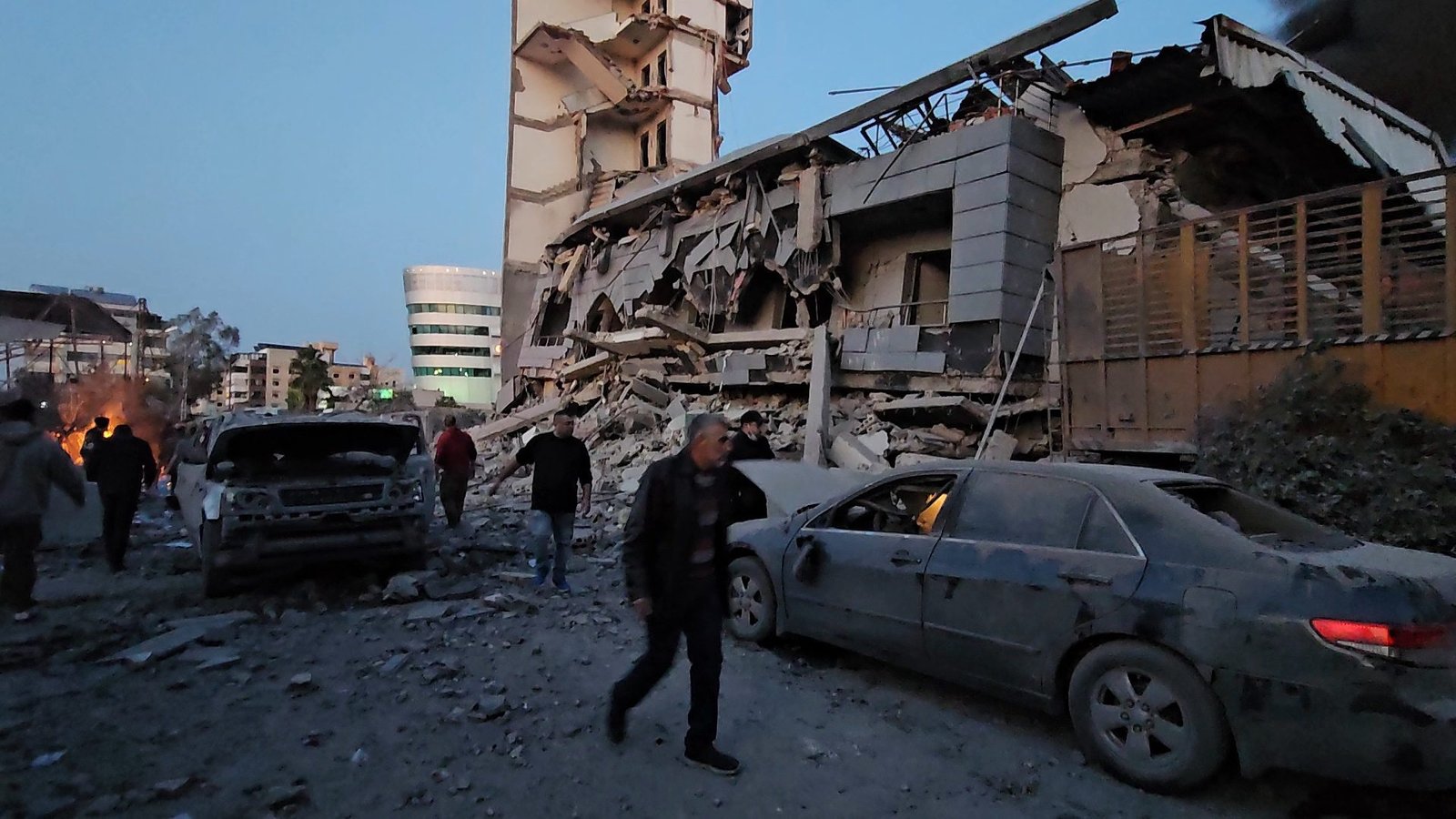
Early Wednesday, smoke rose over parts of Beirut’s southern suburbs after Israeli strikes targeted Hezbollah command centers and weapons storage sites. Israeli officials said the latest operations were limited and defensive, yet warned that the campaign could expand further if rocket and drone attacks from Lebanon continue. At the same time, warnings and evacuation-related messaging circulated in parts of Beirut and southern Lebanon as residents scrambled to assess their safety.
Lebanon’s Health Ministry reported at least 40 people killed and hundreds wounded in the latest wave of strikes. Tens of thousands of civilians have fled their homes as concerns grow that the confrontation could become an open-ended conflict.
Lebanon’s political leadership has tried to distance the state from Hezbollah’s actions. Prime Minister Nawaf Salam publicly condemned the group’s involvement in the war and wrote on X: “We will not accept anyone dragging the country into adventures that threaten its security and unity.” The message signaled Beirut’s attempt to curb attacks launched from Lebanese territory and avoid deeper involvement in the regional conflict.
Israeli officials view Hezbollah’s intervention as part of Iran’s broader regional strategy. Israeli Defense Minister Israel Katz issued a stark warning to the group’s leadership, writing that Hezbollah Secretary-General Naim Qassem “is now a target for elimination,” and adding: “Whoever follows in the path of Khamenei will soon find himself with him in the depths of hell along with all the thwarted elements of the axis of evil.”
Analysts told The Media Line that Hezbollah still operates as a key Iranian proxy. Avraham Levine of the Alma Research and Education Center said the group will likely continue limited attacks against Israeli military positions along the border rather than attempt a large-scale ground incursion.
The Lebanon escalation is unfolding alongside the fifth day of coordinated US-Israel strikes on Iran, which Israeli Prime Minister Benjamin Netanyahu said could take “some time.” Setton’s full article lays out how these interconnected fronts—Lebanon, Iran, and Israel—are rapidly reshaping the regional battlefield.