Groundbreaking fortified hospital, built in days amid missile barrages, shields rehab and geriatric patients from salvos, ensuring care without chaos
Sara Nisri accompanied her husband, Meir, from Loewenstein Rehabilitation Medical Center in Ra’anana to a new facility in Rishon LeZion—about 20 miles away—while missiles and rockets were falling.
“I came here in an ambulance, with two medical professionals and my husband,” Nisri, from the northern city of Yokneam, told The Media Line last week.
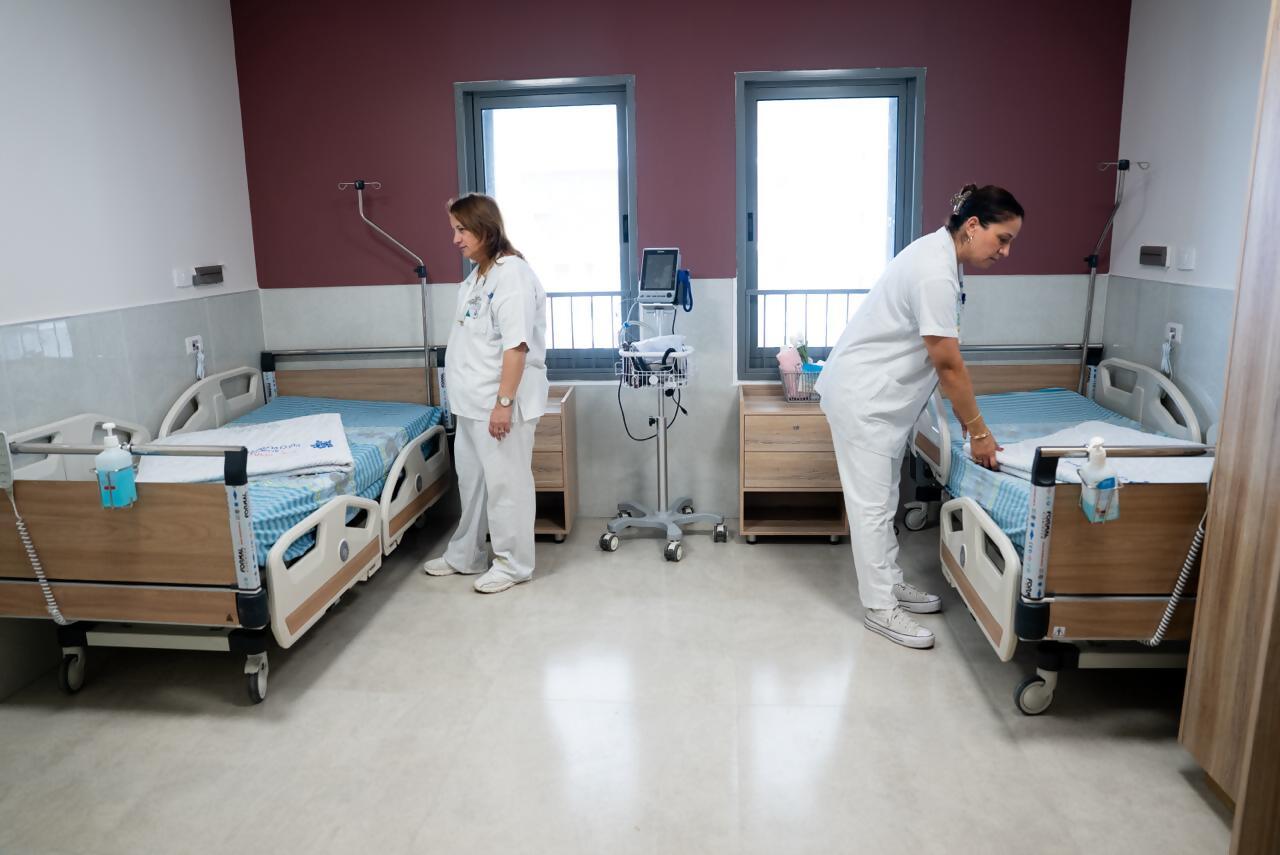
Setting up the new Lion’s Shield hospital. (Clalit Health Services Spokesperson)
Standing outside the new facility, known as Magen HaAri or Lion’s Shield in English, which opened just one week after the start of the war, Nisri explained that her husband had recently experienced a stroke. Since then, she had been by his side at the Ra’anana hospital.
But when the war broke out on February 28, the situation became both more complicated and more dangerous.
Meir requires a wheelchair, and transferring him from his bed to a bomb shelter every time a siren sounded was nearly impossible. Finding a safer rehabilitation unit where he could continue recovering during wartime quickly became essential.
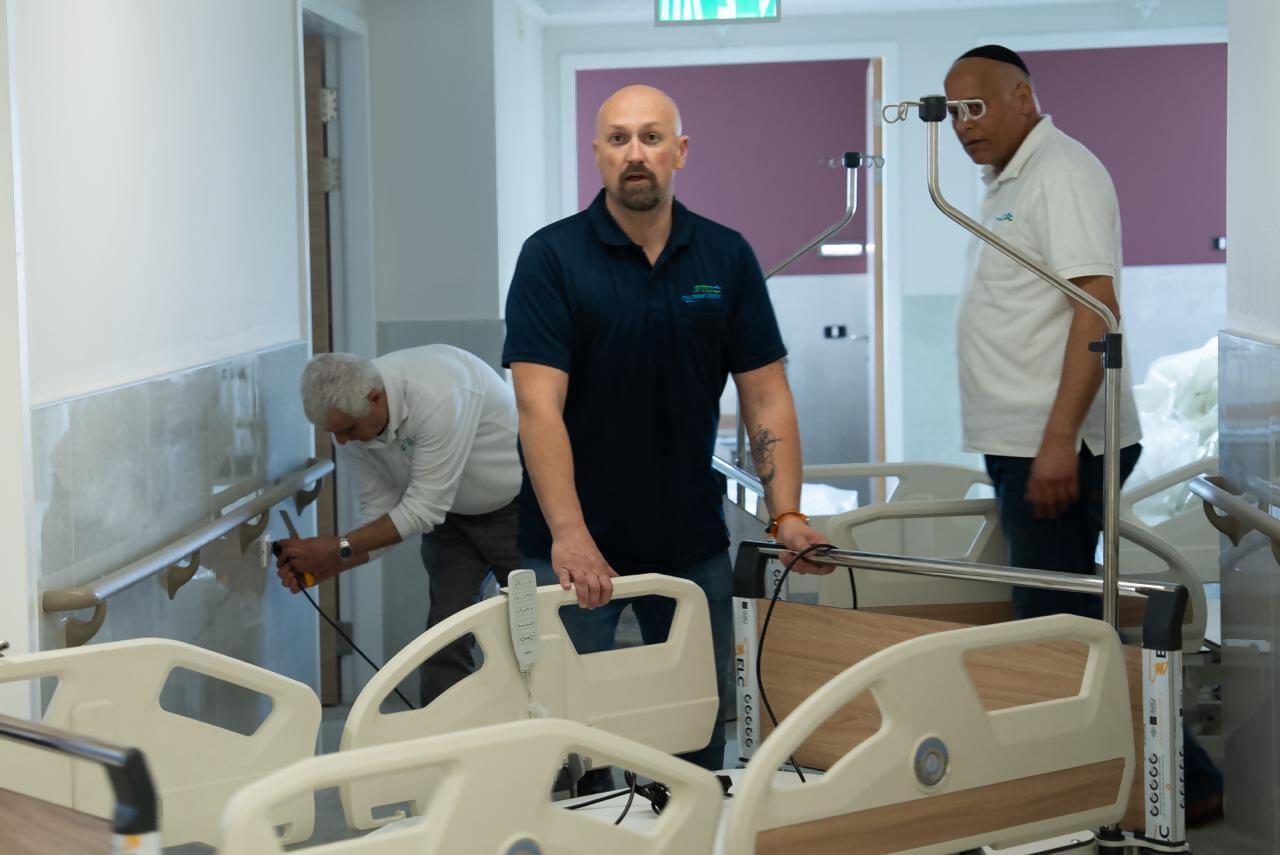
Setting up the new Lion’s Shield hospital. (Clalit Health Services Spokesperson)
“The idea that we could be in a safe place gives us some quiet,” Nisri said. “You don’t need to run with the rolling bed, the wheelchair. You don’t need to get stressed with every siren.”
You don’t need to run with the rolling bed, the wheelchair. You don’t need to get stressed with every siren.
When a siren sounds, people in Israel generally have around 90 seconds to reach a shelter. But for elderly patients and those undergoing rehabilitation, that window is often not enough time.
Most hospitals in Israel moved patients to underground facilities when the war began. However, smaller rehabilitation or geriatric centers often lack that capability.
As a result, Clalit Health Services decided to establish the 15th hospital under its umbrella, specifically for these vulnerable patients.
Dr. Mira Maram, deputy director general at Clalit Health Services and head of its hospitals division, was tasked with leading the effort.
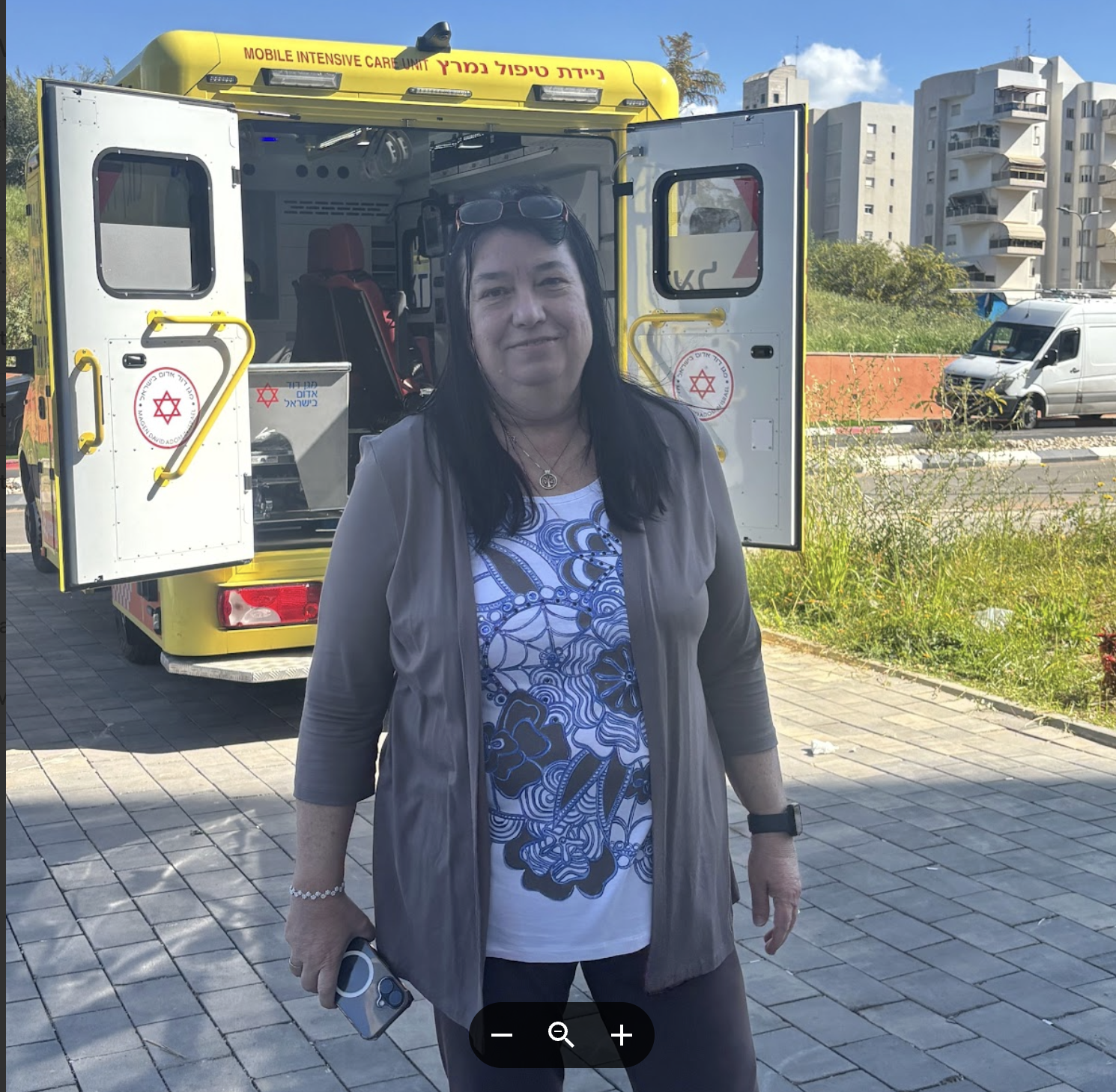
Dr. Mira Maram. (Maayan Hoffman/The Media Line)
“In less than a week, we started here,” Maram said, pointing to the new Lion’s Shield hospital, which opened in Rishon LeZion just one week after the war began. “We had the building, but we had nothing inside. So, we took equipment and staff from three hospitals, along with their patients, and we brought them here.”
She said they were now completely safe, that there was no need to go anywhere, and that they could deliver the best possible care. “This was a moral decision for us. No one should be left behind. … It’s called Lion’s Shield because we are protecting them like a lion,” she added.
This was a moral decision for us. No one should be left behind.
Lion’s Shield Hospital is a joint medical operation run by three institutions: Loewenstein Rehabilitation Hospital, Herzfeld Geriatric Rehabilitation Medical Center, and Beit Rivka Geriatric Medical Center. The facility can hold more than 200 patients.
When The Media Line visited the site on the second day after the facility opened, more than 60 patients were already being treated. A full team of doctors and nurses was present, along with a medical clown.
The same medical and nursing teams who cared for the patients in their previous facilities relocated to the new hospital. Logistics personnel, engineering teams, IT specialists, and operations staff were also mobilized to enable the rapid launch. In total, about 250 staff members are involved in running the facility.
Dr. Tatiana Vender, director of Beit Rivka Geriatric Medical Center and a specialist in neurology and physical and rehabilitation medicine, serves as the facility’s director.
The building, owned by the Hamami family, was originally planned as an assisted-living facility. Approximately half of the building was allocated to Clalit in an agreement signed on February 28, the night that the war began. The new facility occupies seven fortified floors in a building originally designed for assisted living, allowing many patients to remain in protected rooms rather than being rushed to shelters or stairwells whenever a siren sounds.
Clalit CEO Dr. Eytan Wirtheim decided to establish the hospital. He said Clalit’s emergency protection and relocation measures across its 14 hospitals had brought more than 90% of its hospitalized patients under optimal protection.
The facility includes extensive medical and operational equipment, including a mobile x-ray unit, patient hoists, ultrasound systems, defibrillators, medication refrigerators, infusion pumps, ECG machines, portable suction devices, oxygen generators, and specialized hospital beds. Clalit said the initial cost is estimated at around NIS 4 million.
Maram explained that after a stroke, patients often have mobility problems and therefore need rehabilitation, and that the same is true for patients who fracture a hip, undergo surgery, and then have to learn to walk again. She added that after two years of war, younger people had also been injured and needed rehabilitation, and said the new hospital was part of the answer.
“Nowhere in Israel is there anything like this,” she said, referring to the fully fortified rehabilitation center that was established in just a few days. “I don’t know of anywhere in the world.”
Nowhere in Israel is there anything like this
Israel’s Samson Assuta Ashdod University Hospital is the country’s only public fully fortified hospital. It was established in 2017 and was the country’s first new public hospital in more than 40 years. Assuta runs in partnership with the Maccabi Healthcare Services fund.
Professor Amir Haim, acting head of the Orthopedic Rehabilitation Department at Loewenstein, now serves as director of Department D at Lion’s Shield Hospital. He admitted he was initially skeptical when Clalit first proposed the idea.
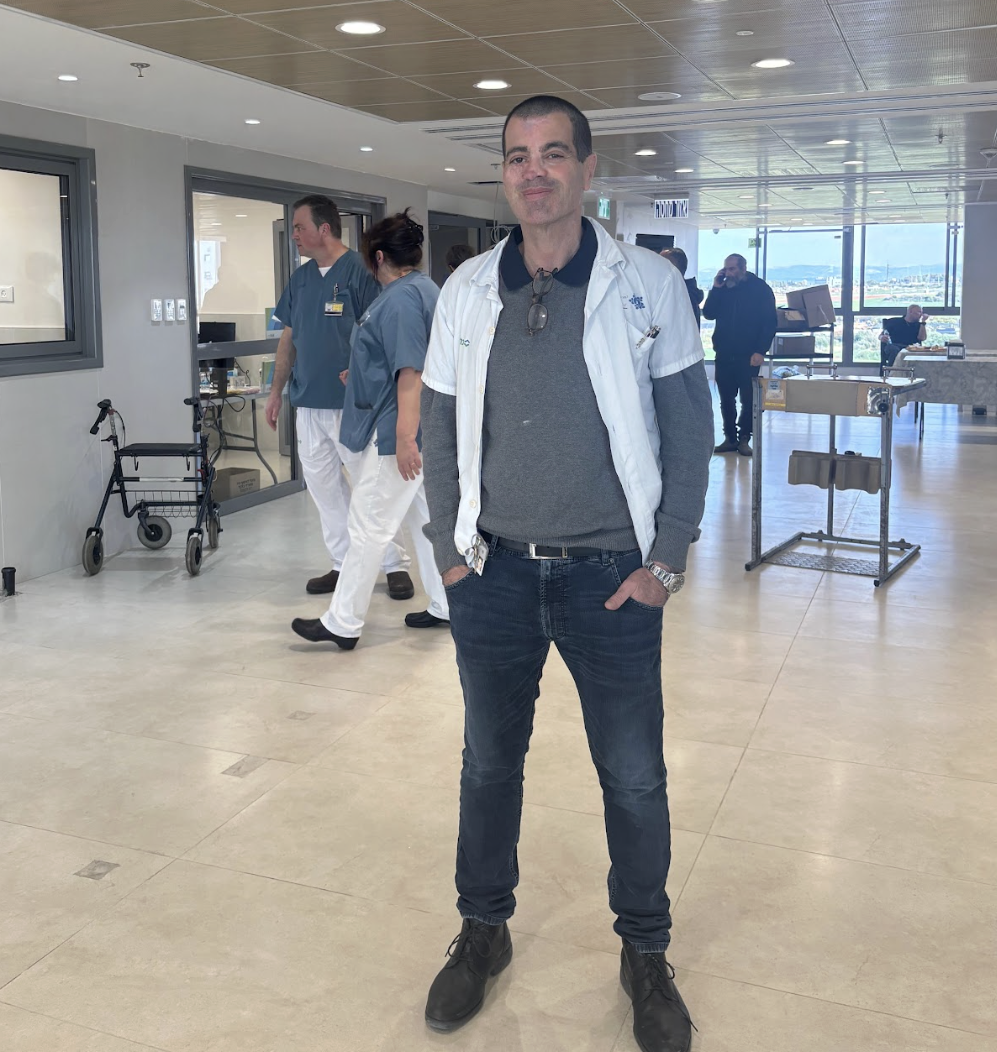
Prof. Amir Haim. (Maayan Hoffman/The Media Line)
“I couldn’t see how you could pull all this off in a week,” he said. “Now, it really makes me proud.”
I couldn’t see how you could pull all this off in a week. Now, it really makes me proud.
Haim said that at Loewenstein, it was often impossible to move immobile patients to shelters in time. In practice, patients sometimes sheltered in stairwells or wherever they could.
Now he knows the patients will be protected. When a siren sounds, the staff simply closes the doors, and everyone inside remains safe.
“The mood here is amazing,” he told The Media Line.
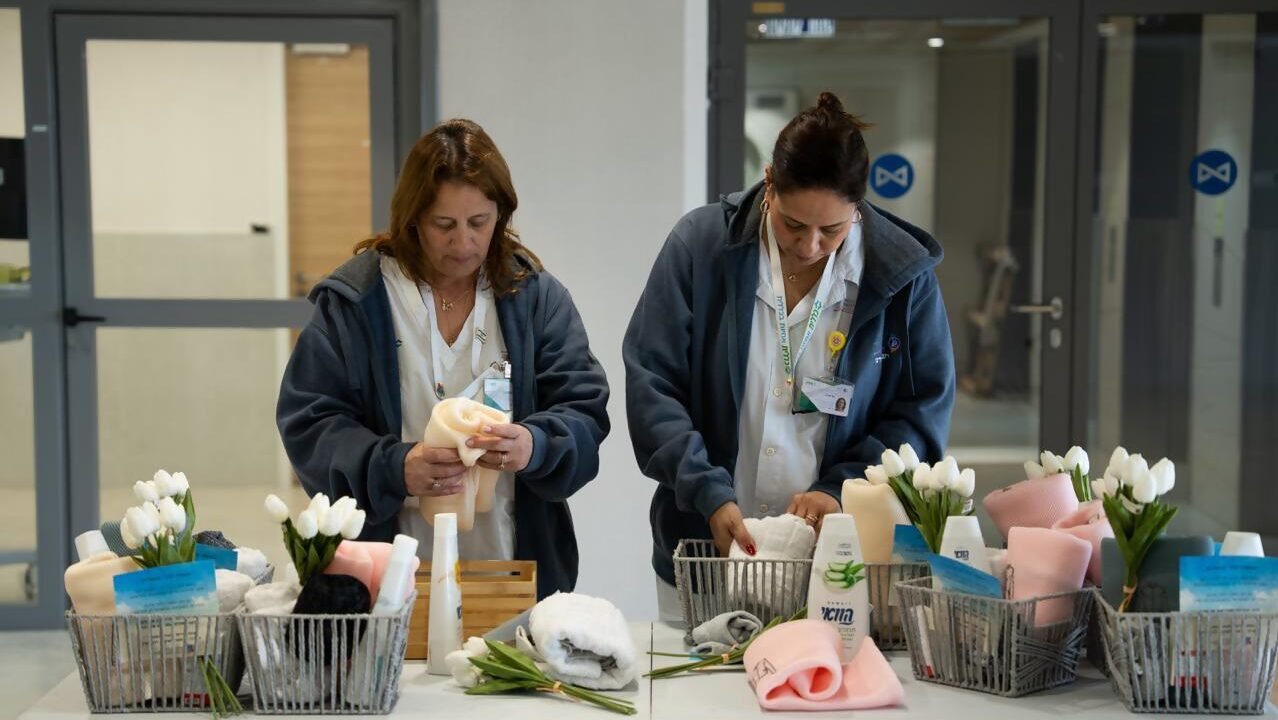
Patient Liora Matatov, 36, agreed. After suffering a stroke, she lost feeling on the left side of her body and is now paralyzed and undergoing rehabilitation. She had arrived from Loewenstein the day before, and staff greeted her with a small welcome package of essentials she might have forgotten in the rush to leave her previous hospital.
She said she could see “what a huge project and a huge undertaking it is to keep us all safe. I’m very grateful for that.”
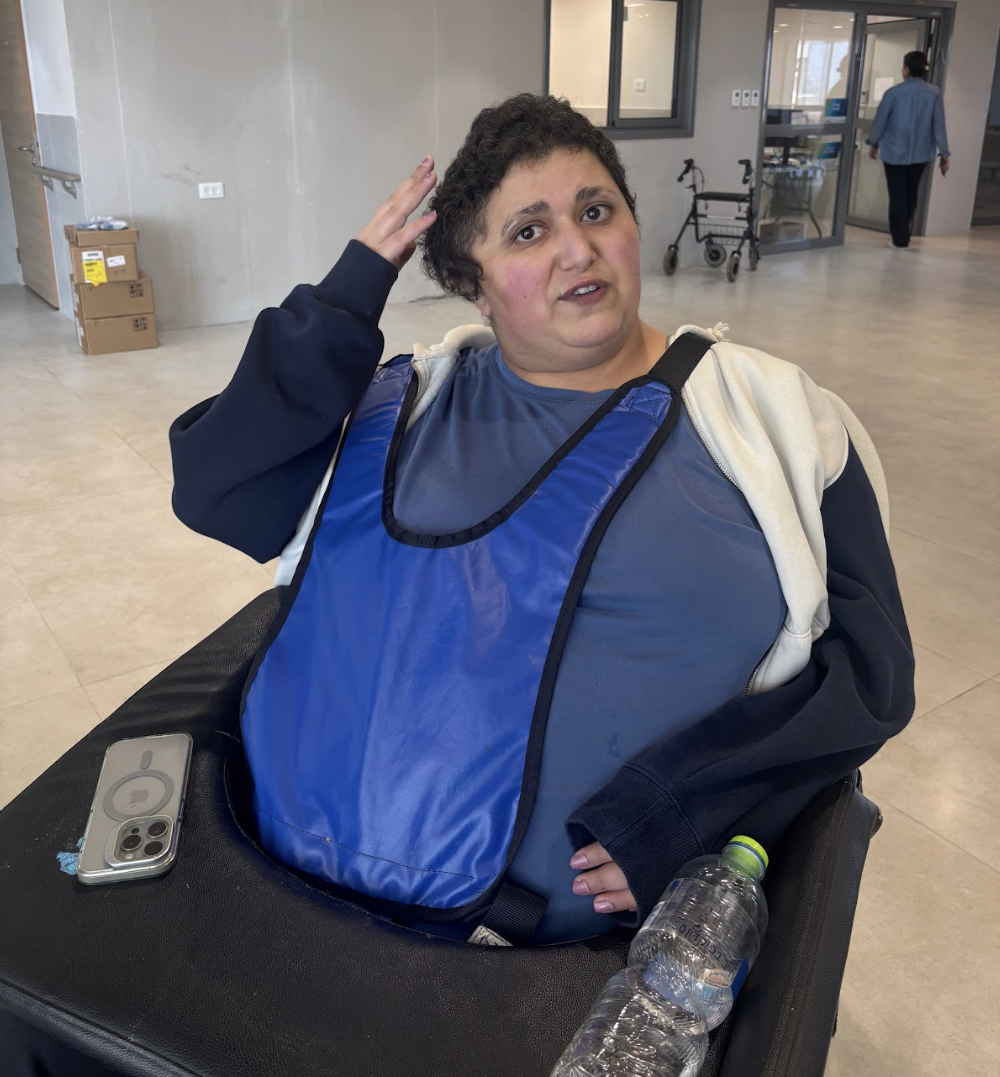
Liora Matatov. (Maayan Hoffman/The Media Line)
But she also said she expected nothing less from Israel.
“I think it’s classical to Israel,” Matatov said. “We had to reinvent ourselves, each and every generation, in order to find a way to survive. That’s our strength.”