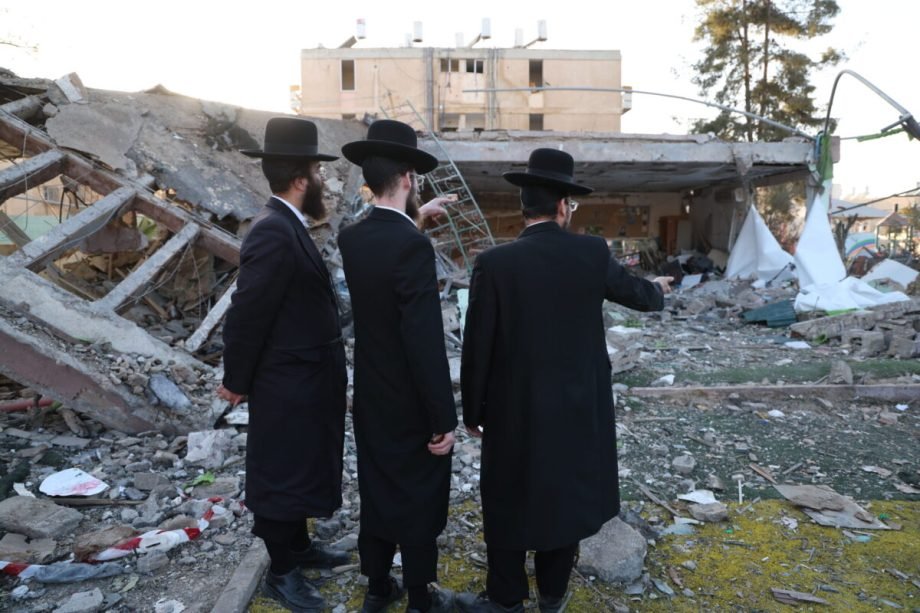
Iran’s missile strike near Israel’s Dimona nuclear facility on Saturday night was more than a dramatic escalation in the shadow war between the two nations. It was a reminder of the fragility of Israel’s decades-long policy of “nuclear ambiguity,” a strategy designed to keep adversaries guessing about the country’s ultimate deterrent while avoiding direct confrontation with allies who have long opposed nuclear proliferation.
The missiles landed just 14 kilometres from the reactor, damaging nearby buildings and injuring at least 20 people. The facility itself was untouched, but the symbolism was unmistakable: Iran had demonstrated its ability to reach Israel’s most sensitive site, despite Prime Minister Benjamin Netanyahu’s declaration only a day earlier that Iran’s missile capabilities had been “destroyed.”
A Retaliation With Symbolic Weight
The strike was retaliation for Israeli-American attacks on Iran’s Natanz nuclear enrichment facility only a day earlier. Tehran’s Aerospace Force commander, Majid Musawi warned of “upcoming surprises,” framing the attack as an “eye or an eye.” The message was clear: Iran could threaten Israel’s nuclear infrastructure, even if it stopped short of hitting the reactor itself. For Israel, the incident is a nightmare scenario. Dimona has long been the centrepiece of its nuclear program, shrouded in secrecy since the 1950s. The facility was built with French assistance, under the guise of a textile plant. When American inspectors pressed for clarity, Israeli officials offered evasions. President John F. Kennedy, sceptical of the “textile” story, insisted on sending inspectors. According to hearsay that has circulated for decades, Prime Minister David Ben-Gurion considered Kennedy’s insistence intolerable, with some conspiracy theorists even suggesting—without evidence—that Kennedy’s assassination was linked to his pressure on Israel’s nuclear program.
The Ambiguity Strategy
For nearly seven decades, Israel has neither confirmed nor denied possessing nuclear weapons. This policy of deliberate vagueness—known as “amimut,” or opacity—has served multiple purposes. It has deterred adversaries without provoking sanctions or rupturing relations with Washington. It has allowed Israel to maintain a strategic edge while avoiding the obligations of the Nuclear Non-Proliferation Treaty.
Tehran’s Aerospace Force commander, Majid Musawi warned of “upcoming surprises,” framing the attack as an “eye or an eye.” The message was clear: Iran could threaten Israel’s nuclear infrastructure, even if it stopped short of hitting the reactor itself.
Non-Proliferation Treaty
The ambiguity unravelled in 1986 when Mordechai Vanunu, a technician at Dimona, revealed details of Israel’s nuclear arsenal to the Sunday Times of London. His disclosures suggested Israel possessed dozens, perhaps hundreds, of warheads. Vanunu was abducted by Mossad agents in Rome, tried in Israel, and imprisoned for 18 years. His revelations, however, permanently altered the global perception of Israel’s nuclear capabilities.
A Reactor Under Threat
Saturday’s strike underscores the vulnerability of nuclear facilities in wartime. While Dimona’s reactor was not hit, the proximity of the missiles raises questions about what might happen if Iran—or another adversary—were to target it directly. A strike on a nuclear reactor could release radiation across the region, creating a catastrophe far beyond the borders of Israel. Israel has invested heavily in missile defense systems, including the Iron Dome and Arrow interceptors. Yet Iran’s ability to penetrate those defenses and strike so close to Dimona suggests that Israel’s shield is not impenetrable. Regional Reverberations.
For Iran, the strike was a demonstration of resilience and capability, intended to show that its missile arsenal remains intact despite Israeli claims.
The attack is likely to reverberate across the Middle East. Gulf states that have normalized relations with Israel in recent years may now reconsider the risks of aligning too closely with a country whose nuclear facilities are under threat. For Iran, the strike was a demonstration of resilience and capability, intended to show that its missile arsenal remains intact despite Israeli claims. For Washington, the incident is a reminder of the delicate balance it has tried to maintain for decades: supporting Israel’s security while opposing nuclear proliferation. The United States has never publicly acknowledged Israel’s nuclear arsenal, even as it has pressed Iran to abandon its own nuclear ambitions.
Historical Echoes
The Dimona strike evokes historical echoes of the Cold War, when nuclear facilities were considered untouchable targets. Israel’s secrecy about its program was tolerated by successive American administrations, partly out of strategic necessity. Kennedy’s scepticism was unusual; later presidents accepted Israel’s assurances, even as intelligence reports confirmed the existence of a nuclear arsenal. The French role in building Dimona remains a sensitive subject. In the 1950s, Paris saw cooperation with Israel as a way to strengthen ties in the Middle East. The reactor was built using French technology, and Israeli scientists quickly mastered plutonium production.
The incident highlights the paradox at the heart of Israel’s nuclear strategy: Secrecy has preserved deterrence, but it has also created vulnerabilities.
The Road Ahead
Whether Saturday’s strike marks the beginning of a new phase in the conflict remains uncertain. Iran’s warning of “upcoming surprises” suggests further escalation. Israel, for its part, is unlikely to abandon its policy of ambiguity, even as its nuclear infrastructure becomes a more visible target. The incident highlights the paradox at the heart of Israel’s nuclear strategy: Secrecy has preserved deterrence, but it has also created vulnerabilities. By refusing to acknowledge its arsenal, Israel has avoided international scrutiny. Yet that same secrecy makes Dimona a tempting target for adversaries seeking to expose Israel’s vulnerabilities.
As the dust settles in Dimona, the world is reminded that nuclear ambiguity is not invulnerability. The missiles that landed just short of the reactor may have been a warning shot. The next strike could test whether Israel’s decades-old policy can withstand the realities of modern warfare.
The views expressed in this article belong to the author and do not necessarily reflect the editorial policy of Middle East Monitor.