The Strait of Hormuz has long been treated as a narrow maritime chokepoint with outsized strategic value. But in moments of crisis, it becomes something more than a shipping lane: it becomes leverage.
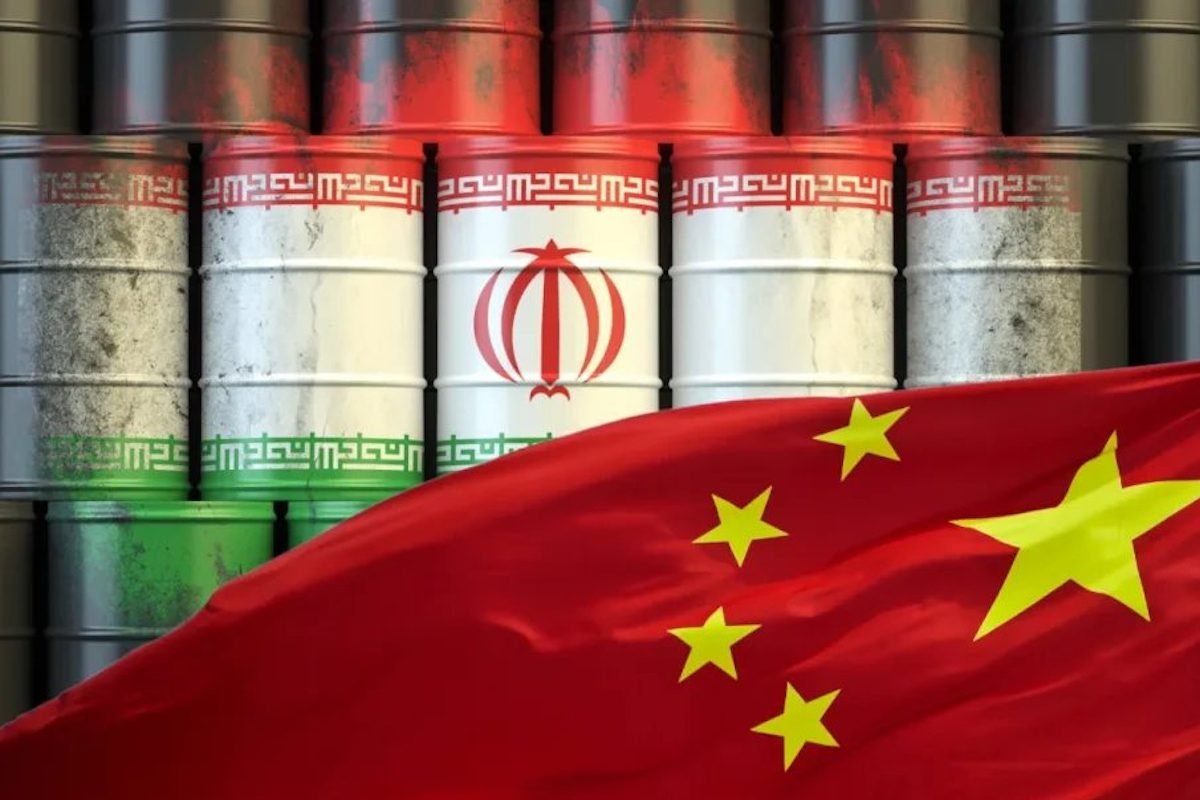
If recent reports are accurate that Iran is considering allowing limited tanker passage only if transactions are settled in Chinese yuan, then the issue at stake is no longer merely the movement of ships. It is the future architecture of global energy finance.
The immediate context is military escalation and maritime insecurity. The strait, through which roughly a fifth of the world’s oil and gas trade normally passes, has been severely disrupted by the latest conflict involving Iran, the United States and Israel.
Washington is now pressing other countries, including China, to help reopen and secure the waterway, underscroing just how central Hormuz remains to global energy stability.
Against that backdrop, reports that Tehran may condition tanker passage on yuan-denominated oil trade should be read less as a technical payment proposal than as a geopolitical signal. It would represent a deliberate attempt to fuse military geography with monetary strategy.
Tehran’s strategic calculus
Iran has at least three incentives for doing so.The first is sanctions evasion. The real force of American sanctions does not rest only on law or military power, but on the privileged position of the US dollar within global finance.
Oil is still overwhelmingly priced and settled in dollars, and much of the international payments ecosystem remains exposed to American regulatory reach. When transactions pass through dollar-clearing channels, Washington gains exceptional coercive power: it can monitor, delay, freeze or penalize them.
That is why sanctions on Iran, Russia and Venezuela have carried such weight. A shift into yuan would not nullify sanctions, but it could reduce their bite by moving at least part of energy commerce outside the most vulnerable dollar channels.
The second incentive is strategic reciprocity with China. Even under sanctions pressure, China has remained Iran’s crucial oil customer. Reuters reports that Iran has continued exporting around 1.1 to 1.5 million barrels per day in recent weeks, with China remaining the top buyer.
In practical terms, Beijing has helped keep a sanctioned Iranian oil economy alive. In political terms, it has offered Tehran a major-power relationship not defined solely by isolation.
Demanding yuan settlement would therefore not simply be an anti-American move; it would also be a pro-China one, rewarding the partner that has stayed engaged when many others stepped back.
The third incentive is symbolic but no less important: challenging the petrodollar order. Since the 1970s, the linkage between Gulf oil exports and dollar pricing has been one of the hidden foundations of American power. The bargain was never only about currency.
It was also about security, alliance structures and the recycling of oil wealth through dollar markets. But the result was clear enough: countries needed dollars to buy energy, and the United States benefited from enduring global demand for its currency.
De-dollarization without displacement
According to the IMF’s currency composition data, the US dollar remains by far the largest component of allocated global foreign exchange reserves, even though its share has gradually declined over time.
The renminbi is already in the IMF’s SDR basket alongside the dollar, euro, yen and pound, but its global reserve role remains much smaller. What Tehran appears to be testing, therefore, is not an immediate replacement of the dollar, but an incremental widening of non-dollar energy trade.
That is the key point too often lost in dramatic talk of “the end of the petrodollar”. The dollar is not about to be dethroned overnight, nor is the yuan ready to assume the full burdens of a global reserve currency.
China still maintains capital controls, its financial markets are not yet as open or trusted as American ones, and many states continue to prefer the liquidity, legal protections and depth of dollar-based markets. Even many countries unhappy with US dominance are not eager to exchange one monetary dependency for another.
Still, trends matter. Russia has increasingly sold energy to China in yuan. India has experimented with alternative payment arrangements in its trade with sanctioned partners.
BRICS states continue to discuss non-dollar settlement mechanisms, however unevenly. In that wider context, an Iranian yuan-for-Hormuz policy would not create a new direction in global finance so much as accelerate an existing one.
It would also sharpen a larger regional contest. For China, wider yuan use in oil trade would advance two long-term goals at once: currency internationalization and energy security. China imports vast quantities of Middle Eastern oil, and it has strong incentives to build payment structures less exposed to US pressure or wartime disruption.
For the United States, by contrast, any movement of Gulf energy trade away from the dollar risks eroding both sanctions leverage and broader strategic influence in the region. This is why the current crisis should not be interpreted solely through the lens of shipping security.
Hormuz is becoming a laboratory for a broader experiment: can control over a physical chokepoint be converted into leverage over the currency of trade itself?
That experiment may yet fail. Much depends on whether other energy buyers would accept yuan settlement under crisis conditions, whether insurers and traders would cooperate, and whether Gulf producers beyond Iran would move in a similar direction.
There is also the question of credibility. A payments system becomes powerful not simply when one state demands it, but when many actors trust, use and institutionalize it over time.
Financial battlefields
Even if Tehran’s proposal remains limited or temporary, it would still mark something important. It would show how revisionist states now think about power: not only in terms of missiles, proxies and blockades, but in the language of clearing systems, settlement currencies and reserve diversification.
In other words, the contest over world order is no longer confined to battlefields and sea lanes. It is increasingly being fought through the plumbing of global finance.
Iran’s Hormuz gambit may not end the petrodollar era. But it does illuminate a world in which the monetary foundations of American primacy are being probed from multiple directions at once.
And in that world, even a narrow waterway can become the stage for a much larger shift.
Kashif Hasan Khan is dean at the School of Graduate Studies and head of the Department of Economics at Paragon International University in Phnom Penh, Cambodia. He is an editorial board member at the Asian Journal of Economic Modelling (Scopus Q3) and associate editor of Crossroads of Social Inquiry at Abu Dhabi University.