As pressure mounts on the Islamic Republic and talk of a possible US ground confrontation grows louder, Iranian opposition groups outside the country are scrambling to prove they matter. In this timely piece, Omid Habibinia tracks a weekend of rallies, conferences, and political maneuvering stretching from London to Texas to Washington, showing an opposition that is active, ambitious, and still deeply divided over who should lead a post-regime Iran.
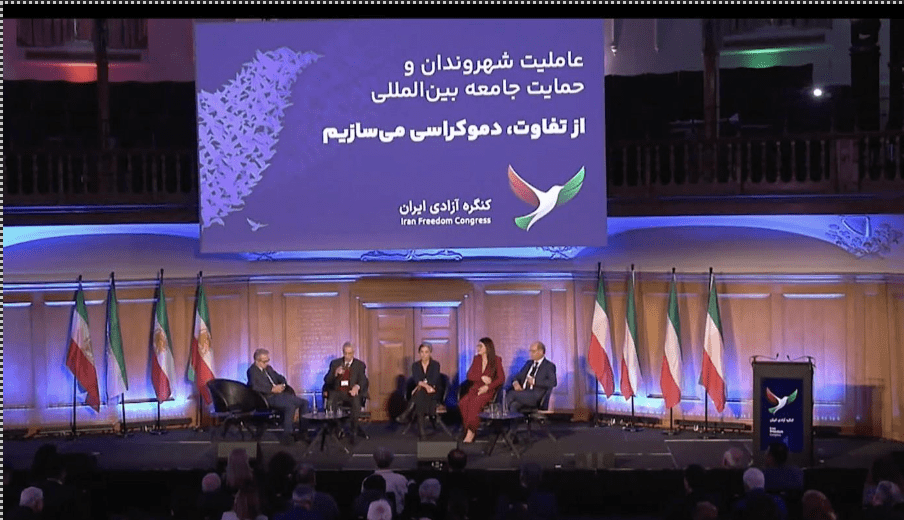
Habibinia shows that the anti-regime camp is anything but unified. Republicans gathered in London under the banner of the Iran Freedom Congress, monarchists aligned with exiled Crown Prince Reza Pahlavi appeared at the Conservative Political Action Conference in Gaylord, Texas, and then rallied outside the White House, while leftist groups and supporters of the Mojahedin-e Khalq held separate events of their own. The result was not a single show of opposition strength but several competing ones, each trying to claim legitimacy and momentum.
One of the article’s central tensions is the growing argument over foreign influence. Some outlets and activists have alleged links between pro-Israel networks and parts of the diaspora mobilization, especially around the Iran Freedom Congress and Pahlavi’s camp. Organizers denied direct foreign involvement, but calls for transparency over funding have not gone away. At the same time, Pahlavi is presented as leaning openly into his ties with Israel and right-leaning US political circles, while republican and progressive figures try to frame themselves as a more democratic, less personalized alternative.
Habibinia also gives the story real emotional weight through voices shaped by loss and fear. Human rights activist Azamat Azhdari, whose sister was killed when the Islamic Revolutionary Guard Corps shot down Flight PS752 in 2020, speaks of the need to unite diverse opposition forces. A political activist in Tehran, speaking under heavy Israeli airstrikes, says a democratic transitional council could help unify future protests rather than fracture them.
What emerges is a picture of an opposition camp that senses opportunity but still cannot escape its old rivalries. Habibinia captures both the energy and the mistrust that now define this moment. Readers should read the full article and watch the video report, because the struggle over who gets to speak for Iran’s future is no side story anymore.