Following joint attacks by the United States and Israel on Iran on February 28, the country has come under repeated strikes. These attacks, which were ostensibly supposed to target Iran’s nuclear and missile capabilities, have also caused civilian casualties and damage to cultural sites.
Airstrikes near historic districts in Tehran and Isfahan have damaged monuments that have survived for centuries. The losses highlight how war can endanger not only lives but also the historical memory embedded in cities and landscapes. As an Iranian art historian, watching these events unfold in my country is deeply and doubly painful.
Iran contains one of the world’s richest concentrations of historic architecture and urban heritage. The country has 29 Unesco world heritage sites, spanning more than two millennia, from ancient imperial capitals to Islamic urban ensembles and desert cities. Yet monuments that have survived centuries of invasions, political upheaval and regime change remain vulnerable in modern conflict. Even when heritage sites are not deliberately targeted, nearby explosions, fires and shockwaves can damage fragile masonry, glazed tiles and decorative interiors.
Cultural sites affected
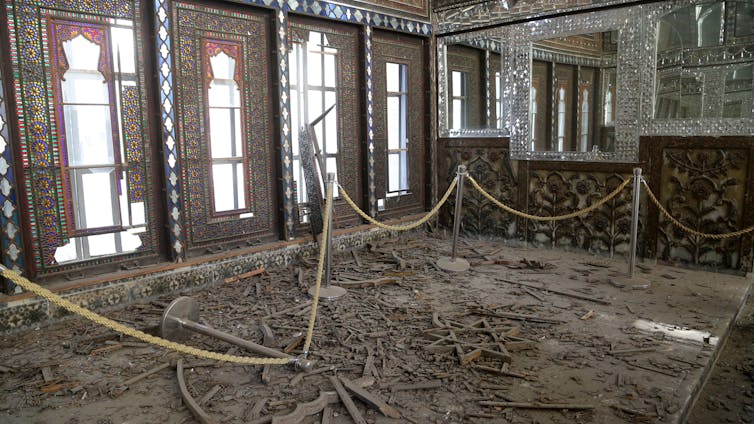
In the capital, Tehran, airstrikes have damaged two important historic sites: Golestan Palace and the Grand Bazaar.
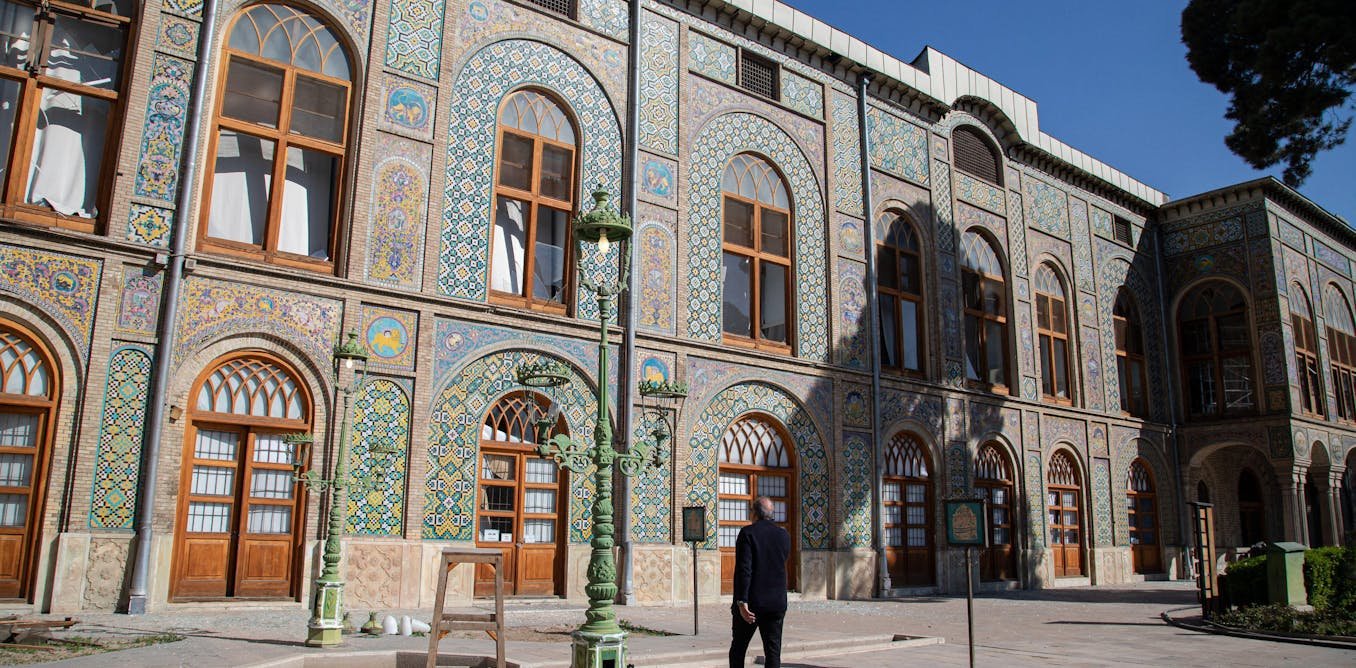
Golestan Palace, a Unesco world heritage site, served as the ceremonial residence of the Qajar dynasty in the 19th century. Its halls feature elaborate mirror mosaics, painted tiles and an architectural style blending Persian traditions with European influences, reflecting a moment when Iran was engaging more directly with global artistic currents.
The Tehran bazaar, meanwhile, is far more than a commercial district. Like many historic bazaars across the Middle East, it functions as a living urban organism linking trade, religious institutions and social life. Historically it has also played an important role in Iran’s political movements (being influential in the Iranian Revolution of 1978/79 with the support of the bazaar merchants for the eventual leader of the Islamic Republic, Ayatollah Ruhollah Khomeini) and economic networks.
Damage to such spaces therefore affects not only historic architecture but also the social and urban structures that shape everyday life.
Strikes have also affected Isfahan, one of Iran’s most important historic cities and the Safavid capital during a golden age of art, architecture and trade. Under Shah Abbas I, the city was transformed into an imperial centre of culture and urban planning, anchored by Naqsh-e Jahan Square, the monumental complex of mosques, palaces and bazaars that earned the nickname Nesf-e Jahan – “half the world”.
According to cultural heritage officials, blast waves affected several historic buildings including Timuri Hall, the Jebe-Khaneh building, the Rakib-Khaneh (Isfahan Museum of Decorative Arts), Ashraf Hall and the Chehel Sotoun palace complex. Damage reportedly included collapsed ceilings, broken doors and windows, and shattered glass at nearby monuments such as Ali Qapu Palace.
The damage in Isfahan is especially concerning because the city occupies a central place in Iran’s architectural and cultural history. The city flourished as the Safavid capital in the 17th century and remains one of the most important historic cities in the Islamic world. Even limited damage in this historic city raises serious concerns. Decorative elements such as tile work, murals and mirror mosaics are among the most fragile components of Safavid architecture and are extremely difficult to restore once lost.
International heritage organisations have also expressed alarm. The US committee of Blue Shield, an international NGO that works to protect cultural heritage during war and disasters, warned that disregarding international conventions protecting cultural property in wartime could lead to violations of international law. Blue Shield also referred to recent damage at sites including Chehel Sotoun Palace in Isfahan and Golestan Palace in Tehran.
The vulnerability of Isfahan also highlights broader risks facing Iran’s cultural heritage. Sites such as Persepolis, the Achaemenid ceremonial capital; Pasargadae, home to the tomb of Cyrus the Great and the historic desert city of Yazd represent different layers of Iranian civilisation, from ancient imperial history to Islamic urban culture.
Why cultural heritage matters to Iranians
Iran’s historic monuments are not simply archaeological sites or tourist attractions. They form part of a cultural identity shaped by thousands of years of artistic, literary and architectural traditions. Cities such as Shiraz, Isfahan and Yazd are closely intertwined with the poetry of figures such as Hafez and Ferdowsi. Their works continue to shape Iranian cultural life today.
For many Iranians, historic monuments symbolise a sense of continuity linking the ancient Persian past, the Islamic period and the modern nation.
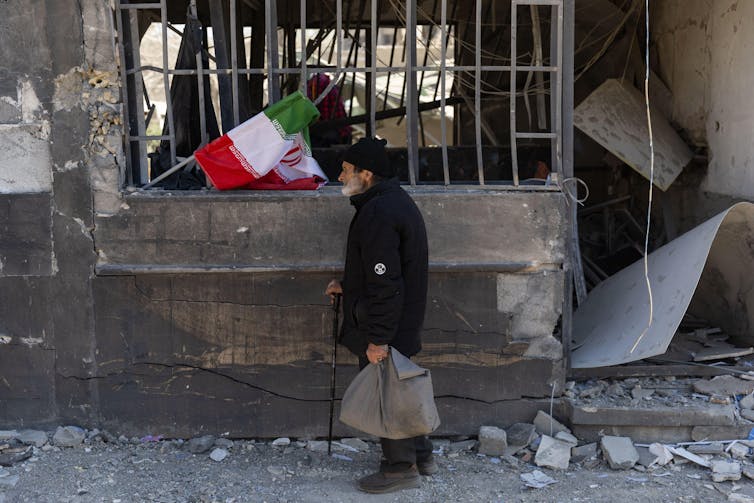
At the same time, concern for damaged monuments has provoked strong reactions online. On social media, posts lamenting the destruction of historic sites often draw angry responses arguing that human lives are more important than buildings. For many Iranians, already angered by war and years of internal repression – including the killing of protesters during waves of unrest – this contrast raises difficult questions about whose losses receive attention.
Some have also asked why the international community showed little concern when Iran’s ecosystems were being damaged over many years through environmental mismanagement. Lake Urmia, for example, which was once one of the world’s largest salt lakes, has lost most of its surface area due to dam construction and agricultural water diversion.
For many Iranians, these overlapping crises – environmental degradation, political repression and war – form part of a broader landscape of loss affecting both people and cultural memory.
When war damages historic monuments, more than architecture is lost. Fragments of cultural memory that have endured for centuries disappear with them.
Many of Iran’s historic sites have survived invasions, revolutions and political upheaval, yet today’s conflicts pose new risks when historic cities lie close to strategic targets. Once destroyed, these monuments cannot truly be replaced.
Protecting cultural heritage in times of conflict is therefore not only about preserving buildings, but about safeguarding the memories and histories that connect societies across generations.