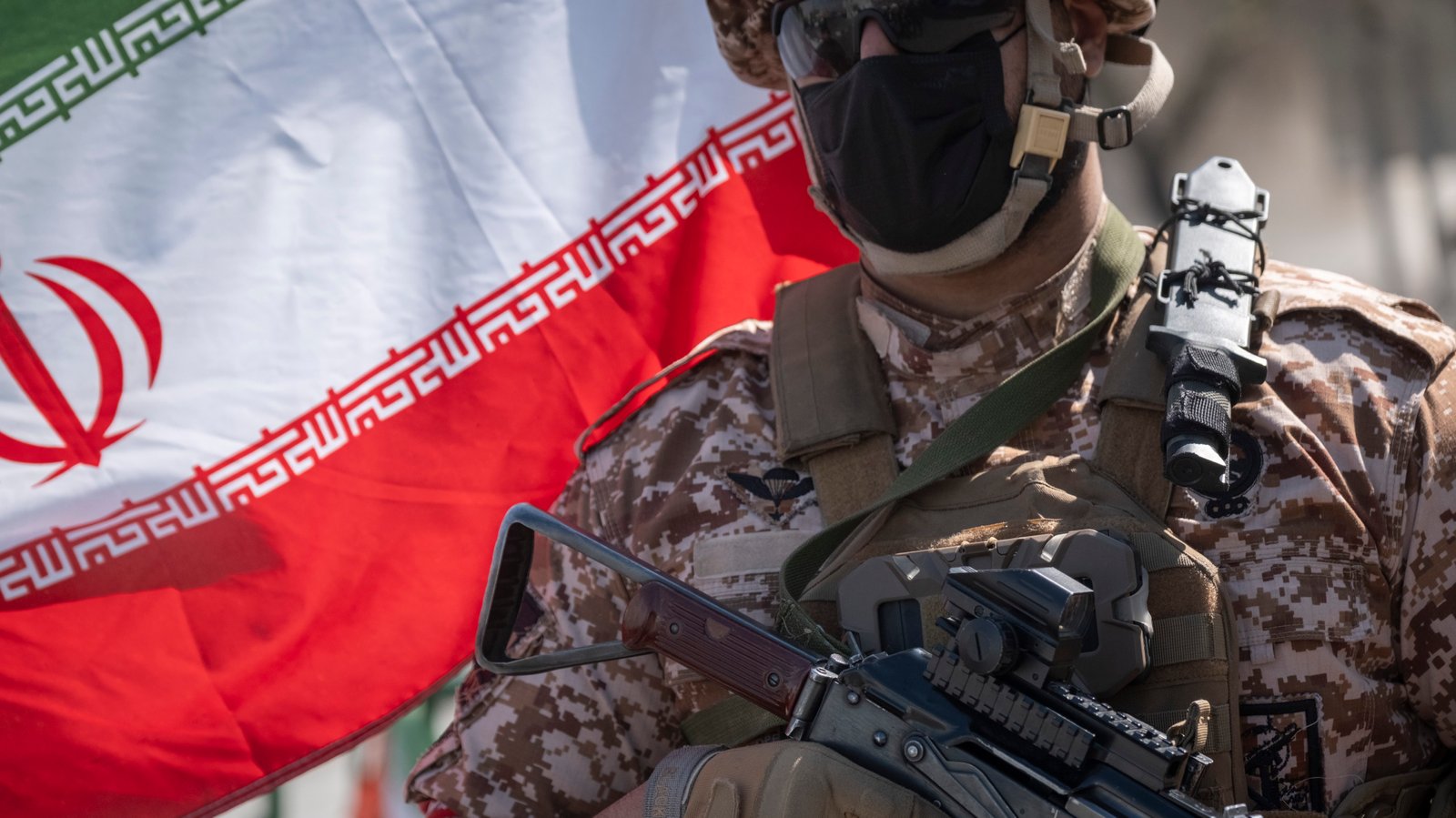
Omid Habibinia’s report reads like a dispatch from a system starting to come apart at the seams. The core claim is stark: after a week of US and Israeli strikes, and after the killing of Iran’s supreme leader, voices inside and outside the country are describing an Islamic Revolutionary Guard Corps, or IRGC, that looks less like an iron pillar of the regime and more like a battered machine struggling to stay upright.
The piece centers on an Iranian military officer who told The Media Line that “the fall of the Islamic Republic is inevitable,” arguing that members of the IRGC, the Basij, and other repressive forces still deployed in cities are exhausted, desperate, and losing their ability to function. The report portrays a force hit not only by battlefield losses but by disruption to communications, the loss of commanders, and the erosion of secure headquarters. Even temporary cover sites, including sports stadiums, are said to have come under attack. That is not the image of a confident regime. It is the image of men being pushed out of the house while the roof is still on fire.
Habibinia layers that internal account with outside analysis. Iran specialist Emily Blout says the IRGC has tried to survive by dispersing fighters, command nodes, and munitions into unusual locations, including hospitals and schools, while preserving enough local autonomy to keep control if central leadership is eliminated. She warns that even a collapsing regime may still fight brutally, with weeks or months of urban guerrilla warfare possible before any final break.
The article also looks at the forces that might exploit such a rupture: Kurdish peshmerga fighters, street protesters, student groups, labor activists, and other anti-regime networks. The Mojahedin-e Khalq appears in the picture too, though with heavy skepticism about its claims and relevance. What emerges is not a neat scenario but a combustible one, with armed opposition, public rage, and state disintegration all pressing against each other at once.
Near the end, Omid Habibinia makes clear that the IRGC’s size, money, and long grip on power do not guarantee survival. If war drags on and street unrest returns in force, the regime’s most feared institution could fracture much faster than it once seemed possible. Read the full article and watch the video report for the sharper details, the competing opposition forces, and the unnerving sense that Iran may be entering its endgame.