This is the text from The Conversation UK’s World Affairs Briefing email. Sign up here to receive weekly analysis of the latest developments in international relations, direct to your inbox.
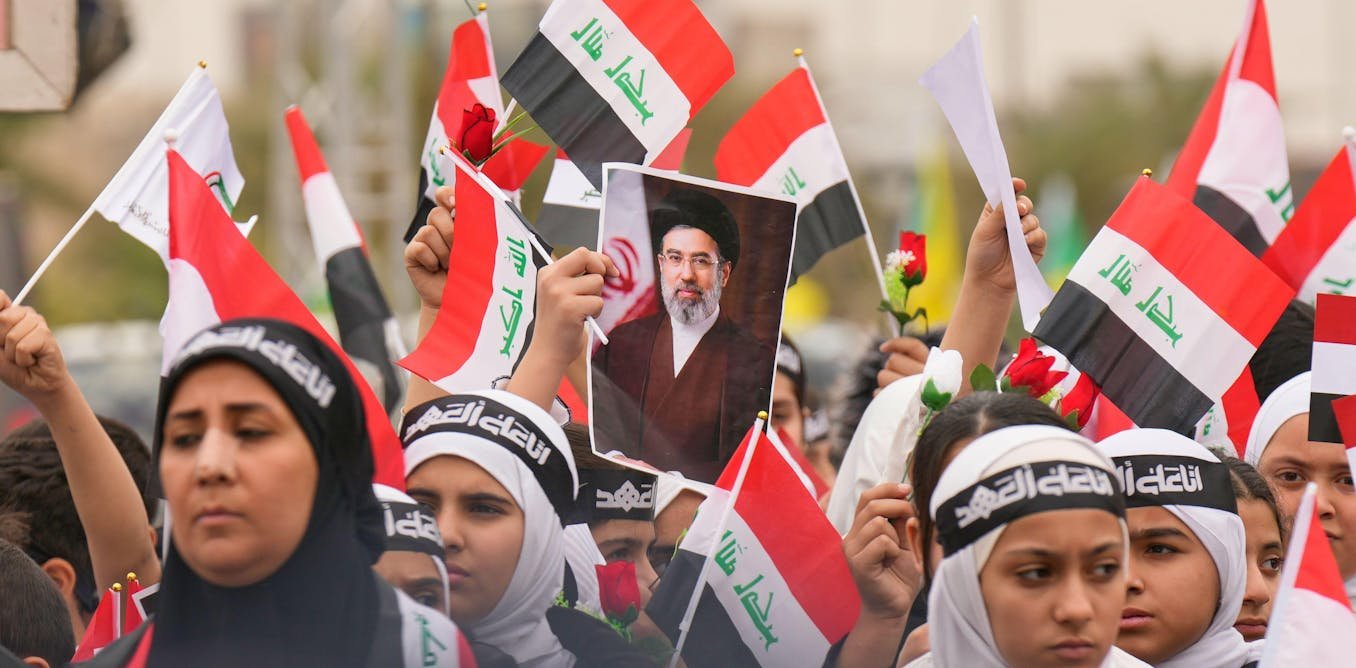
From the defiant tone struck by Iran’s newly appointed supreme leader, Mojtaba Khamenei, in his first statement as leader on Thursday, it appears that the ayatollah has no intention of calling an end to Iranian resistance. Instead, Khamenei – who did not appear in public but whose words were read out on state media – said Iran was preparing to open new fronts in the war and would continue to block the strait of Hormuz.
He also vowed to avenge Iran’s “martyrs”, among whom he counts his own father and wife, stressing that “every member of the nation who is martyred by the enemy is an independent subject for revenge”.
The messages coming from the Trump administration continue to be mixed. The president himself seems to change his mind on this fairly regularly. He told a rally in Kentucky on March 11 that while: “You never like to say too early you won. We won.” On Monday March 9 he was saying that: “I think the war is very complete, pretty much … we’re very far ahead of schedule.”
But at the same time he has also declared that nothing short of “unconditional surrender” will do and that he wants to pick Iran’s new leader personally.
Andy Gawthorpe believes Donald Trump is talking himself out of seeking an early exit ramp from the war. He explains that whether a conflict is a success or failure is “typically judged against the goals the combatants set for themselves”. But, he notes, not only has Trump set some lofty and unlikely goals, but his senior advisers are also introducing other factors into the equation.
Gawthorpe says it may be that the war aims as expressed by secretary of state and national security adviser, Marco Rubio, are more realistic. Rubio wants to destroy Iran’s ballistic missile programme and its navy. This is a more achievable wishlist, although it might cost the US a fortune and seriously deplete its stock of air defence interceptors, with as yet unknown consequences for global geopolitics.
For Trump to stick with his stated aims but be forced to settle for less risks looking as if the war is a failure. And that would be a disaster for the Republican Party just months away from the midterm elections.
Read more: Trump says the Iran war will end ‘very soon’ – but it is not clear how
It’s all so different from what the president promised on the campaign trail. Back then the message was “America first” and “no new wars”. Trump’s message to his base has always been that America has been drawn into unnecessary and costly foreign conflicts on the back of what previous “liberal” administrations have seen as pointless nation-building missions to boost democracy in support of a rules-based order. Rather than being “number one”, the US had become a “do-gooder” abroad while neglecting American families suffering the fallout of globalisation at home.
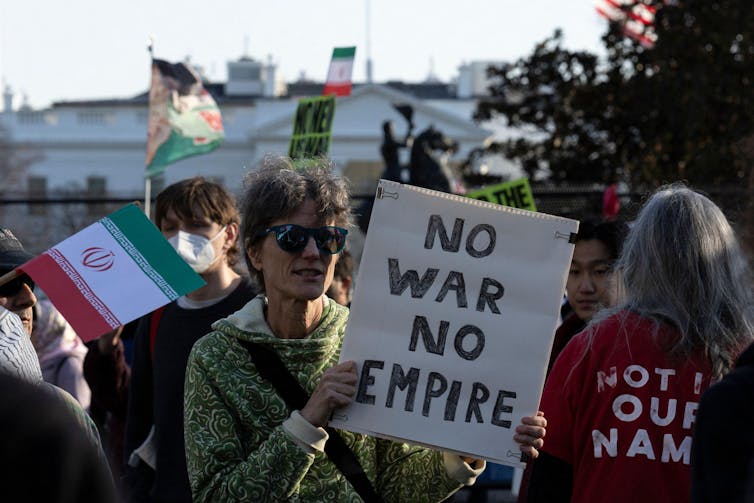
So what are we to make of the reality of Trump 2.0? Bamo Nouri and Inderjeet Parmar, both experts in US foreign policy at City St George’s, University of London, believe that very little has materially changed. They write that US foreign policy, even when cooperating with regional partners and proxies as it has over the years, has been based on the overarching principle of supporting American hegemony. America first without the baseball cap, if you like.
The language is different. As Nouri and Parmar conclude: “Liberal internationalists justified primacy through universalist ideals. America first recasts it in nationalist terms: sovereignty, strength, deterrence.”
Read more: Middle East conflict shows the real meaning of Trump’s ‘America first’ foreign policy
Over the past 14 months, the EU has had to scramble to adjust to the new realities of US foreign policy under Trump 2.0 – a new world in which European security is a long way down the agenda. This has been most evident over Russia’s war in Ukraine, which has put huge economic pressure on the EU (and other European allies such as the UK) as they’ve scrambled to find funds to support Kyiv. This has put a great deal of pressure on EU solidarity, and at least two member states, Hungary and Slovakia, are at loggerheads with the rest of the EU and threaten to derail its plans to continue to supply Ukraine with weapons.
Now the US-Israeli war in Iran is threatening to expose yet more fissures, write Richard Whitman and Stefan Wolff.
Read more: Iran and Ukraine are changing the EU and testing its unity
Meanwhile, following the assassination of Iran’s former supreme leader, Ali Khamenei, on the opening day of the war, Luca Trenta and Arturo Jimenez-Bacardi, point out that the groundwork for that was all laid by the US, which “helped plan the operation, provided key intelligence to identify Khamenei’s location and destroyed Iranian defences to pave a path for his executioners, [but] did not pull the trigger”. The actual killing strike was delivered by Israeli warplanes.
It is, they write, something of a tradition going back many decades and spanning several continents, for the US to hatch assassination plots but allow a proxy to do the killing.
Read more: Ali Khamenei’s killing continues long US tradition of letting others pull the trigger
View from the Gulf
Trump always claimed the Abraham accords, which aimed at normalising relations between Israel and the Gulf states, as one of the great foreign policy successes of his first term. But it’s hard to see how the stability and prosperity for all that were the aim of the accords will survive this conflict.
While so much of the Middle East was wracked with conflict over three decades (the Iran-Iraq war, the Gulf wars of Bush father and son, and the Arab Spring) the six countries of the Gulf Cooperation Council (GCC) – Bahrain, Kuwait, Oman, Qatar, Saudi Arabia and the United Arab Emirates have been largely tranquil. (A nascent uprising in Bahrain in 2011 was quickly and savagely put down with the help of its neighbours.)
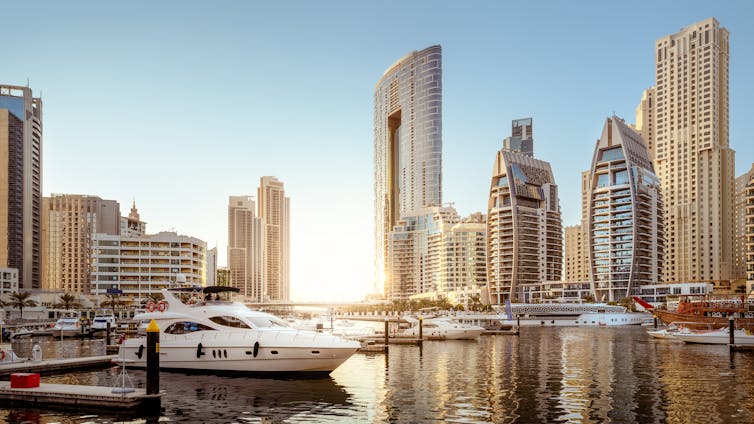
Instead, stability, safety and modernity were the hallmarks of their success. But now, writes economist Emilie Rutledge of the Open University, this is at risk. For those states whose wealth has been underwritten by their oil exports, this will of course be a challenging time. But perhaps more important is the reputational damage as the hordes of businesspeople, holidaymakers and lifestyle influencers raced to get flights (some of the latter group without the pets they had delighted in posing with on Instagram). Whether and how quickly these countries’ reputations will recover will be down to how long and damaging the conflict turns out to be, Rutledge concludes.
Read more: The Middle East conflict has swiftly exposed economic vulnerability in the region
The same goes for the price of oil, writes Adi Imsirovic. Usually oil markets are robust enough to absorb short-term supply shocks, but a lot will depend on how long Iran is able to keep the strait of Hormuz closed for. Imsirovic, an expert in energy systems at the University of Oxford, weighs up the economic and geopolitical risks of a prolonged conflict.
Read more: These are shaky times for oil markets. An expert explains what a prolonged war will mean for prices
We’ll miss them when they’re gone
One of Iran’s great gifts to the world is its cultural heritage. The country has 29 Unesco world heritage sites spanning thousands of years of artistic, literary and architectural greatness. From the Achaemenid ceremonial capital at Persepolis to the tomb of Cyrus the Great at Pasargadae, Shiraz, the “city of poets, gardens, and wine” and the Safavid-era Persian glories of Isfahan, Iran is pretty much unparalleled as a store of cultural wonderment.
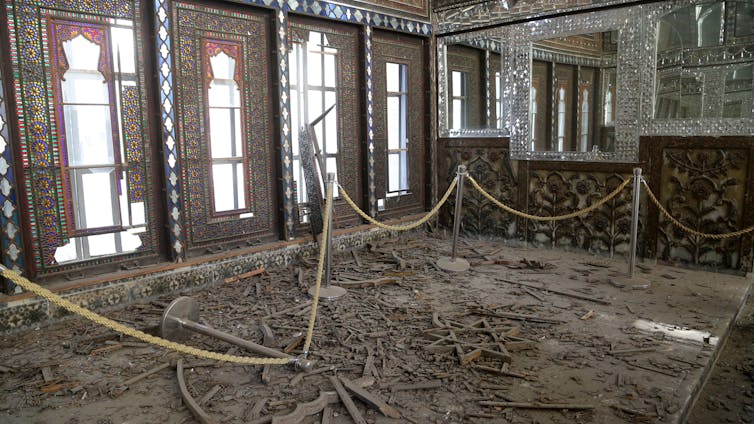
Deliberately targeting cultural monuments is prohibited under numerous international conventions. But precious things are often also delicate and easily damaged. British-Iranian academic Katayoun Shahandeh of SOAS, University of London, identifies several important sites that have already been damaged in the air campaign. They will be hard to properly repair, she concludes: “Once destroyed, these monuments cannot truly be replaced.”